Doctor of Arts, leading researcher at the Institute of Art History of the Academy of Sciences of the Republic of Uzbekistan, professor (Uzbekistan). Doctor of Philosophy, Professor, Scientific Forum on International Security at the Bundeswehr Academy of Leading Personnel (Germany).
POST-
MODERNISM
THEORY AND PRACTICE
OF MULTI-
CULTURALISM IN EUROPE
Reflections on the prospects for the political project of multiculturalism in the post-Soviet space: Yes or no?.–Interlos.–2008.–. On the place and role of multiculturalism in the communicative space.–PhilosophicaProblems of the Humanities S.
ҰРМАЛЫ АСПАПТАР-
The stages of creation of percussion musical instruments of the Kazakh nation (dangyra, dabyl, etc.) are examined in this article. Author details: Edil Usurkhanov - Second year Master's student, specializing in "percussion instruments" at the National Conservatory of Kazakhstan Kurmangazy.
ШЫҒАРМА-
ШЫЛЫҚТАҒЫ КӨРКЕМ
ҚИЯЛ МЕН БЕЙНЕ
Analysis of the creative works of artists reveals the psychological and philosophical essence of the. Creative imagination" as the artistic images in the works of art created by psychoanalytical methods of S.
SADAQSHILIQ – THE ART OF
AND SHOOTING THE KAZAKH
HORSEBOW
- Introduction
- Methods
- Research results
- Conclusion
There were two main types of the horse bow known in Kazakhstan: large and smaller horse bows. Large Kazakh horse bow (Batyr's bow) in the Central State Museum of the Republic of Kazakhstan, Almaty. As we can see, the Hun bow design survived millennia and became one of the Kazakh bow types.
Tobyrshaqs - the distinguishing feature of most Kazakh horse bows are the two tobyrshaqs (string bridges) at the elbow bends of the bow legs [7]. The arrow rests on the thumb of the hand holding the bow, and on the right side of the bow (for a right-handed shooter). The big advantage of the Kazakh Draw is that it uses the stronger finger of the hand, the thumb.

ARTISTIC
PECULARITY
OF CREATIVITY OF THE
PAINTER AMAN MUKAZHANOV
When we talk about leatherwork, the name Darkembay Shokparov comes to mind first. We can pay particular attention to the round, twisted, rectangular and zigzag shapes that appear in the works of the author. We can see the tradition and history of our country in the works of the artist, made of leather.
Mountain ranges and the image of the symbol of the sun god can also be seen in the background. This was found in the study of Toktabaev SZ "Characters in the ornamentation of Kazakhs and Turkic peoples." [2. The petroglyphs depicted in the work are one of the most important monuments and diverse landscapes of Tamgaly.

TRACING THE
ORIENT” IN SYNAGOGUE
ARCHITECTURE IN BULGARIA
Introduction
- The Jewish community in Bulgaria
- Synagogues in Bulgaria Material traces of Jewish population
- Methodology
The largest compact community of this population were the so-called Sephardics - Jews, who were expelled from Catholic Spain at the end of the 15th century (1492). Findings in the field include: main foundation walls; a mosaic image of one of the main Jewish symbols - the menorah;. The report focuses on synagogues built on Bulgarian lands during the last decades of the 19th century and the early years of the 20th century.
These buildings are elements of the state historical and artistic heritage (now partially preserved), as religious buildings of all the ethno-confessional. A special feature of the chosen period is the role of the temple and temple institution (be it a synagogue, church or mosque) as an urban and social structure. It is therefore possible to notice the concentration of religious buildings in the main state settlements, the same as the lack of synagogues in the southern parts of the country.
Case studies research The relatively small number of
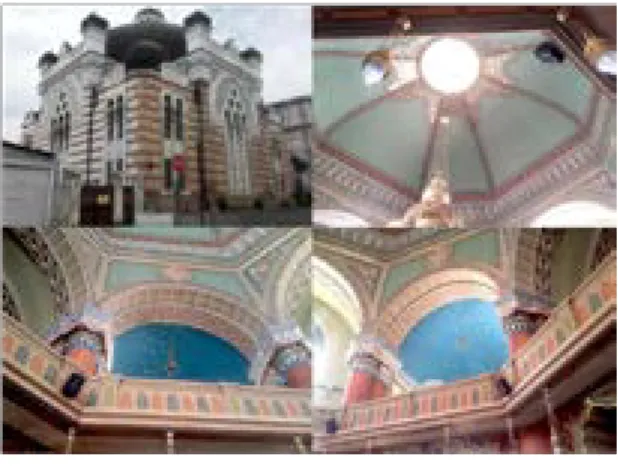
It is the synagogue where people will be blessed in the name of the Lord, and the city of Arieh, Gabriel. The interior of the prayer hall is again created with four buttresses supporting carved ceilings with geometric decoration. Compliance is also found in the nature and placement of the decorations, in the chosen colors and their combinations.
Thus, a parallel with the interior decoration of the Great Synagogue in Florence from 1882 is even possible, despite the substantial differences in the overall architectural design, and in the social, ethno-confessional and cultural context. Located in the old center of the town, within the narrow, densely built urban space, the synagogues charm its observers with its compact size, harmonious proportions and magnificent decorations. The building form is cubic and the main hall is covered with a large dome (the diameter of the dome is 27.50 m.
Conclusions
Still, Bulgarian researchers often define the artistic style of the Sofia Synagogue (and of some other Grünanger buildings), as secession influence, or even as the so-called style of "national-romanticism" (which was typical of regional architecture during the establishment of all "nation states" in the late XIX century). At the same time - in 1909 - a local synagogue was also consecrated in the southern Black Sea port city of Burgas (our final tenth case study). Some elegant exterior decorations and parts of interior decorations:. murals in the timpani and on the sides of arches, carved ceilings and more are still preserved, although the building functions as an art gallery these days.
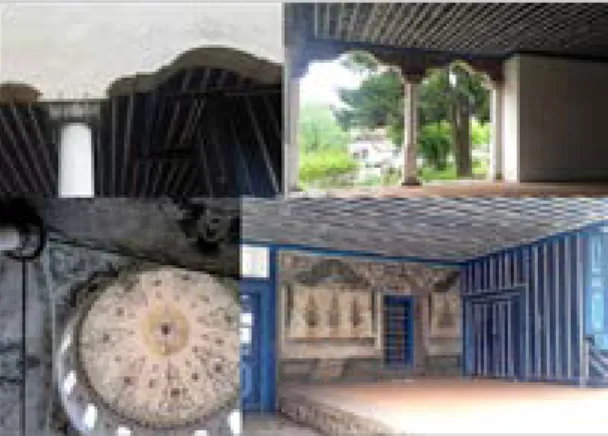
Here the Orient takes the form of links with European Orientalism, as part of the development of the eclecticist (historical) styles of the 19th and early 20th centuries. At the same time, the synagogues in the chosen period and region (although fewer in number compared to churches and mosques) were truly comparable in terms of their typologies and significance in the respective cityscapes. It is also possible to explore the buildings of some regional mixes of religious communities, such as the “Dönmeh” people in Solun and their Yeni Camii (Figure 14).

К ВОПРОСУ
РЕЖИССЕРСКОЙ ИНТЕРПРЕТАЦИИ
ШЕКСПИРА НА СЦЕНЕ ТЕАТРА
This article addresses the issues of director's interpretations of classical works, with particular attention to productions of Shakespeare's tragedies. Discusses the performances created by the directors of the European and Eastern theaters in the second half of the 20th century and the beginning of the 21st century.
ТВОРЧЕСКИЙ ПОРТРЕТ
КОМПОЗИТОРА АЛИБИ
МАМБЕТОВА- ЖУБАНОВА
Так, дипломное произведение «Маленькая пастораль» для камерного оркестра неоднократно исполнялось на пленуме Союза композиторов СССР в Душанбе (1990) и на первом международном фестивале композиторов «Би-би-си – Мастерприз» под патронажем М. XIX век («Аллегро» для скрипки соло и струнного оркестра), французское средневековье («Ночной полет» (Vol de Nuit) по роману Антуана де Сент-Экзюпери), позднее романтическое («Поэма для виолончели с оркестром» ), музыкальный язык японских мастеров («Трио в форме вариаций на японскую тему»), польское народное творчество («Попурри на польские темы» для школьного оркестра), «акустические электронные тембры» [1. Статья посвящена многогранной деятельности нашего земляка, музыканта, исследователя, музыкально-социального деятеля (актера), педагога Алиби Мамбетова-Жубанова.
O koshute”, the work, which is important for the musician himself, on the example of which the analysis of composer's stylistic features in writing is done. The article shows the outreach mission of Alibi Mambetov-Zhubanov in relation to his ancestors – Akhmet Kuanovich Zhubanov, Gaziza Akhmetovna Zhubanova, Azerbaidzhan Madievich Mambetov. Keywords: Alibi Mambetov-Zhubanov, Zhubanov dynasty, lineage, Almaty national conservatory of Kurmangazy, composer, cultural legacy.
РАЗВИТИЕ ПРИНЦИПОВ
ДЕЙСТВЕННОЙ СЦЕНОГРАФИИ»
В КАЗАХСКОМ ТЕАТРЕ В 1960-
Scenography was separated from other plastic arts, turned into an independent art, an influential performer of drama. New directors, artists who offered new solutions for the artistic productions of the show come to the Kazak Theater. Scenography - the sphere of artistic activity, equally important for the fine arts and for the theater.
Represents one of the components, one of the sides of the synthetic art of the theater, where the artist's work is subordinated to the performance, the stage design, at the same time carries the artistic images that affect the viewer with visual means. In the scenography, not only the principles are preserved, but also the specific techniques for.
ХХ ҒАСЫР МЕН ХХІ ҒАСЫР
БАСЫНДАҒЫ ҚАЗАҚСТАН
ГРАФИКАСЫ
THE BOOK GRAPHICS IN FINE ARTS OF KAZAKHSTAN IN XX AND BEGINNING OF XXI CENTURIES Abstract. Fine arts of Kazakhstan developed greatly at the end of XIX and the beginning of XX centuries. Individual and social aspects of this question - it is the national, spiritual development, development of traditional life of the population, which can be traced in history as encyclopedic dictionary of art, unprecedented and significant history of information is taken into account that by the graphic industry, which means beginning of linocut types, lithography and etching according to book graphics, is in public consciousness and shows specific information.
At first glance, the roots of graphics in the fine arts of Kazakhstan begin with the early works of A. Kasteev. Keywords: Kazakhstan, fine arts, graphic arts, folklore, book graphics, piece of art, type of graphics. Department of History and Theory of Fine Arts at the National Academy of Arts of Kazakhstan T.Zhurgenov.
QUESTIONS OF PSYCHO-
READINESS OF ART
UNIVERSITY STUDENTS
At the same time, there is no systematic effort in this direction in the educational space of the art universities. The concept of psychological readiness is considered most holistically in the context of 'psychological readiness for action'. In other words, in the process of facilitation, the group actively participates in solving the tasks that are set, by using and actualizing its internal potential.
Preparation in many aspects consists in the formation of psychological readiness for career building and professional activity in the conditions of market relations. One of the ways of psychological support can be the use of training in the work of the organization as a way to form and develop a psychological readiness for building a career. The facilitating style is most effective in the early stages of building a career because it involves a.
ҚАЗАҚСТАНДАҒЫ ДУАЛДЫ
БІЛІМ БЕРУ
ЖҮЙЕСІНІҢ ӨЗЕКТІЛІГІ
BERKOVA'S TEXT BOOK
KAZAKHSTANI NON-FICTION
OF NATURE AND SOCIETY” IS
PUBLISHED
The author focuses on the development of films on the interaction of nature and man in Kazakhstan: by year, by filmmakers, by themes and by shooting locations. Examining the state of this type of film in today's Kazakhstan, the author comes to a grim conclusion: at this time the genre in the country is. Belyalov, who successfully worked here in the Soviet era (a separate chapter in the manual is devoted to their work).
Another strong point is the fact that Nadezhda NikolaevnaBerkova is not only a film researcher, but also an active advocate of nature (she is one of the co-founders and active members of the Ecological Society "Green Rescue", which has been operating in Almaty for many years years), which means that the author knows very well not only local films about nature and man, but also how this interaction actually happens in the country - at the level of the individual, society, state. The value and importance of this work also lies in the fact that the textbook is equipped with links to special films that are stored in the Central Archive of the Republic of Kazakhstan - a student can watch the film in the archive or the film room of Non-fiction film T Kazakhstan on the interaction of nature and society" in the library of T.

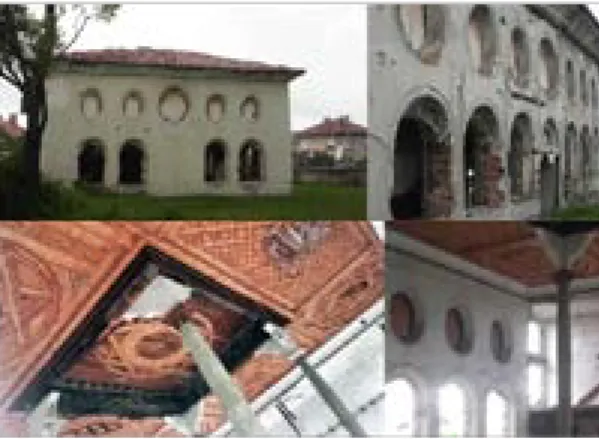

![Figure 6. Case 4. Dobrich synagogue, 2011 [13]](https://thumb-ap.123doks.com/thumbv2/azdokorg/10590932.0/67.807.106.416.488.702/figure-6-case-4-dobrich-synagogue-2011-13.webp)

![Figure 7. Vidin synagogue postcard.[16]](https://thumb-ap.123doks.com/thumbv2/azdokorg/10590932.0/68.807.67.373.322.517/figure-7-vidin-synagogue-postcard-16.webp)