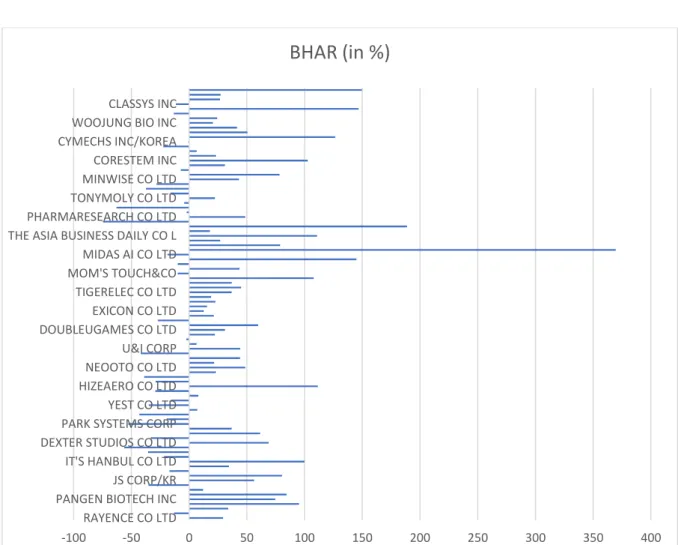
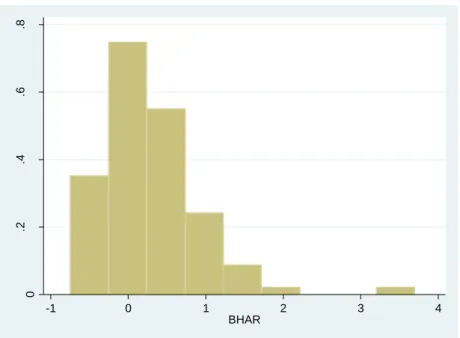
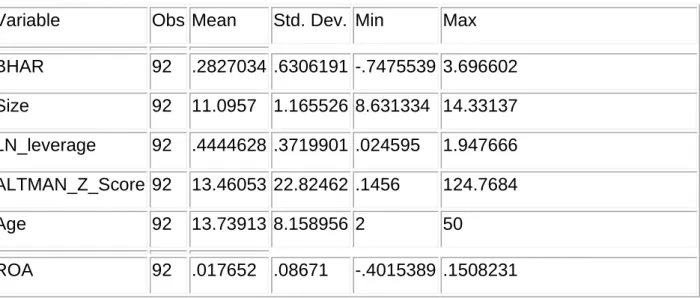
Abstract - In this research, we empirically investigated South Korean initial public offerings (IPOs) to provide an international evidence case on the long-term performance of IPOs. Contrary to previous international evidence, our results show that Korean IPOs outperform experienced firms with similar characteristics. The results show that the three-year value of buy-and-hold abnormal returns (BHAR) is 28.3%.
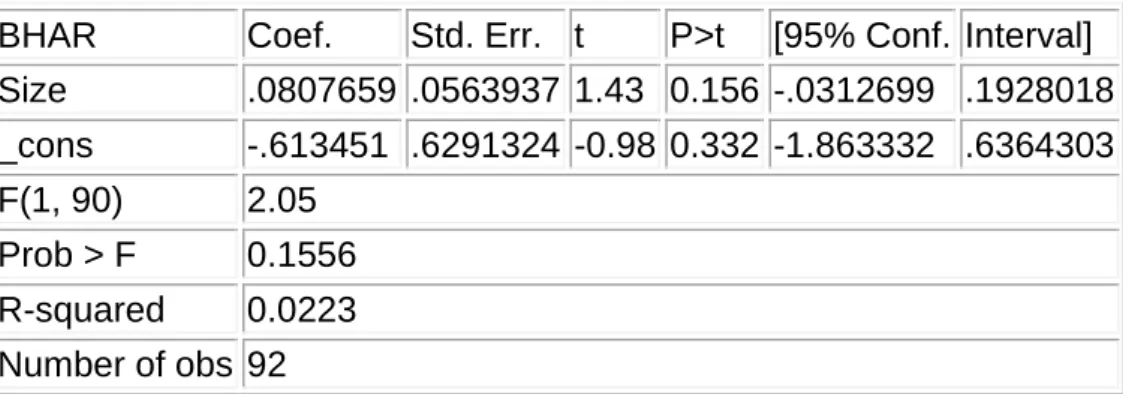
Our results suggest that the opinion divergence hypothesis (as a whole) does not apply to the case of Korean IPOs, however a sub-hypothesis (Size) is accepted. Based on the multivariate regression model, firms with large size and low financial leverage appear to experience greater long-term outperformance on average.
Introduction
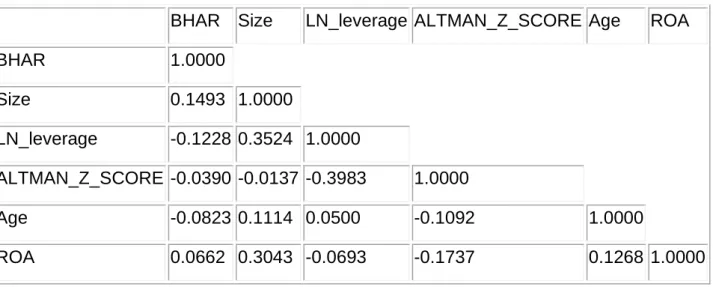
The market is open every day of the week except Saturday, Sunday and holidays.” (PricewaterhouseCoopers Report 2017, p. 1). The purpose of the study is to examine whether the long-term IPO performance evidenced in the US, UK and other developed markets can also be applied to South Korean IPOs. We also used correlation analysis and regression modeling to evaluate the significance of the influence of some key factors on BHAR in South Korea.
The long-term performance of IPOs is a positive function of the age of the issuing company in South Korea. The long-term performance of IPOs is a positive function of the issue size of the company in South Korea. The long-term performance of IPOs depends on the company's financial strength in South Korea.
The long-term performance is negatively related to the financial leverage of the firms in South Korea. The study consists of an introduction, a literature review, research methodology, results of the empirical study, conclusion and references.
Literature Review
For example, there was a rather dated study on the long-term performance of South Korean IPOs by Kim in 1995. For example, Cao and Wen write: “While developed countries report a consistent record of poor performance In the long term, developing countries have mixed results. Jewartowski and Lizińska write: "Our study documents several determinants of short- and long-term IPO returns that are consistent with the opinion divergence hypothesis (Miller 1977). (Jewartowski and Lizińska 2012, p. 60).
In fact, there are three main hypotheses about the long-term underperformance problem that are mainly tested: opinion divergence hypothesis, impresario/overreaction hypothesis, and opportunity hypothesis. For example, Fathi and Simonsson (2018) conducted an analysis of long-term IPO performance for Swedish companies based on BHAR. 2010) conducted a similar analysis for the United States. Although a large number of studies are devoted to developed markets, there are studies that have evaluated long-term IPO performance based on BHAR for emerging markets.
Jamaani and Alidarous (2021) studied the specifics of long-term IPO performance for companies in Saudi Arabia. Singh and Jain (2018) used a modified cumulative market-adjusted return method to analyze the long-term performance of IPOs.
Research Methodology
Miller writes: "Since there are no direct measures of uncertainty about the value at the time of initial presentation, it is necessary to find variables that represent the degree of initial uncertainty" (Miller 2000, p. 9-10). Size, firm age, industry and financial strength are among the surrogates of uncertainty that can shed light on the issue. We will also analyze several other important factors that can have a significant impact on long-term IPO performance.
Kumar and Sahoo (2021) proved that risk exposure is a significant factor affecting long-term IPO performance. On the other hand, higher risk must be offset by higher returns so that financial risk can have a positive impact on the long-term IPO. Financial leverage is used as an independent variable for the analysis of long-term performance.
In particular, Aslam and Ullah (2017) revealed a negative and significant impact of financial leverage on long-term IPO performance. We also assume that financial leverage will have a negative impact on long-term IPO performance. Companies that have more profitable and efficient businesses have, on average, more successful long-term IPO performance, according to an empirical study by Singh and Jain (2018).
The researchers built a regression model and proved that ROA, used as a proxy for business performance, had a statistically significant impact on long-term IPO performance. Mutai (2020) also conducted an empirical study and showed that ROA and ROE are not reliable predictors of long-term IPO performance. Accordingly, there are different approaches to understanding the effect of ROA on long-term IPO performance.
The sample of IPO companies was taken from KOSDAQ stock exchange, due to the search criteria more than 90 percent of companies were listed on this stock exchange. In particular, Z-Altman is quite different for such companies, but these changes are related to the details of the business model of organizations in the financial industry. Longer periods may involve fundamental transformations of the company's business model, so IPO performance analysis becomes less relevant in this case.
Results of the empirical study
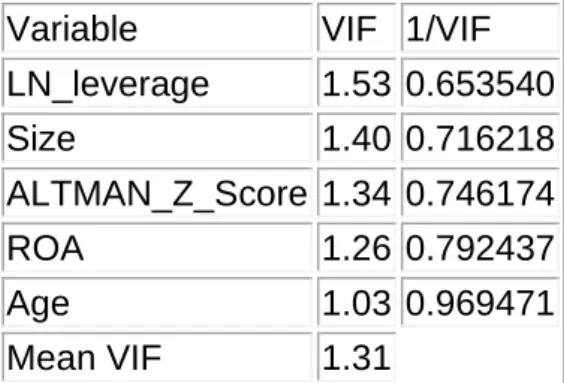
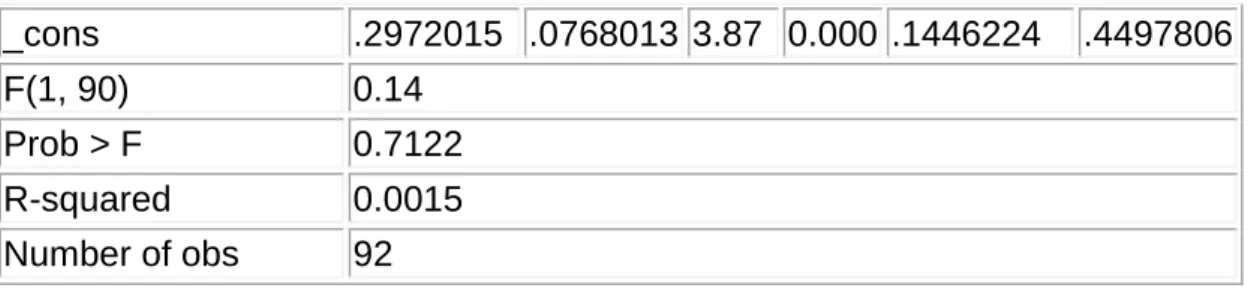
The results of the VIF test for the model with operating variables also show that the risk of multicollinearity is low. Next, we will present the results of the regression analysis. First, we checked each hypothesized factor separately. According to the results of this model, Altman Z-Score has no significant effect on BHAR at the 10% level.
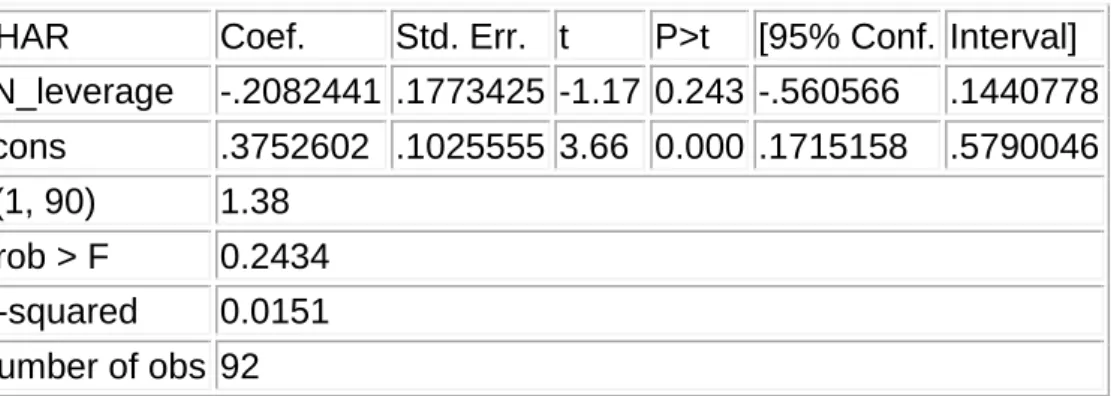
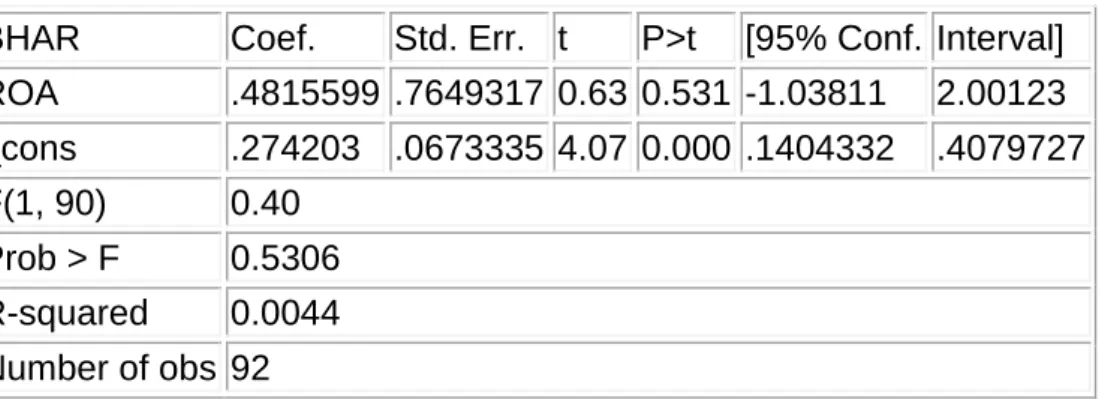
The results of the regression calculation, where Gearing is the independent variable, are shown in Table 9. According to the results of the t-test, this variable is not significant at the 10% level. The results of the regression calculation, where ROA is the independent variable, are shown in Table 11.
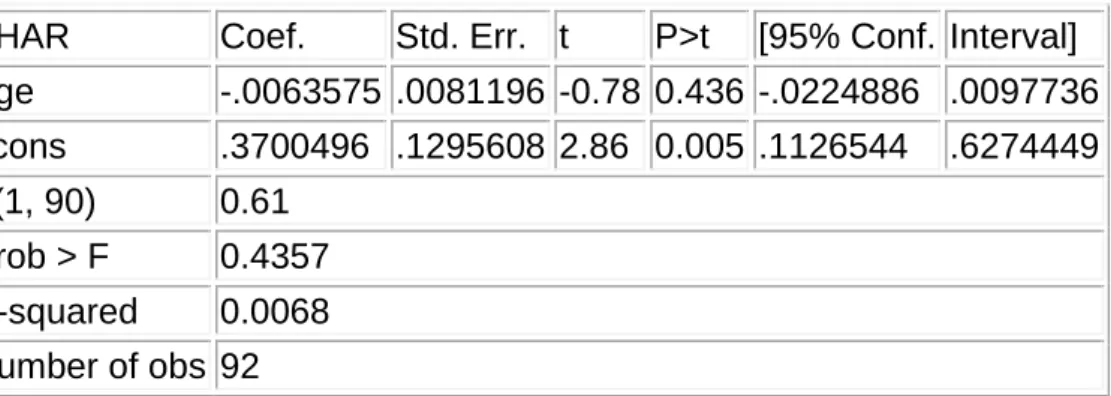
ROA had no significant effect on BHAR at the 10% level, according to the results of this model. The results of the regression calculation, where Age is the independent variable, are shown in Table 13. The model results show that Age did not have a statistically significant effect on BHAR.
The results of the White test for heteroscedasticity show that the null hypothesis of homoscedasticity is confirmed. We also improve the quality of the model by taking into account the simultaneous influence of several factors. This is one of the reasons why company size has a positive effect on long-term performance.
Que and Zhang (2019) reached similar conclusions based on the results of the BHAR model. On the one hand, the high level of financial risk is a consequence of the company's aggressive investment policy. On average, financial leverage has a negative impact on long-term IPO performance, as the results of the regression analysis show.
The financial strength of the company is not the basis for growing the company's value in the long term. Therefore, the growth of the company's capitalization may be based on aggressive expansion, which does not imply high profitability.
Conclusion
Most companies have shown fairly good results in terms of capitalization growth over the long term. We did not include the 2020-2021 periods to avoid distorting the model results due to the strong impact of the coronavirus on the stock market. 2014) “Long-term IPO Performance: The Case of the Mauritius Stock Exchange”, Applied Financial Economics, Vol. 1993) “Aftermarket Performance of Initial Public Offerings in Latin America”, Financial Management, Vol.
The Long-Term Performance of SME IPOs in India: Empirical Evidence from the Indian Stock Market”, Journal of Asia Business Studies. 1997) “Detecting long-term abnormal stock returns: the empirical power and specification of test statistics”, Journal of Financial Economics, Vol. 2010) “A study on the long-term performance of IPOs in India”, Journal of Managerial Finance and Research, Vol. Evidence from Taiwan Stock Market”, Journal of Finance and Accounting, Vol. 1987) “Further Evidence on Investor Overreaction and Stock Market Seasonality,” Journal of Finance, Vol.
-perform IPOs on the Swedish stock market between 2004-2014-Compared to private equity backed IPOs. 2012) “Short-term and long-term performance of Polish IPOs”, Emerging Markets Finance & Trade, Vol. 2017) “Determinants of Long-Term IPO Performance: The Case of Pakistan Stock Exchange”, Economics, Business and Management, Vol. 1995) “Aftermarket Performance of Initial Public Offerings in Korea”, Pacific-Basin Finance Journal, Vol. 2003) “Initial Public Offerings in Multiple Frames: The Impact of Subsequent Equity Issuances on Underpricing and Retained Ownership Signaling” Available at:.
1977) “Risk, Uncertainty, and Divergence of Opinion”, The Journal of Finance, Vol. 2000) “The Long-Term Underperformance of Initial Public Offerings: An Explanation”, Department of Economics and Finance Working Papers 16. PricewaterhouseCoopers Report (2017) “Listing in Korea A Guide to Listing on the Korean Stock Exchange”, Available at: https:/ /www.pwc. com/kr/en/tax/samilpwc_2017k-ipo_en.pdf [Accessed: 25 November 2021]. Pre-IPO Growth, Venture Capital, and Long-Run IPO Performance", Economic Modeling The Long-Run Performance of Initial Public Offerings", The Journal of Finance, Vol. 1998) “Initial Public Offerings”, Contemporary Finance Digest, Vol.