FIRM PERFORMANCE AMONG MALAYSIA AND SINGAPORE SHARIAH PLCs
BY
ELENA TAN CHIEW YEN LEE WHYE PIN
A final year project submitted in partial fulfillment of the requirement for the degree of
BACHELOR OF INTERNATIONAL BUSINESS (HONS) UNIVERSITI TUNKU ABDUL RAHMAN
FACULTY OF ACCOUNTANCY AND MANAGEMENT DEPARTMENT OF INTERNATIONAL BUSINESS
APRIL 2019
ALL RIGHTS RESERVED. No part of this paper may be reproduced, stored in a retrieval system, or transmitted in any form or by any means, graphic, electronic, mechanical, photocopying, recording, scanning, or otherwise, without the prior consent of the authors.
We hereby declare that:
(1) This undergraduate FYP is the end result of our own work and that due acknowledgement has been given in the references to ALL sources of information be they printed, electronic, or personal.
(2) No portion of this FYP has been submitted in support of any application for any other degree or qualification of this or any other university, or other institutes of learning.
(3) Equal contribution has been made by each group member in completing the FYP.
(4) The word count of this research report is 18596.
Name of Student: Student ID: Signature:
1. Elena Tan Chiew Yen 1607397 ____________________
2. Lee Whye Pin 1607293 ____________________
We would like to thank everyone who had contributed to the successful completion of this project. We would like to express my gratitude to my research supervisor, Mr. David Ng Ching Yat for his invaluable advice, guidance and his enormous patience throughout the development of the research.
In addition, we would also like to express my gratitude to our loving parents and friends who had helped and given me encouragement for our project.
Last but not least, we would like to show our appreciation to the previous researchers who have contributed in relevant topics which are helpful in this research.
Copyright @ 2019...ii
DECLARATION... iii
ACKNOWLEDGEMENTS... iv
TABLE OF CONTENTS... v
LIST OF TABLES... ix
LIST OF FIGURES...xi
LIST OF ABBREVIATIONS...xii
PREFACE... xiii
ABTRACT... xiv
CHAPTER 1: RESEARCH OVERVIEW... 1
1.0 Introduction... 1
1.1 Research Background...1
1.1.1 Corporate Governance andShariahCorporate Governance...1
1.1.2 Importance of Board...4
1.2 Problem Statement... 4
1.3 Research Objective...5
1.3.1 General Objective...5
1.3.2 Specific Objectives...6
1.4 Research Questions... 6
1.4.1 General Question...6
1.4.2 Specific Questions...7
1.5 Significance of the Study... 7
1.6 Chapter Layout...8
CHAPTER 2: LITERATURE REVIEW... 10
2.0 Introduction... 10
2.2.1 Corporate Governance in Malaysia...15
2.2.2 Singapore Code of Corporate Governance...16
2.3 Theoretical Model... 19
2.3.1 Agency Theory...19
2.3.2 Stewardship Theory...20
2.3.3 Stakeholder Theory... 22
2.3.4 Resource Dependency Theory (RDT)...23
2.4 Dependent Variables... 24
2.4.1 Return on Assets (ROA)...24
2.4.2 Return on Equity (ROE)...25
2.4.3 Tobin’s Q...26
2.5 Independent variables...26
2.5.1 Number of Independent Directors (NOID)... 26
2.5.2 Independent Chairman (IC)...28
2.5.3 CEO Tenure (CEOT)...30
2.5.4 Board Size (BS)...32
2.5.5 Number of Women on Board (NOW)...34
2.5.6 Foreign Director on Board (FD)...37
2.6 Research Framework...38
CHAPTER 3: METHODOLOGY...39
3.0 Introduction... 39
3.1 Research Design...39
3.2 Data Collection Method... 40
3.2.1 Secondary Data...40
3.3 Sampling Design... 41
3.3.1 Target Population... 41
3.3.2 Sampling Frame... 41
3.3.5 Sampling Size...44
3.4 Research Instrument...44
3.5 Constructs Measurement... 45
3.5.1 Origin of Construct...45
3.5.2 Scale Measurement...46
3.6 Data Processing... 47
3.7 Data Analysis... 47
3.7.1 Descriptive Analysis...47
3.7.2 Inferential Analysis... 48
3.7.2.1 Panel Data Analysis...48
CHAPTER 4: DATA ANALYSIS...51
4.0 Introduction... 51
4.1 Descriptive Analysis- Malaysia and Singapore...51
4.1.1 Statistic for Dependent Variables...51
4.1.2 Statistic for Independent Variables... 53
4.2 Panel Data Analysis...56
4.2.1 ROA in Malaysia...56
4.2.1.1 Random Effect Model of ROA in Malaysia...56
4.2.1.2 Hausman Test for ROA in Malaysia... 57
4.2.2 ROA Singapore... 58
4.2.2.1 Random Effect Model of ROA in Singapore... 58
4.2.2.2 Hausman Test for ROA in Singapore...59
4.2.3 ROE in Malaysia... 60
4.2.3.1 Random Effect Model of ROE in Malaysia... 60
4.2.3.2 Hausman Test for ROE in Malaysia...61
4.2.4 ROE in Singapore...62
4.2.4.1 Random Effect Model of ROE in Singapore...62
4.2.4.2 Hausman Test for ROE in Singapore...63
4.2.5 Tobin’s Q in Malaysia...64
4.2.6 Tobin’s Q in Singapore... 66
4.2.6.1 Random Effect Model of Tobin’s Q in Singapore... 66
4.2.6.2 Hausman Test for Tobin’s Q in Singapore...68
CHAPTER 5: DISCUSSION AND CONCLUSION...69
5.0 Introduction... 69
5.1 Hypothesis Testing...69
5.1.1 Hypothesis Testing Summary of ROA Results...69
5.1.2 Hypothesis Testing Summary of ROE Results... 70
5.1.3 Hypothesis Testing Summary of Tobin’s Q Results...70
5.1.4 Summary of Hausman Specification Test...71
5.1.5 Hypothesis Test Summary...71
5.2 Summary of Test... 77
5.2.1 Descriptive Analysis...77
5.2.1.1 Dependent Variables – Malaysia and Singapore...77
5.2.1.2 Independent Variables – Malaysia and Singapore... 78
5.3 Discussion on Findings... 79
5.4 Limitation of the Research... 81
5.5 Recommendation in Future Research...82
5.6 Conclusion...82
References... 84
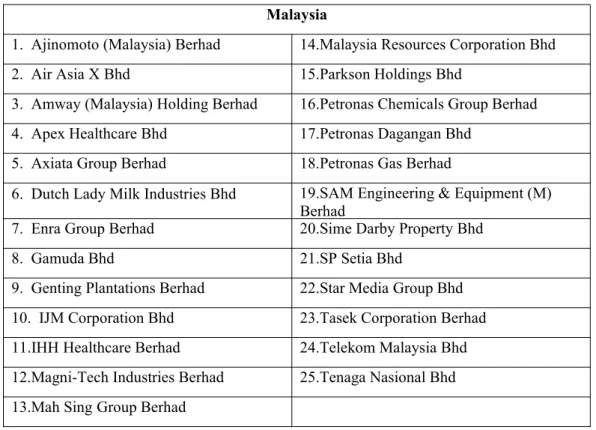
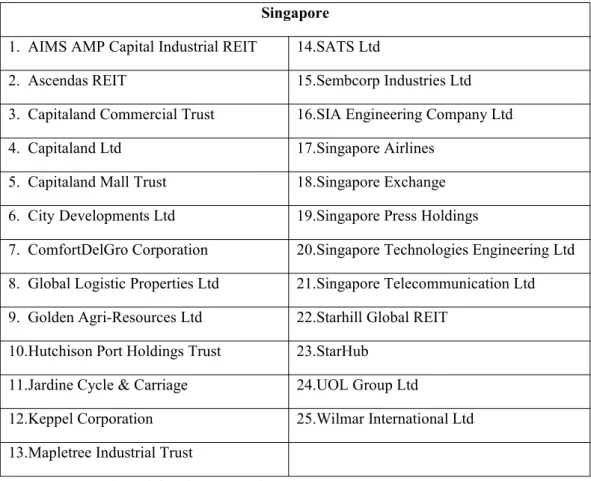
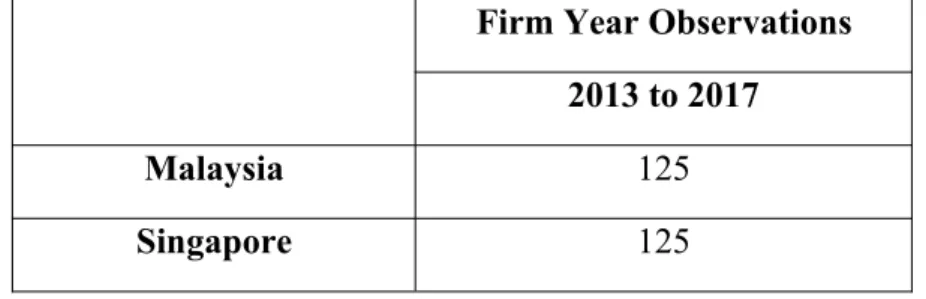
Table 3.3.2.1: List of Top 25 SelectedShariahPLCs in Malaysia 42 Table 3.3.2.2: List of Top 25 SelectedShariahPLCs in Singapore 42 Table 3.3.5: Number of Firm Year Observation in Malaysia and Singapore over
5-Years Period 44
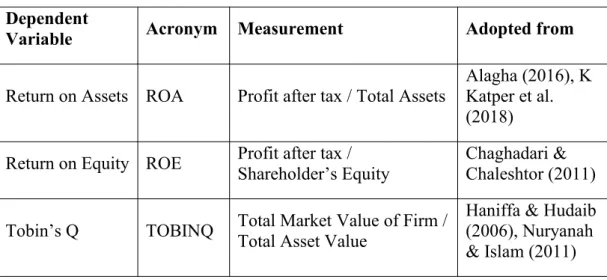
Table 3.5.1: Table of Dependent Variables 45
Table 3.5.2: Table of Independent Variables 46
Table 4.1.1 (a): Descriptive Statistic for ROA, ROE and Tobin’s Q in Malaysia 51 Table 4.1.1 (b): Descriptive Statistic for ROA, ROE and Tobin’s Q in
Singapore 52
Table 4.1.2 (a): Descriptive Statistic for IC and FD in Malaysia 53 Table 4.1.2 (b): Descriptive Statistic for IC and FD in Singapore 54 Table 4.1.2 (c): Descriptive Statistic for NOID, CEOT, BS and NOW in
Malaysia 54
Table 4.1.2 (d): Descriptive Statistic for NOID, CEOT, BS and NOW in
Singapore 55
Table 4.2.1.1: Random Effect Model of ROA in Malaysia 56 Table 4.2.1.2: Hausman Test Results for ROA in Malaysia 57 Table 4.2.2.1: Random Effect Model of ROA in Singapore 58 Table 4.2.2.2: Hausman Test Results for ROA in Singapore 59 Table 4.2.3.1: Random Effect Model of ROE in Malaysia 60 Table 4.2.3.2: Hausman Test Results for ROE in Malaysia 61 Table 4.2.4.1: Random Effect Model of ROE in Singapore 62 Table 4.2.4.2: Hausman Test Results for ROE in Singapore 63 Table 4.2.5.1: Random Effect Model of Tobin’s Q in Malaysia 64 Table 4.2.5.2: Hausman Test Result for Tobin’s Q in Malaysia 65 Table 4.2.6.1: Random Effect Model of Tobin’s Q in Singapore 66 Table 4.2.6.2: Hausman Test Result for Tobin’s Q in Singapore 68 Table 5.1.1: Hypothesis Testing Summary of ROA Results in Malaysia and
Singapore 69
Table 5.1.3: Hypothesis Testing Summary of Tobin’s Q Results in Malaysia and
Singapore 70
Table 5.1.4: Summary of Hausman Specification Test 71
Table 5.1.5: Summary of Hypothesis Testing 71
Figure 2.1: Global Islamic finance assets forecasted for year 2012 to 2023 and
onwards. 13
Figure 2.3.1: Diagram of Agency Theory 19
Figure 2.3.2: Diagram of Stewardship Theory 20
Figure 2.3.3: Diagram of Stakeholder Theory 22
Figure 2.3.4: Diagram of Resource Dependency Theory 23 Figure 2.5: Research Framework of Corporate Governance and Firm
Performance 38
Page
BoD Board of directors
BS Board Size
CEOT CEO Tenure
CG Corporate Governance
CGC Corporate Governance Committee
FD Foreign director
IC Independent Chairman
NOID Number of independent directors
NOW Number of women directors
PLC Public Listed Company
RDT Resource Dependency Theory
ROA Return on Assets
ROE Return on Equity
This research project unit UKMZ3016 Research Project was done by students of Bachelor of International Business (HONS) in order to complete the undergraduate program. The tittle of the thesis is Analysing Board Characteristics with Firm Performance among Malaysia and SingaporeShariahPLCs. It is also a project that assembles the intellectual interest and critical thinking of the students.
This enhances the integration of capabilities and abilities of the undergraduates in the application of theoretical elements.
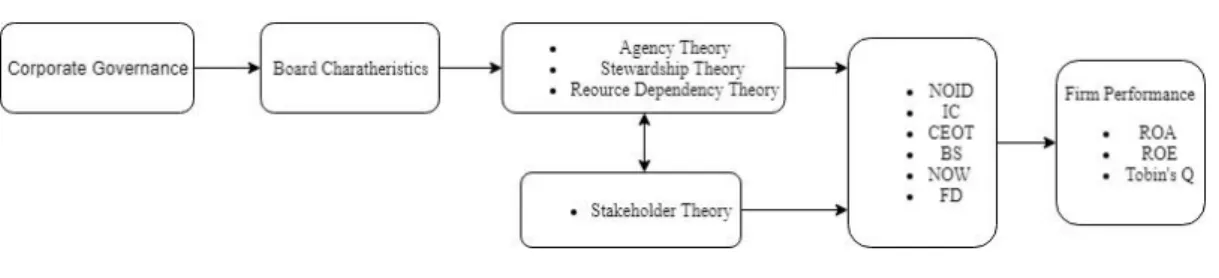
The main purpose of this research project is to investigate the independents variable that affect the firm performance among Shariah PLCs in Malaysia and Singapore. Throughout this project, there are six variables has been identified which are number of independent directors (NOID), independent chairman (IC), CEO tenure (CEOT), board size (BS), number of women directors (NOW) and foreign directors (FD).
The purpose of this research is to determine if corporate governance mechanisms are more significant between Shariah PLCs in Malaysia or Singapore. Corporate governance mechanisms that adopted in this research are number of independent directors, independent chairman, CEO tenure, board size, number of women directors and foreign director. These mechanisms are applied to examine its relationship towards firm performance. The firm performance is measured by return on assets (ROA), return on equity (ROE) and Tobin’s Q. The samples used in this research are 25 Malaysian Shariah PLCs and 25 Singaporean Shariah PLCs in the period of 2013 to 2017. This research applied Panel Data Analysis to examine the overall 5 years results. There are 2 types of panel estimator approaches that can be implemented which are fixed effect and random effect.
This research is also employed Multiple Linear Regression with the aim to examine the year to year relationship between corporate governance mechanisms, Malaysian and SingaporeanShariahPLCs’ performance.
The results shown that independent chairman, CEO tenure and foreign director have no impact towards both countries. However, the other 3 independent variables are statically affecting the Singaporean Shariah PLCs’ performance.
Number of independent directors has a significant and negative impact on ROA and ROE in Singapore and has no impact in Malaysia. Besides, board size only has positive and significant impact on ROA, ROE and Tobin’s Q in Singapore.
While, number of women directors has significantly negatively impact on ROE and Tobin’s Q in Singapore.
CHAPTER 1: RESEARCH OVERVIEW
1.0 Introduction
This study examined the relationship between board characteristics and firm performance of Shariah PLC among Malaysia and Singapore which listed in Bursa Malaysia and Singapore Exchange. Six board characteristics were employed as explanatory variables which were the number of independent directors, independent chairman, CEO tenure, board size, number of women on board and foreign directors on board. This chapter consisted of introduction, research background, problem statement, research objectives, research questions, significance of study and chapter layout.
1.1 Research Background
1.1.1 Corporate Governance and Shariah Corporate Governance
Corporate governance (CG) is the expansive term that described the procedures, customs, policies, laws and systems that guided organizations and companies about the management, the acting ways and controlled over how they operate. It was committed to accomplish the corporate’s goal successful and manage the relationships between stakeholders which involving the board of directors and shareholders (Khan, 2011). CG is also a way for a firm’s
structure involved with the procedures and rules for the decision making of corporate affairs. CG provided a structure through which corporate goals could be set and their performance of these objectives could be monitored and achieved. Hence, CG is a set of rules and regulations designed to protect the values of firm and interests of shareholders (Samaduzzaman, Zaman & Quazi, 2015).
In the past two decades, CG had became a crucial issue with the rise of global privatization and a series of global company failures and scandals. The frequent corporate failures caused by neglecting of CG had brought pressure on global public sector organizations to effectively and successfully implement first-rate CG practices. This issue had been investigated by researchers and practitioners in several industrialized nations and they started to put more concerns on CG (Sinha & Singhal, 2012).
Good Corporate Governance (GCG) not only a circumstance but also a valuable system which had a vital impact in the increasing of company value.
Some people believed that the economic crisis in Southeast Asia and other countries was not mainly caused by macroeconomic factors. Unfortunately, the weakness in CG was the core reason of the economic crisis. Therefore, this phenomenon had forced companies adopted and implemented GCG in order to achieve corporate goals. The companies believed that the implementation of GCG was another form of business ethics and work ethics, which had been a commitment of companies. According to Halimatusadiah, Sofianty & Ermaya (2015), the implementation of GCG was closely related to the companies’ image building. Tarraf (2010) claimed that a good CG required an appropriate incentive from managers to work on behalf of the shareholders whereas an appropriate understanding about the managers’
decisions by shareholders. Hence, it allowed for a balance between managers’
and shareholders’ desires.
Unfortunately, none of the code advocating best practices seems to provide a test to determine when good governance was implemented. Empirical evidence accumulated that even the company deemed to be full compliance with governance rules but a business failure could still happened
unexpectedly. The share price of a listed company was often used as a proxy for good governance. However, this proxy ignored other economic issues, such as the ability of a corporate to be flexible in managing known risks, identifying and managing unknown risks. Moreover, this proxy also ignored non-economic aspects of governance like accountability for investors, stakeholders and the wider community, or concerns about ethics, stakeholders and environmental hazards. The classification of directors as independent may not be relevant to the decisions made. The board conflicts of interest could not be prevented by delegating them to subcommittees. No matter how directors were classified, a unitary board is inherently conflicted. The more the independent directors from their colleagues, business and its industry, the lesser the information and powers of a director could performed their core fiduciary responsibilities of supervision and direct management without depending on the management reports with their inbuilt self-service motivation. There is no reason to worship independence blindly. This also means that current best practices are uncompetitive and unethical (Turnbull, 2011).
However, there was a different between Shariah CG and CG. In order to show that CG isShariahin nature, the whole system of the company must be guided and controlled in accordance with Shariah, where the goals that the company wanted to achieve must be valid according toShariahand even the rights and interests must follow the principles of Shariah. Therefore, the entire activities of the company must conform to the values as agreed and accepted by theShariah. As a result, ShariahCG was not only considered as a mode of business-making, but also a profit-generated consideration. But the most importantly, religious orientation is worth considering and paying attention to (Zain, Zulkarnian & Hassan, 2015).
1.1.2 Importance of Board
Board of directors was regarded as the most crucial corporate governance mechanism, which supervised and advised the top management to fulfill their responsibility to protect shareholders’ interest. Board structure had great influenced on CG practices in both developed and emerging markets.
Previous studies shown that the importance of board structure not only arises from managerial scandals and corporate failure, but also from the impact of board structure on a company’s financial performance (Almadi, 2016).
According to Puni (2014), it was suggested that in order for the board to exercise its strategy and oversight responsibilities effectively, a strictly constituted board committee must be in place to support the board’s ability to carry out those basic responsibilities. Kesner (1988) stated that since most of the board’s decisions were made at the committee level, its effectiveness was enhanced through type and composition of board committees.
Boards were frequently subdivided into smaller committees in order to effectively oversee the execution of management and perform other tasks involving serious agency issues, such as determining executive compensation, engaging with external auditors as well as recruiting and dismissal CEO.
Usually, the board of directors had three fundamental board committees that support the works of board, which included audit, compensation and nominations committee (Puni, 2014).
1.2 Problem Statement
After the outbreak of financial crises in the Asian countries, a great attention was paid to improve the CG practices. Some studies had also been conducted to explain the impact of CG on the Shariah PLCs’ performance (Sadiq Shahid, Rizwan, Hassan & Khalil, 2016). The majority of the past studies focused on the impact of firm performance in Non-ShariahPLCs but not ShariahPLCs (Albaity
& Ahmad, 2011; Abu Bakar & Ali, 2014; Farooq & Alahkam, 2016). However, merely a little attention was drawn to the effect of firm performance towards CG mechanism amongShariahPLCs. There was lack of research on the impact of CG on Shariah PLCs. There were only little studies that focused on how CG affects the performance of ShariahPLCs. Among the studies were Dali Nuradli Ridzwan Shah Bin, Hamdi Hakeim & Hamid Suhaila (2008) and Elsidding Ahmed (2017).
Moreover, there were also certain studies that investigated the impact of CG towardsShariahPLCs within the country. For instances, Elsidding Ahmed (2017), Endraswati (2013), Norman, Haron & Hassan (2016), Al-Matari, Al-Swidi, Fadzil
& Al-Matari (2012), Shittu, Ahmad & Ishak (2016), Sadiq Shahid, Rizwan, Hassan & Khalil (2016). Apart from that, the contradistinctions of CG among two or more countries were also carried out in the previous studies. They were Farooq
& Alahkam (2016), Habib & Ul Islam (2014). Unfortunately, the comparative CG on Shariah PLCs of Malaysia and Singapore was seemed to be less in previous studies. Hence, the motivation to conduct this study was mainly to examine the impact of CG practices onShariahPLCs in Malaysia and Singapore.
1.3 Research Objective 1.3.1 General Objective
The primary objective of this research was to determine if CG mechanisms are more significant between Shariah PLCs in Malaysia or Singapore. The performance of Shariah compliant companies in Malaysia and Singapore were measured by ROA, ROE and Tobin’s Q.
1.3.2 Specific Objectives
The specific objectives derived from general objectives were as follows:
i. To determine the relationship between the number of independent directors and firm performance amongShariahPLCs in Malaysia and Singapore.
ii. To investigate the relationship between independent chairman and firm performance amongShariahPLCs in Malaysia and Singapore.
iii. To examine the relationship between CEO tenure and firm performance amongShariahPLCs in Malaysia and Singapore.
iv. To identify the relationship between board size and firm performance amongShariahPLCs in Malaysia and Singapore.
v. To inquiry the relationship between the proportion of women on board and firm performance.
vi. To examine the relationship between the presented of foreign director on board and firm performance amongShariahPLCs in Malaysia and Singapore.
1.4 Research Questions 1.4.1 General Question
Are CG best practices more significant between Malaysian and Singaporean ShariahPLCs?
1.4.2 Specific Questions
i. Does there any negative impact between the numbers of independent directors with Malaysian or SingaporeanShariahPLCs’ performance?
ii. Does independent chairman positively associated to Malaysian or SingaporeanShariahPLCs’ performance?
iii. Does CEO Tenure have negative relationship with Malaysian or SingaporeanShariahPLCs’ performance?
iv. Does there a positive relationship between board sizes with Malaysian or SingaporeanShariahPLCs’ performance?
v. Does the number of women on board negatively affect with Malaysian or SingaporeanShariahPLCs’ performance?
vi. Has foreign director a significant positive relationship with Malaysian or SingaporeanShariahPLCs’ performance?
1.5 Significance of the Study
The findings of this research will provide a comprehensive and thorough examination of CG practices in countries where the companies’ ownership is concentrated. The outcome from this study thus benefits researchers because it provided empirical evidence towards Malaysia and Singapore Shariah PLCs performance. Most of the previous studies focused on capital structure, financial performance and risk disclosures. However, little emphasis was given to Shariah PLCs in Malaysia and Singapore, most of the studies focused on PLCs and non-ShariahPLCs.
Moreover, this study was also able to provide a contrast about the impact of CG on Shariah PLCs between developing (Malaysia) and developed countries (Singapore). According to the outcome of this research, it showed that a major direct relationship on Malaysia and Singapore CG practices by improving future code of CG. This is due to the outcomes of the research’s findings was able to act as a guideline or reference for Shariah PLCs to develop better CG practices that will effectively improve the firm performance of Malaysia and SingaporeShariah PLCs.
Besides, the results of research’s finding highlighted the lack of CG practices used among Malaysia and Singapore ShariahPLCs as the firm was able to enhance an overall comprehension on the board characteristics with company performance.
Furthermore, the findings of research were able to bring benefits and contribute to all future researches, potential investors, regulators such as government and bank.
This will let these several parties to enjoy the finding results, due to this research was to analyzing the board characteristics with firm performance among Malaysia and Singapore Shariah PLCs. Overall, this research study also emphasized the importance of board characteristics in CG practices to all related stakeholders.
This research’s finding will enhance the board characteristics with firm performance among Malaysia and SingaporeShariahPLCs. The analysis data had been used in the finding was able to provide the evidence and support to others related studies.
1.6 Chapter Layout
This study comprised of five chapters. The first chapter is about the research overview which consisted of the background of the study, problem statement, research question, research objective and lastly the significance of the study.
Chapter two presented a comprehensive literature review where related analyses of journals and theses. Besides, the resource dependency theory, agency theory,
stakeholder theory, stewardship theory were described in this chapter to make a comprehension about the topic. Research framework will also be formulated. This chapter will explain all relationships between the variables. Furthermore, chapter three explained the Research Methods that are involved in this study. Chapter four presented the descriptive analysis and panel data analysis from the conducted research. Last but not least, chapter five summarized the finalized report and the findings and limitation of study as well as suggesting recommendations for future research.
CHAPTER 2: LITERATURE REVIEW
2.0 Introduction
This chapter will be the literature review of the study. The information in this chapter was being through from the secondary sources such as journals, articles, e-books, reports and theses. It consisted of section 2.1 literature ofShariahPLCs;
section 2.2 corporate governance in Malaysia and Singapore; section 2.3 theoretical models; section 2.4 literature reviews of all the dependent variable and the independent variable besides section 2.5 research framework. The objective to conduct literature review was to explain the hypothesis expansion will affect the relationships between the 6 independent variable whereby number of independent director, independent chairman, CEO tenure, board size, number of women on board, foreign director on board and 3 dependent variables which are ROA, ROE and Tobin’s Q.
2.1 Shariah PLCs
The term ‘Shariah’ is commonly known as Islamic Law, in English. ‘Shariah’
which denotes ‘the path to the origins of life’. Technically, the term ‘Shariah’ is referring to Prophet Muhammad who knew the entire Islamic system. It has been mentioned in the Quran and also embodies the traditional lifestyle of the Prophet, which called ‘Sunnah’ (Kasi & Muhammad, 2016).
An increasing number of Shariah PLCs have attracted our attention due to their unique characteristics which distinguishing them from the conventional companies. More and more Muslims which represented nearly 20% of the world’s population with the increasing market demand for investment products complied with Shariah law, which offered stable and lower risk had fascinated more listed
companies to choose for Shariah compliant status via the screening process of exclusion and inclusion exercise (Kasi et al., 2016). Shariahcompliance led firms to follow certain guidelines which included maintaining a restricted level of debt in the capital structure and a certain level of liquid assets in the company’s portfolio (K Katper, Shaikh, Anand & Ali, 2018).ShariahPLCs emphasized their business operation and activities that complied with the principles of Shariah, which is the Islamic law that governs every aspect of each Muslim’s life, observance of Islamic ethics and corporate standards. Islam also emphasized the role of justice, selflessness, and integrity in a principle-agent relation. Therefore, the researcher suggested that the Islamic economic system stresses that markets should work with justice, compassion and solidarity (K Katper et al., 2018).
According to Shariah Advisory Council (SAC) developed standard criteria to review the companies’ activities. The following core activities which the principles ofShariahdo not permit are listed below:
(a) Financial services based onriba(interest) (b) Gaming and gambling;
(c) Sale or manufacture of non-halalproducts or related product
(d) Conventional insurance; since the primary factor of the conventional insurance is gharar(uncertainty) which is forbidden in Islam.
(e) Entertainment activities that are non-permissible as indicated byShariah;
(f) Sale or manufacturer of tobacco-based products or related products;
(g) Share trading or stockbroking inShariahnon-compliant securities; and (h) Other activities deemed non-permissible as indicated byShariah.
As a consequence, companies engaged in the core activities listed above were considered to beShariahnon-compliant (Abu Bakar et al., 2014).
According to Farooq et al. (2016), both of the researchers argued that Shariah PLCs inherent certain financial characteristics that may disadvantageously affect firm performance. For instance, there was a requirement for companies to be
Shariah compliant which is to have low leverage. Grossman & Hart (1982) and Williams (1987) stated that companies with low leverage face higher agency problems. They disputed that low leverage reduced the threats of liquidation and thus increased the agency problem. They pointed out that liquidations were crucial because it could affected managers’ salaries, reputations and benefits at personal cost to them. Hence, whenever encountered with increased threat of liquidation, managers reacted to it by assuring that liquidation does not occur, consequently working in the optative interest of shareholders and enhancing firm performance.
In another relevant study, Jensen (1986) argued that leverage could enhanced firm performance by reducing free cash flow available to managers. Since high leverage resulted in high interest payments, it brought about reduction in cash available for managers to commandeer. According to Margaritis & Psillaki (2010), they stated that less expropriation ultimately led to better performance.
Other than that, low amount of account receivable also the requirement for companies to be Shariah compliant. Previous literature showed that account receivables are an essential mechanism for companies to establish long-term relationship with their customers. Researchers believed that high intensity accounts receivable could indicated that the buyer had received credit guarantees from companies and expected to buy more from these companies. Therefore, companies with high amount of account receivable should performed better than similar companies with low amount of account receivables (Farooq et al, 2016).
Luo and Chen (1997) reported that companies with high account receivables had better performance, in term of sales growth. According to Farooq et al. (2016), they argued that Shariah PLCs were unable to establish and maintain their business networks in the same way as Non-Shariahcompliant companies because of the low amount of account receivables. As a result, their performance should be lower than those companies which do not comply withShariahprinciples.
The other essential features of Shariah PLCs were interest bearing securities and low amount of cash. Previous literature had shown that companies with high amount of cash in hand were able finance large capital expenditure. Hence, these particular firms outperform among their counterparts. In line with Farooq et al.
(2016) of opinions, Mikkelson and Partch (2003) proved that operating
Besides, the researchers also pointed out that high cash holdings were accompanied by endearing investment, especially in R&D and superior growth in assets. Vijayakumaran & Atchyuthan (2017), they found that there was a positive correlation between cash holdings and firm performance on their study by using sample of firms listed in Colombo Stock Exchange (CSE) over the period 2011-2015.
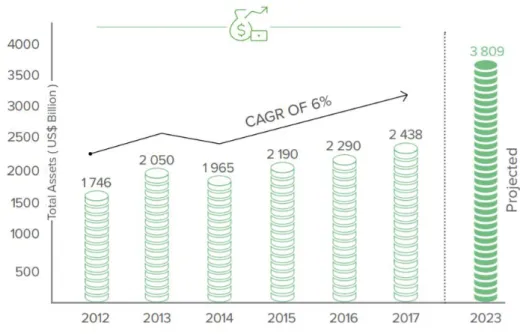
Figure 2.1: Global Islamic finance assets forecasted for year 2012 to 2023 and onwards.
Source: Islamic Finance Department Report 2018
In Singapore, even though the market for Islamic products is small, however, the demand from the country’s minority Muslim population was growing every year (Gerrad & Barton Cunningham, 1997). According to Khan & Bashar (2008), this country was a relatively new market player in the field Islamic finance. They required Shariah compliant products that would met their financial plans and livelihood needs without riba (interest), gharar (uncertainty and lack of transparency), as well asmasyir(gambling). As the market grew, a wide variety of asset classes and products had been introduced. In term of investment portfolios, for instance, Singaporean Muslims were able to invest in the asset classes which
including the global equity fund (Templeton Shariah Global Equity); the Asian equity fund (Templeton ShariahAsian Equity); the globalsukuk fund (Templeton Global Sukuk); the global commodity fund (Deutsche Noor Precious Metals);
Singapore REITS (Sabana REITS); and SGX stocks that were selected by ideal ratings software. In conclusion, with the increasing demand forShariahcompliant products, Islamic finance will maintain its economic hot spot in the coming decades (Hassan, 2017).
Regionally, Malaysia is a leader in Islamic finance (Khan & Bashar, 2008). In Malaysia, Shariah Index launched by the Bursa Malaysia on April 17, 1999. As the securities to be Shariah compliant, they need the approval from Shariah Advisory Council (SAC) of the Securities Commission of Malaysia (SCM) (Kasi
& Muhammad, 2016). Abdullah, Hamid & Kamis (2015) believed that the larger the size of BoD, the greater the risk and the greater the difficult of decision making therefore led to inconsistency in direction due to the divergence of opinions among board members on the study for Malaysian Shariah compliant listed companies with 250 sample companies for the year 2007 to 2010.
Malaysia’s Securities Commission and leading index providers like Shariah Board, DOW Jones Islamic Market Index (DJIM) and FTSE Global Islamic Index Series had created devoted Islamic indices to sieve selected companies and their stocks for Shariah PLCs. However, companies will be removed from the lists when it fails to comply with the financial ratio screens and business activities. As a result, the lists of Islamic equity indexes accessible in the industry are Kuala LumpurShariah Index, Dow Jones Islamic Market Indexes, FTSE Global Islamic Indexes, Global GCC Islamic Index and MSCI Islamic Index Series.
2.2 Corporate Governance
2.2.1 Corporate Governance in Malaysia
In Malaysia, government had established CG codes and mandatory all local public listed company (PLCs) to implement with the rules and regulations according to the Malaysian Code on Corporate Governance (MCCG 2000, 2007, 2012 and 2017) (Bhatt, 2016). After the Asian financial crisis of 1997, most Asian countries including Malaysia were trying to reinforce their CG, transparency and disclosure levels (Ho & Wong, 2001). Therefore, MCCG first issued on March 2000 and incorporated in Bursa Malaysia’s Listing Requirement in January 2001. The objective is to facilitate disclosure by providing investors more accurate information such as assessment of companies’ performance for the investment decisions. Besides, MCCG also serve as a clarify duties and responsibilities guideline to all the member of the BOD (Rahman & Salim, 2010).
After the MCCG 2000 and MCCG 2007 issued, CG enhance the firm ability and leads to increase the performance (Bhatt, 2016). The MCCG has made some changes on October 2007, and revised to MCCG 2007. There was only a small changed from MCCG 2000, such as strengthening the BOD and audit committees to assure they fulfill their roles and responsibilities effectively.
Thus, by increased the frequent of meetings and training was able to enhance the effectiveness of audit committee. However, to enhance the effectiveness of PLCs, executive directors were unable become a member of the audit committee (Rahman & Salim, 2010).
In July 2011, the Securities Commission Malaysia (SCM) had established Corporate Governance Blueprint 2011 to strengthen self and market discipline and attain good CG cultures. Besides, blueprint states that good business is being ethical and sustainable not just about to accomplish the demand financial bottom line by being competitive. Thus, MCCG 2012 was
introduced to emphasis on enhancing the board structure and composition.
BOD has the responsibilities to be effective stewards of the firm, by assuring the firm compliance with laws and ethical value to ensure the risk management and internal control levels (Securities Commission Malaysia, 2012).
In order to adapt the new changes, latest version MCCG 2017 has introduced by adding new approach which is the Comprehend, Apply and Report method (CARE approach). Thus, in MCCG 2017 encourage non-listed companies such as licensed intermediaries, state-owned companies and small and medium enterprises (SMEs) to adopt on the CG rules and regulations to increase the sustainability, transparency and accountability of the firm (Securities Commission Malaysia, 2017). There were some studies revealed that MCCG have a direct relationship with the firm performance (Leng, 2004).
While, there were also some research uncover that there was no direct relation among CG and firm performance (Ponnu, 2008).
2.2.2 Singapore Code of Corporate Governance
After Asian Financial Crisis in 1997-1998, CG practices had been concerned issue by numerous Asian nations. However, Singapore was less badly affected by the AFC than its Southeast Asian neighbors. The drop in economic growth from 7.8 percent in 1997 to 1.5 percent in 1998, the rise in the unemployment rate from 1.7 percent in 1997 to 4.5 percent in 1998, as well as sharp declined in stocks, real estate and currency, all proved that Singapore’s economy still suffered from a severe blow. Due to the crisis, Singapore government has taken a series of actions to fortify its financial sector and improved the competitiveness of its economy (Thompson & Agnes, 2002).
According to Mak & Chng (2000), Singapore has been moving steadily from a merit-based system. The quality of companies to be listed will be judged by the securities regulators to a disclosure-based system. According to the recommendations of the Corporate Finance Committee, the market evaluated companies based on more comprehensive information. The move not just changes the role of regulators. It also calls for major changes to the legitimate and administrative structure, codes of best practice, accounting and auditing standards as well as the role of third-party oversight bodies, for instance, the news media and investors’ associations. In view of this, the Treasury, along with the Attorney General’s Chambers and Monetary Authority of Singapore (MAS, has led a complete review of corporate governance and regulation. As a component of this exercise, the government built up three private-sector-led committees in December 1999, one of which was the Corporate Governance Committee (CGC), so as to study and provide details on practices in CG in order to make essential recommendations.
In 2000, CG developed rapidly in practice and philosophy toward the standards promulgated by the Organization for Economic Cooperation and Development (OECD). The CGC examined international best practices benchmarks to develop CG principles and suggested appropriate changes in CG practice adapt to the local environment. The CGC had completed its review final report was submitted. The Code of Corporate Governance (the
“Code”) was then first issued on 21st March 2001 (Thompson et al., 2002).
Under the Singapore Exchange’s (SGX) listing rules, all of the listed firms were required to disclose of its CG practices and an explanation of any breaches from the Code in their annual reports with effect from January 2003.
The “comply or explain” principle could be found in the Code of Corporate Governance in Singapore (Monetary Authority of Singapore, n.d.). As had been stated, the Code is not obligatory but emphasizes on self-regulation.
According to Koh & Yip (n.d.), they stated that Singapore was considered one of the best CG countries among Asia and the world. It makes nearly 70 best practice recommendations within four areas: Board Affairs, Remuneration Affairs, Accountability and Audit as well as Communication with Shareholder.
The Code had been revised on 14 July 2005 and again on 2 May 2012. The MAS issued that the purpose to revise the Code in May 2012 was to addresss the issues which triggered the 2008 Global Financial Crisis. This financial crisis could be traced to the American sub-prime home mortgages sector, with raising mortgage default or delinquency rates resulting in a rapid devaluation of mortgage-related financial instruments. In particular, Singapore experienced a recession, with a decline in GDP growth rates across two consecutive quarters driven by a global credit crunch as well as an overall decline in global demand. Major changes related to many crucial features of CG. For instance, the composition of BoD of listed firms in Singapore, the role of independent directors was increasingly prominent and holding not more than 10 percent of shares. Independent directors must make up for half the board instead one-third standard if there was a CEO Duality which means the Chairman and the CEO were not separated (Singapore Management University, 2014). Further, according to the Code (2005) stated that the BoDs should be responsible for considering the appropriate board size of the BoDs based on the nature and scope of the firm’s operation in order to conduct an effective decision making process (Monetary Authority of Singapore, n.d.).
The CGC was established to conduct a comprehensive review of the Code on 28 February 2017. MAS accepted all the recommendations that submitted by the committees, and led to the issuance a revised Code (“2018 Code”) and accompanying Practice Guidance on 6 August 2018. The 2018 Code supersedes and replaces the Code that was issued in May 2012. The 2018 Code applies to annual report covering fiscal year beginning from 1stJanuary 2019 (Monetary Authority of Singapore, n.d.).
2.3 Theoretical Model 2.3.1 Agency Theory
Figure 2.3.1: Diagram of Agency Theory
Source: Gray, Owen & Adams (1996)
Agency theory was originating from the contractual theory. This theory described that the separation the relationship of ownership and management between one or more principal (owner) and the agent (CEO and management team), which called agency relationship. It depicted that the principle who supply the capital to the firm hires an agent to administrate the firm which delegate some decision making right to the agent. Thus, agency theory able to leads powerful agency theory (Jensen & Meckling, 1976).
In financial open system, agency relationship could led to two agency problems between shareholder and management, which were the interest conflict and risk tolerance. These two problems bring CG issues, when shareholder and managers have distinct opinions, shareholder will tend to act in their best interest while managers will emphasis in the risk preferences.
Follow by that, waste of time spends, additional expenses cost and supervision cost will increase the agency cost (Homayoun, 2015; Oguz &
Dincer, 2016; Rahman & Salim, 2010).
Agency theory concentrated on extrinsic rewards such as tangible, exchangeable merchandise have a market value that can be measured (Rahman & Salim, 2010). There were some studies shows that ROA and ROE can measure the agency cost (Li & Cui, 2003; Xu, Zhu & Lin, 2005). Thus, Tobin’s Q also one of the method to measure the agency cost (Morck, Shleifer & Vishny, 1988; Agrawal & Knoeber, 1996).
There was some research supported that agency theory has significance relationship to set up efficient management control (Dikolli, 2001; Eldenburg
& Krishnan, 2003). Therefore, a firm choose an appropriate CG between principle and agent could ensure the efficient management control and reduce the agency costs.
2.3.2 Stewardship Theory
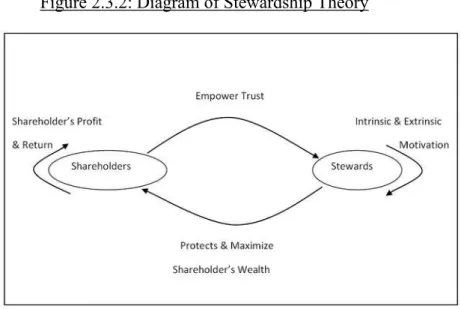
Figure 2.3.2: Diagram of Stewardship Theory
Source: Abdullah & Valentine (2009)
In stewardship theory, shareholder and managers were having the same interest, which opposite with agency theory (Kultys, 2016). Therefore, the
firm should assign required authorities to managers as they are good stewards which represent the organization and motivated to work hard (Rahman &
Salim, 2010). Thus, in the research of Davis, Schoorman & Donaldson (1997) uncovered that a steward ensures the firm performance to maximize the wealth of shareholder as doing so, steward also able to enhance the effectiveness of function.
Stewardship theory concentrated on intrinsic rewards such as growth opportunity, accomplishment, affiliation, and self-actualization (Rahman &
Salim, 2010). Besides, steward was willing to act in the manner of hard working to achieve the best interest which leads to collectivist benefit rather than individual profit (Keay, 2017; Okiro, 2014). In the study of Okiro (2014) reveal that there was no interest conflict between the stewards and shareholders.
Stewards preferred low-power distance culture and involvement-oriented management structure rather than direct control management (Donaldson &
Davis, 1991; Baeten, Balkin & Berghe, 2011). In stewardship theory, the final goal was to determine whether the mechanisms and structure could increase the effectiveness of conformity between the shareholder and stewards (Okiro, 2014). Thus, in Donaldson & Davis (1991) revealed that stewardship theory brings better decision making and CG.
2.3.3 Stakeholder Theory
Figure 2.3.3: Diagram of Stakeholder Theory
Source: Donaldson & Preston (1995)
The stakeholder theory was to describing any individuals or organization who could affect the company success or failure such as shareholders, suppliers, customers, employees, local communities and other public which have related relationship with the company (Heath & Norman, 2004). Thus, stakeholder theory was to determine and examine the affection on organization action to let company be aware of their corporate governance, strategic administration, business ethics, and the effectiveness of mechanism (Donaldson & Preston, 1995).
According to the study of Smallman (2004), stakeholder theory was an extension from agency theory, therefore the responsibility of BoD was enhanced from shareholders to stakeholder’s interest. Besides, company considered a broader group of stakeholders has become the alternative of a narrow focus on shareholder (Freeman, Wicks & Parmar, 2004).
There was some research uncovered that stakeholder theory’s moral viewpoint, by gaining the confidence from stakeholder, organization should ensure that all stakeholder was treated equitable (Okiro, 2014; Donaldson &
Preston, 1995). In stakeholder theory, shareholder unable to maximizing their wealth, this was due to the company would fairly divide and served all stakeholder interest (Donaldson & Preston, 1995).
2.3.4 Resource Dependency Theory (RDT)
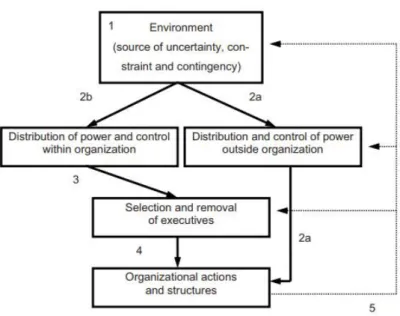
Figure 2.3.4: Diagram of Resource Dependency Theory
Source: Pfeffer & Salancik (2003)
The resource dependency theory (RDT) was an explanation for a company clearly knew that the behavior, structure, stability, and the changes of an organization (Nienhüser, 2008). In the research of Pfeffer (1972) mentioned that the theory mentioned that when an organization utilized all the usage of resources to let the operation run smoothly it will lead to an effective organization.
In the classification of strategic management and organization theory, RDT has become the most impactful and influential theories. This theory possesses an interdependent and not autonomous organization which could led to decrease the uncertainty, resource dependency and let company able to acquire the resources through the method of alliance and merger with competitors (Hillman, Withers & Collins, 2009; Chiambaretto, 2015).
RDT emphasizes on company take advantage on which BoD had the connection to environment to obtain and insure the resource of the organizations. Besides, this theory also proposes that director on board are an institution to administrating the external dependencies, by decreasing the uncertainty of environment and transaction costs (Pfeffer, 1972; Pfeffer &
Salancik, 1978; Hillman, Cannella & Paetzold, 2000).
2.4 Dependent Variables 2.4.1 Return on Assets (ROA)
Return on assets (ROA) is a financial ratio which illustrated the ratio of profits earned from total assets (Saragih, 2018). The calculation of ROA was to dividing a firm’s earning before the depreciation, interest, tax and amortization (PBDITA) from the overall assets at the end of the year (Kiel &
Nicholson, 2003; Yermack, 1996; Al-Matari, Al-Swidi & Fadzil, 2014). ROA was to using accounting-based measurement in short-term to measure the finance performance (Klapper & Love, 2002). The result of ROA discloses management’s effectiveness in utilized company capability to generate net profits from the total available assets (Gitman et al., 2011; Haniffa & Hudaib, 2006). There were many studies found a positive relationship between ROA and board characteristics (Ong, Heng, Ahmad & Muhamad, 2015; Matari, Swidi & Fadzil, 2014; Johl, Kaur & Cooper, 2015). According to the study of
measurement approaches of firm performance. There was empirical evidence support that ROA has significant impact on board size and CEO tenure (Ng, Teh, Ong & Soh, 2016). However, Matari et al. (2014) uncovered that ROA has no direct impact on the board size and CEO tenure.
2.4.2 Return on Equity (ROE)
Return on equity (ROE) often called by Return on Common Equity, and said to be the ultimate ratio or the “mother of all ratios” which could be obtained from a firm’s financial statement (Rosikah, Prananingrum, Muthalib, Azis &
Rohansyah, 2018; Gazzola & Amelio, 2014). It was a financial ratio which illustrated the percentage of profit that could generated on the equity capital investors had allocated in the firm. Therefore, every company emphasis on ROE by measuring firm’s earnings performance, to ensure the effectiveness level of company management in generating profit (Kamar, 2017). The calculation of ROE is by profit after taxation or total equity shares in issue.
ROE is using the accounting-based measurements approach to measure the financial capability. This type of measurement was used on the short-term in the past few years (Al-Matari et al., 2014). There was study found that ROE was positive but no statistically significant association between the firm value (Rosikah et al., 2018). According to Topal & Dogan (2014), ROE does not have any impact on board size. Thus, in the study of ISIK & INCE (2016) revealed that ROE has a positive relationship between the independent CEO while has a negative effective but significant on the board size.
2.4.3 Tobin’s Q
Tobin’s Q is a financial ratio of a firm’s market value which to reposition cost of the assets (Lindenberg & Ross, 1981). The calculation of Tobin’s Q is the overall assets of the company divided the percentage of the market capitalization and total debt. Tobin’s Q is using market-based measurements to measure the financial performance (Al-Matari et al., 2014; Rostami, 2015).
The measurement of Tobin’s Q used the traditional way by expected measure long-run company performance (Bozec, Dia & Bozec, 2009). The effectiveness of Tobin’s Q indicated that the firm has better performance, asset management, investment and growth potentials (Nuryanah & Islam, 2011; Barontini & Caprio, 2006). According to Topal & Dogan (2014), Tobin’s Q has a positive relationship between board sizes. However, some studies showed that Tobin’s Q had negative relationship between board sizes (Lipton & Lorsch, 1992; Jensen, 1993). Thus, the study uncovered that Tobin’s Q has negative relationship with CEO duality (Topal & Dogan, 2014).
2.5 Independent variables
2.5.1 Number of Independent Directors (NOID)
An independent director was referred as a director which does no has direct relationship and conflict with any commerce or monetary relation with the firm, and also no direct personal and business relationship with the BoD which could interfered the judgement decision or interest of the firm.
Independent director was a compulsory for a firm to ensure an equitable decision making can be made. Thus, independent directors could avoid conflicts of interest and able to use unbiased third party vision to cope the
disagreement (Rahman & Salim, 2010; Securities Commission Malaysia, 2007).
In the composition of board of directors, a listed issuer was recommended to have at least 2 or one-third of independent directors on the board (Rahman &
Salim, 2010; Securities Commission Malaysia, 2017). However, if the Chairman and Chief Executive Officer (CEO) in the firm is the same member means CEO Duality, the independent directors should increase and make up half of the board to ensure the effectiveness of the management (SID, 2012).
In addition, in the Singapore revision of code 2005 stated that the increasing NOID can enhance the effectiveness of judgment decision.
Some of the studies revealed that there was a positive relationship among the NOID with the practice of CG (Kang, Cheng & Gray, 2007; Gómez, Cortés &
Betancourt, 2017; Pombo & Gutiérrez, 2011). This was due to independent director was able to make fair decision making to the governance responsibilities (Moreno-Gomez, Gomez-Betancourt & Ramirez, 2016).
Besides, it was also an argument that shown a negative coefficient among NOID and firm performance which stated that if independent directors does not execution their responsibility, the existence of independent director will affect the firm to enhance the performance capability (Fuzi, Halim &
Julizaerma, 2015; Chugh et al., 2011). In the study of Bhatt (2016) stated that in the CG, independent director of the firm had a negative relation regarded to ROA and Tobin’s Q.
The research of Gómez et al. (2017) shown that there was a negative relation with the participation of independent director and firm performance based on the measurement of ROA and ROE. However, in some research revealed that there was a positive relationship among corporate governance and firm performance, the higher ROA and Tobin’s Q leads to better corporate governance (Klapper & Love, 2002). In some research uncovered that the existence of the independent directors will enhance the investors trustfulness and company performance, which point out there was a significant positive relationship (Rahman, Ibrahim, & Ahmad, 2015; Fauziah, Yusoff, & Alhaji, 2012).
Besides, one of the study shown that there was an insignificant impact, which indicated the superior of independent director, leads to lower firm performance, (Latif, Shahid, Haq, Waqas & Arshad, 2013) In the research of Rosikah et al. (2018) found that NOID had a positive but insignificant effect with the firm value as measured by ROE. Moreover, there were few findings uncovered that increased the NOID will lead to a negative effect on firm performance (Farhan, Obaid & Azlan, 2017; Wang & Zhou, 2013).
Based on the past studies, it was postulated in the following hypothesis:
H11A: Number of independent directors has a significantly negative relationship with firm performance (ROA).
H11B: Number of independent directors has a significantly negative relationship with firm performance (ROE).
H11C: Number of independent directors has a significantly negative relationship with firm performance (Tobin’s Q).
2.5.2 Independent Chairman (IC)
Independent chairman (IC) is the person who can exercised the required independence of judgment in assessing management (Rahman & Salim, 2010).
The IC has the responsible to set the agenda and make certain effectual flow of communication on the board, such as enforcing the standards of the group, ensured if a quorum is presented (Kakabadse & Kakabadse, 2007; Robert et al., 2011). Besides, the role of chairman been known as having a different influence on board dynamics, contribution, supervision and support the administration. The chairman also had a role to ensure all the board members obtained accurate and timely information (Kakabadse & Kakabadse, 2007).
Chairman had the responsible to evaluate the performance and comprehend the capability effectiveness of independent director, this was due to when the wrong judgment let the situation get worse chairman was the person who need to remedy the circumstances (Rahman & Salim, 2010). In Krause (2016) revealed that, IC could served as a strong supervise and collaboration such as control the rewarding when the performance was weak while collaborate when the performance is strong to balance the capability. Thus, there was a study found that the presence of IC will decrease the agency problem (Balsam, Puthenpurackal, & Upadhyay, 2011). However, in the study of Krause, Semadeni & Cannella (2014) uncovered that IC could created agency problem.
There was one of the researches uncovered that there had a significant relation among the board composition and the independence of the board chairman (Coles & Hesterly, 2000). However, in some studies found that in general and crisis period there was no statistically significant role of IC with the firm performance (Arslan, Karan & Ek¸si, n.d; Krause et al., 2014). In the research of Hussin and Othman (2012) revealed that IC have a direct relation with the firm performance by reducing the agency problem. However, there was a finding shown that IC have negative impact on the firm performance which will reduce the effectiveness and increase the cost and information flow (Payal and Kang, 2016; Krause et al., 2014). In the research shown that by using the Tobin’s Q measurement, IC had negative relationship with the firm performance (Arslan, Karan & Ek¸si, n.d.). Besides, there were few findings uncovered that IC has a positive effect on firm performance (Ibrahim, Ahmad and Khan, 2017; Balsam, Puthenpurackal and Upadhyay, 2011).
Based on the past studies, it was postulated in the following hypothesis:
H12A:Independent chairman has a significantly positive relationship with firm performance (ROA).
H12B:Independent chairman has a significantly positive relationship with firm performance (ROE).
H12C:Independent chairman has a significantly positive relationship with firm performance (Tobin’s Q)
2.5.3 CEO Tenure (CEOT)
In most of the studies, CEO tenure (CEOT) is defined as the number of year CEOs hold their position. CEOT is a very important construct for research relating to organizational and executive leadership. In addition, CEOT was always associated with the quality of leadership and power (Herly &
Sisnuhadi, 2011; Simsek, 2007). A CEOT in their position was usually limited because certain succession plans were carried out frequently. This was done to avoid of over-extended contracts which led to increase in the cost of management dismissal when performance was poor (Al-Matari, Al-Swidi, Fadzil & Al-Matari, 2012). Over the past decades, researchers found interesting for the relationship between CEOT and firm performance.
Researchers analyzed mechanisms that might govern the relationship between CEOT and firm performance by focusing one tenure’s more proximal outcomes such as company invention and R&D spending. On the one hand, Barnard (1938) argued that leadership especially the most senior position in a firm had an important impact on firm performance and survival at all levels.
For instance, Barnard (1938) believed that top leaders had set a collective goal that ties all the participants in the organization together.
Resource dependence theory holds that the longer time that a member served in his or her job position, the more experience and knowledge his or her will gain. Likewise, CEOs with long tenure tend to contribute higher level of information concerning governance practices as the performance of firm increase. There were few studies found that there was a positive correlation between CEOT and firm performance as measured by ROA in developed countries, for instance Koufopoulos, Zoumbos, Argyropoulou & Motwani
(2011) and Kyereboah-Colema (2007). Consistent with the agency theory, CEOs with long tenure disclose less about corporate governance practices because they felt empowered and less supervised by the board of committees (Shen, 2003). However, new CEOs had a diametrically opposed view. They tend to reveal more information to avoid developing the perception that the CEOs are satisfying their own personal interests.
In terms of agency theory, its advocates believed that the relationship between CEOT and firm performance should be negative. The previous studies found that there was a negative relationship between CEOT and firm performance as measured by ROA, for instance, Evan, Nagarajan & Schloetzer (2010) and Al-Matari et al. (2012). Moreover, Herly et al. (2011) shown there was a negative relationship between CEOT and firm performance as measured by Tobin’s Q.
Gacheru (2011) found that CEOT had a negative but insignificant effect with firm performance as measured by ROA based on his study for firms listed on the Nairobi Stock Exchange. The researcher stated that it does not matter whether a CEO stays for long in a firm or was replaced more frequently.
Another study examined by Kyereboah-Colema (2007) supported the result from Kusumasari (2018) and Gacheru (2011), as the researcher found that there was not relationship between CEOT and firm performance as measured by Tobin’s Q on his study for 103 firms listed drawn from Ghana, South Africa and Kenya from the five years’ period 1997-2001. Beside, a strong empirical study supported by Limbach, Schmid & Scholz (2015) found there was a non-linear relation between CEOT and firm performance, and they suggested that the optimal CEOT (the”sweet spot) was about 12 years based on their study for the average 1500 firms. Furthermore, they found that the optimal CEOT depends on a firm’s economic environments that determine the cost-benefit relationship. For companies operating in dynamic, rapidly changing environments, their peak performance was reached much earlier compared to the average companies and, conversely, companies in more mature and stable environments reached their peak performance much later.
Based on the past studies, it was postulated in the following hypothesis:
H13A: CEO tenure has a significantly positive relationship with firm performance (ROA).
H13B: CEO tenure has a significantly positive relationship with firm performance (ROE).
H13C: CEO tenure has a significantly positive relationship with firm performance (Tobin’s Q).
2.5.4 Board Size (BS)
Board size (BS) is referring to the number of directors on the board. Board size would also affect the efficiency of the board. The number of board directors varies from country to country, or firm to firm due to there was a differences between culture, rules and regulation as well as ownership structure. The optimal size of the board should be consisting of both the executive and non-executive directors (Zabri, Ahmad & Khaw, 2015).
Agency theory holds that the more directors there are, the stronger the control over the management will be, thus contributing to a better performance. From the perspective of resource theory, the more directors of a firm, the stronger ability for companies to benefit from their expertise by building a long-term relationship with strategic environment. Kiel & Nicholson (2003), Li, Armstrong & Clarke (2014) and Nowroz (2015) found a significant positive relationship between firm performance and board size. For the optimal BS, Jensen (1993) suggested that its size needs to be at least seven or eight persons for a board of directors (BoD) to perform effectively.
In the relevant literature, although numerous studies had examined the relationship between BS and firm performance, those results were not conclusive. In examining this relationship in the Bangladesh listed firms, Rashid, De Zoysa, Lodh & Rudkin (2010) found a significant negative
relationship between ROA, however it shown a positive relationship between Tobin’s Q. Similarly, Nazar & Rahim found a significant negative relationship between BS associated with ROA and insignificant negative linked with ROE in Sri Lankan listed companies. The same conclusion was drawn by Zabri, Ahmad & Khaw (2015) based on a study of Malaysia PLCs.
The results shown that board size had significantly weak negative correlation with ROA and it was found to be no significant to ROE. In Malaysia and Singapore, a study conducted by Mak and Yuanto (2003) stated that the highest performance of a company when their boards made up of five members.
In theShariah Supervisory Board (SSB) context, it preferred to have a SSBs with small size due to it was easy for the management and BoD to control and affect it while the SSBs with large size was difficult for them to control it. At the same time, SSBs with large size contain scholars with various experiences and skills as well as school of fiqh will leads to better interpretation of products and operations and thus better performance (Hamza, 2016).
Based on the past studies, it was postulated in the following hypothesis:
H14A: Board size has a significantly positive relationship with firm performance (ROA).
H14B: Board size has a significantly positive relationship with firm performance (ROE).
H14C: Board size has a significantly positive relationship with firm performance (Tobin’s Q).
2.5.5 Number of Women on Board (NOW)
The definition of board gender diversity referred to the existence of female as the board of directors (NOW), which is a crucial aspect of board diversity (Dutta & Bose, 2016). Gender diversity of board is an emerging field of CG research recently, but most of the empirical studies on this subject were restricted to developed countries, for instance Andersson & Wallgren (2018) found that the presence of one or more female on board had a positive effect on firm performance as measured by Tobin’s Q with a sample of 100 Swedish companies listed on Nasdaq Stockholm on time period 2013-2016.
Nonetheless, the study found on Pasaribu (2017) shown that female directors were unlikely to have a significant impact on firm performance in the UK.
Whereas, there was a positive impact of women directors on small firms, which was greater influenced as compared to UK listed firms. This may be caused by two major reasons. Firstly, large firms which were associated with strong governance suffered from over-monitoring issues when female directors were appointed (Adams & Ferreira, 2009; Jurkus, Park & Woodard, 2011). Secondly, large firms were suffering greater external intervention than small firms in terms of the composition of their boards of directors. The impact on NOW on firm performance was not consistent in past empirical studies, which may be due to endogenous problems or some characteristics such as governance, industry and competition (Pasaribu, 2017).
Gender inequality on the BoD had been a systemic issue in the corporate world. Hence, government had imposed quota to increase the presence of women on the boards especially in the developed countries. They believed that increasing diversity of the boards will create more talents, in terms of their expertise, experience, and connections, which will lead to better governance and firm performance. This indicated that there is a positive correlation between women directors and firm performance. It could be supported by the study of Bart & McQueen (2013) which had found that representation of women at board as director improved firm performance.
In Malaysia, Julizaerma & Sori (2012) carried a study and reported that there was a positive relationship existed between gender diversity and firm performance as measured by ROA. The same conclusion drawn by Fan (2012) found the evidence to support a positive effect on gender diversity associated with firm performance as measured by Tobin’s Q, this study was using 390 observations from various sectors listed on the SGX on time period 2002-2004. Multiple regression simultaneous equations were used to control the possible endogenous issues in this study.
MCCG which revised in 2012 had made a special reference to the importance of diversity and the issue of gender diversity. The revised 2012 Code claimed for board to develop a formal policy on board diversity in order to ensure there are enough female candidates in the recruitment process. In addition, the Code claimed for the board of listed firms to disclose in their annual reports with regarded to gender diversity policies and the measures taken to achieve these goals (Securities Commission, 2012). Malaysians’ attitudes towards gender were largely determined by Confucianism (the religion of the majority of the Chinese) and Islam (the religion of the Malays). Confucianism and Islam imposed a thick ‘glass ceiling’ and established an impenetrable barrier for women’s progression into senior level of position in an organization (Tracey, 2012; Tunimez, 2012).
According to Abdullah (2013), the researcher carried out some interesting findings such as the appointment of female as the board of directors was related to the size of the board. As a result, women were less likely to be appointed to the small boards and vice versa. Moreover, women were appointed as a director mainly due to their relationships with the firm’s major shareholders, which mean they were bound to be nominated to the board of government owned firms or in the family owned firms. In addition, women were more likely to be nominated as executive or non-executive directors (as nominees to control shareholders of the firm), but not as independent directors. Therefore, the concept of “know-who” or “guanxi” or simply
“relationship” plays a crucial role in female getting on the board in Malaysian firms. In general, the impact of connection appears to be the main determinant