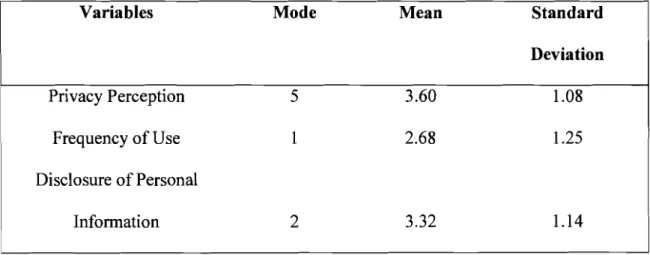
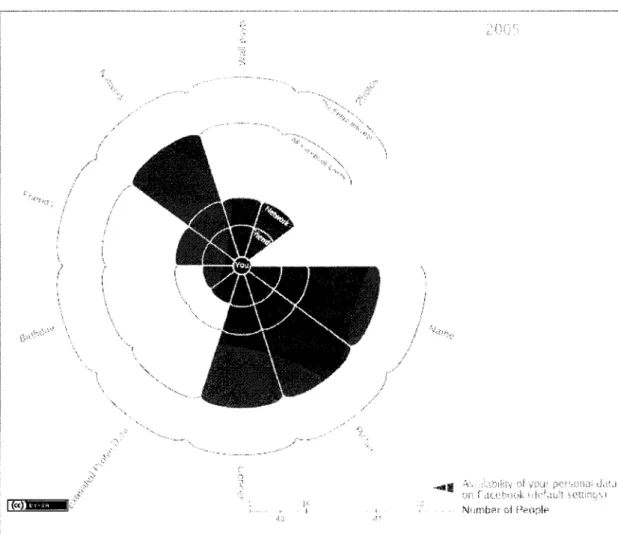
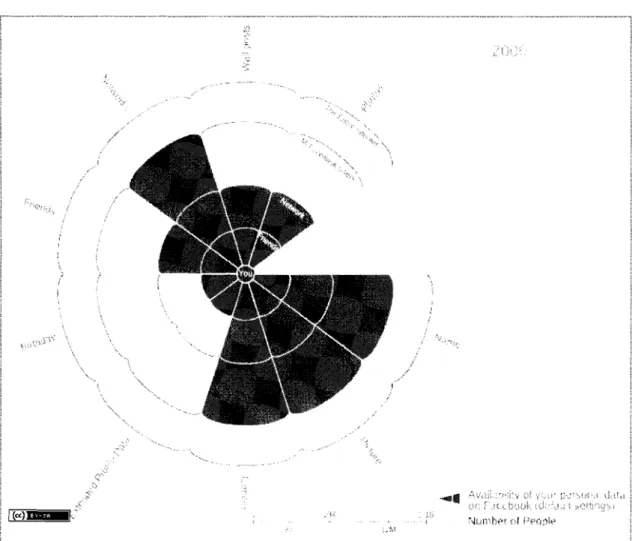
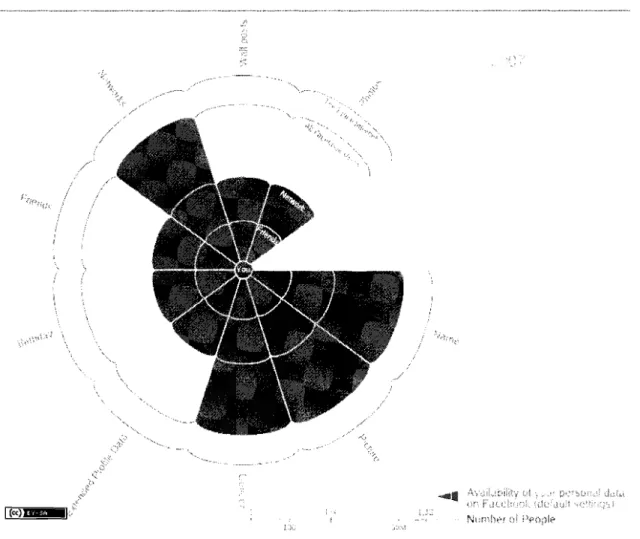
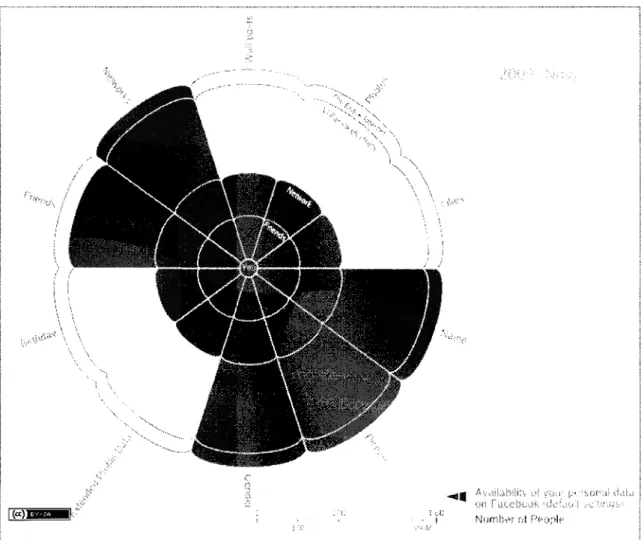
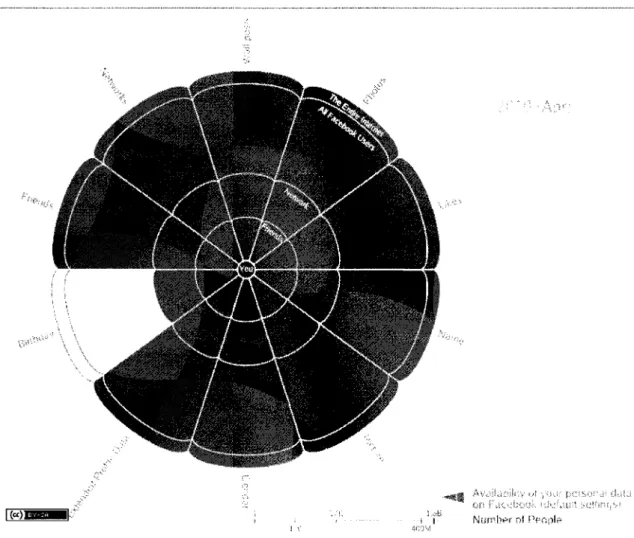
As Nosko, Wood and Molema (2010) mentioned, one of the primary goals of the SNS is to encourage the disclosure of personal information with others online. Facebook members or users including students and adolescents provide personal information on their profiles that can be viewed by a large number of people. According to McKeon (2010), the default privacy settings for a Facebook user's personal information have become increasingly permissive.
Users should change the default settings to keep their personal information private. In Western society, it is social custom that one does not ask others for personal information as a sign of respect (Nosko et al., 2010).. different for the people in Asian countries including Malaysia. Any Internet users can also access their personal information if they have not alerted the privacy settings, which can lead them to become the victim of identity theft.
This study aims to investigate Facebook users' perception of privacy, frequency of use and disclosure of their personal information to other users. The study will also help educate Facebook users about the sensitivity of disclosing their personal information online and its possible frightening consequences in the future.
Scope of the Study
Proposed Theoretical Framework
Hypotheses
Methodology
Research Design .1 Sampling
Instrumentation
The study was conducted using primary data collection through a web-based questionnaire created using Google Documents (or Google Docs). The questionnaire was created as a web page and is hosted on a host site, namely Google Docs. The questionnaire had twenty items, which consisted of four items on demographic factors, ten items on perception of privacy, three on frequency of use, and finally, three items on disclosure of personal information.
Respondents were asked to indicate their level of agreement by choosing a value that matched what they thought or felt when answering the questions. Respondents were asked to choose one answer from the answers to one item and fill in the answers in the blanks for two other items. The final section consisted of three items on the dependent variable, disclosure of personal information.
Respondents had to mark all the answers that apply to them for the final item, as well as fill in the answers in the blank.
Data Collection Procedures
Data Analysis
Findings
Demographic Factors
Graph and table 3.3 (appendices, page 45) show that respondents with a bachelor's degree made up the highest percentage in terms of education level (5-1). The other groups for education level were diploma (13%), pre-university education (3%) and middle or high school (5%).
Descriptive Analysis
Findings
Chi-square
Probably the most flexible and certainly the most widely used statistical test of significance is the chi-square test. The chi-square test works with nominal data as well as with ordinal, internal, and ratio data, which explains its popularity. Chi-square allows researchers to compare an observed set of data with an expected set of values to see how well the observed data matches the expected.
The difference between 'observed' and 'expected' is key to the chi-square test. The chi-square test uses the magnitude of the difference (in the cells of the contingency table) between what was observed and what might be expected to calculate whether researchers can be confident that the observed relationship is actually due to something other than pure chance . - whether it was real or coincidental (Denscombe, 2003). A significant chi-square tells researchers that the observed distribution is significantly different from the expected distribution (Allen et al., 2009).
Correlation Coefficient
Additionally, a p-value significance of less than 0.05 (or < 0.05) is the conventional level generally accepted in social science research. This indicates that 95 times out of 100, the researcher can be sure that there is a true or significant correlation between two variables, and there is only a 5% chance that the relationship does not actually exist (Sekaran, 2003). Researchers generally consider any correlation coefficient between 0.3 and 0.7 (plus or minus) to demonstrate a reasonable relationship between two variables.
The results showed that there were significant relationships (p < 0.05) for nine items, with the exception of question 6 (or 46). Of the 30 items shown in Tables 3.5, 3.6, and 3.7 (Appendices, Pages), the items showed significant positive relationships between the first independent variable, privacy perception, and the dependent variable, personal information disclosure. It could be concluded that generally higher levels of privacy perception resulted in more disclosure of personal information.
In other words, higher levels of privacy perception did not result in less disclosure of personal information. Out of 9 items illustrated in Tables 3.8, 3.9 and 3.10 (Appendix, page 50-5 I), only 2 items recorded significant relationships between the second independent variable, frequency of use, and the dependent variable, disclosure of personal information.
Summary of Findings
Discussion and Conclusions
A small percentage of 6% strongly agreed that Facebook has done enough to secure their personal information. As many as 5 1% were not sure whether Facebook has done enough to secure their personal information (chart and table 4.6, page 58). On the contrary, 58% believed that they have done enough to secure their personal information on Facebook.
However, only 26% of respondents admitted to having read Facebook's Privacy Policy in full (graph and table 4.4, page 56) and 22% claimed to have read Facebook's terms of service in full (graph and table 4.5, page 57). . 19 of the 30 items displayed in Tables 3.5, 3.6 and 3.7 (pages 4 7 4 9 ) revealed significant positive relationships between the first independent variable, privacy perception, and the dependent variable, disclosure of personal information. It can be concluded that higher levels of privacy perception generally did not lead to less disclosure of personal information.
Research Question 2: Does Facebook users' usage frequency influence the disclosure of personal information? The scientists reported that the majority of respondents who were active users tended to be more open or disclose personal information the most.
Limitations of the Study
Recommendations for Future Research
Previous studies have highlighted the need for more research on SNS and privacy, as research in this area is still scarce (Lewis et al., 2008; Debatin et al., 2009). There is also a need for more studies in this area in Asia, as many previous studies have been conducted in the Western world. The researcher would also like to propose more large-scale studies on Facebook and privacy, such as Digital Life, the largest global research project on online activities and behavior of people around the world.
A larger-scale research would allow access to a more accurate and complete picture of the selected field. For example, if hundreds of millions of Facebook users requested that Facebook make privacy the default setting on the site, Facebook Inc. was likely more willing to listen. Future researchers may wish to extend studies on SNS and privacy by adding new variables not mentioned in previous studies.
Future researchers may want to consider using other theories that were not used in previous studies to support their findings. The researchers would like to suggest future researchers to use other instruments such as interviews or data mining and interviews for in-depth information. Direct contact at the interview site means that data can be checked for accuracy and relevance as the researchers collect the data. e) Sample.
Many of the previous studies chose tertiary education (college and university) students as their sample. Therefore, researchers would like to recommend more heterogeneous or diverse samples so that better generalizability to larger populations can be made.
Conclusions
Users should be careful about the information they provide on Facebook and limit access to their profiles. As information retrieval and analysis tools become more powerful, users need to develop common sense about accepted practices on Facebook (Jones and Soltren, 2005). Retrieved from http://www.heinz.cmu.edu~-acquisti/papers/acquisti-gross-facebook-privacy-PET-final.pdf.
Americas Conference on Information Systems: Proceedings of the Thirteenth Americas Conference on Information Systems, Keystone, CO. Retrieved from http://news.sky.com/skynews/Home/Technology/Facebook-Mark-Zuckerberg-CEO-Admits-Privacy-Controls-Have-Missed-The-. Retrieved from http://news.sky.com/skynews/Home/Business/Facebook-Hits-500-Million-Users-Worldwide-Just-Six-Years-After-Mark-Zuckerberg-Created-.
Privacy as Information Access and Illusory Control: The Case of the Facebook News Feed Privacy Protest. Retrieved July 17, 2010, from http://groups.csail.mit.edu/mac/classes/6.8O5/student-papers/fallO5-papers/facebook.pdf. Promoting i-safety: Effects of privacy warnings and privacy seals on online risk assessment and privacy behavior.
Gender
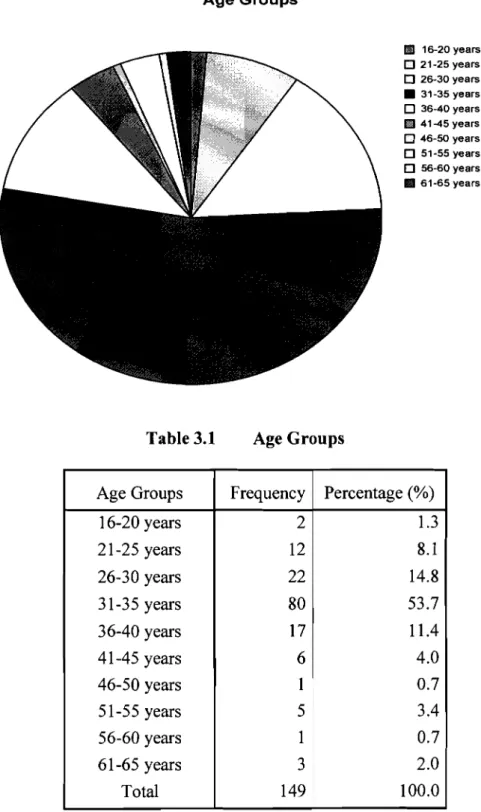
Age Groups
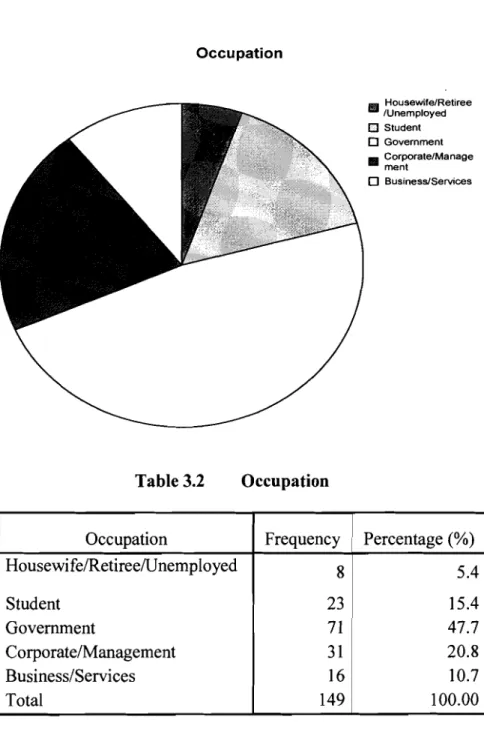
Occupation
Chart 3.3 Education Level
Q16: Which of the following personal information have you included in your profile that can be viewed by others (ie other than you). Please fill in "Other" if you have included any other personal information (eg Bio, likes and interests, website, etc.). Please fill in "Other" if you have included any other personal information (eg Bio, likes and interests, website, etc.).