Family and friends are two of the most important parties in life and it is no different when it comes to completing this research. In conclusion, it is of the highest expectation and hope that this research will not only benefit us in completing our bachelor's degree, but can be used as a very useful tool in analyzing the willingness of Malaysian university students to work abroad. Without them, this research would not even be completed, so it is truly gratifying to have them by our side.
Finally, we hope that this survey can provide a much clearer picture of the willingness of Malaysian students to work abroad. The primary objective of this research is to investigate the willingness of Malaysian students to work abroad in addition to the factors that encourage it. Limitations of this research were also properly identified and recommendations were also suggested.
Finally, this research was conducted in a way that is not only intended to meet personal needs, but also to benefit future researchers and practitioners by providing accurate and specific information about readiness to work abroad.
INTRODUCTION
- Introduction
- Research Background
- Research Problem
- Research Objectives
- Research Questions
- Hypotheses of the Study
- Research Significance
- Chapter Layout
- Conclusion
In brief, the purpose of this research is to investigate the factors influencing willingness to work abroad among Malaysian students. There are some specific objectives that are related to the factors influencing willingness to work abroad among Malaysian university students discussed in this research. To determine whether behavioral CQ influences willingness to work abroad among Malaysian students.
To determine whether cognitive CQ influences the willingness to work abroad among Malaysian university students. To determine whether metacognitive CQ influences the willingness to work abroad among Malaysian university students. To determine whether motivational CQ influences the willingness to work abroad among Malaysian university students.
To determine whether quality of life influences willingness to work abroad among Malaysian university students.
LITERATURE REVIEW
Introduction
Review of Variables
- Willingness to Work Abroad
- Cultural Intelligence (CQ)
- Behavioral Cultural Intelligence (CQ)
- Cognitive Cultural Intelligence (CQ)
- Metacognitive Cultural Intelligence (CQ)
- Motivational Cultural Intelligence (CQ)
- Quality of Life
- Extraversion
Review of the Underlying Theories
- The Theory of Planned Behavior
- The Social Cognitive Theory
Reviews of Relevant Theoretical Models
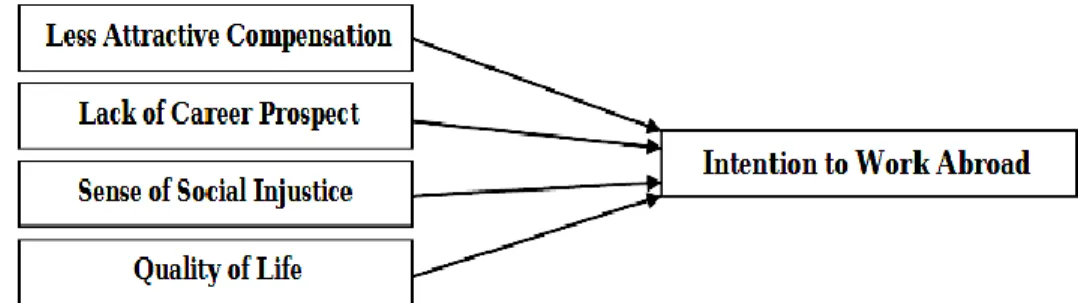
- Review of Theoretical Model 1
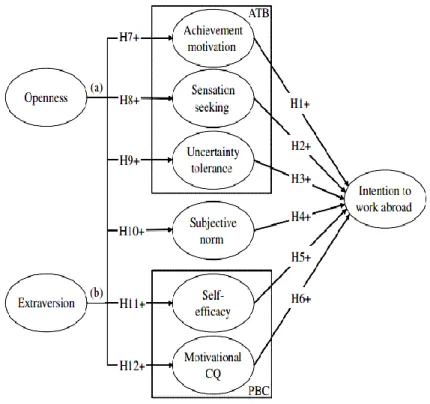
- Review of Theoretical Model 2
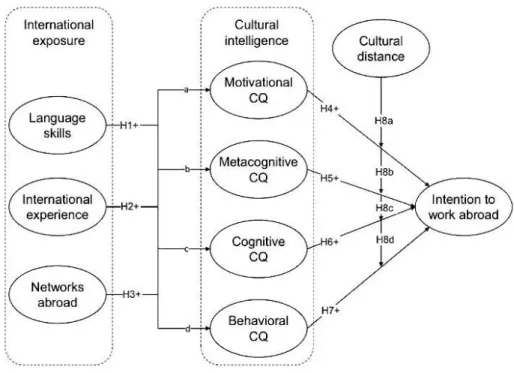
- Review of Theoretical Model 3
Hypotheses Development
- Relationship between Behavioral Cultural Intelligence (CQ) and
- Relationship between Cognitive Cultural Intelligence (CQ) and
- Relationship between Metacognitive Cultural Intelligence (CQ) and
- Relationship between Quality of Life and Willingness to Work Abroad
- Relationship between Extraversion and Willingness to Work Abroad
Conclusion
METHODOLOGY
Introduction
Research Design
- Quantitative Research
- Causal Research
Data Collection Methods
- Primary Data
- Secondary Data
Sampling Design
- Target Population
- Sampling Frame and Sampling Location
- Sampling Elements
- Sampling Technique
- Sampling Size
Research Instrument
- Questionnaire
- Questionnaire Design
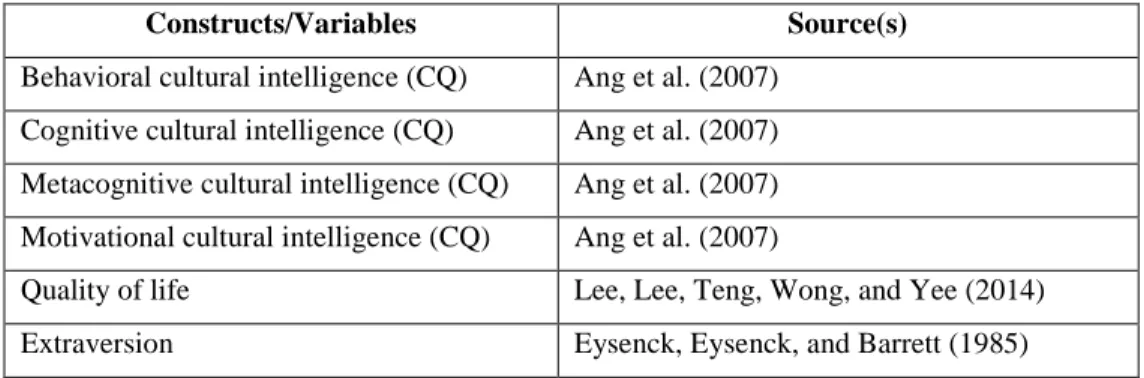
- Origins of Construct
Construct Measurement
- Scale of Measurement
- Nominal Scale
- Ordinal Scale
- Interval Scale
Data Processing
- Data Checking
- Data Editing
- Data Coding
- Data Transcribing
- Data Cleaning
Data Analysis
- Descriptive Analysis
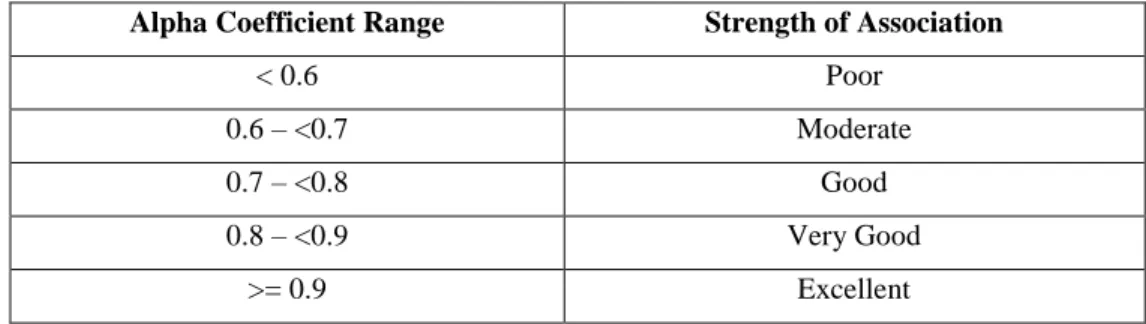
- Scale Measurement
- Reliability Test
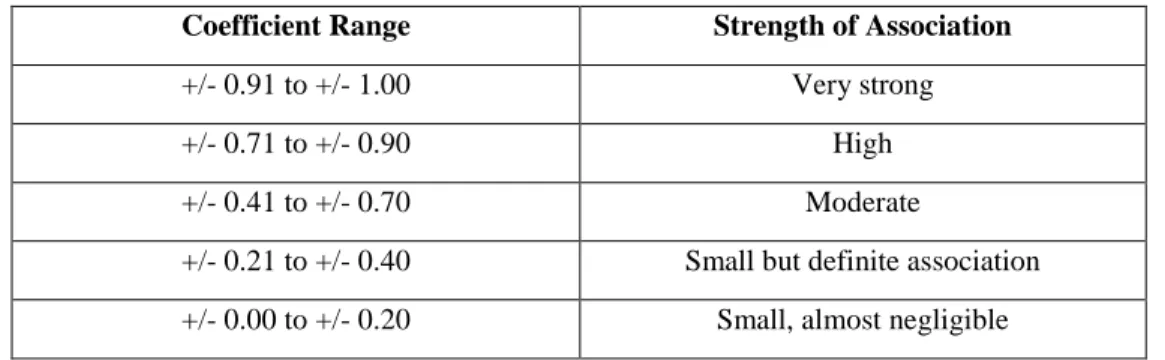
- Inferential Analysis
- Pearson Correlation Coefficient Analysis
- Multiple Regression Analysis
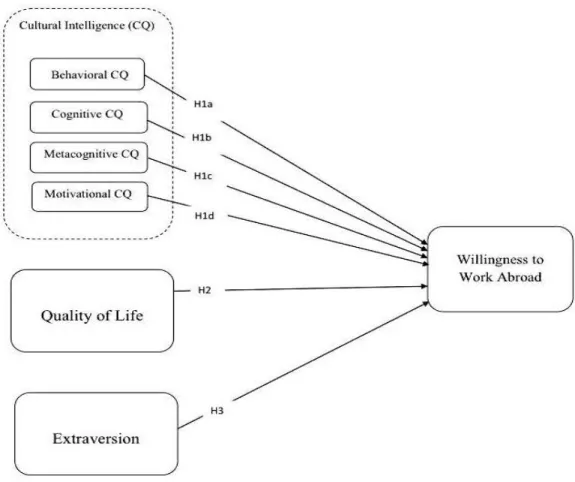
Proposed Conceptual/ Theoretical Framework
Conclusion
DATA ANALYSIS
Introduction
Descriptive Analysis
- Respondent Demographic Profile
- Gender
- Age
- Race
- Marital Status
- Education Level
- Type of University
- Year of Study
Scale Measurement
- Reliability Analysis
Inferential Analysis
- Pearson Correlation Coefficient Analysis
- Multiple Regression Analysis
Conclusion
DISCUSSION, CONCLUSION AND IMPLICATIONS
Introduction
Major Findings
Hypotheses serve as an important statement for the prediction of the relationship between behavioral CQ, cognitive CQ, metacognitive CQ, motivational CQ, quality of life, extraversion and willingness to work abroad.
Implications of the Study
Also, HR management should offer better pay that is at least comparable to inflation or cost of living increases. A better and more competitive HR policy with more attractive and attractive benefits, perks and pay structures can attract local talent to work for them. Apart from this, the government can have ideas about minimum wages, labor rewards and incentives to be offered by comparing with the minimum wages in other countries to improve the quality of life of individuals.
In addition, the government needs to strengthen law enforcement regulations and rules to combat various types of crimes to ensure safer communities so that skilled talents remain in the country. Extroverts are passionate and enthusiastic about solving problems in the workplace, they are sociable and comfortable with communication and interaction. This in turn will improve productivity and they will be highly motivated and work well in teams.
As such, it helps retain the talents to build a potentially defining workforce for the country's better future. Finally, retained employees will be important because it can attract more multinational companies to expand in Malaysia and thus improve foreign direct investment.
Limitations of the Study
A total of 200 full-time Malaysian university students who participated in the survey may not be comprehensive enough as the sample size is considered to be minutes. Therefore, the results obtained may not accurately reflect the willingness to work abroad among university students in Malaysia. Still, the size of the respondents cannot be a strong representation or voice for a much more substantial and massive population of Malaysian university students.
Having said that, the responses received have been treated objectively without hindering arriving at the analytical assessment of this research and also interpreting the results. Despite being able to achieve literally all the objectives of the research, the results and results could have been further improved with better reasons and justifications, if there had been even more space and time to put the puzzles together in the interpretation of the collected data and information more analytically and confirmatory. There could have been little things overlooked here and there in processing the results and arriving at certain hypotheses, but having said that, the research has been carried out in the most unbiased and unbiased way to derive the conclusions.
In addition, different educational backgrounds can also influence the willingness to work abroad among Malaysian university students. If different students pursue their tertiary studies at different universities with different courses and different subjects, it would often affect their willingness to work abroad after graduation. As mentioned earlier, the sample size for this study is not large, which could compromise the accuracy of the information collected and the conclusion derived.
However, this research is still conducted in a neutral and independent manner with thorough and relentless studies and references that have been examined. Last but not least, another obstacle in conducting and completing this research is finding relevant journals and articles as evidence to support the research. As most of the recognized and established journal publications requested payment for downloads with the minimal costs envisaged for this research, more time should be spent to find free references to justify.
However, there may be some areas in the study that are missing information that may have made the results less accurate and desirable. All in all, although we have to commit quite a lot of time in getting suitable references, it is worth it as this research can be strongly supported and evidenced.
Recommendations for Future Research
Limited choices of compatible and appropriate journals and articles is another obstacle, as a large number of materials are not in the Malaysian context, deterring their use and requiring additional efforts to search for articles in the Malaysian context. In addition, the survey respondents could go beyond just current Malaysian university students, it could include recent graduates, such as in the past five years, and working individuals, as they have also been students, and they would understand precisely the reasons behind and the implications of working abroad, especially for those who have previous experience of working abroad. Their insights can also be a very useful addition to the research, as they can offer a number of different viewpoints and perceptions of both tertiary education and work experiences.
Ultimately, with abundant resources, a job can be done more efficiently and effectively with better end products, this saying goes very close, with great power comes great responsibility. This research was completed on a very tight budget and deadline and it is inevitably inappropriate to claim that the results may have been negatively affected because of this. However, research would be more likely to have better evidence based on numbers if it could reach a larger audience in completing the survey and also be able to access more journal publications, not just limited to free ones.
It is therefore strongly recommended that, in addition to some financial resources, an investigation should also be given sufficient time with sufficient manpower. Without a doubt, a study should be conducted on its own if there are certain limitations here and there, which is why, as reiterated earlier, this study has been managed and completed using the limited resources for the best possible outcome.
Conclusion
CQ and motivational CQ), quality of life and extraversion are significantly positively associated with the willingness to work abroad. The research has also been conducted in the most unbiased and unbiased manner to derive the conclusions. In addition, recommendations to improve the quality of this research are suggested for further investigation.
Cultural intelligence: Its measurement and effects on cultural judgment and decision making, cultural adaptation, and task performance. Individual and corporate perspectives on the factors influencing the decision to accept an international assignment. Retrieved February 1, 2019, from https://www.worldofbuzz.com/malaysian-millennial-graduates-prefer-work- overseas-compared-country/.
The impact of cultural intelligence (CQ) on cross-cultural job satisfaction (CCJS) and international related performance (IRP). Retrieved February 1, 2019, from http://www.malaysiandigest.com/opinion/559568-working-in-singaporevs-malaysia-is-the-grass-always-greener-on-the-other-side.html. The prevalence of brain drain in Malaysia: Perceptions of working or not working abroad in the future.
Intention to pursue overseas employment opportunities among university students and graduates: A case study of the University of Peradeniya,. The theory of planned behavior supplemented with cognitive cultural intelligence and work-related perceptions in predicting intention to work abroad.
Questionnaire
While it is likely that I would find a job abroad, I think I could work in Malaysia instead as it is difficult to look for a job abroad. I am aware of the cultural knowledge I use when interacting with people from different cultural backgrounds. I adjust my cultural knowledge when I interact with people from a culture I do not know.
I am confident that I can handle the stress of adapting to a culture that is new to me. I am more satisfied with living abroad than with the local environment. I will leave my country if I can provide better educational opportunities for my children in other countries.
SPSS Output: Reliability Test
Pearson Correlation Analysis
Multiple Regression Analysis