In addition to some of the demographic variables such as gender, education level and race also indicated significant influence on political participation. This dissertation entitled "USES AND GRATIFICATIONS: MOTIVATIONS OF FACEBOOK USERS ON POLITICAL PARTICIPATION" was prepared by TAN SZE CHUAN and submitted as partia. l fulfillment of the requirement for the degree of Master of Communication at the University Tunku Abdul Rahman.
Problem Statement
Facebook is one of the most well-known social media channels among a large number of social networking sites, providing people with alternative ways to spread news, information and opinions about political events more thoroughly and quickly than other offline media (Liu, 2015). A recent study on the trend and role of social media found that Facebook acts as a portal for young people to acquire political knowledge and information, helping to lower barriers and broaden the scope of politically related activities (Mohamad, et al. ., 2018).
Research Objectives
Is there a significant impact of information needs on both Facebook and offline political participation. RQ2: Is there any significant influence of social needs on both Facebook and offline political participation.
Research Range
Research Significant
For example, if the result showing that entertainment needs to significantly influence political participation on Facebook, news and articles related to politics should be presented in a more humorous and creative way in order to attract the attention and response of Malaysian users. of Facebook. In addition, the political leader can manage their Facebook page which seems to be more important for the satisfaction need that encourages more involvement of Facebook users in both Facebook and offline political participation.
Dissertation Structure
This literature review lists research areas related to both Facebook and offline political participation and the satisfaction needs of Facebook users. This chapter begins with Section 2.1, which includes definitions of key terms and variables commonly used in this study.
Definition of Terms
- Offline Political Participation
- Social Need
- Recognition need
- Control Variables
- Understanding the Underlying Psychological Motives for Facebook Use
- Motives of Facebook Use and User Demographics
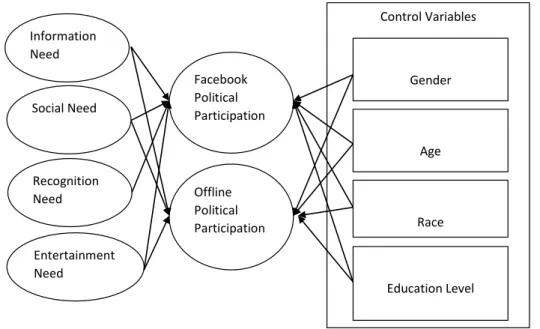
RQ2: Is there any significant influence of social need on both Facebook and offline political participation? Is there a significant influence of control variables (gender, age, race and education level) on both Facebook and offline political participation?
Conceptual Framework
The purpose of this research is to study the impact of Facebook gratification needs on both Facebook and offline political participation by incorporating U&G theory through the U&G framework. The approaches used in this study will be discussed in more detail in this chapter.
Research Design
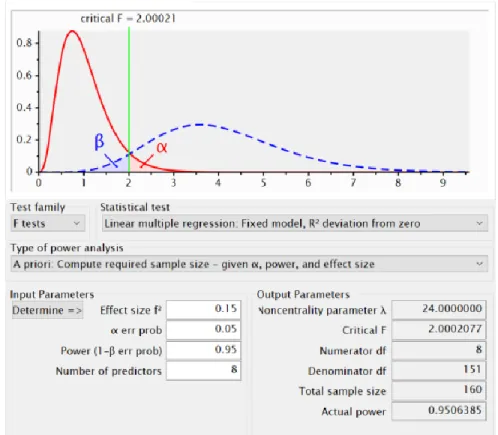
Sampling Procedure
This study relies on the online google form survey method to collect data to investigate the influence of Facebook gratification needs on Facebook political participation and offline political participation. With posting links to the google survey form through Facebook for two months. An introductory page is included in this online questionnaire to convey the purpose of the survey and the respondent's right to withdraw from the survey. Furthermore, all participants were informed that their participation in this study is voluntary, responses will be kept anonymous and will only be used for the purpose of this study.
Virtual snowball sampling procedures began by first identifying potential subjects in the population through Facebook friends who are of different age groups and races. In addition to asking the Facebook friends to answer the online questionnaire, they are asked to recruit other Facebook friends who are of the same age group and race based on voluntariness. Some Facebook friends contacted may be very helpful in helping to recruit more suitable samples, but some may not be able to get the right sample to participate in this study.
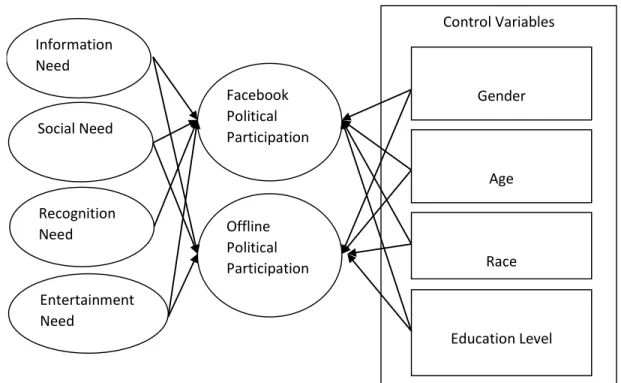
Research Framework
In addition, personal demographic information is controlled throughout the survey on questions including gender, age, education level, and race. These demographic variables including gender, age, education level and race are expected to have strong influence on both Facebook and offline political participation in Malaysia.
Research Instruments
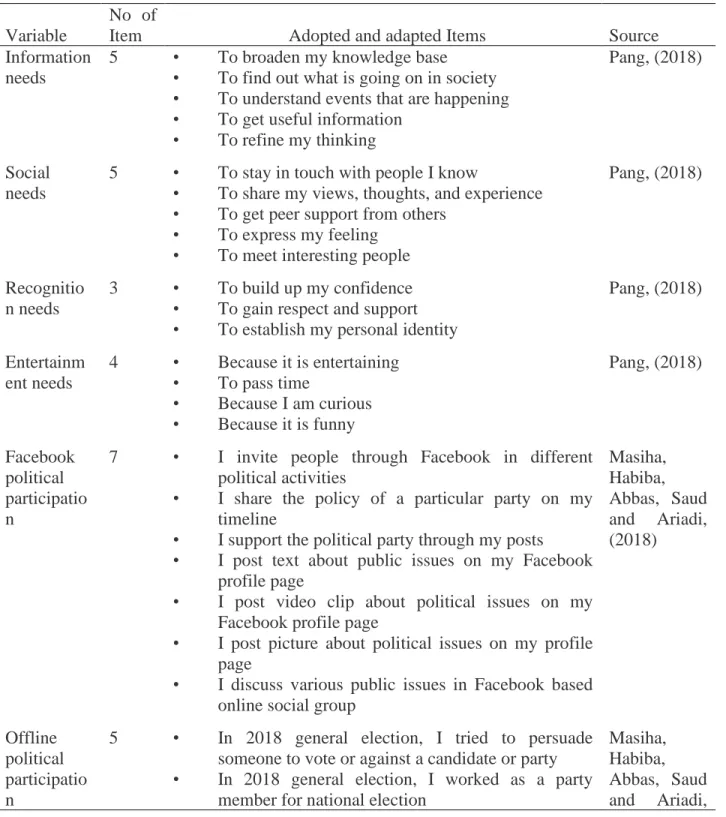
Facebook Political Participation and Offline Political Participation
The response range on each of these scales includes and5, where 1 indicates “never,” 2 indicates “rarely,” 3 indicates “sometimes,” 4 indicates “often,” and 5 indicates “always” regarding their frequency of involvement in such political participation.
Demographic Variables
Respondents were asked to respond to a series of items based on a five-point Likert scale.
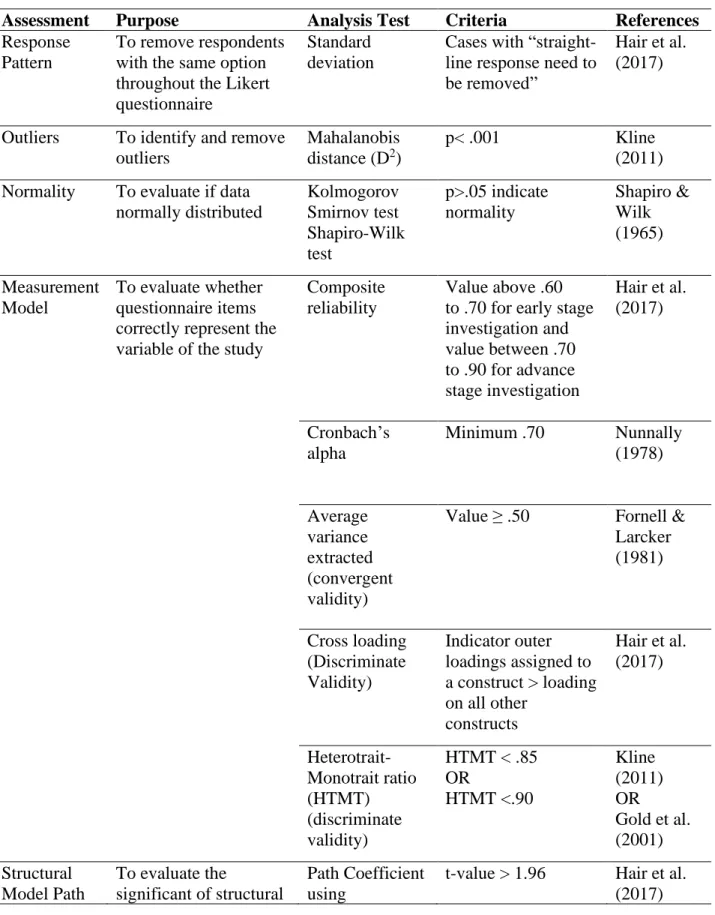
Methods of Analysing Data
Value above 0.60 to 0.70 for early stage investigation and value between 0.70 to .90 for advanced stage investigation.
Summary
Research Finding 4.1 Data Preparation and Assessment
- Missing Data Assessment
- Response Patterns
- Outliers
- Normality Assessment
Therefore, data were screened in terms of unqualified responses (to ensure that respondents were between 21-59 years of age and are Malaysian). Furthermore, questionnaires with the same Likert option (straight line responses) were also removed (Hair et al., 2017). Thus, 20 cases did not meet the prescribed criteria for completion and 15 cases had "straight line" responses.
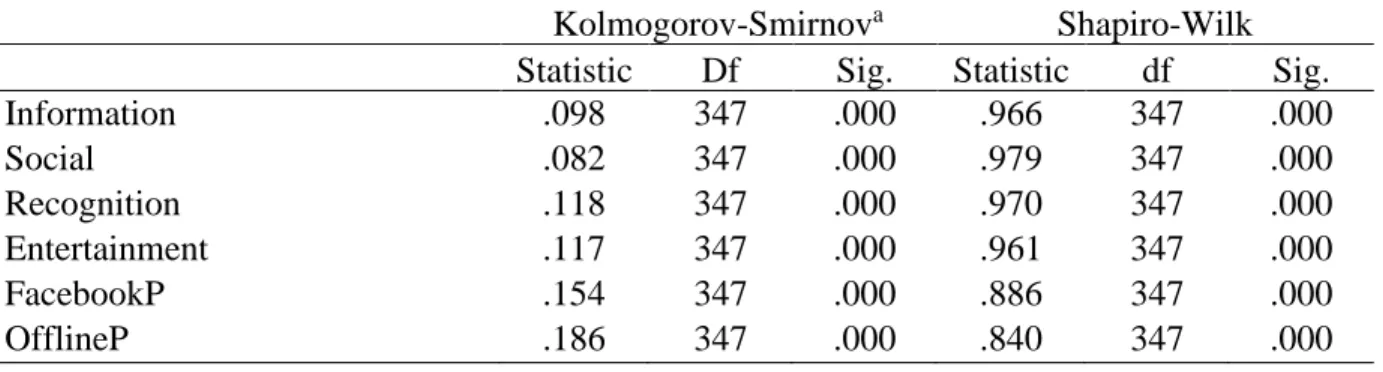
With SPSS 23, Mahalonobis Distance values were obtained and used to calculate p-values for the cumulative chi-square distribution. As shown in Table 4.1, the assumption of normality was violated as the Kogomorov-Smirnov and Shapiro-Wilk tests were significant. However, this would not be a concern for the study as the data were analyzed with the non-parametric SmartPLS software with bootstrapping of 5000 samples (Hair et al., 2017).
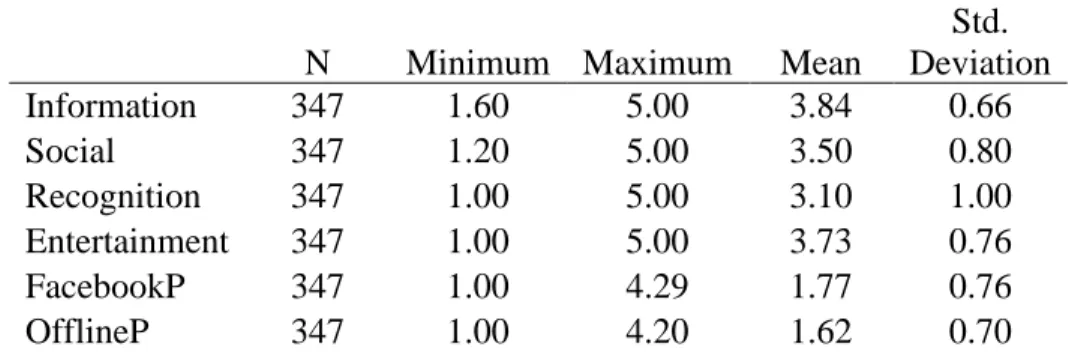
Descriptive Analysis of Constructs
Respondents’ Profile
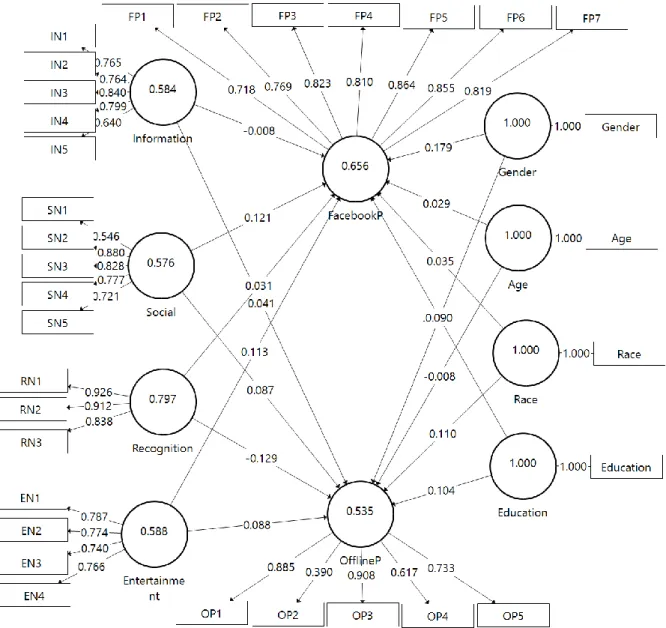
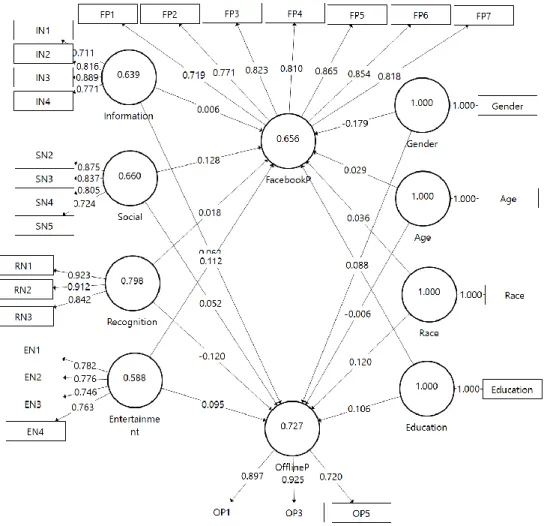
Measurement Model Analysis
Convergent Validity
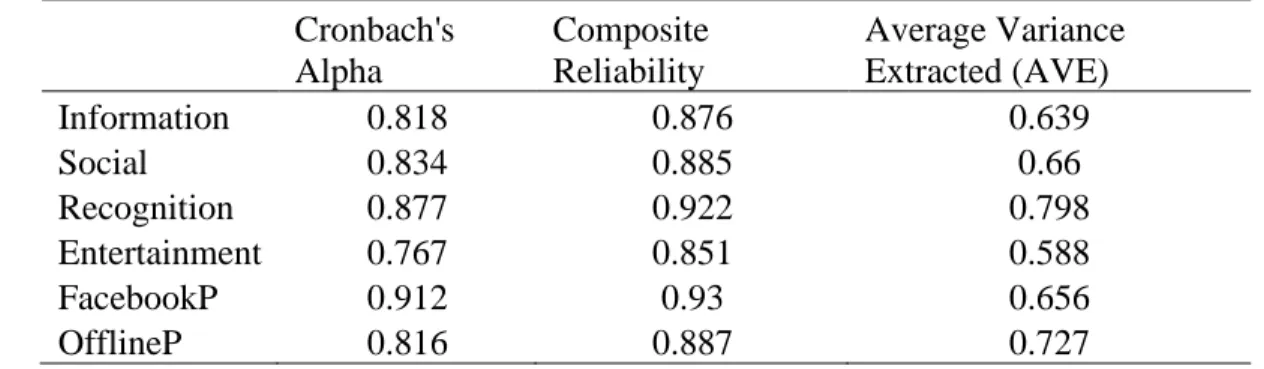
As shown in Table 4.4, the construct AVE ranges from .876 to .930, indicating that all constructs account for more than 50 percent of the variance in the indication.
Discriminant Validity
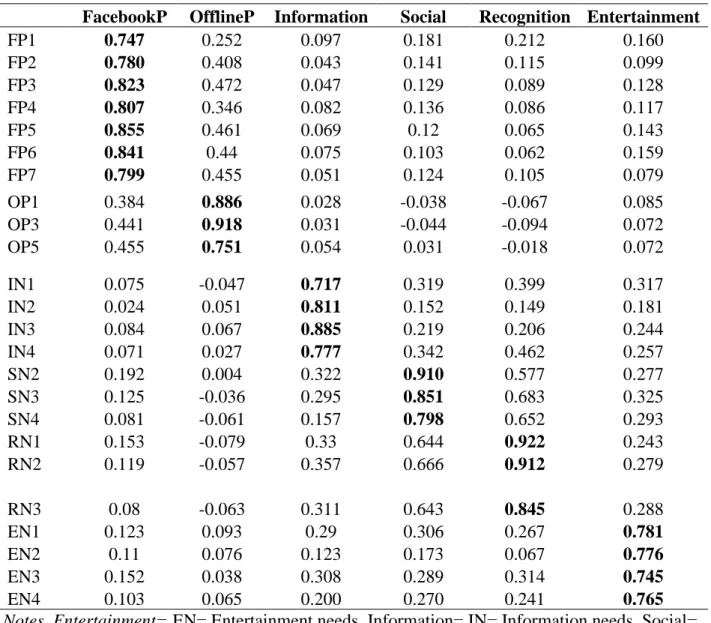
Note: Information= Information need, Social= Social need, Entertainment= Entertainment need, FacebookP= Facebook political participation, OfflineP= Offline political participation. SN= Social Needs, Recognition= RN = Recognition Needs, FacebookP= FP = Facebook Political Participation, OfflineP= OP= Offline Political Participation. As shown in the table, each value in the item on its own variable is the highest, suggesting that it has established discriminant validity (Fornell & Larcker, 1981).
Entertainment notes: Information= Information need, Social= Social need, Entertainment= Entertainment need, FacebookP= Facebook political participation, OfflineP= Offline political participation. In addition to the Fornell-Larker Criterion, discriminant validity between variables is also assessed with the Heterotrait-monotrait (HTMT) ratio. Notes: Information= Information need, Social= Social need, Entertainment= Entertainment need, FacebookP= Facebook political participation, OfflineP= Offline political participation.
Structural Model Analysis
Path Coefficients
Coefficient of Determination
Summary
Finally, the structural model was assessed to answer the hypotheses in terms of path coefficient.
Discussion and Conclusion 5.1 Introduction
Overview and Discussion of Findings
RQ1: Is there a significant effect of information needs on both on- and off-Facebook political participation? Is there a significant influence of social needs on political participation on and off Facebook? Social needs significantly influence political participation on Facebook Not supported Social needs significantly influence political participation offline Not supported.
Is there any significant influence of need for recognition on both Facebook and offline political participation. Is there any significant influence of Entertainment Need on both Facebook and offline political participation. Is there any significant influence of the control variable (gender, age and education) on Facebook political participation and offline political participation.
Discussion of Results
Research Objective One
However, there is no significant influence between information needs and both Facebook political participation and offline political participation. The result shows inconsistency with the previous research done in western, which found that information use of social media has significant influence on offline political participation (Gsinous, Wagner & Gray, 2016; Vromen, Loader, Xenos & Bailo, 2016). Therefore, typically disengaged Facebook users will tend to remain disengaged and lower the information needs of social media use on both Facebook and offline political participation (Low, 2019).
Surprisingly, the results show that Facebook users who primarily use Facebook for entertainment should have a significant positive influence on Facebook political participation. However, the result of this study shows consistency with many previous researches that there is no significant relationship between entertainment needs and offline political participation (Pang, 2018; Chang, 2015). Furthermore, the result obtained from this study shows that social and recognition needs do not have a significant impact on both political participation on Facebook and offline political participation.
Research Objective Two
A similar result has been observed by previous research that social need does not automatically promote political participation when relationships are primarily maintained (Chang, 2015). Surprisingly, based on this result, age has no significant effect on both Facebook political participation and offline political participation. In short, these results indicate that some of the demographic characteristics of users may be a critical factor that drives Facebook users to engage in Facebook political participation and Facebook political participation.
Implications of the Study
Then, the result of this study shows inconsistency with previous research in other democracies regarding how social media influence political participation. Thus, the result can provide insight into the potential political impact of new media use, while at the same time providing reports on the impact of gratification demands on citizens' political participation in different social contexts. First, it provides insights for the social media provider on how to attract individuals to adopt the platform by satisfying their gratification needs.
Based on the findings, the Facebook content provider would learn how to customize their messages in order to meet the satisfaction need and then attract attention and consumption among the overwhelming competitors available on the same platform. For example, content providers may need to present political content in a more humorous and creative manner in order to encourage Malaysian Facebook users to consume, share and even comment on the content. Furthermore, while Facebook continues to be busy in the lives of all Malaysians, information use among Facebook users in Malaysia surprisingly does not significantly affect both Facebook and offline political participation.
Limitation of Study and Future Research Recommendation
In summary, the result shows the role of needs gratification in political participation among Malaysian Facebook users. The mediating role of knowledge and efficacy in the effects of communication on political participation. Pathways to expressive and collective participation: Patterns of use, political efficacy, and political participation on social networking sites.
Malaysian Millennials' Social Media Consumption and Political Knowledge, Participation and Voting in the General Election 2018. Exploring the Relationship between Facebook Use and Political Participation among Youth in Pakistan. Social media and mobile phones as forces of political mobilization for youth: Examining the moderating role of online political expression on political participation.