1
An Online System for Parents Teacher Association (PTA) for School
by
Muhammad Idham Bin Azman 17005734
Dissertation submitted in partial fulfilment of the requirements for the
Bachelor of Information Technology (Hons)
JANUARY 2022
Universiti Teknologi PETRONAS Bandar Seri Iskandar
32610 Bandar Seri Iskandar Perak Darul Ridzuan
2
CERTIFICATION
An Online System for Parents Teacher Association (PTA) for School
by
Muhammad Idham Bin Azman 17005734
A project dissertation submitted to the Information Technology Programme
Universiti Teknologi PETRONAS in partial fulfilment of the requirement for the
BACHELOR OF INFORMATION TECHNOLOGY (Hons)
Approved by,
__________________________
(AP DR. Izzatdin B Abdul Aziz)
UNIVERSITI TEKNOLOGI PETRONAS BANDAR SERI ISKANDAR, PERAK
January 2022
3
CERTIFICATION OF ORIGINALITY
This is to confirm that I am responsible for the work presented in this project, that the original work is mine except as mentioned in the references and acknowledgement, and that the original work included herein was not undertaken or completed by unnamed sources or individuals.
_____________________________
MUHAMMAD IDHAM BIN AZMAN
4
ABSTRACT
Parents are a child's finest instructors and role models. Consequently, it is critical for parents to be actively engaged in their child's education, rather than leaving everything to the teacher.
There seems to be a wealth of research indicating that good communication between parents and teachers has a beneficial effect on a child's academic success. The following are some of the primary objectives that must be met in this study: 1) To study Parents and Teacher's perspective on the connection using online or mobile application. 2) To develop an application that engage parents in educational programmes and other events, an effective information- notification system. 3) Help school handle problematic students by collaborating with moral rehabilitation programs, spirit building camps and counselling sessions aimed at creating awareness, and enthusiasm for learning and success in the lesson. Parent Teacher Association (PTA) applications for learning support systems in the form of communication are, on the other hand, quite rare in Malaysia. Parents and teachers, in particular, who are between the ages of 21 and 60, are already adept at utilising smartphone; hence, the education sector may use communication techniques such as connecting to parent-teacher associations (PTA). Not only that, but the school will be more updated in terms of contributing money, materials, and energy for the benefit of the students and the school's facilities. As a result, this study engaged in the action for developing an application known as SchoolGo app. As an outcome, the Agile Software Development Life Cycle approach was developed and applied (SDLC). Agile SDLC is believed to be the most suited since it is great for agile application development tasks, allowing for autonomous advancement of each phase until the final product is complete. The technique is as follows into these phases: 1) prerequisites 2) design and architecture 3) development 4) evaluation and feedback. In accordance with timetable and planning that have been executed, the application is supposed to address the primary objective of study and build a connection between parent and teacher while monitoring their children or student in a simple way.
5
ACKNOWLEDGEMENT
This is an opportunity I'd want to express my gratitude to everyone who contributed to and was engaged in the completing of my Final Year Projects (FYP) I and II, both past and present. Prior to anything else, I'd want to express the deepest appreciation to AP Dr Izzatdin B Abdul Aziz, my FYP supervisor, for his important guidance and support during the course of my year in practise. He has made significant contributions and supported me in the generation of ideas for the creation of this research.
This report would not have been possible without my family's love and support, particularly my parents, Azman Bin Atan and Norlida Binti Musa, who have been instrumental in making it happen. I'd want to convey my thanks to them for their compassion, support, encouragement, and prayers, which I much appreciate. Throughout the session, they've been tremendous supporters and motivators for me to succeed.
Last but not least, I'd want to convey my appreciation to every one of my colleagues who have aided in my success research and replied to my project by providing comments and critiques that have assisted me in improving the final version of the dissertation report.
6
TABLE OF CONTENTS
CERTIFICATION 2
CERTIFICATION OF ORIGINALITY 3
ABSTRACT 4
ACKNOWLEDGEMENT 5
TABLE OF CONTENTS 6
LIST OF TABLES 7
ABBREVIATIONS AND NOMENCLATURES 9
CHAPTER 1: INTRODUCTION 10
1.1 Background of Study 10
1.2 Problem Statement 11
1.3 Objective 12
1.4 Scope of Study 12
1.5 Project Relevancy and Feasibility 13
CHAPTER 2: LITERATURE REVIEW 14
2.1 Parent Teacher Association (PTA) Responses to Changing Educational Policy: A
Malaysian Experience 14
2.2 Study on The Role of Parent Teacher Association (PTA) on the Development of Secondary
Schools Govt of Quetta 14
2.3 The efficiency of school-parent associations (SPA) at schools 14 2.4 The Role of Parents Teachers Association (PTA) In Educational Development in Cross
River State 15
2.5 Parents’ Opinion Regarding the Use of Distance Learning During Covid-19 Pandemic 15 2.6 Development of Mobile Application-based Parenting Media to Improve the Quality of Child Care Center Services during the COVID-19 Pandemic 16 2.7 Use of mobile application: Means of communication between parents and class teacher 16 2.8 Hero: Designing Learning Tools to Increase Parental Involvement in Elementary
Education in China 17
CHAPTER 3: METHODOLOGY 18
3.1 Research Methodology 18
3.2 Project Activity 19
3.2.1 Requirement Gathering 20
3.2.2 Design the Requirement 20
3.2.3 Construction / Iteration 21
3.2.4 Deployment 21
3.2.5 Testing 22
7
3.2.6 Feedback & Report 22
3.3 Time Frame for the Project Development 23
3.4 Key Milestone 26
3.5 Tools 27
3.5.1 Front-end 27
3.5.2 Back-end 27
3.5.3 Hardware 28
3.5.4 Software 28
CHAPTER 4: RESULT AND DISCUSSION 29
4.1 Data gathering and Analysis 29
4.1.1 Interview 29
4.1.2 Discussion 30
4.1.3 Use Case Diagram 32
4.1.4 Questionnaire Survey Analysis 33
4.2 Prototype 37
4.2.1 Deliverable’s Interface 37
4.2.2 User Testing 42
CHAPTER 5: CONCLUSION AND FUTURE WORK 44
5.1 Recommendation for Future Work 44
REFERENCE 45
APPENDICES 47
LIST OF TABLES
Table 1: List of abbreviations, acronyms, and terms, used in this report. ... 9
Table 2:Gantt Chart for FYP I ... 23
Table 3: Gantt Chart for FYP II ... 25
Table 4:Milestone for FYPI & FYPII ... 26
Table 5: Front-end... 27
Table 6: Section 2 Survey ... 34
Table 7: Section 3 Survey ... 35
8 LIST OF FIGURES
Figure 1: Agile SDLC methodology ... 18
Figure 2: Software Development Life Cycle (SDLC) ... 19
Figure 3: System Flowchart ... 20
Figure 4: Back-end ... 28
Figure 5:UAT SchoolGo ... 30
Figure 6: Feedback SchoolGo ... 31
Figure 7: Use Case Diagram for SchoolGo app... 32
Figure 8: First section of survey Google Form ... 33
Figure 9: Login Page ... 37
Figure 10: Sign Up section ... 38
Figure 11: Parents Dashboard ... 39
Figure 12: Communication dashboard ... 40
Figure 13: Teacher Dashboard ... 41
Figure 14: Admin Dashboard... 42
Figure 15: Deleting Class... 43
9
ABBREVIATIONS AND NOMENCLATURES
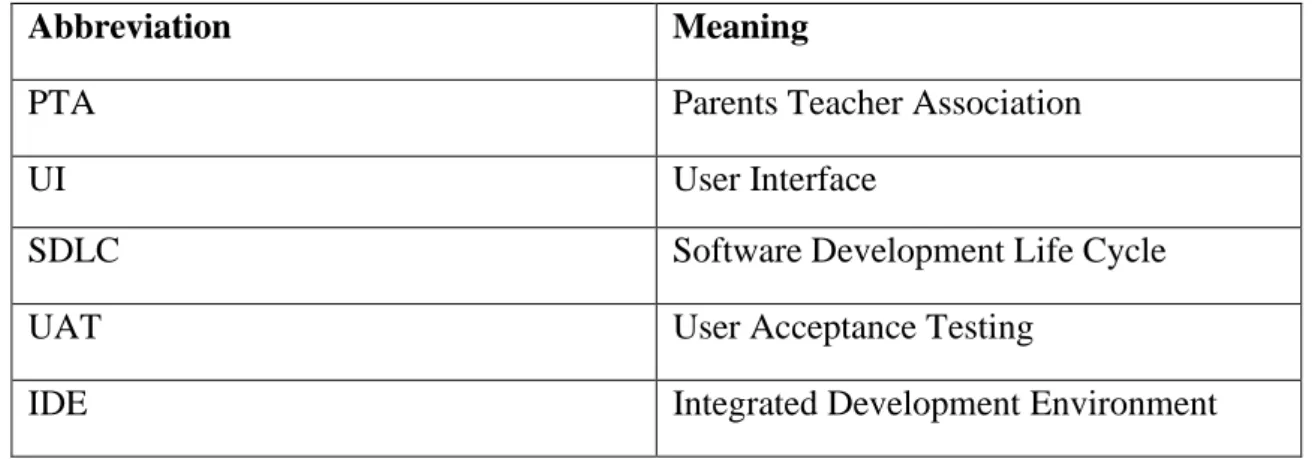
Table 1: List of abbreviations, acronyms, and terms, used in this report.
Abbreviation Meaning
PTA Parents Teacher Association
UI User Interface
SDLC Software Development Life Cycle
UAT User Acceptance Testing
IDE Integrated Development Environment
10
CHAPTER 1: INTRODUCTION
1.1 Background of Study
During a crisis such as the COVID-19 pandemic, it is important to improve communication, transparency, and trust in order to implement effective containment measures.
Communication can assist in identifying and addressing concerns and misunderstandings, as well as boosting community engagement in resolving issues. A two-way communication system will allow for the exchange of concerns, comments, misconceptions, and rumours regarding Covid-19, as well as the dissemination of facts about the virus.
Within this environment, teachers took a particular interest in enhancing the quality of communication and collaboration with their students’ families. During the pandemic, parents’
engagement in school life, home visits, collective meetings, and individual meetings with teachers were not scheduled. This fact may influence the level of collaboration between parents and teachers as aged 21 to 60 years old. Earlier to the COVID-19 epidemic, meetings and teaching resources were conducted in person. Meanwhile, meetings involving parents, educational seminars, and parent lectureships were often held in the school setting. Recent research has proven that teachers and parents increasingly progressively using a variety of modes of communication in this modern day.
The parent-teacher connection is an important component of communication (Vasarik Staub, Stebler, & Reusser, 2018; Lau & Ng, 2019; Gârţu, 2017). Nowadays, Parent-teacher interactions occur more regularly in a context of online. All throughout epidemic, the objective of communicating with teachers stays the same: the children’s well-being and academic progress. Communication with parents often has a beneficial influence on their engagement in their children’s education. “Among the subjects often recommended by parents for interaction with teachers, the much more frequently mentioned are the children's performance in terms of learning and discipline, as wel’ as their pro“ress." (Hobjilă, 2014, p. 688).
During the limits imposed by the COVID-19 epidemic, the challenges to maintaining a healthy and effective connection with parents become increasingly diversified. Several critical reasons include parents’ lack of time and their lack of engagement in the learning system (Marin & Bocoș, 2016; Marin & Bocoș, 2019). SchoolGo is believed to be capable of increasing interest and involvement in school, particularly with regards to children’s
11 development. This application was created as a mobile communication tool to facilitate interaction between parent-teachers aged 21 to 60, or more precisely, primary school pupils who are members of the Parent Teacher Association. The SchoolGo App is supposed to assist in the areas of learning and discipline, child development, and even school activities that will improve students’ motivation in studying and help them achieve excellent results.
SchoolGo is not an app designed for typical modes of communication such as SMS and texting, but rather incorporates a social network component to keep parents and teachers connected and informed about their children. SchoolGo’s primary objective is to stimulate and reignite interest in an engaging social network environment. Online Accessible is a cutting- edge feature that enables mobile access to virtual meeting platforms. Each user may successfully join or establish meetings at any time as their wishes.
1.2 Problem Statement
Students, parents, and teachers face three (3) primary challenges in terms of social, communication, and technology concerns, which include the following:
1. Malaysia does not have a Parent-Teacher applications
2. Difficulty conducting meetings and discussions, referred to as Annual General Meeting (AGM), which are critical for the student’s progress.
3. Deficiently for parents and teachers to take note student’s performance.
Parents-Teacher’s connection apps such as SchoolGo that include communication features such as ClassDojo, ClassTag, and so on already exist, however the primary function to communicate in Malay does not. The apps that are being made accessible lack support for the Malay language, making them unsuitable for usage in elementary schools to increase communication between teachers and parents. Additionally, some current apps restrict the application’s capabilities by requiring users to pay a monthly charge to access all services.
Parents and teachers between the ages of 21 and 60 have actual experience with other media and social networking sites. In their spare time, these adults dare to peruse through social media platforms such as Facebook. As a result, parents and instructors can simply administer
12 SchoolGo. Additionally, other programmes may perform the same job as SchoolGo applications.
Meanwhile, parents and teachers often met in person on a yearly basis. They are typically obligated to attend the meeting. As such, it has stymied the annual meeting (AGM) of the PTA in terms of school growth due to the Covid limitation. For years and months, these parents-teachers’ meetings have been postponed and cancelled.
As a consequence of the epidemic, teachers are also confined to their homes. This makes it more difficult for teachers and parents to oversee school activities, particularly those that need financial support. It is challenging for instructors to interact more closely with and understand their parents. To guarantee that information is received and comprehended, as well as to collect and raise funds and contributions for school expansion and student accomplishment.
1.3 Objective
The following are the project’s objectives:
• To develop an online Parents-Teacher conferences app that helps parents-teachers can interacting and do annual virtual meeting.
• To study parents and teachers to exchange ideas and information about the lesson generally taught in that school.
• To develop and implement school handle problematic students by collaborating counselling sessions aimed at creating awareness, and enthusiasm for learning and success in the lesson.
1.4 Scope of Study
This study demonstrates the important nature of communication between parents and teachers, even when they do not meet physically. This study aims to assist parents and teachers in communicating in a modern, easy-to-understand environment. The target users for this study were adult among parents-teachers aged 21 to 60 years. Primary school students in Malaysia, teachers, and even parents are all examples of target users. However, one of the project’s
13 limitations is that the prototype developed is limited to primary school students. Thus, parents- teachers who are older or less educated than the primary focus will be deemed unsuitable to use this app based on their age, knowledge, and so forth.
1.5 Project Relevancy and Feasibility
The online Parents-Teacher idea of conferences is used to connection concepts allows the parents-teacher to advance on their communication within parent-teacher, school and students, given the characteristics of online or mobile applications: convenient and rapid access, accessibility, and cheap cost. This makes way for adults between the ages of 21 and 60 to spend time on the app though at the same time communicate among parents and teachers.
Parents-teachers’ interest in communicating through this app will also increase as the app likely to be as same with another social network app such as WhatsApp. The SchoolGo the application is anticipated to assist parents and teachers aged 21 to 60 years old or more to make the system more efficient when it is available in Bahasa. The project is expected to take 29 weeks to complete if all goes according to plan. The author plans to finish a proposal, preliminary research, literature evaluation, and methodology throughout the first 15 weeks.
The author has begun the first phase of application development and expects to complete it in the following four months, which corresponds to Final Year Project 2 timetable.
14
CHAPTER 2: LITERATURE REVIEW
2.1 Parent Teacher Association (PTA) Responses to Changing Educational Policy: A Malaysian Experience
According to A.Z.A Razak, K.E Hoque, S. Ghavifekr and N.M. Nor, PTA members believed that implementing a new educational policy was solely connected to school;
nevertheless, they also believed that some obstacles arose at school as a result of the policy’s adoption, and they offered suggestions to help the school execute the new policy.
This article is somewhat related to the SchoolGo study because it involves the PTA members in Malaysia, only this article is related to the changing the educational policy.
Through this article, it shows that PTA members will be more motivated to engage for the implementation of educational policy.
2.2 Study on The Role of Parent Teacher Association (PTA) on the Development of Secondary Schools Govt of Quetta
According to Zunair on 2018, the PTA may help students overcome academic obstacles, whether behavioural or intellectual, such as fleeing, avoiding, dropping out, not attending, having difficulty with the curriculum, or being bullied.
According to Zunair on 2018, the PTA may help students overcome academic obstacles, whether behavioural or intellectual, such as fleeing, avoiding, dropping out, not attending, having difficulty with the curriculum, or being bullied.
2.3 The efficiency of school-parent associations (SPA) at schools
Fatma O., and Cevdet C., define SPAs should not just financially assist schools;
they should also support efforts aimed at increasing student performance. It should take the lead in developing and implementing diverse programmes in collaboration with other non- governmental organisations and public institutions.
15 School events should be developed to increase parents’ awareness, and school-parent integration should occur. Special days (mothers’ day, religious holidays, etc.) are to be transformed into organisations that give orientation. The school and parents should maintain regular contact; family should not only be informed about the children’ progress and school activities, but also motivated to engage.
With online Parents-Teacher conferences application, parents and teacher can always interacting among them. In fact, online network can help parents to keep update about their children’s academic performance, academic results, also discipline and school activities and events.
2.4 The Role of Parents Teachers Association (PTA) In Educational Development in Cross River State
Agba, Gabriel A., Anake, Paulina M. And Agim, Martha Agede stated once a term, the PTA should host a general meeting for the purpose of presenting reports, including financial accounts, and an annual meeting. A biennial meeting for the election of officials will be conducted. This will promote growth and development while avoiding monopolies. The principal must keep all minutes of meetings after their completion by the secretary.
The complex network of interactions and interdependences that exists between individuals and groups, so that their activities and duties span social, economic, cultural, and educational domains in the sake of improving student academic performance, school effectiveness, and educational growth. Finally, for PTA involvement with this project to be effective, parents’ knowledge and abilities must be recognised and valued.
2.5 Parents’ Opinion Regarding the Use of Distance Learning During Covid-19 Pandemic
According to Marin, Bocoș, Călin, and Cordoș, the epidemic has changed the parent- student-teacher connection process significantly, the ramifications of which will need to be examined in future research. Numerous previous research has shown that numerous barriers may exist that hinder parents from engaging in school activities (various parental obligations, vast distance between home and school, insufficient time resources, etc.).
16 Given that parents have become used to the use of online media, the efficacy of parenting activities conducted in part or entirely via the use of learning resources might be evaluated to determine their impact on the quality of the school-family collaboration. Teachers employ a range of tactics to appropriately educate parents, including digital apps, websites, and educational platforms especially developed for this purpose.
2.6 Development of Mobile Application-based Parenting Media to Improve the Quality of Child Care Center Services during the COVID-19 Pandemic
As stated by Rezka, Sucipto, Lidya, Yessi in this research, educational services may be provided via a menu of stimulation aid services depending on many areas of child development through created apps. The prevalence of two-way contact between parents and instructors undoubtedly benefits children’s development.
Parents’ responsibility in creating the groundwork for discipline in their child’s spirit is essential and irreplaceable, which is why parents must be instructors and mentors who are brimming with love for children. These features are still available during the COVID-19 epidemic and may be accessed through the application’s menu, namely weekly progress reports for parents and teachers.
2.7 Use of mobile application: Means of communication between parents and class teacher
According to Mustafa in 2016, collaboration between parents and teachers is critical for student success. Stakeholders in the education sector are attempting to devise the most effective means of enticing parents to participate in school events. To engage parents in educational programmes and other events, an effective information-notification system should be built.
Through the use of a mobile app as a communication tool in education, successful relationships such as the flow of information from the class instructor may be encouraged.
Additionally, it fosters collaboration between the school and parents via the use of the mobile app. Following that, a mobile app may be used to facilitate communication between parents and teachers. Finally, using a mobile application as a means of communication increases parental participation.
17 2.8 Hero: Designing Learning Tools to Increase Parental Involvement in Elementary
Education in China
As stated by Zhao Y., Sumitro Y., Hope A., James A., Huang J., and Shi Y, to help parents become more involved in their child's education, teachers use extracurricular challenges and in-class motivational tools to make learning fun and interesting for both parents and their children. Website for teachers, a mobile app for parents, and a map that can be used in the classroom by each student These three parts works together to help parents get involved with teacher-made challenges and bring out-of-school learning achievements back into the classroom to help students do better in school.
The author think that challenge-based advice will be more explicit and obvious for parents, will make it simpler for teachers to assess progress, and will be more engaging for both parents and children. The challenges are developed in response to a variety of educational issues, rather than being tailored to any single student.
18
CHAPTER 3: METHODOLOGY
3.1 Research Methodology
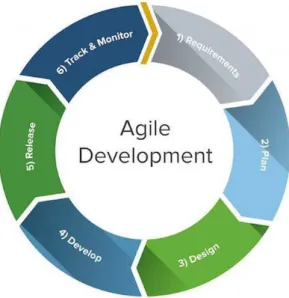
Each project or piece of study must have its own specific method. in order to be finished with the least amount of risk and in the shortest amount of time possible. The authors adopted the Agile Software Development Life Cycle technique for developing this mobile application for online Parent-Teacher conferences (SDLC).
To begin, Agile is a hybrid of two process models, incremental and iterative. Agile is a methodology that focuses on improving customer satisfaction via quick delivery. It is divided into iterations, with each iteration lasting around two weeks. This indicates that Agile activities will be performed every two weeks until the product satisfies user requirements.
Meanwhile, SDLC refers to the software development life cycle. This is extremely similar to the processes associated with SchoolGo development of applications, including concept design, development, and testing. The primary author's justification picked SDLC is to ascertain that application is completed within a set budget and timeline.
Figure 1: Agile SDLC methodology
19 3.2 Project Activity
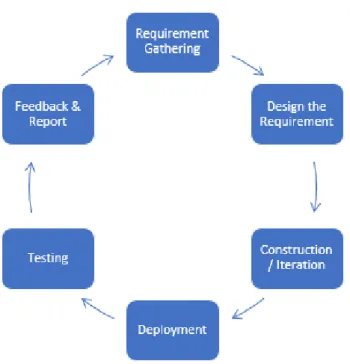
The activities of a project are basically pillaring sections or tasks which include many subtasks. Comparable to this research, the Agile SDLC process has multiple sub-tasks that comprise it a whole methodology. This research not only examines Parent-Teacher Associations, but also includes the creation of a mobile application, making SDLC an ideal component to include in this study.
Figure 2: Software Development Life Cycle (SDLC)
20 Figure 3: System Flowchart
3.2.1 Requirement Gathering
To compile specifications, I attempted to acquire materials, data, and information for this research by surveying instructors, parents, and students. Google Form is the technology that I use to conduct this poll. I categorise it as follows: Demographic Profile, Parent-Teacher Association (PTA) Awareness, Impact of Covid on PTA, and Opinion on Online Parent- Teacher Conferences Application.
Apart from that, I had an interview with Mr Amin Aiman Bin Ariffin, 23, a practical teacher who presently works at SMK Alam Megah. Mr. Amin said that parents regularly inquire about their children's online and face to face class performance. Additionally, some parents and teachers are debating and preparing how to conduct and update about their children performance.
3.2.2 Design the Requirement
Following that, I began the design flow for this phase after gathering all of the requirements. During this step, I constructed a flowchart that depicts the application's
21 procedure from authentication to completion. I create the flowchart using an online application called lucidchart. It's free and may assist me in creating even the simplest flowchart.
Due to the fact that I am aware of the structure and path of my development using the flowchart, it's simple for me to go on to the next step, application development. As a result, I was able to eliminate risks and functionalities that did not align with the project's initial goals.
3.2.3 Construction / Iteration
We've reached the third step, at which point the building or development process begins after the design and implementation flows are complete. As a result, the development process is simplified since it is focused on the primary goal rather than spending time on extra features that do not fulfil the initial criteria. As a result, time and money are saved by developing a small application with little functionality within a certain iteration period. Indirectly, since the development cycle has been finished and recognised in advance, all risks, extra work, barriers, and problems may be met with greater preparation. Specifically, the front-end and back-end tasks will be divided in this part since the system needs a User Interface and a database procedure to hold information about the system's users.
3.2.4 Deployment
After the first iteration has been finished, the deployment step may be initiated. Agile does not require that the deployment phase wait until all processes/iterations have been finished before commencing the implementation phase. In this way, if any modifications in the requirements occur during testing, the product may be changed on the following iteration without causing a delay in the development schedule.
The deployment procedure may be classified into two categories: officially sanctioned and unofficially sanctioned. In the beginning, the deployment will be done informally, meaning that it will just be a prototype, and users will be able to experiment with certain features that are not yet completely functional. Following that, once the programme has been entirely finished within the specified time frame, it will be officially released on Google Play Store, where it will be available for download by any Android smartphone user.
22 3.2.5 Testing
It is possible to start the testing step immediately once the first iteration is completed.
A product has successfully finished phase one of the first iteration when it has completed iteration one for two weeks. So, the developer may carry out a few simple tests to confirm that the functionality is as desired.
Following that, the testing process may be broken into another section, which is known as User Acceptance Testing, or UAT. These are tests carried out by actual users to detect any issues that developers may have missed or to determine if additional requirements should be included. Once all iterations have been finished and the product has been completed in its whole, UAT activities will be carried out.
3.2.6 Feedback & Report
Finally, the author will seek feedback from users for their work. Adults between the ages of 21 and 60, as well as parents and instructors, are among the users who are most suited to offer comments. The author will either change the application or include this information into the report based on the input received. Feedback is very crucial to acquire since this research is required to determine customer thoughts and responses, as well as whether or not the products are beneficial.
Apart from that, the Additionally, the author will write a report for with this Final Year Project as parts of final year student's education. project assignment. This study is also intended to serve as a resource for additional research into mobile applications, such as a mobile Parents- Teacher Conferences app, social networks, and the interaction between parents and teachers.
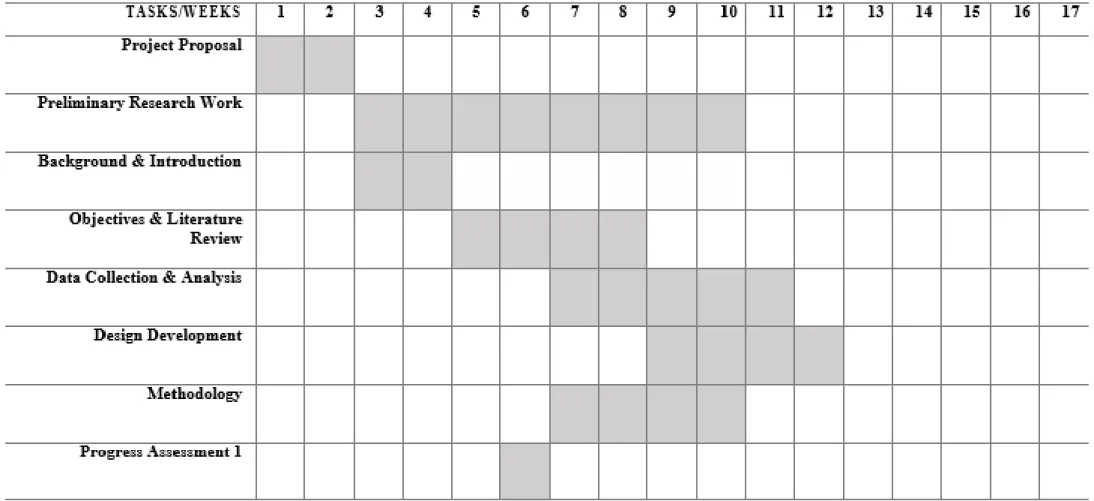
23 3.3 Time Frame for the Project Development
Table 2:Gantt Chart for FYP I
24
25 Table 3: Gantt Chart for FYP II
26 3.4 Key Milestone
Table 4:Milestone for FYPI & FYPII
27 3.5 Tools
The author outlines the technologies used to perform the research in this section. With this technology, a prototype may be constructed and utilised as compelling proof for achieving the study's objective. It involves front end, back end, hardware, and software application development.
3.5.1 Front-end
Essentially, the main layout is called the front end that the user sees. The author utilised a variety of tools to create the UI. The first is Visual Studio Code, which is an IDE enabling authors to create code. Following that, the author utilises the React Native framework to assist in the development of a mobile application. This framework is optimised for mobile application development and includes several libraries optimised for mobile application development.
Table 5: Front-end
Visual Studio Code React Native Framework
3.5.2 Back-end
The operation at the back-end occurs in the background. Users will not be able to observe any motions or processes taking place but will only be able to see the outcome using the UI. The back end is crucial for operations such as data processing, retrieval of data by GET and POST, and data modification also effective data organisation.
Among the tools being used by author is Google's Firebase. As a result, It is very trustworthy and of superior quality. Firebase's primary function is authentication, which includes the login or sign-up procedure, database storage, and machine learning.
28 Figure 4: Back-end
3.5.3 Hardware
Among the hardware components of this project is an Android smartphone. It intends to demonstrate coding on a real smartphone and to allow users to experience the application in real-world scenarios. Other than Android smartphones are not supported since this application is designed only for Android users. Other than that, the second piece of gear is a laptop.
Naturally, authors will want a laptop to begin a coding endeavour.
3.5.4 Software
In an information technology project, the most critical component is the software.
Additionally, SchoolGo needs tools such as Visual Studio Code to facilitate code writing.
Additionally, GitHub Desktop is required to assist authors in storing, transferring, and tracking their coding activities. Following that, the Firebase is a piece of software that functions as a data base and identification service. There is a lot of trust and quality in Firebase because it comes from Google, which is a very big company.
29
CHAPTER 4: RESULT AND DISCUSSION
4.1 Data gathering and Analysis
As shown in the table, data collection was conducted to get information using both the quantitative and qualitative method.
4.1.1 Interview
Before anything else, the author had a meeting with a person who was interested in this project, Mr Amin Aiman Ariffn, a practical Secondary school teacher. The 20-minute interview session was designed to elicit information on instructors' performance in terms of student learning during class, as well as teacher comments or suggestions for improvement.
The author performed the interview session and directly interviewed the teacher who taught the student both online as well as offline. Just before the author talks a little more about the prototype which is currently being made in the first part of the interview. This is to help Mr. Amin Aiman Ariffin grasp and have an understanding of the prototype that is being used.
Only afterwards did the writer start interviewing people, and then did the author start with some questions.
The ideas of posed questions by the author to Mr Amin Aiman Ariffin:
i. Have you heard the term Parent-Teacher Association Application before? If yes, could you please describe briefly what you understand about PTA mobile application?
ii. The aspect of from the perspective of a teacher is mobile application could be used to online education, particularly as we addressed for parents’ awareness.
iii. What components of the mobile application could I include to motivate teachers to continue learning? What are some aspects that are appropriate for online education?
iv. All learning was transferred to online learning during the Covid-19 pandemic. In your perspective, is it necessary for students to go class while studying online?
v. So, how can you improve student engagement in online classrooms, in your experience?
How do you make students engaged in online courses?
30 vi. Does the style of interaction play a part in educating students in Mr Amin's experience as a teacher? Is it accurate that the form of the question has an effect on the way and interest with which students learn? How do you feel?
4.1.2 Discussion
From the interviews conducted, Mr Amin Aiman strongly agreed on the developed application into parent and teacher's communication. Communication will be more effective when there are elements of interaction such as communication, update student’s performance and attendance.
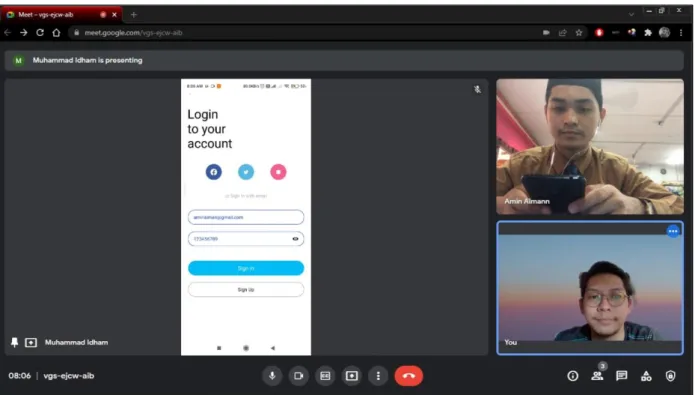
Figure 5:UAT SchoolGo
31 Figure 6: Feedback SchoolGo
This interview session was also very helpful to the writer when Mr Amin Aiman gave some suggestions to improve the class’s details section in the app. It is better to put words that are easy to understand to maintain the interest of parents and teachers, especially for those who are had difficult in farsightedness or who are the elderly or oldest.
32 4.1.3 Use Case Diagram
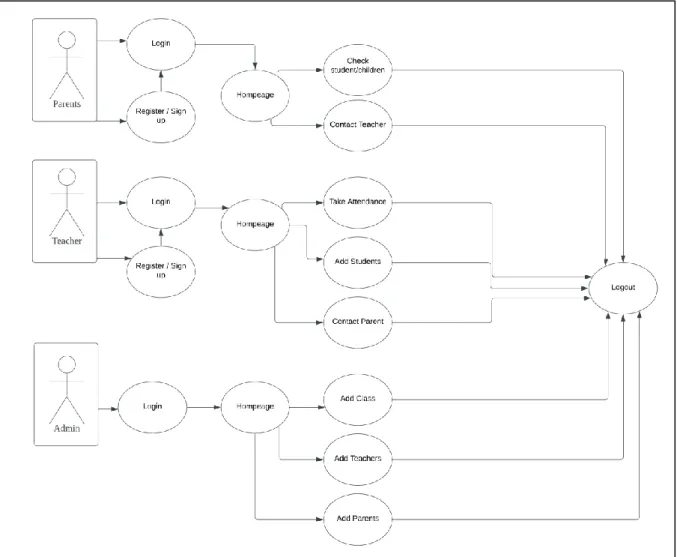
Figure 7: Use Case Diagram for SchoolGo app
Through the use case diagram, it can show more clearly the flow of the SchoolGo app system because it can provide an overview and visuals.
Users must first register on the SchoolGo app. The user must select whether they want to be a parent or a teacher. This is because the functions of parents and educators are nearly identical. Teachers have the ability to produce new students since they have access as teachers.
Meanwhile, parents can only monitor their children per class.
Besides, admin have access to the add new class, add new teachers, and add new parents respectively. Admin is most dominant in handling SchoolGo app.
33 4.1.4 Questionnaire Survey Analysis
For the last method is the author using survey analysis method. I began the first part by explaining and summarising this project because I want respondents to grasp the study's objectives, aims, and result.
Figure 8: First section of survey Google Form
Next, I asked respondents to describe their position in PTA in the second part. This is because my primary objective is to elicit responses from teachers and parents in particular. I asked respondents to rate their knowledge with and awareness of the PTA. Because I'm developing a Parents-Teacher application, I need to know their reaction to this study. I'm curious as to if the PTA is important or if there is a better appropriate topic for this research.
34 Table 6: Section 2 Survey
Following that, I'd want to learn more about the concept of online PTA for adults.
Because I want to foster relationships amongst them among primary school students, I'm curious about the implications of online platforms.
Total Respondent
Who are you?
Are you familiar with Parents Teacher Associations (PTA) or Persatuan Ibu Bapa dan Guru (PIBG)?
Are you aware the problem faced by PTA members during Covid-19?
35 Table 7: Section 3 Survey
Do you agree the idea of development PTA
application?
What platform do you prefer for developing application of PTA?
Finally, I want to construct an online / mobile application, and as such, I'm interested in the responses and views of respondents about online / mobile apps, specifically if they agree or disagree with this concept. As the result, they are more likely into mobile application and website.
36 Do you have
any
suggestion?
According on the questionnaire, the author may assume that the majority of 15 respondents, regardless of whether they are teachers or parents, would accept this online PTA programme. This Google Form survey bolsters the authors' premise that communication has an influence on the interest of persons aged 21-60 in school development, especially considering contemporary pandemic challenges. Additionally, many believe that implementing online communication between parents and teachers is appropriate, with more than 90% of respondents expressing that they would use it if introduced.
37 4.2 Prototype
4.2.1 Deliverable’s Interface
Figure 9:
Login Page
Firstly, when a user first visits the website, they will be sent straight to the log-in page.
The login page was created so that a user may log in and have full access to the website. To log in, users must enter their email address and password; however, if the user does not have an account, they must create one. Moreover, there is slider button on top right of the login page for the user to translate the application from English to Bahasa Melayu.
38 Figure 10: Sign Up section
Next, the user was then sent to a sign-up page where they may establish a profile.
Because the website was created for both parents and teachers, the user will be able to select whether they are a parent or a teacher. The user will be needed to fill in basic information such as full name, email and password.
39 Figure 11: Parents Dashboard
40 Moving forwards, once the user (parent) has logged in, they will be directed to the home page. There are two elements on the home page. The first one is the information dashboard which is located on top of the page where it will show parent’s child and profiles. Moreover, the translate from English to Bahasa Malay is still there when the slider button is set to Bahasa.
Last but not least, parents can edit their profile by fill in the name, contact number, address and telegram username.
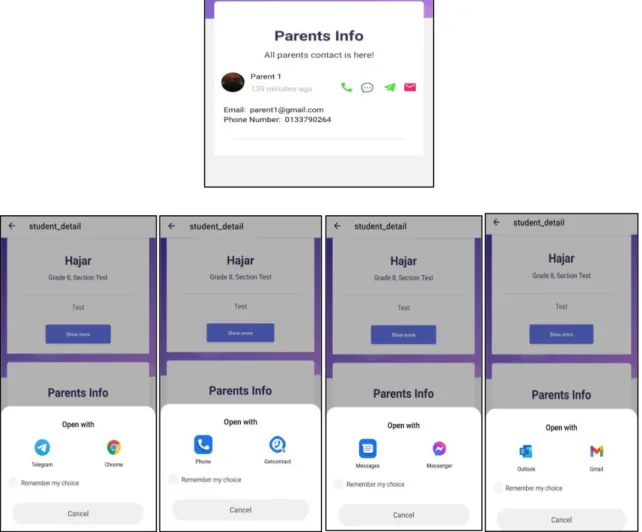
Communication and chatting will using social media platform which is Telegram. The reason why is, Telegram is a free cloud service where can store messages, media and documents. User can use it by tap the light-green paper plane. Besides, the other option for user the interact with teachers is calling, messages (SMS) and email.
Figure 12: Communication dashboard
41
Figure 13: Teacher Dashboard
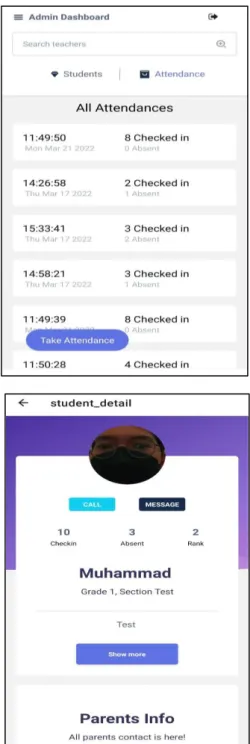
Furthermore, once the user (teacher) has logged in, they will be directed to the home page. There is only one element on the home page. The user (teacher) can access and update for the assigned classes. Moreover, the assigned classes can be update by the teacher such as add students by click at the plus (+) button and same goes to take attendance when click at the take attendance button. Also, when click the list of the student, user can see the details of the student and their parents’ info thus teacher can contact the parents using telegram or call.
42 4.2.2 User Testing
I. Developer Testing
Figure 14: Admin Dashboard
43 The author is indeed a developer for the SchoolGo prototype under the experimental area. As the Admin, the developer has performed extensive testing on the Login page, Register, Homepage, Add Classes, Add Teachers, Add Parents, and database management.
When a user registers, their data is kept, and they must be authorised before they would log into the programme. All data would be immediately saved in Firebase. Every time a user checks students, adds students, takes attendance, or interacts with other users, all activities are recorded in the user database and presented on the main dashboard.
Figure 15: Deleting Class
Finally, besides adding new class the admin also can deleting class which doesn’t use anymore. Admin can delete the class by select the dustbin icon on the side of class name.
Next, admin can add and delete teachers list at admin dashboard.
44
CHAPTER 5: CONCLUSION AND FUTURE WORK
In conclusion, the techniques and characteristics of an online platform may be used more often in parent-teacher contact with schools since they help motivate parents, particularly about their children's academic success. In a pandemic scenario, parents will be more inclined to connect with instructors through internet platforms. Thus, internet resources may assist parents in being more responsible and concerned about their children's education. Indirectly, it benefits children's growth and academic achievement without placing parents at risk, since student information will be readily accessible.
5.1 Recommendation for Future Work
The project's operations are proceeding on schedule and have so far succeeded in accomplishing the following objectives:
a) Conduct a review of teachers' and parents' impressions of the online platform.
• A study of 15 respondents revealed that more than 90% agreed to use the online technique into school development.
b) Conduct user research and analysis on apps for parents-teachers at the elementary school level.
• According to the study respondents, communication is critical for future preparation.
c) Create a game-based application that encourages communication between parents and teachers.
• Thus far, the tool has been identified, and a template application has been successfully produced in the prototype of the smartphone's design.
45
REFERENCE
[1] Razak, A. Z. A., Mohd Nor, N., & Ghavifekr, S. (2016). Parent Teacher Association (PTA) Responses to Changing Educational Policy: A Malaysian Experience. Regional Conference on Science, Technology and Social Sciences (RCSTSS 2014). Published. https://doi.org/10.1007/978- 981-10-1458-1_43
[2] Ali Syed, Z. (2018, August). Study on The Role of Parent Teacher Association (PTA) on the Development of Secondary Schools Govt of Quetta. Published. https://doi.org/10.13140/RG.2.2.31941.60642
[3] Ozmen, F., & Canpolat, C. (2010). The efficiency of school-parent associations (SPA) at schools. Elsevier Ltd. Published.
https://doi.org/10.1016/j.sbspro.2010.12.428
[4] Anake, G., Martha Agede, A., & Anake, P. (2018, May). The Role of Parents Teachers Association (PTA) In Educational Development in Cross River State. Published.
[5] Crina Marin, D., Bocos, M., Călin, C.V., & Cordoș, I. (2020, June).
STUDIA UBB PSYCHO. Parents’ Opinion Regarding the Use of Distance Learning During Covid- 19 Pandemic, 83–110.
https://doi.org/10.24193/subbpsyped.2020.1.04
[6] Arina Rahma, R., S., Amalia Rahmania, L., & Affrivenni, Y. (2021).
Development of Mobile Application-based Parenting Media to Improve the Quality of Child Care Center Services during the COVID-19 Pandemic. 2021 7th International Conference on Education and
Technology (ICET). Published.
https://doi.org/10.1109/ICET53279.2021.9575091
46 [7] Can, M. H. (2016). Use of mobile application: Means of communication
between parents and class teacher. World Journal on Educational Technology: Current Issues, 8(3), 252– 257.
[8] Kimu A. M. (2012). Parent Involvement in Public Primary Schools in Kenya. submitted in accordance with the requirements for the degree of Doctor of Education in the subject Education Management at the University of South Africa, pp. 1-305.
[9] Rose Ngare. (2014). ROLE OF PARENTS TEACHERS ASSOCIATION IN ENHANCING DISCIPLINE IN PUBLIC SECONDARY SCHOOLS IN ONGATA RONGAI ZONE, KAJIADO COUNTY, KENYA. Faculty of Education Department of Educational Administration and Planning in Partial Fulfillment of the Requirement for the Degree of Master of Education in The Catholic University of Eastern Africa, pp. 5-49
47
APPENDICES
Appendix 1: SchoolGo Flowchart
Appendix 2: SchoolGo Logo