Robotics Rehabilitation for Training and Assessment of Upper Extremities by
Chee Pui San 16545
Dissertation submitted in partial fulfillment of the requirements for the
Bachelor of Engineering (Hons) (Electrical & Electronics Engineering)
JANUARY 2016
Universiti Teknologi PETRONAS Bandar Seri Iskandar 31750 Tronoh Perak Darul Ridzuan
i
CERTIFICATION OF APPROVAL
Robotics Rehabilitation for Training and Assessment of Upper Extremities
by CHEE PUI SAN
16545
A project dissertation submitted to the
Electrical & Electronics Engineering Programme Universiti Teknologi PETRONAS in partial fulfillment of the requirement for the
BACHELOR OF ENGINEERING (Hons) (Electrical & Electronics Engineering)
Approved by,
--- (Assoc. Prof. Dr. Irraivan Elamvazuthi)
UNIVERSITI TEKNOLOGI PETRONAS TRONOH, PERAK
January 2016
ii
CERTIFICATION OF ORIGINALITY
This is to certify that I am responsible for the work submitted in this project, that the original work is my own except as specified in the references and acknowledgments, and that the original work contained herein have not been undertaken or done by unspecified sources or persons.
………
(CHEE PUI SAN)
iii ABSTRACT
Robotic Rehabilitation is a prominent rehabilitation tool that provides comprehensive repetitive tasks, diversity and feedback for cost efficiency with quantitative measurement of human motor performances substituting the conventional physiotherapy. However, the current literature has a paucity of robotic devices assessment on the human motor performances with different handedness. Therefore, this study aims to investigate both hands kinematic abilities to accomplish a reaching task which is the virtual supermarket game (picking up the food) with their effect of handedness is conducted by using rehabilitation robotic, Armeo®Spring along with the surface electromyography (sEMG) to evaluate the ability of individual muscle activation when performing an upper extremities reaching task. Moreover, a Robotics Rehabilitation Management Tool is developed as a user-friendly clinical management tool for physiotherapist and patients. Fifteen (15) subjects, 9 males, and 6 females are divided into different groups; males right-handed, males left-handed, female right- handed, female left-handed and males both-handed. From the study, the range of motion (ROM) and muscle activation (sEMG signal) of the subject were significantly dependent on the handedness. On the contrary, the game scoring and hand position/opening reach were not affected by handedness.
iv
ACKNOWLEDGEMENT
First of all, I would like to express my warm thanks to all that have aided and helped me along the way. This project has been an incredible accomplishment and milestone for me and my supervisor, Assoc. Prof. Dr. Irraivan Elamvazuthi. I have learned many valuable lessons and experiences that will be beneficial for me in the future.
In addition, I would like to express my gratitude to Universiti Teknologi PETRONAS for including Final Year Project subject which is spread throughout two semesters in an eight months period. This long exposure definitely improved my project management, time management, and presentation skills. This curriculum includes comprehensive tasks, presentations with deadlines that are well prepared.
Besides that, I would like to thank my mentor and my teacher, Assoc. Prof. Dr.
Irraivan Elamvazuthi for his teaching, guidance and support in completing this project.
He prepared me well for this project and supported me tremendously throughout this project.
Furthermore, I would like to dedicate my appreciation towards all the volunteers that participated in my research despite their tight schedule.
Last but not least, I would like to thank my family and friends for always supported me throughout the entire project, both by keeping me harmonious and helping me putting pieces together. I hope that the results from this project will be able to impact some decisions in the industry.
v TABLE OF CONTENTS
CERTIFICATION OF APPROVAL ... i
CERTIFICATION OF ORIGINALITY ... ii
ABSTRACT ... iii
ACKNOWLEDGEMENT ... iv
CHAPTER 1 ... 1
INTRODUCTION ... 1
1.1 Background Study ... 1
1.2 Problem Statement ... 2
1.3 Research Questions ... 3
1.4 Hypothesis ... 3
1.5 Research Objectives ... 3
1.6 Scope of Study ... 3
1.7 Relevancy and Feasibility ... 4
1.8 Dissertation Outline ... 4
CHAPTER 2 ... 5
LITERATURE REVIEW... 5
2.1 Background ... 5
2.2 Related Work ... 8
2.3 Critical Analysis ... 13
2.4 Summary ... 14
CHAPTER 3 ... 16
METHODOLOGY ... 16
3.1 Project Methodology ... 16
3.2 Experimental System ... 17
vi
3.2.1 Rehabilitation Robotics ... 17
3.2.2 Delsys sEMG System ... 18
3.2.3 Robotics Rehabilitation and Management Tool (RRMT) ... 19
3.3 Experimental Design ... 19
3.3.1 Subjects ... 21
3.3.2 Experimental Procedure ... 23
3.3.3 EMG Signal Collecting and Processing ... 26
CHAPTER 4 ... 32
RESULTS AND DISCUSSION ... 32
4.1 Results from Rehabilitation Robotic ... 32
4.1.1 Range Of Motion (ROM) ... 32
4.1.2 Game Scoring ... 34
4.1.3 Hand Position Reach ... 36
4.1.4 Hand Opening Reach ... 38
4.2 Muscle Activation ... 40
4.3 Robotics Rehabilitation Management Tool ... 46
CHAPTER 5 ... 48
CONCLUSION AND RECOMMENDATION ... 48
5.1 Conclusion ... 48
5.2 Future Work ... 49
APPENDIX ... 53
vii LIST OF FIGURES
Figure 1: Type of Robotics Rehabilitation ... 7
Figure 2: The flow of Methodology ... 16
Figure 3: Armeo®Spring ... 17
Figure 4: Delsys sEMG Wireless System ... 18
Figure 5: ArmeoSpring Set Up ... 24
Figure 6: Measuring ROM ... 24
Figure 7: Measuring the active motion ... 25
Figure 8: Measuring muscle activation ... 25
Figure 9: Picking food ... 26
Figure 10: Delsys sEMG System ... 26
Figure 11: Acquiring sEMG Signal with Rehabilitation Robotic ... 27
Figure 12: Raw sEMG data ... 27
Figure 13: Obtaining Filtered Signal ... 28
Figure 14: Filtered sEMG Signals ... 28
Figure 15: Obtaining RMS of Filtered Signals ... 29
Figure 16: RMS of Filtered Signals ... 29
Figure 17: Obtaining Threshold from RMS of filtered Signal ... 30
Figure 18: Threshold of RMS ... 30
Figure 19: Obtaining smooth filtered RMS signal using Simple Math ... 31
Figure 20: Smooth RMS of filtered signal ... 31
Figure 21: Smooth RMS in Excel ... 32
Figure 22: ROM for Males ... 32
Figure 23: ROM for Females ... 32
Figure 24: ROM for Males ... 33
Figure 25: Mean ROM ... 33
Figure 26: Game Scoring Male ... 34
Figure 27: Game Scoring Females ... 34
Figure 28: Game Scoring Males ... 35
Figure 29: Mean Score ... 35
viii
Figure 30: Hand Position Reach Males ... 36
Figure 31: Hand Position Reach Females ... 36
Figure 32: Hand Position Reach Males ... 37
Figure 33: Mean Hand Position Reach ... 37
Figure 34: Hand Opening Reach Males ... 38
Figure 35: Hand Opening Reach Females ... 38
Figure 36: Hand Opening Reach Males ... 39
Figure 37: Mean Hand Opening Reach ... 39
Figure 38: Smooth RMS in excel ... 40
Figure 39: RRMT personal information ... 46
Figure 40: RRMT exercise records and data ... 47
Figure 41: RRMT EMG records and data ... 48
Figure 42: The Armeo®Spring Set Up ... 55
Figure 43: Armeo®Spring weight support system ... 56
Figure 44: Male 1 Left-handed (Left) ... 57
Figure 45: Male 1 Left-handed (Right) ... 57
Figure 46: Male 2 Left-handed (Left) ... 58
Figure 47: Male 2 Left-handed (Right) ... 58
Figure 48: Male 3 Left-handed (Left) ... 59
Figure 49: Male 3 Left-handed (Right) ... 59
Figure 50: Male 2 Right-handed (Left) ... 60
Figure 51: Male 2 Right-handed (Right) ... 60
Figure 52: Male 3 Right-handed (Left) ... 61
Figure 53: Male 3 Right-handed (Right) ... 61
Figure 54: Female 1 Left-handed (Left)... 62
Figure 55: Female 1 Left-handed (Right) ... 62
Figure 56: Female 2 Left-handed (Left)... 63
Figure 57: Female 2 Left-handed (Right) ... 63
Figure 58: Female 3 Left-handed (Left)... 64
Figure 59: Female 3 Left-handed (Right) ... 64
Figure 60: Female 1 Right-handed (Left) ... 65
ix
Figure 61: Female 1 Right-handed (Right) ... 65
Figure 62: Female 2 Right-handed (Left) ... 66
Figure 63: Female 2 Right-handed (Right) ... 66
Figure 64: Female 3 Right-handed (Left) ... 67
Figure 65: Female 3 Right-handed (Right) ... 67
Figure 66: Male 1 Both-handed (Left) ... 68
Figure 67: Male 1 Both-handed (Right) ... 68
Figure 68: Male 2 Both-handed (Left) ... 69
Figure 69: Male 2 Both-handed (Right) ... 69
Figure 70: Male 3 Both-handed (Left) ... 70
Figure 71: Male 3 Both-handed (Right) ... 70
x LIST OF TABLES
Table 1: Analysis of Related Robotics ... 8
Table 2: Analysis of Related works ... 10
Table 3: Subjects Details ... 21
Table 4: Handedness Questionnaire ... 22
Table 5: Handedness Evaluation ... 23
Table 6: Muscle Activation for PALMARIS LONGUS ... 40
Table 7: Muscle Activation for EXTENSOR CARPI RADIALIS ... 42
Table 8: Highest Muscle Activation for Males between Left and Right Hand ... 43
Table 9: Highest Muscle Activation for Females between Left and Right Hand ... 43
Table 10: Highest Muscle Activation for Males between Left and Right Hand ... 44
Table 11: FYP 1 ... 53
Table 12: FYP 2 ... 53
1 CHAPTER 1 INTRODUCTION
1.1 Background Study
Musculoskeletal Disorders (MSDs) are a type of impairment that are related to body muscle, bone, joints, tendons, nerves and ligaments [1]. Tendinitis, Epicondylitis, and Carpal Tunnel Syndrome are some of the examples of MSD. For instance, extreme flexion and extension of the wrist or forceful exertion are the common causes of Carpal Tunnel Syndrome. Thus, it is stated that MSDs is the 2nd greatest leading factors of disability and 4th considerable consequence on the universal physical condition in the population which includes both disorder and demise that affects more than 1.7 billion of people worldwide [2]. According to Barthel Index [3], the ability to reach is crucial in performing for beyond half of the activities of daily living (ADL).
All defects and disabilities should be recorded for the sole purpose of strategizing a specific solution to tackle the issue at hand. This will produce promising results and subsequently, improve the life standard. A considerable amount of researches and interventions are being studied. The most common manner of rehabilitation to treat MSDs is by physiotherapy, medication and surgery however the lack of available time, expenses and transportation to the hospitals literacy difficult the effectiveness of rehabilitation the MSDs. Consequently, robotic rehabilitation becomes popular in the world of research that could provide comprehensive repetitive tasks, diversity and feedback for cost efficiency with better quality of rehabilitation repositioning the conventional therapy [3].
In recent studies, patients who initiated their own endeavour to rehabilitate have improved significant recovery and functional outcomes compared to complying solely
2
on the passive robot, like robotics exoskeleton is one of the comprehensive examples [4]. Connecting Virtual Reality with task-oriented repetitive movements’ robots as well improves muscular strength and movement coordination while creating a sense of encouragement in patients with MSDs [5].
On the other hand, hand function serves a great significant impact towards the independence of every ADL that performs self-care, social and work related functions and the quality of life [6]. Handedness is a conspicuous occurrence, refers to the tendency in the dominance of using one hand over the other in executing motor tasks.
The dominant hand is hereby used in most of the motor tasks which includes writing, eating, drawing and throwing. From a survey, 90% of the society is right-handers while the remaining 10% is left-handers. In some rare case, less than 1% is reported as Ambidexterity who can use both left hand and right hand equally well either at the same time or not [7]. In [8], the risk of MSDs (wrist/hand pain) are affected by the handedness.
1.2 Problem Statement
With the drastic increase of MSDs in this globalization era, this may result in severe effects not only to the patients themselves but also to the organization and the economy of the country. For instance, MSDs cost the US approximately $45-55 billion annually which 80 percent of the adults are affected at certain age depending on their workload [9]. Therefore, the problem statements of this project are:
Limited studies on the effect of handedness in the risk of MSDs
In conventional physiotherapy, there is no continuous measurement on improvement which the result might not be as accurate.
Lack of human friendly clinical management tool for physiotherapist and patients
3 1.3 Research Questions
Can Robotics Rehabilitation provide accurate assessment of handedness?
1.4 Hypothesis
The dominant hand should perform better in terms of range of motion while the game scoring, hand position reach and hand opening reach are independent of handedness and gender. Furthermore, muscle activation is affected by handedness and gender.
1.5 Research Objectives The objectives are:
1. To investigate effects of handedness on both hands kinematics abilities.
2. To obtain quantitative data.
3. To develop a Robotics Rehabilitation Management Tool (RRMT).
1.6 Scope of Study
In this project, an experiment is conducted on Armeo®Spring to study on both hands kinematic abilities by performing reaching task which is the virtual supermarket exercise (picking up food) with their effect of handedness. Furthermore, muscle activation for two muscles (Extensor Carpi Radialis and Palmaris Longus) is recorded during the game using Delsys surface electromyography (sEMG) System. The students of Universiti Teknologi PETRONAS are the controlled healthy subjects mimicking the underlying involuntary movements by the difference in their both hands with their handedness. The resulting data is used to determine the coordinated arm and hand movements. In conclusion, quantitative data from the experiments are analyzed and its relationship with the quality of life.
4 1.7 Relevancy and Feasibility
The Robotics Rehabilitation for Training and Assessment of Upper Extremities is a project which is relevant to the electrical and electronics studies as it focuses majorly on the subject of control and instrumentation where it involves the study on the robotics control in human motion. Different modes of control and types of robotics rehabilitation are being studied to designate the foremost rehabilitation method for an optimal reintegration of human motion.
This project is feasible within 8 months of study which is consequently for two semesters as it is a research project. In this research project, an experiment was carried out and the results were analyzed to conclude the hypothesis which had been made upfront. Moreover, research papers, book, and journals are easily assessable in the library and websites.
1.8 Dissertation Outline
The rest of the chapter is outlined as follows:
Chapter 2 discusses the background of robotics technology in rehabilitation field with their different modes of control. Moreover, the different type of robotics rehabilitation and their pros and cons along with the related works will also be reviewed and summarized in the critical analysis section.
Chapter 3 describes the type of robotic rehabilitation being used in the experiment and the flow of FYP 1&2 using a flowchart, Gantt chart, and Key milestones. Furthermore, the experimental design is also being outlined in this chapter in detailed.
Chapter 4 gives the result of the experiment that has been conducted and a discussion based on the results obtained. The hypothesis is being deduced in this segment.
Chapter 5 provides a closure for the study and future recommendations are suggested in this section.
5 CHAPTER 2 LITERATURE REVIEW
2.1 Background
A robot is a machine competent of executing an intricate series of actions autonomously whereas rehabilitation is usually a complex and tedious process which involve task- oriented repetitive movements [10]. Hence, robots are best suited for repetitive movement tasks and better therapy conditions in terms of precision which make them the largest potential as rehabilitation tools.
Rehabilitation robots comprise of a mechanical frame with a few motorized degree-of- freedom (DOF) which is the function to move, translate or rotate, around or along an axis in space by integrating one or several systems together. Furthermore, they come with sensors to provide augmented feedback such as the position or force which empower the robot to carry out the task effectively and efficiently [11].
Certain constraints such as extremities sudden reflexes during the rehabilitation process, limitations on the conventional machines such as “Continuous Passive Motion” (CPM) that will potentially damage the patients’ muscle or tendon tissue as of irregular load outcome is inherently not suitable for MSDs patients. Hence, robotics rehabilitation which is designed according to the patient’s real-time feedback during rehabilitation process serves more advantages [12].
Rehabilitation robots aims are [13]:
1. To assist patients to return to suitable, sustainable and meaningful daily life activities in the shortest time.
2. To achieve physical movement support and psychological recovery
6
3. To replace or assist the therapist in performing repetitive exercises.
Principle Modes of Control
Different modes are defined in designing the rehabilitation robotics which includes active, passive, and interactive systems [14].
Passive: Patients are inactive and their movements are being moved either by robotics or therapist to keep the muscle from atrophying with the absence of voluntary control from the patients. Passive systems are composed of mechanical linkages to move patient’s arm easily. For instance, stiff frames, bearings, and pulleys, and ropes with counter weights are the classic technical elements.
Active: Patients will initiate force to complete a motion. Active systems are made of electromechanical, pneumatic, hydraulic or other drives to enable the movement of patient’s arm actively through a predefined path.
Interactive systems: Patients will initiate certain movement and the robot will react accordingly and assist the patient’s movement using actuators, sophisticated impedance, and other control strategies.
Interactive systems type of control is the common choice in most therapy protocols designs as it serves significant benefits. For example, it is extremely encouraging for enabling patients to attain certain movement or reach which could be difficult to accomplish by them. Help will be activated when a patient initiated a motion of adequate momentum (MIT-Manus [15], ARM Guide [16]) or pressure (MIME) [17] or when EMG signal reaches the maximum threshold. This is a type of impedance control that is represented as a ’virtual slot’ which is between the set point orientation and nominal orientation. These phenomena can be described as two springy walls to assist the patients’ motion. The back wall is mobile along a minimum jerk orientation while the front wall is at rest. In conclusion, when the patient movement is slower than the mobile wall, assistance will be given while on the other hand, if the patient shows the contrary, assistance will be inactive [11].
7 Types of robotics rehabilitation
Types of robotics rehabilitation for upper extremities are defined as in Figure 1.
Figure 1: Type of Robotics Rehabilitation
In Figure 1, robotics rehabilitation is being categorized into two respective groups; EEB and exoskeletons. EEB robots do not possess the ability to apply torque to specific joints of the arm but it provides training capability to the distal segments of limbs in encapsulating a huge fragment of utility workspace by constantly applying mechanical forces. Meanwhile, exoskeletons are rigid external that designed similar to human anatomy and structures in order to empower human joint’s motion. MIT-Manus, ARM Guide, and MIME are some of the few examples of EEB robots. On the contrary, examples of exoskeletons include 6 DOF ARMin, Armeo®Spring and 5 DOF MAHI.
Incomplete tetraplegia is often associated with loss of bladder and bowel control, sexual dysfunction, trunk disability, and walking which are highly ranked as the primary impairments according to [18]. The most significant impairment of all, however, being prioritized is the loss of arm and hand function as it serves a great significant impact
Robotics Rehabilitation for Upper Extremities
End-Effector based (EEB)
MIT Manus
ARM Guide
MIME
Exoskeleton
6 DOF ARMin
Armeo®Spring
5 DOF MAHI
8
towards the independence of every ADL that performs self-care, social and work related functions. The quality of life of this population is then affected in a huge way [6].
2.2 Related Work
A comparison of related robotics is defined as in Table 1.
Table 1: Analysis of Related Robotics No Author Year Type of
Robotics Rehabilitation
Applicatio n
Merits Demerits
1 Sharifi, et al.
[15]
2012 End-Effector Based
MIT- Manus
Low cost Less range of
movement for possible exercise scenario 2 Staubli et
al.
[19]
2009 Exoskeleton 6 DOF ARMin
Features authoritative motion sequences, inclusive of coordinated interactions between wrist, elbow and shoulder joints 3 Gupta,
Abhishek et al.
[20]
2007 Exoskeleton 5 DOF MAHI
Features a safe training
environment and customized feedback
Limitation of torque output capability.
4 Lum et al.
[17]
2006 End-Effector Based
MIME Effective as an equivalent dose of conventional rehabilitation therapy
Lack of distinct treatment for distal joints such as wrists
9 5 Reinkens
meyer DJ et al.
[16]
2000 End-Effector Based
ARM Guide
Adjustable slide to assist forearm movements
Limited working space for linear movements
In Table 1, MIT-Manus [15] which was commercialized by MIT in the USA is a 2 DOF system and one of the low-cost rehabilitation robots. It has a main controller that operates a virtual spring and curb between the task-oriented, stability point contingent on time and the orientation of the end effector. The ARMin [19] is a 6 DOF system . It features authoritative locomotion sequences and coordinated interactions between different articulation inclusive of the wrist, elbow and shoulder joints. On the other hand, MAHI [20] is a 5 DOF system designed at Rice University, which is specialized in virtualized rehabilitation. It features a safe training environment and customized feedback as its primary consideration is the kinematic design with the assistance for excessive weight and gravity compensation. In addition, MIME robot [17] developed by VA/Stanford University, Palo Alto is a traditional industrial robot. It is as efficacious as an alternative dose of conventional rehabilitation treatment due to its large dimensional motion in a 3D plane. The ARM-Guide [16] robot is a reasonable priced and simple designed 4 DOF system. It consists of an adjustable slide with two rotations which enable the 3D variation in the orientation of movements to assist forearm movements.
10
A comparison of related works is defined as in Table 2.
Table 2: Analysis of Related works
No Author Year Experiment Results Limitation
1
Duthill eul et al.
[21]
2015
Ten healthy subjects
performing fine and wide
movements using EMG.
Wide Movement - Left Hand has a
higher number of muscle synergies than right hand regardless of handedness.
Fine Movement
- Dominant hand has higher number of muscle synergies than non-dominant hand.
- Small scale of subjects - Does not
consider both-handed condition - Only depend
on one result which is from EMG.
2
Park and Park.
[22]
2015
Eighteen left- handers subject consisted of ten males and eight females subjects were
experimented on the effects of using a scissor designed for left- handers and for right-handers
Scissor for left-handers - The degree of wrist
flexion decreased which result in more functionality and higher accuracy.
- Only tested on left- handed subjects which the result is too subjective
3
Park [7]
2013
36 subjects (16 left-handers, 20 right-handers) performed an experiment on the muscle activation of upper
extremity during writing.
Left-handers
- Additional wrist flexion is needed during writing - Initiate more wrist
and shoulder muscles Right-handers
- Less wrist flexion is needed when writing - Less wrist and
shoulder muscle needed
- Only depend on one result which is from EMG.
11 4
Park and Yang [23]
2012
25 subjects (12 left-handers and 13 right-handers) evaluated
quantitatively the wrist flexion of right-handers and left-handers through writing.
Left-handers
- Greater wrist flexion is needed during writing
Right-handers
- Lesser wrist flexion is needed when writing
- Does not consider both-handed condition
5
Yoshi kawa et al.
[24]
2007
Ten(10) male subjects (9 right- handed and one left-handed) evaluated
quantitatively the dominance of handedness using haptic virtual reality technology
Position Control Test and Manipulation Test
- The dominance hand performs better compared to the non- dominance hand.
Force Test
- Left hand for left handed and three other subjects left performed better than the right hand.
- Small scale of subjects - Does not
consider both-handed condition - Limitation on
gender
6
Tezel et al.
[25]
2005
221 dental students (24 left- handed, 24 right- handed, 173 right-handed of different age groups) are studied to assess the frequency of MSDs-related during the dental practice.
Left-handed students tend to have higher frequency of MSDs as compared to right-handed students regardless of gender.
- Does not consider both-handed condition - No
quantitative measurement or diagnosis (only based on
questionnaire )
7
Roma n-Liu.
and T.
Tokars ki [26]
2002
Nine (9) healthy right-handed male students were evaluated on the handgrip force and EMG signal for five muscles by carrying out two tests (with maximum handgrip force and with 10% of maximum handgrip force)
The variation between maximum handgrip forces in the experiment does not show significant difference. However, the value of handgrip force exertion is significantly dependent on the upper limb location.
- Small scale of subjects - Constraints
on the
different type of
handedness - Limitation on
gender
12
Numerous studies have been carried out in the area of handedness. In Table 2, Duthilleul et al [21] have carried out a study on a sample of ten healthy subjects performing fine and wide movements using EMG in 2015. From the study, left hand has a higher number of muscle synergies than right hand regardless of handedness in wide movements, while for fine movement, the dominant hand has a higher number of muscle synergies than non-dominant hand. Park and Park [22] also conducted an experiment in the same year on the differences in upper extremities wrist flexion using a scissor made for different dominant. The degree of wrist flexion decreased which result in more functionality and higher accuracy when the left-handers subjects used the scissors that are specially designed for left-handers as compared to scissors that are designed for right-handers.
The research concluded that left-handers needed additional wrist flexion and initiated more wrist and shoulder muscle during writing as compared to right-handers. In addition, Park [7] conducted an experiment on thirty-six subjects consisted of right- handers and left-handers to study on the muscle activation of upper extremities during writing. In this paper, it was reflected that left-handers needed additional wrist flexion and initiated more wrist and shoulder muscles during writing. Moreover, in 2012, Park and Yang [23] did a research on evaluating the wrist flexion for right-handers and left- handers through writing. The result was the left-handers actually need greater wrist flexion during writing compared to right-handers. On the other hand, in 2007, Yoshikawa et al [24] have conducted a study on a control group of ten male subjects (9 right-handers and one left-hander) to evaluate quantitatively the dominance of handedness using haptic virtual reality technology. The finding was the dominance hand performs better compared to the non-dominant hand in position control and manipulation test. In contrary, left hand for left handed and three other subjects’ left hand performed better than the right hand in force test. In 2005, Tezel et al [25]conducted a study to assess the frequency of MSDs during the dental practice which focuses on a control group of 221 dental students (24 left-handed, 24 right-handed, 173 right-handed of different age groups). Left-handed students tend to have a higher frequency of MSDs as compared to right-handed students regardless of gender using questionnaire technique. Roman and Tokarski [26] presented a research to evaluate on the handgrip force and EMG signal for five muscles by carrying out two tests (with
13
maximum handgrip force and with 10% of maximum handgrip force). The variation between maximum handgrip forces in the experiment does not show significant difference. However, the value of handgrip force exertion is significantly dependent on the upper limb location.
2.3 Critical Analysis
MIT-Manus [15] has less range of movement for possible exercise scenario due to it only designed for elbow and shoulder hand movement in a horizontal plane. On the other hand, MAHI [20] has a limitation of torque output capability. The only flaw in MIME [17] is it lacks distinct treatment for distal joints such as wrists. On top of that, the disadvantage of ARM-Guide [16] system is the limited working space for linear movements. From the analysis of the applications of robotics rehabilitation, it shows that Exoskeleton features more advantages especially in terms of joints movement compared to EEB robotics. In a nutshell, Armeo®Spring which is exoskeleton type is chosen as the experimentation tool to understand the human motion and the kinematic abilities of hand motion.
In [21], the study only depended on one result which was solely from the EMG.
Moreover, it did not consider the both-handed condition and conducted on a small scale of subjects which affected the results’ reliability. On the other hand, authors Park and Park study only tested on left-handed subjects which the result was too subjective [22].
In [7] [23], both the studies only depended on one result and did not consider both- handed condition which might affect the result. Besides, Yoshikawa et al [24] had a similar limitation which was a small scale of subjects and limitation on gender which in this case the research only conducted on a control group of ten male subjects. They also did not consider the both-handed condition. In [25], Tezel et al did not have a quantitative measurement or diagnosis as the author only depended on the questionnaire result which might affect the accuracy of his research. Last but not least, [26] had a constraint on the different type of handedness which the author only studied on right- handed subjects. The author did not consider other handedness and had a limitation on gender. In conclusion, all of the studies showed similar limitation where they did not
14
consider the both-handed condition and often had a small scale of subjects. Furthermore, most of the studies were limited to only one source of tool to evaluate the result which is not reliable and supportive enough.
2.4 Summary
In this chapter, the functions and advantages of robotic rehabilitation which make them the most promising rehabilitation tools in the market are being discussed. In addition, the principle modes of control and the types of robotics rehabilitation are being reviewed in depth in this chapter. For instance, different modes in designing the rehabilitation robotics are active, passive and interactive systems. On the other hand, the types of robotics rehabilitation are the EEB robots (MIT-Manus, ARM Guide, MIME) and exoskeleton robots (ARMin, Armeo®Spring, MAHI). Last but not least, the related robotics advantages and disadvantages are discussed and related works are analyzed.
16 CHAPTER 3 METHODOLOGY
3.1 Project Methodology
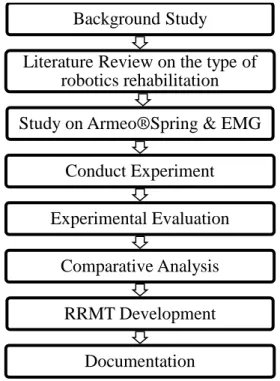
The flow of project methodology is shown as Figure 2.
Figure 2: The flow of Methodology
In Figure 2, the project kick-off with a thorough background study on the project title as it is essential to understand the overview of the project in order to achieve the objectives of the project. Furthermore, various literature sources such as research papers were
Background Study Literature Review on the type of
robotics rehabilitation Study on Armeo®Spring & EMG
Conduct Experiment Experimental Evaluation
Comparative Analysis RRMT Development
Documentation
17
studied and analyzed for the compilation of literature review on different types of robotics rehabilitation.
Besides, the control mechanism of rehabilitation robotic which is the Armeo®Spring was studied to design a foremost method demonstrating the effect of human motion in the different type of handedness using robotics rehabilitation. The quantitative measurements include range of motion, hand position reach (3D) and hand opening reach (3D) were obtained from the rehabilitation robotic was then further studied and evaluated to determine the accuracy and significant of the statistical data. On the contrary, the sEMG device was used in conjunction with the rehabilitation robotic to get additional data for evaluation of the effect of handedness.
Next, the experiment was conducted and evaluated in fifteen (15) healthy subjects from Universiti Teknologi PETRONAS. From the results, a comparative analysis was carried out. Then, Robotics Rehabilitation Management Tool (RRMT) was developed as a user- friendly tool to manage the subjects’ records and statistically data. Finally, the whole project was documented.
3.2 Experimental System
3.2.1 Rehabilitation Robotics
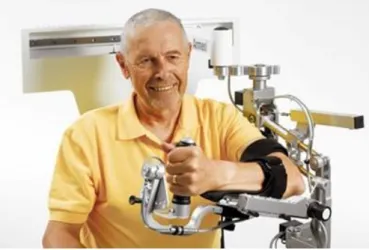
Figure 3 shows a patient with Rehabilitation Robotic device.
Figure 3: Armeo®Spring
18
In this project, Armeo®Spring from Hocoma as shown in Figure 2 was used to study the dynamic function of human motor control and motor learning. The Armeo Therapy Concept focuses on exercises that are self-initiate, self-directed, functional and intense, thus increasing the effectiveness of rehabilitation which is an enhancement version of (T-WREX) [27]. This robotics has an ergonomic arm skeleton with integrated spring mechanism that provides great gravity support system which cradles the entire arm.
Furthermore, with the enhancement of any residual function and neuromuscular control, patients are able to move actively across an extensive 3D workspace providing an augmented feedback. There is also a pressure-sensitive handgrip in which is effective for exercising the hand motor motion by executing grasp and release exercises, movement of wrist. The integration of Armeo software that contains numerous of game-like movement exercises that are similar to ADL simulated in a virtual-reality training creates a motivating environment to the patients’ along with the immediate feedback response [28].
3.2.2 Delsys sEMG System
Figure 4 shows the Delsys sEMG system used in quantifying the muscle activation.
Figure 4: Delsys sEMG Wireless System
Delsys sEMG System is a non-invasive biofeedback system features wireless surface EMG sensors aimed for motor control studies and unit behavior. This system will be used to determine the handedness-related differences in muscle activation. This innovation is an enhancement of conventional analysis of surface EMG which can
19
produce a homogenous EMG signal with low muscle crosstalk and minimized motion artifact with an array of surface sensors.
3.2.3 Robotics Rehabilitation and Management Tool (RRMT)
Robotics Rehabilitation and Management Tool (RRMT) is a user-friendly and sophisticated management tool developed in this project using visual basic. It features
Retrieve and save patient’s personal information
Integration with Armeo®Spring and EMG
Simple illustration (graph) to show the muscle activation
3.3 Experimental Design
The differences in handedness in healthy subjects were studied using robotic rehabilitation (Armeo®Spring from Hocoma) and EMG recording (Delsys dEMG System). For instance, it was expected that a left-handed subject, left hand will have a larger range of motion and opening reach as compared to his right hand because of the constant exertion activities. This experiment measured the range of motion, scoring from a computer-based exercise (collecting food and positioning them in a trolley) scores, hand position/opening reach and EMG signal during the exercise for both hands. The results were analyzed to make a conclusion.
Measurement:
1. Range Of Motion (ROM)
The ROM was measured using Armeo®Spring by assessment of horizontal shoulder abduction/adduction, shoulder inner/outer rotation and shoulder flexion/extension.
2. Game Scoring, Hand Position Reach and Hand Opening Reach
These were measured using Armeo®Spring by performing the computer-based exercise which is similar to daily activities exercise which is picking food and positioning them into the cart.
20
Hand Position Reach is how close the hand was to the target at the minimum point and the smoothness of the movements (ratio of their hand path-length to a straight line).
Hand Opening Reach is how much degree of opening and closing during the grabbing and release of the food.
3. EMG signal
EMG signal of two muscles (Extensor Carpi Radialis and Palmaris Longus) were obtained simultaneously by positioning the electrodes on these muscles during the execution of Armeo®Spring’s exercise.
Filtering raw data using Root Mean Square
𝑹𝒐𝒐𝒕 𝑴𝒆𝒂𝒏 𝑺𝒒𝒖𝒂𝒓𝒆, 𝑹𝑴𝑺 = [𝟏𝑺∑ 𝑓𝑆1 2(𝑠)]
𝟏
𝟐 (1)
where,
S = window lengths (points) f(s) = data within the window
Analyzing the results
𝑴𝒆𝒂𝒏, 𝝁 = 𝜮𝑿𝑵𝒊 (2)
where,
ΣXi = sum of population observations N = number of population observations
21
𝑆𝑡𝑎𝑛𝑑𝑎𝑟𝑑 𝐷𝑒𝑣𝑖𝑎𝑡𝑖𝑜𝑛, 𝑺𝑫 = 𝒔𝒒𝒓𝒕 [𝜮(𝑿𝒊𝑵−𝝁)𝟐] (3) where,
Xi = ith element from the population μ = population mean
N = number of elements in the population
3.3.1 Subjects
There were a total of 15 healthy subjects from Universiti Teknologi PETRONAS without a history of MSDs enrolled in this study. They performed a computer-based exercise that was similar to the activity of daily life which was the picking food and positioning them in a shopping cart. These 15 subjects were divided into 3 distinct categories (Left-handed subjects, Right-handed subjects and Both-handed subjects).
Both-handed is often a rare case but it was also included in this study. These subjects were given a set of questionnaire (LQ test) to place them into their respective categories.
Each category has consisted of 3 male subjects and 3 female subjects except for the both-handed categories which only consisted of 3 male subjects due to its uncommon behavior.
Table 3 shows the subjects details calculated in mean for each respective group.
Table 3: Subjects Details Groups Age
(yrs)
Weight (kg)
Height (cm) M-LH ±22.67 ±58.33 ±167
M-RH ±23 ±62.33 ±175.67
F-LH ±23.33 ±52.33 ±163.67
F-RH ±25 ±49.33 ±162.33
22 Groups Age
(yrs)
Weight (kg)
Height (cm) M-BH ±22.33 ±58.67 ±171.67
Table 4: Handedness Questionnaire
23
Table 5: Handedness Evaluation
3.3.2 Experimental Procedure
The step-by-step procedure of the experiment is outlined as follows:
1. The Armeo®Spring is positioned to the left for left hand assessment.
2. The Armeo®Spring is set up according to the length of the upper and lower arm of the subject and the weight support (described in APPENDIX B) for upper and lower arm is constant which is D for both upper and lower arm as in Figure 5.
24
Figure 5: ArmeoSpring Set Up
3. The assessment started with measuring the range of motion (ROM) as in Figure 6.
Figure 6: Measuring ROM
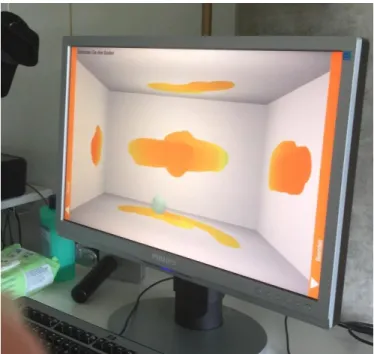
4. The active motion of the subject is measured by painting 5 walls which include the far wall, left & right walls, upper wall and lower wall as in Figure 7.
25
Figure 7: Measuring the active motion
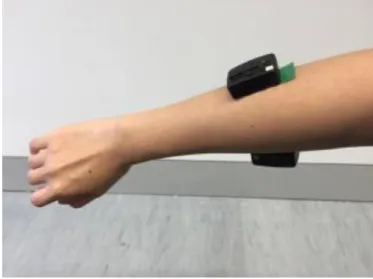
5. Two electrodes are attached to the subjects’ muscles ((Extensor Carpi Radialis and Palmaris Longus) as in Figure 8 to measure the muscle activation during the exercise.
Figure 8: Measuring muscle activation
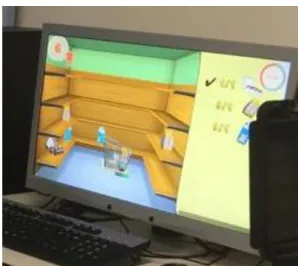
6. Lastly, the training and assessment for a reaching task which is the picking food exercise. The patient has to move his/her arm and grabbed the food and put them into a shopping cart as in Figure 9.
26
Figure 9: Picking food 7. Steps 1 to 5 will be repeated for right hand assessment.
8. The results will be tabulated and a graph for better analysis.
3.3.3 EMG Signal Collecting and Processing
1. The wireless sensors are turned on and attached to the two muscles of the subject (Palmaris Longus and Extensor Carpi Radialis) connected wirelessly to the Delsys sEMG System as shown in Figure 10.
Figure 10: Delsys sEMG System
2. EMG signals are obtained during the execution of exercise using the rehabilitation robotic which is the Armeo®Spring as shown in Figure 11.
27
Figure 11: Acquiring sEMG Signal with Rehabilitation Robotic
3. Figure 12 is the raw sEMG data (Palmaris Longus and Extensor Carpi Radialis) obtained from the two minutes exercise (picking up food and placing them into the cart) which involved constantly grabbing and release of hand function.
Figure 12: Raw sEMG data
4. The raw data are filtered using Butterworth with an order of 4, passband ripple of 3dB, attenuation of 40dB, a band pass response and a corner frequency of 20Hz as shown in Figure 13.
28
Figure 13: Obtaining Filtered Signal
5. Figure 14 shows the filtered sEMG Signals of Palmaris Longus at the top and Extensor Carpi Radialis at the bottom.
Figure 14: Filtered sEMG Signals
6. Figure 15 shows the function in obtaining the root mean square (RMS) of the filtered signals.
29
Figure 15: Obtaining RMS of Filtered Signals
7. The RMS of the filtered signal is shown in Figure 16 with Palmaris Longus and Extensor Carpi Radialis positioned at the top and bottom respectively.
Figure 16: RMS of Filtered Signals
8. Figure 17 shows the function in obtaining threshold from the RMS of the filtered signal for the Palmaris Longus.
30
Figure 17: Obtaining Threshold from RMS of filtered Signal
9. The threshold obtained from the RMS of the filtered signal is shown in Figure 18.
Figure 18: Threshold of RMS
10. Figure 19 shows the function in obtaining smooth filtered RMS signal using Simple Math (Multiply the RMS signal with the Threshold obtained in Figure 18) for the Palmaris Longus.
31
Figure 19: Obtaining smooth filtered RMS signal using Simple Math 11. A smooth RMS of filtered signal for Palmaris Longus is shown in Figure 20.
Steps 8 to 10 are repeated for Extensor Carpi Radialis.
Figure 20: Smooth RMS of filtered signal
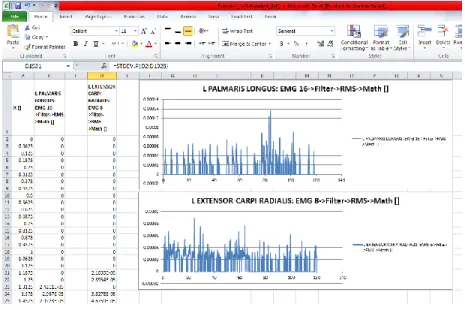
12. After completion of all the steps above, Figure 21 shows the smooth RMS data are exported to Excel for graph plotting and critical analysis of the mean and standard deviation of each subject’s muscle activation.
32
Figure 21: Smooth RMS in Excel
32 CHAPTER 4
RESULTS AND DISCUSSION
4.1 Results from Rehabilitation Robotic 4.1.1 Range Of Motion (ROM)
Figure 22 shows the ROM of male subjects’ left hand and right hand with their handedness.
Figure 22: ROM for Males
Figure 23 shows the ROM of female subjects’ left hand and right hand with their handedness.
Figure 23: ROM for Females
33
Figure 24 shows the ROM of both-handed male subjects’ left hand and right hand.
Figure 24: ROM for Males
Figure 25 shows the mean of ROM of subjects’ left hand and right hand with their handedness.
Figure 25: Mean ROM
In Figure 22 and Figure 23, the subjects’ ROM tends to be larger for their dominant hand as compared to non-dominant hand regardless of genders with significant statistical difference for left-handed and right-handed subjects. On the other hand, in both-handed situation, the ROM differences between both hands are very small which the mean for the three subjects was ±0.0467m3 while the mean for left-handed and right-handed have a significant difference as shown in Figure 25. This certainly proved that the hypothesis is eventually true. The dominant hand has a larger ROM due to constantly exercising of the hand in executing daily activities however, for the both handed subjects where they used both hands as good has a smaller difference of ROM between both hands due to
34
they constantly exercising both of their hands in carrying out daily activities instead of just concentrating on one hand.
4.1.2 Game Scoring
Figure 26 shows the game scoring of male subjects’ left hand and right hand with their handedness.
Figure 26: Game Scoring Male
Figure 27 shows the game scoring of female subjects’ left hand and right hand with their handedness.
Figure 27: Game Scoring Females
35
Figure 24 shows the game scoring of both-handed male subjects’ left hand and right hand.
Figure 28: Game Scoring Males
Figure 29 shows the mean of game scoring of subjects’ left hand and right hand with their handedness.
Figure 29: Mean Score
In Figure 26 and 27, all the subjects showed that the tendency of getting high scores in this exercise was the left hand as compared to the right hand regardless of handedness except for male1 left-handed and male3 right-handed which showed the opposite result.
This result is similar to the studies in [29] [30], when reaching, left hand tends to magnify online control even for adjacent target which eliminated the advantages of right hand regardless of handedness. Moreover, numerous studies have also proved that left- hand is better in playing video games since our left part of the body is being controlled by the right brain which emphasized on the visualization and arts (Motor Skill).
36
However, there was an exception case for the both-handed subjects where all the three males’ both-handed subjects have a higher score with their right hand as shown in Figure 28. In Figure 29 showed the average score of each category of handedness, there was an enormous difference in the both-handed subjects which could be due the sensors error in the rehabilitation robotic or this uncommon behavior of both-handed subjects.
Therefore, further studies on a bigger group of both-handed subjects should be carried out to study the differences of this rare ambidexterity group.
4.1.3 Hand Position Reach
Figure 30 shows the hand position reach of male subjects’ left hand and right hand with their handedness.
Figure 30: Hand Position Reach Males
Figure 31 shows the hand position reach of female subjects’ left hand and right hand with their handedness.
Figure 31: Hand Position Reach Females
37
Figure 32 shows the hand position reach of both-handed male subjects’ left hand and right hand.
Figure 32: Hand Position Reach Males
Figure 33 shows the mean of hand position reach of subjects’ left hand and right hand with their handedness.
Figure 33:Mean Hand Position Reach
In Figure 30, 31 and 32, 53% of the subjects (8 out of 15) showed that the tendency of higher hand position reach in this exercise is the left hand as compared to the right hand regardless of handedness. This result notably supported the findings in the game scoring where the left hand scored higher in the exercise regardless of handedness. Furthermore, in Figure 33, the mean of hand position reach in right-handed and both-handed subjects were higher in left hand than the right hand whereas the left-handed subject showed the contrary with high difference between both hands. This denoted that there might be sensors error in the rehabilitation robotic on some of the subjects because it is quite
38
impossible to have extreme high difference between both hands for the hand position reach.
4.1.4 Hand Opening Reach
Figure 34 shows the hand opening reach of male subjects’ left hand and right hand with their handedness.
Figure 34: Hand Opening Reach Males
Figure 35 shows the hand opening reach of female subjects’ left hand and right hand with their handedness.
Figure 35: Hand Opening Reach Females
39
Figure 36 shows the hand opening reach of both-handed male subjects’ left hand and right hand.
Figure 36: Hand Opening Reach Males
Figure 37 shows the mean of hand opening reach of subjects’ left hand and right hand with their handedness.
Figure 37: Mean Hand Opening Reach
Hand opening reach measured data are shown in Figure 34, 35, and 36. 73.3% of the subjects (11 out of 15) have higher hand opening on the left hand as compared to the right hand in this exercise disregarding of handedness including the both-handed males where the left hand have obvious high contrast with the right hand as shown in Figure 34, 35, and 36. This is also further supported by the higher mean of hand opening reach on the left hand than the right hand as shown in Figure 37. In a nutshell, the outcome
40
from the hand opening reach eventually supported the finding in the game scoring where the left hands were better in terms of virtual based exercise.
4.2 Muscle Activation
Smooth RMS curve for Male 1 (Left-handed) is plotted to determine the mean and standard deviation for assessment as shown in Figure 38. The RMS curves for other subjects are attached in APPENDIX C.
Figure 38: Smooth RMS in excel
Muscle Activation for Palmaris Longus of all the subjects’ left hand and right hand are defined as in Table 6.
Table 6: Muscle Activation for PALMARIS LONGUS
PALMARIS LONGUS Left (Mean±SD) Right (Mean±SD)
Male 1 (L-H) 3.93927E-06±9.32835E-06 1.54115E-05±2.5772E-05
Male 2 (L-H) 3.2393E-06±5.33812E-06 5.70268E-06±1.06945E-05
41
Male 3 (L-H) 1.01446E-05±1.07142E-05 1.03166E-05±1.10467E-05
Female 1 (L-H) 9.9432E-06±1.76649E-05 1.11492E-05±1.614E-05
Female 2 (L-H) 1.2727E-05±1.5957E-05 4.68018E-06±6.4777E-06
Female 3 (L-H) 1.543E-05±2.335E-05 4.07979E-06±1.88846E-05
Male 2 (R-H) 1.4265E-05±3.8811E-05 1.74546E-05±2.55453E-05
Male 3 (R-H) 2.4207E-05±3.24744E-05 1.33599E-05±2.00753E-05
Female 1 (R-H) 3.8158E-06±8.2214E-06 2.58557E-05±4.79397E-05
Female 2 (R-H) 8.37628E-06±1.84441E-05 2.18936E-05±2.41108E-05
Female 3 (R-H) 2.0865E-05±2.4383E-05 2.92188E-05±3.72826E-05 Male 1 (B-H) 3.47641E-06±6.46656E-06 2.83759E-06±3.59392E-06
Male 2 (B-H) 1.94223E-05±2.40247E-05 8.7832E-06±1.64156E-05
Male 3 (B-H) 9.38004E-06±1.54848E-05 7.68014E-06±1.22709E-05
Muscle Activation for Extensor Carpi Radialis of all the subjects’ left hand and right hand are defined as in Table 7.
42
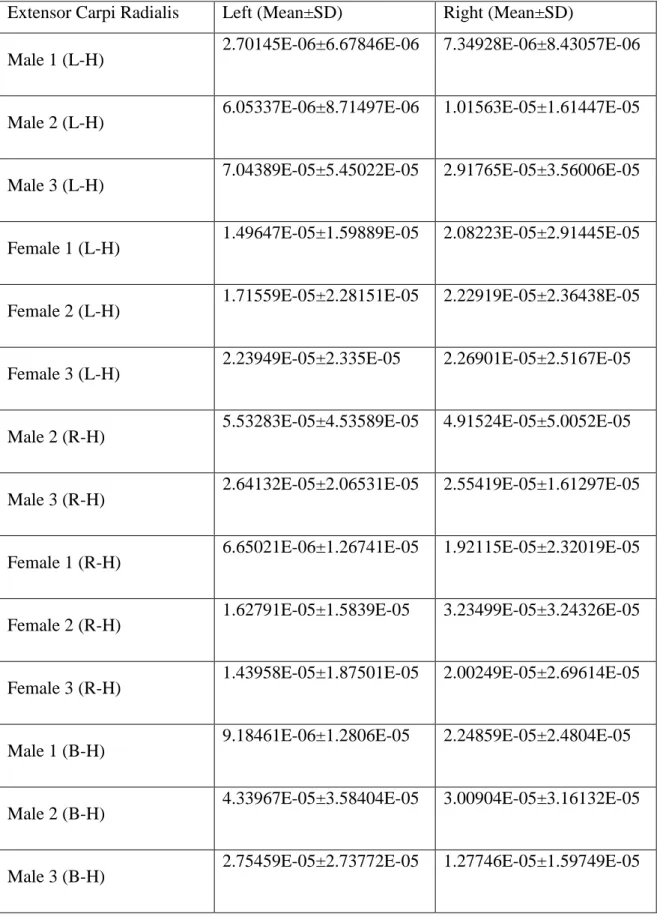
Table 7: Muscle Activation for EXTENSOR CARPI RADIALIS Extensor Carpi Radialis Left (Mean±SD) Right (Mean±SD)
Male 1 (L-H) 2.70145E-06±6.67846E-06 7.34928E-06±8.43057E-06 Male 2 (L-H) 6.05337E-06±8.71497E-06 1.01563E-05±1.61447E-05
Male 3 (L-H) 7.04389E-05±5.45022E-05 2.91765E-05±3.56006E-05
Female 1 (L-H) 1.49647E-05±1.59889E-05 2.08223E-05±2.91445E-05
Female 2 (L-H) 1.71559E-05±2.28151E-05 2.22919E-05±2.36438E-05
Female 3 (L-H) 2.23949E-05±2.335E-05 2.26901E-05±2.5167E-05
Male 2 (R-H) 5.53283E-05±4.53589E-05 4.91524E-05±5.0052E-05
Male 3 (R-H) 2.64132E-05±2.06531E-05 2.55419E-05±1.61297E-05 Female 1 (R-H) 6.65021E-06±1.26741E-05 1.92115E-05±2.32019E-05
Female 2 (R-H) 1.62791E-05±1.5839E-05 3.23499E-05±3.24326E-05
Female 3 (R-H) 1.43958E-05±1.87501E-05 2.00249E-05±2.69614E-05
Male 1 (B-H) 9.18461E-06±1.2806E-05 2.24859E-05±2.4804E-05
Male 2 (B-H) 4.33967E-05±3.58404E-05 3.00904E-05±3.16132E-05
Male 3 (B-H) 2.75459E-05±2.73772E-05 1.27746E-05±1.59749E-05
43
Highest muscle activation for males between left and right hand are summarized in Table 8.
Table 8: Highest Muscle Activation for Males between Left and Right Hand Subjects Palmaris
Longus
Extensor Carpi Radialis
L R L R
Male L-H (n=3)
0 3 1 2
Male R-H (n=2)
1 1 2 0
In males’ category, Table 6 and 7 showed the RMS value of EMG Signal for the following two muscles; Palmaris Longus and Extensor Carpi Radialis respectively during performing the computer based game. In Table 8 shows the highest muscle activation between left and right hand. This table explained that males left-handed have higher muscle activation with their right hand in both muscles; palmaris longus and extensor carpi radialis as compared to the left hand. On the other hand, males’ right- handed shows higher muscle activation with their left hand in extensor carpi radialis while the palmaris longus does not show any notable difference.
Highest muscle activation for females between left and right hand are summarized in Table 9.
Table 9: Highest Muscle Activation for Females between Left and Right Hand Subjects Palmaris
Longus
Extensor Carpi Radialis
L R L R
44 Female L-H
(n=3)
2 1 0 3
Female R-H (n=3)
3 0 0 3
In females’ category, Table 6 and 7 showed the RMS value of EMG Signal for the following two muscles; Palmaris Longus and Extensor Carpi Radialis respectively during performing the computer based game. In Table 9 shows the highest muscle activation between left and right hand. This table explained that females tend to have a similar pattern in these two muscles regardless of handedness. For instance, left-handed and right-handed females have higher muscle activation with their left hand on their Palmaris Longus. On the other hand, left-handed and right-handed females shows higher muscle activation with their right hand in extensor carpi radialis compared to the left hand.
Highest muscle activation for males both-handed between left and right hand are summarized in Table 10.
Table 10: Highest Muscle Activation for Males between Left and Right Hand Subjects Palmaris
Longus
Extensor Carpi Radialis
L R L R
Male B-H (n=3)
3 0 2 1
Subjects that write using their right hand and do other DAL using their left hand is grouped under this both-handed category after the assessment of LQ test. From Table 10, it concluded that their muscle activation in palmaris longus and extensor carpi
45
radialis were higher on their left hand as compared the right hand show the opposite.
This finding was actually similar to the male right-handed subjects. This result proved that it was statistically true because both-handed subjects write using their right-hand and execute other daily activities such as brushing their teeth and play sport with the left-hand.
In a nutshell, the effect of handedness in muscle activation was quite varies depending on gender. For instance, the finding in males’ subjects was greatly affected by the handedness. All the males’ subjects have a higher RMS value for the non-dominant hand except for 2 males’ subjects who showed the contrary. However, for the females’
subjects, they were not affected by handedness and have the same muscle activation for both the left-handed and right-handed females.
46 4.3 Robotics Rehabilitation Management Tool Figure 39 shows the homepage of RRMT tool.
Figure 39: RRMT personal information
In Figure 39, it shows the interface of RRMT for patient’s personal information. With RRMT, physiotherapists can easily assess the details of each individual patient and simply update the progress of the patients or schedule an appointment. There are three parameters that will enable the quick interface which are 'view', 'save' and 'update'. The 'view' button enables user to quickly get an overview of the patients personal information, 'save' button simply saves the information inserted and 'update' overwrites the existing information with the new information inserted earlier.
47
Figure 40: RRMT exercise records and data
Figure 40 shows the RRMT interface with rehabilitation robotic (Armeo®Spring). Using the RRMT, the physiotherapist or patients themselves are able to view their improvement or records from the rehabilitation robotic offline which is much more convenient without the need to install Armeo®Spring software. Therefore, patients are able to watch their improvement even at home.
48
Figure 41: RRMT EMG records and data
Figure 41 shows the RRMT interface with EMG muscle activation of the patient. The physiotherapist or patients themselves are able to view their muscular fatigue in a graph form which is easier to interpret and understandable. Furthermore, the patients are able to assess their EMG data without the need to install the EMG Software which is not as user-friendly and requires payment to install the full version of EMG analysis from Delsys.
48 CHAPTER 5
CONCLUSION AND RECOMMENDATION
5.1 Conclusion
In a nutshell, the effects of handedness on both hands kinematic abilities were studied in this project by evaluating the quantitative measurement obtained from the rehabilitation robotic and surface electromyography (sEMG).
Four kinds of data which includes the range of motion (ROM), game scoring, hand position reach and hand opening reach were obtained from the rehabilitation robot.
First of all, the ROM was significantly dependent on the handedness where the dominant hand had a higher ROM compared to non-dominant hand and both-handed subject showed small difference in ROM between both hands. On contrary, the finding in game scoring was that it was not affected by the handedness which supported by the results from hand position reach and hand opening reach. The left hand had a higher score in the game as compared to the right hand despite handedness excluding the both-handed subjects where all the three males’ both-handed subjects achieved high score with their right hand.
Besides that, sEMG was used to obtain the muscle activation in palmaris longus and extensor carpi radialis. The key parameter that affects the handedness in muscle activation is the gender. For example, the results and findings for male subjects are affected greatly by the handedness. All male subjects have a higher RMS value for the non-dominant hand except for 2 male subjects who beat the odds. On the contrary, the results for female subjects show they were not affected by handedness and have similar muscle activation regardless of dominant or non-dominant handed females.
49
In conclusion, the range of motion and sEMG signal were dependent on handedness and gender while game scoring and hand position/opening reach were not affected by handedness or gender. This research is worthwhile considering that it presents technical statistic in matters of handedness and gender with evidence from other research papers.
On top of that, the development of RRMT significantly improves the tracking and recording of patients’ statistically information. It also features a user-friendly outline which is easy to install with a simple interface for the patients.
Further investigation on a larger cohort of subjects especially for both-handed cases to confirm the study and to enhance the investigation of the differences in handedness-effect on the risk of MSDs is necessary.
5.2 Future Work
These are a few recommendations on future areas of research that is not scope of this project due to the limitation of time and other constraints.
Musculoskeletal Disorder (MSD) patients should be invited to be subjects of study for the feasibility of rehabilitation robotic.
Electroencephalography (EEG) which is for brain activity and electromyography (EMG) which is for muscle activity and functional near-indrared (fNIR) can combine to robustly command the exoskeleton robot.
50 REFERENCES
1. Carmichael, M.G., L. Dikai, and K.J. Waldron. Investigation of reducing fatigue and musculoskeletal disorder with passive actuators. in Intelligent Robots and Systems (IROS), 2010 IEEE/RSJ International Conference on. 2010.
2. Lozano, R., et al., Global and regional mortality from 235 causes of death for 20 age groups in 1990 and 2010: a systematic analysis for the Global Burden of Disease Study 2010. The Lancet, 2012. 380(9859): p. 2095-2128.
3. Wenkang, X., C. Bing, and E. Rogers. Cascade based iterative learning control of robotic-assisted upper extremity stroke rehabilitation. in Decision and Control (CDC), 2013 IEEE 52nd Annual Conference on. 2013.
4. Zhen Gang, X., et al. Towards a brain computer interface driven exoskeleton for upper extremity rehabilitation. in Biomedical Robotics and Biomechatronics (2014 5th IEEE RAS & EMBS International Conference on. 2014.
5. Gmerek, A. The virtual reality system used for upper extremity rehabilitation. in Methods and Models in Automation and Robotics (MMAR), 2012 17th International Conference on. 2012.
6. Kadivar, Z., et al. Robotic training and kinematic analysis of arm and hand after incomplete spinal cord injury: A case study. in Rehabilitation Robotics (ICORR), 2011 IEEE International Conference on. 2011.
7. Park, S., Comparison of muscle activation during dominant hand wrist flexion when writing. Journal of physical therapy science, 2013. 25(12): p. 1529-1531.
8. Oha, K., et al., Individual and work-related risk factors for musculoskeletal pain:
a cross-sectional study among Estonian computer users. BMC musculoskeletal disorders, 2014. 15(1): p. 1.
9. L. Dement. Musculoskeletal Disorders on the Rise. 2016 [cited 2016 10 Apr];
Available from: http://ehstoday.com/blog/musculoskeletal-disorders-rise.
10. Munih, M., et al. Biocooperation in rehabilitation robotics of upper extremities.
in Rehabilitation Robotics, 2009. ICORR 2009. IEEE International Conference on. 2009.
51
11. Robertson, J., N. Jarrassé, and A. Roby-Brami, Rehabilitation robots: a compliment to virtual reality. Schedae. Prepublication, 2010(6): p. 77-94.
12. Akdoğan, E. and M.A. Adli, The design and control of a therapeutic exercise robot for lower limb rehabilitation: Physiotherabot. Mechatronics, 2011. 21(3):
p. 509-522.
13. Lee, M., M. Rittenhouse, and H.A. Abdullah, Design issues for therapeutic robot systems: Results from a survey of physiotherapists. Journal of Intelligent and Robotic Systems: Theory and Applications, 2005. 42(3): p. 239-252.
14. Obiedat, Q.M., Kinematic and Kinetic Comparisons of Arm and Hand Reaching Movements with Mild and Moderate Gravity-Supported, Computer-Enhanced Armeo® spring: A Case Study. 2013.
15. Sharifi, M., S. Behzadipour, and G.R. Vossoughi. Model reference adaptive impedance control of rehabilitation robots in operational space. in Biomedical Robotics and Biomechatronics (BioRob), 2012 4th IEEE RAS & EMBS International Conference on. 2012.
16. Reinkensmeyer, D.J., et al., Understanding and treating arm movement impairment after chronic brain injury: progress with the ARM guide. Journal of rehabilitation research and development, 2000. 37(6): p. 653-662.
17. Lum, P.S., et al., MIME robotic device for upper-limb neurorehabilitation in subacute stroke subjects: A follow