The Educational Research Program (ERP) of the University of the Philippines Center for Integrative and Developmental Studies (UP CIDS) has chosen to enable the collaborative process. They are also allowed to find opportunities outside the school system, JOHN ARNOLD SIENA.
The learning action cell as a major strategy for the professional development of teachers
The dominant method, in the form of the lecture-discussion, is expert-driven and does not allow multiple teachers to demonstrate newly learned skills. The adoption of the DepEd order is a revival of the LAC practice that was introduced in the early 1980s as an offshoot of the Project for the Decentralization of Education (PRODED).
The promise of decentralization
Not included in the calculation of the school division MOOE are financially independent high schools known as operating units, as they maintain their own MOOE. This is also true with the Professional Development Plan component of organizational development plans.
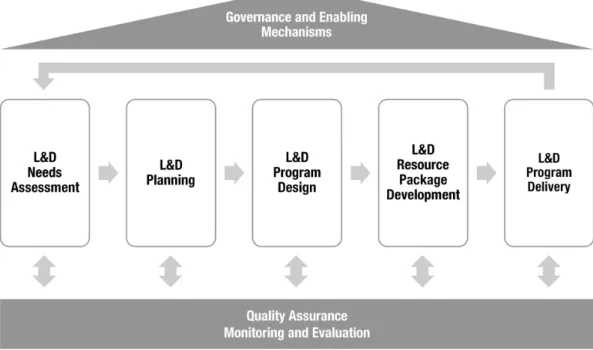
The learning and development (L&D) system
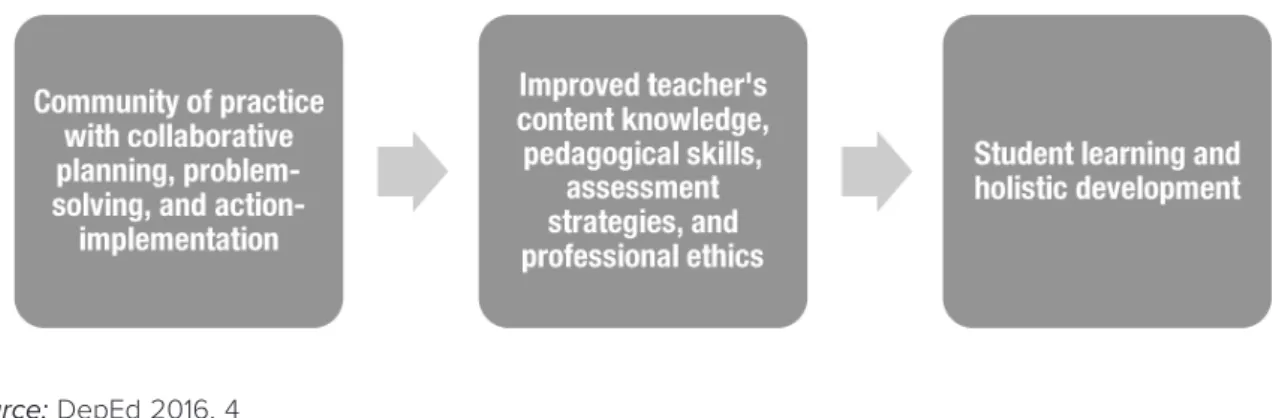
In other words, the section INSET funds may not be enough to cover all the teachers in the section, because not all teachers can be taken into account in the calculation of the section MOOE. The implementation of the L&D system at all management levels is a critical component of the Professional Development (PD) initiative for teachers.
Delineation and scope of PD for teachers
Each of the systems has an integrated quality assurance and technical assistance process. In this system, it is important to strengthen the capacity of school departments and schools to implement plans for the professional development of teachers.
Challenges to decentralization
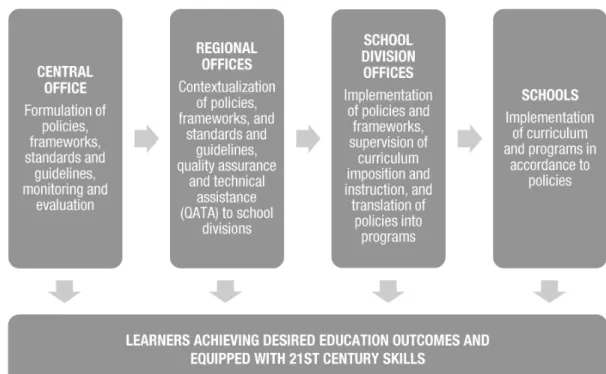
At each level, once capacity has been determined, interventions must be translated into professional development plans and incorporated into relevant organizational planning documents, which are usually medium-term plans covering a period of three to five years. The regional offices will play an important role in providing support in terms of developing a team of teaching leaders, trainers, mentors, learning facilitators, learning areas and/or education specialists, as well as providing technical assistance to ensure that L&D processes and standards are followed in the delivery of interventions for the professional development of teachers. In cases where the Department of Education—whether a school, school district, school division, regional offices, or central office—may not be able to provide for the professional development needs of teachers, there must be an alternative response.
External providers can be tapped as potential partners, but care must be taken to ensure that these are reputable institutions that have established their credibility in the field of learning and development.
Implications on teacher professional development
For schools, this is a three-year development plan, but for departments it can also cover a five-year period. The Act's Implementing Rules and Regulations (IRR) attempted to transfer educational outcomes to school divisions where critical mass could be gathered and sustained. The size and complexity of DepEd's organization can remain a challenge for delivering teacher learning and development initiatives.
The variability in the maturity of practices of different offices at board levels, as well as the leadership and management skills of the staff, can mean major differences.
Conclusion
9155 is to democratize the education system by moving towards school-based management and empowering principals, the law maintained the same organizational structure. It should be further refined in terms of indicators that are specific to the key and learning stages, because different developmental stages and learning or subject areas require different competencies.
Introduction
The teaching profession in the Philippines has had a long historical journey and is anchored in an education system shaped by colonial and post-war history. 74 of the Philippine Commission established the Department of Public Instruction and the Philippine Normal School, the first institution to train future teachers, and was followed by the opening of tributary normal schools in strategic provinces of the country. From the time the Philippines became an independent nation, the education system evolved from a single agency to a trifocal system.
The Department of Education (DepEd), the Commission on Higher Education (CHED), and the Technical Education Skills Development Authority (TESDA) oversee the education system in the Philippines, each with its own specific functions and governance mechanisms.
Retrospective
During the 18th century, the Spanish introduced Catholicism through education, while in the 19th century the Americans brought to the country the Thomasites, who organized teacher training institutions to promote democracy.
Professional Development, and Technology in Basic Education
A View from Pre-Service Teacher Education
In transition to the future: 2018–onwards
The Enhanced Basic Education Curriculum is the main base and anchor of the teacher education curriculum of 2017. With all the fundamental documents, policies and publications studied, the curriculum is also framed by relevant philosophies, theories, practices and supporting mechanisms that will enable the successful implementation of the teacher education program from 2018 onwards. There are nine teacher education degrees, namely (a) Bachelor of Elementary Education (BEEd); (b) Bachelor of Secondary Education (BSE; major discipline);.
Teacher education Questions about the past, present and future related to teaching, professional development and technology in basic education.
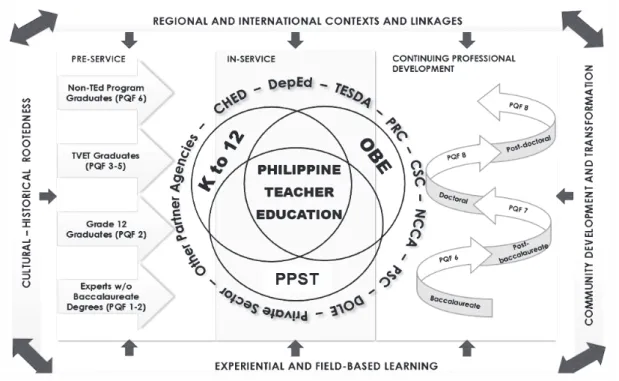
Teacher education issues of the past, the present, and the future related to instruction, professional development, and technology in basic education
SEA (Competency Framework for Teachers in Southeast Asia) must also be embedded in the curriculum. I take this opportunity to give you a sneak peek of the document that I consider relevant to this roundtable discussion as it is being finalized for release to higher authorities.
The National Research Agenda for Teacher Education (NRATE)
The use of information and communication technology (ICT) tools to improve teaching, learning and research, the use of artificial intelligence, big data analysis and other emerging technology developments become challenging issues in the teaching and learning process. learning. More specifically, the analysis showed that the use of computers in the classroom has mixed results in terms of impact on student performance. Because of this rather powerful statement, the use of information and communication technology (ICT) tools in the classroom has come under great scrutiny.
Despite these "mistakes", I still believe in the necessity of integrating ICT in learning and teaching.
The Fourth Industrial Revolution agenda
The International Comparative Analysis of Students' Digital Skills and Learning Experiences (among students in OECD countries) reported that "the reality in our schools lags significantly behind the promise of technology" (OECD 2015, 3). This is understandable, as using ICT in the classroom requires a lot of resources, from the purchase of devices and necessary applications, investment in the professional development of teachers to the establishment of the technical infrastructure. Technological tools should be in the hands of students and not locked away for administrative or clerical work in school offices.
If well integrated into teaching and learning, technology tools can open the door to endless possibilities that can empower students and teachers.
Filipino K to 12 Classroom
Schwab finally argued that the beginning of the second machine age, the Fourth Industrial Revolution, had begun. The rise of artificial intelligence, Internet of Things devices, and digital biomedical tools and procedures are just a few of the tangible and virtual manifestations of the Fourth Industrial Revolution. After this quick historical review, a more important investigation is needed to explore the effect of the Fourth Industrial Revolution on the education system.
The founder and president of the World Economic Forum gave hope when he noted that many education systems, organizations and institutions have begun to reimagine teaching and learning under the premise of "Education 4.0." One of the key ideas he mentioned is that technology or ICT plays an important and essential role in preparing our students to succeed in the complexities of the fourth industrial revolution.
Back to the basics of ICT/technology integration
Schwab argued that because of the fundamental shifts we are experiencing in our personal and professional lives, there is a great need to bridge the disconnect between today's many education systems and the expected and required competencies to help each individual thrive and realize their full potential, especially as part of the global workforce. Although it is easier said than done, I hope that we will continue to push ourselves, our school communities, and the government to prioritize this so that our students today, who will be the future members of the Philippine workforce, will be well equipped to succeed and achieve their potential. In the Philippines, for example, computer education is part of the Technology and Home Economics subject, while in most OECD countries computer education – often referred to as computer science – is an essential component of the science, technology, engineering and mathematics (STEM) interdisciplinary major (or more recently, science, technology, engineering , art and math (STEAM) major), with coding and robotics as core offerings.
The University of South Florida's College of Education clearly reflects this desired idea that the locus of technology used in learning and teaching should shift from teachers to students, as seen in the institution's Technology Integration Matrix (TIM) which, as more importantly, it is based on the goal of promoting technological integration and innovation relative to the characteristics of the 21st century learning environment (Florida Center for Instructional Technology 2019).
Challenges and opportunities in ICT Integration in the K to 12
Returning to the 2015 OECD analysis, the report neither denied nor recommended the removal of ICT tools in the classroom. The challenge is for schools to discover teaching and learning strategies that develop 21st century skills using technological tools. Research on the success of technology integration has shown that teacher readiness is one of the most important catalysts for innovation with ICT in the classroom.
When school leaders don't pave the way, teachers often get lost in the process.
Instruction and ICT integration
Each group collaborated and discussed to come up with an answer to this question: What research should the University of the Philippines Center for Integrative and Development Studies (UP CIDS) Education Research Program (ERP) do in the next five years to help basic education develop policy formulation. Policies to be released within three years are categorized as "very urgent", while policies to be released within five years are categorized as "urgent".
Teacher professional development and ICT integration
29 In order to have a more in-depth interaction about the issues raised by the debaters, workshops were held. Two groups were formed for the workshop based on relevant topics: (1) teaching and ICT integration, and (2) teacher professional development and ICT integration.
Basic Education Instruction and ICT Integration
Participants
6 Belinda Loyola Rektor, Cavite National Science High School 7 Elain Malones Master Teacher, Cavite National Science High.
Basic Education Teacher Professional Development and ICT Integration
Kontor, National Capital Region 9 Marian Christine Patriarca Professor, UP College of Education 10 Regina Punzalan (Dokumenter) UP CIDS ERP.