This special project entitled: “Comparative Evaluation of the Science and Technology-Based Magrove Rehabilitation and Community-Based Ecotourism Management Practices in Paraiso Mangrove Eco Learning Park, Marine and Wildlife Sanctuary in Barangay Paraiso, San Jose District, Tacloban City and in Naungan -San Juan Mangrove Planters Association Eco-Park, Ormoc City, Leyte is hereby accepted by the Faculty of Management and Development Studies, U.P. The special issue is less than 25,000 words in length, excluding tables, maps, bibliographies, and appendices. v Comparative evaluation of the science and technology based mangrove…. My thanks to the University of the Philippines – Open University for giving me an unforgettable academic experience.
My online learning with UPOU was challenging because there were no professors nor classmates to physically help me, especially .. vi Comparative Assessment of S&T Based Mangrove…. I also thank the Faculty of Management and Development Studies, especially our professors who gave us their time and knowledge, as well as the FMDS staff and UPOU registrars for all their patience and help. I thank the Visayas Tacloban College of the University of the Philippines for allowing me to spend many days in the library and use its resource materials and equipment.
May you never tire of conserving our mangrove ecoparks. vii Comparative assessment of mangroves based on science and technology…. A notable similarity in the characteristics of the members of both groups is their willingness to volunteer despite their irregular income from the ecoparks.
INTRODUCTION
REVIEW OF LITERATURE
STATEMENT OF THE STUDY
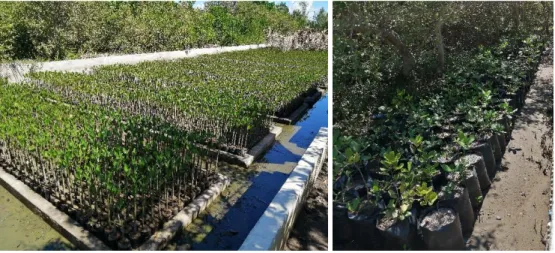
In addition, it provided capacity building support to the barangay and the people's organization through training and benchmarking activities. The people's organization consists of fishermen and unemployed citizens, who help with the restoration and maintenance of the mangroves. Through the ecotourism project, the association's members can earn an income by growing mangrove seedlings, which they supply to NGOs and LGUs implementing mangrove rehabilitation projects.
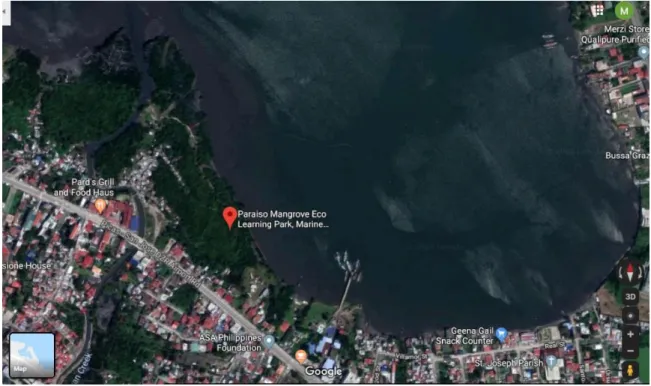
The main objectives of the Paraiso Mangrove Ecopark are to rehabilitate its mangrove forest, to revive the marine life in Cancabato Bay due to the mangrove supporting services, and to provide a source of livelihood for the local community ( Paraiso Mangrove Eco Learning Park, Marine and Wildlife Sanctuary, Marine and Wildlife Sanctuary, 2019). The Naungan San Juan Mangrove Planters Association (NSJMPA) Eco-Park in Naungan, Ormoc City also started as a mangrove rehabilitation project in 1991 through the Community-Based Forest Management (CBFM) Program of the Department of Environment and Natural Resources. The NSJMPA mangrove eco-park has recently been developed, which offers various activities such as mangrove tour, bird watching, kayaking, rowing, mud swimming, fishing and dining, which provide livelihood opportunities to the members of the association and to the community.
In addition, the mangrove eco-park contributes to the improvement of biodiversity in the area and protects communities from the effects of calamities, such as typhoons (Department of Environment and Natural Resources, n.d.). This hope motivates local communities to engage in science-based mangrove rehabilitation and community-based ecotourism management by providing them with a documented guide generated from the actual best practices of the two sites studied, to promote sustainable environmental conservation practices among local communities and tourists. and to increase socio-economic benefits to empower local communities in the region.
OBJECTIVES OF THE STUDY
DESCRIPTION OF THE STUDY AREA
April has the lowest rainfall with an average of 88 mm, while rainfall reaches its peak in November with an average of 446 mm. The hottest month is July with an average temperature of 27.8 °C and the coldest month is January with an average temperature of 25.7 °C. The second study site is the Naungan San Juan Mangrove Planters Association Eco-Park, a 191-hectare mangrove forest found in Barangay Naungan, Ormoc City, Northern Leyte.

METHODOLOGY
As used in similar studies conducted by Miller (2008) and Garcia et al (2017) focusing on community-based ecotourism management, the qualitative case study approach was used, which is useful in case studies. of real life to explain the complex social phenomenon. in this research. The research instruments that were used for data collection were focus group discussion for members of the POs, key informant interview for BLGU officials and DENR project coordinator, document review, field observation and photographic documentation, which were done on separate occasions to provide sufficient time for each activity and group/interested interviewees, as shown in Figure 3. The researcher sought permission from both associations to allow them to undertake research involving their projects, before performing data collection.
RESULTS AND DISCUSSION
More community members showed interest in mangrove restoration because of the cash-for-work projects. 23 Comparative Evaluation of the Science and Technology Based Mangrove…..with Motor Boats by Ormoc Local Government. Both POs carry out regular visits, monitoring and maintenance in the eco-park to ensure the well-being of the mangroves.
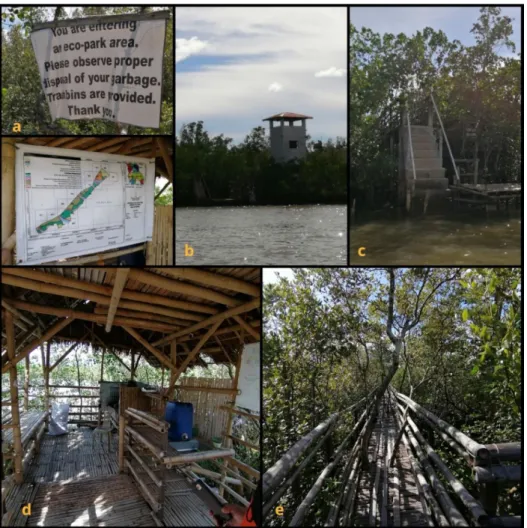
It attached to the trees in large numbers and resulted in the death of 10% of the total mangrove population in the ecopark. 31 Comparative evaluation of the S&T-based Mangrove... ..infrastructure in the eco-park, which includes the cement walkway, boardwalk, floating cottages and training hall. The PO used eco-bricks as a foundation for the concrete walkway in the eco-park.
Both POs use social media as the main means of advertising the eco-park. As for PTFMELPSC, the cooperative chairman and the Board of Directors lead in the implementation of the ecotourism project.
RECOMMENDATION AND CONCLUSION
Proving that community participation in environmental management is successful, the Naungan San Juan Mangrove Planters Association (NSJMPA) unveiled its newly developed mangrove eco-tourism park in Naungan, Ormok City to local media professionals during the World Wetlands Day celebration on February 2 . Article retrieved from http://r8.denr.gov.ph/index.php/homepage/86-region-news-items/925-mangrove-eco-park-rises-in-ormoc-bay-wetlands. Partnerships in Environmental Management for East Asian Seas (PEMSEA) and Coastal Management Center (CMC), Quezon City, Philippines.
Facebook.com.https://www.facebook.com/pg/Paraiso-Mangrove- Eco-Learning- ParkMarine-and- Wildlife-Sanctuary-.