Quite a few scholars have historically attributed the lack of emphasis on urban and regional planning to the primarily agricultural nature of the Philippine economy. As envisioned, the Center would perform research and training functions in urban and regional development, and would be affiliated with the University of the Philippines. Romulo, then president of the University of the Philippines, wrote a letter to the chairman of the National Economic Council (now the National Economic and Development Authority) asking the UN to provide assistance.
As mentioned earlier, the Institute's original graduate education program led to the Master in Environmental Planning (MEP) degree. As mentioned earlier, the majority of the Institute's students in its early years were mainly architects and engineers already working for the government.
A SURVEY
The Graduates of the Master in Environmental Planning
ASTEYA M. SANTIAGO
The results of the study are summarized in this paper in the hope that they will be of use. For example, of the 21 candidates during the first year of the program, they belonged to this age group. In the second year of the programme, 100 per cent (all four) of the candidates were in this age category.
In the first year of the program, more than half of the graduates (60%) were married. While they were a small minority in the first few years, they began to grow in numbers in the last three years of the program. This had increased continuously, so that they were the largest group of enrollees in the past four years of the program.
In fact, only in the first two years of the program were lawyers enrolled. 12. Three of the 12 others who are in the PPDO hold such responsible positions as Area Manager for Luzon. Two state academic institutions, the University of the Philippines20 and the Mindanao State University.
This picture of the distribution of planners across provinces is even more unclear. Moreover, the lack of required texts and other reed materials in the library of V.P. Thus, graduates of the Cabu program completed all course requirements at the institute by spending their $18 quarter in Manila.
Social Indicators and Standards for Housing *
TAPAN K. MAJUMDAR
But the social consequences of the types of housing and environments produced are always left to chance. This would therefore mean that housing standards must be formed to serve each of these family types in the most acceptable ways within the limits of available resources and without sacrificing the interest of the community. It is illustrative in this context to look at the housing definition provided by the expert committee of the World Health Organization (WHO).
A review of housing standards in most developing countries reveals that they are 8$peetuelle ie. they address different aspects of the residential environment. The most obvious social consequence of this approach is that a very large number of families have been deprived of the benefits of housing. This has resulted in a poor distribution of resources between different family groups and a lack of balance between different aspects of the same residential environment.
And from another point of view, a majority of its people are involved in &service, small industry and the traditional bazaar sectors of the economy. This makes the city in the developing world very different from the large-scale heavy industry-based cities in the West, which developed under very different conditions. Different answers can be given if the purpose of the standards is to upgrade housing quality or to ensure acceptable living conditions for the majority of families within the framework of the available resources and objectives.
The characteristics of the urban development process in most Asian cities would mean the adoption of multiple housing standards.
Social Indicators for Housing
It should be POllible to identify those aspects of housing quality that must be sacrificed using a lack of adequate resources. This was mainly due to the fact that information was available mainly on the economic and physical aspects of housing. One of the problems in the field of housing development was that there is almost no evaluation of specific policies and programs.
It is not enough to measure it in terms of the number of units built and/or the amount of money spent. The social aspects must be measured - that is, the impact of housing to promote social development. Outputs from the building and planning processes, such as the number of units produced, should be considered inputs to the housing process.
Thus, instead of observing the physical characteristics of the house and/or the characteristics of its user, the interaction between the two can be used as a framework for developing social indicators for housing. By analyzing the consequences of the housing situation for the user, it is possible to derive social indicators for housing that are goal- and result-oriented and related to the individual. In the normative approach, housing concerns or goals are defined independently of the physical and economic characteristics of the housing or residential neighborhood.
The application of social indicators is one of the ways to understand this relationship empirically.
Transport and Energy Conservation: Issue on
Public versus Private Transportation
TEODORO T. ENCARNACION
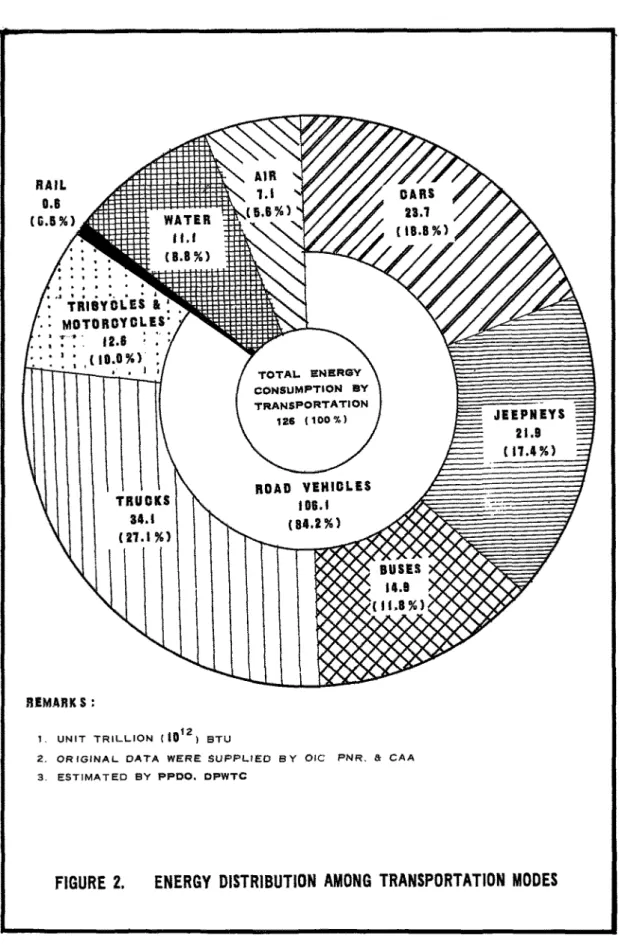
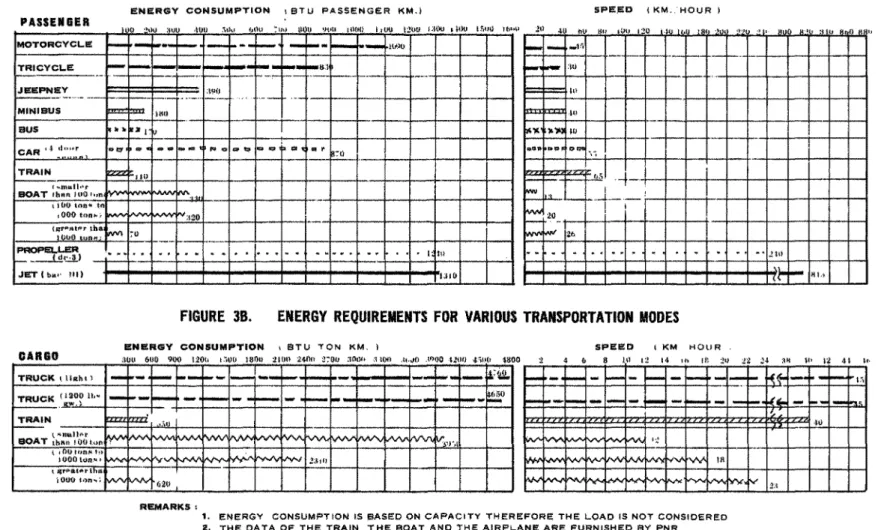
On the other hand, the bus is the most economical consumer of energy, while the jeepney is somewhere in the middle. On the other hand, jeepneys account for 46% and buses for 16%, while cars and taxis account for 25% and 6% respectively, which is in great disproportion to the occupied road space. scolded, to the energy consumption per pa_nger kilometer. But to be sure, this comparison must be based primarily on the criterion that the well-being of society as a whole, and not just that of a privileged few, is improving.
On the other hand, a bus can carry more passengers with a much lower average income per person. per capita for a longer journey time, but the total earning capacity of all bus passengers in their net working time may increase that of the car-driving manager. , all else being equal. However, these incentives for unconditional patronage and viability of buses should be complemented by restrictions on the indiscriminate and uneconomical use of private cars. The taxi approaches the car in terms of operating cost and service level, but the latter clearly has a lower degree of capacity utilization or load factor, i.e. the number of transported passengers per vehicle kilometres, and therefore higher energy utilization par. inhabitant.
In the case of a taxi, it can be loaded with another passenger on the way back. On the other hand, the operations of a truck-for-hire owned by a trucking company can be planned so that it is loaded both ways with loads from different customers. In addition, the truck can pick up a variety of goods on the way to be full most of the time.
The urban rail system requires a huge amount of initial investment, based on the feasibility study for the first subway line in Metropolitan Manila.
ABOUT THE AUTHORS
BOOK REVIEW
LORNA BORJA
BOOK NOTES
This book documents the human description of the general physical and social conditions in American cities as experienced by the people who lived in those cities during the period 1865-1960. Reports of the striking differences in the lifestyles of the rich and the poor as well as the problems faced by city dwellers are vividly presented. This book provides guidelines to consider when evaluating subregional planning studies.
The book further expands its scope to include a general discussion of the historical development of subregional planning. Special attention is also paid to the interplay between various factors, such as the subregion's economic potential, its technical resources. In collaboration with Model Cities projects, a practicing planner and a political scientist investigate the important role of politics in the field of planning.
The other topic consists of planning case studies collected from the experiences of different cities and regions in India. Over the course of the book, the reader is easily shown that urban and regional planning is an effective tool in bridging the gaps between urban and rural life.
IEP MARKS TENTH ANNIVERSARY The Institute will omerve its tenth anniver·
NEW GRADUATE PROGRAM LAUNCHED
REORGANIZATION PLAN The Institute has been asked to assist in the
More recently, considered as a temporary alternative to the existing structure, is a manager-committee type of government. This new organization, which provides for a general manager to be appointed by the President to coordinate activities in the Greater Manila area, is expected to take effect after December 31, 1975, the official expiration date. of local government officials. Integration of participating cities, centralization of functions, and tighter coordination through the general manager promise increased efficiency and greater adaptability in formulating and implementing plans.
CONGRESS HELD IN MANILA
Calabia, the former director of the Cebu Regional Development Center, had made arrangements with Dr. Agustin Kintanar for the transfer of equipment from Cebu Center to the University National Development Research Center, which directs the latter, and with Dr. Dionlsla Rola from U.P. Raymond Apthorpe who had left for England to accept a post as Professor of Development Studies at the University of East Anglia.
Paterson serves as the Institute's advisor and consultant for curriculum development and as a professor in Land Use Planning, a new course to be offered under the new MURP program. While in the Philippines, he conducted a classroom workshop on Transportation Policy Planning, provided advice on Metropolitan Transportation Planning to NEDA and DPWTC, and assisted in the Institute's curriculum development program. Tapan Krimar Majumdar, a sociologist of the Ministry of Works and Housing and Urban Development for the Government of India, as a consultant on secondary urbanization.
AND IMPROVEMENT