I hereby grant to the University of the Philippines a non-exclusive, worldwide, royalty-free license to reproduce, publish and publicly distribute copies of this thesis or dissertation in any form subject to the provisions of applicable laws, the terms of the UP IPR policy and any contractual obligations, as well as more specific permission mark on the title page. This thesis entitled The Meaning of Mone to the Filipino Domestic Workers in Singapore is hereby accepted by the Faculty of Information and Communication Studies, U.P. With this new line of work she was exposed to the low wage workers group where she passionately strove to make a major contribution to improving their lot.
The experiences and challenges the author overcame gave rise to the enthusiasm to discuss the topic related to the financial situation of low-wage Filipino workers in Singapore, which is the group of domestic helpers. Prior to studying Development Communication at UPOU, Rachel actively volunteered at the Humanitarian Organization for the Migration Economy (HOME) defending the rights of migrant workers and providing support especially to domestic helpers who were abused by their employers. This work is also dedicated to the people who supported me throughout, especially SG Beshies.
These different interpretations prove what Tang (1992) argued that “money is in the eye of the beholder”. Therefore, it is not surprising that the arguments of the various researchers claimed that money is interpreted differently by people (Mitchell and Mickel, 1999; Wong, 2010; Tang, 1992; Klontz, et. al, 2011), who have different interpretations and perceptions of money. Carina's story is just one of the many sad stories of OFWs who, after years of working abroad, came home forever with nothing.
Her story was broadcast in one of the episodes of Investigative Documentaries (GMA Public Affairs). Despite the sacrifices and hard work that comes with working in a foreign country, financial stability and lifting the family out of poverty remains an elusive goal. Moreover, the results of the study can also be an eye-opener for the OFWs to raise their awareness on the importance of the meaning they attach to money in relation to their current situation, especially in the area of financial problems.
They also added that there are individual differences in the meanings people attach to money. As Tang (1999) mentioned, the meaning of money lies in the eye of the beholder. This is clear in the study that Twenge and Cooper (2020) conducted on the "Expanding Class Divide in Happiness in the United States.
This argument was refuted in a study conducted by Juneman, Meinarno, and Rahardjo (2012) on the symbolic meaning of money. Their study confirmed the absence of strict gender role restrictions in the symbolic meaning of money. Based on these scenarios, Juneman, Meinarno, and Rahardjo (2012) found that there was no significant difference in the symbolic meaning of money for men and women.
For the data collection, this study used narratology to gain a better understanding of the situation of FDWs. The findings of this study may provide a better understanding of the plight of the OVWs specifically regarding financial aspect and status. It is believed that the integrity of the research is equal to the integrity of the researcher.
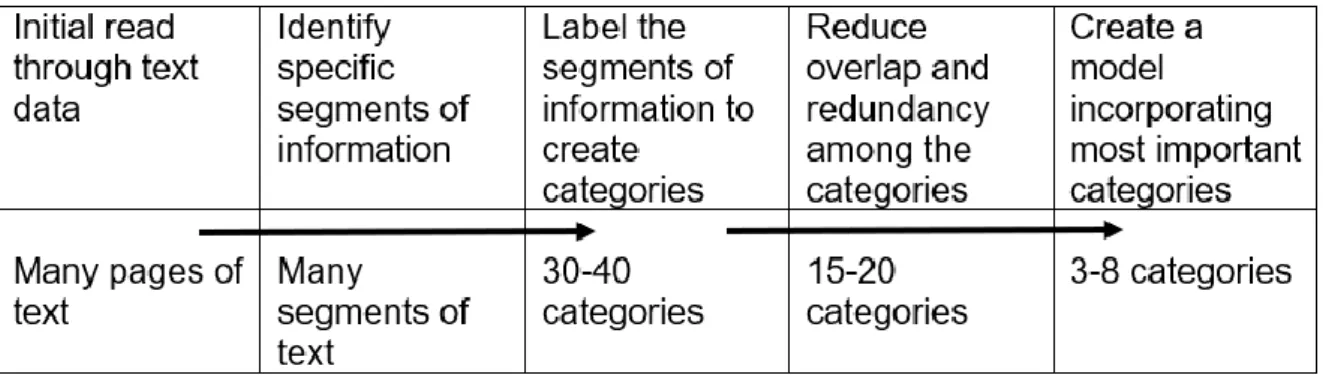
Through narrative interviewing, the researcher collected qualitative data that was rich in details, experiences, descriptions and ideals of the respondents. This is the next part of the narrative interview which will seek explanations about the narrative in the first part of the interview. It is a way of making sense of the data before presenting it in an understandable manner.
This is also to ensure that the interpretation and analysis of the data will be on the neutral side. Creswell (2007) considered validation in qualitative research as an attempt to assess the accuracy of the results as described by the researcher and the participants. It is suggested that the researcher should use validation strategies to document the accuracy of the study.
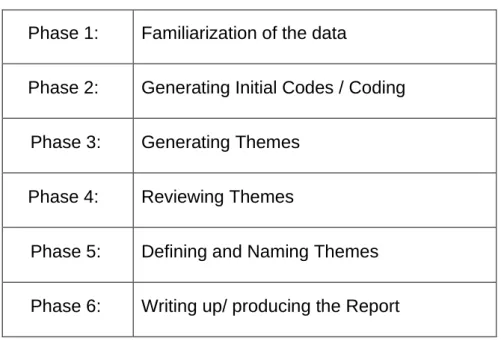
With this technique, the researcher worked with a peer debriefer who has an unbiased view of the study. Although there are software that can be used for analysis of the qualitative data as well as in coding, the researcher used manual coding to interpret the data. This emphasizes the responsibility of the researcher to fully inform the participants about the various aspects of the research.
This study ensured the protection of the privacy of the research participants and the confidentiality of the research data.
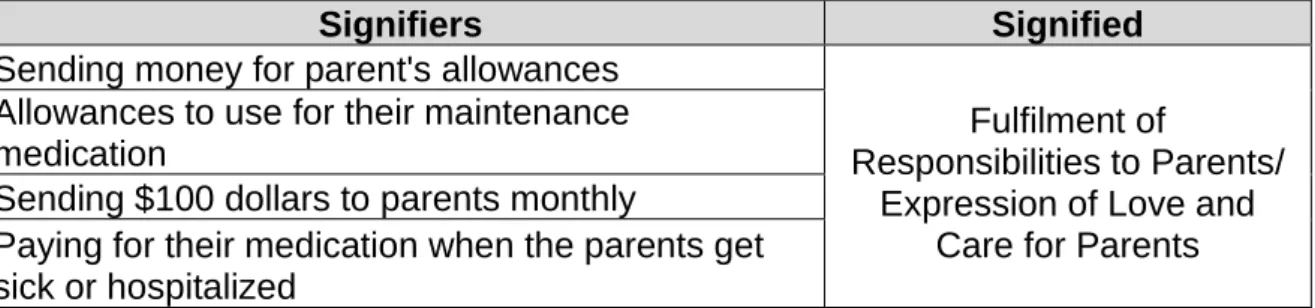
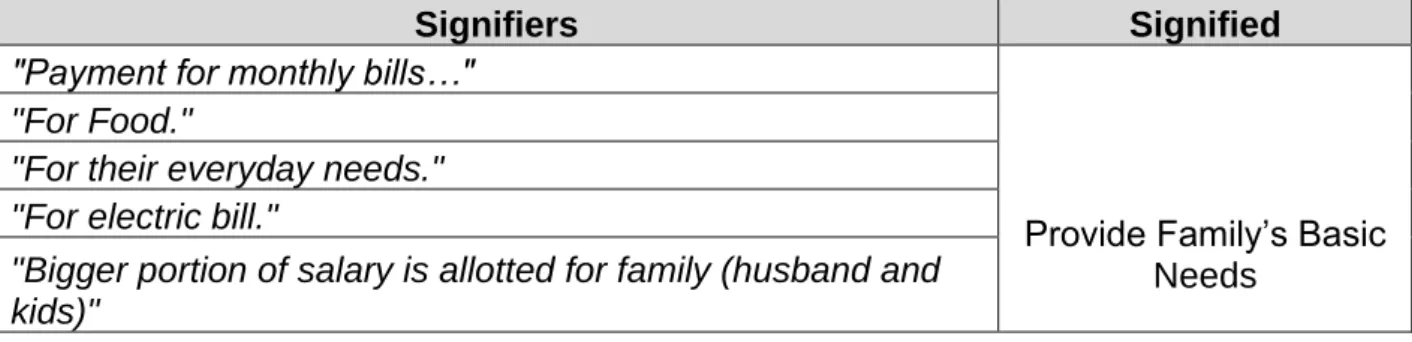
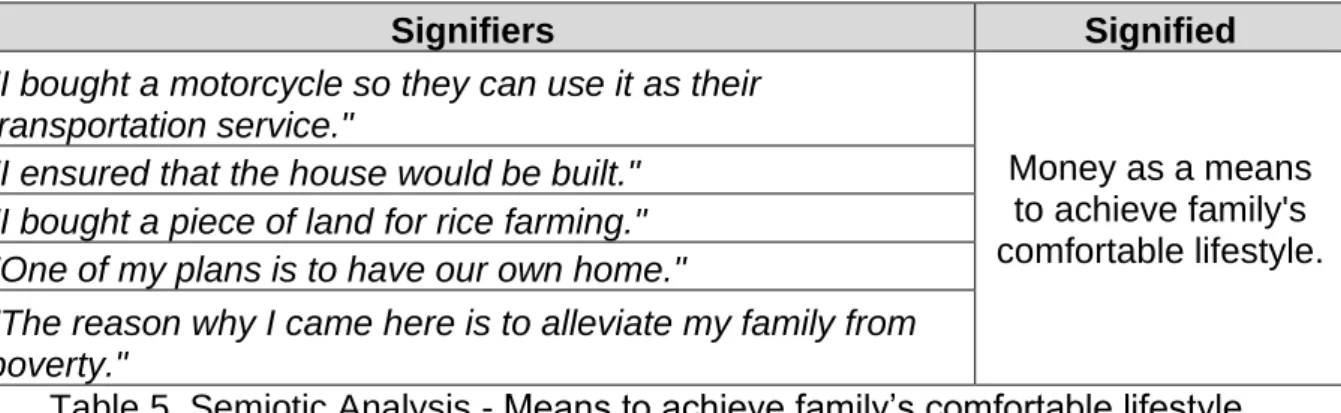
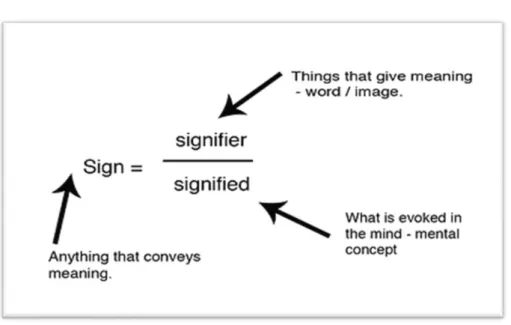
During the interview, these participants revealed that one of the ultimate reasons why they decided to work as domestic workers in Singapore was to meet the needs of their children, especially in terms of education. I would manage to save a portion of my salary, but I mostly also send it to them to buy materials for their modules." In Saussure's semiotic analysis, it is mentioned that signifiers are the physical form of the sign.
One of the participants even said, "if I just stayed in the Philippines, I wouldn't be able to send my children to school, what will happen to their future. Just like for the participants in this study, the FDWs; it was not easy for them to leave their family, their children One of the notable statements in the interview common among the participants focused on the support provided to their parents.
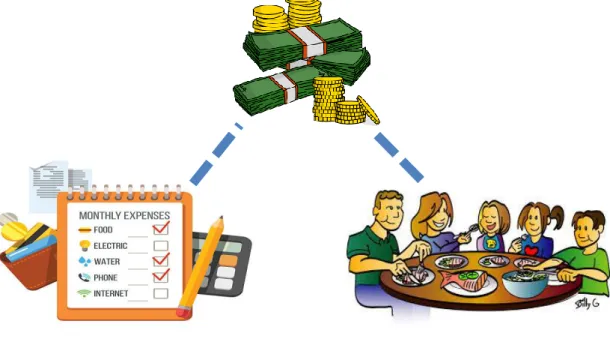
This is also one of the reasons that they happened to work in Singapore for more than 5 years as the money they earned ensures that their family's basic needs are met. This is also one of the main reasons that led them to dive into the world of being an OFW. One of the participants shared that through her salary as an OFW, her family was able to purchase a motorcycle that could be used as their own.
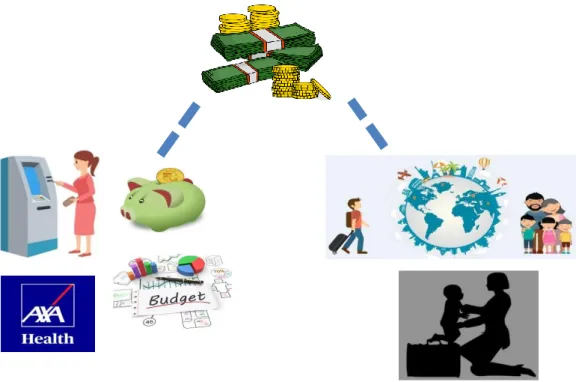
During the interview, the majority of participants revealed that part of their monthly budget was allocated to their savings. One of the participants mentioned that when her children had to buy materials for school projects, she would have part of her savings to send to them. One of the participants mentioned that “with my savings, I think I can return home for good in 2 years.
Unlike the stories of Cherry and Carina as shown in the first part of this study, these FDWs are aware of the importance of allocating part of their salary for savings. In the last part of the interview, as a closing or final word, the participants were asked what money means to them. Below are some of the striking responses which revealed some emotions towards the family and their close circle:.
Interview Guide
Please tell me about your story as an OFW - your job, your typical day, how you spend your time on your days off, your goals, etc. Can you take me back to when you first set foot here in Singapore. Anything you can remember, like your feelings during that time, or you can also share your experiences, changes and adjustments you encountered.
Do you think your income here in Singapore is sufficient or sufficient to extend such support? What constitutes the highest and lowest proportion of your expenditure or budget. What part of your salary is practical for you to save monthly.
If you can allocate this portion on a monthly basis, it will help you shorten the years you plan to stay in Singapore.
Informed Consent Form
Your participation in this research will be of great help in understanding what money is to OFWs. If you accept this invitation to participate in this research, you will be on an interview with me. We will discuss the place of the interview or you can also suggest a place you feel comfortable with.
The entire interview will be audio recorded, but no one will be identified by name on the recording. The interview will be in 2 parts where you will be asked to share your story as an OFW, your aspirations and goals, how you spend your typical day or week. The second part will include some clarification questions based on the history and experiences you shared.
The information you will tell me will not be shared with anyone outside the research team, and nothing will be attributed to you by name. The knowledge we gain from this research will be shared with you and your community before it is made widely available to the public. I understand that I can withdraw permission to use data from my interview within two weeks of the interview, in which case the material will be deleted.
I understand that in any report on the results of this research my identity will remain anonymous. This will be done by changing my name and obscuring any details of my interview that might reveal my identity or the identity of people I speak of. I understand that signed consent forms and original audio recordings will be kept on the hard drive until the analysis and findings of this study are complete.
I understand that a transcript of my interview in which all identifying information has been removed will be kept until the completion of the study.