BIBLIOGRAPHY
YOUNG MI JUNG, November 2006, Comprehension and Performance of Korean College Students in Asking Questions. Benguet State University, La Trinidad, Benguet.
Adviser: Dimas P. Wandit, M.A
ABSTRACT
This study was conducted to determine the comprehension and performance in asking questions among Korean College Students in Baguio City. Particularly, it identified 1) the level of comprehension and performance of the subjects in asking questions, 2) the common grammatical errors committed by the subjects, and 3) the relationship of gender and length of stay in the Philippines to their comprehension and performance.
The research used was the descriptive method. One hundred (100) Korean college students enrolled in the different institutions in Baguio City during the first semester were subjects of the study. Data were obtained through a teacher made and were treated statistically using F-Test and Cochran Test.
The findings of the study revealed that the overall performance of the subjects in asking questions is “very, good”. They were most competent in constructing WH- questions followed by transforming declaratives to questions and comprehending contextualized questions. Male and female subjects who stayed for 1-6 months (less than a year) and more than 25 months (almost two years) do not differ significantly in their
level of comprehension and performance in asking questions. The common grammatical errors committed are category of the auxiliary, position of the auxiliary, subject- auxiliary agreement, tense of the auxiliary and punctuation. Variables like gender and length of stay in the Philippines have no relation to the subjects’ comprehension and performance in asking questions.
From these findings, the following conclusions are drawn. There are no differences in the performance of the subjects in terms of gender and length of stay in the Philippines.
The incorrect use of auxiliary in asking questions is the most common error committed by the subjects. Variables like gender and length of stay in the Philippines have no relation to the subjects’ comprehension and performance in asking questions.
It is then suggested that learners should put emphasis in studying the English auxiliary, negation, and question systems. Further studies on other aspects of interrogatives and the discourse and communicative competence among Koreans should also be undertaken. Lastly, Koreans staying in the Philippines for almost two years should maintain English as a medium of conversation with fellow Korean and Filipino friends.
TABLE OF CONTENTS
Page
Bibliography……….……. i
Abstract….………... …. i
Table of Contents……… iii
INTRODUCTION Background of the Study……….………….. 1
Statement of the Problem………..…. 4
Objectives of the Study……….…………..……... …….. 5
Importance of the Study………... 5
Scope and Delimitation of the Study…………... 6
REVIEW OF LITERATURE Second Language Acquisition…….……….. 8
Interaction and Second Language Acquisition……….. 15
Acquisition of Negation and Interrogation……….……... 16
English Modal Auxiliary Verbs……….……... 22
Communicative Competence……… 24
Error Analysis………..……... 27
Gender………... 32
Length of Stay ……….……... 35
Theoretical and Conceptual Framework……….…… 36
Definition of Terms……… 42
Hypotheses of the Study………….………...……… 43
METHODOLOGY Locale of the Study……….……… 44
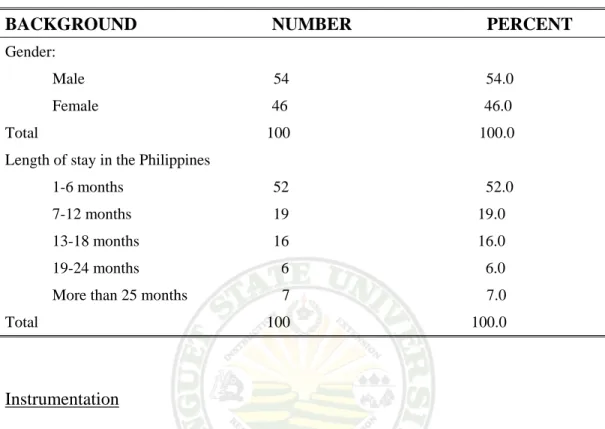
Subjects of the Study……… 44
Instrumentation………. 45
Data Gathering Procedure……… 47
Statistical Treatment of Data……… 47
RESULTS AND DISCUSSION Subjects’ Level of Comprehension in Contextualized Questions………... 49
Subjects’ Level of Performance in transforming Declaratives to Questions………..……… 50
Subjects’ Level of Performance in Constructing WH- Questions……….. 51
Overall Performance of the Subjects’ in Asking Questions……….………. 52
Grammatical Errors Committed by the Subjects………. 54
Subjects’ Level of Comprehension in Contextualized Questions as to Gender………. 58
Subjects’ Performance in Transforming Declarative to Questions as to Gender………. 60
Subjects’ Performance in Constructing WH-questions
As to Gender……….. 61
Subjects’ Level of Comprehension in Contextualized Questions as to Length of Stay in the Philippines……… 62
Subjects’ Level of Performance in Transforming Declaratives to Questions as to Length of Stay in the Philippines……… 65
Subjects’ Level of Performance in Constructing WH Questions As to Length of Stay in the Philippines……… 67
SUMMARY, CONCLUSIONS AND RECOMMENDATIONS Summary……..……… 70
Conclusions………. 71
Recommendations……… 72
LITERATURE CITED……… 73
APPENDICES A. Master’s Model of Errors in Constructing Yes- No Questions……….……….. 79
B. Letter to Administer a Test………. 80
C. Instrument……….……….. 81
D. Results of Item Analysis ………. 90
BIOGRAPHICAL SKETCH………... 91
LIST OF TABLES
Table No. Page
1 Profiles of the Subjects……….. 45
2 Grammatical Errors Committed by the Subjects
of the Study……… 55 3 Subjects’ Level of Comprehension in Contextualized
Questions as to Gender………. 59 4 Subjects’ Level of Performance in Transforming
Declaratives to Questions as to Gender………. 61 5 Subjects’ Level of Performance in Constructing
WH – Questions as to Gender……… 62 6 Subjects ‘ Level of Comprehension in Contextualized
Questions as to Length of Stay in the Philippines……. 64 7 Subjects’ Level of Performance in Transforming
Declaratives to Questions to Length of Stay
in the Philippines………... 66 8 Subjects’ Level of Performance in WH- Questions as to
Length of Stay in the Philippines………... 68
LIST OF FIGURES
Figure No. Page
1. Steps for Making Yes- No questions
With and Without an Overt Auxiliary………. 20
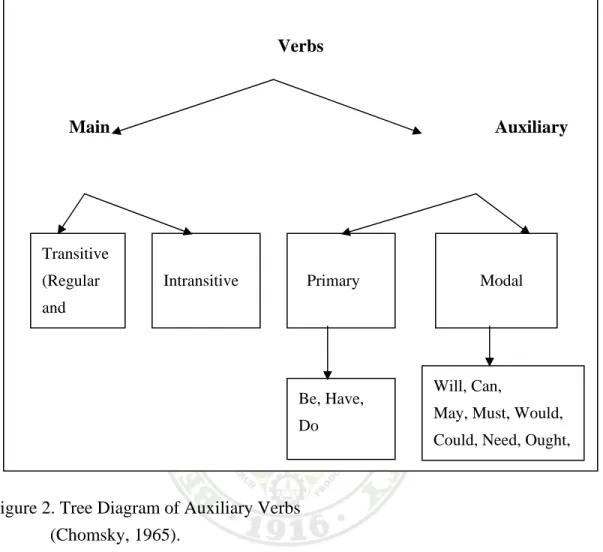
2. Tree Diagram of Auxiliary Verbs………..……….. 25
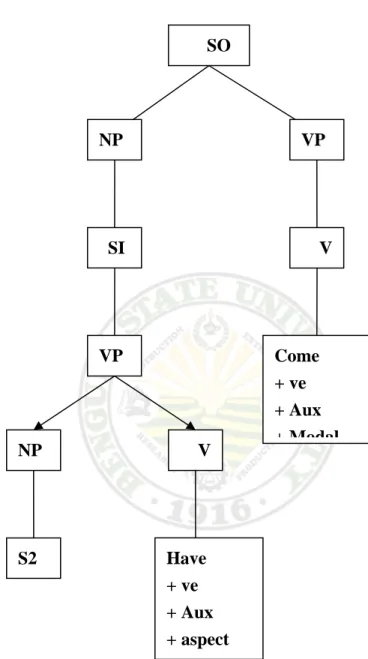
3. The Deep Structure Diagram……… 29
4. The Acquisition Hierarchy……….. 31
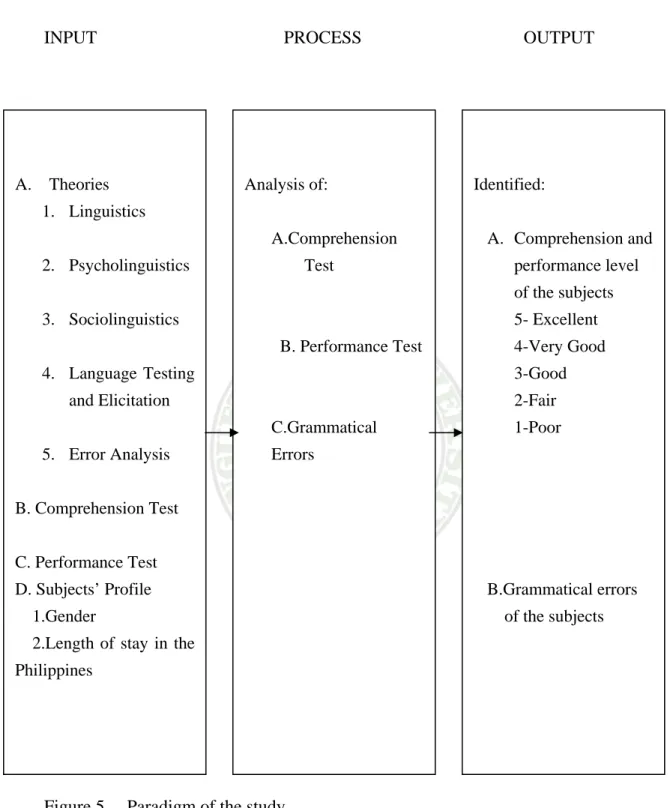
5. Paradigm of the Study……… 41
6. Subjects’ Level of Comprehension in Contextualized Questions……… 50
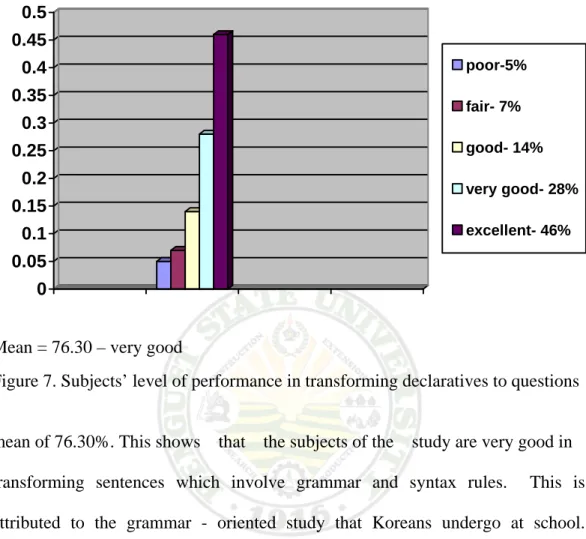
7. Subjects’ Level of Performance in Transforming Declaratives to Questions……….……… 51
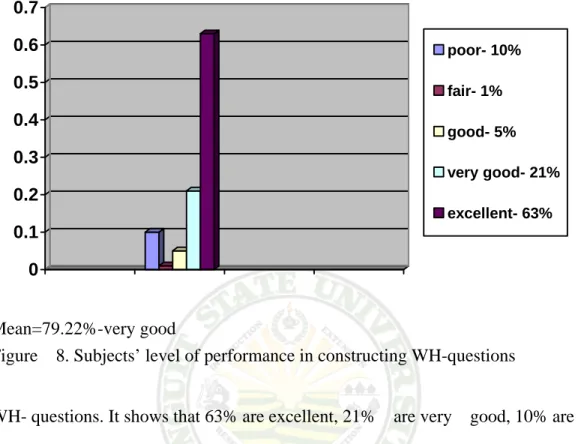
8. Subjects’ Level of Performance in Constructing WH- questions……….……… 52
9. Overall Performance of the Subjects in Asking Questions……… 53
INTRODUCTION
Background of the Study
Language is one of the wonderful gifts given by God to humanity. It is with the help of language that man is able to communicate and solve a number of his problems and has been able to make a lot of achievements in life. If there has been no language, it would have been difficult for man to communicate his views to fellow human beings. There would be no educational activity into existence, there would have been no law making, no preaching, no lecturing and nothing like talking, singing, writing and exchanging views and there would have been no book. That is why it is very essential for every man to learn and use a language.
However, it is not easy to learn a language. Every language is a complex phenomenon, and one has to devote a number of years to learn a language even though some are able to learn more than one language (Bose, 2005).
Every language has its own special way of making words. The ways in which words behave in a particular language is called 'grammar.' When one is speaking or writing in a foreign language or in one’s own language, the use of words must obey grammatical rules of the language concerned. If it breaks down, the sense conveyed through that language also breaks down. The term grammar in its broadest sense refers to the statements about the regularities and the irregularities of language. In every day usage, grammar evokes ideas about
“correctness” of language elements. This view of grammar involves many value
2 judgments about the acceptability of certain utterances. Grammar may all be basically the same as suggested by the term universal grammar, since all grammars must reflect the human minds, then one can assume that mind, always and every where, has something common.
Language reflects cultures, and it helps man for communication and gives a set of habits. Grammar can therefore be thought of as a codification of observable characteristic of large body of speech (Bose, 2005). But knowing a language involves not only knowledge of the formal properties of a language system. More importantly, it involves knowledge and competence on the actual use especially for communication and social interaction. As Kilgour (1999) puts it, it is obviously a vital tool not only as a means of communicating thoughts and ideas but it also forges friendships, cultural ties, and economic relationships.
Language also is knowledge and in the world today knowledge is one of the key factors in competitiveness. Brains and knowledge are what create the prosperity and growth that people tend to take for granted. In an advanced industrial society in an increasingly independent world, the knowledge of other languages becomes indispensable. Just think of how the advent of internet has changed one’s life (Kilgour, 1999). Moreover, lack of language skills result to the inability of the learners to speak for themselves, use sophisticated vocabulary, formulate appropriate questions, or comprehend basic instructions (Levine, 2001).
Korea is one of these countries that wants to be communicatively competent in the English language. Koreans readily admit that knowing how to
3 communicate in English is one of the most important qualifications. Many of them give up their free time and hard- earned cash to improve their skill (Vorhess, 2001). They realize the significance of the English language for their studies, jobs, business and personal development so English starts to be taught in the middle school where children are at the age of eleven or twelve years old. Despite of this, Koreans still find that they lack communicative competence. Such can be attributed to certain factors such as low motivation, educational system, cultural views and exposure to everyday conversations (Niederhauser, 2006).
Consequently, many students who further like to increase their competence attend academies in their own country or go abroad. Philippines, particularly here in Baguio City is one of the places that Koreans chose to develop their language proficiency and communicative competence where they can use the English language appropriately in real life situations. Besides, gaining good communicative skills is always considered one of the most important factors in settling down in a new society for the immigrants (Khan, 2005). As cited in (www.plaza.ufl.edu ), the ultimate goal of learning a second language is the attainment of communicative fluency. Second language researchers also argue that willingness to communicate in the second language is one of the best predictors in determining success in second language acquisition, in association with the perspective that the more active second language learners are with second language use, the greater possibility they have to develop second language proficiency. It is important for Korean students then to understand what effects
4 willingness to communicate in English to enhance the possibility to acquire English proficiency (Samimy, 2002). In order to communicate functionally, patterns of questioning or interrogatives must be developed. Moreover, as Bose (2005) puts it, in order to steer the language, one should internalize the grammatical pattern existing in all linguistic levels of language. The internalization of grammatical rules happens covertly if a language is acquired as first language and it happens overtly if a language is learnt as second or foreign language. However, the internalization of grammatical rule is an imperative prerequisite for any language learning process.
Statement of the Problem
This study analyzed the comprehension and performance in asking questions among Korean College students and identified the grammatical errors committed among Korean college students. Specifically, it sought to answer the following questions:
1. What is the subjects’ level of comprehension in asking questions?
2. What is the subjects’ level of performance in asking questions?
3. What are the grammatical errors committed mostly by the subject in asking questions?
4. What effect do gender and length of stay in the Philippines have on the subjects’ level of comprehension and performance in asking questions?
5 Objectives of the Study
This study determined the comprehension and performance in asking questions among Korean College students and analyzed the common grammatical errors that they committed. Specifically:
1. To determine the subjects’ level of comprehension in asking questions.
2. To determine the subjects’ level of performance in asking questions.
3. To identify the most common grammatical errors committed by the subjects in asking questions.
4. To determine the effects of gender and length of stay in the Philippines of the subjects on their level of comprehension and performance in asking questions.
Importance of the Study
The findings of this study will be beneficial to various individuals.
To school and academy administrators, supervisors and curriculum makers, the results will help them to design their course syllabus and materials more appropriate and effectively for their clientele. Thus, learning the English Language among Koreans will be easier and motivating.
To the subjects of the study, the results will identify their strengths and weaknesses where they have rooms of improvement, thus achieving linguistic and communicative competence.
6 To teachers and tutors, this study will be an advantage for them since it will give them an idea on how to improve instructional materials, implement appropriate techniques and methods for effective teaching-learning process.
To future researchers, this study is an additional reference that will contribute information in the auxiliary, negation and question systems of the English language.
Finally, to the researcher herself, this undertaking will be an inspiration and challenge to continue advancing her knowledge and skills in English.
Scope and Delimitation of the Study
This study was conducted to Korean college students who are studying in the different institutions of Baguio City namely E- Maple Academy, Saint Louis University, University of Baguio and University of Cordilleras during the first semester of the school year 2005-2006.
It covered two aspects namely: 1) the evaluation of the level of comprehension and performance of Korean college students in asking questions and 2) the analysis of the grammatical errors that they committed in transforming declaratives to questions. The comprehension level focused on choosing questions from a given context and the performance level involved sentence transformation to Yes- No questions and constructing WH- questions. The declaratives that were transformed have either overt and buried auxiliaries while the WH- Questions were direct and limited to Who, When, Where, Why and How questions.
7 It also sought to find out the relationship of gender and length of stay in the Philippines to the subjects’ comprehension and performance in asking questions.
REVIEW OF LITERATURE Second Language Acquisition
Krashen’s (1981) Monitor Model so far is the most comprehensive of existing theories in second language acquisition. It consists of five central hypotheses and makes reference to a number of factors which relate to these hypotheses. The different hypotheses are:
1. The acquisition- learning hypotheses. It is applicable to the process of internalizing new L2 knowledge, to storing this knowledge and to using it in actual performance. Acquisition occurs subconsciously as a result of participating in natural communication where the focus is on meaning. Learning occurs as a result of conscious study of the formal properties of the language. In storing the L2 knowledge, the acquired knowledge is located in the left hemisphere of the brain in the language areas and is available for automatic processing. Learnt knowledge is also stored in the left hemisphere of the brain but not necessarily in the language areas and is available for controlled processing. In language use, acquired knowledge serves as the major source for initiating both the comprehension and production of utterances while learnt knowledge is available for monitoring.
2. The natural order hypotheses. It indicates that learners may follow a more or less invariant order in the acquisition of formal grammatical features. It affirms that grammatical structures are acquired in a predictable order. Along side with this hypothesis is the discussion on interlanguage theory. This term was used by Selinker (1972) which Nemser (1971) also referred as
9 with this hypothesis is the discussion on interlanguage theory. This term was used by Selinker (1972) which Nemser (1971) also referred as approximative systems and Corder (1971) as idiosyncratic dialects and transitional competence.
Selinker (1972) suggested that five (5) principal processes operated in interlanguage. These were 1) language transfer; 2) overgeneralization of target language rules; 3) transfer of training; 4) strategies of L2 learning; 5) strategies of L2 communication. These processes together constitute the ways in which the learner tries to internalize the L2 system. They are the means by which the learner tries to reduce the learning burden to manageable proportions which Widdowson (1975) suggested that they can be subsumed under the general process of
“simplification”. Learners have limited processing space so they cannot cope with the total complexity of a language system so they limit the number of hypotheses which they test at any one point in time. Selinker (1972) noted that many L2 learners fail to reach the target competence and they stop learning when their interlanguage contains some rules different from those of the target language system. He referred to this as fossilization and it occurs mostly to language learners and no amount of instruction can further remedy it. Fossilized structures can be realized as errors or as a correct target language forms. When the learner reached a stage of development in which feature x in his interlanguage has assumed the same form as in the target language, then fossilization of the correct form will occur. But if the learner has reached a stage in which feature y still does not have the same form as the target language, then the fossilization will become
10 an error. Occasionally, the learners may succeed in producing the correct target form but when the learner is focused on meaning especially if the subject matter is difficult, he will backslide towards his true interlanguage norm. Selinker and Lamendella (1978) reasoned out that fossilization occurs because the learner believes that he does need to develop his interlanguage any further or it can occur because of some changes in the neural system (Ellis, 1985).
The interlanguage theory further explained why adults successfully achieved native speaker proficiency. They do so because of an acquisition device which Lenneberg (1967) puts it as latent language structure. The successful adult learner is able to transform the universal grammar into the structure of the grammar in the target language by reactivating this latent language structure (Ellis, 1985).
Apart from providing a framework of second language acquisition Selinker (1972) also provided a framework for language-learner language. The interlanguage has three (3) features. First, interlanguage is permeable. The rules that constitute the learner’s knowledge at any one stage are not fixed, but open to amendments. For example, in Chaucer’s English the standard negative construction involved using “not” after the main verb until it evolved gradually to the present day English pattern where “not” is positioned between the auxiliary and the main verb. In a similar way, L2 learners of English pass through a stage involving main verb negation before introducing an auxiliary into their interlanguage system Secondly, interlanguage is dynamic. It is constantly
11 changing. The learner slowly revises the interim systems to accommodate new hypotheses about the target language system. This takes place by the introduction of a new rule, first in one context and then in another, and so on. Thus a new rule spreads because its coverage extends over a range of linguistic contexts. For example, early WH-questions are typically non- inverted (e.g. “What you want?”) but when the learner acquires the subject- inversion rule, he does not apply it immediately to all WH-questions. First, he restricts the rule to a limited number of verbs and to particular WH-pronouns (e.g. “who and what”). Later, he extends the rule by making it apply both to an increasing range of verbs and to other WH- pronouns. This process of revision and extension of rules is a feature of the instability of interlanguage and its built - in propensity for change. Lastly, interlanguage is systematic. The L2 learner does not select haphazardly from his store of interlanguage rules but in predictable ways. He bases his performance plans on his existing rule system (Ellis, 1985).
3.The monitor hypothesis. The monitor is a device that learners use to edit their language performance. It utilizes learnt knowledge by acting upon and modifying utterances generated from acquired knowledge. This can occur either before the utterance or after. There are three conditions for its use 1) there must be sufficient time; 2) the focus must be on form not the meaning; 3) the user must know the rule which is aided by formal instruction.
4. The input hypothesis. It states that acquisition takes place as result of the learner having understood input that is a little beyond the current level of his
12 competence. Input that is comprehensible to the learner will be automatically be at the right level. Input refers to the language that is addressed to the L2 learner either by a native speaker or by another L2 learner. It is the result of interaction.
Not all input is processed by the learner, either because some of it is not understood or because some of it is not attended to. The part then that is processed is referred to as the intake. Three views on input accounts for second language acquisition. First, the behaviorists view the learner as a language producing machine. Here, the input is made available to the learner in form of stimuli and also that which occurs as feedback. It emphasizes the need to regulate the stimuli by grading the input into a series of steps so that each step constitutes the right level of difficulty for the level that the learner has reached. On the other hand, the feedback indicates when the L2 utterances produced by the learners are correct and so reinforces them and it also indicates when the utterances are ill- formed by correcting them. The regulation of the stimuli and the provision of feedback shape the learning that takes place and lead to the formation of the habits. Second, the nativists view the learner as grand initiator. They maintain that exposure to language cannot account satisfactorily for acquisition. Input is seen only as a trigger which activates the internal mechanisms. As a result of this view, there has been a focus on the output of L2 learners particularly the errors they manifested in speech and writing since it was believed that the output would reveal the nature of the learning strategies involved. Third is the interactionist who views that the acquisition of language is a result of an interaction between the learner’s mental
13 abilities and the linguistic environment. The important data are not just the utterances produced by the learners, but the discourse which learner and caretaker jointly construct.
5. The Affective Filter Hypotheses. This deals with how affective factors affect second language acquisition. The filter controls how much input the learner comes into contact with, and how much input is converted into intake. The factors which determine its strength have to do with the learners’ motivation, self confidence, or anxiety state. Learners with high motivation and self confidence and low anxiety state have low filters and so obtain and let in plenty of input while learners with low motivation and self confidence and have high anxiety state have high filters and so receive little and let in less input.
On the other hand, Haynes (1990) states that all new learners of English progress through the same stages to acquire language. However, the length of time each student spends at a particular stage may vary greatly. These stages are:
First is the Pre-production stage which is the silent period. English language learners may have up to 500 words in their receptive vocabulary but they are not yet speaking. Some students will, however, repeat every thing one says. They are not really producing language but are parroting. English language learners at this stage will need much repetition of English. They will benefit from a “buddy” who speaks their language. Second is the early production. This stage may last up to six months and students will develop a receptive and active vocabulary of about 1,000 words. During this stage, students can usually speak in one- or two-word
14 phrases. They can use short language chunks that have been memorized although these chunks may not always be used correctly. Third is the Speech emergence.
Students have developed a vocabulary of about 3,000 words and can communicate with simple phrases and sentences. They will ask simple questions that may or may not be grammatically correct, such as “May I go to bathroom?”
English Language Learners will also initiate short conversations with classmates.
They will understand easy stories read in class with the support of pictures. They will also be able to do some content work with teacher support. Fourth stage is the Intermediate fluency. They are beginning to use more complex sentences when speaking and writing and are willing to express opinions and share their thoughts.
They will ask questions to clarify what they are learning in class. Student writing at this stage will have many errors as English Language Learners try to master the complexity of English grammar and sentence structure. Many students may be translating written assignments from a native language. They should be expected to synthesize what they have learned and to make inferences from that learning.
Finally, the advanced fluency stage that takes students from 4-10 years to achieve cognitive academic language proficiency in a second language. Student at this stage will be near-native in their ability to perform in content area learning.
Most English Language Learners at this stage have been exited from ESL and other support programs.
15 Interaction and Second Language Acquisition
Second language data are made available to the learner in the input he receives. This input is not determined alone by the native speaker but also determined by the learner himself. It is a joint work done by the native speaker and the learner. The feedback he provides affects the nature of the subsequent input from the native speaker (Ellis, 1985). As Smith (1981) notes, the learners’
output serves as an input to his own language processing mechanisms.
Investigating discourses may shed light on how second language learners learn.
As Hatch (1987) argues:
…it is not enough to look at input and to look at frequency; the important thing is to look at the corpus as a whole and examine the interactions that take place within conversations to see how interaction itself determines frequency of forms and how it shows language functions evolving.
Another feature of conversations involving L2 learners is the negotiation of meaning. It involves tactics, strategies and conversational devices such as relinquishing topic control, selecting salient topics, and checking comprehension, topic switching, clarifying, slow pace, repeating utterances and stressing key points. The learner also needs to contribute to the negotiation of meaning by giving clear signals when he/ she has understood or not understood. The result of the negotiation of meaning is that particular types of input and interaction will come out (Ellis, 1985). Aside from the natural settings, interaction is also done in classroom settings. Mc Tear (1975) identifies four (4) types of language use in classrooms. These are: 1) mechanical, where no exchange of meaning is involved;
16 2) meaningful, where language usage is contextualized but still no real information is conveyed; 3) pseudo- communicative, where information is exchanged, but in a way that would be unlikely to occur outside the classroom;
and 4) real communication, which consists of spontaneous natural speech.
Acquisition of Negation and Interrogation
Negation and interrogation are some indicators of the progression which, according to interlanguage theory are the bases of second language acquisition.
They show that there is a clear developmental route. Initially, negative utterances are characterized by external negation, that is, the negative particle (usually “no”) is attached to a declarative nucleus: Example: No very good. No you playing here.
A little later internal negation develops; that is, the negative particle is moved inside the utterance. This often coincides with the use of “not” and / or “don’t”, which is used variably with ‘no’ as the negative particle. “Don’t” at this stage, however is an unanalyzed unit and so cannot be described as ‘do + not’. Example:
Mariana not coming today. I no can swim. I don’t see nothing mop. A third step involving negative attachment to modal verbs, although this may again occur in unanalyzed units initially. Example: I can’t play this one. I won’t go. In the final stage of negation the target language rule is reached. The learner develops an auxiliary system and uses “not” regularly as the negative particle (that is, ‘no + V’
is eliminated). Negative utterances, like positive utterances, are marked for tense and number, although not necessarily always correctly. Example: He doesn’t
17
know anything. I didn’t said it. She didn’t believe me. The way along this route is a gradual one, which for some learners can take longer than two years (Ellis, 1985).
A number of different explanations have been offered in negative utterances where the negator is external to the rest of the utterance: No speak Portuguese. No finish book. No like beer. These are 1) Transfer strategy- Spanish and Portuguese learners have pre- verbal negation in their first language which also permit pronoun deletion. Therefore, when such learners produce utterances displaying external negation, they may simply be using the negative patterns of their L1s. 2) Production strategy - such utterances are the product of a general process of simplification, which is evident in all L2 production. If the learner is credited with knowing that negation in English is internal as in: I no speak Portuguese, the occurrence of what is apparently external negation can be explained as the result of a pro- drop rule, that is, production rule which states that pronouns can be deleted from sentences. This strategy is evident in both positive and negative utterances; 3) Acquisition strategy - ‘no X’ utterances reflect the natural language processing mechanisms of the brain. In this view, external negation is not the result of restrictive simplification , but of an acquisition strategy which governs how learners handle negation in all languages; 4) interactional strategy -‘no X’ is the result of an interactional strategy, that is, the learner borrows a chunk from the previous discourse and then attaches the negator to the front of it like A. Do you like beer? B. No like beer. The learner may then
18 memorize the pattern which he has constructed as a vertical structure and later may use it to initiate his own negative utterances (Ellis, 1985).
On the other hand, there appears to be an early “non- communicative”
stage during which the learner is not able to produce spontaneous interrogatives, but just repeats a question someone has asked him. The first productive questions are utterances with declarative word order but spoken with a rising intonation. At this stage there are also some WH -questions, but these appear to have been learnt as ready made chunks. Example: I am coloring? Sir plays football today? I writing on this book? What’s this? The next development sees the appearances of productive WH- questions. There is no subject - verb inversion to start off with, and the auxiliary verb is often omitted. Example: What are you doing? What
“tub” mean? What the time? Where you work? Later, inversion occurs in yes- no questions and in WH questions. Inversion with “be” tends to occur before inversion with “do”. Example: Are you a nurse? Where is the girl? Do you work in the television? What is she’s doing here? Embedded are the last to develop.
When they first appear, they have a subject - verb inversion, as in ordinary WH- questions: Example: I tell you what did happen. I don’t know where do you live.
Only later does the learner successfully differentiate the word order of ordinary and embedded WH questions like I don’t what he had. As with the negatives, development of the rules of interrogation is gradual, involving overlapping stages and the slow replacement of transitional forms (Ellis, 1985).
19 In addition, Master (1996) talks about the question system that allows one to transform statements into their corresponding question forms and that there are four different types of questions in English: 1) Yes/No questions, 2) information questions, 3) Tag questions, 4) Echo questions. Similarly, Bailey (1974) introduced some kinds of questions in English as following: 1) Direct Yes–No questions are formed by inverting the word order and inserting do where no other auxiliary verb is present, example: “Have you finished your homework?” “Did she go home?” 2) Direct WH-questions begin with a WH-pronoun (what, who, which), WH-adjective (which) or WH-adverb (when, where, why, how), example:
“Who got my pen?” “How far is it? 3) Alternative questions the word order is verb-subject order, example: “Are you coming?” “Are you sleeping? Indirect questions have subject-verb word order: “He asked who ate the bread”. “They asked where we went’. 4) Tag-questions and pseudo-tag-question; Genuine Tag- questions reverse the negativity of the preceding main question and the word order, example: “You love him, don’t you?”
Master (1996) discussed comprehensively the different steps for making Yes- No Questions as shown in Fig. 3.
In a case study conducted by Curtiss (1989) and Yamada (1990) among retarded children, they found out that two of their subjects produced well-formed phonological and morphosyntactical appropriate with fully elaborated inflectional and derivational bound morphology and free grammatical morphemes. It included syntactic structures involving movement, embedding, and complementation. Their
20 production skills are excellent. In contrast, the subjects’ language was semantically deficient. They often used words incorrectly and failed to grasp the full meaning of their own and others’ utterances. They have poorly developed topic maintenance skills; were only moderately sensitive to the interests of their interlocutors; and apparently little concerned with the need to be relevant or informative in conversation. On the other hand, one of the subjects’ receptive performance was poor in syntax. She performed at or below the 2-year-old level on most subtests, including the object manipulation version of various tasks (e.g., active and passive voice
Steps for Making a Yes - No Question with an Overt Auxiliary
Example: Maria can speak Swedish.
1. Find AUX Maria can speak Swedish.
2. Move AUX in front of the Subject Can Maria speak Swedish 3.Add a question mark. Can Maria speak Swedish?
Steps for Making a Yes- No Question with No Overt Auxiliary
Example: The boy lives in Santiago.
1. Find AUX. (Dig it up if it is buried). The boy (does) live in Santiago.
2. Move the AUX in front of the subject. Does the boy live in Santiago.
3. Add a question mark. Does the boy live in Santiago?
Figure. 1. Steps for Making Yes- No Questions with and Without an Overt Auxiliary (Master, 1996)
21 word order, WH-questioning of grammatical subject and object in relativization tests). In her spontaneous speech, she produced many of the structures that she failed to understand on the comprehension tests. In the evaluation of her ability to understand sentences of varying syntactic complexity, she scored below the mean score of non retarded children aged 3 years 6 months. Her comprehension of grammatical morphemes likewise was reduced. It is remarkable that she spontaneously and correctly produced some of same forms that she could not understand in controlled receptive tasks. In addition, O'Connor and Hermelin (1991) found out that their subjects’ receptive and expressive command of English is within normal range. This claim is based on the subjects’ performance on a variety of structures including declaratives, passives, negatives, interrogatives, relatives, and involving variations in agreement and word order.
Garzonio and Hermelin (2004) in a study among Tamil speakers to translate Situ language to Italian interrogatives revealed that despite the typological distance between Italian and Tamil, the acquisition of interrogatives appears to be at first sight fast and correct. There is a first stage in which Tamil speakers produce WH –questions in Situ structures. Very soon, they produce questions with a WH-item at the beginning of the clause, usually written as only one word with the verb: one can claim that these sentences are produced through a reanalysis of WH-items as a sort of WH-agreement morpheme on the inflected verb in a way parallel to the strategy used in Tamil for yes/no questions.
Similarly, in a comparative study conducted by Grebenyova (n.d.) among Russian
22 and English speaking children, they exhibit near perfect knowledge of syntax of multiple interrogatives except for some lack of fronting of the lower WH- phrase by Russian speaking children.
In a study conducted among Iranian EFL students on Preposition Piping and Stranding in interrogatives and relative clauses, it was found out that they omitted the prepositions in spite of the fact that they had already demonstrated their knowledge of subcategorization requirements of the verbs for missing prepositions (Sadighi, Parhizgar, Saadat, 2004). In an investigation to interpret bi- clausal multiple WH - questions in English among Japanese who are highly proficient speakers of English by Tsimpli (2003) to prove the hypothesis that uninterpretable syntactic features that have not been selected during first language acquisition will not be available for second language construction while interpretable syntactic features remain available even those not selected by the first language, it was concluded that a missing uninterpretable feature accounts.
English Modal Auxiliary Verbs
A sentence is not just a group of words, which gives meaning. It consistsof certain elements, which follow each other in a sequence or systematic order. Auxiliary verbs are precisely those verbs which function as dependent in VP in the structure and in contrast with the main verbs such as be, have and do. These belong to both of the classes. The verb may be preceded by up to four auxiliaries. The modal auxiliaries are distinguished from other verbs both
23 main and auxiliaries and they have only tensed forms and do not occur in any syntactic environment where a non-tensed form or a base form is required. Since the position for the following modal is one where a non- tensed form, a base form is required (She may be come). One cannot have non- coordinated sequences of the modals, which come within a single VP like Soon he will can swim, I may shall regret it. (Rodney and and Huddleston, 1978). Auxiliary also is used in the grammatical description of the VP to refer to a set of verbs subordinate to the main verb, which helps to make the distinction in mood, aspect and voice. They also have the negative forms like isn't , hasn't , can't , wasn't and many more.
They can be used as a subjective inversion like is he ,does he , will they. There are semi-auxiliaries, which have the verb that which display some but not all of the properties of the auxiliary class like dare and need (Crystal,1988). The modal are used to express various attitudes like possibility, ability, willingness, probability obligation intention in the events and occurring in the actual happenings. The modal auxiliaries have come from the main verb which consists of negation, inversion, ellipsis, emphasis and clitic forms. They are also characterized as affirmation , interrogative and emphatic.The derivation of surface sentence may have more than one Auxiliary verb. The main verb has been marked as (-Aux) in the lower embedded sentences. The Auxiliary verbs are marked by (+ Aux) in the higher sentence. In order to rising of the predicate raising transformation is necessary. It has given the sentence. He may have come (Bose, 2005).
24 Communicative Competence
The term communicative competence was coined by Hymes (1967), a sociolinguist who was convinced that Chomsky’s (1965) notion of competence was too limited. Chomsky’s “rule- governed creativity” that so aptly describes a child’s beginning grammar at the age of 3 or 4 did not, according to Hymes (1967), account sufficiently for the social and functional roles of the language.
Moreover, defining communicative competence was carried out by Canale and Swain (1980) who gave out the different components of communicative competence. Grammatical competence is the competence that we associate with mastering the linguistic code of a language. The learner must attain as high a degree as possible of linguistic competence. That is, he develop some skill in manipulation the linguistic system to the point where he can used it spontaneously and flexibly in order to express his intended message. The learner must distinguish between the forms which he has mastered part of his linguistic competence, and the communicative functions that they perform. In other words, items mastered as part of a linguistic system must also be understood as part of a communicative competence.
While grammatical competence focuses on sentence level grammar, discourse competence, the second component is concerned with the inter- sentential relationships which means’ that it is the ability to connects sentences to form meaningful utterances. Thirdly, sociolinguistic competence is the knowledge of the socio- cultural rules of language and discourse. Savignon (1967) defines
25
Figure 2. Tree Diagram of Auxiliary Verbs
(Chomsky, 1965).
this competence which requires the understanding of the roles of the participants, the information they share, and the function of the interaction. The learner must become aware of the social; meaning of language forms. For many learners, this may not entail the ability to vary their own speech to suit different social circumstances, but rather the ability to use generally accepted forms and avoid potentially offensive ones. Canale and Swains’s (1980) sociolinguistic competence is now broken down into two separate pragmatic categories:
Verbs
Main Auxiliary
Transitive (Regular and
Intransitive Primary Modal
Be, Have, Do
Will, Can,
May, Must, Would, Could, Need, Ought,
26 functional aspects of language (illocutionary competence, or, pertaining to sending and receiving intended meanings) and sociolinguistic aspects (which deal with such considerations as politeness, formality, metaphor, register, and culturally- related aspects of language).
Lastly, strategic competence is the verbal and nonverbal strategies to compensate for breakdowns in communication. Savignon (1983) defines it as the ability to make repairs, to cope with imperfect knowledge, and to sustain communication through” paraphrase, circumlocution, repetition, hesitation, avoidance, and guessing as well as shifts in register and style. The learner must develop skills and strategy for using language to communicative meanings as effectively as possible in concrete situations. He must learn to use feedback to judge his success, and if necessary, remedy failure by using a different language.
This was also supported by Littlewood (1981) who posited that there are four domains of skills, which make up a person’s communicative competence.
Over the years, Canale and Swain’s (1980) definition of communicative competence has undergone modifications over the years. One of which is Bachman’s (1990) schematization of what he simply calls Language Competence (Fig.3). He places grammatical and discourse (renamed “ textual”) competence under one node which he appropriately calls organizational competence: all those rules and systems that dictate what we can do with the forms of language, whether they be sentence- level of rules (grammar) or rules that govern a “ string”
sentences or together (discourse). Bachman (1990) adds strategic competence as
27 entirely separate element of communicative language ability. Strategic competence almost serves an “executive” function of making the final decision among many possible options, on wording, phrasing, and other productive and receptive means in negotiating meaning.
From all of the views presented, one may say that communicative competence is the over- all competence that enables us to convey, understand messages interpersonally on specific situations.
Error Analysis
Corder (1974) spelled out the different procedures for Error Analysis. 1) A corpus of language is selected. This involves deciding on the size of the sample, the medium to be sampled, and the homogeneity of the sample. 2) The errors in the corpus are identified. 3) The errors are classified which involves assigning a grammatical description to each error. 4) The errors are explained. Attempts are made to identify the psycholinguistic causes of errors. 5) The errors are evaluated.
This stage is necessary for pedagogical purposes. However, Corder (1971) pointed out that errors must be distinguished from lapses. Lapses occur as a result of processing limitations not because of lack of competence and errors occur due to lack of competence. He further pointed out that sentences can be “overtly idiosyncratic”, that is, they are ill- formed in terms of target language rules and can be “covertly idiosyncratic” , that is, sentences are superficially well formed but when their context of use is examined clearly it is ungrammatical. Error
28 Analysis provides two kinds of information about interlanguage.
For the first concerns the linguistic type of errors produced by L2 learners, Richards (1974) provides a list of errors involving verbs (e.g. “be” + verb stem instead of verb stem alone). Here Error Analysis presents an incomplete picture of second language acquisition because it does not tell much about the sequence of development in the learners. The second type of information is the psycholinguistic type of errors produced by L2 learners.
A study of errors here reveals conclusively that there is no single or prime cause of errors and provides clues about the kinds of strategies learners employ to simplify the task of learning a second language. Richards (1974) identifies various strategies associated with developmental or intralingual errors. These are: 1) overgeneralization is used when the items do not carry any obvious contrast for the learner; 2) ignorance of rule restrictions which occurs when rules are extended to contexts where in target language usage are not applied; 3) incomplete application of rules which involves a failure to learn the more complex types of structure because the learner finds he can achieve effective communication by using relatively simple rules; and 4) false concepts hypothesized refers to errors derived from faulty understanding of target language distinctions.
Dulay and Burt (1973 and 1974)) claimed that the errors committed by the learners were developmental, that is, not subjected to first language interference.
From several morpheme studies, they further proposed the acquisition hierarchy (Fig.4) of grammatical features. Each box represents a group of morphemes
29
Figure 3. The deep structure diagram (chomsky, 1965)
NP VP
SI
VP
V
Come + ve + Aux + Modal
NP V
S2 Have
+ ve + Aux + aspect
SO
30 acquired concurrently. Thus, for example, the case distinction between subject and object pronoun is acquired at the same time as basic subject- verb- object word order and together they constitute the first stage of development.
Horner (1988) has suggested that there are three principles involved for the correction of errors. They are 1)Correct the input or output of the students if it appears to some effect ; 2)Do not try to correct everything. The students are learning the language to be able to communicate with the outside world. So the primary concern is with error, which renders the communication itself. There are various types of errors, which have occurred in the student's language as language as discussed by (Bose, 2005). These are 1) The pre- systematic error - The learner does not know this existence of the particular rule.
The errors are random and a learner may occasionally produce the correct form ; 2)The systematic error The learner has made some discovery about a rule on himself; 3)The post- systematic error - The learners produces correct forms but he is not consistent in his performance the encouraging factors about the learner's error is that the errors are transitional and dynamic in the process of acquiring the systems of the target language and the errors will disappear when the learner are exposed to the target language systems more ; 4) Interlingual error - are those deviant forms, which are results of first languages interference ; 5) Intra lingual errors - are caused as a result of interference from within the target language itself for (e.g. use of ‘ is’ always after I. It will imitate as he, is, she, is and becomes I is). These errors are independent of the mother tongue of the learner.
31
Stage
I
II
III.
IV
Figure 4. The acquisition hierarchy (Dulay and Burt, 1975)
6) Developmental errors - are those which indicate the types of strategies by which the learner acquires a language 7) Grammatical errors – show how the learners have committed their mistakes and what type of the error has been identified. Most of the mistakes are common to this category and may occur due to tense forms, active and passive voices and word order. The autor futher remarked that error analysis is one of the important aspects of applied linguistics research because it needs considerable amount of influence over learning, teaching, testing and evaluation in the material production.
CASE WORD ORDER
Nominative/ accusative
SINGULAR COPULA (‘s /is) SINGULAR AUXILIARY (‘s/ is) PLURAL AUXILIARY (are) PROGRESSIVE (-ing)
PAST IRREGULAR would
POSSESSIVE (‘S) LONG PLURAL
3RDPERSON SINGULAR ( s)
have -en
32 Gender
A difference is documented in neuroanatomy between human males and females, concerning the corpus callosum, an array of neural fibers that connects the two hemispheres of the cortex. According to a series of studies reviewed in Holloway (1993), the corpus callosum of females are on average larger when adjusted for total brain size, especially in the posterior portion known as the splenium. Brain size tends to track body size, and so male brains are on average larger. The average size of the corpus callosum in adult females is apparently roughly the same as in males but it is larger in proportion to total brain size. Some researchers have argued that the differences are not so much in size but in three- dimensional tissue distribution, with the female splenium more bulbous and thus more concentrated in the midline, where section areas may be most easily compared. It is claimed by De Lacoste (1986) that human sex differences in the corpus callosum appear by 26 weeks prenatal. The sexual dimorphism of the corpus callosum is said to contrast with other aspects of brain anatomy, where average sizes, corrected for overall brain size, show no significant differences between males and females. Such differences suggest that interhemispheric communication may differ between the sexes. Speech and language tend to be localized on the left, or dominant, side of the brain ("lateralized") while some other functions such as visuospatial integration and emotional appreciation of context are lateralized on the opposite side. Several functional studies have found sex differences in cerebral lateralization for language-related activities like in
33 analyzing the conversation between males and females, Masaitine (2004) found out that there is difference in the amount of speech produced by the two interactants. The man dominates the talk, producing many more clauses. Both speakers produce a comparatively high percentage of declaratives, but the man’s percentage is higher. This suggests that he gets to initiate exchanges by giving information more often. The woman, on the other hand, produces more interrogatives. This fact suggests that she is others-oriented since asking questions is a way of giving up the turn. A comparatively high number of the woman’s full WH-interrogatives shows that she engages her interactant in talk retaining some status as an initiator for obtaining information and at the same time reinforcing the centrality of the man’s contribution. Moreover, her analysis shows that the man’s speech contains numerous incomplete clauses. This suggests that he speaks casually and does not have to compete for the floor. The woman, on the contrary, produces few incomplete clauses. Therefore, her speech appears to be more careful and planned. An additional revealing feature of creating interpersonal meaning is the subject choice. The subject in casual conversation is overwhelmingly a personal pronoun (I or we) since casual talk is typically egocentric. It appears that the man in the study is frequently the subject of his own clauses and he never makes his interlocutor the subject of his clauses. What he wants to talk about is himself. The woman does refer twice to herself as subject but is oriented towards her partner as subject. Such choices are consistent with general trends observed by numerous language and gender studies, which show
34 that men’s linguistic behavior in conversation is that of dominance. Women, on the other hand are more likely to use careful speech, ask more questions and express solidarity with other participants. Similarly, Shihamoto (2001) found out that Japanese female speech has been characterized as more polite than male speech. Cameron (1988) also looked at tag questions in a 45,000 word sample from a British corpus of transcribed conversations. In this corpus, there were 60 tag questions used by men, and only 36 by women. In addition, Holmes (1984) distinguishes two functions of tag questions: modal versus affective. Modal tags request information or confirmation of information of which the speaker is uncertain. He claims that men continue to use modal tags relatively more often and affective tags relatively less often. It is only the people who are in charge of the conversations, the "powerful" speakers who use affective tags.
In language proficiency, Nandakunar (1993) mentioned that in a study of English Proficiency in China, the results indicate that the listening comprehension skill favors females while bundles of grammar, vocabulary, and cloze slightly favor males. Moreover, in an error analysis made by Chen (1996) among Taiwanese in Business English Writing, the males commit 71.5% errors than females whose errors are 28.5% higher. It tells then that the males commit less errors than males. In local context, the findings of Cotiw-an (1987) showed that in all components of grammar that they were tested on, the female gender is leading than the males. This has been reflected also by the study of Lopez (1987) who
35 found out that in the test of English composition and grammar, the females performed better. Similarly, Galangco’s (1988) study along proficiency in written English revealed that females are more proficient in the five aspects of written communication: general vocabulary, capitalization, grammar and sentence structure, and punctuation. On the other hand, Magtales (1998) in her study along listening, reading, grammar, and writing skills revealed that the female respondents were better than the male respondents. Nevertheless, the study of Bataclao (2003) on transitional markers among college freshman showed that gender do not differ significantly. This is also affirmed by Bautista (1995) who found out that gender did not affect the level of proficiency in written English of her respondents. Furthermore, Dalay-on’s (1991) study showed that male and females do not differ significantly in their level of comprehension.
Length of Stay
Where success of Second Language Acquisition is concerned, the general finding is that the longer the exposure to the second language, the ,more native like second language becomes. Burstall (1975) after reviewing the results of the NFER project on the teaching of French in the primary school, concludes that the achievement of skill in a foreign language is primarily a function of the amount of time spent studying that language. This is supported by Ekstrand (1975) who found out that the length of residence of immigrants learning Swedish in Sweden related to free oral production, but not to other aspects of proficiency. In contrast,
36 Hatch (1983) mentioned that the success attained due to years of exposure may be restricted to overall communicative ability, rather than to grammatical or phonological accuracy. Similarly, Krashen (1981) also posits that age affects second language learning. Older learners are better suited to study language form and also to use learnt knowledge in monitoring.
Theoretical Framework
Theories on Linguistics, Psycholinguistics, Sociolinguistics and tenets on error analysis and language testing are gathered to elaborate the input of this study.
Transformational Generative Grammar. As posited by Chomsky (1950), it attempts to define rules that can generate the infinite number of grammatical (well-formed) sentences possible in a language. It starts not from a behaviorist analysis of minimal sounds but from a rationalist assumption that a deep structure underlies a language, and that a similar deep structure underlies all languages.
Transformational grammar seeks to identify rules (transformations) that govern relations between parts of a sentence, on the assumption that beneath such aspects as word order a fundamental structure exists. It encompasses set of rules, such as phrase structure rules and transformation rules that will produce or generate the deep structure from the surface structure of a sentence or utterances. Chomsky (1950) believed that there would be considerable similarities between the deep structures of different languages, and that these structures would reveal
37 properties, common to all languages, which were concealed by their Surface Structures.
Language Transfer. It refers to the influence of the mother tongue (L1) on the learners’ performance in and/ or development of a given target language.
Language transfer is said to be facilitative if the first language (L1) has a positive effect to the learning of the second language (L2) and debilitative if the first language has a negative effect on the learning of the second language. Smith (1994) broadened this concept as Crosslinguistic Influence since the direction of transfer is not only from the mother tongue to the second language but may also be reversed, that is, the previously learned language is changing under the influence of new language learning. It covers all kinds of external linguistic influence including situations where learners fight shy of making connections between different languages they know because they feel such links to be unlikely (Smith, 1994).
Processing Control and Mental Library. One may know something but he or she is not very good at showing his or her new knowledge in actual language use, especially when under pressure. Processing control refers to the productive and receptive control possessed by the language user over the knowledge he or she has of the various aspects of the linguistic system. It is also associated with skill, degrees of fluency or automaticity. Hence, hesitant linguistic behavior may be attributed to a lack of relevant knowledge but it also may be attributed to the actual possession of the relevant knowledge without fluent control over that
38
knowledge (Smith, 1994).
Hatch’s Discourse Theory. It follows from a theory of language use, in which communication is treated as the matrix of linguistic knowledge that language development should be considered in terms of how the learner discovers the meaning potential of language by participating in communication. Its principle also includes that the conversational strategies used to negotiate meaning and the resulting adjusted input, influence the rate and route of second language acquisition. This was further supported by Halliday (1975) who concluded that the development of the formal linguistic devices grew out of the interpersonal uses to which language is put. Cherry (1979), also proposed that through communication with other people, children accomplish actions in the world and develop the rules of language structure and use.
Elicitation and Language Testing. If the teacher or a learner wants to find out how close the learner’s knowledge and skill are to that of a comparable native speaker of the language in question, then it becomes necessary to run a series of tests on the learner. Many language testing techniques may be used when the focus is not so much on the target norms as on the interlanguage system of the learner. However, probing deeply into the properties of the learners’ current linguistic system involves many more specialized instruments that are usually used in language testing. Communicative language tests are intended to be a measure of how the testees are able to use language in real life situations. In
39 testing productive skills, emphasis is placed on appropriateness rather than on ability to form grammatically correct sentences. In testing receptive skills, emphasis is placed on understanding the communicative intent of the speaker or writer rather than on picking out specific details. And, in fact, the two are often combined in communicative testing, so that the testee must both comprehend and respond in real time because in real life, the different skills are not often used entirely in isolation (Smith, 1994).
Error Analysis. In learning the second language, use of word or grammatical features showing faculty or incomplete form may occur. Incomplete knowledge is the main reason for the occurrences of such errors. The occurrences of mistakes may be due to the lack of attention on the part of learner. Mistakes are derivations due to performance factors such as memory limitations (eg.
mistakes in the sequence of tense and agreement in long sentences). They are typically random and are readily corrected by the learner when his attention is drawn to them. Errors, on the other hand are systematic, consistent deviances characteristic of the learner's linguistic system at a given stage of learning.Generally, unsystematic wrong items occurring sporadically in speaking or writing may be called as mistake and systematic wrong items occurring uniformly in all the context of speaking or writing may be called as errors. In other words, mistake is connected with language competence or grammatical competence. However, it is difficult to identify which one is an error and a
40 mistake. Errors are important sources of information to decide the learner's strategy in learning and are found in the learner's output. The teachers come to know the learners struggle to learn L2 while learning it for communicative purposes. A look at the various kind of errors L2 learner made, will guide the teacher not only to identify the problematic area of L2 learners, but also to spot out areas for which remedial programmes and materials are needed. Error analysis then does not only finds out and classifies the errors in L2 learners out put but also tries to interpret the learning strategy of the learners. Error analysis also helps in language teaching curriculum since it is used to (1)Error analysis is useful to rectify the errors, to give remedial practice and prepare lessons keeping in mind the nature of errors committed by the learner. (2)It helps to identify the level of linguistic and communicative competence of the learner. (3)It helps to identify the influence of L1 while learning L2. (4)It is also useful to deduct the amount of interest learner show on L2 learning (Bose, 2005).In the output of this study, the grammatical errors and level of performance of the subjects in asking questions are identified. Relationship between the learner variables and their performance level is addressed.
41
INPUT PROCESS OUTPUT
INPUT PROCESS OUTPUT
Figure 5. Paradigm of the study A. Theories
1. Linguistics
2. Psycholinguistics
3. Sociolinguistics
4. Language Testing and Elicitation
5. Error Analysis
B. Comprehension Test
C. Performance Test D. Subjects’ Profile 1.Gender
2.Length of stay in the Philippines
Analysis of:
A.Comprehension Test
B. Performance Test
C.Grammatical Errors
Identified:
A. Comprehension and performance level of the subjects 5- Excellent 4-Very Good 3-Good 2-Fair 1-Poor
B.Grammatical errors of the subjects
42 Definition of Terms
The following terms are defined operationally in this study.
Comprehension Level. It is how well the subject of the study understand the given situation. It is measured by 5- excellent, 4- very good, 3- good, 2- fair and 1- poor.
Level of Performance. In this study, it is the proficiency of the subjects in constructing interrogatives. It is measured by 5- excellent, 4- very good, 3- good, 2- fair and 1- poor.
Error Analysis . In this study, it is the identification and analysis of errors students commit in constructing yes- no and WH- questions.
Grammatical Errors . In this study are the inconsistencies, irregularities and incorrectness of grammar that the subjects commit in sentence transformation.
Contextualized Questions. In this study are the questions that the subjects construct from the given context.
Yes- No Questions. These are the questions that are answerable by yes or no (Master, 1996).
WH- Questions. In this study are the questions that begin with who, what, when, where and how.
Overt Auxiliaries. Auxiliaries such as is, are, can, have, was are found in the sentences (Master, 1996).
43 Buried Auxiliaries. Auxiliaries such as is, are, can, has are not found in the sentences (Master, 1996).
Hypotheses of the Study
The following hypotheses guided this study:
1. There is no significant difference in the level of comprehension and performance of the subjects in asking questions.
2. The grammatical errors committed by the subjects do not differ significantly.
3. There is no significant relationship that exists between gender and length of stay in the Philippines to the subjects’ level of comprehension and performance in asking questions.