No part of this guide may be reproduced or translated in any form without the written permission of the copyright owner, except for quotations and references, which will be properly credited to this publication. This guide focuses on the development of a model farm with an emphasis on providing an enabling environment for mechanized farm operations in irrigated rice production. One of the Department of Agriculture's eight food leveling paradigms in Philippine agriculture is farm consolidation.
It contains procedural information from land consolidation to provision of access roads and construction of irrigation and drainage facilities, which are all important factors in rice cultivation.
LIST OF TABLES
14 The standard field size and layout in Japan 35 15 The improved layout of the REMD farm 36. 17 Paving of the access road at the REMD farm 40 18 The design and layout of access structures.
INTRODUCTION
In this guidebook, a mechanized model farm refers to an area where the environment has been sufficiently improved and made favorable for rice mechanization. A model farm has adequate irrigation and drainage facilities, strategic exit and entry roads and ramps for farm machinery, consolidated plots, leveled soil and is fully mechanized. This model farm hopes to create a work pattern suitable for fully mechanized operations from tillage to harvest.
Agricultural mechanization has transformed the world of agriculture, especially in developed countries such as Japan and South Korea.
LAND CONSOLIDATION
Compaction is the process of restructuring small plots of land into a larger area to eliminate the unwanted effects of fragmentation. The advantages of compaction are increased land utilization by 6% and yield by 10% due to larger harvested areas and better water management due to well-leveled areas. The field efficiency of the machine is also improved to at least 90% with respect to fragmented and small plots.
When developing a fully mechanized farm for rice production in irrigated lowland conditions, the first step in selecting sites for land consolidation is to identify the soil and determine soil properties and characteristics. Once identified, a topographical survey of the farm site can be carried out, with the aim of determining the elevation of the area, to determine whether it meets all requirements. In addition, identify the locations of other structures, such as irrigation and drainage canals and access roads, that should also be taken into account when consolidating the area.
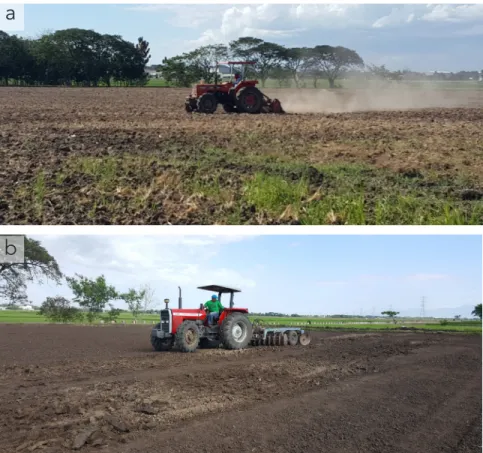
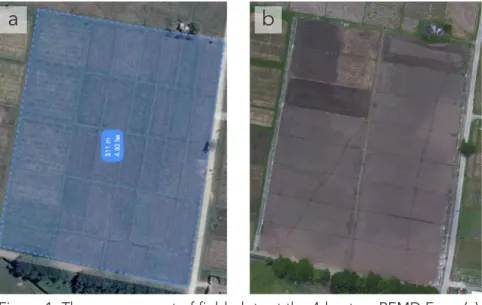
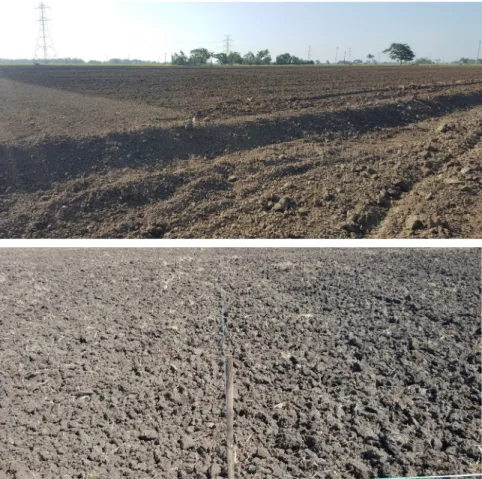
Plots must be arranged regularly so that the machines that will operate in the area are easily accessible, otherwise the plots must be restructured. Arrangement of arable plots on the 4 ha REMD farm (a) before and (b) after compaction. Small fields are plowed at least twice to prepare the surface for dry leveling.
Existing orchards that would no longer be part of the larger plots to be formed must also be ploughed. When the field dries up or after a week or two without rain, plow the area again to obtain small soil clods suitable for dry leveling.
NOTE
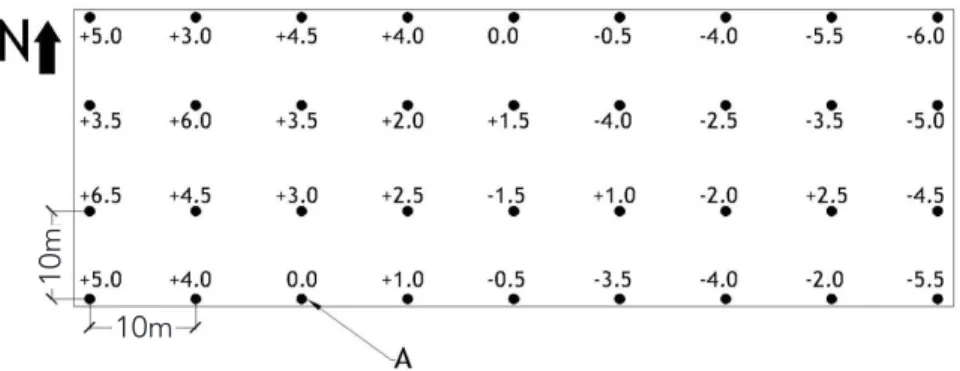
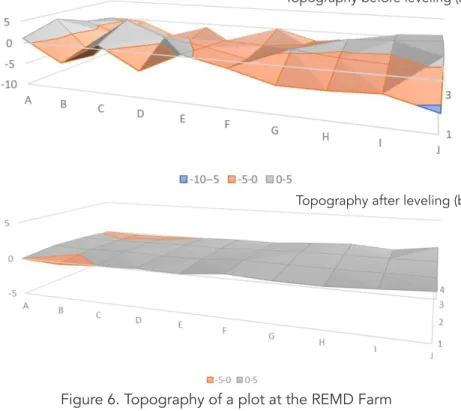
A topographical survey of each plot should be done to determine the low and high spots. Record the readings on a grid card with a yardstick so that any point in the field can be checked back if the need arises. Next, determine the average height of the field by taking the sum of all the readings and dividing by the number of readings taken.
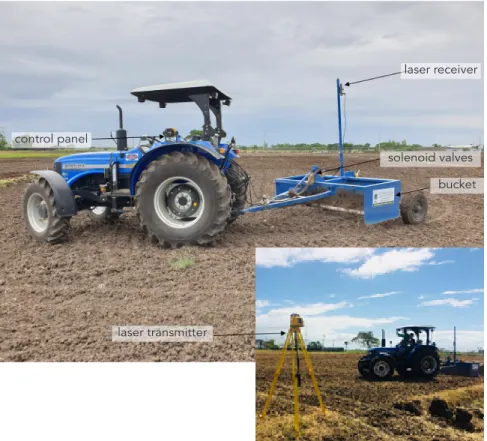
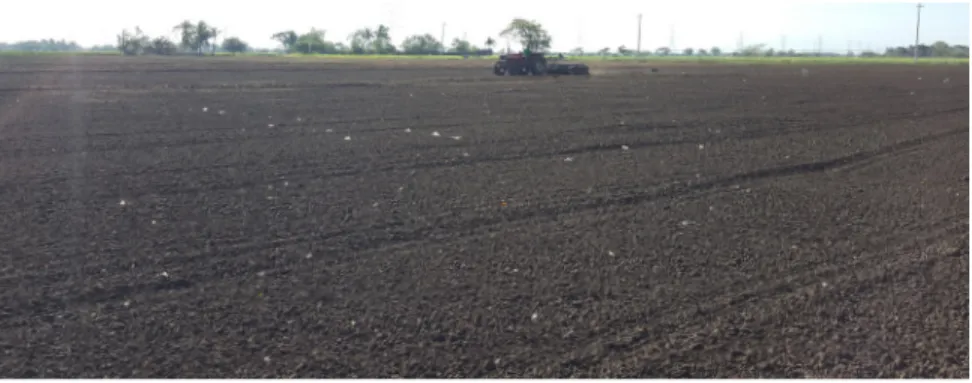
Subtract all the recorded heights from the mean and prepare another grid map showing the difference between the mean height and the recorded height (Figure 4). Positive (+) height indicates that the area should be filled, while negative (-) height indicates that the spot should be cut. Laser leveler moves the dry soil from the higher points of the field to the lower points using a four-wheel tractor with leveling bucket that operates automatically using a laser control system.
The laser transmitter emits a laser beam that is intercepted by the laser receiver mounted on the leveling bucket. The control panel mounted on the tractor interprets the signal from the receiver and opens and closes the hydraulic valve, which will raise or lower the bucket (IRRI, 2013). Set the laser receiver on the rod mounted on the leveling bucket at a height that will place the bucket's blade 1 cm to 2 cm above the ground surface.
Stop the process when the bucket no longer scrapes the soil at any point within the plot. 17 | Guidelines for developing a mechanized farm for irrigated rice. MODEL DECEPTION Water discharge from a 4-inch water pump on the REMD farm.
ESTABLISHMENT OF IRRIGATION AND DRAINAGE FACILITIES
Irrigation system
This includes the inspection and assessment of the physical, environmental and agricultural conditions of the physical, environmental and agricultural conditions of the target area. For irrigation, choose an irrigation method that is most suitable for the growth of the target crops. In surface irrigation, the topography of the land must be taken into account, where the slope and features of the surface that need correction by land leveling, as well as the direction of irrigation are all important.
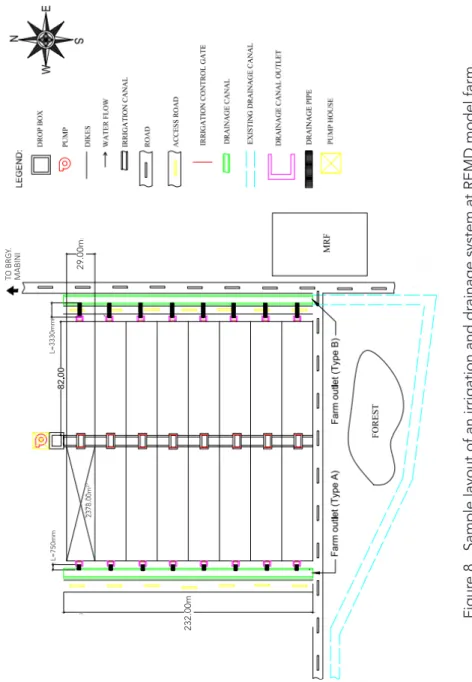
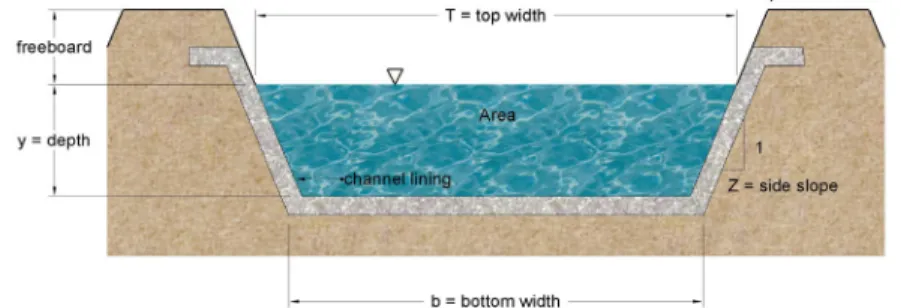
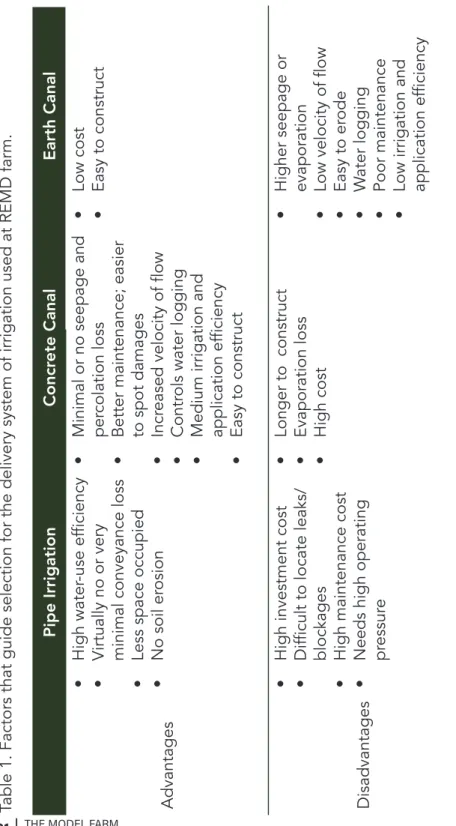
In addition, a control gate can be placed at the opening of the canal to facilitate water distribution per block or rise within the company. Factors determining the selection for the irrigation system used in the REMD farm.| Guidelines for Developing a Mechanized Farm for Irrigated RiceTHE MODEL FARMPipe IrrigationConcrete CanalEarth Canal Benefits. On the REMD farm, the cross-section of a trapezoidal channel was used, as shown in Figure 9.
Designing the channel involves choosing the channel alignment, size and bottom slope. At REMD farm, the design discharge was based on the FWR to be supplied by pump irrigation as the source of water in the area. The allowable velocity is the average velocity at which or below the bottom and side of the channel will not erode.
For example, at REMD farm there is already an existing groundwater source with a shallow tube well. Irrigation structures such as (a) a pump house or a (b) drop box at the pump station on the REMD farm.
Drainage system
- Prepare the layout of the drainage plan. A layout or a map should be prepared to show the proposed location of the
At the REMD farm, the pump house was designed to accommodate a rice husk gasifier engine-pump system as an alternative to a diesel engine pump to pump irrigation water from a tube well. In addition, a drop box was also constructed to temporarily collect and raise the upstream water level during pumping before it is diverted to an agricultural ditch/lined canal. A layout or map must be prepared showing the proposed location of the drainage system, including other features such as access roads, farm boundaries, and irrigation facilities that affect the design, construction, and maintenance of the proposed improvement.
On the REMD farm there was already an existing main drainage channel and the land gradient was also identified. Therefore, only the cross-sectional size of the proposed lined channel was designed, including the drainage pipe to collect water from the field to the drainage system or the main channel with open ditch. Various pipe drains are designed to collect or block excess water from a small area and drain the water to the main ditch.
Any drainage installation must be designed according to the probability of occurrence of a maximum expected discharge, which is related to the intensity and duration of rainfall events. For surface runoff, the coefficient is usually expressed in terms of flow rate per unit area, which varies with area size. The results of the analysis are presented in curves that show the relationship between the intensity of rainfall of a certain duration and the possible frequency of occurrence of the event in question.
The determination of the optimal size based on the designed Q can be solved by iteration using the selected cross-sectional area listed in Table 3 and details are given in PAES 216:217. 31 | Guidelines for Developing a Mechanized Irrigated Rice Farm THE MODEL FARM Gravel of the access road at the REMD farm.
ESTABLISHMENT OF ACCESS ROAD AND RAMP
Prepare the plan and layout. When all needed information is already available, plan the improvements to be done and
Holistic planning and scheduling of activities should be done to avoid overlapping activities that may affect the overall outcome and completion of the project. These plots are regularly arranged on the north and south sides of the farm with an irrigation channel in the center and a drainage channel as the border. The shoulder that provides space for stopping outside the traffic lanes must have a minimum width of one meter and a maximum slope of 4% for one- and two-lane roads.
When selecting the size of the road, the main considerations are the width and volume of machinery that will be working on the farm at the same time. The width was based on the maximum width of a machine that would operate in the area to facilitate the movement of two machines operating simultaneously. This was to ensure the stability of the embankment through natural compaction, especially for the newly constructed roads in the area, as compaction equipment was not available and the budget was limited.
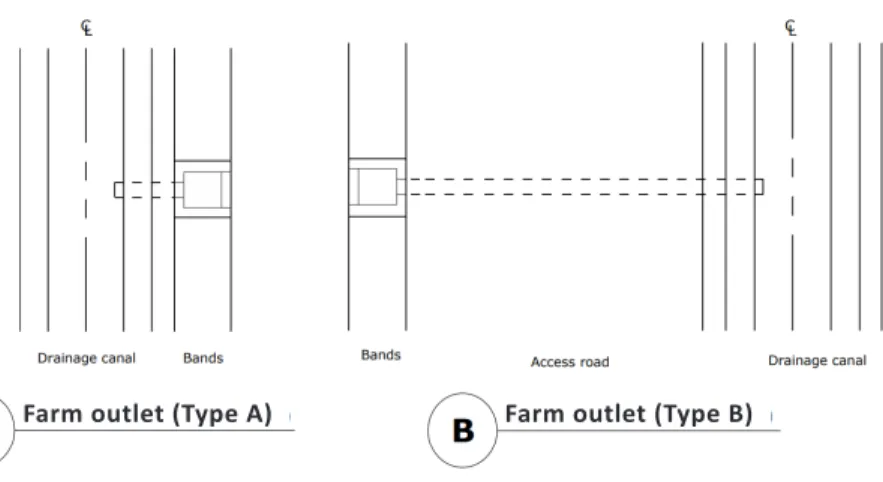
As with the access road, the width of the driveway should be based on the width of the large machines that will be working in the field. To improve traction on machines without rubber tires, the sloped portion of the ramp is rubber-lined (Figure 19). The economic feasibility of the project was evaluated using the benefit-cost ratio (BCR), payback period and return on investment (ROI).
Investment costs include the costs of civil works and materials in the construction of irrigation and drainage facilities and accessories, access roads and soil consolidation. Interest on investment, insurance and repair and maintenance was set at 10, 4 and 10% of the total investment cost, respectively. However, the payback period of scenario 1 (ie, 37 years) is too long for the project to generate benefits to cover the costs incurred in the investment.
The ROI is also very low, indicating that the investment return of the project is not favorable for their costs.

ACKNOWLEDGMENT
CONTACT US