SUPPORTING SUSTAINABLE DEVELOPMENT THROUGH COMMUNITY-BASED TOURISM: A CASE STUDY OF BAN. was submitted to the College of Management, Mahidol University for the degree of Master in Management. SUPPORTING SUSTAINABLE DEVELOPMENT THROUGH COMMUNITY BASED TOURISM: A CASE STUDY OF BAN NONG KHAO, KANCHANABURI PROVINCE. This research aims to investigate how Community Based Tourism (CBT) can be applied in tourism area to support the Sustainable Development (SD) in Thailand.
The Tourism Authority of Thailand (TAT), as one of the government sectors responsible for promoting the country's tourism in accordance with the 20-year national strategy, developed its corporate plan 2021-2022 under the vision "To be a leader in promoting Thailand as a sustainable and preferred destination for tourism." Tourism in the old ways has been based on capitalism, which focuses on the biggest profits of the organizations and owners; at the same time, they overlook the environmental, economic and social concerns, as well as the preservation of the next. Here's puts the concept of sustainable development into practice, and community-based tourism is one of the tools to support the new way of tourism.
Research Questions
Research Objectives
Research Scope
Expected Benefits
LITERATURE REVIEW
- Community-Based Tourism (CBT)
- Sustainable Development (SD)
- Other Related Theories
- Nature of Tourism
- Participation Theory
- Success Story of CBT/SD
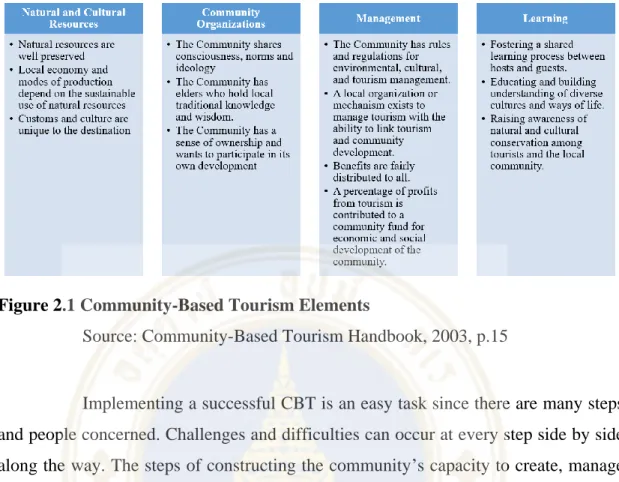
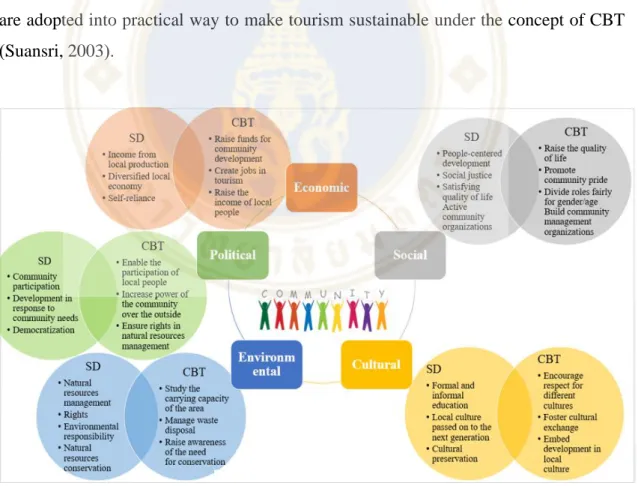
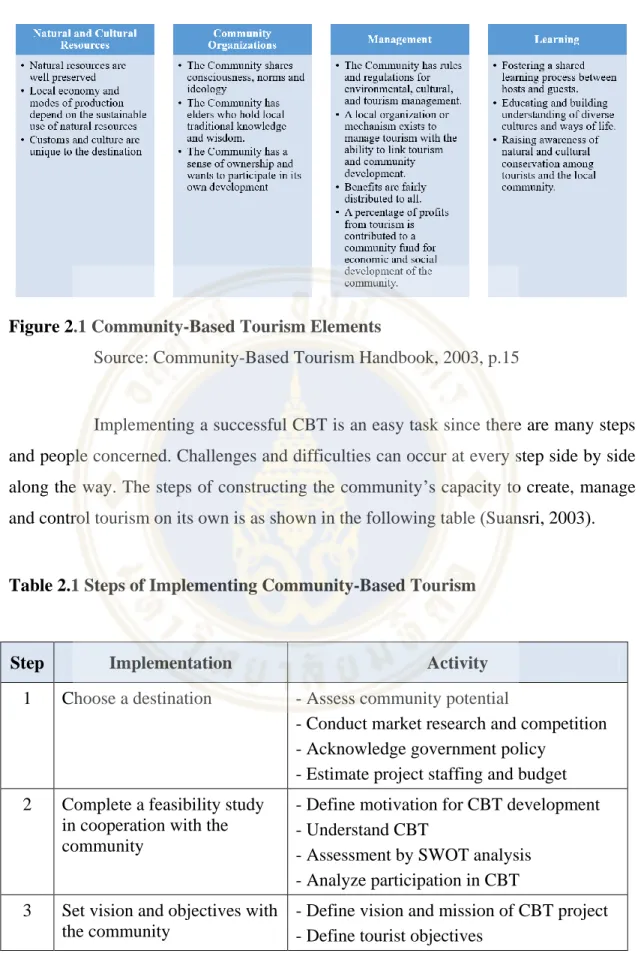
Kobkarn Wattanavrangkul said one of the Tourism Authority of Thailand's strategic plans is to expand the CBT network in Thailand in 2017. CBT can also reduce the gap between rich and poor as it distributes money directly to local people to improve their own work-life balance and improve unity among people in the community (TAT, 2019). As stated in Potjana Suansri's Community-Based Tourism Handbook, CBT features include four key elements related to natural/cultural resources, community organization, management and learning (Suansri, 2003), as shown in the figure.
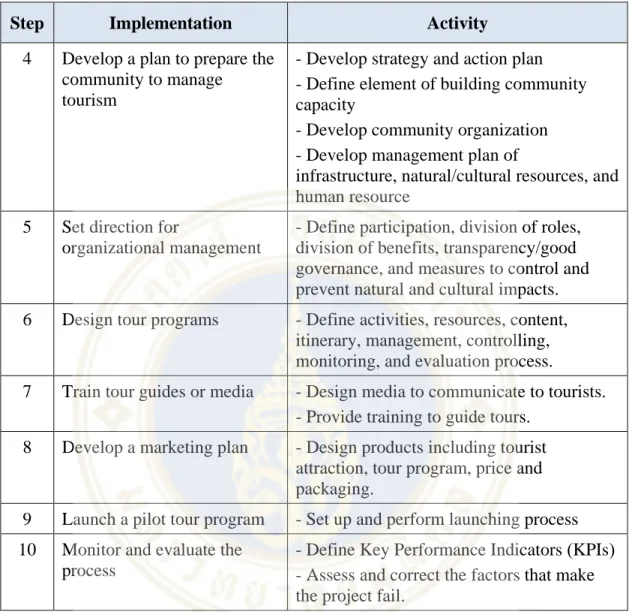
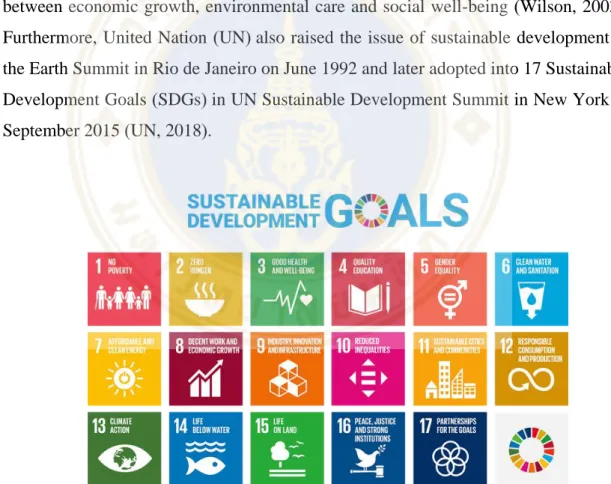
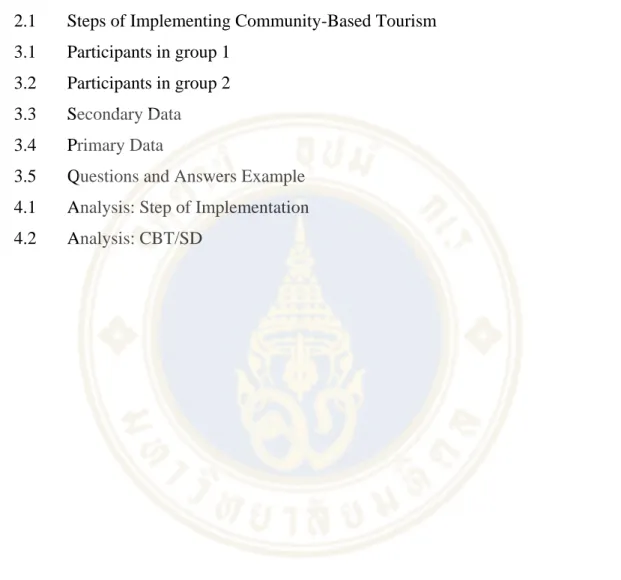
The steps to build the community's capacity to create, manage and control tourism on its own are as shown in the following table (Suansri, 2003). The idea of sustainable development was first introduced in 1987 in the publication of the Brundtland Report. The report conveyed the message of the negative environmental consequences of economic growth and globalization, as well as possible solutions to the problems caused by industrialization and population growth.
For this reason, regular monitoring of the external and internal environment of destinations is necessary to ensure a successful tourism industry. The participation of a community member is essential for the success of the Tourism in the Community project. According to Agenda 21 in the publication of the Brundtland Report in 1987, community development requires full participation as a partnership of people in the community during the development process.
Many scholars such as Paul 1987, Backman 2001, McIntyre, 1993, all agree that participation of local people in the community is one of the critical success factors in community tourism development and can bring a solution to the negative effects of mass tourism (Tourism) . Notes. 2019). In this way, local people should be involved in every step of the project from the beginning. Participation must be made in the process of decision-making, planning, implementation, profit sharing and program evaluation and monitoring.
However, these problems can be minimized by building a strong and unified community organization, the input of community representatives at all levels of CBT, and the involvement of stakeholders in CBT monitoring and evaluation (Suansri, 2003).
RESEARCH METHODOLOGY
- Research Design
- Sample Selection
- Local Community People and Leader at Ban Nong Khao 1 Abbot from Wat Intraram
- Tourism Authority of Thailand (TAT) officers 1 Promoting tourism product officer
- Data Collection
- Interview Questions
- Research Variables
- Data Analyzing
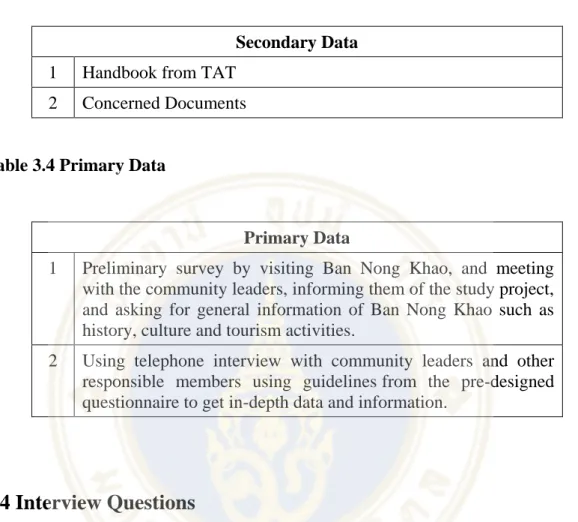
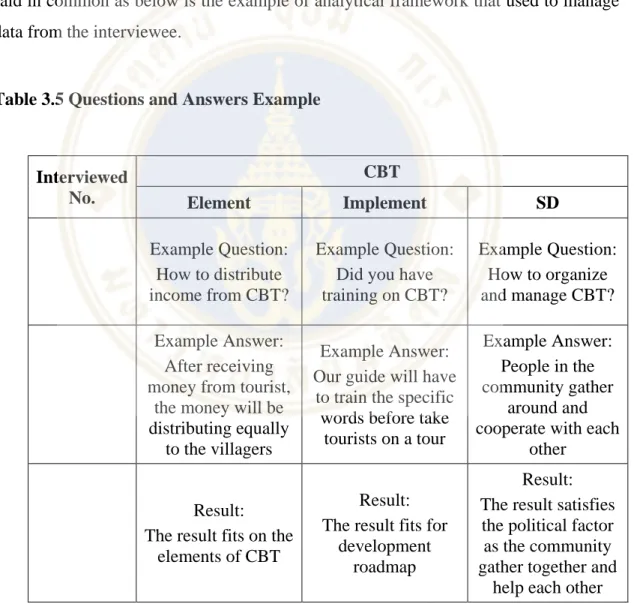
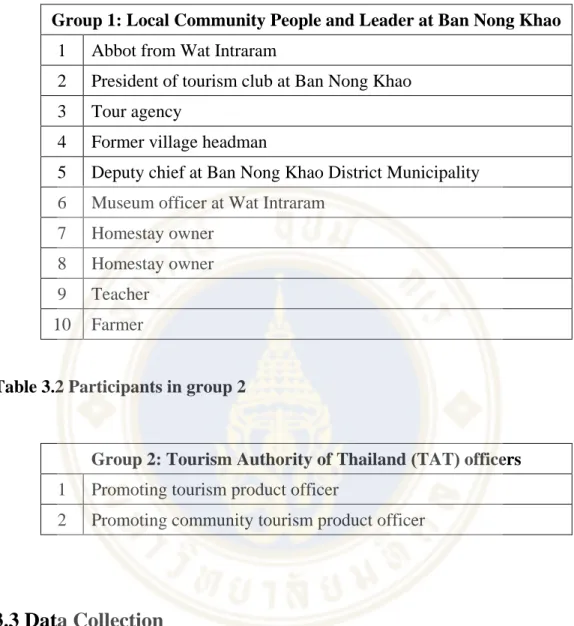
The person to be interviewed consists of community leader and other community members at Ban Nong Khao and officials of the Tourism Authority of Thailand (TAT) who participate in local community development. 1 Preliminary research by visiting Ban Nong Khao and meeting the community leaders, informing them about the study project and asking for general information about Ban Nong Khao such as history, culture and tourism activities. According to the holistic approach, the element, implementation steps and principles of CBT/SD will provide a basis and checklists.
The data collected from Ban Nong Khao is then assigned to these checklists. What do you see as the key achievements of community-based tourism in terms of sustainable community development? How community-based tourism has impacted sustainability in terms of living standards in Ban Nong Khao community.
What support do you need from the Tourism Authority of Thailand to improve community tourism in the community.
RESULTS AND FINDING
- General Profile
- Economic
- Tourism Products
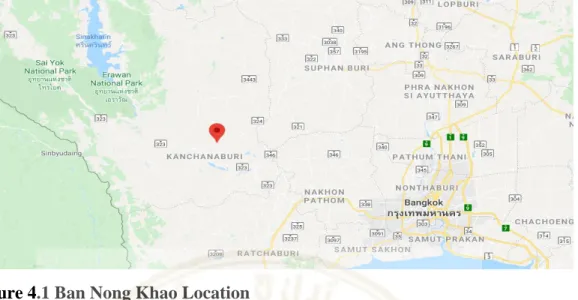
- Introducing Community-Based Tourism at Ban Nong Khao The first Community-Based Tourism at Ban Nong Khao begun in 1997,
In terms of economy, the villagers earn income from agriculture, especially rice cultivation and production of molded palm sugar, as seen in the village area surrounded by palm trees on the edge of rice fields. For arts and crafts, the village is also famous for weaving cloths, namely "100 colors loincloths". These products were selected as OTOP "One Tambon One Product", and are famous souvenirs from Ban Nong Khao.
This living museum provides visitors with the source of wisdom and culture in the community that had the potential to become a center of community knowledge and expertise. Tourists have the opportunity to learn and experience in 9 learning bases with the community's unique cultures, lift styles, eco-tourism, agricultural tourism, old houses and traditional faith ceremony and rituals. Visitors can get a unique experience of the traditional Thai lifestyle in old-fashioned houses and cultures.
Take a fun ride with a farmer's truck through the village and the landscape of the rice fields and the handmade products shop. 1 Day Tour - Riding an "E-Taen" farm truck to visit the village shrine, a fan palm plantation amidst rice fields along the dirt path to nature, rural environment and rural way of life. Learn how to harvest crops and produce local snacks and desserts, handloom clothes and bamboo products and pay respect to the spirit of the Rice Goddess.
Excerpt from 4 day Kanchanaburi tour - Continue to visit Ban Nong Khao, a cultural village to see the traditional farming society and various folk activities from rice pounding and making typical Thai sweets, rural ceremonies, planting rice while singing folk songs traditional and Phleng Phuang Malai. Then tourism activities have expanded from tour operator businesses and become one of the popular community tourism in Thailand.
Gap Analysis of CBT/SD at Ban Nong Khao
- Community-Based Tourism Analysis
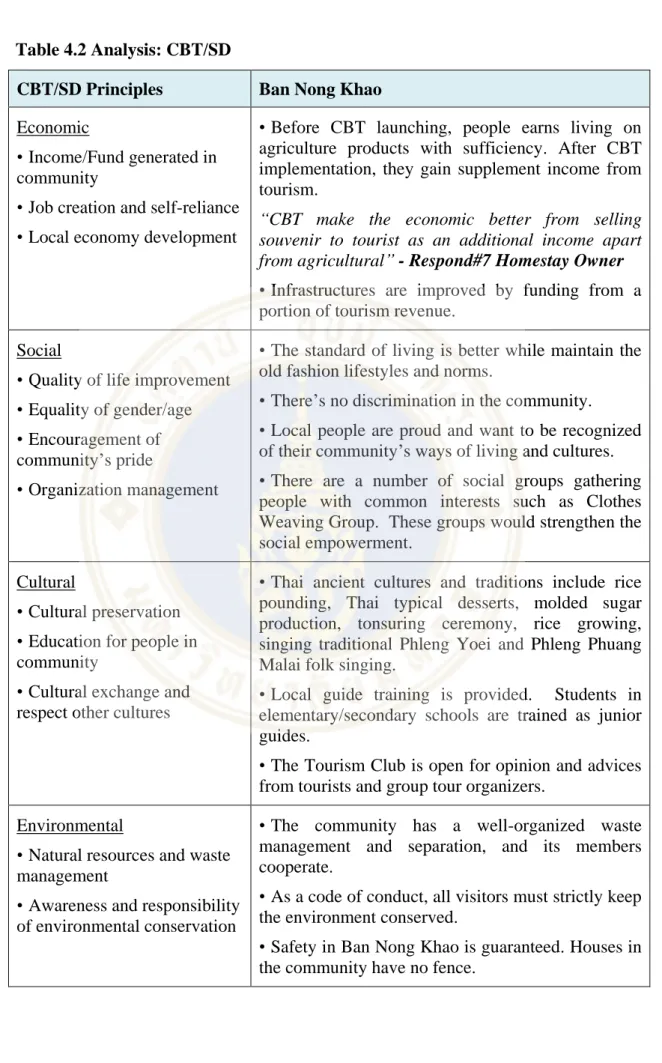
- CBT/SD Analysis
Local people are proud and want to be recognized by their community's ways of life and cultures. There are a number of social groups that bring people together with common interests, such as the Clothes Weaving Group. Thai ancient cultures and traditions include rice pounding, Thai typical desserts, cast sugar production, tonsuring ceremony, rice cultivation, singing traditional Phleng Yoei and Phleng Phuang Malai folk song.
Of course, from the checklist in the table above, CBT in Ban Nong Khao fully supports the sustainable development of the community. We have witnessed many positive economic, social and environmental impacts including improved quality of life, additional individual income, community fundraising, cultural and natural resource conservation and community strengthening. The negative impact has also come with the concern that the younger generation may forget their cultures and lifestyles and instead adopt urban lifestyles.
However, the community recognizes this problem and tries to prevent this situation by offering training on local cultures and supporting youth participation in the tourism community. We train our children from a young age to learn about community cultures through fun and let them participate in cultural shows like Rum Klong Yao.”
Findings Discussion
In Ban Nong Khao, the influence and power of the Buddhist monks on the community is very great. According to the interviews, all respondents agreed that the abbot of the temple plays an important role in the development of the community. The beginning of community tourism arose and grew under the supervision of the abbot.
Afterwards, when the abbot died and the newly appointed abbot did not pay attention to community development, tourism was in a recession for many years. Fortunately, the current abbot, appointed a year ago, has vision and is once again supporting a sustainable tourism project in the community. Because their background is closely linked to that of others in the community, they proudly present their own identity, culture, experiences and rural lifestyle to visitors.
The physical problems or weaknesses faced by the community in practicing cultural tourism include insufficient welcoming area at the tourist center at Wat Intraram and lack of toilets. At present, local guides' English is not good enough, so they sometimes have to hire guides from the tour operators. To overcome this weakness, the society urgently needs to organize the intensive foreign language education using free media available in social networks to increase their skills.
The community should cooperate with business partners such as tourism operators to increase its competence in this area.
RECOMMENDATIONS AND CONCLUSIONS
Conclusion
Recommendations
Ban Nong Khao is willing to improve its tourism products in this way because it already has a basic foundation that is consistent with its philosophy. Ban Nong Khao should use bloggers and influencers as important media to communicate its products to both Thai and foreign tourists. It is a suitable means because when contacting the people in Ban Nong Khao, they can convey the impression through word of mouth from their actual experiences.
Since the activities and attractions in Ban Nong Khao are compact and take quite little time to explore, combining learning packages and information exchange would create synergy, benefits and mutual benefits overall. This would help Ban Nong Khao be a good example of sustainable development through community tourism.