This thesis would not have been completed without all the support I have always received from him. Without them, there would be no data to analyze and this thematic paper would not have been completed. The purpose of this study was to test the hypotheses of four factors influencing online shopping intention behavior toward personal care products.
In the last two decades, the Internet has assumed an increasingly important role in social and business life. Online shopping processes include customers selecting items using shopping cart software and then going through a payment process with delivery at the end. The advantages of online shopping are being open 24 hours and seven days a week, easy access, quick time to find the products online and low cost.
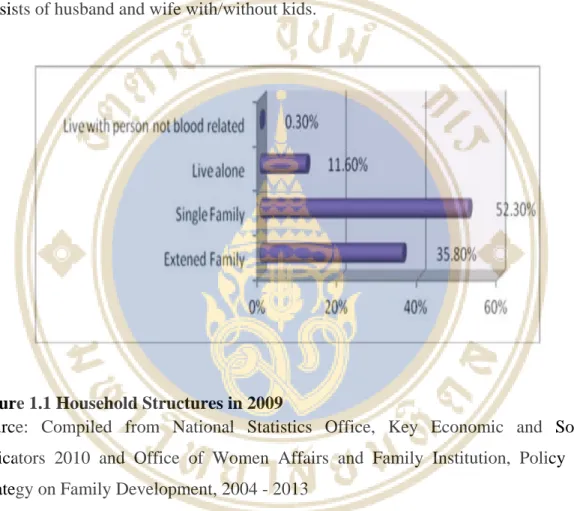
The National Statistics Office Thailand (NSO) gives the definition of household as "the smallest group of people who live together, make collective decisions and provide common food and other essentials. In 2009, a study showed that the single family was the highest percentage of family type in Thailand (Figure 1).The report found that clothing and accessories were the best-selling category online and there was a good trend of growth in the online market.
Moreover, food/beverages/healthy goods and electrical appliances also showed opportunities for growth in the market.
Problem
According to the NSO, the highest percentage (68.8%) of consumers shopping online were between the ages of 25-49.
Objective of the Study
LITERATURE REVIEW
- Perception
- Perceived Benefit
- Perceived Risk
- Customer Service
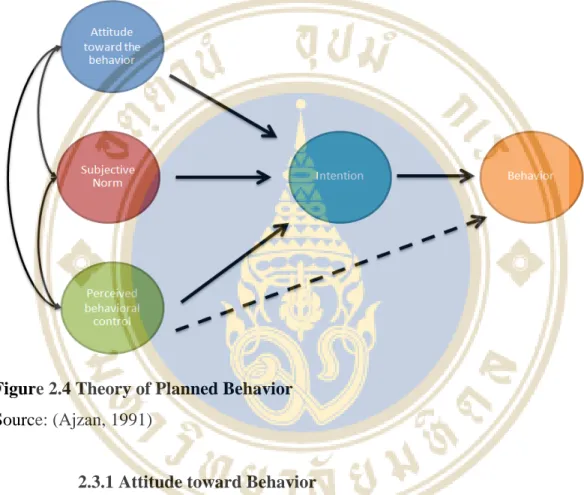
- The Theory of Planned Behavior
- Attitude toward Behavior
- Subjective Norms
- Perceived Behavioural Control
- Gap of Literature
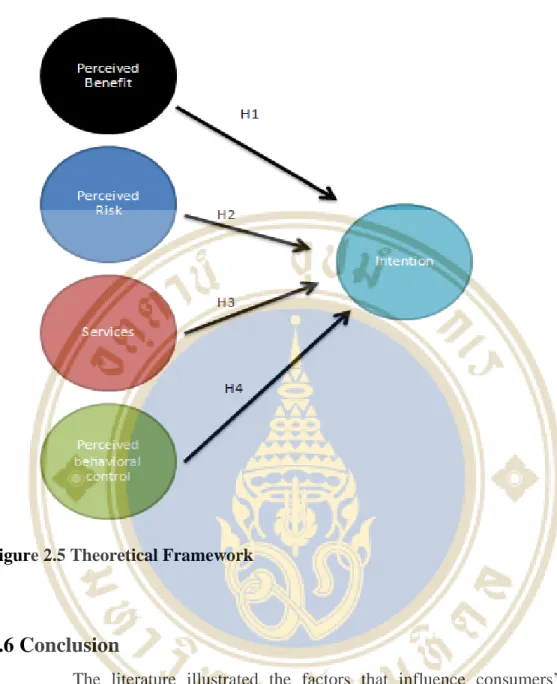
- Theoretical Framework
- Conclusion
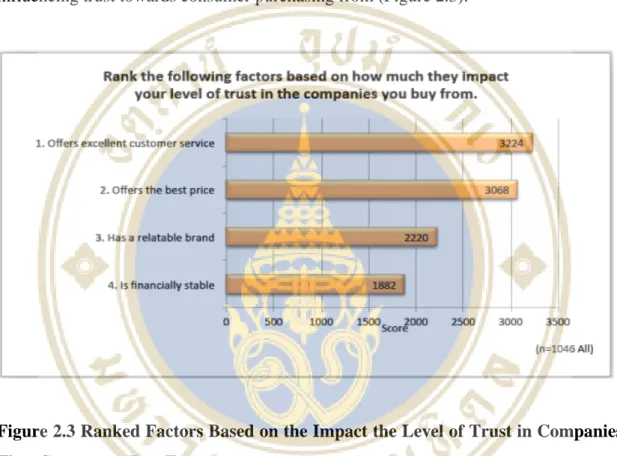
Furthermore, availability and wide range of products, convenience/comfort of shopping and an easy-to-navigate website, and enjoyment of online shopping had a significant impact on online shopping intentions. Based on the results of Thai perception; Shopping online wasn't easy and they didn't mind shopping in offline stores even though it was less convenient than shopping online. Convenience, time savings, ease of use, lower prices and choice were examined and the findings showed that all these factors had a positive impact on online shopping intentions.
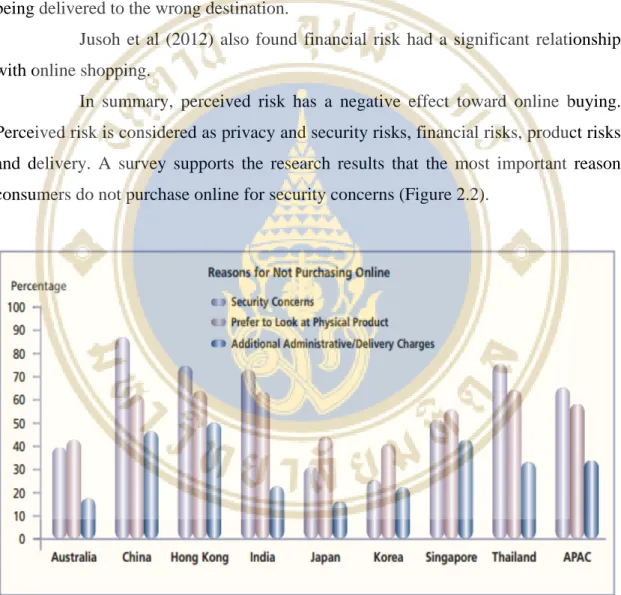
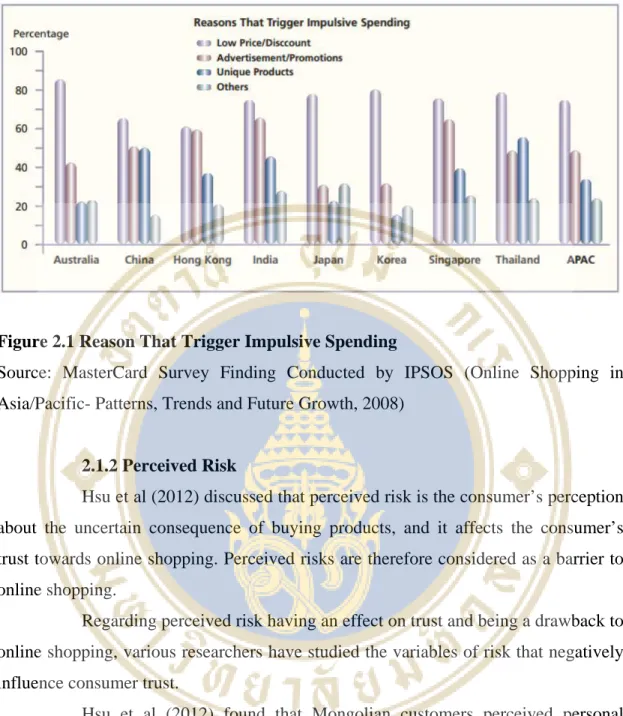
Hsu et al (2012) discussed that perceived risk is the consumer's perception of the uncertain consequences of purchasing products and it affects the consumer's trust in online shopping. Hsu et al (2012) found that Mongolian customers perceived personal information (privacy and security risks) as a risk and this led them to distrust online shopping. Poor product quality was considered a product risk. 2012) have also studied risk and its influence towards online shopping.
They found that the speed of delivery encouraged consumers' online shopping intentions because customers were usually happy to search for new things. However, consumers will put off online shopping if they experience lost goods, damaged goods or packages being delivered to the wrong destination. On the other hand, Zhang et al. 2012) found that after-sales services were not a significant factor affecting consumers' online shopping intentions.
Attitude towards online shopping is defined as consumers' positive or negative feelings towards online purchases (Literature: Jusoh et al, 2012). Previous findings by Thananuraksakul (2007) found that subjective norms are likely to influence online shopping behavior, and subjective norm is a factor influencing online purchase intentions in Thailand. This result was similar to Laohapensang's findings: friends and colleagues influenced online shopping behavior in Iran.
Most researchers studied online shopping intention without considering the degree of buyer involvement. There have been researchers who have used TPB to study its impact on online shopping behavior in Asia as well (Ming-Shen et al, (2007); Thananuraksakul, (2007); Javadi et al. Further study in this paper focuses on in online shopping intentions toward personal care products (low-involvement products).
Based on the literature, the variables studied included perception, services, attitudes toward online shopping, subjective norms, and perceived behavioral controls that influenced online shopping intentions. The factors were convenience, time saving, ease of use, price, risks, services, attitude towards online shopping; subjective norms and perceived behavioral control.
RESEARCH METHODOLOGY
- Overview
- Data Collection Methodology
- Data Sampling and Measurement
- Preliminary Findings
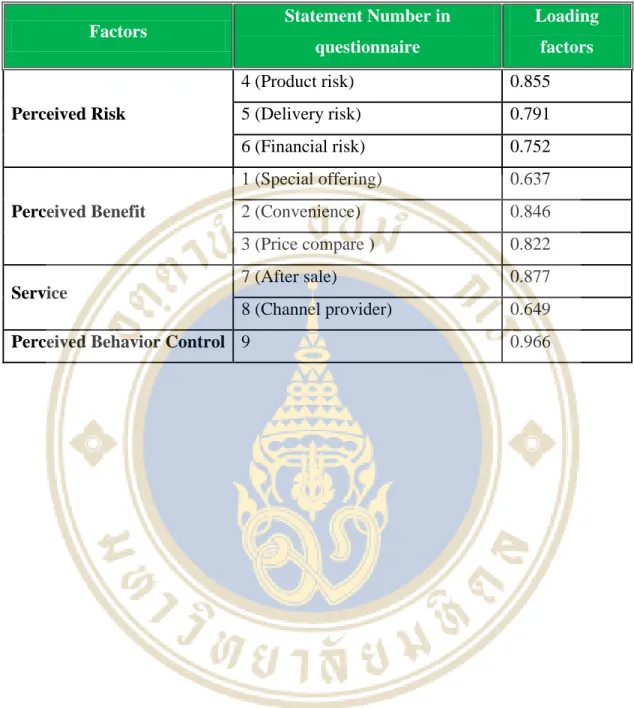
Data were obtained through an online questionnaire because it was easy to enter data for analysis and link it to the target respondents. The study used factor analysis to group the variables into factors and remove the variable that was not significant and used regression analysis to test the hypotheses. Covered services 1) after-sales services; studied by Ming-Shen et al. 2012); and 2) channel provider (website via computer/app via smartphone).
RESEARCH FINDINGS
- Respondents’ Age
- Respondents’ Income
- Online Shopping Experience
- Hypotheses Test
53 respondents, or 91.4%, have experienced online shopping; and only 8.6%, or 5 respondents, have never bought anything online. The significance level of this study was set at 0.05: Hypotheses were rejected at significance values of more than 0.05. As shown in Table 4.2, the regression analyzed the relationship between perceived benefit and online shopping intention as significant (sig. <0.05).
The result of Beta coefficients and t-value found a positive relationship between perceived benefit and online shopping intention. As shown in Table 4.3, the regression analysis of the relationship between perceived risk and online shopping intention was not significant (sig.> 0.05). As shown in Table 4.4, the regression analysis of the relationship between service and online shopping intention was not significant (sig.> 0.05).
As shown in Table 4.5, the regression analysis of the relationship between perceived behavioral control and online shopping intention was not significant (sig. > .0.05). Several researchers had also studied this and they found that perceived benefit and perceived risk were important factors (Hsu & Bayarsaikhan, 2012; Jusoh &.. Ling, 2012), while service and perceived behavioral control were not significant factors influencing online shopping intentions. to shop (Zhang et al., 2012). From this study, only one of the four hypotheses was supported (sig < 0.05), namely the perceived benefit.
It shows that consumers perceived convenience, special offers and price comparison as important factors influencing online shopping intentions.

DISCUSSION
Conclusions
This article shows how the theory of planned behavior was applicable to determine consumer behavior intention. Additionally, the study added perception and service to a theoretical framework to test factors from the literature.
Recommendations
Retrieved from http://www.mastercard.com/us/company/en/insights/pdfs/2008/Asia_Pacifi c_Online_Shop.pdf. Retrieved from MiVa Merchant: http://www.mivamerchant.com/blog/the- history-of-ecommerce-how-did-it-all-begin. Retrieved from SearchBlog.Asia: http://www.searchblog.asia/thailand/e-commerce- thailand/thailand-e-commerce-trends-in-2011/.
Retrieved from case studies in The Times 100: http://businesscasestudies.co.uk/first-direct/#axzz2lBPvWaI2.
APPENDICES
APPENDIX A: Questionnaire