Human Resource Management, Employees’ Motivation and Job Productivity: The Case of Medical Research Centers in
the United Arab Emirates
دراوملا ةرادإ ةيرشبلا
:ةيجاتنلإاو ةيعفادلا ةدحتملا ةيبرعلا تاراملإا ةلود يف ةيبطلا ثوحبلا زكارم ةلاح
ZAINAB SALEM EBRAHIM TAHER ALHASHMI
Dissertation submitted in partial fulfilment of the requirements for the degree of MSc HUMAN RESOURCE MANAGEMENT
at
The British University in Dubai
November 2017
DECLARATION
I warrant that the content of this research is the direct result of my own work and that any use made in it of published or unpublished copyright material falls within the limits permitted by international copyright conventions.
I understand that a copy of my research will be deposited in the University Library for permanent retention.
I hereby agree that the material mentioned above for which I am author and copyright holder may be copied and distributed by The British University in Dubai for the purposes of research, private study or education and that The British University in Dubai may recover from purchasers the costs incurred in such copying and distribution, where appropriate.
I understand that The British University in Dubai may make a digital copy available in the institutional repository.
I understand that I may apply to the University to retain the right to withhold or to restrict access to my thesis for a period which shall not normally exceed four calendar years from the congregation at which the degree is conferred, the length of the period to be specified in the application, together with the precise reasons for making that application.
COPYRIGHT AND INFORMATION TO USERS
The author whose copyright is declared on the title page of the work has granted to the British University in Dubai the right to lend his/her research work to users of its library and to make partial or single copies for educational and research use.
The author has also granted permission to the University to keep or make a digital copy for similar use and for the purpose of preservation of the work digitally.
Multiple copying of this work for scholarly purposes may be granted by either the author, the Registrar or the Dean of Education only.
Copying for financial gain shall only be allowed with the author’s express permission.
Any use of this work in whole or in part shall respect the moral rights of the author to be acknowledged and to reflect in good faith and without detriment the meaning of the content, and the original authorship.
ABSTRACT
Organizational productivity is a crucial problem for any organization. There has been a problem of many business managers regarding the human resource department as a critical component of the business. Particularly, some business managers do not trust the HR department as a strategic business organ. The purpose of this research is to explore the human resource management at medical centres in the United Arab Emirates.
The study uses the inductive research approach. It analyzes employees’ motivation in different medical centres in the United Arab Emirates. The investigation employs mixed methods, both quantitative and qualitative. On one hand, it is important to collect enough data for calculating a correlation between the workforce’s motivation and productivity. In order to achieve this aim, it is planned on carrying out a survey among employees of medical centres in the United Arab Emirates. Survey and interviews are conducted in this research and 200 respondents were selected so that through investigation could be performed. Descriptive statistics are reported though frequencies and the distribution of the values of the variables. Chi- square tests are performed through crosstabulation of the main study variable. Pearson correlation results and regression tests have been applied so that the associations and relationships between the study variables can be understood. In the majority of reported cases the level of significance is at the 1 percent level. It is found that HR management at medical centres in the UAE is relatively effective. It fulfils its main function, although certain problems exist. It is recommended for the organizations under investigation to take several actions which can make their HR departments more effective and the betterment could be determined.
Keywords: Human Resource Management, Job Productivity, Employees Motivation and Medical Research Centres
صخلملا
و ةيعفادلا دعت .ةمظنم يلأ ةمساح ةلكشم ةيجاتنلإا
دوجو ظحول دعلا ىدل ةلكشم
ي اميف لامعلأا يريدم نم دي ةرادإب قلعت
ةيرشبلا دراوملا ةرادلإا هذه نوري لا ثيحب ،
.لمعلا يف مساح رصنعك ف
ا مسق يف لامعلأا يريدم ضعب قثي لا ةيرشبلا دراومل
وه ثحبلا اذه نم ضرغلا .يجيتارتسا لمع زاهجك ةسارد
ةلود يف ةيبطلا زكارملا يف ةيرشبلا دراوملا ةرادإ ا
تاراملإ
ةدحتملا ةيبرعلا .ةيبطلا زكارملا ىلع اهريثأت ىدم ةفرعمو ،
.يئارقتسلاا ثحبلا جهن ةساردلا مدختست ةيعفاد ليلحتو ةساردل
يف ةفلتخملا ةيبطلا زكارملا يف نيفظوملا د
تاراملإا ةلو
ةيبرعلا ا .ةدحتمل مادختسا مت ،ىرخأ ةيحان نمو بيلاسأ
،ةعونتم ةيعونو ةيمك نم كلذ يف امل .
ل ةيمهأ ب عمج ةيفاك تاناي سايقل
نيب طابترلاا ةيعفاد
.ةيجاتنلإاو ةلماعلا ىوقلا ،فدهلا اذه قيقحتلو
مت ا زكارملا يفظوم نيب حسم ءارجإ ةلود يف ةيبطل
.ةدحتملا ةيبرعلا تاراملإا امك
رايتخا متو ثحبلا اذه يف تلاباقملاو نايبتسلاا ءارجإ مت 200
كراشم مهنم ةساردلا هذه يف .
و تايطعملا ليلحت للاخ نم تاءاصحلإل ةيفصو ريراقت دادعا مت تاريغتملا ميق عيزوتو تاددرتلا
. ت م خا ءارجإ عبرم تارابت
.يسيئرلا ةساردلا ريغتمل لدابتملا بيرقتلا للاخ نم ياك قيبطتو
تارابتخاو نوسريب طابترا جئاتن رادحنلاا
وصولل ل ىلا
تاريغتم نيب تاقلاعلاو تاطابترلاا مهف تلااحلا ةيبلاغ يف .ةساردلا
اهتسارد مت يتلا مهلأا ىوتسم نوكي ،
ىوتسم دنع ةي 1
.ةئاملاب ىلا ةساردلا تلصوت دقو يبرعلا تاراملإا ةلود يف ةيبطلا زكارملا يف ةيرشبلا دراوملا ةرادإ نأ
.اًيبسن ةلاعف ةدحتملا ة
يهف اهتفيظو يدؤت
،ةيسيئرلا م .ةنيعم لكاشم دوجو نم مغرلا ىلع
يقحتلا ديق تامظنملا ذختت نأ نسحتسملا ن نم ديدعلا ق
نكميو ةيلاعف رثكأ اهيدل ةيرشبلا دراوملا ماسقأ لعجت نأ نكمي يتلا تاءارجلإا قيقحت
نسحتلا .
ACKNOWLEDGMENT
There are many people to whom I would like to thank at this point as they are the real people who made this proud moment in my life. First I will like to thank my supervisor Prof. Ashly Pininngton who have helped me in completing this dissertation and was really a helpful hand at all times whenever I need him. Further I will thank my parents who have supported me at all times so that I could continue my studies and I could grow in better manner. I will also like to thank my friends and the group which actually helped me out in completing this dissertation as there was continuous support from them at all times and due to that I am able to complete my dissertation on time.
i
TABLE OF CONTENTS
TABLE OF CONTENTS... i
List of Tables ... iii
List of Figures ... iv
Abbreviations ... v
Chapter 1 ... 1
Introduction ... 1
1.1 Research Overview ... 1
1.2 Research Problem ... 3
1.3 Research Aims and Objectives ... 4
1.4 Research Questions ... 4
1.5 Design Limitations of the Study ... 5
1.6 Structure of the Dissertation ... 6
Chapter 2 ... 8
Literature Review – Part I... 8
2.1 Introduction ... 8
2.2 Definitions ... 8
2.3 Background Discussion ... 10
2.3.1 Differences between Old and New HR ... 10
2.3.2 Steps to Becoming Modern Human Resource ... 11
2.4 How HR Business Partnership Evaluated ... 13
2.4.1 Employee Retention ... 13
2.4.2 Employee Turnover ... 14
2.4.3 Organizational Commitment ... 20
2.4.4 The Phenomenon of Employee Motivation ... 26
Chapter 3 ... 35
Literature Review – Part II... 35
3.1 Introduction ... 35
3.2 Barriers and Enablers to HR Management ... 35
3.2.1 Cultural Factors which influence Human Resource Management ... 35
3.2.2 The Factors of External Environment which Influence HR Management45 3.2.3 The Factors of Internal Environment which Influence HR Management 48 Chapter 4 ... 55
ii
Research Design and Methodology ... 55
4.1 Introduction ... 55
4.2 Research Methodology ... 57
4.3 Study Instrument ... 58
4.4 Research Sampling ... 59
4.5 Procedure ... 61
4.6 Methods of Analysis ... 61
Chapter 5 ... 63
Results ... 63
5.1 Introduction ... 63
5.2 Descriptive Statistics ... 63
5.3 Inferential Statistics ... 65
Chapter 6 ... 89
Discussion ... 89
6.1 Introduction ... 89
6.2 The interview Results ... 89
6.3 Data Limitations ... 92
Conclusions and Recommendations ... 94
7.1 Introduction ... 94
7.2 Conclusions ... 94
7.3 Recommendations ... 95
7.4 Contribution of this Research ... 95
References ... 97
Appendices Appendix 1 – The Questionnaire (Survey) ... 106
Appendix 2 – The Questionnaire (Interviews) ... 107
iii
LIST OF TABLES
Table 1. Survey's Results ... 63
Table 2 ANOVA Results ... 65
Table 3 ... 67
Table 4 ... 69
Table 5 ... 71
Table 6 ... 73
Table 7 ... 75
Table 8 ... 77
Table 9 ... 79
Table 10 ... 81
Table 11 ... 83
Table 12 ... 85
Table 13 Pearson Correlation ... 87
iv
LIST OF FIGURES
Figure 1. The measurement of employees' turnover (Tsai & Wu, 2010) ... 16
Figure 2 ... 68
Figure 3 ... 70
Figure 4 ... 72
Figure 5 ... 74
Figure 6 ... 76
Figure 7 ... 78
Figure 8 ... 80
Figure 9 ... 82
Figure 10 ... 84
Figure 11 ... 86
v
ABBREVIATIONS
HR Human Resource
HRM Human Resource Management
UAE United Arab Emirates
1
CHAPTER 1 INTRODUCTION
1.1 Research Overview
In the recent times, the main concern of many organizations has been on how to increase their productivity and customer satisfaction. To achieve this objective, these organizations often send their employees for training and awareness sessions. Previously, employees were regarded only as an input to the production process of the organizations. Nonetheless, following the Hawthorne studies by Elton Mayo between 1924 and 1932, this perception of employees changed (Al-Ajmi, 2001). According to these studies, employees are not only the inputs of production, but also the major contributors to the business operations (Al-Ajmi, 2001). Further, Al-Ajmi (2001) noted that employees are not only motivated to work hard by monetary returns, but also by their attitudes. When employees are satisfied, they become motivated to work harder which results in a higher productivity (Herzberg, 1968). Employees’ motivation entails job satisfaction, good working climate and other remuneration packages. Managers have a huge role to play in the employees’ motivation process by planning and introducing new incentives.
With an increased rate of interaction between different global communities, the number of business opportunities for companies has also been increased. Based on this fact, various organizations have moved to ensure that they have adopted the right strategies to enable them gain a competitive advantage in the global business environment. As observed by Herzberg (1968), many companies have in the recent past adopted various human resource strategies to gain a competitive advantage in the global business environment. In particular, many corporate organizations have adopted the most efficient human resources management strategies that have a potential to satisfy and motivate employees. This move has not only been induced by the need
2
for business efficiency, but also because of the external pressure to adhere to the principles of human rights.
As a result, employee motivation has emerged as the main focus of most corporate organizations throughout the world. Regardless of the type of organization, employee motivation has become a part of the wider strategy of increasing productivity. An organization can enhance performance and productivity on a long-term basis when the workforce has the desire to work hard to achieve the organizational set of objectives (Shell & Duncan, 2006). In view of the fact that employee motivation has been indicated to have a positive correlation with the company’s productivity, conducting a research on the same topic is worthwhile. With respect to this, businesses have begun to invest enormous resources on the strategies of increasing employee motivation. This move is based on the research studies that link employee motivation to increased inputs and outputs. Additionally, some studies have linked employee motivation to increased customer satisfaction. Highly motivated employees work diligently when serving the customers (Al-Ajmi, 2001; Okpara, 2004; Shell & Duncan, 2006). In this paper, the relationship between employee motivation and performance at the medical in the United Arab Emirates will profoundly be explored.
The medical sector is one of the most important sectors in the UAE in terms of the services it offers as well as the number of employees it recruits. The issue of employee motivation has been one of the most researched topics in the UAE. However, unlike other sectors, the health sector has not been extensively studied in regards to the relationship between employee motivation and organizational productivity. Much the same as other key sectors, the health sector offers millions of people the opportunity to work. But to achieve the expected workload in an effective way, there have been attempts by various healthcare organizations to initiate programs meant to motivate their respective workforce. In particular, the HR business
3
partnership has recently received much attention by healthcare organization management to boost their productivity through employee motivation. However, there is a scarcity of information regarding the level at which employee motivation has led to increased productivity.
Therefore, this paper will seek to undertake an extensive survey to ascertain whether employee motivation is directly related to productivity. The survey will specifically focus on medical centers in the United Arab Emirates.
1.2 Research Problem
1.2.1 Main Problem.
Employee motivation is of critical importance to promoting organizational performance within the healthcare sectors. Regardless of the spheres of activity, poor employee performance can have negative implications on the productivity of the firm (Nordberg, 2008). Particularly in a sector like healthcare, the issue of employee motivation assumes a critical significance in view of the implications it can have on the productivity of the company. Precisely, employee motivation has been attributed to promoting customer satisfaction. Therefore, the main problem of the study is employees’ motivation at medical centers in the United Arab Emirates and its effect on their productivity.
1.2.2 Sub-Problems
Organizational productivity is a crucial problem for any organization. In this study, the main focus will be not on measuring productivity, but on exploring the ways in which HR management can influence it. Moreover, it is important to emphasize that this influence can occur directly or through motivation. Both these options will be explored in regards to medical centers in the United Arab Emirates.
Secondly, there has been a problem of many business managers regarding the human resource department as a critical component of the business. Particularly, some business
4
managers do not trust the HR department as a strategic business organ, but they instead regard it as a personal sector. The research will, therefore, seek to ascertain the extent to which a motivated HR Department helps the organization to enhance high levels of productivity.
1.3 Research Aims and Objectives
The purpose of this research is to explore the human resource management at medical centers in the United Arab Emirates.
The current proposed study is important in view of the practical and theoretical implications of the observations made regarding the link between motivated workforce and organizational productivity. Eventual inferences will include both the knowledge and the understanding of how various aspects of employee motivation can affect the productivity of the organizations based in the UAE. Additionally, the findings and recommendations from this study can be used to help UAE medical organizations to formulate effective HR strategies to increase their productivity and place themselves strategically in the ever competitive global environment. Also, this study will provide fresh information that will help to test various western theories and hypothesis about the link between workforce motivation and productivity.
Further, this study fills an existing gap in the knowledge library since it is one of the few studies that deal with the HR function in the medical sector in the United Arab Emirates. Finally, the outcome of the study will prove practically helpful as it will provide guidance to the healthcare professionals on how they can capitalize on the value of HR work to improve the performance in the hospital settings.
1.4 Research Questions
The research questions of this study are as follows:
a) What are the main features of HR management at UAE’s medical centers?
b) What are the key aspects for UAE’s medical centers to consider in the field of HR?
5
c) What is the current motivational level of employees at UAE’s medical centers?
d) Is there a correlation between the motivation and productivity of employees at UAE’s medical centers?
e) What are the barriers that currently block the way of HR professionals to positively influence employees’ motivation at UAE’s medical centers?
f) What are the opportunities that HR professionals can build on to increase employees’
productivity at UAE’s medical centers?
1.5 Design Limitations of the Study
This research study will employ participants from the seven medical centers: Prime Medical Center, Mediclinic Dubai Mall, Ahalia Hospital, Al Madar Medical Center, Al Hisan Medical Centre, JTS Medical Centre and Karama Medical Centre. The main delimitation of the study is that the results from this setting will be assumed be relevant to other hospitals in the UAE. It is well known that there is a substantial difference between working environments in the private and public sectors. Therefore, the study will suffer from accuracy issues as most medical centers from this list are private and the HR practices and employee experience would be different from those practiced and experienced in the UAE public medical sectors.
Simultaneously, a correlation between variables found in the study is likely to be universal for most organizations in the UAE. The study will also operate with privacy and anonymity delimitations. The study will ensure that privacy and anonymity are upheld, but the participants may still have some concerns over the same subject. Because of the intensity of the surveys to be undertaken, the study might acknowledge the existence of fatigue among the participants.
Hopefully, the different nature of the interviews will help overcome the negative implications of the current proposed study.
6
1.6 Structure of the Dissertation
The dissertation is organised into seven chapters as shown below,
Chapter 1 – Introduction: This chapter presents the research overview, research problem, research aims and objectives, research questions, the significance, research strategy and design limitations of this research. Also, it briefly highlights details the structure of this dissertation.
Chapter 2 –Literature Review (Part I): This chapter presents the literature review focusing on the concepts of modern human resource, HR business partnership, employee retention and turnover. Phenomenon of employees’ motivation is explored in detail.
Chapter 3 –Literature Review (Part II): This chapter presents the literature review on concepts of barriers and enablers to HR management. The cultural factors which influence human resource management are also discussed.
Chapter 4 –Research Design and Methodology: This chapter presents the research philosophy, approach, strategy and design, and methods used to address the research questions.
Chapter 5 –Questionnaire Results: This chapter details the analysis, results, and findings of the questionnaire designed to assess and analyse the human resource management, employees’ motivation and job productivity among medical research centers in the United Arab Emirates.
Chapter 6 -Discussion: In this chapter the findings of the questionnaire are discussed, interpretation of results is presented including researcher’s views as well as issues from the literature review. The limitation of the data collection and analysis are also discussed in this chapter.
7
Chapter 7 -Conclusions and Recommendations: In this chapter the conclusions of the study are presented along with their implications and associated recommendations to academics and practitioners. Also the contributions of this study are presented.
The next chapter presents the literature review on PM performance and project success.
8
CHAPTER 2
LITERATURE REVIEW – PART I 2.1 Introduction
The topic of workforce motivation and its relationship with organizational productivity has drawn a lot of attention among different scholars in the recent past. Particularly, this interest has been with reference to the importance of the concept in the ever competitive business environment (Krzemien&Wolniak, 2007). Over the recent history, a multiple of scholars have made a remarkable work by identifying the relationship between workforce motivation and the organizational productivity. Within this period, theories have been put forward to explain this intrinsic relationship between the two phenomena. In the same vein, the relationship between employee motivation and customer satisfaction has been explored. According to Terpstra (1979), a myriad of studies exploring the impacts of motivated workforce indicate that motivated employees work hard to satisfy their customers. In light of this fact, the study seeks to explore literature materials that have covered the issue of strategic Human resource business partnership and its influence of the organizational productivity. To effectively explore this topic, the literature material will be divided into the following sections: Definition of the topic, evaluation of HR business partnership, barriers towards effective HR practices, and the phenomenon of employee motivation.
2.2 Definitions
Human Resource (HR): HR refers to the organization department tasked with locating, screening, employing and training job candidates, as well as executing employee-benefit programs (Nordberg, 2008). As organizations seek to gain a competitive advantage in the
9
market, human resources department plays a major role in enhancing them to deal with the ever dynamic global environment and the increased demand for quality workforce.
Employee motivation: Motivation refers to the intrinsic enthusiasm by employees and the desire to undertake the tasks related to work (Ongori, 2007). In other words, motivation is an internal desire that forces an individual to execute an action. As a rule, this factor is affected by both internal and external processes. Therefore, motivation is the product of an interaction between conscious and unconscious factors such as the intensity of the need, the value of the reward, and the ultimate expectations of an individual. The role of an employer is to achieve employee motivation to enable them work towards realizing the goals of the organization.
Employee retention: A recent definition of employee retention refers to this concept as the prevention of the loss of skilled employees from an organization to ensure there is profitability and productivity (Chaminade, 2006).
Productivity: Employee productivity refers to the evaluation of the efficiency of an employee or a group of employees (Ongori, 2007). Productivity may be evaluated in terms of the output of a worker in a specific period of time. Mostly, the productivity of a certain employee is evaluated relative to other workers undertaking the same task. The fact that much of an organization success is dependent on workforce productivity, productivity is an essential aspect for businesses.
Organizational commitment: Bateman & Strasser (1984) refer organizational commitment as a multidimensional aspect that involves the worker’s loyalty to the organization and the desire to achieve its objectives, keep its values and protect its membership. The primary elements of commitment include admitting and realizing the goals of the organization and the desire to work to meet the organizational expectations.
10
2.3 Background Discussion
2.3.1 Differences between Old and New HR
Over time, a number of scholars have been debating on the differences between the old and new human resource managements. Armstrong refers to the new HR as a strategic and flawless approach to the management of the firm’s workforce who individually and collectively contribute to the productivity and achievement of the set goals (Storey, 1995). However, other scholars such as Storey (1995) define the new HR as a distinctive approach to recruitment management that aims at obtaining competitive advantage through the strategic cultivation of the highly committed and qualified workforce, using a plethora of cultures, personal techniques and structure. On the other hand, the old HR, commonly known as “personnel management”
refers to that section of the management that is concerned with the individuals at work and their relations within an organization. The main goal of Personnel Management is to bring together and grow into an effective organization people, who comprise an enterprise, considering their welfare, to enable work maximally (Storey, 1995). Based on the definitions of these concepts, the new and old HR practices have a set of differences.
First, old HR is regarded as a management activity, which particularly targets the non- management staff. On the other hand, new HR is focused on the development of the management team. Based on this fact, it is certain that the old HR deals with non-managers while the new HR focuses on the managerial stuff. Secondly, the two concepts differ in the focus of the line management. The old HR’s line management is concerned with managing people. Additionally, this concept acknowledges that the personnel work must be implemented within the line management where the workforce is physically situated (Storey, 1989). In the new HR, management is vested in the line management where the business managers coordinate and direct all the resources in the organization to enhance a bottom-line outcome.
11
Third, the old HR approach considers employees as the organization’s input for achieving the anticipated outcome. Based on this understanding, this approach ensures that the effective strategies are put in place to motivate employees to work hard in the realization of the organizational objective. Conversely, the new HR model regards the employees as an important and valuable asset within the organization, which will help in the realization of the corporate goals and objectives. In other words, unlike the old HR, the new HR model regards people as critical assets and manages them and their strengths to meet the objectives of the enterprise.
Furthers, the old HR model focuses on employee welfare, labor relation, and personnel management. This role is different from how the new HR model deals with the management issues. In particular, the new HR focuses on the acquisition, growth, motivation, and maintenance of the personnel in the organization.
2.3.2 Steps to Becoming Modern Human Resource
Becoming a modern human resource requires organizations to observe the fundamental philosophies of the emergence of human resource management. First, the managers are required to achieve the organizational goals, mission, and vision by using personnel as valuable resources. Unlike the old HR model where people are regarded as the instruments of accomplishing tasks, the modern HR model requires the recognition and appreciation of the need to put people at the top of the agenda in realizing the organizational goals. Because the power of the organization depends on the nature of the workforce, putting people first in all HRM functions in the organization is the primary principle of the modern HR model (Chaminade, 2006).
Achieving modern HR management also requires the utilization of the staff capacity.
Productive organizations are those that are able to effectively utilize the potential of the workforce (Chaminade, 2006). A full utilization of employees is manifested in a plethora of
12
approaches such as placement, design, and recruitment. This approach entails redesigning jobs in new forms such as the jobs which can be executed by one personnel, employment of the multi-skilled workforce, sub-contracting, part time work arrangements and many others.
Additionally, achieving modern HR requires management to be driven by the top management in the interests of the major stakeholders. The major organizational stakeholders include the managing board, shareholders, customers, clients, and the workers. Achieving the modern human resource further requires organizations to consider employees as asserts instead of perceiving them as liabilities. Previously, training and development of employees was mostly regarded as an extra cost that needs to be avoided in order to make the organizations profitable.
However, with the new model, organizations are obliged to regard training and development as the necessary impetus to boost productivity.
The new HR practice calls for getting extra value from employees. The organization’s workforce is capable of producing extra value (Chaminade, 2006). Therefore, it is the duty of the management to ensure that extra value has been acquired through HR development and performance management structures. The idea of extra value is founded on the principles of production economics. According to this principle, an employee can be used to produce marginal output if effectively trained and developed, undertakes the right job and is remunerated accordingly. Employee commitment has also been indicated to be a requirement for achieving the modern HR practice within organizations. According to Chaminade (2006), organizational success emanates from the workforce’s total commitment to the organization’s values, goals, and mission. When the workforce understands the future of its organization as well own future, it triggers commitment, which subsequently results in high productivity.
Lastly, organizations can achieve modern HR practices by enabling managers to be dynamic
13
and adapt to the required changes in realizing efficiency in HRM functions. Adaptability and flexibility seek to minimize bureaucracy and fixed working regulations and rules.
2.4 How HR Business Partnership Evaluated
A multiple of literature have been put forward by numerous scholars in regards to how HR business partnership can be evaluated. In this section, the study will explore different methodologies by different scholars and compare them with other scholars.
2.4.1 Employee Retention
The ability of an organization to retain employees is a critical tool of measuring the HR business partnership. Employee retention refers to a voluntary action by an organization to make an environment that maintains employees for a long period (Chaminade, 2006). A recent definition of employee retention refers to this concept as the prevention of the loss of skilled employees from an organization to ensure there is profitability and productivity (Chiboiwa, Samuel, & Chipunza, 2010). Other scholars view the concept of employee retention as a product of the implementation of policies and processes that enable the workforce to remain working in the organization because a conducive working environment (Baer, Fagin, & Gordon, 1996).
Nonetheless, exploring employee retention within the purview of workforce turnover is insufficient; instead, the focal point ought to be on the manner in which workforce retention enables the preservation of the employees that are able to meet the organization’s corporate objectives (Waldman & Arora, 2004). According to these scholars, employ turnover is critical in removing those employees that are unable to meet the expectations of the organization.
Therefore, good employ retention focuses on maintaining those employees that can help the organization meet its corporate needs.
The ability of an organization to attract and retain talented employs depicts the strength of its HR business partnership. The retention of skilled workforce is beneficial to an
14
organization because employees’ competencies and expertise are critical its ability to gain a competitive economic advantage (Kydt et al., 2009). Additionally, employ retention is crucial to an organization because high competition can result in the lack of enough skilled employees in the market. Therefore, as workers are searching for good employment opportunities, different organizations are also looking on how to improve their HR practices to attract and retain highly qualified workers. Nonetheless, organizations are facing a myriad of challenges in attracting and retaining highly qualified talents due to bounded rationality, especially of socio-cultural norms linked with the country.
Many organizations are concerned with the issue of employee retention because the need to leave is a problem for both the workers and their employers. As observed by Kydt et al.
(2009), companies are highly concerned with the cost of losing skilled workers and are, therefore; increasingly improving their HR practices to maintain the existing workforce. The need for high productivity through high employee turnover has forced organizations to take deliberate HR steps to retain employees to avoid low-job satisfaction. Some of the mostly used strategies to retain employs include better working environment, training and growth, competitive compensation packages, and other essential benefits. Because of this importance attached to employ retention, researchers can use this concept to evaluate how effective an organization’s HR business partnership is.
2.4.2 Employee Turnover
HR business partnership can also be assessed using employee turnover. In accordance with Judge (1993), voluntary and involuntary staff turnover constitute the most well-known classification of the types of employees’ turnover.
While the former occurs due to the workers’ decisions, the latter occurs on the employer’s initiative. Based on Judge’s definition, involuntary employee turnover is either by downsizing
15
or discharge. Downsizing turnover is a crucial activity to boost the efficacy of an organization and its capability to the expectations of its shareholders. On the other hand, discharge turnover deals with the removal of poorly-performing workers from the organization (Donoghue &
Castle, 2006). On the other hand, voluntary employee turnover is further sub-divided into two more types, which include avoidable turnover and unavoidable turnover. The two types of turnovers differ from each other based on the factors that trigger them. In particular, avoidable turnover is about the exit of a worker from a company because of the circumstances that could have been evaded.
On the other hand, unavoidable turnover is about the exit of workers under circumstances that could not be avoided by the organization. These circumstances mazy include death of the employee or permanent relocation of the worker to a different locality of country.
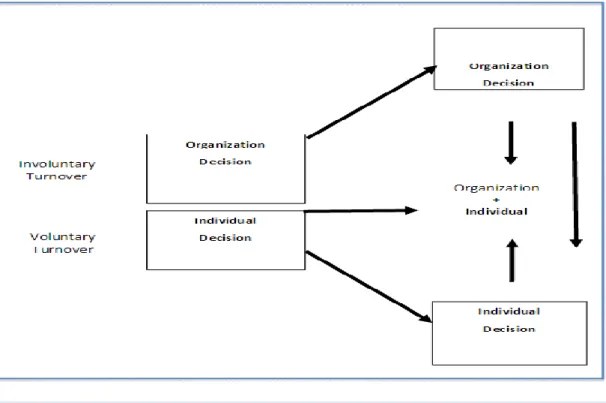
In recent times, the focus of HR has been to identify the turnover elements that were previously categorized as unavoidable to explore for strategies to counteract them. Unlike in the past, today there is mounting pressure on the HRM to initiate policies that will ensure unavoidable turnover is no longer rendered unavoidable, by putting strategies in place to enable the individuals to continue working while at the same time meeting personal obligations (Ongori, 2007). As indicated in the Figure 1, involuntary turnover exists to meet the expectations of the organization while voluntary employ turnover is geared to meeting the expectations of an employee.
Different factors are known to affect employ turnover. First, employee attitudes and personal factors can affect employ turnover. Employee attitudes regarding the work are critical in predicting the organizational employee turnover rates (Judge, 1993). According to Judge (1993), high levels of job satisfaction make employees develop a desire to commit to working, thereby minimizing the levels of employee turnover.
16
Figure 1. The measurement of employees' turnover (Tsai & Wu, 2010)
A broad range of scholars have explored the link between turnover rates and job satisfaction. Dissatisfied employees tend to leave their jobs in search of well satisfying ones.
For instance, almost 25% of the workforce in the UAE absents itself from the normal work duties because of the dissatisfaction (Tsai &Wu, 2010).
Secondly, employee turnover rate is measured by performance appraisal and feedback.
The fact that employers feel that honest appraisal might damage employees’ self-esteem leads to a situation when many organizations have refrained from providing frank feedback (Tsai
&Wu, 2010). Honest feedback about the worker might trigger unfavorable consequences within the United Arab Emirates’ organizations (Gopalakrishnan, 2002). To avoid negative consequences, a mediator is deployed by UAE organizations to deliver the appraisal feedback.
Many of the UAE employees are shown to be against the appraisal feedbacks offered by their respective organizations.
17
Employee turnover rate is further affected by the lack of rewards and recognition by organizations. A large body of evidence has linked rewards and recognition to high level of employee turnover. A study by Gallup Organization found that employee satisfaction and job retention are directly related with recognition and the provision of rewards (Buckngham&
Coffman, 1999). Poor employ turnover is related with lack of recognition and rewards, but with recognition organizations are able to retain skilled workforce and encourage them to work hard towards achieving the organizational corporate goals (Buckngham& Coffman, 1999). Hansen et al. (2002) differentiate recognition and reward by asserting that intrinsic motivation is driven by the specific behavior required by an organization when initiating the reward strategy. Lack of proper recognition has been accused to be the main factor behind the high levels of employee turnover in the United Arab Emirates. 44% of the participants who took part in the Hansen et al (2002) study observed that lack of recognition from their employers is one the major reasons they are not motivated to work towards achieving the targets set by their respective organizations. The other 30% of the participants pointed that there is a need for their organizations to offer them equal opportunities if they are required to put more effort in their productivity. Overall, this survey indicated that the lack of proper recognition and rewards by the various organizations in the United Arab Emirates is the main reason there is a minimal employee turnover and poor productivity. Currently, offering financial incentives and recognition initiatives remain to be critical tools to ensure that there a high retention rate is accompanied by a high productivity rate (Apker, Propp&Zabava, 2009).
Besides recognition and rewards, HR business partnership can be evaluated by assessing the rate of professional and personal advancement in organizations. Lack of professional and personal advancement of employees in organizations is among the chief reasons why many workers leave their organizations (McCabe et al., 2008). In many instances, employees are
18
forced to change jobs because of the need to have professional and personal achievements. In particular, such kinds of employees usually move to those organizations that guarantee them the chance to grow their careers. Shaw, Duffy and Stark (2000) observe that frustrations resulting from the lack of career advancements are some of the reasons many organizations are having low productivity from their workforce. Usually, commitments to work hard and realize the organizational goals are hampered when employees realize that their chances to advance their careers are diminished by their organizations. A study by Al-Ahamadi (2002) among the UAE employee indicated that employee show a greater desire to work when they are satisfied that they have chances to advance their personal and professional careers.
The effectiveness of communication within organizations can also show how effective or ineffective the HR business partnership is executed in a particular organization. Good communication within an organization is critical in supporting and boosting employees’
attachment to the organization, and as a result it increases the level of productivity (Apker, et al., 2009). Further, Apker et al. (2009) point that lack of effective communication is the primary barrier that hampers employee motivation, which subsequently results in the intention to leave the organization in search of a new one. Ongori (2007) argues that in order for organizations to have high employee turnover, they should ensure they have an effective line of communication within their operational structures. Otherwise, inadequate or ineffective communication between the management line and employees is the main reason for workers quitting organizations. Ongori (2007) further argues that the lack of proper communication between the management and the employees leads to lower levels of moral among the employees, and finally results in a poor employee turnover.
For instance, Ongori (2007) observed that many UAE organizations lack long-term strategies and policies concerning quality, vision, and mission. Additionally, the author noted
19
that these organizations did not follow proper documentation procedures. Quirke (2008) conducted a survey for 600 employees in the UAE organizations and showed a wide gap of communication between the employees and the management. According to this study, even though managers are aware of the significance of communication, they are reluctant to implement it. Quirke (2008) posits that there is a need for the organizations to be aware of the principles and benefits of effective communication if they are to realize the full benefits of their investments. For instance, most of the surveyed participants from Saudi Arabia indicated that they often depend on their managers to acquire relevant information regarding their respective jobs. The same results were depicted by the other participants from the other countries in the UAE.
Other scholars have postulated that determining the employee turnover can depict a great deal of information regarding the effectiveness of the HR business partnership in an organization. Mostly, the impact of employee turnover is greatest when there is a downward trend in the levels of productivity, quality and profits. For small organizations, high employee turnover means that the staff is there for only routine reasons instead of the issues of work quality (DeConick& Johnson, 2009). Employee turnover is associated with both positive and negative consequences. The negative consequences include low production and are associated risks, poor performance, and increased tension between the management and the workforce.
To overcome the problems associated with poor employee turnover raters, organizations are required to undertake some steps. The most fundamental strategy to increasing employee turnover rates is by increasing their satisfaction levels. However, the big issue is on how to handle the diverse needs of each and every employee in an organization (Denisi&Griffin, 2008).
An effective strategy should target those employees who seem more likely to leave the organization sooner than later. According to Ongori (2007), the strategies that reduce the
20
employee turnover rates should be carefully implemented in order to ensure that they are effective. Therefore, it is imperative for the management to first identify the primary reasons that force employees out of the organization before designing the most appropriate strategy to curb it. The best way to determine the problem within the organization is by administering exit interviews among the employees. Through this strategy, the management will have unbiased information regarding the state of affairs in the organization, which will subsequently prove critical in implementing the necessary mitigation strategy (Ongori, 2007). Strategies such as job redesigning, new compensatory plans and recruitment of appropriate employees are critical strategies to having a higher employee turnover rate in the organization. Additionally, offering the employees a chance to inherit the existing opportunities is another possible strategy to ensure they remain working in the organization. Ongori (2007) observes that when employees are assured of getting promotions in form of inheriting the existing vacant positions, they naturally develop a positive attitude towards the organization.
2.4.3 Organizational Commitment
Organizational commitment has attracted a multiple of definitions from different scholars. Bateman &Strasser (1984) refer organizational commitment as a multidimensional aspect that involves the worker’s loyalty to the organization and the desire to achieve its objectives, keep its values and protect its membership. The primary elements of commitment are identified by Mowday, Steers and Porter (1979), which include admitting and realizing the goals of the organization and the desire to work to meet the organizational expectations. HR business partnership can be evaluated by directly observing employee organizational commitment. An individual’s attitude in the organization is directly related to his or her desire to work. Ongori (2007) observes that organizational commitment is influenced by the firm’s practices and norms. Some scholars have argued that employee commitment is a product of a
21
variety of work-related factors. Over the recent years, organizational commitment by the employees has attracted a great deal of attention from researchers from both the private and public sectors. Some of these studies confirm that employees working in public sectors tend to portray a great deal of commitment towards their organizations. A possible explanation for this observation is that most of the public sectors are designed in such a way that the recognition and respect of the rights of employees are given much attention. Additionally, public sectors have traditionally been indicated to provide high levels of job satisfaction, job security, and rewards. Though some private organizations offer more remuneration packages than the public sector organizations, many of them lack job security and favorable working conditions.
Therefore, many employees working in environments where their rights are not properly respected tend to depict a less of commitment to their works (Ongori, 2007).
Employee commitment has been indicated by a broad range of studies to pose a number of consequences to organizations. Somers (1995) reports results from a study that targeted nurses in a healthcare setting. According to this study, those nurses that were less committed to their work tended to portray a higher degree of absenteeism.
The phenomenon of organizational commitment has been researched from various perspectives. In particular, a lot of studies are dedicated to the influence of leadership on this factor. As specialists believe, a proper usage of leadership instruments might lead to a significantly increased level of employees’ commitment. Shore et al. (2005) explain that different leadership styles have various effects on employees’ job performance. The main reason why these effects are so different is that each leadership style has its own specifics from the employees’ point of view. Democratic leaders usually employ a variety of mechanisms in order to ensure a proper motivation of their subordinates. In this situation, it is no wonder that employees’ commitment to the job and to the organizational objectives is substantial. If a person
22
feels that his inputs are valued and he gets fair rewards for his work, the variable of his commitment to the organizational goals tends to grow. In contrast, autocratic leaders often fail in positively influencing the job commitment of their subordinates.
Von Glinow&McShane (2000) explore transformational leadership in light of its consequences for an organization. According to the scholars, trust, cohesion and motivation are among such consequences while improved commitment to the job is definitely the most important result of transformational leadership. This statement is supported by many other studies, both theoretical and empirical. From the perspective of the current dissertation, it is very important to review the study designed by Karamat (2013). In his investigation, the scholar tried to find the impact of leadership on organizational performance. As he deduced, this impact is not direct. In most cases, the effect of leadership on the workforce’s productivity can be observed through a set of intermediaries. These intermediaries are usually represented by employees’ increased commitment to the job, their trust in leaders and their willingness to work hard in order to ensure the achievement of the organizational goals. In other words, organizational commitment enables the positive influence of leadership on the organizational performance.
In the third quarter of the 20th century, a lot of scientists studied the phenomenon of organizational commitment from various psychological perspectives. While the first researches on employees’ motivation boiled down to simple tangible side-bets models, these investigations were focused on the ways in which a psychological connection between employees and organizations develops. In line with this psychological approach, employees’ commitment should be understood as “the relative strength of an individual’s identification with an involvement in a particular organization” (Steers, Mowday& Porter, 1979). Under the psychological paradigm, commitment is positioned not only as an important driver of
23
workforce’s productivity, but also as a significant determinant of turnover rates. Moreover, some specialists even believe that the indices of commitment provide more justified premises to forecast an organizational turnover rate than the indices of job satisfaction. The authors emphasize that organizational commitment is composed of the three components: acceptance, participation and loyalty.
In the last quarter of the 20th century, scholars developed the multi-dimensional approach towards organizational commitment. Meyer & Allen (1984) have proposed two scales of measuring this phenomenon: affective commitment and continuance commitment. Affective commitment is a degree to which a person is willing to keep his job position and his place in an organization. It is an emotional attachment to an organization which doesn’t have a strong logical background. In contrast, the continuance commitment scale measures an extent to which a person wants to keep his work position because of realizing the costs of leaving an organization. This is rather a rational decision which is supported by specifics numbers like an employee’s current salary, his current rent and other bills. In six years after the first variation of organizational commitment’s model, Meyer & Allen (1990) added a third dimension to their scale, a so-called normative commitment. As it is obvious from its name, normative commitment describes an employee’s willingness to work in some company due to an obligation. This obligation can be referred to a manager, a coworker or even a family member.
S. Ghosh& D. Swamy (2014) have proposed a new model which measures organizational commitment. Their concept implies distinguishing the two main dimensions of organizational commitment. The first dimension measures the time of commitment, its continuance over short-term and long-term periods. The second dimension describes the nature of commitment. In regards to this scale, commitment can be divided into instrumental, normative and affectionate types. Instrumental commitment usually occurs on early stages,
24
right after the person’s employment. However, after an employee realizes the nature of an organization, its specifics, organizational structure, corporate culture and corporate philosophy, he develops a deeper attachment to it.
S. Nawab& K. Bhatti (2011) found that financial incentives don’t have a substantial impact on affective commitment of the employees while their influence on normative and instrumental types of commitment is essential. It is surprising since the scholars have identified a strong correlation between financial incentives and employees’ job satisfaction. Nevertheless, their high level of job satisfaction doesn’t necessarily lead to an increased organizational commitment. The phenomenon of organizational commitment is also dependent on various non-tangible factors. In particular, an employee should sensate that his efforts are appreciated and his inputs are properly rewarded. He also should feel that his own values harmonize with the values of the organization’s corporate culture. Otherwise, a person wouldn’t feel an emotional attachment to an organization and his commitment to it would be exclusively instrumental. Similar conclusions have been made by many other scientists who investigated the phenomenon of organizational commitment.
From the perspective of this dissertation, it is important to analyze a relationship between organizational commitment and job satisfaction. This research problem has been explored from different perspectives by many scholars. Meyer et al. (2002) claim that organizational commitment is a derivative from job satisfaction. It seems relevant to point out that job satisfaction is exclusively related to some job whereas organizational commitment is directly connected with the specific organization. The authors emphasize that organizational commitment and job satisfaction aren’t always in harmony. Sometimes an employee is committed to an organization, but he doesn’t have a high level of job satisfaction. It may happen
25
due to numerous reasons. For instance, a worker might think that he deserves a higher income or a better job position.
Interestingly, the empirical studies show a low correlation between job satisfaction, organizational commitment and an employee’s decision to leave an organization (Norizan, 2012). In some cases, a person may be completely dissatisfied by his current job and not feel any commitment to an organization, but he is willing to keep his job position because there are no other options. In contrast, even a manager who is satisfied with his salary, working conditions and other workplace’s specifics can make a decision to leave his job after being headhunted by some large international corporation.
Generally, a relationship between organizational commitment and job satisfaction is a complex research problem. There is no agreement among scholars even regarding the basic characteristics of a correlation between these two variables. As stated above, most scientists tend to believe that organizational commitment is rather a derivative from job satisfaction.
However, the available evidence provides a premise to claim that their relationship is not one- sided. There are even some studies which position the organizational commitment as a primary factor. Kovach (1977) explains that “job satisfaction is recognized as a component of organizational commitment.” A correlation between job satisfaction and organizational commitment is usually considered to be significant by specialists regardless their opinion on the nature of a relationship between these two factors. Organizational commitment is a more valid indicator of a person’s attachment to his current position because it doesn’t include any job-specific issues. The indicator of organizational commitment is easier to calculate and, thus, it is easier to employ this statistic in organizational strategies and operations.
As a conclusion, it can be stated that organizational commitment is one of many indicators which measure a person’s attachment to an organization and his current job. Some
26
scholars believe that this indicator is a determinant of many other characteristics such as a person’s trust in a leader, his level of job satisfaction and a desire to keep his job position while others claim that organizational commitment is a derivate from job satisfaction. In any case, it is obvious that there is a positive correlation between the increases in organizational commitment and the increases in job satisfaction.
2.4.4 The Phenomenon of Employee Motivation
In business studies, the main objective of scholars is not to investigate some abstract phenomena, but to find a way to increase profits. One of the ways to do so is to affect employees’ job performance by introducing effective motivational programs. In order to understand whether motivated workforce increases performance, it is important to explore the phenomenon of motivation, its main features and characteristics. The nature of motivational behavior boils down to three features: it is characterized by a long continuance, it is aimed at achieving certain goals and it results from a specific need or a group of needs (Flippo, 1982).
Accordingly, effective motivation implies satisfying employees’ needs.
The most well-known theory on human needs has been developed by A. Maslow (1954).
The scholar divides all the human needs into the five groups: physiological, safety, social, esteem and self-actualization. These groups are located in a strict hierarchical order. According to Maslow, it is impossible to satisfy some group of needs without satisfying the previous one.
For instance, a person starts thinking about the sphere of self-actualization only after all the other four levels of needs are satisfied. In organizations, the Maslow’s theory provides a practical concept for managing employees’ motivation. At the same time, despite its extreme popularity, the Maslow’s concept hasn’t been accepted by all the scholars. Some of them point out that people are able to satisfy the highest levels of their needs without satisfying their safety or even physiological needs.
27
Another popular concept on motivation belongs to D. McGregor (1960). The scholar has formulated two theories: “Theory X” and “Theory Y”. In accordance with the first theory, which was widely used by managers in the first half of the 20th century, employees were regarded as creatures that don’t like work and try to avoid it. They don’t demonstrate high levels of creativity and are not able to solve complicated problems. Thus, a logical decision for a manager is to control his subordinates, provide clear guidelines and make sure that they follow the rules. The scholar doesn’t agree with this theory and puts forward an assumption that another concept, “Theory Y”, is more applicable to organizations. According to this theory, employees are creative. They are able to solve complicated problems and they are willing to work hard if the work is interesting for them. Therefore, a manager is recommended to help them with finding and developing this interest. Creating a positive work environment seems to be the foreground mission of managers under the “Theory Y” paradigm.
The third motivational theory which has received a lot of attention from scholars is the Aldelfer’s concept. According to this researcher, human needs can be divided into the three groups: existence, relatedness and growth. Existence needs can be associated with the physiological and safety needs in the Maslow’s pyramid. The field of relatedness needs is characterized by a person’s desire to play some social roles and engage in an interpersonal relationship. Finally, the last group of needs is responsible for a personal growth. While it might seem that the Adelger’s concept is very similar with Maslow’s pyramid, these two theories have one significant difference (Stoner, Freeman & Gilbert, 2007). While Maslow claims that human needs can be only satisfied by rotation, Aldelfer argues that the three groups of needs found by him can be satisfied in turn, in reverse order or even simultaneously. This conclusion provides managers with a higher level of flexibility while developing incentives for their subordinates.
28
Unlike Maslow, McGregor and Aldelfer, D. McClelland considers the aspect of social factors in the process of needs’ formation. In other words, he argues that some needs are directly determined by people’s social experience. Among such needs, he distinguishes the following:
the need for achievement, the need for power, and the need for affiliation. The need for achievement implies a person’s ambition to complete complicated tasks and reach important goals. It can manifest itself differently, but it is always derived from an unconscious desire to increase the level of self-appraisal. The need for affiliation lies in the area of a relationship with other people. This need reflects an aspiration to be accepted by others and to feel an attachment to some social group. Finally, the need for power is the less popular out of these three needs. It is not inherent for all people, although a lot of persons feel a desire to control others. In some cases, the need for power is a result of a displacement. Employees who are influenced and controlled by an autocratic leader are more prone to the development of this need than those who work with democratic leaders (McCleland, 1978).
The expectancy theory designed by Vroom (1964) was developed on the basis of the aforementioned concepts. In its core, the expectancy theory implies that people choose certain types of behavior because they evaluate the possible expected outcomes of each option and choose those options which promise the best rewards. This process can be described with the three main components: expectancy, instrumentality and valence. On the stage of expectancy, people measure their skills, correlate them with the desired outcome, and consider the possibility of reaching the outcome and demonstrating a necessary level of performance. The next stage, instrumental, is focused on a correlation between performance and outcomes.
Employees who have reached this stage are concerned about the procedures of evaluating the performance, their trust in people who decided whether they deserve rewards, and their general opinion on the justice and fairness of rewards commonly accepted in an organization. Finally,
29
the last component of the model, valence, reflects a person’s attitude towards an outcome. The scholar explains that there are three possible behavioral responses of people to the outcomes:
indifference, avoidance and welcome.
All the theories reviewed above have been widely used in organizations. Unfortunately, the available evidence provides a ground to take up the position that none of these theories can be considered universal. The features of a particular culture and organization influence the staff’s motivation. In particular, for Japanese companies, a specific “Theory Z” has been developed, in accordance with which people prefer working in groups and demonstrate high results due to the synergy effect. Therefore, while analyzing the influence of workforce’s motivation on productivity, it is critical to consider the specific features of an organization, culture and various characteristics of external and internal environments.
A correlation between employees’ motivation and organizational performance is a popular research problem which has been researched in detail by many scholars. It seems relevant from the perspective of the problem under investigation to review some of the studies on this topic. The overwhelming majority of studies on the research problem of a connection between employees’ motivation and their productivity deduce that a correlation between workforce’s motivation and productivity exists. For instance, C.E. Maduka& O. Okafor (2014) claim that low productivity of workers in manufacturing firms in Nnevi is directly connected with their lack of motivation, which is primarily caused by limited welfare packages. In contrast, additional financial incentives introduced in some other organizations in Nnevi led to an increase in workforce’s productivity. The authors presume that this pattern can be applied to any industry. However, it should be noted that the nature of incentives which are needed for boosting motivation can be different in dependence on various factors. In particular, as stated