I also provided some examples from the Theory of Linear Differential Equations and from the Theory of Distributions, also called generalized functions. However, to underline the connection with the Theory of Complex Functions, we write here instead. Then the integral representation of L{f}(z) is convergent for Rez > σ(f) and divergent for Rez < σ(f).
The function L{f} is analytic in (at least) the open half-plane Rez > σ(f), and its derivative is obtained in this group by differentiating under the sign of the integral. We defined the thez-transform of the sequence as the following analytic function, which is defined outside a disc (again a Laurent series). The following theorem is similar to a theorem for second-order linear ordinary differential equations with constant coefficients.
The complete solution of this equation is obtained by adding to (xn) the complete solution(yn) of the corresponding homogeneous equation. Click on the ad to read more Click on the ad to read more Click on the ad to read more.
2 The Laplace transform
Click on the ad to read more Click on the ad to read more Click on the ad to read more Click on the ad to read more. The integral is of a type, which cannot be expressed by elementary functions, so the example shows that even if we can prove that the Laplace transform exists, it is not always possible to find an exact expression for it. Click on the ad to read more Click on the ad to read more Click on the ad to read more Click on the ad to read more Click on the ad to read more.
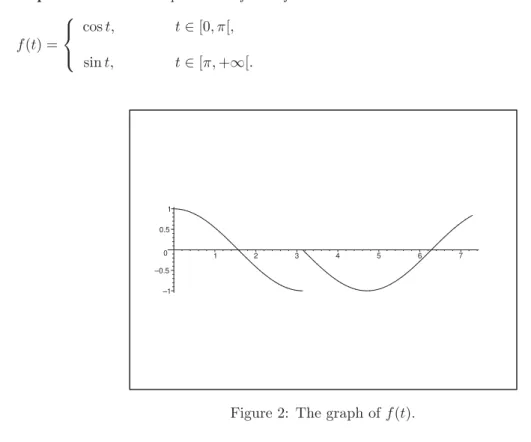
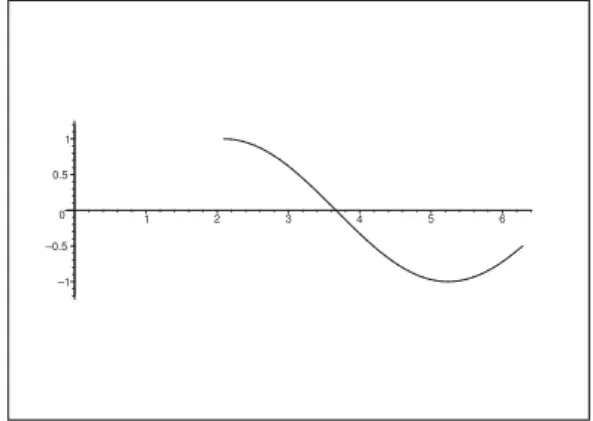
Example 2.10 Give an example of a non-periodic function f, whose Laplace transform has the same form as in the Rule of Periodicity. Therefore, one should not be misled by the formal form of the Laplace transform into believing that the function is periodic. Click on the ad to read more Click on the ad to read more Click on the ad to read more Click on the ad to read more Click on the ad to read more Click on the ad to read more.
STUDY AT A TOP RANKED
INTERNATIONAL BUSINESS SCHOOL
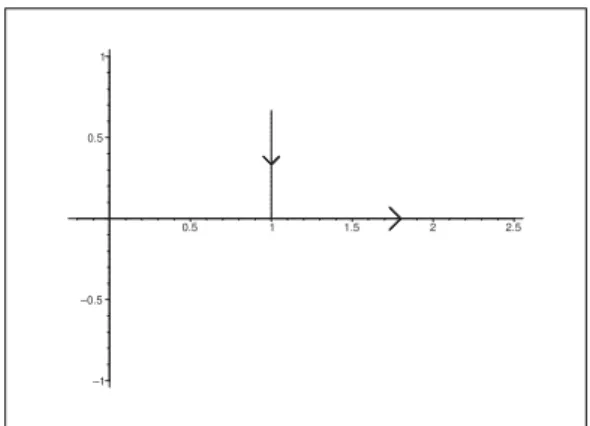
Finally, it follows from the division rule byt that if Re(z)>0 and the path of integration is the curve Γz, which consists of the line segment from z tox= Re(z), and then the line segment fromx to +∞ intercepts the positive real axis that. Click on the ad to read more Click on the ad to read more Click on the ad to read more Click on the ad to read more Click on the ad to read more Click on the ad to read more Click on ad to read more. In all three cases we have given rational functions with zero at∞, so the inverse Laplace transform exists and is given by a residue formula. a) Inspection and calculation rules.
Click on the ad to read more Click on the ad to read more Click on the ad to read more Click on the ad to read more Click on the ad to read more Click on the ad to read more Click on ad to read more Click on ad to read more. In all three cases we have given a rational function with zero at∞, so the inverse Laplace transform exists and is given by a residue formula. We have in all three cases a rational function with zero at∞, so the inverse Laplace transform exists and is given by a residue formula.
We will treat the cases in different alternative ways so that different methods can be compared. a) Breakdown and calculation rules. Click on the ad to read more. Click on the ad to read more. Click on the ad to read more. Click on the ad to read more. Click on the ad to read more. Click on the ad to read more. Click on the ad to read more. on the ad to read more Click on the ad to read more.
CLICK HERE
In all four cases we have a rational function with a zero at∞, so we can apply the residue formula. Alternatively, we get by theresiduum formula, where the poles are−1,−5 and 2,. visit www.ligsuniversity.com to find out more. currently enrolling in the Interactive Online BBA, MBA, MSc,. where we use that it is easier to differentiate after division by a polynomial. 48 Example 2.33 Find the inverse Laplace transforms of. we are alternatively bitten by the Rule of Multiplication, where the formula must be read from right to left.
This means that the inverse Laplace transformf(t) ofF(z) can be expressed with a residual formula, f(t) = res. It is clear that a−1 is the constant term of. because, as before, one notices that the series has radius of convergence +∞. Example 2.35 Find the inverse Laplace transforms of . z), and since the latter series is convergent for every ∈R, we get. Here z= 0 is the only singularity (unfortunately a significant singularity), so we get by the inverse Laplace transform by a residue formula.
Here z = 0 is the only singularity (an essential singularity), so we get from the residue formula that. Example 2.36 Find the inverse Laplace transform of 1 (z+ 3)(z−1) using the Convolution Theorem. z), we get by the Convolution Theorem that. Then the equation was transformed by the rule of convolution by the Laplace transform into .
We required f ∈F to be continuous, so we have to reject the solution 2δ−1 and we got. Then, according to the convolution rule, the equation is transformed by the Laplace transform to It is obvious that the inverse Laplace transform exists in this case and is given by the residue formula.
3 The Mellin transform
4 The z -transform
Today, SKF's innovative know-how is already crucial for running many of the world's wind turbines. If we switch the order of summation in the calculation and use |z|>1 implicitly, i.e. alternatively, we first apply Rule V, followed by Rule I (because the order of the pole at 0 of the transformed expression is q= 2 ) :. a) Find thez-transformationF(z)of the series n. for|z|> R, where one will find the smallest possible R. wherex passes through the positive real numbers > 1. B).
Find the domain of convergence of the z-transform F(z) of f with sample period T = 1 and express F(z) in terms of basis functions without using sum signs.
5 The Fourier transform
If instead|ξ|>1, then we can assume thatξ >1 because the calculations are analogous forξ <−1. Since ξ=±1 is a null set, we can neglect the value at these points, so we summarize F.
EXPERIENCE THE POWER OF FULL ENGAGEMENT…
Since we have a second-order zero at∞, the integral is also convergent forξ= 0, and it follows from continuity that the expressions above hold for allξ∈R.
6 Linear difference equations
SETASIGNThis e-book
From the identity theorem, we conclude that this equation is satisfied, if and only if the following recursion formula applies (andz belongs to the field of convergence). It is clear that ifz∈C\. it is deduced that the thez-transform of yn, i.e. z{yn}, is. where zis is a complex variable, andβ < α <0. a) Find the singularities of Y(z) and their type for |z|<∞. Calculate the residuals at the poles.
7 Distribution theory
Since F{δ}= 1, and since neither 1 nor δ lies in L2(R), Parseval's relation makes no sense at all.