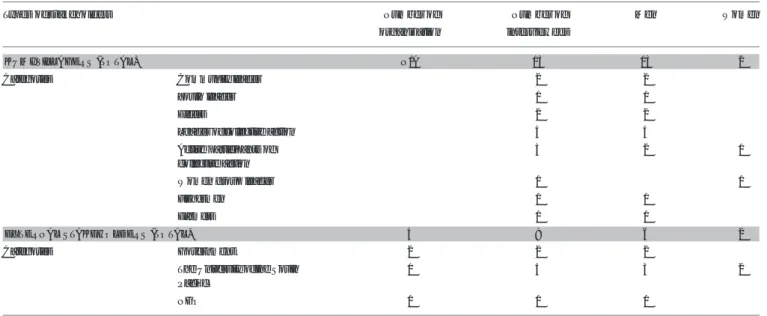
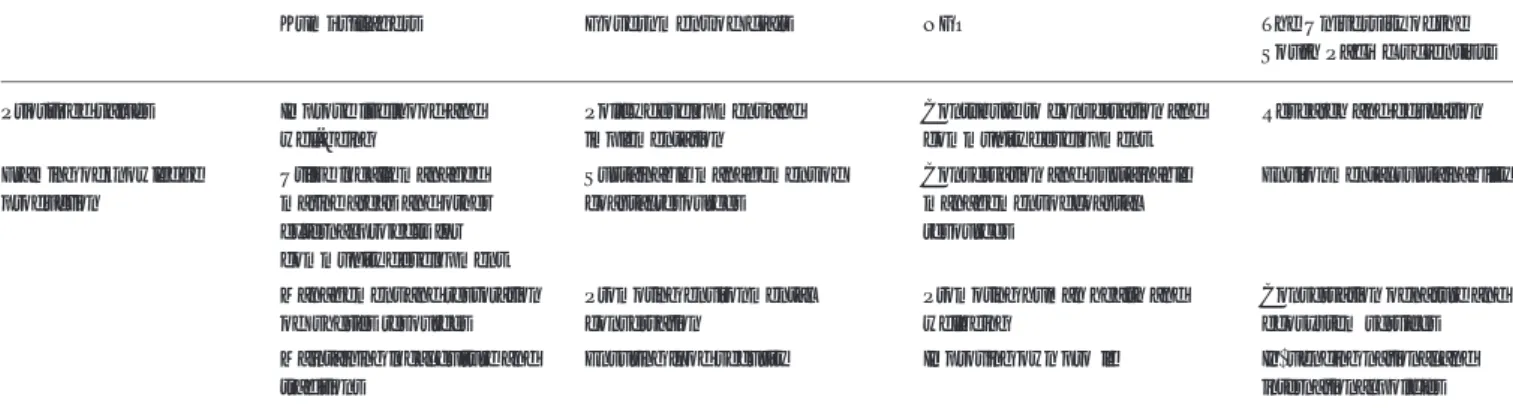
All of these influence human behavior and action and are collected or available within the respective marine resource use system, which can support the livelihoods of a large proportion of the local population. The diversity of the professional backgrounds (geography, environmental psychology, ecology, sociology and anthropology) essentially shows that it has not researched perceptions in (not only marine) natural resource use systems.
FISHING CATEGORIES
The transition to a tourism-led economy has maintained a level of economic prosperity in French Polynesia, and it remains one of the wealthiest Pacific island nations with a GDP per capita of US$15,272 (Baudchon et al., 2008). The effect of these demographic changes on fishing in Moorea is unknown, but fishing pressure throughout the region appears to be related to local population numbers, although the relationship is poorly understood (Russ and Alcala, 1989; Jennings and Kaiser, 1998).
CAUGHT SPECIES
In 2011, Moorea was the most visited island in French Polynesia with more than 70,000 tourists visiting the island's 22 large hotels and 48 smaller "pensions de famille" (ISPF, 2001). In addition, fishing has become just one of many marine-focused activities that include scuba diving and beach and boating activities, each of which puts different pressures on the coral reefs and lagoon ecosystem.
FISHING GEAR TYPES
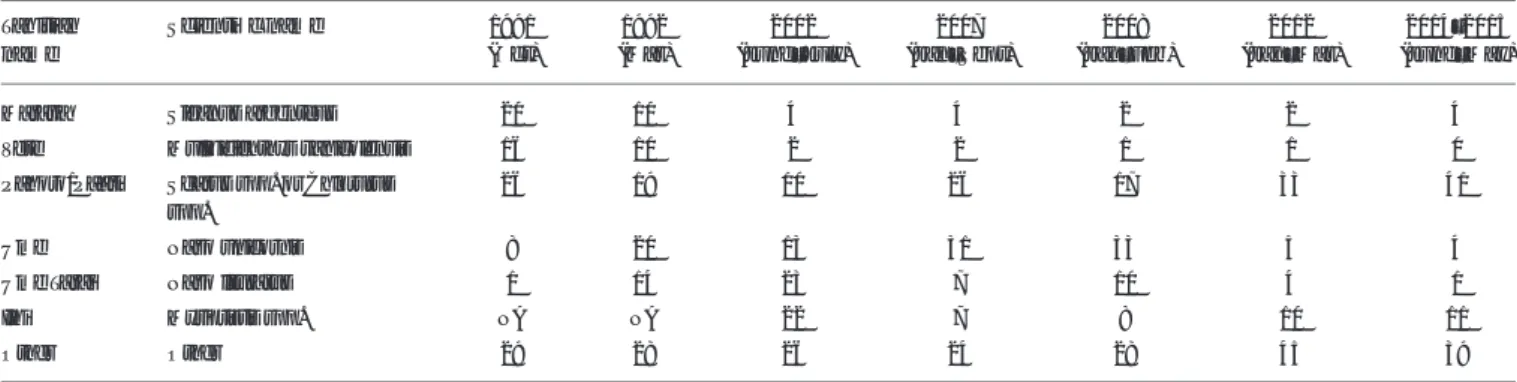
Selling catch A part of the catch is sold and some is kept for own consumption The catch is for own consumption Fishing is the year's most important source of income Fishing is a supplementary form of income Fishing is primarily a recreational activity. Fishing traps are widely used in the Tuamotu and Leeward Islands, where they may account for 90% of the catch (Galzin et al., 1989), but they are not used in Moorea's lagoon.
YIELD ESTIMATES
An analysis of seafood consumption can be a good alternative to the indirect assessment of fishery production (Paddon, 1997; Gilbert, 2006; Labrosse et al., 2006). If this calculated fishing pressure is accurate, it is quite high considering that 5 fishers per km2 is the upper limit at which coral reef resources can be safely exploited (McClanahan et al., 2002).
PERCEPTIONS OF STOCK STATUS
Complexity in coral reef fisheries. fish eaten, origin of the fish eaten, number of boats and fishermen in the household) and (ii) on the number of fishing trips of one fisherman in the household over a period of 2 weeks (to cover one spring tide period and one wet tide period) together with (iii) the names, sizes and number of fish eaten during meals during the previous 3 days.
DISCUSSION
Culturally motivated fishing, although more similar to recreational fishing, translates into fishing behavior that cannot be easily analyzed within a cost or benefit maximization model, where the economic value generated by the activity forms the core of the analysis. More integrated field work is required to better assess the sustainability of existing fisheries, in which social science techniques are combined with ecological field surveys to understand how fishing behavior depends on ecological condition, livelihood opportunities, intangible benefits, cultural cohesion and personal identity.
CONCLUSIONS
To better understand fishing on Moorea, consider the non-material benefits associated with Polynesian lifestyle and identity. Given the social and environmental complexity of Moorea's lagoon fisheries, any attempt to understand their dynamics will likely require integrated methods that consider both systems simultaneously.
AUTHOR CONTRIBUTIONS
ACKNOWLEDGMENTS
Exactitude et biais des estimations de la consommation de poisson à partir des enquêtes auprès des ménages. Cas de la commune de Haapiti (Moorea) Polynésie française. 1992). La France et le Pacifique Sud : une histoire contemporaine.
INTRODUCTION
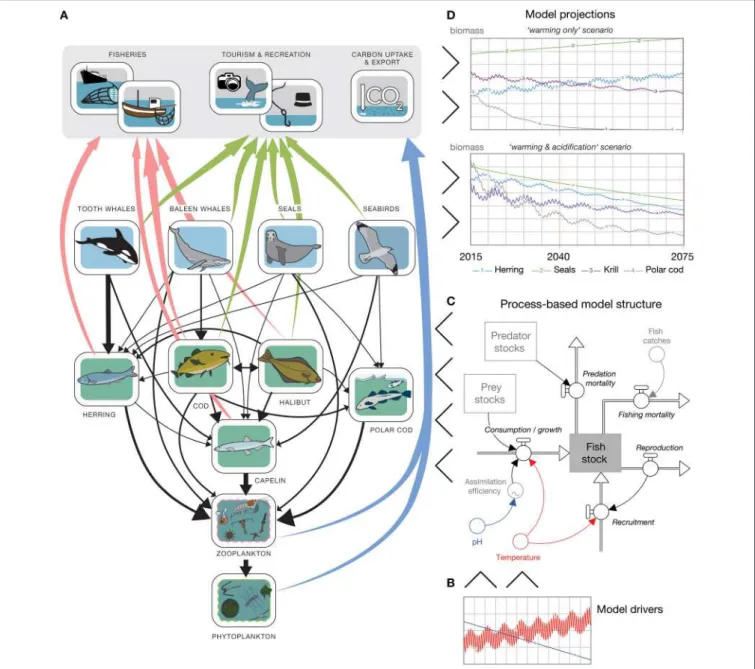
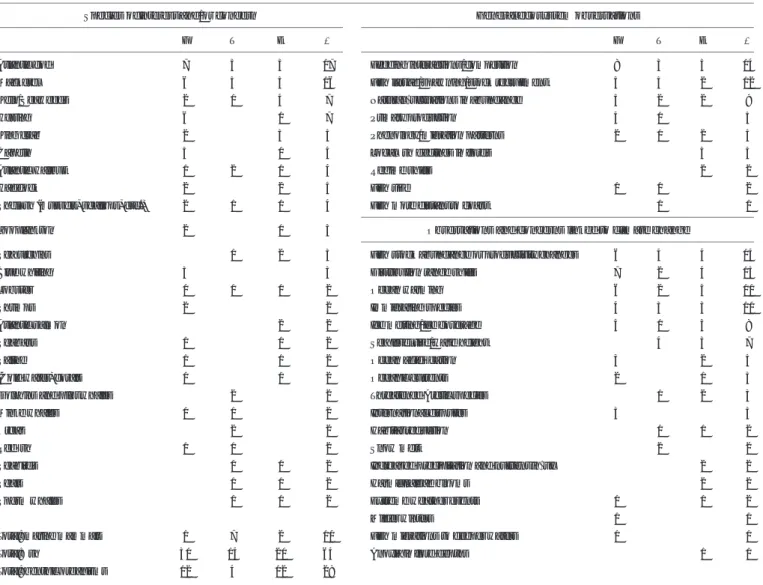
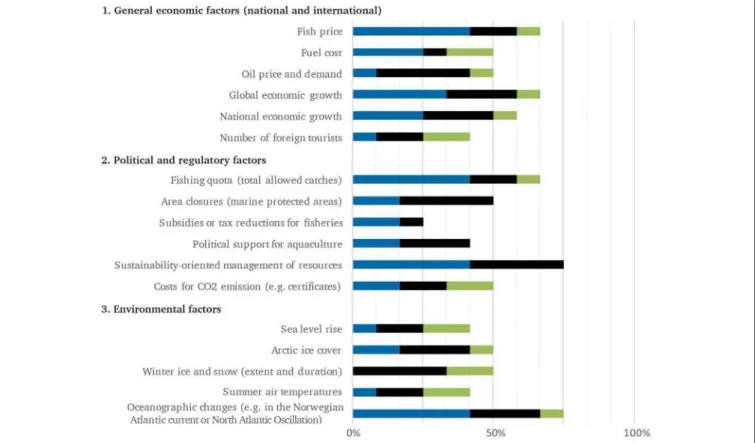
We constructed an ecological model of the expected impacts of ocean warming and acidification on marine ecosystem services in the Barents Sea region, based on input from potentially affected stakeholder groups (Costanza and Ruth, 1998; Voinov and Bousquet, 2010). We included input from stakeholders on which ecosystem elements and processes to include in the model, and used stakeholder perceptions to assess the ways in which people and social groups might be affected by environmental change in the region.
MATERIALS AND METHODS Stakeholder Consultation
The graphical interface of the model included dynamic displays of the states of the relevant biomass compartments and other indicators in the . -level interface of the model, with modules of the most relevant species interacting in the marine food web and links to ecosystem services provided (gray shaded top row).
RESULTS
Also in the opinion of the stakeholders, increased fines for illegal fishing and catch limits for tourist fishing may become necessary. Cultural and ethical values were implicitly taken into account in the discourse-based valuation, which should improve the perceived legitimacy of the derived recommendations (Wilson and Howarth, 2002).
ETHICS STATEMENT
In a next step, the knowledge on environmental and socio-economic framework factors gained in this study will be integrated into sustainable scenarios and stakeholders will again be involved in finding adaptation options under these scenarios using an expanded and validated version of the model. By reflecting the complexity of biological processes underlying ecosystem dynamics, individual scientific results of ocean warming and acidification research can be integrated and communicated, interactions and uncertainties discussed with affected parties, and confidence gained in long-term predictions under climate change.
FUNDING
Characterizing societal responses in relation to identified features of the social-ecological system (eg, species composition, ecological dynamics, human uses and user groups) can provide insights for research in situations with lower data availability and lower level of stakeholder knowledge, where a comparably high model detail may not be possible. Our integrative ecosystem model was designed to consolidate dynamic simulation of climate change impacts with stakeholder perceptions and concerns.
SUPPLEMENTARY MATERIAL
Challenges and successes in managing a shared fish stock - the case of the Russian-Norwegian Barents Sea cod fishery. In the next section, we introduce the concept of conservation adaptation and examine bridging organizations as an organizational strategy to foster adaptation.
THEORETICAL BACKGROUND
Therefore, consensus building and conflict resolution are important characteristics of governance, but they are difficult to establish and maintain (Folke et al., 2005). Such access can enable capacity building for more engaged or empowered participation in conservation (e.g. Jamal et al., 2007).
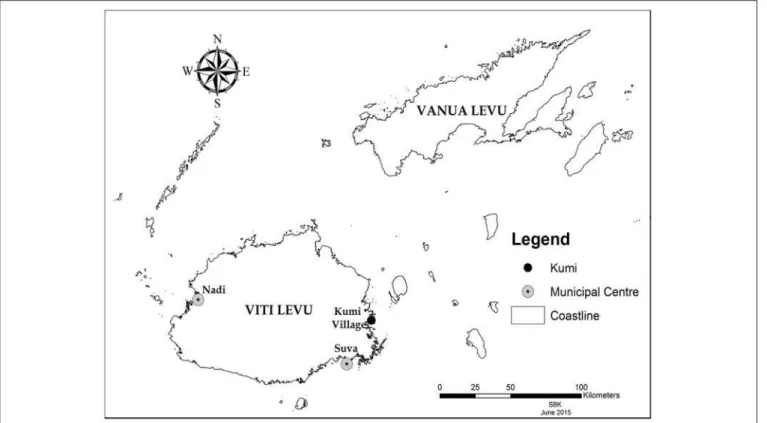
MATERIALS AND METHODS Research Context and Sites
CASE STUDIES
According to the head of the ornamental fishermen association and NGO field staff, there are less than 100 ornamental fishermen in the sub-district. Reef Check Indonesia, a chapter of a US-based environmental NGO of the same name, has been active in the Buleleng region since 2006.
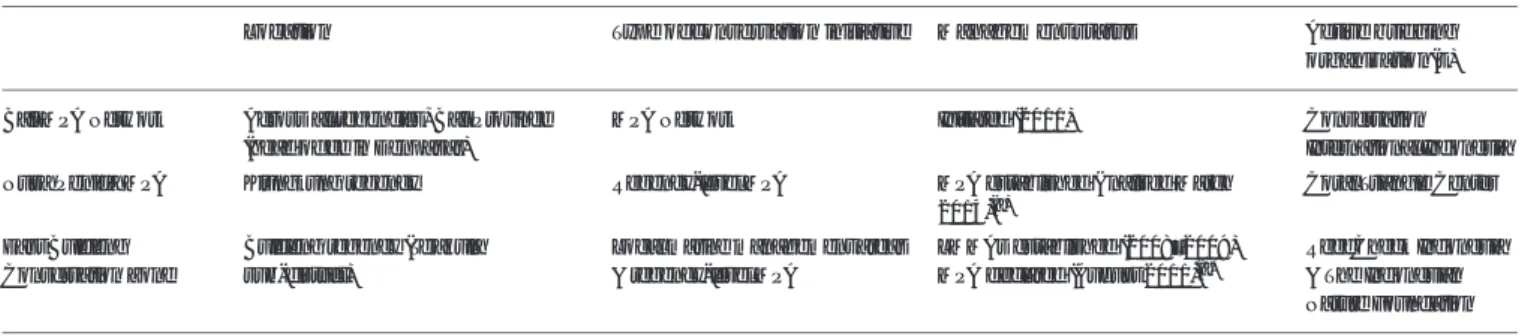
RESULTS: CONTRIBUTIONS OF BRIDGING ORGANIZATION TO CONSERVATION FIT
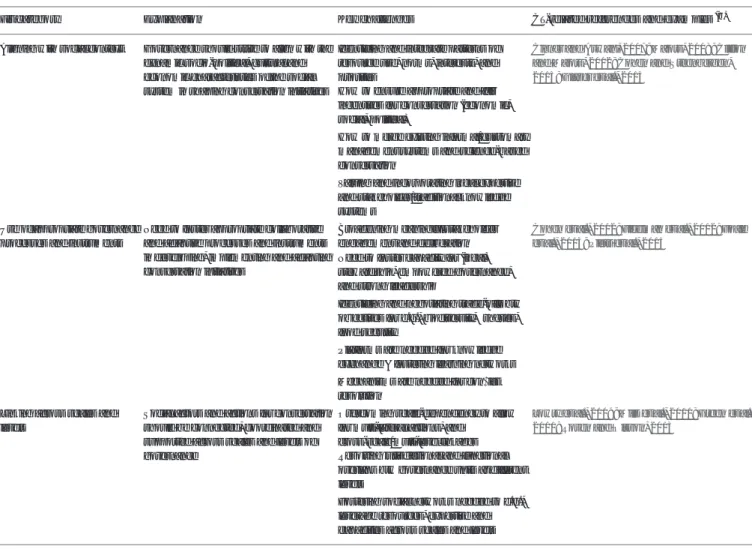
We now serve as a facilitator for the socialization and communication of the MPA and work with various stakeholders on conservation issues in the context of the MPA. (Community organization rep., personal communication 2014). In our cases, some bridging organizations have been working together in the region for more than a decade to strengthen connectivity between social actors.
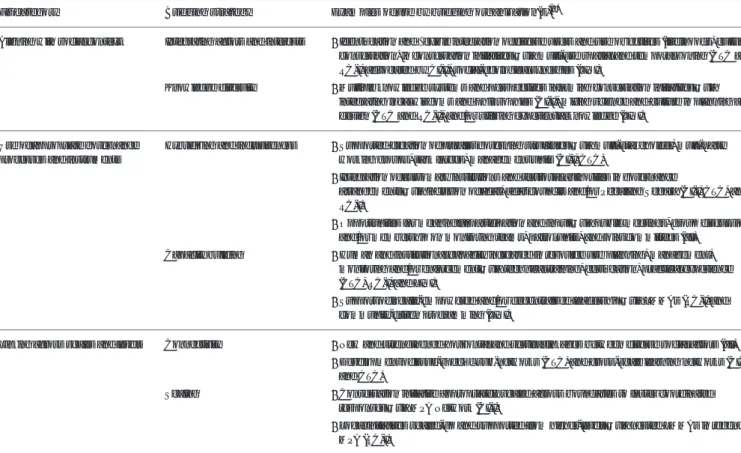
DISCUSSION: OBSERVATIONS ON BRIDGING AND STRENGTHENING
Liaison organizations may not have comparable expertise, for example, on economic development, poverty alleviation or urbanization (cf. Foale et al., 2013). This raises questions about the long-term sustainability of conservation adaptation outcomes in the absence of linkage organizations.
CONCLUSIONS: FUTURE DIRECTIONS AND INSIGHTS FOR THE CT
There is therefore a strong need for additional research on the political and ecological dimensions of bridging organizations in the region. A mismatch of scales: challenges in planning for implementation of marine protected areas in the Coral Triangle.Conserv.
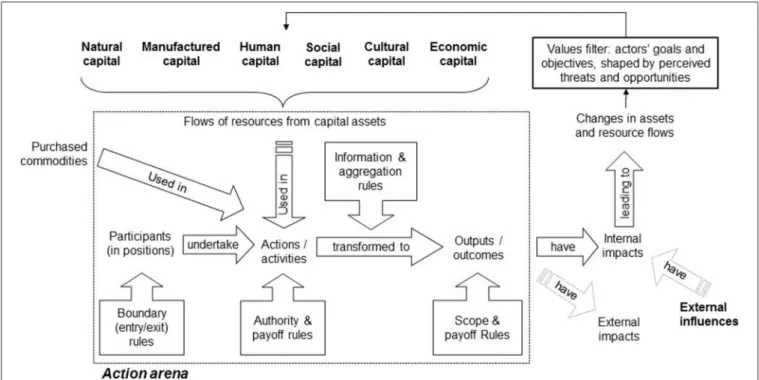
RESULTS AND DISCUSSION Interview Results
The development of a co-management program in Spain has increased local awareness of the importance of local fisheries resources for local livelihoods. One respondent also noted that local elites also acted in the interest of the community.
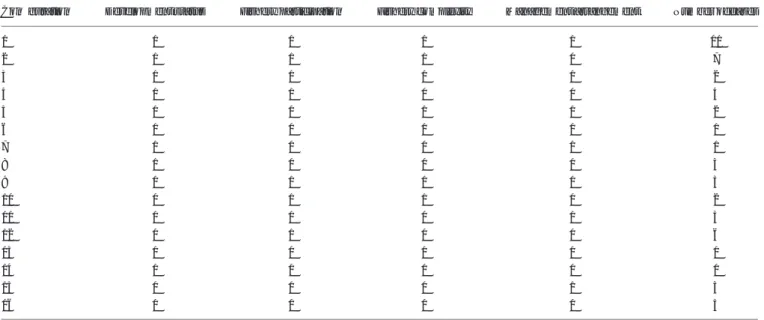
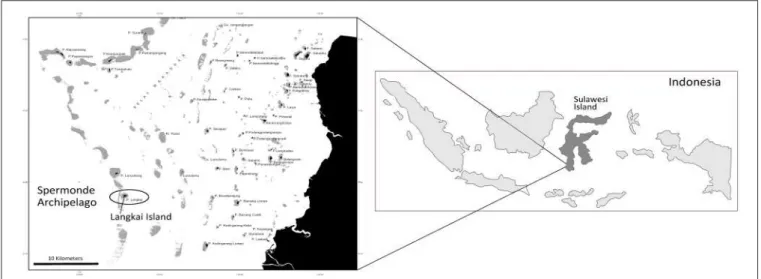
STUDY AREA: THE SPERMONDE ARCHIPELAGO, INDONESIA
Both groups identified fishermen using different gear types in the Langkai Island waters (for details see Figure 3). The idea of the Langkai Islanders in both group sessions represents their influence on marine resource use patterns in the Langkai Island waters.
CONCLUDING REMARKS
The findings show that there are differences in the strictness of the enforcement of local rules. Joint actions are often influenced by the preferred values among stakeholders and the prospect of tangible outcomes of the actions.
CONCLUSION
This paper attempts to empirically examine the perceptions regarding marine biodiversity conservation among various stakeholders of the Kogelberg Biosphere Reserve, South Africa. Moreover, the study of environmental perceptions in particular is very important to understand the social complexity embedded in the environmental crisis.
CONSERVATION THROUGH THE ESTABLISHMENT OF BIOSPHERE
The primary use of the coast and its resources includes the harvesting of abalone (Haliotis midae), west coast lobster (Jasus lalandii), linefish and seaweed. However, continued illegal exploitation and pressures for greater access to coastal marine resources by local resource users (among others) in the KBR and elsewhere along the country's coast are of concern to the National Forestry and Fisheries Department (Turpie et al., 2009: pp. iv–vi; Sunde, 2014: p. 23).

MATERIALS AND METHODS
11 The Marine Working Group on KBR Management is just talk, talk, talk. The importance of a factor is determined statistically by its Eigenvalue (ie, the sum of the squares of the factor loadings).
UNBRAIDING THE LIFEWORLD: THE ANATOMY OF A CONCEPT
While we have thus far examined the ontological and epistemological foundations of the lifeworld approach, how then. In order to map their diverse epistemological currents, Figure 1 depicts how the concept of the lifeworld developed.
OPERATIONALIZING LIFEWORLDS IN EMPIRICAL RESEARCH
The normative underpinnings by which communal insiders and outsiders were differently framed lay in a host of interpretations that involved crossing over: (a) pioneer narratives (i.e., "Who fished here first," "Who cleared this land?"), (b) discourses of ancestral belonging and homeland (e.g., ) interlaced biographical livelihood identities. For example, if the pervasively pronounced phase suv hayot were taken literally, as a blanket cultural expression defining Uzbek life—the paradoxes surrounding practices that otherwise imply unproductive allocation and use of water across the Uzbek hydraulic bureaucracy would have remained relatively underexplored.
COASTAL OR MARINE LIFEWORLDS?
Similarly, homogenizing all migrating fishermen as aliens and outsiders would have led to the problematic obscuration of multiple modes of sociality and ways of interacting with the world (popularly theorized as sambandam) along liminal coastlines. Meanwhile, a commonly expressed limitation of the lifeworld approach can be found in its methodological individualism.
DE-TERRESTRIALIZING AND UN-HUMANIZING A CONCEPT
The world of life at that time inevitably represented a humanized view of the world, as can be seen, for example, in anthropomorphized writings. Katikiro RE and Mahenge JJ (2016) Fishermen's perception of recurrent dynamite fishing practices on the Tanzanian coast.
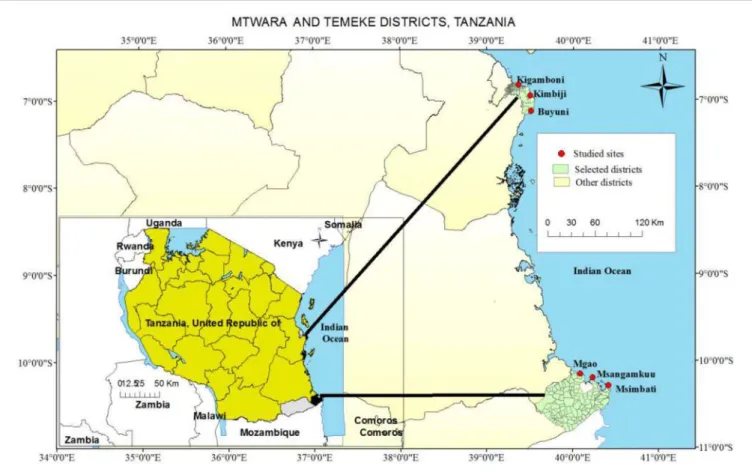
MATERIALS AND METHODS Study Sites
But only 18% of survey respondents reported receiving support, information and training to stop dynamite (and other destructive) fishing activities. Do you know any local customs or local regulations that relate to the use of dynamite fishing.
AUTHOR CONTRIBUTION
Chapter Five—Conservation Status Assessment of the Indian Humpback Dolphin (Sousa plumbea) Using IUCN Red List Criteria,” in Advances in Marine Biology, ed. A. Available online at: http://www.sciencedirect.com/science/article/pii/. 2015b).Explosive fishing in Tanzania: Spatial distribution and hotspots. Ministry of Livestock and Fisheries Development, United Republic of Tanzania. Available online at: http://www.mifugouvuvi.go.tz/wp- content/uploads/2014/08/SWIOFISH-TANZANIA-ESMF-FINAL.pdf FAO and UNEP (2010). Report by FAO/UNEP experts.
ENVIRONMENTAL PSYCHOLOGY
Community-based resource management frequently faces problems due to stakeholder misunderstandings, lack of commitment, non-compliance or conflicts (Bloomfield et al., 2012; Glaser et al., 2015). In our opinion, a commonly underestimated cause for this predicament is the differential perception of environmental changes, coping strategies and social processes by individual stakeholders.
BACKGROUNDS ON PERCEPTIONS AND CBMRM-RELATED BEHAVIOR
Furthermore, the interaction with the environment shapes perceptions that are relevant in CBMRM contexts (Pita et al., 2013; Wyles et al., 2014; . Beardmore, 2015). Even more, successful communication can depend on whether stakeholders perceive their interlocutors as similar to themselves (Siegrist et al., 2000).
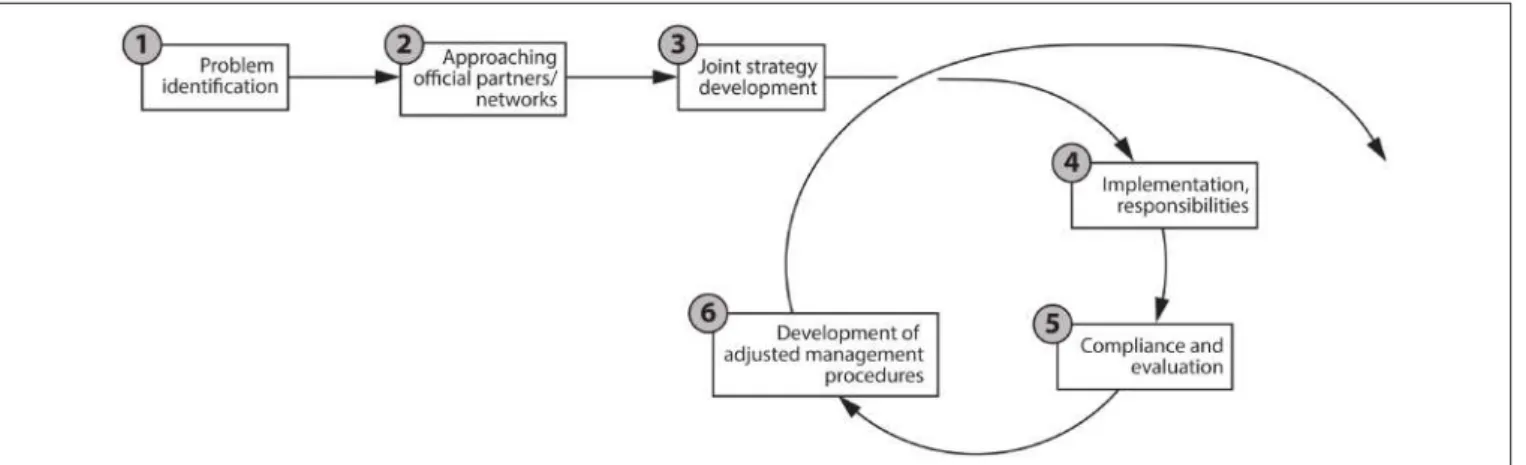
PERCEPTION EXPERTS—A PRACTICAL PROPOSAL
This work is part of the REPICORE project (grant 01LN1303A), funded by the German Ministry for Research and Education (BMBF) in the framework of "Research. A central factor affecting the price of sea cucumbers is the quality of processing (Purcell, 2014).
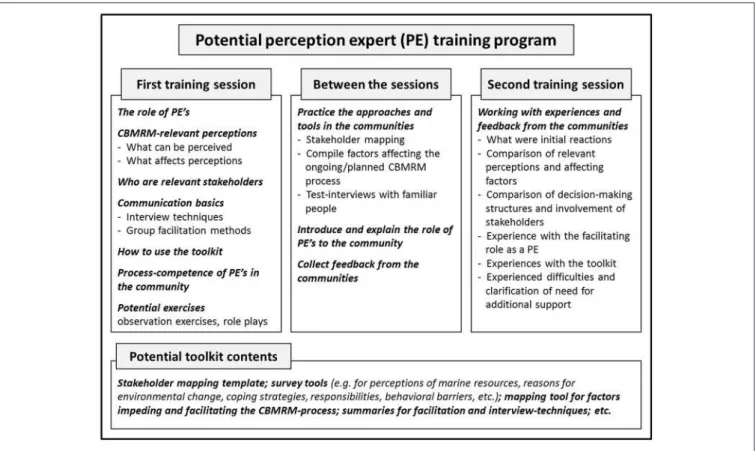
DISCUSSION AND CONCLUSION
Smuggling practices have also been documented at the point of export from producer countries to evade regulations and trade tariffs (e.g. The Hindu, 2016). Cultural Identities of Chinese Business:. shark fin netting company in Hong Kong.Asia Pac.