ACADEMIC STAFF RECRUITMENT AND RETENTION STRATEGIES AT THE UNIVERSITY OF LIMPOPO
BY
JOCELYN MOLLY MOKODITOA
MINI-DISSERTATION SUBMITTED IN PARTIAL FULLFILLMENT OF THE REQUIREMENT FOR THE DEGREE OF
MASTER OF PUBLIC ADMINISTRATION
IN THE
FACULTY OF MANAGEMENT SCIENCE AND LAW TURFLOOP GRADUATE SCHOOL OF LEADERSHIP (TGSL)
UNIVERSITY OF LIMPOPO
SUPERVISOR : PROF. FREDERICK AHWIRENG-OBENG
2011
i
DECLARATION
I declare that the “Academic Staff Recruitment and Retention Strategies at the University of Limpopo” (mini-dissertation) hereby submitted the University of Limpopo, for the degree of Master of Public Administration has not previously been submitted by me for a degree at this or any other university; that it is my own work in design and execution, and that all material contained therein has been duly acknowledged.
_________________________ _________________
MOKODITOA JM (Ms) DATE
STUDENT NUMBER 9448868
ii
ACKNOWLEDGEMENTS
Throughout the study from the beginning of course work to the research work and writing up I was assisted, encouraged, guided and supported by numerous people in different ways. That being the case, I would like to express my sincere appreciation to the following people:
My supervisor, Professor Ahwireng-Frederick Obeng, for his continual advice, guidance and inspiration to this study.
My children, Madibeng, Mpho and Tebatso, for the endless love, support and motivation during the whole process.
My colleagues and classmates for the encouragement, assistance and support we shared at all times.
The interviewees, for their valuable time, honest responses and willingness to take part in this work.
Lastly, the Almighty God, for giving me the strength and perseverance during the whole process until the end.
iii ABSTRACT
The paper examines the causes of the high turn-over rate and the non-retention of the academic staff at the University, and come up with possible solutions to curb the problem. The study addresses the factors that affect the academic staff recruitment and retention strategies. The paper further address identification of factors contributing to the high turnover rate of the academic staff at the University of Limpopo, analyze causes of the problems, work on the feedback obtained from interviewees, and make recommendations that will enable the University to come up with possible and implementable strategies for the recruitment and retention of the academic staff.
This was evident by the results of the study through the literature review and the interviews held that academic staff recruitment and retention is a problem. It is therefore advisable for the University to take note of the results of this study, and that there should be a turn-around strategy that could be implemented and monitored.
The Human Resource department should have a database that tracks the career path of all academic staff, and notify all appointees who are coming up for tenure. This notice could go out at the start of the last but one year before the appointees become eligible for appointment with tenure. The university must develop a culture of reasonable, clearly articulated, and enforced deadlines for processing applications for promotion. Human Resources department have a role to play in the promotion process as well. Access to information about the promotion process can be enhanced by revamping the websites for some of the institutions which are not really helpful in this respect. Relevant documents (e.g., conditions of service, appointment and promotion guidelines, benefits) can then be made accessible via institutional websites in a very organized manner than is currently the case in many universities.
iv
TABLE OF CONTENTS
ITEM PAGE
CHAPTER ONE
INTRODUCTION ………..……… 1
1.1 BACKGROUND TO THE STUDY ………. 1
1.2 STATEMENT OF THE PROBLEM ………. 2
1.3 RESEARCH QUESTIONS ……….. 3
1.4 AIM OF THE STUDY ……….. 4
1.5 OBJECTIVES OF THE STUDY ……….. 4
1.6 SIGNIFICANCE OF THE STUDY …….………. 4
1.7 DEFINITION OF CONCEPTS ……….……. 5
1.7.1 Recruitment ……… 5
1.7.2 Selection ……… 5
1.7.3 Retention ……… 5
1.7.4 Screening ……… 5
1.8 RESEARCH OUTLINE ……… 6
1.9 CONCLUSION ……… 6
CHAPTER TWO LITERATURE REVIEW ………..…… 7
2.1 INTRODUCTION ………..… 7
2.2 A BRIEF HISTORY OF THE UNIVERSITY OF LIMPOPO ……..……. 7
2.3 THE ESTABLISHMENT OF THE UNIVERSITY ……….……..….… 9
2.4 GOVERNANCE PROCESS ………...… 10
2.5 STUDENT POPULATION ………..… 10
2.6 STAFF GROWTH AND DEVELOPMENT ……… 11
2.7 LITERATURE RELEVANT TO THE PHENOMENON OF ACADEMIC STAFF RECRUITMENT AND RETENTION STRATEGIES ………… 11
v
2.7.1 Direct Discrimination ………. 12
2.7.2 Indirect Discrimination ………..…. 13
2.7.3 Equity ……….………. 13
2.7.4 Freedom of Information ……… 13
2.7.5 Victimization ………... 14
2.8 RECRUITMENT ………... 14
2.8.1 Recruitment Policy …..……….………... 15
2.8.2 Recruitment Strategies ………..… 16
2.8.2.1 Internal Factors ………. ……….………. 16
2.8.2.2 External Factors ………. ……….………. 20
2.8.3 Retention Strategies ……… 26
2.8.3.1 Reward / Compensation System ………. 26
2.8.3.2 Fringe Benefits ……… 27
2.8.3.3 Promotion of Present Staff …………..………. 27
2.8.3.4 Job Satisfaction ………..……….. 28
2.8.3.5 Succession Plan ………..……….. 29
2.9 CONCLUSION ……..……….. 29
CHAPTER THREE RESEARCH METHODOLOGY 3.1 INTRODUCTION ……….. 30
3.2 RESEARCH DESIGN ……….. 31
3.2.1 Choice of Design ……….. 31
3.2.2 Rationale for the study ……….. 32
3.2.3 Research Methods ……….. 32
3.3 AREA OF STUDY ……….. 33
3.4 POPULATION ……….. 33
3.5 SAMPLING METHOD ……….. 33
vi
3.6 DATA COLLECTION METHOD ………. 34
3.6.1 Interviews …………..……… 35
3.6.2 Documentary Review ……….. 35
3.7 DATA ANALYSIS METHOD ………. 35
3.8 MEASURES TO ENSURE TRUSTWORTHINESS ………... 36
3.8.1 Truth Value ..………. 36
3.8.2 Applicability ……… 36
3.8.3 Consistency ……… 37
3.8.4 Neutrality ……… 37
3.9 ETHICAL CONSIDERATION ………. 37
3.9.1 Informed Consent ……… 37
3.9.2 Confidentiality ……… 38
3.9.3 Privacy ……… 38
3.10 CONCLUSION ……… 38
CHAPTER FOUR DATA ANALYSIS, PRESENTATION AND INTERPRETATION OF RESULTS 4.1 INTRODUCTION ……… 39
4.2 DATA COLLECTED FROM INTERVIEWS ……… 39
4.2.1 Responses from Staff outside the Human Resources Department …… 40
4.2.2 Responses from Staff within the Human Resources Department … 40 4.3 DATA COLLECTED FROM EXIT INTERVIEW FORMS ………. 42
4.3.1 Resignations and Retirements ………. 43
4.3.2 Expatriate Staff Members ………. 43
4.4 CONCLUSION ……… 44
vii CHAPTER FIVE
CONCLUSIONS, RECOMMENDATIONS AND IMPLICATIONS
5.1 INTRODUCTION ……… 48
5.2 CONCLUSIONS ……… 48
5.3 RECOMMENDATIONS ……… 50
5.4 IMPLICATIONS ……… 55
REFERENCES 58
ANNEXURES
ANNEXURE A. Organogram
ANNEXURE B. Interview Questions: Staff outside Human Resources………
ANNEXURE C. Interview Questions: Staff within Human Resources ………
ANNEXURE D. Exit Interview Questions ……….
ANNEXURE E. Editorial Letter ………...
viii
LIST OF TABLES AND FIGURES
TABLE 1 Student Enrolment for the period 2000 to 2009 10
TABLE 2 Staff Growth and Development for the period 2005 – 2009 11
FIGURE 4.1 Responses from staff within the Human Resources department
(in percentage) 41
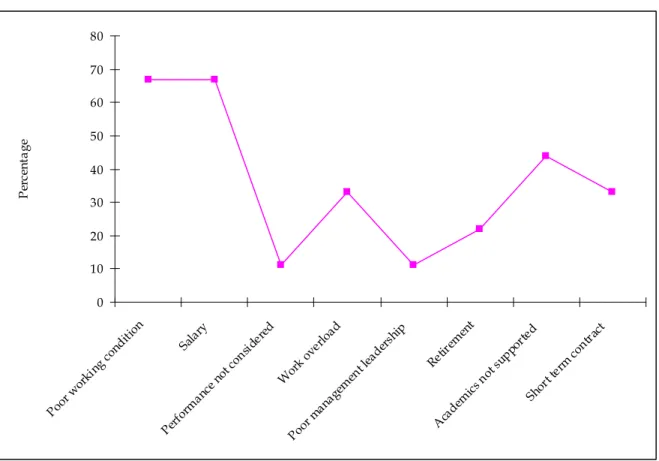
FIGURE 4.2 Reasons for leaving the University of Limpopo (in percentage) 42
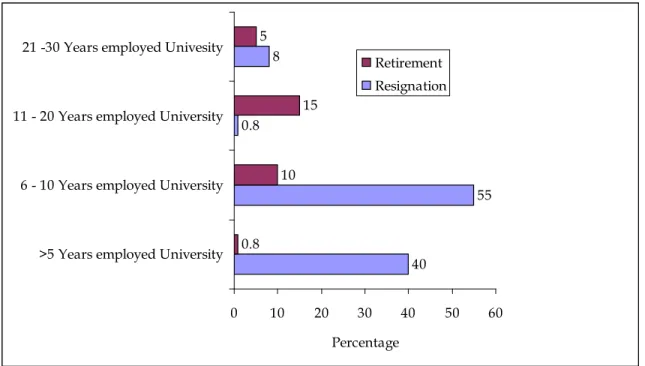
FIGURE 4.3 Retirement and Resignations (in percentage) 43
ix
LIST OF ABREVIATIONS
UL : University of Limpopo
PPP : Personnel Policy and Procedure Manual
CCMA: Commission for Conciliation, Mediation and Arbitration
1 CHAPTER 1
INTRODUCTION
Since 1994, the South African government’s regulation of Human Resource Management has increased drastically. The country’s institutions are currently facing unprecedented challenges in their recruitment of staff. The Constitution of The Republic of South Africa Act No. 108 of 1996, the Basic Conditions of Employment Act No. 75 of 199, the Employment Equity Act No. 55 of 1998, the Labour Relations Act No. 66 of 1997, the Skills Development Act No. 97 of 1988, to name but a few, are some of the laws that have presented institutions of Higher Education with innumerable challenges on recruitment.
An institution’s Human Resources Department is thus expected to offer expert advice on the process of recruitment that is in line with the expectations of government.
However, it must be considered that institutions have to operate in a diverse environment (Cornelius, 1999). They are expected to attract high potentially talented people. It is indicated that the war for talent is creating a new business reality (Michaels and Handfield-Jones, 1995).
1.1 BACKGROUND TO THE STUDY
The University of Limpopo is a historically disadvantaged Institution of Higher Learning. In 2000/2002, the institution embarked on restructuring of staff members.
In 2006/2007, the University suffered a high turnover rate of the academics, which has resulted in continuous recruitment. This ultimately, disadvantages the students, who are the main stakeholders of the institution.
2 According to Notten (2003) an international research project was conducted to investigate and compare human resources practices in organizations in South Africa and Singapore. Popular strategies in these two countries include developing talent within an organization and developing career plans. Cloete (1993), states that the process of recruitment must be undertaken with a view of obtaining the services of people of quality.
The findings will give additional information that will improve where there is a problem and need. It will also contribute positively to both the students and the policy implementers, and the community at large. Recruitment will be done effectively and staff will be retained for continuity of teaching and research purpose at the University.
1.2 STATEMENT OF THE PROBLEM
The Personnel Policy and Procedure Manual (PPP) of the institution is outdated, and does not conform to the Human Resources Management laws of the country, however, the University is currently working on the new Policies of the institution. Compliance with the laws of the country is compulsory. The high turnover rate and non-retention of academic staff at the University is of much concern. The end result of this is a continuous recruitment process, which is costly and time-consuming. It also disadvantages the students in that, in some instances, the replacement process takes very long.
Temporary and part time staff are hired for short term periods, and this disrupts the continuous learning of students. Temporary staff do not put all the effort expected of them, as their appointment is for a limited period of time. Therefore, they seek permanent employment elsewhere.
3 As stipulated in the European management Guide of 1997, part time work in Belguim is encouraged in that workers have a right, with limitations, to request a transfer from full-time to part-time employment. In France, Part time staff are entitled to all the benefits that the full time employees receive, though, on a pro-rata basis.
Carrell, Elbert, Hatfield, Grobler, and Warnich (2000) argues that part-time staff members are less costly than full-time employees, especially where they perform much better than full-time employees. They are available for a stipulated period of time at a fixed rate.
The researcher’s observation is that they (part-time staff) are not readily available for students’ consultations. The student results become negative because of the inadequate tuition offered.
1.3 RESEARCH HYPOTHESIS / QUESTIONS
It is imperative to have research questions, in that, the questions provide a focus for data collection, and keep the researcher focused on the initial interest, states Maree (2007).
“What are the factors that contribute to the high turnover rate and non-retention of academic staff at the University of Limpopo?”
“Does the university have a clear Policy on Recruitment and Retention Strategies”?
“If yes, is the Policy clear and well implemented”
“Are the policy implementers well trained for the Job?”
“If no, is training arranged?”
4 1.4 AIM OF THE STUDY
The main aim of the study is to investigate the causes of the high turn-over rate and the non-retention of the academic staff at the University, and come up with possible solutions to curb the problem. The formulated recommendations will help correct the problems, as mistakes and wrong doings will be pointed out. It will also assist the institution to retain potential staff, which will lead to improved students’ results. Again the university will be able to comply with the Government rules and regulations, and meet the expectations of both staff and students.
1.5 OBJECTIVES OF THE STUDY
The objectives of this study are the following:
a) to identify the factors contributing to the high turnover rate of the academic staff at the University of Limpopo
b) analyze causes of the problems
c) work on the feedback obtained from interviewees, and
d) Make recommendations that will enable the University to come up with possible and implementable strategies for the recruitment and retention of the academic staff.
1.6 SIGNIFICANCE OF THE STUDY
The findings will give additional information that will improve where there is a problem and need. It will also contribute positively to both the students and the policy implementers, and the community at large. Recruitment will be done effectively and staff will be retained for continuity of teaching and research purpose at the University.
5 1.7 DEFINITION OF CONCEPTS
Some concepts which will be used in this research paper need to be defined to give clarity of their meanings for this study.
1.7.1 Recruitment
Carrell, Elbert, Hatfield, Grobler, Marx and van der Schyf, (1998) defines recruitment as a process of acquiring applications of available candidates qualified to fill vacant positions of an organisation, while Werther and Davis (1996) regard recruitment as the process of finding and attracting capable applicants for employment.
1.7.2 Selection
According to Nel, van Dyk, Haasbroek, Schultz, Sono and Werner (2004) selection is the process of trying to determine which individual will best match particular jobs in the organizational context, taking into account individual differences, the requirements of the job and the organization’s internal and external environment.
1.7.3 Retention
The Concise Oxford Dictionary (2008) defines retention as to continue to have, keep possession of.
1.7.4 Screening
Screening is a process whereby as soon as a sufficient number of applications have been received candidates are sieved for selection, reducing the number of applicants to a manageable pool who will then have better chances of competing to be selected
(Chatterjee 1999).
6 1.8 OUTLINE OF RESEARCH
Chapter 1:
The background and significance of the Study gives a brief background to the study, research problem and discusses why the research was warranted. The objectives or aims of the study and the research questions were looked into as well; the research methodology discussed, some concepts defined, and the de-limitation of the study is indicated too.
Chapter 2:
Literature Review – this is the critical assessment of what has been done previously in the given topic, regarding the revision and reconsiderations.
Chapter 3:
Research Methodology - Data Collection, preparation, coding, data capturing and editing, data analysis and interpretation of results
Chapter 4:
Data Analysis, Presentation and Interpretation of Results
Chapter 5:
Conclusions, Recommendations and Implications
1.9 Conclusion
This chapter has highlighted the background to the study, the research problem, objectives, research methodology, justification of the study, and a chapter summary of the dissertation. The following chapter will contextualise the study within the context of current literature.
7 CHAPTER TWO
LITERATURE REVIEW 2.1 INTRODUCTION
This chapter will provide a brief history of the University of Limpopo, which was previously named the University of the North, the establishment of the University, the governance, student population, staff population and the literature relevant to the phenomenon of Recruitment and Retention strategies of academic staff.
This is done with the aim of gathering information for the research work which is a review for the period 2005 – 2009.
2.2 A BRIEF HISTORY OF THE UNIVERSITY OF LIMPOPO
The University of Limpopo is one of the oldest universities in the country as outlined by the University of Limpopo Act, no. 47 of 1969.
It is situated about thirty kilometres from Polokwane, on the R71 Tzaneen road, in Limpopo Province. It was established in 1959 under the trusteeship of the University of South Africa. This was done through the provisions of the Extension of the University Education Act of 1959, which brought about the establishment of racially exclusive universities for Black South Africans and was initially named the University College of the North (UL Three Year Rolling Plan, 2000-2002:1).
The status of the College was maintained until the South African Parliament promulgated the University of the North Act No. 47 of 1969, thus bringing to the end its college status with effect from 01 January 1970 (UL Three Year Rolling Plan, 2000-2002).
8 Currently, all institutions of higher education are governed by the Higher Education Act No. 101 of 1997. As the need for institutions of higher learning grew, three satellite campuses under the auspices of the University of the North, were established, one in Venda (1980), Qwaqwa (1981) and Giyani (1983). Subsequently, the Venda campus became a university on its own, and the University of the North remained with the other two satelites. (UL Three-year Rolling Plan, 2000-200).
In the years 2001 and 2002, restructuring was embarked upon on both two satellite campuses and the main university campus, respectively. Some staff members from the Giyani campus were deployed to the main campus, others were laid off on operational basis, and the rest were retrenched (UL Three Year Rolling Plan, 2000-2002). At the main campus also, in 2002, some staff members were laid off, and retrenched on operational basis. During the restructuring process of the University in 2000 and 2001 respectively, faculties were scaled down from eight (8) to three (3), namely, Humanities, Management Sciences and Law and, Sciences, Health and Agriculture.
Based on the Higher Education Act 101 of 1997: 23&24), the Qwaqwa campus had to merge with the University of the Orange Free State. Some teaching staff members were deployed to the main campus, whereas the others were absorbed into the new University of the Free State. The process was finalized in December 2003. The University of the North has since merged with the Medical University of South Africa with effect from 01 January 2005, and the new institution became a new University of Limpopo. It is now structured into four faculties, namely, Science and Agriculture, Health Sciences, Management and Law, and Humanities.
The University of Limpopo has shed its apartheid stigma, and now stands as a transformed institution that had Dr Nelson Mandela (Madiba) as one of its past Chancellors and Professor Kader Asmal as one of its past Chairperson of Council.
9 In March 2008, the Minister of Education, Naledi Pandor, announced the establishment of a Ministerial Committee on Progress Towards Transformation and Social Cohesion and the Elimination of Discrimination in Public Higher Education Institutions to “investigate discrimination in public higher education institutions, with a particular focus on racism and to make appropriate recommendations to combat discrimination and to promote social cohesion”. The Committee located its investigation within the context of the transformation agenda of Education White Paper 3: A Programme for the Transformation of Higher Education. White Paper 3 explains that transformation requires that all existing practices, institutions and values are viewed anew and rethought in terms of their fitness for the new era”. At the centre of the transformation agenda, in terms of ‘fitness’, is the White Paper’s vision for the establishment of a single national coordinated higher education system that is “democratic, non-racial and non-sexist”. (Report of the Ministerial Committee on Transformation and Social Cohesion and the Elimination of Discrimination in Public Higher Education Institutions (30 November 2008)
(FINAL REPORT)
2.3 THE ESTABLISHMENT OF THE UNIVERSITY
The organizational structure below describes the University of Limpopo model. At the top is the Vice-Chancellor who is acting as the Chief Executive Officer (CEO) of the University, followed by the two Deputy Vice-Chancellors Academic & Research and Administration, the Chief Financial Officer and the Registrar, the Senior Manager Finance, the Executive Manager: Human Resources, Executive Manager: ICT, Executive Manager: Marketing and Communications, the Executive Deans of the faculties; Health Sciences, Humanities, Management Sciences and Law and Science and Agriculture, the Directors of the Schools, the Senior Professors, Professors, Associate Professors, Senior Lecturers and the Junior Lecturers.
10 2.4 GOVERNANCE PROCESS
The Vice-Chancellor is currently Professor NM Mokgalong. He took over from Professor Patrick FitzGerald, (who was appointed in a ministerial capacity as the Administrator of the University), when his term expired in December 2002. Firstly as an Interim appointment, then later on he was appointed on contract basis to date. The Vice-Chancellor reports directly to the highest decision-making body, namely, the University Council, of which Dr R Khoza is the Chairperson. The Senate is also the decision making body on academic matters.
2.5 STUDENT POPULATION
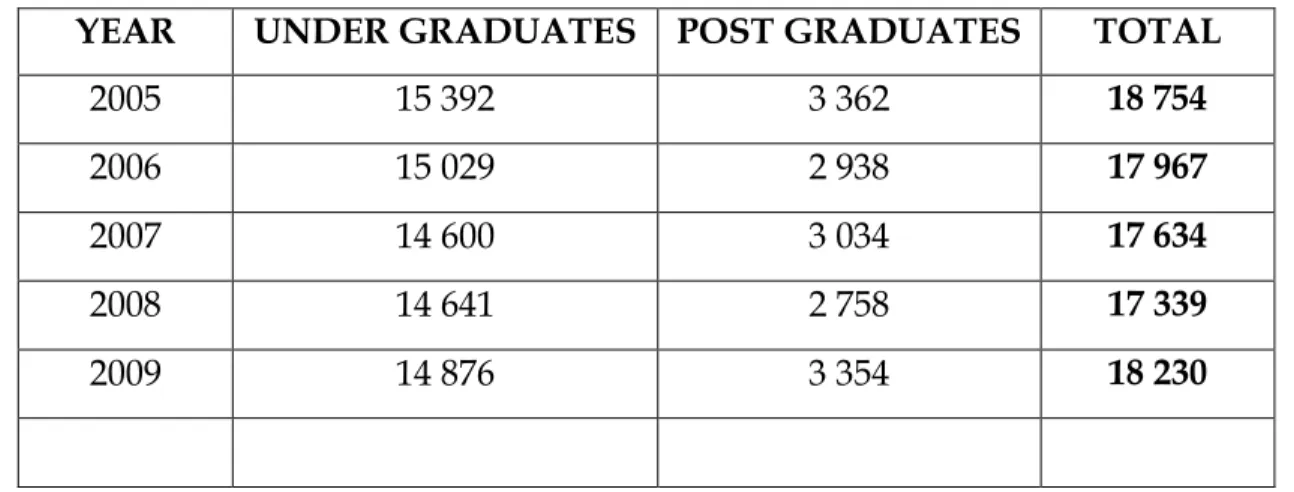
Since the inception of the University, the student population is growing. In the year 1994, the number reached a peak of 19 780 enrolled students. From 1995 onwards, however, the University experienced a steady decline in enrolment, which became a cause for great concern (UL Three Year Rolling Plan, 2000-2002).
YEAR UNDER GRADUATES POST GRADUATES TOTAL
2005 15 392 3 362 18 754
2006 15 029 2 938 17 967
2007 14 600 3 034 17 634
2008 14 641 2 758 17 339
2009 14 876 3 354 18 230
Table 1 The student enrolment for the years 2000 to 2009
11 2.6 STAFF GROWTH AND DEVELOPMENT
The University of Limpopo being one of the oldest universities in the country, the number of staff increased with the passing of years. However, the institution suffered a high turnover rate between the years 2005 and 2008, and that has drastically reduced the number of staff. Staff movements between the years 2005 and 2010, as per the University’s Employment Equity Reports, are as follows:
YEAR NO. OF STAFF MEMBERS
2005 2 012
2006 2 003
2007 1 878
2008 1 851
2009 2 211
2.7 LITERATURE RELEVANT TO THE PHENOMENON OF ACADEMIC STAFF RECRUITMENT AND RETENTION STRATEGIES
Human Resources is regulated by legislations such as the Employment Equity Act No.
55 of 1998, the Basic Condition of Employment Act No. 75 of 1997, the Labour Relations Act No. 66 of 1997, the Skills Development Act No. 97 of 1988 and the Constitution of the Republic of South Africa, Act. No. 108 of 1996.
The Acts that govern human resource have more influence on recruitment, given that they have to be taken into consideration whenever staff recruitment processes had to be embarked upon. There are serious implications when such legislation is not considered.
12 In order for the organization to achieve its goals, the financial and physical resources and the human resources are required. The financial and physical resources are regarded as most important and the people are taken for granted, whereas the organization cannot function without people.
The Human Resources Management of the University of Limpopo is faced with new and important challenges because of the dramatic changes taking place in both internal and external environments of the organizations in the country.
Externally, the economic change accelerates rapidly and puts the South African Human Resources Managers under extreme pressure to make a meaningful contribution to the success of their organizations (Carell, et al 2000).
The challenges faced are Direct and Indirect Discrimination, Equity, Freedom of Information and Victimization.
2.7.1 Direct Discrimination
Direct discrimination pertains to treating everybody in the same manner on the prohibited grounds. An individual may not be discriminated against because of a perception on the part of others, such as, a perceived religious belief.
Roberts (1994) agrees with Carrell et al (2000) in that, people must not be discriminated against unnecessarily.
Both the blind and the partially impaired people are partly discriminated against, as the campus is not fully user-friendly to them. Some buildings do not have provision for people on wheel chairs. Such buildings have no lifts or escalators, but only stairs, for instance, the old K-Block building at the University of Limpopo.
13 2.7.2 Indirect Discrimination
Indirect discrimination refers to applying a requirement or condition, even without intent, which affects some people covered by the legislation rather than the population in general and which cannot be objectively justified, such as, height requirements, where this would not be job related, could be indirectly discriminatory against women.
2.7.3 Equity
The Employment Equity Act No. 55 of 1998 expressly prohibits discrimination, both direct and indirect, on the grounds of race, religion, gender, marital status, membership of the travelling community, sexual orientation, age, family status, and disability. The procedure contained herein intends to ensure that institutions recruit the best people for the job-enshrined principles, thus ensuring equal treatment. There is no difference between temporary and permanent employees, therefore, the same care and attention must be given to every appointment.
2.7.4 Freedom of information
The university is governed by the provision of the Freedom of Information as stated in the Constitution of the Republic of South Africa Act No. 108 of 1997. This gives individuals the legal right of access to own personal information held by the institution, to their own employment records, and the reasons in writing, for decisions made, that have impacted either negatively or positively on them.
Based on information gathered from the Knowres Conference of 2002, the reasons for decisions made by selection committees in respect of each applicant, both at short- listing and the final selection interview, may be released to applicants on request, and are therefore necessary and need to be documented.
14 2.7.5 Victimization
No person must be victimized for lodging a complaint or allegation of discrimination, or for acting as a witness in connection with proceedings under the Act, or has been involved in any other way or intends to get involved in any of these actions.
Roberts (1994) states that victimization happens when an individual has lodged a complaint or allegations of discrimination, eg. pregnancy and thus, agreeing with Carrell et al (2000) above.
2.8 RECRUITMENT
According to Carrel et al (2000) recruitment is the process of acquiring applicants who are available and qualified to fill vacant positions in an organization. The main requirement in recruitment is a well-conceived policy wherein guidelines and objectives to be achieved should be properly outlined.
Gerber, Nel & van Dyk, (1995), state that a recruitment policy is designed to describe and provide guidelines on carrying out recruitment processes. Its main objective is to enable management to attract the most competent of the candidates and to fill in the positions with the best qualified applicants.
Both Carrell et al (2000) and Gerber, Nel & van Dyk (1995) share similar understanding in that without well-designed policies, set objectives for the institution will not be attained. The recruitment process should be exhaustive and require potential employees to go through competency-based interviews, to avoid high turn-over rate.
An organization should search for candidates, to bring a range of skills and versatility.
15 According to Cloete (1998), a policy should distinguish between posts to be filled by external recruits and those that should be filled by internal promotions or succession.
The South African general practice is that posts in a fixed establishment should be filled by transfers or promotions (internally). If a suitable candidate is not available, it can be filled through recruiting externally.
Cloete (1998) clearly states that only when there is no existing staff member available to be transferred or promoted, outsiders can be considered for the position.
2.8.1 Recruitment Policy
Recruitment of staff is an ongoing process in most organizations, and it is very crucial.
Carrell, et al (2000) refers to recruitment as the process of acquiring applicants who are available and qualified to fill vacant positions in an organization. The main requirement in recruitment is a well-conceived policy, wherein guidelines and objectives to be achieved should be properly outlined.
Different authors view this in the same way, namely, the careful consideration of the policy, rules and regulations, without forgetting the different Acts that serve as guidelines to employment. Accordingly, an institution must have a well-conceived policy as the first requirement for a strong workforce. According to Cloete (1998) the policy must provide guidelines on recruitment of staff and should state the goals to be achieved by the institution.
An institution’s Recruitment Policy has to be fair and consistent, be of non- discriminatory nature on the grounds of sex, race, age, religion, or disability, and should conform to statutory regulations of the country, and agreed best practices.
16 There is a general shortage of supply of knowledgeable staff, as a result, there is vast competition in organizations to attract and retain these skilled resources Notten (2003).
Strategies that work best in attracting, motivating and retaining knowledgeable staff should thus be put in place. Policies and procedures must be carefully looked into, so as to ensure that they go along with the Labour Relations Act.No. 66 of 1995. Where necessary, there should be a compilation of new procedures to be applied consistently and fairly to all job applicants Carell, et al (2000).
A recruitment policy is designed to describe and provide guidelines on carrying out recruitment processes. Its main objective is to enable management to attract the most competent of the candidates and to fill in the job positions with best qualified applicants Gerber, Nel & van Dyk, (1995).
2.8.2 Recruitment Strategies
Organizations are realizing that attracting and retaining the right talent has become the key strategic objective. The traditional recruitment focus on skills and knowledge has to be changed to focus on values and culture fit. There are internal and external factors that affect recruitment.
2.8.2.1 Internal Factors
a) Organizational Strategic Plan
The organizational strategic plan is the basis for short-term period in that recruitment efforts are based. The Human Resources department must make use of the organizational business plan in order to achieve the objectives set, indicates Erasmus (1998).
17 b) Organizational Policy
Gerber, Nel & van Dyk, (1995) states that an organizational policy should provide for promotion opportunities for posts of existing staff members. If this is applied, external recruits will be in the cases of junior or entry posts. Existing staff members will thus be offered priority in being promoted, and this will help create a sense of security for them
Erasmus (1998) further argues that an organizational recruitment policy must be clear, for example, affirmative action, promotion from within or employment of the handicapped, and that all the stakeholders within the organization must participate in determining the policy.
Non-promotion and the recruitment of outsiders in an institution create a low morale, depression and de-motivation to existing staff members. Positions should be viewed as very urgent, for competency, potential and long-term development. An organization should search for candidates to bring a range of skills and versatility.
Policies and practices of every organization have an effect on the recruitment of staff.
Some believe in promotion only from within, many practice nepotism, whilst others perpetuate their community/clan. The main requirement, however, is that, whatever the declared or undeclared policy or practice is, it must significantly demarcate recruitment (Chatterjee, 1999).
c) Organizational Culture
An ideal organizational culture consists of a combination of high quality and high acceptance, and vice versa Boshoff (1998). The more an organization allows itself to be pushed into a conformance culture, the more backbone its employees will lose.
18 Standards will be lowered and it will become very difficult or even impossible to achieve quality Boshoff (1998). Taking popular decisions, pleasing people, doing what the masses expect one to do, being pressurized into appointing people, going with the stream, overlooking poor performance, allowing lower standards, failing to discipline people, breaking accepted rules, tolerating manipulation, ignoring sensitive problems, and bending over backwards to please people, are all symptoms of a conformance culture Boshoff (1998).
Many organizations fail to realize that creating a culture where transparency, openness, mutual trust, and respect are practiced is the cornerstone of human resource professionals. Every staff member in an organization should be involved, contribute opinions and play an active role in living the culture.
d) Organizational Image
Gerber, Nel & van Dyk, (1995), says that the image of an institution is based on what it does, and whether or not it is regarded as a good and advantageous place to work in.
Both the community and staff members of an organization can have an impact and influence on the recruitment of staff.
According to Chatterjee (1999), the quality of job applicants depends highly on the image of an organization. The better the image, the better the organization is known, the better the quality of applicants and the greater the number of applicants.
Whether or not an organization is favourable to work in, determines how it is perceived by the public and staff members. The larger the organization, the more likely it is to have a well-developed image (Chatterjee, 1999). The number and quality of job applicants depend crucially on the image perception of the organization. Whilst the
19 institution must build up its own image, it is also influenced by the general image of the industry.
The above authors are in agreement in that the organizational image has an impact in the attraction and retention of staff. The above mentioned statement further indicates that the organization is responsible to build its own reputation and image.
e) Recruitment Requirements
Organizational requirements of prospective staff members have a determining influence on the recruitment program. If the requirements are abnormally high, they may impede the program. Therefore, it is important that effective job analysis, job descriptions and job specifications be used to lay down the requirements for the job incumbent, and for the smooth running of a recruitment program Gerber, Nel & van Dyk, (1995).
If correct information regarding job requirements is available, including the remuneration involved and the direction in which the organization is moving, both the organization and the candidate can make a better judgment of whether the job and the candidate’s own needs and abilities will match or not.
In the case of the University of Limpopo, however, the researcher observed that there are no job descriptions in place. Based on Erasmus et al (1998), accurate job descriptions and specifications help to set realistic requirements which results in effective recruitment. Recruitment criteria must always be drawn to avoid discriminatory practices.
Laferla (1998) states that most managers do not fail because they lack the financial acumen, marketing knowledge or management skills. The most common reason for
20 failure is an excessive ego drive characterized by misplaced ambition of a self-serving, uncompromising and dominating nature, which is neither for the good of the organization nor custodians.
2.8.2.2 External factors
According to Gerber, Nel and van Dyk (1995), external factors are based on Government or trade union limitations and the general condition of the labour market.
Government Acts and trade unions have far more influence on recruitment in ways mentioned below:
i) Government Acts
This has to be taken into consideration whenever a recruitment process has to be taken into action. Acts like the Labour Relations Act No.66 of 1995, the Employment Equity Act No. 55 of 1998, the Skills Development Act No. 97 of 1998, the Higher Education Act 101 of 1997, the Basic Conditions of Employment Act No. 75 of 1997, to name but a few, have serious implications when they are not taken into cognisance.
- The Labour Relations Act No. 66 of 1995
The purpose of the Act is to advance economic development, social justice, labour peace, and the democratization of the workplace by fulfilling the primary objective of this Act, which is, to give effect to, and regulate the fundamental rights conferred by Section 27 of the Constitution of South Africa, in that every person shall have the right to fair labour practice.
Since its inception in 1996, the LRA has brought about fundamental revisions to the employment relationship in South Africa. It gives effect to constitutionally entrenched
21 rights such as the right to strike, freedom of association, equality, and the like (Venter, 2003).
The Act applies to all employees and employers in South Africa, and creates new rights, structure and procedures. In terms of Section 3, it excludes the South African National Defence Force, the National Intelligence Agency and the South African Secret Services (Venter, 2003).
According to Finnemore (1998), an Act has an important effect in standardizing labour rights and labour relations processes, resulting in greater opportunity for consistency, efficiency, social justice and equity.
- The Employment Equity Act No. 55 of 1998
The purpose of this Act is to achieve equity in the workplace by promoting equal opportunities and fair treatment in employment, through the elimination of unfair discrimination; implementing Affirmative Action measures to redress the imbalances in employment experienced by the designated groups, so as to ensure their equitable representation in all occupational categories and levels in the workplace.
Chapter Two of the EEA (1998) stipulates that no person may unfairly discriminate, directly or indirectly, against an employee in any employment policy or practice, on one or more of grounds including race, gender, pregnancy, marital status, family responsibility, ethnic or social origin, colour, sexual orientation, age, disability, religion, HIV status, conscience, belief, political opinion, culture, language, and birth.
Top management of the University consists mainly of men, while there were only few females at the time of the study. (16 males and 4 females) (EE Report 2004/2005).
22 - The Skills Development Act No. 97 of 1998
The purpose of the Act is to look into the need to develop the skills of the South African workforce; Increase levels of investment in education and training in the labour market and to improve the return on that investment; encourage employers to use the workplace as an active learning environment, provide employees with opportunities to acquire new skills, to provide new entrants to labour market work experience, and employ persons with difficulty to be employed; encourage workers to participate in learner-ships and other training programs; improve the employment prospects of persons previously disadvantaged by unfair discrimination, and to redress those disadvantages through training and education; ensure the quality of education and training in and for the workplace; and provide and regulate employment services.
- The Higher Education Act 101 of 1997
The purpose of this Act is to regulate Higher Education Institutions; provide for the establishment; determine the composition and functions of the Council of Higher Education Institutions; provide for the appointment and functions of an independent assessor; provide for the registration of private Higher Education Institutions; provide for quality assurance and qualify promotion in Higher Education Institutions; provide for transitional arrangements and the repeal of certain laws; and provide for matters connected therewith.
It is desirable to restructure and transform programs and institutions to respond better to the Human Resources’ economic and development needs of the country, since it will help provide optimal opportunities for learning and the creation of knowledge.
23 - The Basic Conditions of Employment Act No. 75 of 1997
The purpose of this Act is to advance economic development and social justice by fulfilling the primary objectives of this Act, which is to give effect to the right to fair labour practices referred to in Section 23(1) of the constitution by establishing and making provision for the regulation of the basic conditions of employment and thereby to comply with the obligations of the Republic as a member state of the International Labour Organization, and provide for matters connected therewith.
The Act applies to all employees and employers, except members of the National Defence Force, National Intelligence Agency, South African Secret Service, and the unpaid charitable workers (Venter, 2003).
ii) Trade Unions
A trade union, in terms of the Labour Relations laws, is deemed to be a registered trade union that is sufficiently representative of the employees employed by the employer in a workplace, under the Labour Relations Act No. 66 of 1995, and continues to be a body corporate (South Africa, 1995).
This definition was formulated in 1920, but it is most appropriate within the current South African context. It clearly indicates that unions not only aim at improving conditions such as wages and other benefits at the work place, but also at defending the status quo and protect members from dismissal, retrenchment and even cuts in pay.
According to Finnemore (1997), a Trade Union is a continuous association of wage earners for the purpose of maintaining or improving the conditions of their working lives.
24 Carrell, et al (2000) define Trade Union as an organization of workers formed to further the economic and social interests of its members. Among other purposes of the existence of a Trade Union is job security and regulation. Thus, insecurity is often a driving force of unionization. Most employees join unions as a means of protecting their jobs. Members are, in most cases, expected to be protected from dismissal, retrenchment and unilateral action by management in changing job descriptions and working conditions.
The presence of a Trade Union has significant implications for the structure of an organization, and for the management of human resource. For union employees, Human Resources’ procedures and policies are shaped by a written agreement between the management and the union.
Carrell, et al (2000) states that unions can either be registered or not registered.
Unregistered unions, although they may enter into agreements with employers have no statutory rights.
Finnemore (1997) in turn mentions that Trade Unions participate in everything that takes place within an organization, to represent the interests of employees. There should always be a 100% consultation between the union and the employer. Decisions should be taken in consultation with the union. This helps the workers to be fully informed about everything in the organization.
Carrell, et al (2000) and Finnemore (1997) agree that a trade union is in full support of employees and guard against unfair labour practices in the work place.
25 b) The General Condition of the Labour Market
Gerber, Nel & van Dyk, (1995) defines Labour Market as a place where-in demand and supply factors are expressed in exchange of labour between two parties, namely, employee and employer
Since South Africa’s re-admittance into the international arena, massive discrepancies in the development of South Africa’s labour market as a result of the apartheid regime have been relieved (Venter, 2003).
South Africa’s poor standing in the management and people criteria is, however, still most disturbing. It has the most serious implications for the development of the country’s labour market, and includes factors such as HIV/Aids in the workplace, equal opportunity, and economic literacy, to name a few. This necessitates a dire need for positive intervention to improve the South African workers’ poor performance (Venter, 2003).
The government exerts considerable influence through its ability to change the rules to legislate and make sure that the acts and rules are abided by. The nature of legislative intervention is the creation of positive rights. The government is directly able to exert considerable influence on the terms and conditions of employment and the management of a significant proportion of the country’s labour force.
Hollinshed and Leat (1995) states that the objective of legislative intervention can be broadly separated into that which is regulatory and one which is protective. This distinction invariably becomes blurred in practice, though it can be used as a convenient structural framework.
26 2.8.3 Retention Strategies
2.8.3.1 Reward / Compensation System
According to Armstrong and Long (1994), the objective of the reward system include the attraction, motivation and retention of staff at all organizational levels. To accomplish these objectives, management has to consider a number of critical policy issues such as that pay incentives to reward individuals or group behavior.
Muchinsky (1995) further indicates the objective of compensation as an improvement of both employer and employee performance, and if rewarded accordingly, the employees are motivated.
The two authors (Armstrong and Long (1994) Muchinsky (1995)) are in agreement that the compensation system serves to attract and retain employees. Further, it helps provide for their personal needs.
Carrell, et al (2000), states that effective staffing can retain the human resource most likely to serve an organization’s need. He further indicates that the compensation system should not hinder efforts to retain productive employees attracted and hired.
The compensation system is broad and plays a vital role. It assists in attracting and retaining good employees, and brings job satisfaction for the institution to achieve its goals. The benefits that the institution offers to employees fall within the umbrella of the compensation system.
27 Well structured salary packages could attract good applicants for the job and serve as a good retention strategy for the organization, as other employers in the market place are also searching for the best, Nel et al (2004).
Staff members should be remunerated based on their performance and the scarce skills categories should be taken into consideration. Human Resources staff should know what is expected of them and should accordingly be rewarded for their efforts.
Compensation is regarded as a vital role player in job satisfaction and staff retention.
Pay satisfaction leads to desirable behavior value, increases employee effort and decreases absenteeism and turnover, Muchinsky (2005)
2.8.3.2 Fringe Benefits
Du Plooy and Snyman indicate that one of the main reasons to remain in the employ of the universities is because of the study benefits granted for both the staff members and their dependants. The researcher observed the same at the University of Limpopo.
Most of the academic staff who decided to stay at the University did so because of the study benefits for both dependents and themselves, as self-development.
2.8.3.3 Promotion of present employees
According to Gerber, Nel & van Dyk, (1998), promotion is regarded as the most important source of candidates for vacancies, in that positions will be filled by way of promotion or transfer of existing personnel.
Promotions improve the morale of staff members as they know that their good work is acknowledged, states Cloete (1985).
28 Some symptoms of employee depression are that people do not feel recognized or appreciated for the work they do. They feel that their lives are out of balance and that no matter how much they do, it is never enough. Talented and valued staff members leave the organization. Others rebel, merely following rules and doing only what they are told to do (Boshoff, 1997).
Absenteeism, frequent lateness of arrival at work, poor performance, to name a few, are the results of de-motivated staff members in the workplace (Snell, 1999).
2.8.3.4 Job Satisfaction
Jacobs E. and Roodt G. (2008) refers job satisfaction as an employee’s attitude towards the job. How people achieve and maintain correspondence with the environment to satisfy both the extrinsic and intrinsic needs.
Pietersen (2003), cited Buss (1988) describing job satisfaction as fulfillment of values of needs by employees. She further cites Igbaria, Meredith and Smith (1994) regarding job satisfaction as the most important factor to determine a person’s intention to stay with the organization.
According to Locke (1976) as cited by Pietersen, indicates that the common aspects of job satisfaction amongst others is working conditions, recognition, to name a few.
The Department of Public Service and Administration’s Guide to Retention (2006) as cited by van Dyk, indicate that creating a condusive work environment is part and parcel of effective retention strategy. This falls within staff members’ job satisfaction.
29 2.8.3.5 Succession Plan
Effective internal staffing plans, policies and procedures promote the achievement of both an organization and employees’ personal goals, for instance, effective staffing can retain the human resource most likely to serve an organization’s needs (Carrell, et al 2000).
An organization may look internally (within) to fill vacant posts.
2.9 CONCLUSION
The university policies are under review, a Human Resource plan and succession plan must be in place and be aligned with the organization’s strategic objectives, to correct the wrong doings in the recruitment, promotion and retention of staff members, for the development of the institution.
Apathy towards work, frequent late arrival at work, poor performance, to name a few, are the result of de-motivated staff members at the workplace.
This results in low morale of staff, students’ poor performance due to large numbers in classes, difficulty in one-on-one consultation with lecturers and negative students’
results.
Retention strategies must be sought, to alleviate the turnover rate and low-morale of the present staff members. To achieve quality recruitment, it is important to obtain commitment from everybody and training is the main solution to the problem.
30 CHAPTER THREE
RESEARCH METHODOLOGY
According to Smit (1995) the researcher should strive for quality and excellence, be able to justify the research and strive to make a contribution through the research.
3.1 INTRODUCTION
This chapter focuses on how the research work was designed and data collected for the study. The researcher used two research methods with a view to gather as much relevant information as possible, namely, interviews and documentation. The researcher designed a questionnaire to collect data.
In this study, the researcher used the qualitative method as the nature of the topic under investigation requires. Qualitative research is often used to generate possible leads and ideas which can be used to formulate realistic results.
Research is a means of collecting data to produce new products. It is referred to as a fact-finding activity, and defined as a procedure by which one attempts to find systematically, and with the support of demonstrable facts, the answers to a question or the resolutions of a problem (Walliman, 2001).
The Oxford Concise English Dictionary refers to research as a systematic investigation into the study of materials and sources in order to establish facts and reach new conclusions.
According to Brynard and Hanekom (1997), research methodology is the how of collecting data and the processing thereof, within the framework of the research process.
31 Sampling was done to sufficiently represent the population and to also achieve the intended objective.
3.2 RESEARCH DESIGN
Mouton (1996) refers to Research Design as a tool to enable the researcher to anticipate what the appropriate research decisions should be, so as to maximize the validity of the eventual results. It gives the framework for collecting data and how the study will be conducted. Research design deals with the following questions in the study: what are the data needed, where the data is collected, how will the data be collected, how will the data be analyzed and interpreted. Creswell (1998) defines research design to mean the entire process of research from conceptualizing a problem to writing a narrative report.
3.2.1 Choice of design
Williams and Grinnel (1990:304) describes qualitative research as studies whose purpose is to just gather data or facts in instances where little is known about the field of study. Where more is known about the research topic, a study can be expected to provide a higher level of knowledge; the appropriate research design here would have to be descriptive. Mouton (1996:111) states that descriptive research may be conducted by means of a review of the related topic and other pertinent literature and also by an investigation involving people who have practical experience of the problem to be studied. In this study, university employees were interviewed.
32 3.2.2 Rationale for the study
The main aim of the study is to investigate the cause of the high turn-over rate and the non-retention of the academic staff at the university, and come up with possible solutions to curb the problem. The study will also assist the institution to retain potential academic staff, which will lead to the improvement of quality of output.
3.2.3 Research methods
Qualitative research was more relevant for this study as it set out to provide solutions to practical problems, in this case, the high turn-over rate and the non-retention of the academic staff at the University. Several authors (Rothmans and Thomas, 1994, Rubin and Babbie, 1993:99 and Monette, Sullivan and de Jong, 1994:6) contend that qualitative research is designed with a practical outcome in mind in which the assumption is that some group or the University community as a whole will gain specific benefits from the research.
The qualitative approach according to the definition of Mouton and Marais (1994:155) is the approach in which the procedures are formalized and explicated in a not so strict manner, in which the scope is less defined in nature and in which the researcher does the investigation in a more philosophical manner. In this investigation, according to Nesser, Jourbert and Sonnekus (1995:53-54) preference is given to methods and techniques that capture the meaning of the experience, action or interaction;
unstructured questionnaires and interviews, participant observation; recording of life histories; analysis of collected data by means of non-quantitative frameworks and category systems.
33 3.3 AREA OF STUDY
The area of study for the research is the University of Limpopo, Turfloop Campus. The University of Limpopo comprises two categories of staff, namely; the teaching (academics) and support service. This study will concentrate mainly on academic staff as this seems to be the more problematic area in recruitment and retention. The academics are the main role players in the lives of the students, who are the main stake holders of the institution, as teaching is the core business of the University.
3.4 POPULATION
According to Bless and Higson-Smith (1995) population is a set of elements that the research focuses on and the results arrived at should be generalized. Therefore, the population for the study is drawn from the University of Limpopo, Turfloop Campus.
Bless and Higson-Smith (1995) further argues that, though the sample is a subset of the population, it must represent the whole population fully.
The University has four Faculties, comprising 11 Schools and 68 disciplines. Each faculty is headed by the Executive Dean, Schools by Directors, and different disciplines have Heads of Departments.
3.5 SAMPLING METHOD
A total of thirty five (35) participants were included in the study. The participants were staff members of the University and exit interview forms of the staff member who resigned from the university. The sample was inclusive of all the staff in the University such as staff outside human resources and within human resources department, and the university union representative (National Health and Allied Workers Union).
34 The sample was formed based on Bless and Higson-Smith (1995) that sampling is the technique to rationalize the collection of information and to select the objects, persons or and events from which the actual information can be drawn. The sample was based on staff members of the target population, using the stratified random sampling method.
This enabled the researcher to obtain different views concerning proper recruitment and retention strategies.
3.6 DATA COLLECTION METHOD
Data collection is a means of collecting information from different sources. This is the most time-consuming exercise in that the population targeted for a study purpose should ideally be reduced to a small manageable group or portion, but still be representative of the large group. The main purpose of data collection is to produce reliable data that were aimed at acquiring Mouton (1996). The researcher will interview participants at the time convenient for them. The qualitative interview is specified as a method and a social interaction to find out what others felt and thought about their world and to understand their experiences. In-depth one-on-one interview will be conducted. This interview method affords participants with an opportunity to reflectively explain the phenomenon of interest (Polit & Hungler, 1995; Streubert &
Carpenter, 1999).
In this study interviews were planned from at least 45 minutes. The researcher observed the following steps in each interview:
• Make an appointment with each informant regarding time and venue.
• Conduct interviews at the time convenient for the participants.
Re-iterate the purpose of the study, the right of the participants to voluntarily participate and to withdraw at any time.
In this study, interview and documentary review were used.
35 3.6.1 Interview
A semi-structured interview was used, with questions relating to the recruitment and retention strategies at the University of Limpopo. The main reason for going through this process was to obtain the opinions of the staff members and get more inputs to help solve the problem of recruitment and retention of staff at the University of Limpopo.
3.6.2 Documentary review
The following documents were perused as part of data collection, so as to help find more information:
The Personnel Policy and Procedure manual of the University of Limpopo (PPP); The Constitution of the Republic of South Africa of 1996; and Exit Interview forms
3.7 DATA ANALYSIS METHOD
The analysis of data followed the collection thereof, which helped the researcher to find solutions to the problems created by existing problems with the recruitment and retention strategies at the University of Limpopo.
The analysis helps the researcher to discard data that are irrelevant to the research project and retain only what are the relevant. This is the process of determining what the data mean so that irrelevant information is filtered out, reducing the final information to manageable proportions, Mouton (1996). The results of the analysis could be a conclusion to the problem under investigation.
36 For the present study, the researcher observed that in all stages of data collection, for almost all the sections of the university, line managers were in an acting capacity, and not permanently appointed in their specific positions. Relevant qualifications for positions occupied were not considered. Lack of skills, knowledge of the job and the competency were often not suitable for their jobs.
3.8 MEASURES TO ENSURE TRUSTWORTHINESS
Trustworthiness focuses on measures to convince the readers and the researcher that the findings are worthy to be considered (Lincoln & Guba, 1985). The researcher adopted several practical strategies as described by Lincoln & Guba (1985), to ensure trustworthiness throughout the study. The four strategies that were applied to ensure trustworthiness included: truth value, applicability, consistency and neutrality, (Brink, 1996, Krefting, 1990).
3.8.1 Truth value
This is the criterion that one establishes confidence in the truth of the findings of the inquiry for the subjects with which and the context in which the inquiry was carried out. Truth value was being met using credibility which was ensured through prolonged engagement, reflexibility and triangulation of data (Krefting, 1990; Matwa, Chambeli, Muller& Levit, 2003).
3.8.2 Applicability
This is a criterion to determine the extent to which the findings of a particular study can be applied in other contexts or with other participants. This was ensured through the strategy of transferability (Krefting, 1990, Matwa et al, 2003).