Accretion versus bioerosion on the Maputaland reefs in South Africa – The major processes
Submitted in fulfilment of the academic requirements for the degree of Master of Science in the Oceanographic Research Institute, affiliated with the School of Biological and Conservation Sciences,
University of KwaZulu-Natal, Durban.
By Ashley Grimmer
December 2011
As the candidates supervisor I have/have not approved this thesis/dissertation for submission.
Name: ________________________
Date: _________________________ Signed: ________________________
i. Abstract
The development of coral reefs is largely restricted to areas within the tropics where favourable conditions for both coral and reef growth prevail. There is, however, a continuum from these typical, accretive reefs in the tropics to marginal, non-accretive, coral-dominated reef communities which occur at higher latitudes. High-latitude reefs function similarly in many regards to their tropical counterparts and are regulated by similar processes to a varying degree. In this study, the major biological and physico-chemical processes were assessed which directly or indirectly prevent the continued persistence of reefal frameworks and thus hinder reef accretion on high-latitude reefs in the iSimangaliso Wetland Park. These reefs have a high diversity of hard and soft corals with significant reef coverage, yet little evidence of any biogenic accretion has been observed. The scleractinian coral, Acropora austera, is one of the few corals which may be responsible for reef framework production. It exhibits a gregarious growth pattern, forming large, monospecific stands with an interlocking framework characteristic of the early stages of reef accretion. The framebuilding potential of A. austera and the continued persistence of such frameworks were thus determined by in situ monitoring of coral growth, mortality, bioerosion and several physico-chemical parameters.
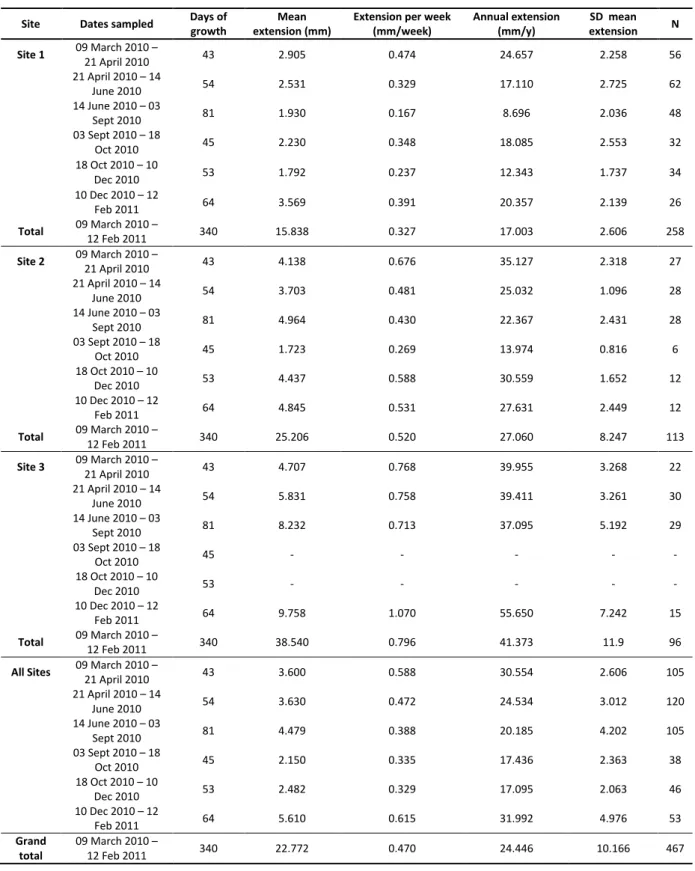
Growth rate and mortality of A. austera branches were measured at three sites of differing stand size and apparent age. This was achieved by repeated image analysis and by staining branches with the vital stain, Alizarin Red S. Both measures of growth yielded a similar linear extension rate of 24.5 mm/yr (n = 467), comparable to related species at similar latitudes. Mean branch mortality was as high as 50%, with clear differences manifested between each A. austera stand. Branch extension rates and branch mortality were inversely related between sites. Small, young stands exhibited significantly faster coral growth rates, lower mortality and a net increase in overall branch length over the study period, whilst the opposite was true of larger, more developed stands. In addition, bioerosion was determined at each site to assess its potential for carbonate removal and its destabilizing effect on reef frameworks. Bioerosion intensity was recorded as “percentage area damage” within cross-sections and “frequency of occurrence” of bioeroding organisms in coral rubble fragments (n = 120). The level of bioerosion was found to be substantial (up to 11.5% loss in weight of coral fragments over the 12-month study period) and was found to decrease significantly with a reduction in size of each A. austera stand.
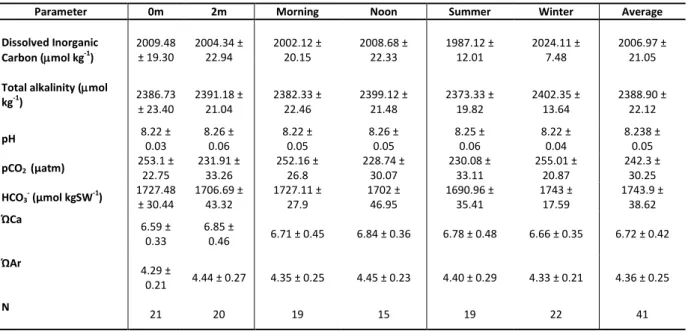
Aragonite saturation state is considered a major factor that limits the geographical range of coral reefs globally. Although previously thought to be limiting in Maputaland, mean ΩArag values of 4.40±0.29 were measured on the reefs in summer and 4.33±0.21 in winter and thus would not have limited reef development. Past studies have noted the turbulence on South African east coast reefs and its adverse effect on reef development. This was corroborated in this study with the measurement of considerable sediment resuspension (0.17 g cm-2 day-1) and regular damage to both living coral and the reef framework caused by large swells.
These results lead to the theory that Acropora austera stands senesce with increasing size and age.
Although large coral frameworks are found on the Maputaland reefs, they do not persist in the long term. High rates of sediment resuspension prevent infilling of the interstitial spaces and eventual cementation, while high levels of bioerosion lead to framework instability over time. Rough seas
further hamper accretion by physical removal of both living coral and the coral-derived framework, thus removing recent growth. This process is suspected to cause an imbalance in the carbonate budget of these marginal reefs, ultimately favoring carbonate removal over carbonate deposition.
Keywords: Acropora austera; Linear extension; Bioerosion; Aragonite; Water movement;
Sedimentation; Reef framework; Accretion
ii. Preface
The experimental work described in this dissertation was carried out at the Oceanographic Research Institute, affiliated with the School of Biological and Conservation Sciences, University of KwaZulu- Natal, Durban, from March 2009 to December 2011, under the supervision of Professors MH Schleyer and Dr D Glassom.
These studies represent original work by the author and have not otherwise been submitted in any form for any degree or diploma to any tertiary institution. Where use has been made of the work of others it is duly acknowledged in the text.
iii. Declaration - plagiarism
I, Ashley Grimmer declare that:
1. The research reported in this thesis, except where otherwise indicated, is my original research.
2. This thesis has not been submitted for any degree or examination at any other university.
3. This thesis does not contain other persons’ data, pictures, graphs or other information, unless specifically acknowledged as being sourced from other persons.
4. This thesis does not contain other persons' writing, unless specifically acknowledged as being sourced from other researchers. Where other written sources have been quoted, then:
a. Their words have been re-written but the general information attributed to them has been referenced
b. Where their exact words have been used, then their writing has been placed in italics and inside quotation marks, and referenced.
5. This thesis does not contain text, graphics or tables copied and pasted from the Internet, unless specifically acknowledged, and the source being detailed in the thesis and in the References sections.
Signed:
iv. Table of contents
1. Chapter 1 - A review of high-latitude reef processes ... 12
1.1. Introduction to High-latitude reefs ... 12
1.2. Reef Marginality ... 13
1.3. Mechanisms of reef accretion/degradation ... 15
1.3.1. Aragonite saturation state ... 15
1.3.2. Climate change ... 16
1.3.3. Storm disturbance ... 17
1.3.4. Water movement and light availability... 18
1.3.5. Bioerosion ... 19
1.3.6. Sedimentation and eutrophication ... 20
1.3.7. Coral growth and reef accretion ... 21
1.4. South African Reefs ... 24
1.4.1. Frame-building coral assemblages in Sodwana Bay, South Africa ... 26
1.5. Aims... 26
2. Chapter 2- Introduction to methodology ... 28
2.1. Measuring growth ... 28
2.2. Measuring bioerosion ... 28
2.3. Water movement ... 29
2.4. Sedimentation ... 30
3. Chapter 3 - Methods and materials ... 32
3.1. Study sites ... 32
3.2. Study species - Acropora austera (Dana 1846) ... 34
3.3. Physico-chemical parameters ... 35
3.3.1. Aragonite saturation state at Sodwana Bay ... 35
3.3.2. Sea water temperature ... 35
3.3.3. Swell height data ... 36
3.3.4. Water movement determinations ... 36
3.3.5. Sedimentation measurements ... 37
3.3.6. Sampling design ... 38
3.4. Acropora austera growth ... 40
3.4.1. Measurement of branch extension rates ... 40
3.4.2. Image analysis of in situ coral nubbins for branch extension rates ... 41
3.4.3. Reader error (APE and CV) for branch extension rates determined by image analysis 41 3.4.4. Alizarin Red S stain ... 42
3.5. Bioerosion of reef framework ... 42
3.5.1. Collection of branching coral rubble ... 42
3.5.2. Sectioning coral rubble ... 42
3.5.3. Bioerosion cages ... 43
4. Chapter 4 – Results ... 44
4.1. Physico-chemical parameters ... 44
4.2. Growth and mortality of Acropora austera ... 47
4.3. Bioerosion of reef framework ... 53
5. Chapter 5 –Discussion ... 56
5.1. Possible limits for coral reef development at Sodwana Bay, South Africa ... 56
5.5.1. Aragonite saturation state ... 56
5.5.2. SSTs and light availability ... 57
5.5.3. Physical disturbance... 57
5.5.4. Bioerosion and loss of reef framework ... 58
5.5.5. Water movement ... 60
5.5.6. Sedimentation ... 60
5.2. Acropora austera growth and reef accretion ... 61
5.3. Acropora austera mortality and loss of stand structure ... 62
5.4. Climate change and reef marginality at high-latitude sites. ... 63
5.5. Conclusion ... 64
6. References ... 67
v. List of tables
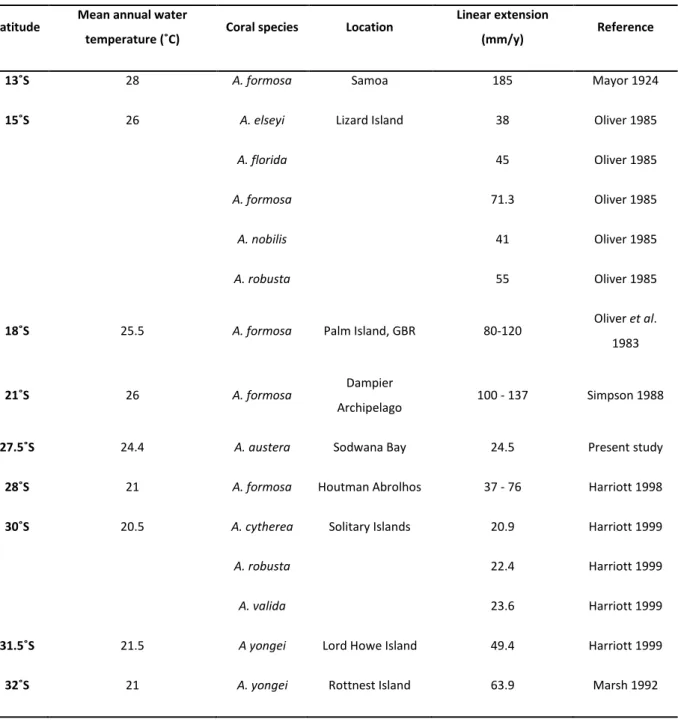
Table 1: Published data on growth rates of Acropora spp. at different latitudes and temperatures in the southern hemisphere (adapted from Harriott, 1999).
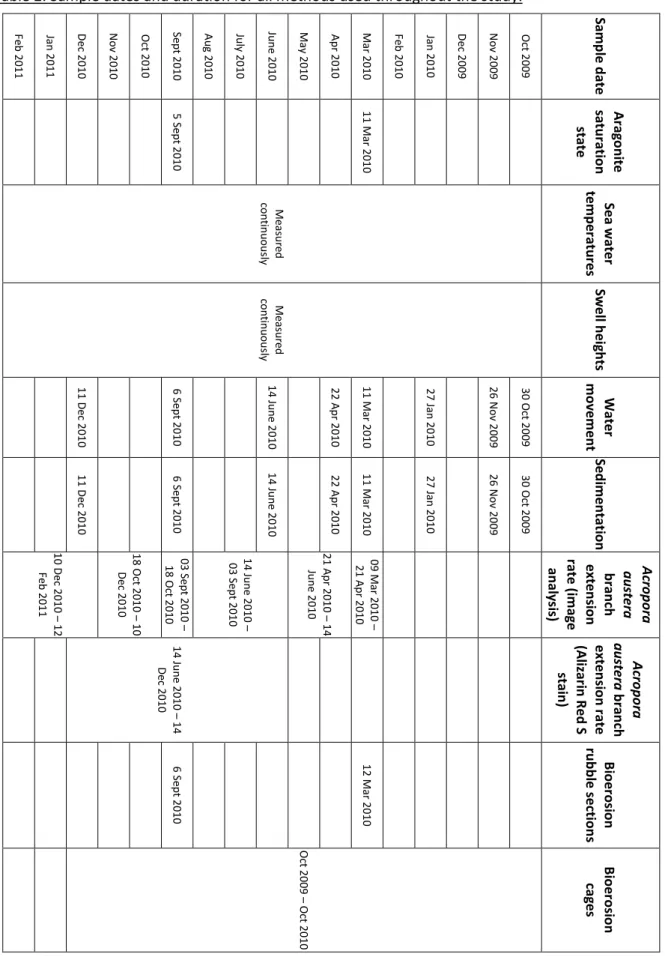
Table 2: Sample dates and duration for all methods used throughout the study.
Table 3: Average concentrations (±standard deviations) of carbon systems parameters at 0 m above the reef, 2 m above the reef, morning (7:00 am), noon (12:00 pm), summer (March) and winter (September) on TMR, Sodwana Bay, South Africa.
Table 4: measurements of water motion (percentage loss in gypsum candle length hr-1) and levels of sedimentation (g cm-2 day-1) recorded at three sites on TMR, Sodwana Bay. “IP” are measurements recorded within the Acropora austera framework and “OP” are those recorded outside each coral patch (a-d indicate differences among groups indicated by an LSD a-posteriori analysis).
Table 5: Extension of Acropora austera branches calculated from repeated image analysis at three sites on TMR, Sodwana Bay, South Africa
Table 6: Acropora austera branch mortality (%) for each sample site and sampling date on TMR at Sodwana Bay
Table 7: Number of nubbins stained with Alizarin Red S, the number retrieved and the branch extension rates.
Table 8: Bioerosion score of Acropora austera rubble fragments and the percentage area damaged by bioeroders both in situ and in “bioerosion cages”. N is the number of rubble pieces sampled, numbers in parenthesis are the total surface area of rubble sections measured in cm2.
vi. List of figures
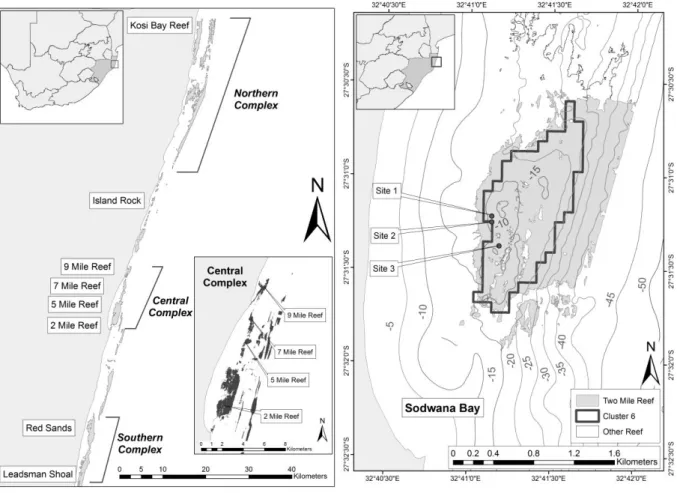
Figure 1: Seafloor map of the central reef complex at Sodwana Bay, South Africa, showing the study sites on Two-mile Reef.
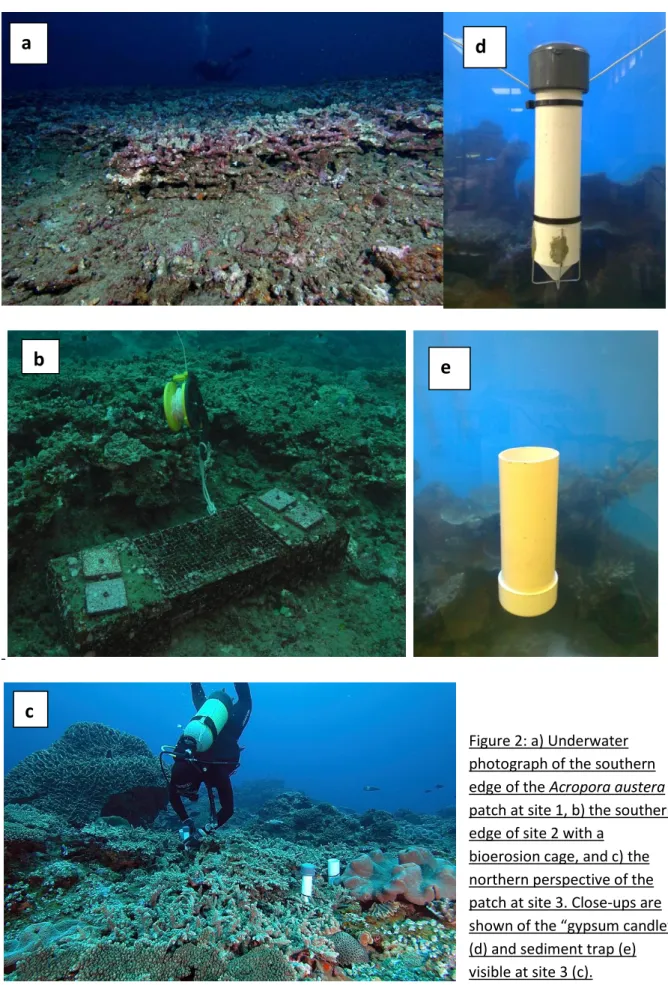
Figure 2: a) Underwater photograph of the southern edge of the Acropora austera patch at site 1, b) the southern edge of site 2 and, c) a northern perspective of the patch at site 3.
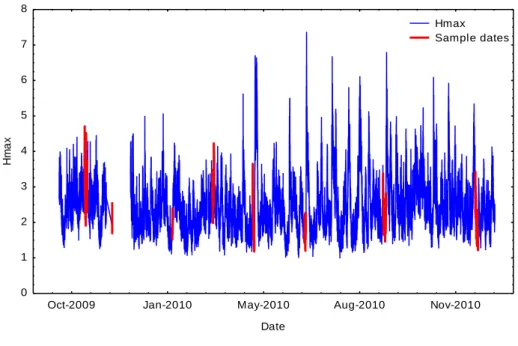
Figure 3: Maximum swell height data recorded at Richards Bay during October 2009 – February 2011. Sampling dates are represented in red. Data supplied by SADCO.
Figure 4: Box plots of swell heights (m) recorded in the Richards Bay area (200 km south) during October 2009 – February2011 relative to indices of water motion measured at Sodwana Bay over the same period.
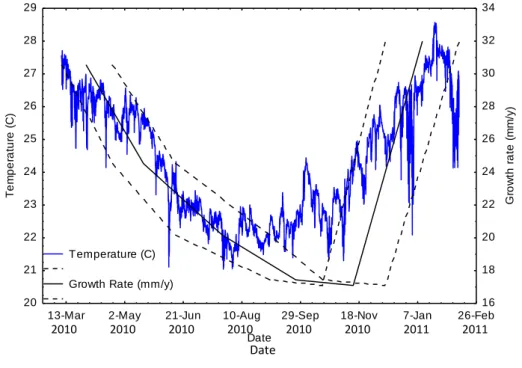
Figure 5: Relationship between mean water temperature and branch extension rates in Acropora austera on TMR, Sodwana Bay, South Africa. Dotted lines represent the branch extension rates at the start and end of each measurement period, and the solid line the extension rate at the midpoint of that period.
Figure 6: Branch extension rates of Acropora austera nubbins at three study sites on TMR, Sodwana Bay, South Africa
Figure 7: Cumulative percentage change (APC) in branch lengths of Acropora austera. a) Mean APC over time for the 12 month study period, and b) at three sites on TMR, Sodwana Bay, over
Figure 8: a) Average bioerosion score and b) percentage area damaged in Acropora austera rubble at three sites on TMR, Sodwana Bay, South Africa.
Figure 9: Underwater photographs taken at the same location at Site 1 over a 12 month period. a) April 2010, b) June 2010, c) September 2010, d) December 2010, and e) February 2011.
vii. Acknowledgements
I would like to thank my supervisors, in particular, Prof. Michael Schleyer who showed tremendous reserve and patience, guidance and understanding, and through all his subtleties gave me direction and drive. Also the “Coral Team” at ORI; Justin Hart, Phanor Montoya-Maya, Stuart Laing, Camilla Floros and Chris Wilkinson all deserve thanks for their help with various aspects of this project. Lastly I would like to show my appreciation for my father who has given unconditional support and financial aid throughout my university career.
1. Chapter 1 - A review of high-latitude reef processes
1.1. Introduction to High-latitude reefs
The majority of coral reefs found around the globe are restricted to tropical latitudes. There are, however, a number of localities where significant coral communities dominate areas outside the tropics. Some extend considerably into high-latitude, sub-tropical or marginal habitats and in several of these areas, there is significant reef accretion (e.g.: Gulf of Aqaba, Red Sea, Heiss 1995). By contrast, most high-latitude reefs are non-accretive in nature and fail to form a stable reef framework (Veron 1992; Glynn 1993; Riegl et al. 1995; Riegl 1999). By the same token, coral- dominated reefs in the iSimangaliso Wetland Park of South Africa show little evidence of a stable reef framework and no indication of any cumulative reef accretion from historic records (Ramsay &
Mason 1990; Riegl et al. 1995; Ramsay 1996).
The causal circumstances which lead to reef framework production are a subject still receiving attention, yet it is known that there are differing limits of environmental conditions required for coral growth as opposed to reef growth (Grigg 1982 a, b). The results of this inconsistency are coral communities which often occur across a much wider latitudinal range than coral reefs themselves (Grigg 1982 a, b; Eakin 1996; Reaka-Kudla et al. 1996; Harriott 1999; Guinotte et al. 2003). At high- latitude sites or in biogeographically isolated areas, rich yet non-accretive coral communities are common and often function in a similar ecological fashion to tropical reefs (For example, Oman (Glynn 1993); Northern Ryukus, Japan (Veron 1992); South Africa (Riegl et al. 1995); Arabian Gulf (Riegl 1999); Lord Howe Islands and Solitary Islands, Eastern Australia (Harriott 1992); Hawaii (Grigg 1982 a, b)). Several hypotheses suggesting possible reasons for the distinct lack of accretion in high- latitude reef systems include: reduced coral growth rates and elevated mortality at lower temperatures (Edmondson 1929; Stoddart 1969; Veron & Done 1979; Rosen 1988; Veron 1995;
Edmunds 2005), an inability to compete with benthic organisms from temperate regions (Holmes et al. 1997), low aragonite saturation states (Kleypas et al. 1999 a; Feely et al. 2009), or lowered reproductive output and/or planular settlement at high latitudes (Veron 1974). However, more recent work suggests that successful coral reproduction and subsequent recruitment occurs at high latitudes (Harriott 1992; Kenyon 1992; Babcock et al. 1994; van Woesik 1995; Glassom et al. 2006;
Wilson & Harrison 1997; Kruger & Schleyer 1998) and many hermatypic corals are able to survive at temperatures as low as 14˚C (Veron 1995).
In addition to a general decline in conditions deemed desirable for coral growth with increasing latitude (Grigg 1982 a, b), coral reef formation is largely determined by the destructive forces of physical, chemical and biological erosion (Tribollet and Golubic 2011). Chemical erosion is considered negligible (Scoffin et al 1980 in Tribollet and Golubic 2011) and thus is not included in this study. Erosion from physical disturbances such as storms, although often temporary events, can result in significant damage but often on a localized scale (Riegl 1995; 1999). Biological erosion, however, is often considered the main force of reef degradation (Tribollet and Golubic 2011), particularly in areas of increasing environmental or anthropogenic stress (Hutchings et al 2005).
Bioerosional processes play a domineering role in reef biogeochemical cycles such as sediment production and recycling of dissolved Ca2+ and C (Tribollet and Golubic 2011).
Within the tropical belt, many accretive reefs have lost their frame building corals during episodic disturbances (Riegl 2001). Temperature anomalies, Acanthaster planci predation and physical disturbance by hurricanes (Highsmith et al. 1980; Rogers et al. 1982; Perry 2001) all serve to diminish reef framework production. Most tropical reefs do, however, display the ability to recover from such disturbances, entering a continuum of “shifting steady-state mosaics” which are primarily regulated by disturbances rather than coral growth rates (Done 1999). High-latitude, marginal reefs often do not have the same resilience and frequent disturbances may result in the “switch-off” of framework production, or may have prevented it from ever being switched-on (Buddemeier 1988;
Riegl 2001). Here, the major processes which inhibit reef accretion at high-latitude, marginal sites are investigated with reference to the implications of forecasted effects of climate change on ocean chemistry and thus coral growth, survival and carbonate precipitation or removal.
1.2. Reef Marginality
Guinotte et al. (2003) discuss the complexities in defining marginality in coral reefs and coral community assemblages in terms of ecosystem function and the conditions which make a habitat marginal. They suggest three definitions by which coral reefs or coral communities may be considered marginal:
“1. In a purely statistical sense, identifying the subset of reef communities or conditions that are near the extreme of a particular suite of environmental variables or community conditions.
2. On the basis of proximity to an environmental condition known or reasonably assumed, based on physiological or biogeographic evidence, to place an absolute limit on the occurrence of reef communities or key classes of reef organisms.
3. In terms of organism and community condition (cover, composition, diversity, health) or metabolism. We address the interacting concepts of community and marginality below.”
(Guinotte et al. 2003) The coral-dominated reef communities of South Africa fit definitions two and three above. However, the grouping of reefs by the extent to which environmental conditions are limiting often reflects the low ends of their environmental distribution, being high-latitude reefs (Kleypas et al. 1999 b;
Guinotte et al. 2003). Yet stressed reefs, well within the tropics, may too be experiencing marginal conditions for either coral growth or reef accretion.
Often high or low extremes of temperature, salinity, light availability, aragonite saturation states (Kleypas et al. 1999 b; Guinotte et al. 2003) and the frequency of disturbance events (Harriott 1999;
Riegl 2001) can be shown to be stressful and thus potentially limiting for reef development. Thus, an indication of their spatial and temporal (duration and frequency) delimitation needs to be incorporated in discussions on marginality (Guinotte et al. 2003). As such, reefs that occur at high- latitude are often considered to be marginal on the basis of their proximity to one or more environmental conditions which are known to limit the distribution of reef communities, key classes of organisms or key reef processes (Guinotte et al. 2003). Yet, it may be argued that the high- latitude reefs of South Africa are not marginal in terms of reef community structure and condition (cover, composition, diversity, health) or metabolism (Riegl et al. 1995; Guinotte et al. 2003; Celliers
& Schleyer 2008), but rather in terms of limiting environmental conditions and habitat availability.
Under the current pressure of climate change, many reefs are in danger of becoming marginal as local conditions continue to decline from the “normal” environmental limits for either coral growth or reef development (Kleypas et al. 1999 b). As such, understanding marginality at high-latitude sites may provide valuable insight into future limits on coral reef development.
1.3.Mechanisms of reef accretion/degradation
Reef accretion is only possible where carbonate precipitation, through the growth of calcifying organisms and chemical cementing processes within the reef framework, exceeds that of carbonate removal (Grigg 1982 a, b; Highsmith et al. 1983). The initial stages depend on rates of skeletogenesis of the constituent frame-builders (Highsmith et al. 1983) and subsequent retention of calcium carbonate in the reef framework. However, counteracting reef growth are physical, chemical and biological destructive processes (Goreau 1959; Hein & Risk 1975; MacGeachy & Steam, 1976;
Hatcher 1997) which, if recurrent or chronic, can result in reef framework inhibition by an imbalance in the reef carbonate budget, favouring removal rather than deposition (Riegl 2001).
1.3.1. Aragonite saturation state
Aragonite saturation state is given as the ratio of the ion activity product to the stoichiometric solubility product with respect to calcium carbonate. Saturation states of greater than 1 refer to super saturation and CaCO3 precipitation can occur (Morse & Mackenzie 1990). Global sea surface waters are supersaturated with respect to all mineral phases (calcite, aragonite and high-magnesium calcite) but the degree of super saturation varies both temporally and spatially (Holland 1984;
Kleypas et al. 1999 a). Higher saturation states in the tropics are primarily due to high water temperatures, whilst lower saturation states are generally found at higher latitudes or areas of deep- water upwelling (Kleypas et al. 1999 b).
Calcite and aragonite saturation states are primarily dependent on carbonate ion concentrations in sea surface waters, and, as such, are sensitive to changes in ocean pH. Under normal conditions, the pH of ocean surface water is 8.0 to 8.2 with bicarbonate [HCO3-
] ion concentrations between 6 and 10 times that of the carbonate ion [CO32-
] concentration. However, when CO2 dissolves in ocean water, the acid formed lowers the ocean pH so that some carbonate binds with hydrogen molecules to form bicarbonate, a process termed ocean acidification. Since Ca2+ is rarely limiting, aragonite saturation states are largely determined by the availability of carbonate, described below as calcium carbonate saturation state (Ώ) and defined as:
,
where Ksp is the stoichiometric solubility product for a particular mineral phase of CaCO3 (Kleypas et al. 1999 a).
The interaction between CO2 and CaCO3 in seawater (CO2 + H2O + CaCO3 2HCO3-
+ Ca2+) alters with the addition of CO2[aq], encouraging CaCO3 dissolution, and the reciprocal when CO2 is removed (Kleypas et al. 1999). For this reason, Kleypas et al. (1999 b) suggest the transition from coral- community to accretive reef to occur only where saturation states rise above 3.4, despite super saturation of such minerals in ocean waters
Reef accretion is thus controlled both temporally and spatially by changes in sea water chemistry as a result of increased levels of anthropogenic CO2. This may significantly affect the ability of reef organisms to calcify (Houghton et al. 2001) and the ability of reefs to form stable frameworks (Kleypas et al. 2001; Guinotte et al. 2003). Corals and other calcifying organisms are dependent on calcium and carbonate ion concentrations in ocean waters to secrete CaCO3 skeletons. Reductions in ion concentrations associated with ocean acidification as a result of elevated CO2[aq] will greatly hamper corals in their growth and ability to deposit reefal structure (Langdon 2003; Jokiel et al.
2007). Coral and calcareous algae calcification rates were shown to decline by 11 – 37 and 16 – 44 %, respectively when using laboratory experiments and modelling techniques to simulate double the present CO2 concentrations (Gattuso et al. 1999; Kleypas et al. 1999 a; Langdon 2003; Marubini et al.
2003). Moreover, Kleypas et al. (1999 a, b) estimated that an average decline in reef calcification of 6 – 11 % has occurred from preindustrial CO2 levels and a further reduction of 14 – 30 % is expected by the middle of the next century. In addition to lowered growth rates as a consequence of ocean acidification, it is suggested that calcifying organisms may also produce skeletons of lower density (Buddemeier et al. 2004). Thus, not only will reef-building species be hampered in their ability to compete for space on the reef (Buddemeier et al. 2004), but will be more susceptible to physical breakage and invasion from bioeroders (Torunski 1979; Lopez-Victoria et al. 2006; Calcinai et al.
2007).
1.3.2. Climate change
Under presently forecast changes in climate, Edmunds (2005), amongst others, predicts a strong positive relationship between increases in scleractinian calcification and temperature but, more importantly, a rapid reversal of this effect beyond a narrow temperature threshold. Additionally, sub-lethal increases in temperature are expected to alter coral population dynamics through
elevated growth rates, thus favouring an increase in the relative abundance of larger colonies (Edmunds 2005). Altered coral growth rates with increased SSTs may accelerate the transition of colonies between size classes and thus alter population trajectories (Edmunds 2005). A rapid transition to larger demographic stages will have beneficial consequences, possibly resulting in enhanced reproductive output (Hall & Hughes 1996), the higher survival of new recruits (Jackson 1977), greater resistance to partial tissue recession (Hughes & Jackson 1985) and changes in coral community composition as corals inclined to eurythermal conditions will have a heightened competitive advantage (McClanahan & Maina 2003). The changing thermal regime will thus provide the latter species the possibility of range extension (Precht & Aronson 2004; Edmunds 2005).
Although these species may experience extensions in their geographic range under the influence of global climate change (Guinotte et al. 2003) and attain a competitive advantage over stenothermal assemblages, most tropical reefs are expected to become marginal in nature in the near future (Guinotte et al. 2003). Coral-dominated reefs may cease accretion and succumb to increased erosion pressure with further ocean acidification (Buddemeier et al. 2004). However, field studies have documented calcification rates in Porites spp. which have increased rather than decreased over the past century (Lough & Barnes 1997 & 2000; Bessat & Buigues 2001), and changes in community structure on a high-latitude reef in South Africa are presently favouring Scleractinea growth over Alcyonacea (Schleyer & Celliers 2003). This suggests that corals and coral-dominated communities are currently responding to the initial influences of increased temperature over that of decreased carbonate ion concentrations (Schleyer & Celliers 2003). However, deleterious effects will be manifested should ocean temperatures exceed the bleaching threshold (Buddemeier et al. 2004;
Crabbe 2008). It is anticipated that, under the divergent forces of increasing temperature and declining levels of aragonite saturation, reef development at marginal, high-latitude sites will be subject to expansions in range yet further diminished accretive ability (Kleypas et al. 1999 a, b;
Schleyer & Celliers 2003).
1.3.3. Storm disturbance
Large scale disturbances such as storm swells are known to provide episodic control over physical reef structure and the development of benthic communities (Massel & Done 1993; Riegl 2001). The partial, complete, or catastrophic removal of coral colonies and reef substratum may clear space on the reef and result in higher coral recruitment and larval settlement (Highsmith 1982) thus,
influencing reef biodiversity and facilitating community succession (Huston 1985; Wilkinson &
Buddemeier 1994).
Mass mortality of corals is a naturally occurring phenomenon and should not necessarily result in a
“switch-off” in reef framework development (Riegl 2001). Post-hurricane survival rates of branching coral fragments, as cited in Perry (2001), are often high (e.g.: Belize, 46%, Highsmith et al. 1980; St.
Croix, 35-66%, Rogers et al. 1982) and can promote the continued local dominance by branching corals by increasing colony numbers and promoting colony dispersal (Perry 2001). Thus, reef communities should have the potential to rapidly return to pre-disturbance conditions, as was the case in shallow water reef environments dominated by acroporids in the Caribbean throughout the Pleistocene and Holocene periods (Jackson 1992; cited in Perry 2001). However, reef framework development may be locally inhibited by chronic disturbances where living corals and reef frameworks are repeatedly removed by frequent storm surges, resulting in lower reef coverage (Connell 1997; Hughes & Connell 1999; Riegl 2001). Furthermore, excessive wave-stress may stunt asexual reproduction of potential frame-building species, thus limiting rates of population turnover and their ability for post-disturbance recovery (Riegl 2001). Storm-generated coral rubble is highly mobile and, unless held in place by existing reef topography or a coral framework, may be rapidly exported and/or eroded into sediment before sufficient cementation by calcareous algae has taken place (Blanchon et al. 1997). For example, coral-dominated reefs in Dubai fail to form stable rubble accumulations as storm-generated coral fragments are small, mobile and, due to a flat reef topography, are quickly eroded or exported (Riegl 2001).
1.3.4. Water movement and light availability
Water movement and availability of light are considered the dominant factors that influence hermatypic coral growth and survival on a local scale (Kaandorp 1999). Reef morphology, depth and zonation are all largely determined by these important factors (Wilkinson and Buddemeier 1994).
Water movement also has a profound influence in modulating physiological pathways at the level of individual corals (Sebens et al. 2003). Flow affects nutrient diffusion (Kaandorp et al. 1996;
Kaandorp 1999) and the encounter rate of corals with food particles (Sebens et al. 1997). Likewise, water movement enhances photosynthetic rates of the symbiotic algae and increases respiration rates within coral tissues (Bruno & Edmunds 1998). Thus, reduced water movement may decrease
coral metabolic rates and may lead to a loss of coral condition and slower growth rates in certain species (Bruno & Edmunds 1998).
Several authors have ascribed the morphological plasticity of corals to variations in light availability (Barnes 1973; Graus & Macintyre 1982) and water movement (Helmuth & Sebens 1993; Lesser et al.
1994; Kaandorp 1999). Yap et al. (1998) report faster growth of transplanted nubbins of a hermatypic coral at shallow depths with high light availability and higher water motion. Likewise, a simulation model of coral growth forms, supported by in situ observations and experimentation, yielded a gradient in the growth form of Pocillopora damicornis relative to water movement (Kaandorp et al. 1996; Kaandorp 1999). Coral colonies gradually changed from compact growth forms in turbulent environments, where water movement was optimal for nutrient supply and adsorption, to thin-branching morphologies in calm environments where diffusive processes became the dominant form of nutrient gathering (Kaandorp et al. 1996; Kaandorp 1999). In addition to nutrient adsorption and possibly prey capture (Helmuth & Sebens 1993), the authors suggested that, with increased water movement, there is an increased probability of structural damage which results in a compact growth form in coral colonies.
1.3.5. Bioerosion
There is a synergistic relationship between the primary producers in any bioeroder community, microbial epiliths and endoliths, and their grazers. Grazing of carbonate substratum hampers the stabilizing effect of calcifying benthic organisms so that the bioerosional process and subsequent breakage becomes progressive (Goreau & Hartman 1963; Torunski 1979). Should this process become dominant or unbalanced in terms of carbonate removal over deposition, reef accretion may not occur.
Bioerosive agents occupy a wide variety of taxonomic affiliations, with each group performing some function in coral reef development or degradation (Tribollet and Golubic 2011). External bioeroders, such as fishes of the family Scaridae, graze on carbonate structures in an effort to reach the epilithic and endolithic organisms living within. In this manner, large portions of coral-derived substratum can be removed relatively quickly (Goreau & Hartman 1963; Torunski 1979). Macroboring organisms also contribute to carbonate removal. These are organisms which actively penetrate into carbonate structures in search of food or shelter and thus perform a different function to external bioeroders (Tribollet and Golubic 2011).
Macroborers constitute the primary focus in the Bioerosion section of this study. They include foraminifera, sponges, bryozoans, polychaetes, sipunculids, bivalves and some crustaceans (Tribollet and Golubic 2011). Despite the wide diversity of organisms which contribute to bioerosion on coral reefs, a significant portion of such erosion is attributable to boring sponges alone (MacGeachy &
Stearn 1976; Hudson 1977). The erosive action of these organisms penetrates the carbonate substratum, resulting in the excavation of an extensive network of tunnels and cavities and the subsequent degradation of the reef (Lopez-Victoria et al. 2006; Calcinai et al. 2007). Sponges remove carbonate by both chemical dissolution and mechanical etching of carbonate chips, which are expelled through their aquiferous system into the reef environment (Rutzler & Rieger 1973).
Calcareous chip production can attain up to 22 kg CaCO3m-2 year-1and contribute up to 40% of the sediment production on coral reefs (Neumann 1966; Rutzler and Rieger 1973; Futterer 1974; Rutzler 1975). Additionally, recent studies have revealed that this can involve a rate of chemical dissolution of carbonate three times higher than that of the mechanical etching and chip production process (Zundelevich et al. 2007). In an accretive reef system, this process would be outweighed by higher carbonate deposition from calcifying organisms, such as scleractinian corals and various coralline algae, fast physical compaction by wave action and chemical solidification from rain water input (Veron 2000; Done et al. 1996). Yet, under environmental or anthropogenic stress, or in marginal habitats, many reefs fail to accrete (Harriott 1999 – Lord Howe Islands; Riegl 2003 – Arabian Gulf;
Hutchings et al 2005).
1.3.6. Sedimentation and eutrophication
High rates of sedimentation on coral reefs can have opposing effects for coral health and for reef accretion. In severe cases, excessive sedimentation has been linked to coral stress and subsequent bleaching (Riegl & Branch 1995; Meehan & Ostrander 1997), among other physiological responses.
For example, lowered growth rates of both branching and non-branching hard corals have been shown to occur with increased levels of sedimentation associated with coastal development and increased land run-off on Indonesian reefs (Crabbe & Smith 2005). A secondary effect of sedimentation stress is a change in coral growth form, favouring vertical, upright growth to prevent accumulation of sediment on the colony surface (Crabbe & Smith 2005). An associated decrease in light availability further contributes to this alteration in growth pattern (Wellington 1982; Rogers 1990). Yet certain aspects of reef accretion are dependent on the reworking of imported and locally derived autochthonous sediments into permanent reef structure (Ramsay 1996). Infilling of the
interstitial spaces within reef frameworks is a vital component to unconsolidated reef accretion, particularly where branching-coral assemblages are dominant (Veron 1995). Sediments created by both biological and physical erosion are not necessarily subtracted from reef carbonate budgets but may be retained within the framework and, if stable, can add significantly to reef development (Veron 1995; Perry 1999; Riegl 2001). However, continual resuspension of sediments, as is common in a high-energy environment, can have deleterious effects of reef health.
Increased suspended material may not only reduce light levels (Rogers 1990) and interfere with photosynthesis, but also hinder coral feeding (Bak 1978) and cause corals to expend energy on the removal of sediment particles (Storlazzi et al. 2011). Furthermore, toxic substances, such as dissolved heavy metals, may adhere to fine-grained sediments, thus assisting in their transport and accumulation on reef substrata (Saouter et al. 1993; Bastidas et al. 1999). Settlement of such sediments on corals can alter the microbial community within their surface mucosal layer and lead to a loss of health, hampered resistance to disease, and subsequent infection (Kuntz et al. 2005). In addition, nutrient loading of sea surface waters may enhance pathogen growth and thus rates of infection (Bruno et al. 2003; Smith et al. 2006). Rates of bioerosion have also been shown to increase along gradients of increased eutrophication and the associated environmental parameters (Chazottes et al. 1995). Eutrophication by the addition of nitrogen and phosphorous, often associated with increased sedimentation or land-based run-off, has the potential to increase growth rates and thus the efficacy of many bioeroding organisms (Pastorak & Bilyard 1985; Sammarco &
Risk 1990; Edinger et al. 2000). Additionally, eutrophication can alter the pattern of dominance on coral reefs in favour of various forms of algae and heterotrophic invertebrates relative to reef- building corals (Rose & Risk 1985; Sammarco & Risk 1990) and thus facilitate a change in reef community structure (Smith et al. 2006; Chazottes et al. 1995). This may disrupt the equilibrium between deposition and erosion of carbonate and can result in physical reef loss and possibly the
“turn-off” of reef framework development (Davies & Hutchings 1983; Kiene 1988; Peyrot-Clausade et al. 1995, 1999; Reaka-Kudla et al. 1996; Pari et al. 1998; Riegl 2001).
1.3.7. Coral growth and reef accretion
Growth rates of calcifying organisms do not necessarily equate to reef accretion (Buddemeier &
Kinzie 1974), nor does species richness or coral cover by major frame-builders result in a permanent reef framework (Riegl 2001). Yet both are necessary precursors for reef expansion. The development
of a reef framework results from a balance in environmental conditions that favour scleractinian growth under a no-disturbance scenario (Riegl 2001). Although corals are not the only calcifiers on coral reefs, they provide an essential framework for other benthic calcifiers to adhere to. Coral derived frameworks facilitate the accumulation of sediments and the eventual chemical cementation of the sum into a permanent reef structure (Stoddart 1969). Overall accretion results from a surplus in the reef carbonate budget whereby carbonate precipitation outweighs both physical and biological reef erosion and subsequent sediment export (Ramsay 1996; Glynn 1997). A concept discussed by Grigg (1982 a) and termed a “Darwin point” is described as a region where coral reefs are able to persist yet fail to accrete. He argues that, with a southward progression in latitude, calcium carbonate deposition is gradually offset by an increasing level of bioerosion (Grigg, 1982 a, b; Eakin 1996; Reaka-Kudla et al. 1996; Harriott 1999; Guinotte et al. 2003), and thus a transition from accretive reefs to non-accretive coral communities and an increase in marginality of reef habitat (Veron 1995; Guinotte et al. 2003). Concurrently, there is a reduction in coral growth rate (Harriott 1999; Table 1). Both factors are likely to contribute to hampered frame-building capacity and thus lowered accretion at high-latitude sites (Johannes et al. 1983).
Table 1: Published data on growth rates of Acropora spp. at different latitudes and temperatures in the southern hemisphere (adapted from Harriott, 1999).
Latitude Mean annual water
temperature (˚C) Coral species Location Linear extension
(mm/y) Reference
13˚S 28 A. formosa Samoa 185 Mayor 1924
15˚S 26 A. elseyi Lizard Island 38 Oliver 1985
A. florida 45 Oliver 1985
A. formosa 71.3 Oliver 1985
A. nobilis 41 Oliver 1985
A. robusta 55 Oliver 1985
18˚S 25.5 A. formosa Palm Island, GBR 80-120 Oliver et al.
1983
21˚S 26 A. formosa Dampier
Archipelago 100 - 137 Simpson 1988
27.5˚S 24.4 A. austera Sodwana Bay 24.5 Present study
28˚S 21 A. formosa Houtman Abrolhos 37 - 76 Harriott 1998
30˚S 20.5 A. cytherea Solitary Islands 20.9 Harriott 1999
A. robusta 22.4 Harriott 1999
A. valida 23.6 Harriott 1999
31.5˚S 21.5 A yongei Lord Howe Island 49.4 Harriott 1999
32˚S 21 A. yongei Rottnest Island 63.9 Marsh 1992
1.4. South African Reefs
The coral-dominated reefs of Sodwana Bay are the central of three reef complexes in South Africa.
The central reef complex consists of Two-, Four-, Seven-, and Nine-mile reefs (Figure 1; TMR, FMR, SMR and NMR, respectively). Their ecology and community structure have been comprehensively studied and described by Riegl 2001, Celliers & Schleyer 2003, Riegl 2003, Schleyer & Celliers 2003, Glassom et al. 2006, Celliers & Schleyer 2008, and Schleyer et al. 2008.
Figure 1: Seafloor map of the central reef complex at Sodwana Bay, South Africa, showing the study sites on Two-mile Reef.
Reefs on the north-eastern coast of South Africa constitute a diversity peak for coral communities south of the equator (Schleyer & Celliers 2003), with a notably high cover of scleractinian (26.9±15.0
%) and alcyonacean (32.0±11.9 %) species (Celliers & Schleyer 2008; Schleyer et al. 2008). The unique location of these reefs, representing the southernmost distribution of this fauna along the east African coast, results in a blend of both temperate and tropical marine organisms at Sodwana Bay and other local reefs. Lateral reef growth is prevented by a limited area of colonisable
substratum (Ramsay 1996) whilst vertical reef growth appears non-existent. Assemblages of branching corals which hold the potential to build complex frameworks and thus contribute to vertical reef growth are found in varying densities on the reefs (Riegl 2001), yet no frameworks remain permanently.
There is a global trend of decreasing coral reproduction and subsequent planular settlement with increasing latitude (Hughes et al. 2002). Low latitudes exhibit high acroporid settlement which subsides with a relative increase in the numbers of pocilloporids at higher latitudes (Hughes et al.
2002). As such, coral settlement at Sodwana Bay is dominated by pocilloporids, regardless of site or season, comprising 86% of all coral settlement with a mere 9% of settlement being attributable to acroporid species (Glassom et al. 2006). However, this trend may be an artefact of experimental methods as faviids, poritids and other families which may contribute to reef development tend not to settle on artificial settlement tiles (Glassom et al. 2006). Although both acroporids and pocilloporids display some frame-building capacity, the coral-deposited carbonate reef structure at Sodwana Bay is minimal, with sandstone base-rock often only centimetres below the reef surface (Ramsay 1996; Riegl 2001).
Kleypas et al. (1999a) modelled the physical and chemical limitations for coral growth at different latitudes. It was estimated that South African reefs fall within acceptable limits for salinity, PO4 and NO3 but within the marginal limits for light penetration, temperature and aragonite saturation state (Schleyer & Celliers 2003). The above mentioned parameters dictate coral and reef distributions on a global scale whilst additional processes are thought to regulate development at the scale of individual reefs. Disturbances shape reef structure and influence benthic organism abundance and composition. Coral bleaching events have been observed but unlike the rest of the East Coast of Africa (Obura et al. 2000) only slight bleaching occurred at Sodwana Bay prior to and including the 1998 El Nino Southern Oscillation (ENSO) event (Schleyer et al. 1999; Celliers & Schleyer 2002).
However, measureable bleaching was recorded in 2000 where protracted periods of elevated water temperature coincided with high levels of irradiance caused by exceptional water clarity (Celliers &
Schleyer 2002). Again, slight bleaching was observed in early 2011 (pers. comm. local dive charters).
A crown-of-thorns starfish (COTS; Acanthaster planci) outbreak occurred on the reefs during the 1990s (Celliers 2001). The persistence of COTS within the food-limited environment of these reefs caused significant reductions in hard coral cover over isolated areas, affecting coral community structure (Celliers 2001). Impacted areas entered post-disturbance, alternate stable-states (Celliers 2001). Perhaps the most active of all the disruptive processes occurring on the reefs of the iSimangaliso Wetland Park are frequent and high-energy storm surges (Riegl 2001). It is generally
accepted that large-scale disturbance events such as storm surges or hurricanes play a definitive role in reef ecology and geomorphology (Stoddart 1969; Highsmith et al. 1980; Rogers et al. 1982; Riegl 2001).
Periodic and chronic disturbances, such as those mentioned above, coupled with the marginality in environmental conditions (i.e. aragonite saturation state, temperature, light availability) for reef growth has led to the current theory for the lack of reef development in the area (Kleypas et al. 1999 a, b; Riegl 2001; Schleyer & Celliers 2003). However, results obtained from a constant monitoring programme initiated on the Sodwana Bay reefs over the last decade have revealed conditions which currently favour scleractinian growth and calcification (Schleyer & Celliers 2003). Yet, if the predictions by Kleypas et al. (1999 a) hold true, hard coral cover will decrease as growth rates subside to diminished aragonite saturation states in the near future, further hampering accretive ability (Schleyer & Celliers 2003).
1.4.1. Frame-building coral assemblages in Sodwana Bay, South Africa
Several coral assemblages have previously been delimited in the Sodwana Bay reef complex (Riegl et al. 1995; Riegl 2001; Celliers & Schleyer 2008). Of these, it was only the Acropora-dominated assemblage (A. clathrata, A glauca, A. branchi, A. tenuis and A. austera) which showed frame- building potential (Riegl 2001), whereby large monospecific and potentially monoclonal stands develop to a sufficient size and density (i.e. interlocking) to classify as a reef framework. As such, A.
austera was designated the focal species for this study, whereby its growth, mortality and the persistence of the underlying frameworks was monitored in situ.
1.5. Aims
In this study, it is postulated that the distinct lack of any cumulative biogenic accretion on South African reefs is a consequence of several interrelated processes. Limiting environmental parameters coupled with chronic stressors (i.e. excessive sedimentation and wave-generated surge) may result in reduced growth rates of frame-building corals. The persistence of frame-building coral populations is possibly negated by occasional failure in sexual reproduction and recruitment success,
and chronic failure to reproduce asexually (Riegl 2001). Furthermore, periodic, large–scale disturbance from storm surges can uplift living coral cover along with the underlying reef framework revealing bare base-rock and thus, re-setting reef accretion to zero (Riegl 2001). Internal bioeroder communities weaken coral framework, adding to their susceptibility and facilitating the likelihood of physical damage (Torunski 1979; Lopez-Victoria et al. 2006; Calcinai et al. 2007). Bioeroders also reduce solid substratum to sediment and contribute significantly to sediment production on the reef (Scoffin et al. 1980; Hubbard et al. 1990). Should locally-generated autochthonous sediment be retained within the reefal framework and reworked into permanent structure, reef accretion would occur. Despite this no evidence of a permanent reef structure is observed at Sodwana Bay (Ramsay
& Mason 1990; Ramsay 1996; Riegl 2001).
Therefore this study will investigate the mechanisms which prevent these reefs from forming permanent in situ frameworks in the presence of a rich coral fauna (Schleyer 2000; Glassom et al.
2006). This has relevance to our understanding of current coral reef dynamics at high-latitudes and may provide a model for the study of many of the stressors to which coral reefs are being subjected globally.
Several potentially limiting factors for reef development were assessed;
1. Aragonite saturation states were determined and compared to those stated in the literature, 2. Swell height data was collected from the nearest ADCP and temperature data from UTRs placed on the reef,
3. Rates of sedimentation were determined to assess the potential for sediment infilling of the reef interstitial spaces,
4. The level and severity of bioerosion and the quantity of CaCO3 removed was measured and is suspected of weakening reef frameworks created by Acropora austera.
The growth, mortality and dynamics of large monospecific patches of the major frame-building coral, Acropora austera, was assessed by;
1. Repeated image analysis of quadrats within each of three sites, 2. Staining nubbins with the vital stain, Alizarin Red S,
3. Levels of water movement and sedimentation were compared between sites to detect potential differences.
2. Chapter 2- Introduction to methodology
2.1. Measuring growth
Measuring growth of branching corals in the field can be difficult, requiring individual branches to be monitored through time. A commonly used, non-invasive method of growth determination utilizes image analysis of photographs taken repeatedly of the same branches (Crabbe & Smith 2002;
Crabbe & Smith 2005). However, growth estimates based solely on image analysis may introduce errors such as lens distortion or parallax in measuring the growth of branches not in a horizontal plane. Alternative methods are available, yet most also have limitations. Physical marking of colony branches with wire (Harriott 1999) or plastic cable-ties (Crabbe & Smith 2005) can damage coral polyps and may result in overgrowth by fouling organisms (attempted and abandoned in present study). Chemical marking with the vital stain, Alizarin Red S, has been used not only for corals (Harriott 1999), but also other calcifying organisms (Steller et al. 2007). Although a relatively easy and non-invasive technique, many authors report mixed results with low staining success (Blake &
Maggs 2003; Harriott 1999; Present study). Here two methods of growth determination were employed for the hermatypic branching coral, Acropora austera, chemical staining with Alizarin Red S and photographic imaging.
2.2. Measuring bioerosion
Levels of micro and macro-bioerosion have been used as an integrated, holistic approach to evaluate coral reef health (McClanahan 1997; Edinger et al. 2000), yet methods of evaluating bioerosion rates and intensities differ substantially. The rate of bioerosion refers to the quantity of skeletal material removed over time, whilst the presence of bioeroding organisms and damage done by these organisms constitutes bioerosion intensity. Methods for the quantification of bioerosion rates are described by Zundelevich et al. (2007) and Nava & Carballo (2008) and require specialized and sensitive equipment. These, although yielding meaningful data, are generally inappropriate for rapid assessments on reefs. By contrast, measurements of bioerosion intensity by internal eroders have been achieved using a number of methods. Some authors have employed blocks of coral skeleton or calcite placed on the reef to quantify eroder invasion, eroder densities and net erosion over an
extended time-frame (Kobluk & Risk 1977; Kiene & Hutchings 1994; Chalzottes et al. 1995; Pari et al.
1998; Tribollet et al. 2002). Measuring the area removed from cross-sections of branching corals or massive coral heads, of either dead rubble or living colonies, is a commonly applied method for the quantification of bioerosion intensity in modern reef assessments (e.g.: Holmes et al. 2000). This is often done using X-rays (Highsmith et al. 1983; Sammarco & Risk 1990) or photographs with subsequent image analysis (Risk et al. 1995). An inventory of bioeroders by species or eroder organism composition found within the coral skeleton is added to this methodology (Holmes et al.
2000; Nava & Carballo 2008). The use of these methods yields results which can be compared at various spatial and temporal scales to assess differences in reef ecosystem function, and may not only assist in categorizing reefs but also advance our understanding of the biogeographic and physiological limits to coral reef development within climatic and evolutionary time-scales (Guinotte et al. 2003).
2.3. Water movement
The use of dissolution rates from gypsum blocks as a non-dimensional index of water movement is a relatively simple and inexpensive technique for in situ measurements of water flow. This method was first introduced by Muus (1968) and Doty (1971) and termed “plaster balls” or, more commonly, the “clod card” technique. Subsequently, various forms of the gypsum-dissolution technique have been used for a large variety of physical-biological interactions in many disciplines (summarized by Porter et al. 2000). These initial studies have been supplemented by Jokiel (1978), Morrissey (1993) and Thompson & Glenn (1994) who investigated the effects of temperature, salinity and water volume on the rate of gypsum dissolution. In addition, the theory has been adapted to include materials such as dissimilar metals (McGehee 1997; Boizard & DeWreede 2006), orthorhombic forms of calcium sulphate (Barton & Wilde 1971), and sucrose candies (Shaughnessy 1996), among many others.
The gypsum-dissolution technique has previously been described as a method which ‘‘incorporates any water motion due to tidal as well as wind-wave effects in the same integrated measure’’
(Wildish & Kristmanson 1997) and thus provides either an absolute or, more importantly, a comparative measure of water motion. However, Porter et al. (2000) argue that the flow variables (e.g. current velocity, flow intensity, turbulence intensity, and water motion) are nonspecific, thus it is often not clear what gypsum-dissolution is measuring. They found gypsum-dissolution to be
appropriate for steady flow and fluctuating flow regimes, but not so for a mixed flow environment.
The relationship between rates of dissolution was found to be different in each flow environment and, most notably, the effects of steady flow and fluctuation intensity were not additive (Porter et al. 2000). Often a standardized calibration curve is created and used to translate a loss in weight of gypsum to water velocities. Creating such a curve requires immersion of similar blocks of gypsum in standing water or flowing water of known velocity within similar temperature and salinity ranges (Doty 1971; Jokiel 1978; Morrissey 1993; Thompson & Glenn 1994; Porter 2000). However, most authors attempting this technique report highly variable results and, consequently, a poor estimation of water velocity (Boizard & DeWreede 2006). Methods based on gypsum-dissolution have been used extensively as an index of water motion, yet have major limitations in that they provide no information regarding instantaneous flow, variable flow magnitudes or self-imposed hydrodynamic disturbances (Boizard & DeWreede 2006). However, once these limitations are taken into consideration, the method has proven useful for studies involving mass transfer, or nutrient delivery, or removal to and from organisms, and as a comparative index between study sites (Gerard 1982; Larned & Atkinson 1997; In: Boizard & DeWreede 2006). In the present study a variation of the gypsum dissolution technique was used as a method of comparative assessment of levels of water movement between several areas on the reef.
2.4. Sedimentation
Although various forms of sediment traps have been utilized since midway through the 20th century, it is only since the 1970s that modern variants have been used in shallow environments less than 40 m in depth (reviews in Bloesch & Burns 1980; Reynolds et al. 1980; Butman et al. 1986; Storlazzi et al. 2011). They have become increasingly popular as a comparative method to measure the effect of sedimentation on coral reefs and coral reef organisms (Rogers 1990; Holmes et al. 2000; Crabbe &
Smith 2005 amongst many others), assessing the impact of land-use practices (Jordan et al. 2010) and as an effective tool in reef monitoring (Wilkinson et al. 2003).
Sediment traps are used to capture a representative sample of the net vertical flux of all sediment particles in the water column over a designated period. This provides (a) an integrated rate of particle supply and (b) an indication of particle properties and sediment composition over the time of deployment (Storlazzi et al. 2011). For these reasons, sediment traps have become a standard measurement tool and an important component of coral reef studies (Storlazzi et al. 2011).
Here, levels of sedimentation were assessed as an indication of a potential stressor to local corals and to provide insight into sediment resuspension within areas of reef framework and the implications for unconsolidated reef accretion.
3. Chapter 3 - Methods and materials
3.1. Study sites
The study was conducted at Sodwana Bay within the iSimangaliso Wetland Park on the north eastern coast of South Africa. The reefs are located between 27˚and 28˚S and comprise the central of three reef complexes (Riegl et. al. 1995; Schleyer 2000). They are the southernmost distribution of extensive coral-dominated benthic communities on the East African Coast (Schleyer 2000; Glassom et al. 2006). Sodwana Bay is a high-latitude, non-accretive reef community and considered marginal in nature, it has a persistent and significant coral community comprising of scleractinian corals (43 genera comprising 93 species) and an abundance of non-accretive species (11 genera of alcyonacea comprising 39 species with 1 species of Milleporina) (Riegl 2001; Schleyer & Celliers, 2003; Celliers &
Schleyer 2007). However, these communities grow only as a thin veneer on a substratum consisting of fossilized Pleistocene beach-rock with the occasional aeolianite outcrop (Ramsay 1996).
In selecting study sites, preference was given to those located within TMR which had an established population of Acropora austera, forming large monospecific patches. Three sites were selected based on patch size and depth of the underlying coral framework. The size of each A. austera patch ranged from an estimated 6 m2 up to 20 m2. Other than the use of intrusive methods, the depth of any existing framework could not be directly measured without compromising its stability. For this reason an estimate of framework depth was used to rank sites. Site 1 was the largest with the deepest observable framework. Area coverage of the A. austera patch at site 1 was estimated to be
>20 m2 with interspersed colonies extending further. Framework depth to base-rock was 40 cm in areas where base-rock was visible and likely to be deeper in other areas (Figure 2a). Site 2 was observably smaller and less developed than site 1, with an overall size of 8 – 12 m2 and framework depth of 30 cm and less where base-rock was visible (Figure 2b). Site 3 was the smallest and least developed of all sites. Total area cover was 6 – 8 m2 with base-rock visible in most areas (Figure 2c).
Study sites were all at a depth of 10 – 14 m depth and thus subject to similar irradiance levels.
Figure 2: a) Underwater photograph of the southern edge of the Acropora austera patch at site 1, b) the southern edge of site 2 with a
bioerosion cage, and c) the northern perspective of the patch at site 3. Close-ups are shown of the “gypsum candle”
(d) and sediment trap (e) visible at site 3 (c).
a
b
c
d
e
Two-mile Reef lies 1.08 km offshore and is 2.14 km2 in length. The water depth ranges from 6 – 10 m on the shallowest pinnacles to 24 – 27 m on the fore-reef (Celliers & Schleyer 2002). The reefs afford the coastline little protection from the substantial swells and storm surges which frequent the area (Southern African Data centre for Oceanography) The Agulhas Current passes southwards at a maximum velocity of up to 1.5 m s-1 with its core situated just offshore to the continental shelf (Schumann 1988). Unconsolidated lithology in the region is predominantly quartzose shelf sand with a low carbonate content ranging from 4 to 13% (Ramsay 1996). Sediment reworking is common and highly active in depths less than 50 m due to the high-energy swell regime characteristic of the region (Ramsay 1996). Bioclastic sediments on this shelf are defined as having greater than 20%
CaCO3, of which the chief contributing components are molluscan fragments, foraminiferal tests, sclerites of soft corals and sea fans, echinoderm spines, bryozoan fragments, hard coral and calcareous algae remains, and spicules from sponges (Ramsay 1996).
3.2. Study species - Acropora austera (Dana 1846)
The genus Acropora is categorized as an important reef-building coral, particularly where the expected form of reef development is that of unconsolidated rubble accretion (Riegl 2001). Acropora austera is a common species of branching hard coral, and one of the few corals on the Maputaland reefs that form large monospecific stands with the potential to develop a complex, underlying framework. Although Buddemeier & Kinzie (1974) suggest no causal connection between coral growth and reef formation it is postulated that the persistence of a framework matrix, such as that created by A. austera, is a precursor to unconsolidated reef accretion (Veron 1995; Blanchon et al.
19979; Riegl 2001).
The coral dominated reefs of Sodwana Bay show 58.9±19.0 % total living cover with 26.9±15.0 % being hard corals, and 5.0±7.9 % of which were Acropora species (Celliers & Schleyer 2008).
Furthermore, of the 29.0±7.8 % hard coral cover on TMR alone, only 2.7±2.4 % is attributable to Acropora species (Celliers & Schleyer 2008). Acropora austera generally has a caespitose to aborescent growth form with branches given off in all directions from a broad basal attachment (Riegl 1993). This species does, however, show great plasticity in growth form depending on local environmental conditions. On sheltered reefs, branching is broadly spaced with upward growing branches, whereas on exposed reefs, branches tend towards prostrate and sprawling forms (Riegl 1993). In these areas, however, the original branching pattern is barely discernable as colonies are