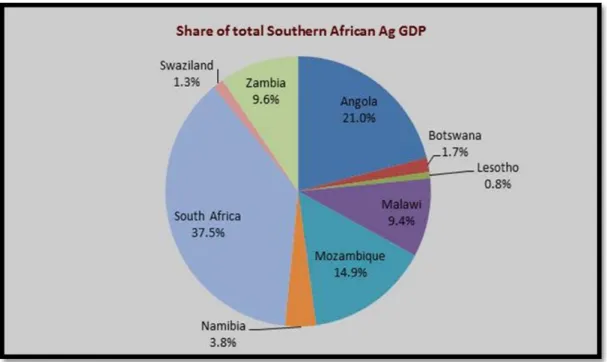
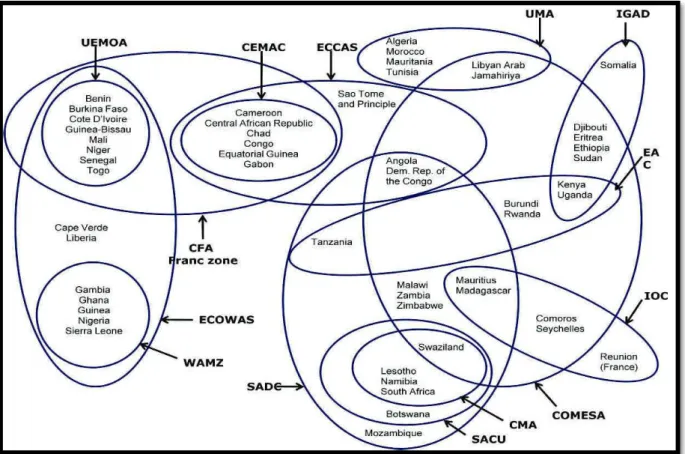
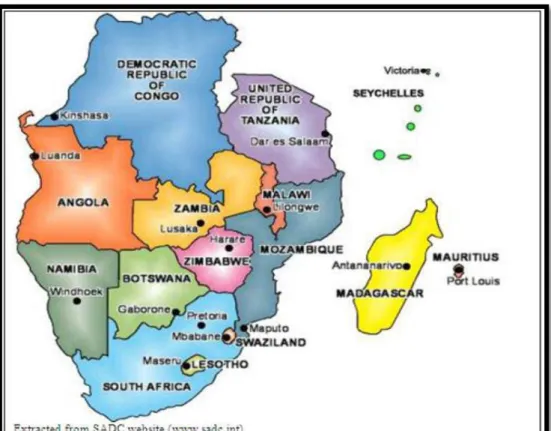
The results of this study show South Africa as the most suitable candidate for RI leadership in South Africa. South Africa is also the largest investor of capital and the largest individual investor in SADC.
BACKGROUND & INTRODUCTION
Introduction
Conceptualization of RI
Origins of RIAs
RIAs in Europe
The core objectives of the EU are to promote Union value, peace and the welfare of the people within the Union. In the EU constitutional framework, the EU objectives and the rule of law are treated to the utmost importance and used as a criterion to check the actions of the member states.
RIA’s in Other Parts of the World
In 2004, there were 144 cases brought before the ECJ, where member states were found to have failed to comply with its requirements under Community law. The total number of proceedings brought by the Commission against Member States has increased to 2,497 since 1952.
RI in Africa
Pan Africanism & RI
African Renaissance
The time that Africa has actively experimented with economic integration is estimated to be about half a century (Chauvin & Gaulier, 2002). The formation of the union of states in supranational units has been the strategy to overcome the challenges that globalization has brought.
Challenges Facing RI in African
The challenges facing RI in Africa have contributed to the lack of success of RI schemes. This followed earlier attempts by the British government to promote RI in East Africa as a way to unite countries in that region and keep administrative costs manageable.
The History of RI in Southern Africa
The SADCC was formed in the form of the 'Lusaka Declaration: South Africa: Towards Economic Liberation.' (Schoeman, 2002: 2). The formation of SADCC was "a defense mechanism by the Front Line States (FLS) to the PW Botha government of South Africa's idea of a constellation of states in the region".
Benefits of RI
While it is true that membership in a regional bloc sometimes weakens national sovereignty and independent action, the advantages of membership in a regional bloc seem to outweigh the disadvantages. This makes RI not only an African phenomenon, but involves the global community, as evidenced by the example of the EU.
The importance of a hegemon in a Regional Bloc
Politically, South Africa has played a mediating role in a number of countries in the region. Based on these factors, corporate responsibility in the SADC region would be difficult (if at all possible) without South Africa's involvement.
SA to lead or Not to Lead SADC - The Debate
Would that country be able to provide economic and political support to the region in the same way or better than South Africa. Indeed, this is a bitter pill to swallow for those who disapprove of South Africa's hegemonic status.
Theories used in the study
- Hegemonic Stability Theory
- RI Theory
- Research Methodology
- Research aims and objectives
South Africa's inconsistencies in its foreign policy and lack of representative staff at SADC headquarters have been used to bolster arguments about its inability to lead SADC. In addition, it was felt that the HST would assist in assessing whether or not South Africa is a regional hegemon and whether or not South Africa has the capacity to lead RI in the SADC region.
Significance of the study
Structure of dissertation
They will discuss the pros and cons of South Africa leading the integration process in South Africa. We will discuss an overview of existing RI communities in South Africa to assess their successes and failures.
Limitations of the Study
Conclusion
LITERATURE REVIEW
- Introduction
- The RI Concept & history
- RIAs
- What is RI?
- Contentions of South Africa as Hegemony
- South Africa’s monetary contribution to other countries
- The EU Model of integration
- Pax Africana
- Conclusion
Is South Africa the dominant power in Africa and whether it is an exploitative hegemony. The literature review chapter provides the most relevant and latest literature regarding RI in Africa in general and in southern Africa in resp.
THEORETICAL FRAMEWORK
- Introduction
- Hegemonic Stability Theory
- Historical origins
- Scholarly definitions & Characteristics of a Hegemon
- Counter-Hegemony
- RI Theory
- Definition
- Historical Origins of RI
- Economic integration theory
- Preferential Trade Arrangements (PTAs)
- Free Trade Area (FTA)
- Customs Union (CU)
- Economic Union
- Conclusion
They will identify existing gaps in the literature and provide guidance on how this study will fill those gaps.
BENEFITS AND CHALLENGES OF RI
Introduction
Consensus on RI
Benefits of RI
- Trade Creation & Trade Diversion
- Investment
- The impact on Human Development and poverty
Challenges of RI
- The unwillingness of member states to cede their sovereignty
- Overlapping membership
The EU
- Case Study: The EU Economic Integration Process
SADC
- Transition from SADCC to SADC
- SADC Finance and Investment Protocol
- Consensus to establish a Common Market by 2015
- SADC Trade Protocol
- SADC Free Trade Area (FTA)
- Formation of the AU
- Formation of NEPAD
- Progress and setbacks
Conclusion
SOUTH AFRICA’s ROLE IN AFRICA’s RI AGENDA
Introduction
The basic purpose of this chapter is to explore South Africa's role and influence in the Southern African region. This chapter presents the main prevailing arguments against the perceived role South Africa is said to play in the region. This includes a discussion of the role South Africa has played in African institutions such as SADC, AU and NEPAD.
Finally, a comparison is made between South Africa and Nigeria regarding their contributions and roles on the African continent. This discussion will define South Africa's current role in the region and thereby complete an assessment of South Africa's potential to lead the regional agenda in Southern Africa.
South Africa’s role in SADC & Africa
- South Africa in the AU & NEPAD
- South Africa’s foreign policy in Africa
- The National Development Plan 2030 (NDP)
South Africa has also been an important and active actor in NEPAD and the AU (Soko, 2007). South Africa's relationship with Mozambique is a fitting illustration of South Africa's deepening economic growth in the region. South Africa's domestic growth is strongly linked to regional and continental growth (Amos, 2010).
Conflict resolution and peacekeeping have been another pillar of South Africa's relations and foreign policy in the SADC region as well as on the African continent (Mandela, 2010). Because of this, South Africa has invested deeply in the Pan African Parliament (PAP) and the AU.
What is Hegemony?
These contributions to peacekeeping efforts did not go unnoticed; rather, they boosted the image of the country in the eyes of the international community. This is also in support of the doctrine of 'African renaissance' which has become important in South Africa's foreign affairs (Soko, 2007). A hegemon is a state that is the only one in the system that has great power.
According to Tetenyi, a country that is significantly stronger than other great powers in the system is not a hegemon because, by definition, it faces other great powers. Also important are the specific actions taken by the hegemon in promoting its own national agenda and the agenda of the region, for example efforts include: mediation efforts of the hegemon during conflicts, monetary aid, creation of institutions of interest to the region. and the placement plan within these institutions (Tetenyi, 2014).
South Africa’s character traits as Hegemon
The scholarly debate about South Africa's role in the region has been imperative and controversial. To this end, South Africa's foreign policy and diplomacy saw a fundamental change (Tjemolane, et al, 2012). South Africa's perceived hegemonic role faces a lack of unanimity; South Africa has been heavily accused of being a bully to other countries in the region and continent.
This behavior undermines South Africa's perceived role in the region and also creates a rift with other African countries, hindering the forging of a sincere partnership (Chidaushe, 2010). Langalanga (2014) challenges that the transformation of the South African economy does not weaken South Africa's role in the SADC region and the continent.
South Africa and Nigeria: Statistical Contestation for Hegemon
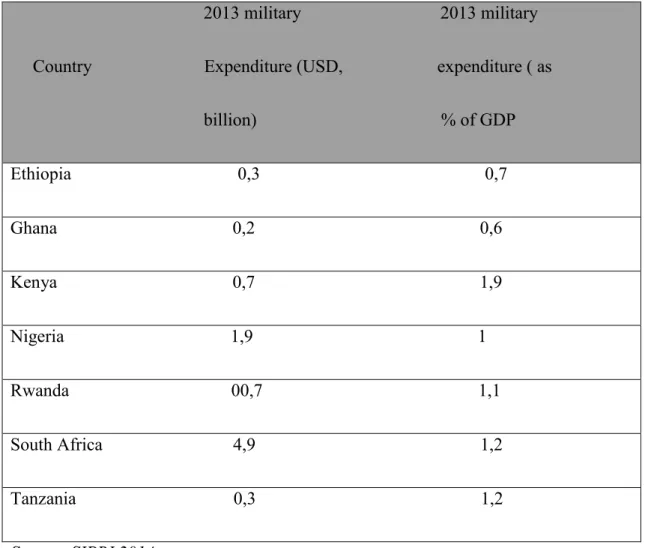
South Africa's progress is evident and the country is showing more interest in the region. With the end of apartheid, the 1996 Defense White Paper and the 1998 Defense Review formed the basis of South Africa's defense strategy. South Africa is ranked third when it comes to the best investors in Africa.
After South Africa, Nigeria is increasingly becoming the most attractive country in Africa to do business in Africa. Even though South Africa itself receives aid, it provides aid to other countries within Africa.
Nigeria’s role in West Africa
Tetenyi (2014) argues that, according to the interviews conducted for his research, given the widespread strikes by workers, foreign investors may have second thoughts about reinvesting in South Africa. However, Nigeria is also showing increasing strength in key areas and, as previously mentioned, has recently overtaken South Africa as the largest GDP on the African continent. Although Nigeria has the largest GDP, when it comes to trade and investment, the country has not yet achieved the same level of influence as South Africa (Tetenyi, 2014).
However, some countries within the continent do not fully trust South Africa's development aid because it is sometimes perceived to be motivated by an imperialist agenda (Tetenyi, 2014). However, when comparing the roles at the continental level, South Africa has played a much more defining role because of the contributions it has made.
Conclusion
CONCLUSION & RECOMENDATIONS
Introduction
Some scholars argue that RI in Africa would not be possible in Africa without South Africa's active and emerging leadership role after 1994. South Africa has the most developed infrastructure in Africa. It is the largest contributor to foreign direct investment in other countries in SADC and in African countries. continent. However, others argue that Nigeria's GDP on the African continent has no bearing on South Africa's role as hegemon of the African continent.
South Africa is the gateway to Africa and therefore remains the most preferred destination for doing business in Africa. In terms of trade and investment, both South Africa and Nigeria have contributed to development in Africa.
Conclusion
This study went on to discuss South Africa's role as a hegemon in the region as well as the continent. South Africa's actions are often viewed with a sense of distrust both in Africa and in the SADC region. As the largest investor in SADC member countries, South Africa undoubtedly has the largest GDP in the region.
South Africa contributes sixty-three percent of SADC's total GDP (Hartzenberg & Kalenga, 2015). Acceptance of the leadership role as hegemon is also missing from South Africa (Flemes, 2007.
Recommendations
South Africa's most important trading partners are those in Europe, North America and Japan (McGowan & Ahwireng-Obe, 1998). Moreover, South Africa has achieved much in the SADC region and on the continent. The Republic of South Africa and the G20: its political, national interests and priorities as a member of the process.
The role and importance of South Africa in Africa and for the development of the African agenda. Regional hegemony as an instrument for peace: an assessment of South Africa's role in regional development.