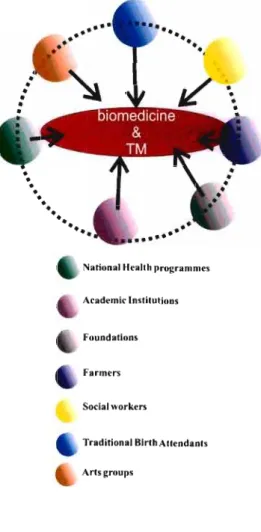
Programs developed by the National Department of Health and other stakeholders in indigenous medicine development often need to be accommodated architecturally. Joint work, especially of indigenous healers and other individuals or organizations, in the development of indigenous medicine (such collaborators are called partners).
ABBREVIATIONS USED IN STUDY
Research Background
INTRODUCTION
The two health care systems share a common goal, which is to improve the delivery of health care in South Africa. Key role players have called for a structure that accommodates both areas to facilitate collaboration, particularly by teaching practitioners about its policies and procedures.
RESEARCH BACKGROUND
- Current State of Development in TM
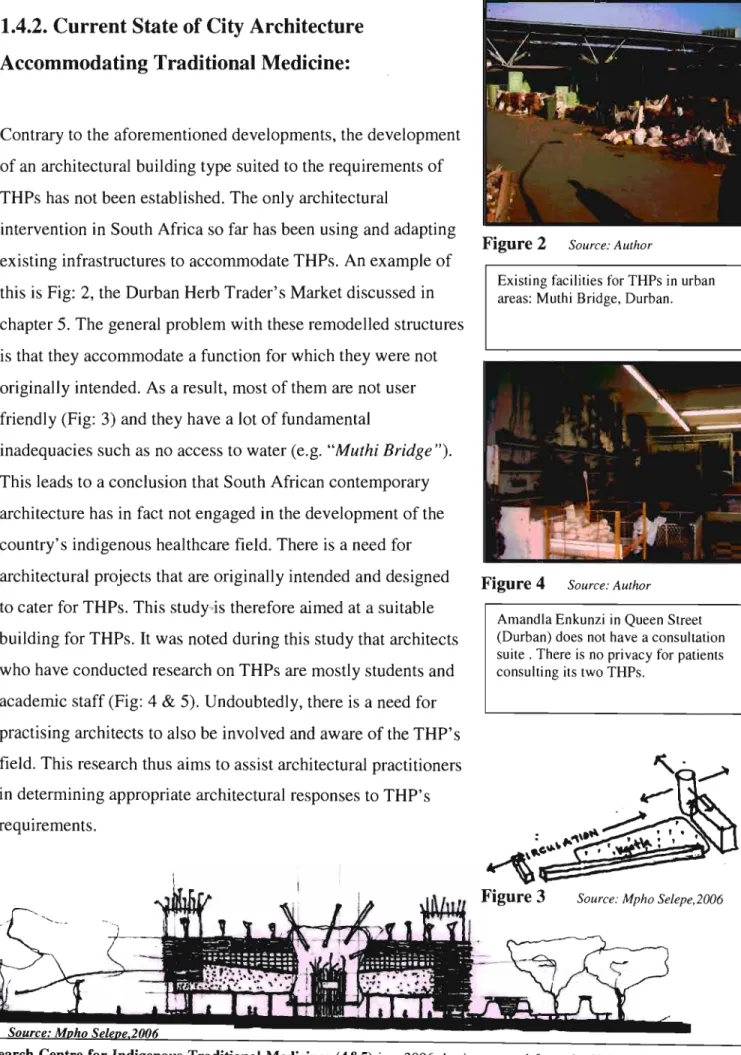
- Current State of City Architecture Accommodating Traditional Medicine
- Current State of Collaboration with Biomedicine and it's implication on space
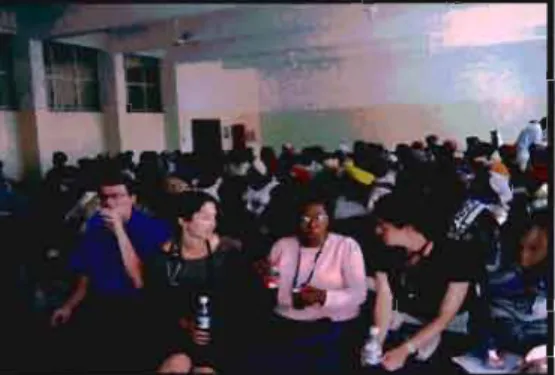
There is undoubtedly a need for practicing architects to also be involved and aware of the THP's field. Key players in the collaborative effort such as Dr Githae (2007) therefore called for programs that would encourage interaction between the two practitioners to change attitudes towards each other (Fig:7 & 8).
RESEARCH PROBLEMS
- Architecture and Distinctions between African Wisdom and African Spirituality in Indigenous Medicine
- The Need for "Place Making" for indigenous medical practitioners in Cities
- Obstacles hindering the merger of biomedicine and TM
Collaboration also plays a role in eliminating the stigma associated with the indigenous medical system. The extreme imbalances in built form quality between the two medical fields could potentially reinforce the perception of THPs as second-rate practitioners.
KEY QUESTIONS TO BE ASKED
WORKING HYPOTHESIS
AIMS AND OBJECTIVES OF STUDY
The study aims to establish sustainable architectural relationships between the workplace of Indigenous and biomedical practitioners in an attempt to facilitate fusion. Another aim of the study is to create an archetypal brief which provides architects with the necessary information to design a medical facility that takes into account indigenous healing systems in South Africa.
CONCLUSION
Ultimately, the research aims to create a physical platform where the two types of practitioners can collaborate and develop through the sharing of skills, while economizing on the use of shared facilities, thus creating an affordable and effective healthcare system for all to create. However, it is intended that the practical construction limitations do not detract from the quality of the resulting construction model of this study.
RESEARCH METHODOLOGY
- Study Areas
- Research Plan
- Primary Information
- Research Methodology
- Secondary Information
Primary sources assisted in the collection of first-hand information on the subject of African indigenous healthcare architecture. THPs and key informants in the representative organizations (of THPs) were interviewed to determine the:. ideal schedule of stay for THP's healthcare facility.
INVESTIGATION OF KEY ASPECTS TO BE CONSIDERED IN THE DESIGN OF COLLABORATIVE HEALTHCARE FACILITIES
The Role of Collaboration in Indigenous Medicine, A broad view
- Summary of Collaboration Partners and Their Roles
Traditional birth attendants who can act as special emissaries for TM in the community because they have a high level of acceptance in the community and are THPs themselves. According to ATMC-Dbn (2007), this is the model that South Africa currently uses in collaboration.
Reclaiming the Status of Indigenous Healthcare as an Architectural Specialty in its Own Right
A thorough investigation of the rich symbolism and meaning of this architectural genre is therefore essential for all architects involved (e.g. case study, Chapter 3.1).
Architecture in Maintaining the Fundamental Differences of Partners
The Impact of Spoken Language to Architectural Language of Indigenous Healers
This is a very strong word in South Africa; restores trust, pride and respect to local healers. The word Makhosi is used all the time when we greet, address and talk to native healers.
Designing for Community Engagement, Visibility and Transparency of Indigenous Medical Practice
Indigenous Healer's Approach to the Environment and the Genius Loci
Therefore, it seems that incorporating this concept of native design into urban healthcare facilities would help create a relevant feeling for both THPs and their patients. Adherence to this principle means that buildings must not only be environmentally friendly, but also site-specific so that they are part of the existing genius.
Summary and Conclusions
The Current Design Approaches in Conventional Healthcare Architecture: (Precedent Studies)
- Kokstad Private Hospital
- Bezons Clinic
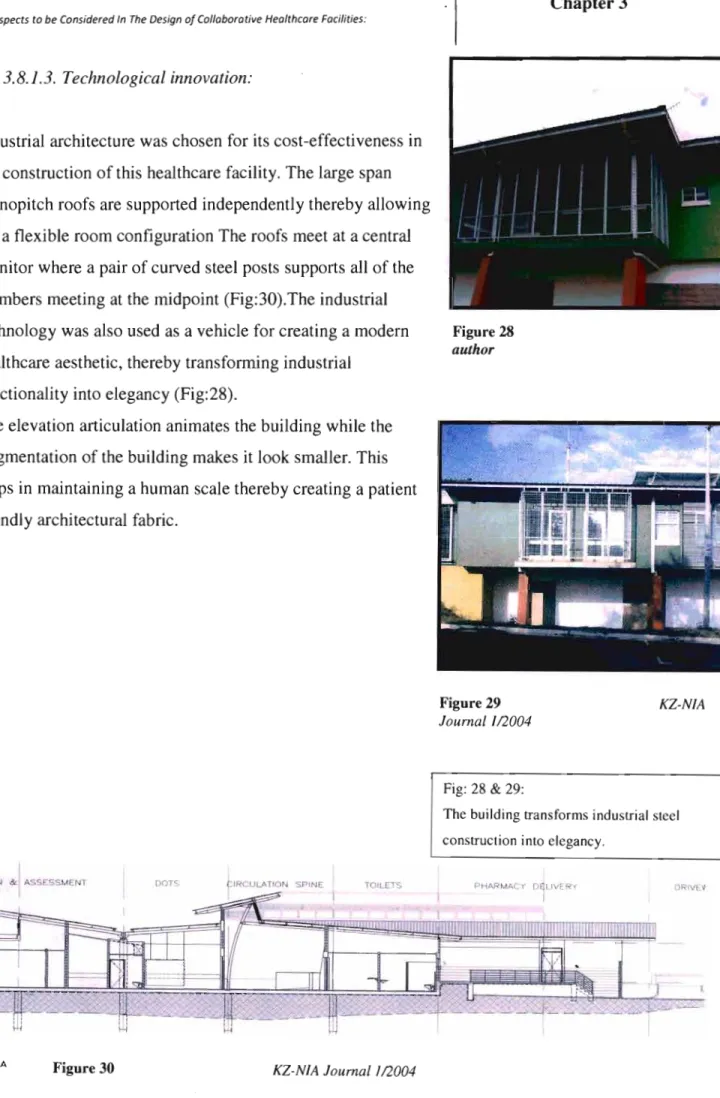
All areas of circulation are highlighted with mosaics on the floor, so patients know when they are on the 'street'. The mosaic design also tells people about the character of the street at a certain point, for example, where two 'streets' intersect, there is a circular design that resembles a traffic circle. Large-span single-pitched roofs are independently supported, allowing for flexible room configuration. The roofs meet at a central monitor where a pair of curved steel columns support all members meeting in the middle (Figure: 30). Industrial technology has also been used as a means of creating a modern health aesthetic, transforming the industrial.
CASE STUDIES
Tembe Homestead/Hospital
- Context and Overview
Both the husband and wife have individual ancestral powers and are trusted THPs from Tembe Village. Similarly, outdoor areas set aside for ceremonial gatherings and performances are galloped around a larger tree (eg fig.:48). The main family room is located at the western end of the husband's domain so that it becomes a semi-public space during ceremonies, while the second-born son's room is located at the main entrance as a symbol of protection for both the members of the house and the patients. .
ISIBAYA
MAIN ROAD
Legend
- Response to Climate
- Construction Technology
- conclusion
- Durban Herb Trader's Market
- Context and Overview
- Planning
- The Concept of a Cultural Shopping Centre
- Conclusion
- Miscellaneous Formal Shops of African Indigenous Medicines
- Overview
- Spatial Requirements
- 1clusions and Recommendations
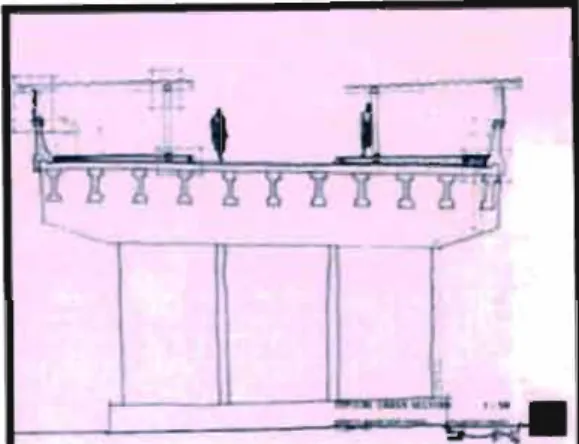
However, Durban herbalists became the leaders of the commercialization of TM in the country. On the upper floors of the Herb Trader's Market there are administrative offices where THPs pay their rent. The earthy colors and the patterns used on the floor of the Information Center evoke African medicine displayed on the bridge (Fig: 59).
CONCLUSIONS AND RECOMMEDATIONS
The vernacular architecture of THPs in rural parts of KZN has definitely demonstrated this evolution. The functioning of different types of THPs should be understood and taken care of in architectural interventions. There is a need for architects to be part of the main actors to ensure that the indigenous theories of oMakhosi are incorporated into their urban facilities.
BRIEF DERIVATION AND REQUIREMENTS FOR THE PROPOSED BUILDING
- CLIENTS
- ROLE OF PARTNERS AND MAIN AIM OF COLLABORATION
- DEFINATION OF ZONES AND SPACES OF INDIGENOUS MEDICINE
- rief Derivation And Requirements For The Proposed Building
- rie f Derivation And Requirements For The Proposed Building
- THE PROPOSED SCHEDULE OF ACCOMMODATION
Traditional Health Practitioners Board will be responsible for licensing and qualification of indigenous medical practitioners trained in the facility and selection of the practitioners to work in the proposed facility. These stores will be supplied by the THPs gardens (healthy natural food). The shops will mainly sell African food to adopt the concept of a cultural shopping center which aims to increase the tourist attraction (refer to chapter 5.2.3). This section sets out a schedule of accommodation for the proposed Indigenous and Biomedical Practitioner Collaborative Healthcare Facility (Durban).
FUNCTIONAL REQUIREMENTS AND SCHEDULE OF ACCOMMODATION
SITE SELECTION
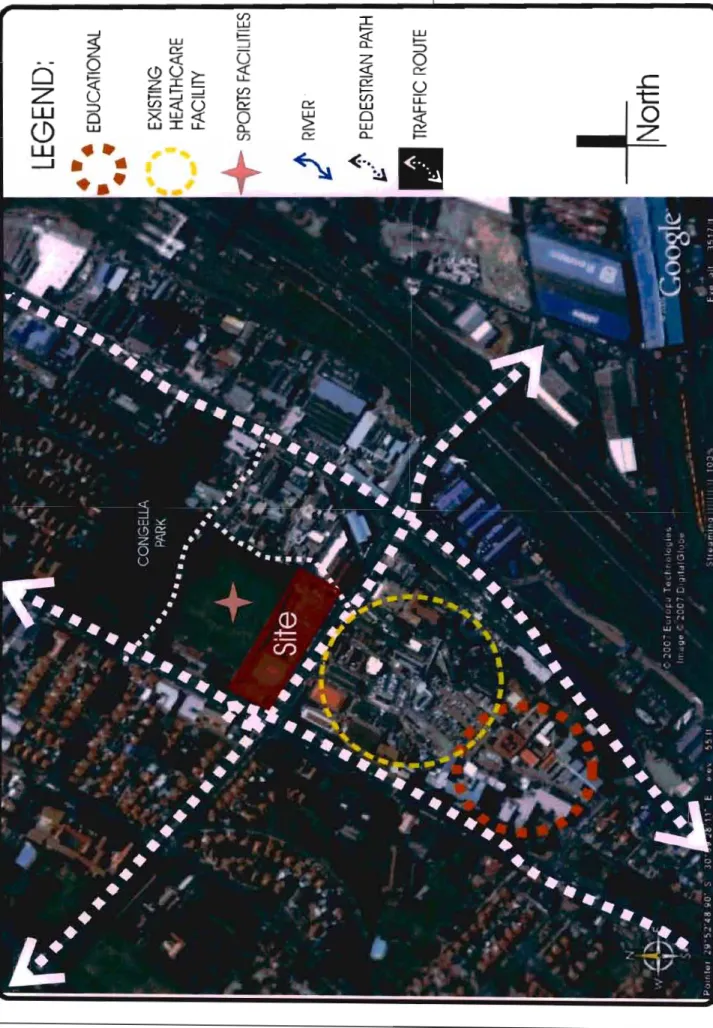
The Nelson Mandela School of Medicine plays a fundamental role in the development of indigenous medicine in KwaZulu-Natal. Gqaleni, 2007) The programs developed by this academic institution for traditional healthcare practitioners create a strong need to link the proposed healthcare facility with formal education. The Cato Manor site (priority 1) was chosen because of its location on university grounds, in close proximity to several faculties that play a role in the development of indigenous healthcare. In terms of accommodating other partners for this collaboration, the selected site has sufficient space to accommodate both the proposed spice plantation and the pharmaceutical factory.
Factors determining choice of site
The second platform is at the rear southwest part of the site and is submerged. The sunken rear platform of the site could be used for additional parking during conferences. It also provides enough space for the proposed pharmaceutical facility (future expansion). There are also no trees on the site, so no trees will be removed behind the building.
DESIGN DEVELOPMENT
Conceptual Stage 1
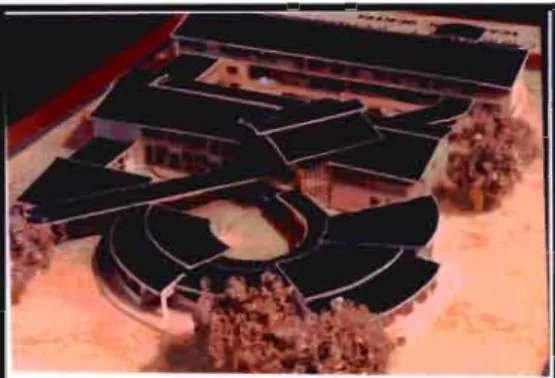
The Proposed Building
Facilitating Collaboration between Traditional Healers and Western Health Professionals in Chronic Disease Management in Swaziland, Unpublished PhD in Nursing Dissertation, University of Natal, Durban. The Importance of African Traditional Medicine to the Health Needs of Humanity, Unpublished Journal, Nelson Mandela School of Medicine, Durban.
Relevance to this study
For example, "an indigenous health worker must not perform activities such as umshunqiso (burning medicinal substances) for patients in the I C U.". The country needs them to take their place in society; Indigenous health professionals should take advantage of the doors now open to them to strengthen their profession. Ask yourself, if it is successful, who will benefit from it among the biomedical and indigenous health professionals?”.
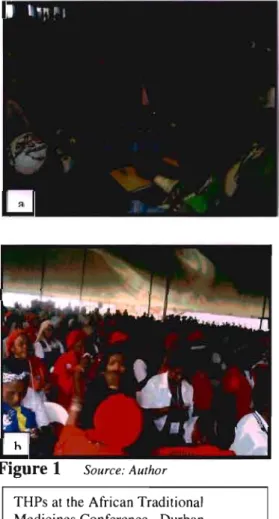
African Traditional Medicine Conference 2007, Durban The Authors' Observation and Experience
He described the architecture of the Indigenous Health Practitioners as one of the most beautiful in Africa because of the symbolism and meaning it possesses. It is similar to the architecture of the Zulu speakers referred to as Zulu architecture. The word Makhosi is used at all times when greeting, addressing and conversing with native healers, it is used in exactly the same way as "Amen" when speaking to native healers.
South African Perspectives of African Traditional Medicine
The School of Alternative Medicine and Technology
INHERENT PARTNERSHIPS IN AFRICAN TRADITIONAL MEDICINE
Thus, in perfect balance and harmony, as illustrated by the tree of life, a conscious solidarity/partnership is formed between the individual, the members of the household and beyond, which includes the ancestors. The Tree of Life and African traditional medicine can only exist sustainably if they are in perfect balance, harmony and partnership with the environment and ecosystem (Earth). Through this balance, harmony and partnership, sustainability is assured because the tree of life will produce fruit and seeds to propagate the human forest (community) and allow the transfer of apprenticeship, knowledge and wisdom of traditional healing/spiritism.
Application
WHY PARTNERSHIP IN TRADITIONAL MEDICINE?
To get a wider and more coordinated response - a better referral system between different organizations, other traditional healers and some conventional health practitioners. Fewer political constraints due to the potential for partners to speak with one voice on important issues related to traditional medical practice. More effective and creative programs of traditional medicine - by sharing lessons and experiences.
WHOM DO YOU COLLABORATE WITH IN TRADITIONAL MEDICINE PARTNERSHIPS?
WHAT TRADITIONAL MEDICINE ISSUES AFFECT THE BUILDING OF PARTNERSHIPS?
The topic of my address to this distinguished meeting is: The Relevance of Traditional Medicine to Humanity's Healthcare Needs. World Health Organization sources tell us that African traditional medicine covers about 70% of health care services in many African countries. Finally, I am grateful for the opportunity given to me to be part of this conference and the celebration of African Traditional Medicine Day.
INTERVIEWS
To run the proposed schedule of accommodation behind him as a 'client' and a key player in the Renaissance of African indigenous medicine. And the training schools can be contacted through the District Coordinators of each province in the country. Communication with eThekwini Municipality and other national players in indigenous medicine development.