Aspects of the urban ecology of the Spotted Thick-knee (Burhinus capensis)
Kyrone K. Josiah
Submitted in fulfilment of the academic requirements for the degree of
Master of Science
in the Discipline of Ecological Sciences School of Life Sciences
College of Agriculture, Engineering and Science University of KwaZulu-Natal
Pietermaritzburg Campus 2021
i ABSTRACT
With the increase in urbanisation and the negative impact it has had on biodiversity globally, there has been a recent trend in studying species responses to the unnatural changes in their habitats.
Avian species are suitable for response studies because they have the greatest mobility to move in and out of fragmented areas that compose of varying intensity in anthropogenic development and human activity. However, there is a paucity of research on specific species or select groups of species with increased urban presence, thus information about their urban ecology is relatively limited. In Africa, one such avian species that lacks urban ecological information is the Spotted Thick-knee (Burhinus capensis). The Spotted Thick-knee is a ground-nesting species that appears to be persisting in urban areas of South Africa.
This thesis aimed to evaluate aspects of the Spotted Thick-knee's urban ecology in Pietermaritzburg, KwaZulu-Natal, South Africa. The objectives of this thesis were to: (1) determine whether Spotted Thick-knees have experienced changes in range, distribution and abundance across South Africa; (2) assess and collect novel information on human-wildlife interactions that result from the presence of Spotted Thick-knees across a fragmented and human- modified landscape, which consists of varying anthropogenic developments; and (3) determine whether different land-use and anthropogenic activities influence the nesting ecology of Spotted Thick-knees breeding across an urbanised landscape.
Firstly, we extracted and examined data collected from the Southern African Bird Atlas Project (SABAP) in project one (SABAP1), which consists of data records between 1987–1993;
and project two (SABAP2), which consists of data records from 2007 and is currently ongoing as of 2021. We used the geospatial data from species sightings in both project databases to analyse historical and current trends in range and distributions of the Spotted Thick-knee across South
ii
Africa. We associated changes in Spotted Thick-knee sightings to changes in species abundance in that specific area. Furthermore, we associated areas of absence in sightings or areas where Spotted Thick-knee have only recently been sighted, as changes in range and distributions. Results suggest that there is currently an overall decrease in abundance of Spotted Thick-knees across South Africa. There has been a perceived increase in population and distribution of Spotted Thick- knees, because of the recent increase in reports of the species presence in urban areas. However, this trend likely results from the increase in intensity and scale of urban developments across South Africa, which has led to easier sighting of Spotted Thick-knees present in urban and peri-urban areas.
Secondly, we conducted monthly presence-only surveys between July 2019 and December 2020, excluding 3 months between March–May 2020 because of Covid-19 National lockdown regulations in South Africa. Direct observations were carried out at known locations of Spotted Thick-knees across the urbanised landscape of Pietermaritzburg, KwaZulu-Natal. Locations were discovered through active surveying as well as public participation. We carried out pilot observations between April–June 2019, in public areas and other areas of access where the species was observed before commencement of the study and areas determined to be suitable for the species to occur based on existing literature. For the public participation approach, we distributed newspaper articles in June 2019, with requests for information regarding Spotted Thick-knee sightings. We included 52 locations in the study, with 47 locations identified before fieldwork commenced in July 2019. Four more locations were identified during the data collection period, because of late responses from public participants. For the ‘human-wildlife interactions’
component of the study, we sent out questionnaires to participants from the newspaper article
iii
request, in an attempt to collect qualitative information regarding their perception of Spotted Thick-knees in Pietermaritzburg.
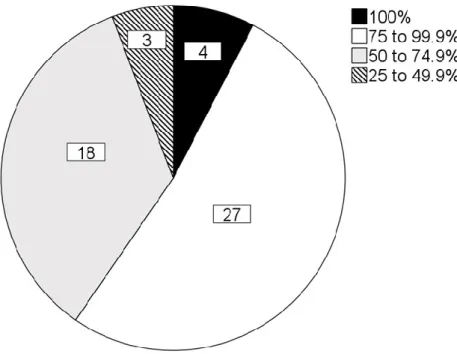
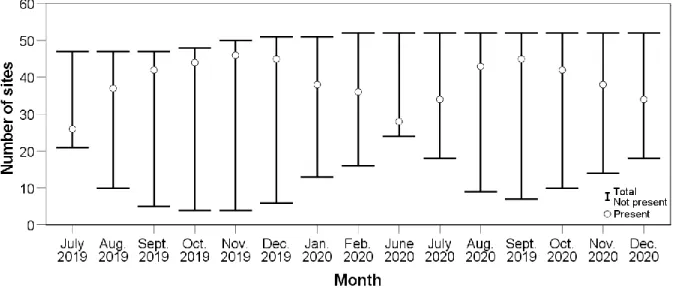
Results from the Spotted Thick-knee monthly-presence study suggest that their occurrence at known locations was not random with Spotted Thick-knee present at 30 out of 52 sites for more than 75% of the number of months in the study period; and the movements of individuals and/or pairs could be seasonally influenced because there were generally less sites with Spotted Thick- knee present during known non-breeding months compared to breeding months. Results from questionnaire feedback supported the limited existing literature pertaining to behaviours of Spotted Thick-knee. Furthermore, frequent observations highlighted Spotted Thick-knee response, or lack thereof, to the novel pressures associated with attempts to persist in anthropogenically influenced environments. Domestic dogs (Canis lupus familiaris) were identified as the most common threat followed by ‘pool drownings’, as the major ‘known’ causes of injury or death to urban-dwelling Spotted Thick-knees.
Lastly, we carried out active observations and remote monitoring of Spotted Thick-knee nest sites, which were identified through a corollary study that assessed their presence across the urbanised landscape of Pietermaritzburg. Data were collected between July 2019 and December 2020. Data were collected in the breeding season that began in July 2019. We continued to monitor sites until February 2020 as Spotted Thick-knee were historically documented to be breeding until April in this part of South Africa. However, Covid-19 National lockdown regulations prevented data collection between March–May 2020. Data collection resumed between June–December 2020 for direct observation of sites to determine whether nest site re-use took place in a subsequent breeding season. We collected information regarding clutch size and the outcome of a nesting attempt regarding whether the nesting attempt was the first or second attempt by the breeding pair;
iv
the land-use of each site; and the month of initiation for each nesting attempt. A nesting attempt was considered to be a success if at least one hatchling was observed. A nesting attempt was considered to have failed if there were no hatchings observed; nests were inactive or abandoned;
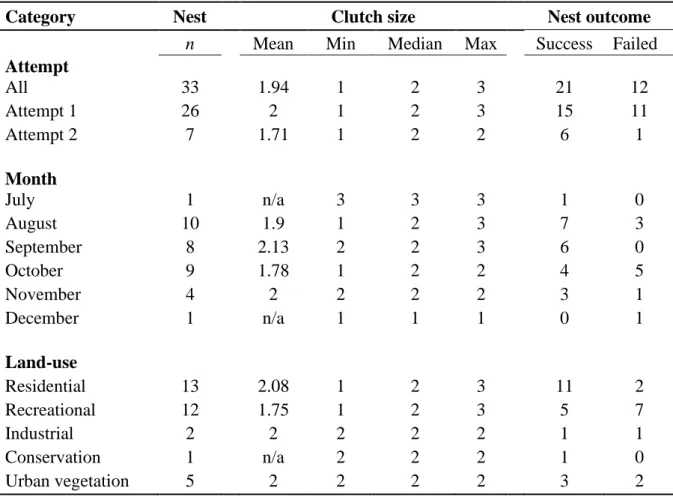
nest or eggs were destroyed; or eggs failed to hatch after the maximum incubation period known for Spotted Thick-knees which was 30 days. Results showed a significant difference between the 21 nesting attempts that succeeded and the 12 nesting attempts that failed. We investigated nest- site selection by collecting data on specific nest-site characteristics and habitat variables at each site, including the land-use each nest site was located. Data were collected within a study-defined nest-plot of 10 m in radius with the nest in the centre. The area's general land-use was recorded because land-use differs in development and anthropogenic activity, which was predicted to influence nest-site selection. We compared characteristics and measured variables associated with nest-plots to random sites that were considered to be suitable for nesting. Results showed that for select habitat variables, Spotted Thick-knee were preferential in their selection of nest sites. These preferences include: greater use of shrub-like species for nest site placement compared with nests with tree species and nests with no cover structure; more grass cover; shorter grass; shorter vegetation; and flatter slopes at nest sites, compared to random sites.
By use of an information-theoretic approach, we investigated Spotted Thick-knee nest survival as a function of daily nest survival in program MARK. Habitat variables and nest-site characteristics were considered predictor variables in nest survival and analysed in conjunction with data relevant to nest ages; nesting attempt date within a season; and independent variables such as temperature, precipitation, and observer effect on nest sites during visits. Results from this section showed the most support for models with nest age; nest date in season; the proportion of
v
bare ground cover in nest-plot; and the use of shrub-like nest-cover structures, as the most influential prediction variables relating to daily nest survival.
We remotely monitored a subsample of Spotted Thick-knee nest sites using camera-traps to investigate incubation activity within human-modified habitats. We recorded the duration of incubation in min. h-1 where the duration of the incubating adult present were summed for each hour within a 24-h period. We compared incubation activity over 12-h (day vs night) and hourly over 24-h periods. We recorded the number of disturbance events and the disturbance duration in min. h-1 within the field of view for each captured image and carried out regression analyses to determine whether these disturbances and durations influenced incubation activity. Furthermore, we identified the cause of these disturbance events where possible and categorised them as: human-
; domestic animal-; motor vehicle-; or wild animal-induced events. Results showed that incubation activity was significantly longer during the ‘day’ (12 h; 6:00 to 17:59) compared with the ‘night’
(12 h; 18:00 to 5:59); but shortest during the ‘17:00 to 17:59’ hour, over the 24-h period. We found that 32.6% of disturbance events were caused by domestic animals or pets. We found a significant relationship between disturbance events and incubation activity. Incubation activity decreased as a result of an increase in the number and duration of disturbance events.
We revisited sites between July–December 2020 to determine whether Spotted Thick-knee re-used nest-sites and found that 75.8% of Spotted Thick-knee nest sites from the 2019–2020 breeding season were re-used in the 2020–2021 breeding season, and that 80% of the re-used nest sites had a successful nesting attempt in the 2019–2020 breeding season.
Data collection for this section was notably constrained by the Covid-19 National lockdown and severity of the pandemic in South Africa. Some public participants and property
vi
owners were hesitant to have the observer visit sites frequently. Therefore, sites were visited less frequently at 14-day intervals until the end of the data collection period.
The study of Spotted Thick-knee nesting ecology highlighted the habitat and nest-site characteristics that were preferred by breeding pairs; the impact these selections have on nest survival in anthropogenically transformed environments; and some of the major risks and novel pressures associated with nesting in human-modified habitats. The main findings in this thesis provide novel information on Spotted Thick-knee in an urban ecological context. Each component of the study comprised of aspects relevant to their response to anthropogenic developments and human activity. Insights from this study are essential to providing a framework and understanding of the many terrestrial-dependent bird species that may be behaviourally similar. This study improved on our understanding of changing land-use on ground-nesting species, especially considering the paucity of current scientific literature on this group. The baseline data and preliminary findings from this study will become increasingly relevant in the future because the natural landscape continues to be removed and destroyed for human ‘benefit’. It has been suggested that many species will be at risk because of loss of habitat; therefore, conservation will be more difficult or too late if there is insufficient information and understanding of the species.
ix
COLLEGE OF AGRICULTURE, ENGINEERING AND SCIENCE DECLARATION 2 - PUBLICATIONS
DETAILS OF CONTRIBUTION TO PUBLICATIONS that form part and/or include research presented in this thesis.
PUBLICATION 1 KK Josiah & CT Downs
Using the Southern African Bird Atlas Project (SABAP) as a tool to examine Spotted Thick-knee distributions across South Africa
Author contributions:
KKJ conceived paper with CTD. CTD sourced funding. KKJ collected and analysed data and wrote the paper. CTD contributed valuable comments to the manuscript.
PUBLICATION 2 KK Josiah & CT Downs
Presence of the Spotted Thick-knee across the urban landscape of Pietermaritzburg, South Africa, and the resulting human-wildlife interactions
Author contributions:
KKJ conceived paper with CTD. CTD sourced funding. KKJ collected and analysed data and wrote the paper. CTD contributed valuable comments to the manuscript.
PUBLICATION 3 KK Josiah & CT Downs
xi
ACKNOWLEDGEMENTS
I would like to thank my supervisor, Professor Colleen Downs, for providing invaluable guidance and support for this thesis. I would also like to thank you for going beyond this role, you have continuously believed in me and motivated me, especially when I was going through the toughest of times. I am grateful to you for opening doors to a future I never imagined I could reach. Thank you for leading by example as an academic but also as an exemplary human being. Special thanks to Preshnee Singh for research guidance and equipment support. Thanks to Dr Vuyisile Thabethe, Dr Yvette Ehlers Smith, Dr David Ehlers Smith, and Mbali Sosibo for their expert guidance in select studies, assistance in the field and help with statistical analyses or GIS outputs. I would like to thank the National Research Foundation (ZA) and the University of KwaZulu-Natal (ZA) for funding. I would like to thank my fellow lab mates from the Down’s Lab for inspiration. I have seen the way you all have carried out your studies, and I hope to be just as academically competent as you all are. I am thankful to the lecturers and admin staff in the School of Life Sciences at the University of KwaZulu-Natal (UKZN), you all have done a splendid job to support my development. I would like to thank all the newspapers that distributed my article, the public participants that responded to my request for information, and completed my questionnaires, as well as the owners of private properties where the study was conducted. Each study in this thesis which required ethical clearance was approved by the University of KwaZulu-Natal Humanities and Social Sciences Research Ethics Committee (Protocol number HSSREC/00000865/2019).
This was in accordance with institutional and/or national standards such as the 1964 Helsinki declaration as revised in 2013. I would like to acknowledge and say thank you to members of the public that have contributed to the Southern African Bird Atlas Project (SABAP). Your voluntary submission of species sightings is invaluable to bird species distribution studies.
xii
I dedicate this thesis to my late grandfather Jasper Matthew Josiah, grandmother Dolores Bridget Josiah, father Craig Nolan Josiah, mother Navi Josiah, sister Cleo Cade Josiah, and daymother Ntombizanele ‘Gladys’ Sukude. I am immensely appreciative of the roles you have each played in my life. To my grandpa, you did not get to see me or any of your grandchildren make it through university for their first degree, but I hope you are happy up there knowing that I went even further just like you pushed me to. To my granny, thank you for doing more than the position required and making sure I was (am) always seen to, I will never forget the amazing person that you are. To my father, thank you for all the sacrifices you have made and for teaching me to stand up for what I believe. To my mother, thank you as well for all the sacrifices you have made and for being my shoulder to lean on. To my sister, thank you for bringing excitement into my life and doing your best to support me in all the ways you have. To Gladys, thank you for taking care of me and doing more than your job required, you have significantly contributed to my growth and development. I want to acknowledge the rest of my family for their roles because the person that I am now is the result of a group effort. To my aunties: Deveshnee; Felicia; Lerusha; Odette; René;
Rochelle, and uncles: Anesh; Feroz; Erwin; Byron; Sashen; Seelan, thank you for the roles each of you have played my life, this thesis is also a result of your efforts. To my cousins, thank you for making life fun, I hope I set a good example for you all. To my future self, I hope that you look back at this thesis if you ever feel insignificant, lost, or under pressure. I have no doubt that when you read this thesis, you will be reminded of the challenges you faced during this time and understand that there is no obstacle or challenge that is too difficult for you to overcome.
xiii CONTENTS
ABSTRACT ... I PREFACE ... VII DECLARATION 1 - PLAGIARISM ... VIII DECLARATION 2 - PUBLICATIONS ... IX ACKNOWLEDGEMENTS ... XI CONTENTS... XIII LIST OF FIGURES ... XV LIST OF TABLES ... XVIII
CHAPTER 1
1
INTRODUCTION... 1
1.1 Urbanisation and its impact ... 1
1.2 Importance of studying urban areas and the species within them ... 3
1.3 Response of species to urban areas and the process of urbanisation ... 4
1.4 Ground-nesting birds in South Africa ... 6
1.5 Spotted Thick-knee ... 10
1.6 Problem statement ... 14
1.7 Aims and objectives ... 15
1.8 Structure of the thesis... 16
1.9 References ... 17
1.10 Supplementary information ... 21
CHAPTER 2
39
THE SOUTHERN AFRICAN BIRD ATLAS PROJECT (SABAP) AS A TOOL TO EXAMINE SPOTTED THICK-KNEE DISTRIBUTIONS ACROSS SOUTH AFRICA ... 39
2.1 Abstract ... 40
2.2 Introduction ... 41
2.3 Methods... 45
2.3.1 Study species ... 45
2.3.2 Study area ... 46
2.3.3 Data collection... 48
2.3.4 Data analyses ... 49
2.4 Results ... 51
2.4.1 South Africa ... 51
2.4.2 Provinces of South Africa ... 52
2.5 Discussion ... 56
2.6 Acknowledgements ... 58
2.7 References ... 58
2.8 Supplementary information ... 61
CHAPTER 3
63
PRESENCE OF THE SPOTTED THICK-KNEE ACROSS THE URBAN LANDSCAPE OF PIETERMARITZBURG, SOUTH AFRICA, AND THE RESULTING HUMAN- WILDLIFE INTERACTIONS ... 63
3.1 Abstract ... 64
3.2 Introduction ... 65
3.3 Methods... 68
xiv
3.3.1 Study species ... 68
3.3.2 Study area ... 69
3.3.3 Data collection- Presence across the landscape ... 71
3.3.5 Public perceptions of the Spotted Thick-knee... 74
3.3.6 Data analyses ... 74
3.4 Results ... 75
3.4.1 Presence across the landscape ... 75
3.4.2 Public perceptions of the Spotted Thick-knee... 78
3.5 Discussion ... 79
3.5.1 Conclusion ... 85
3.6 Acknowledgements ... 85
3.7 References ... 86
3.8 Supplementary information ... 90
CHAPTER 4
93
FACETS OF SPOTTED THICK-KNEE (BURHINUS CAPENSIS) NESTING ECOLOGY ACROSS AN ANTHROPOGENIC LANDSCAPE ... 93
4.1 Abstract ... 94
4.2 Introduction ... 95
4.3 Methods... 97
4.3.1 Study area and study sites ... 97
4.3.2 Data collection... 99
4.3.3 Clutch size and nest outcome ... 100
4.3.4 Nest-site selection ... 101
4.3.5 Nest survival ... 104
4.3.6 Incubation activity ... 105
4.3.7 Nest site re-use ... 107
4.3.8 Data analyses ... 107
4.4 Results ... 112
4.4.1 Clutch size and nest outcome ... 112
4.4.2 Nest-site selection ... 114
4.4.3 Nest survival ... 117
4.4.4 Incubation activity ... 122
4.4.5 Nest site re-use ... 125
4.5 Discussion ... 125
4.6 Acknowledgements ... 129
4.7 References ... 130
4.8 Supplementary information ... 134
CHAPTER 5
143
CONCLUSIONS AND RECOMMENDATIONS ... 143
5.1 Introduction ... 143
5.2 Research findings and synthesis ... 144
5.2.1 Distribution trends across South Africa ... 144
5.2.2 Human-wildlife interaction across an urban landscape ... 144
5.2.3 Nesting ecology ... 145
5.3 Conclusions and reccomendations ... 145
5.4 References ... 148
xv
LIST OF FIGURES
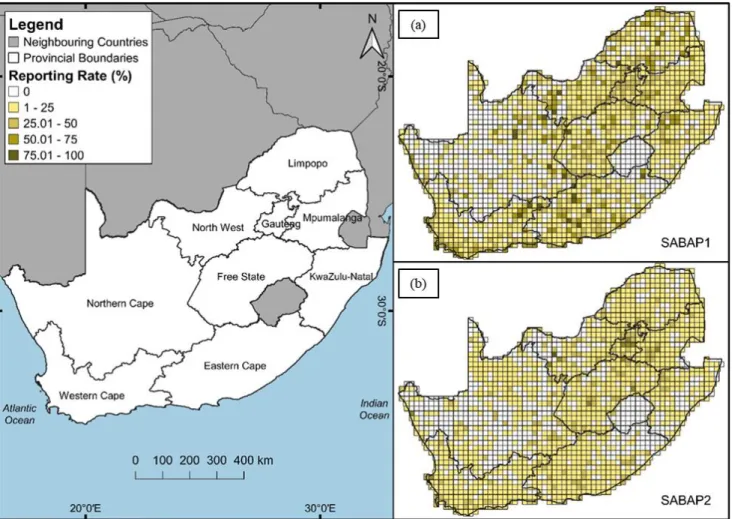
Fig. 1.1 Spotted Thick-knee adult accompanied by two hatchlings (photo credit: Rob Guest)…. 11 Fig. 1.2 Map showing the Spotted Thick-knee distribution range in Africa (area shaded in green indicates populations that are native residents) (Source: BirdLife International 2021a). ..…….. 13 Figure 2.1: Provinces of South Africa. Reporting rate percentages for Spotted Thick-knees across South Africa and Lesotho from (a) SABAP1 data recorded between 1987–1993; and (b) SABAP2 data recorded between 2007–2021 (18 January 2021). ……….…………48
Figure 2.2: Change in Spotted Thick-knees' reporting rates between Southern African Bird Atlas Project 1 (SABAP1) and 2 (SABAP2), from South Africa and Lesotho quarter degree grid cells (QDGCs; N = 1981). Changes, or lack thereof, in reporting rates from SABAP1 to SABAP2 are expressed for each QDGC whereby red-cells represent a ‘Decrease’ (C < 1); blue-cells represent an ‘Increase’ (C > 1); green-cells represent ‘Stable’ (C = 1) or no change in reporting rates; yellow- cells represent a ‘New Record’ from SABAP2 not recorded in SAPAB1; white-cells represent
‘Absent’ areas that had sighting reports of the species in SABAP1 but no sighting reports from SABAP2 surveys; light-grey-cells represent ‘Never Recorded’ areas which indicate that there was no reported sighting of the species during surveys from both SABAP1 and SABAP2; dark-grey- cells represent ‘Unsurveyed’ areas that were not surveyed for SABAP1 and not yet surveyed for SABAP2 at the time of data download (18 January 2021); and black-cells represent ‘Invalid’ cells with a total number of reporting checklists < 4 in both SABAP1 and SABAP2. ………….….. 55 Fig. 3.1 Spotted Thick-knee site locations (n = 52) included in the present study, across the urbanised landscape of Pietermaritzburg and (a) the study area in KwaZulu-Natal Province, South Africa. ……….. 71
xvi
Fig. 3.2 Total number (n = 52) of Spotted Thick-knee site locations grouped according to the percentage of months for each site where the study species was present. The percentage was calculated by dividing the number of months that a site was visited by the number of months with presence recorded for that site and then multiplying the value by 100. ……….77 Fig. 3.3 Number of sites with Spotted Thick-knees ‘present’ or ‘not present’ in the present study, relative to all site locations visited for each month. (The top-whisker indicates the total number of sites visited for each month; bottom-whisker indicates sites with study species not present, and the white dot (○) in the bar indicates sites with study species present). ………...77 Fig. 3.4 Number of reports for causes of injury or death to Spotted Thick-knees in the present study, as observed by public participants that completed questionnaires or reported incidents through other communication. ……… 79 Fig. 4.1 Spotted Thick-knee nest site locations and the land-use classification for each nest around Pietermaritzburg, South Africa during the present study. The study area location in (a) South Africa; (b) KwaZulu-Natal Province; and (c) satellite imagery overlay for improved interpretation of urban dense areas (Google Earth v7.3 2020). ………..98 Fig. 4.2 Spotted Thick-knee number of nests and nest outcomes according to (a) land-use classification; and (b) month of initiation for nest attempt during the 2019-2020 breeding season.
……….………114 Fig. 4.3 Slope degree (°) for nest sites (n = 26) and random sites (n = 26) of Spotted Thick-knee nest-plots in the present study. Bold lines in the box represent the median; boxes represent the quartile deviation; and the whiskers represent the range of values. ………117 Fig. 4.4 Spotted Thick-knee probability of daily nest survival, from the best supported model, for nests aged 1, 15, and 25 early in the nesting season on day 25 (‘D25’ in figure) compared with
xvii
nests of the same ages but initiated later in the nest season on day 105 (‘D105’ in figure) in the present study. Most nests had a shrub-like nest-cover structure and were influenced by an increase in the proportion of bare ground covering the surface of the nest-plot. ...… 122 Fig. 4.5 Spotted Thick-knee mean incubation time per hour for each hour in a camera-trap day in the present study. Shaded bars indicate hours that were within the night period whilst bars with no shading indicate hours within the day period for our study. Hour (h) labels indicate the time of start and included the duration of 59 min. 59 s. for that hour. Error bars represent mean ± 2 SD (standard deviation). ………..……….. 123 Fig. 4.6 Effect of increasing disturbance durations in minutes per hour (min. per h), on Spotted Thick-knee incubation time in the present study. ………..………….124 Fig. 4.7 Examples of camera-trap events identified as known disturbances, where Spotted Thick- knee incubation was taking place just before the disturbance where (a) shows the incubating adult which moved away from the nest shortly before the appearance of a Woolly-necked Stork (Ciconia microscelis); (b) an adult displaying defensive behaviour at an unidentified object that was perceived as a threat; (c) incubating adult moved away from nest shortly before the appearance of a domestic animal identified as a domestic cat (Felis catus); and (d) a breeding pair (bottom right corner) displaying defensive behaviour towards a domestic dog (Canis lupus) after initial disruption of incubation by the parking of the motor vehicle. …………..………....124
xviii
LIST OF TABLES
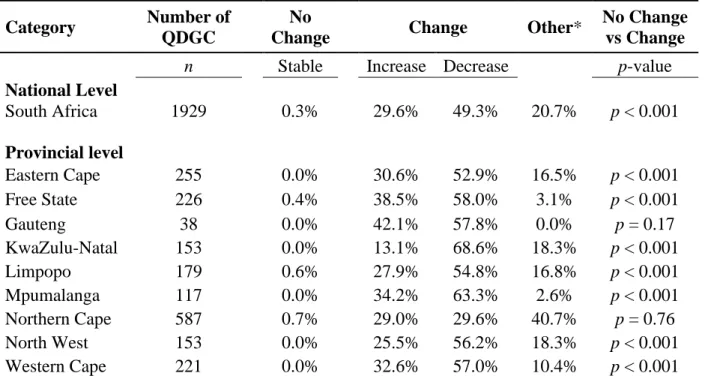
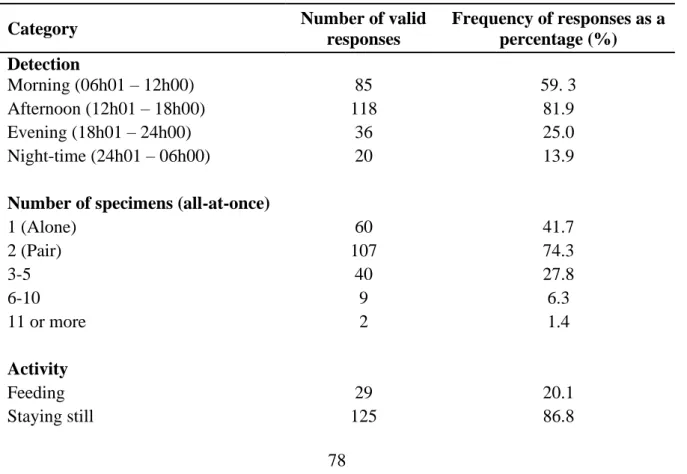
Table 1.1 Summary table for the number of ground-nesting bird species in South Africa. ……. 8 Table 2.1: Summary of reporting rate changes in quarter degree grid cells (QDGC) for South Africa at the national and provincial levels for SABAP 1 and 2 for Spotted Thick-knees in the present study. The number of cells with no change or change expressed as a percentage of the number of QDGC, which are the total number of cells for each category. ………..…54 Table 3 Number of valid responses for each question from the total number of questionnaires (n
= 144) completed and returned by public participants in the present study. Frequency of responses is expressed as percentages. ……… 78 Table 4.1 Spotted Thick-knee clutch size and nest outcome for all nests and those categorised by nesting attempt, month and land-use in the present study. ………113 Table 4.2 Spotted Thick-knee habitat variables comparison between nest sites and random sites in the present study. ………115 Table 4.3 Most supported models (ΔAICc < 2.00 units) from the stage 3 analysis of combined predictor variables for Spotted Thick-knee nest survival in the present study. ………120 Table 4.4 Coefficient estimates for predictor variables included in the most supported model from stage 3 for Spotted Thick-knee survival. Results presented by the beta estimate, standard error (SE), and 95% Confidence Intervals (CI). ………..121 Table 4.5 Relative importance of predictor variables included in the ten most supported models
(ΔAICc < 2.00 units) from stage 3 of Spotted Thick-knee survival analyses in the present study.
……….121
1 CHAPTER 1
Introduction 1.1 Urbanisation and its impact
With increasing human populations globally, there has been elevated anthropogenic effects on the planet’s environments and biodiversity (Hunter 2007; McCleery et al. 2012; Mahmoud and Gan 2018). Urbanisation has been identified as one of the most significant anthropogenic activities to impact the natural environment (McKinney 2002; Hunter 2007;McCleery et al. 2012; Mahmoud and Gan 2018). Urbanisation is defined as “the process of man altering natural landscapes for development” and is commonly used to describe the process of change, from natural areas to anthropogenic developed areas (McKinney 2006; Sih 2013; Sol et al. 2014). Different urban environments are created based on the function and needs of the human population within that area (McKinney 2006). This aforementioned process can be complicated as the different developments allow for a wide range of areas that are classified as urban. Within that range, there are areas that do not have strong pressures on species than those with various factors that increase pressures on a species' survival (Singh and Downs 2016; Widdows and Downs 2017; Downs et al. 2021). The most notable impact that urbanisation has, whether small scale or large scale, is the ability to destabilise ecosystem functioning (McCleery et al. 2012; Wang et al. 2019; Hasan et al. 2020).
Ecosystem functionality is pivotal to the survival of plant and animal species within them (McCleery et al. 2012; Light et al. 2013). Ecosystem services can be defined as “ecological processes that yield goods and services, either directly or indirectly” (Elmqvist et al. 2003; Light et al. 2013). Major ecosystem services that can be provided include water and air purification and the mitigation of droughts and floods. Biodiversity is also maintained through ecosystem services (Elmqvist et al. 2003; Light et al. 2013; Evers et al. 2018). Interruptions or loss of ecosystem
2
services through urbanisation can have a profoundly negative effect on humankind and other species (Elmqvist et al. 2003; Evers et al. 2018; Filloy et al. 2019). For example, carbon dioxide (CO2) emissions from deforestation and urban environments' development negatively affect the carbon cycle by producing more carbon than the Earth can absorb, consequently fuelling climate change (Mahmoud and Gan 2018). Urban water bodies that have been exposed to degradation because of urbanisation have compromised the ability of the land to deliver services (Light et al.
2013). The disruption of ecosystem functioning through anthropogenic activities has also led to drastic decreases in biodiversity in many parts of the world (Mahmoud and Gan 2018). For example, anthropogenic activities such as farming and infrastructural development have negatively impacted species biodiversity (Elmqvist et al. 2003; Adams et al. 2006).
Although urban environments are modified to the needs of the human population residing in them, it can be argued that they are diverse and are capable of accommodating natural functioning ecosystems, hence the growing use of the term ‘urban ecosystem’ (Wilby and Perry 2006; Davis et al. 2011; Wu 2014; Barot et al. 2019; Rivkin et al. 2019). Land-use differs greatly depending on the use and the activity on the land, which in turn, creates fragmented areas of different habitats resulting in a mosaic of natural and urban areas (Alberti et al. 2003; Adams et al.
2006; Wilby and Perry 2006; Davis et al. 2011; Wu 2014; Barot et al. 2019; Rivkin et al. 2019).
There has been an increase in the need to study urban areas and the systems within them, and this has led to the field known as ‘urban ecology’ (Wu 2014; Barot et al. 2019; Rivkin et al. 2019).
There has been a sharp rise in the number of studies that incorporates anthropogenic activity and human-made environments as a factor of influence compared with those studies that strictly focused on natural ecology (Alberti et al. 2003; Wilby and Perry 2006; Benton-Short and Short 2008; Ramalho and Hobbs 2012; Barot et al. 2019; Rivkin et al. 2019). Urban ecology has
3
developed considerably as a field of study globally, with an increased focus on how species persist in urban environments (Wu 2014; Barot et al. 2019; Callaghan et al. 2019; Rivkin et al. 2019).
1.2 Importance of studying urban areas and the species within them
There are many habitats where humans and animals interact and coexist, but none are as anthropogenically complex, as that of an urban area (Marzluff et al. 2008; Sol et al. 2013). These urban areas may seem uninhabitable by other species; nevertheless, fauna and flora species are found in these fragmented areas. Hence, it is important to understand these areas because they are now identified as transformed habitats for many species (Filloy et al. 2019; Fontúrbel et al. 2019).
If these newly transformed habitats are mismanaged, it will negatively impact many urban- persisting species, and conservation efforts will need to be put in place (Hobbs et al. 2009; Filloy et al. 2019). Therefore, the sooner these transformed habitats are understood, the more informed decision-making will be, especially from a conservation perspective.
Conservation is of increasing importance because of the negative impacts’ humans have on biodiversity. For example, urban biodiversity has been in the conservation limelight for many years, focusing on conservation efforts in urban areas like cities (Hobbs et al. 2009; Evers et al.
2018). Anthropogenically influenced environments can generally not be restored to their former state (Evers et al. 2018). Anthropogenic land transformation has become an inevitable part of the Earth's future, which raises the requirement for further studies on urban environments and the species within them (Evers et al. 2018). Understanding how anthropogenic activities change and influence the natural environment can better conservation practice in the future (Hobbs et al. 2009).
The need to understand these newly transformed habitats and the interactions of species of fauna and flora within them has become of increasing importance (Alberti et al. 2003; Adams et
4
al. 2006; Wilby and Perry 2006; Davis et al. 2011; Wu 2014; Barot et al. 2019; Rivkin et al. 2019).
Studies on urban ecology provide insight into how species have reacted and will react to increasing urbanisation which will aid in better decision-making with regards to actions that we previously perceived as benefits without consequences (White et al. 2005; Garden et al. 2010; Ramalho and Hobbs 2012; Wu 2014; Barot et al. 2019; Rivkin et al. 2019).
1.3 Response of species to urban areas and the process of urbanisation
Although many species of fauna and flora are adversely affected by urbanisation, some species have been shown to adjust to urbanisation changes (McKinney 2006; Shochat et al. 2010; Sol et al. 2013). Furthermore, some species persist or thrive in these modified environments, namely:
urban adapters and urban exploiters. Urban adapters are those species that are new to or persist well in urban environments whilst taking advantage of similar or even identical resources found in their natural environments (Hunter 2007; Filloy et al. 2019; Fournier et al. 2020). Urban exploiters are often the focus of research in this field of study because species associated to this group not only survive in these fragmented environments; instead, they thrive in them by making use of ‘urban’ constructs and resources (Hunter 2007; Filloy et al. 2019; Fournier et al. 2020).
Species that persist in urban environments have to adapt at a ‘rapid’ rate because of the increase in risks and changes that they face; otherwise, they become threatened or locally extinct (Kark et al. 2007; Lowry et al. 2013; Sol et al. 2013; Filloy et al. 2019; Fournier et al. 2020). In addition to natural challenges such as predation and competition, other challenges are characteristic of urban areas, such as human disturbance (McKinney 2006; Filloy et al. 2019;
Fournier et al. 2020). Most of the well-known urban exploiter species are generalists in that they have a wide tolerance range of environmental conditions, because of their ability to utilise other
5
less preferred resources when those that are most preferred are inaccessible (Lowry et al. 2013;
Callaghan et al. 2019; Filloy et al. 2019). Through various studies, it has become apparent that what is common and most certainly essential to successful urban adapted animal species, is that they display changes in some or all of the following aspects, namely: habitat use, ranges, movements, foraging and reproduction (Barot et al. 2019; Callaghan et al. 2019; Rivkin et al.
2019). The study of these different characteristics in individual species or communities allows for valuable ecological information to be attained such as the importance of mobility (Bradsworth et al. 2017; Barot et al. 2019; Rivkin et al. 2019).
Regarding terrestrial vertebrate species, mobility is key to survival in urban environments hence many reptiles and mammals that thrive in these environments are generally small in size (Bradsworth et al. 2017; Barot et al. 2019; Rivkin et al. 2019). Examples of urban terrestrial exploiters include racoons (Procyon lotor), tropical house geckos (Hemidactylus mabouia) and kit foxes (Vulpes macrotis) (Kark et al. 2007; Lowry et al. 2013). Examples of urban terrestrial exploiter species found in South Africa are the small-spotted genets (Genetta genetta) (Bateman and Fleming 2012) and the large-spotted genet (Genetta tigrina) (Widdows and Downs 2017).
Animals that fly, such as most bird and insect species, are assumed to be able to traverse urban environments relatively easily in comparison with terrestrial species, although some bird and insect species have also been negatively impacted by urbanisation, especially those that are known as habitat specialists (Marzluff 2001; Isaksson 2018; Guenat et al. 2019). There has been a recent trend in studying avian species because they have the greatest mobility to move in and out of these areas (Callaghan et al. 2019; Filloy et al. 2019; Rivkin et al. 2019). There is a paucity of research on specific species; thus information about their urban ecology is relatively limited. The literature that exists is partially biased since it is mostly composed of studies from Europe and the
6
Americas, which is problematic because major urbanisation developments and changes are currently occurring in Africa (Warren and Lepczyk 2012). However, in South Africa, there are some bird species that are well documented as urban exploiters such as Hadada Ibis (Bostrychia hagedash), Pied Crows (Corvus albus), Egyptian Geese (Alopochen aegyptiaca), Rock Doves (Columba livia) and several raptor species (Greenwood 2007; McPherson et al. 2015; Callaghan and Brooks 2016; Singh and Downs 2016).
Although there have been several general studies (morphology, physiology, behaviour) on urban terrestrial bird species, relatively few have investigated urban terrestrial bird species' ecology. The global number of identified species in an urban context has relatively few terrestrial bird species studied in this context. Most terrestrial species can fly whereas the rest cannot, and as a result, they are fully dependent on the land e.g., Ostrich (Struthio camelus). Even those terrestrial species that can fly are dependent on the land for some major part of their life cycle (feeding and/or breeding), which has led to their inclusion in the reproductive behavioural group of species that are identified as “ground-nesting birds” (Somveille et al. 2019). There is an increase in the importance of studying ground-nesting birds because of urban expansion, which results in the decline of natural vegetation and natural land, which are two environmental factors they are highly dependent on for survival (Callaghan et al. 2019; Somveille et al. 2019).
1.4 Ground-nesting birds in South Africa
Bird species belonging to the class Aves are the most commonly known fauna to occupy the Earth’s atmosphere out of all animal classes. However, birds are not only found in the air as select species thrive in aquatic habitats which are known as semi-aquatic species, whilst some species have limited flight capability, or are not able to fly at all, which are known as terrestrial species
7
(Roots 2006; Brusatte et al. 2015; Rico-Guevara et al. 2019; Tobajas et al. 2020). The flightless group includes all species from the paraphyletic group ‘ratites’ (e.g., order: Struthioniformes) and some species within the orders: Anseriformes; Galliformes; Podicipediformes; Pelecaniformes;
Sphenisciformes; Coraciiformes; Ciconiiformes; Gruiformes; Mesitornithiformes;
Charadriiformes; Falconiformes; Psittaciformes; Columbiformes; Caprimulgiformes;
Strigiformes; and Passeriformes (Roots 2006; Rico-Guevara et al. 2019; Tobajas et al. 2020). A common trait amongst all bird species is that they depend on land in some aspect of their life cycle such as breeding (i.e., nesting, development into adulthood etc.); and/or survival (i.e., diet resources, protection against predation etc.) (Alerstam and Högstedt 1982; Isaksson 2018; Tong 2020). It is apparent that the land is largely utilised for breeding and nesting by most species, but it is vital to the survival of all bird species (Alerstam and Högstedt 1982; Isaksson 2018; Tong 2020).
Although all bird species use the land or material from the land for their nesting habits, there are various ways in which birds’ nest (Alerstam and Högstedt 1982; Gould and Gould 2012;
Tarboton 2014; Tong 2020). There are certain species which do not have a nest structure and may lay eggs on the bare ground, but most species have actual nest structures constructed from various materials such as mud, plant matter, as well as their saliva (Gould and Gould 2012; Tarboton 2014;
Tong 2020). Apart from the actual nest structure, another key element is the nesting habit which describes ‘where’ and sometimes ‘how’ the nest site is chosen and/or constructed (Gould and Gould 2012; Tarboton 2014; Tong 2020). These nesting habits are categorised as: no nests;
floating; platform (including ledges and cliff edges); burrow; mound; brood parasitic; ground;
foliage/vegetation supported and cavity (excavators’ and those that use pre-existing cavities, including cliff faces) (Gould and Gould 2012; Tarboton 2014; Tong 2020). In many cases, the
8
ground-nesting category incorporates other nesting habits because of interrelating features.
Furthermore, it could also be because of the lack of clarification of what constitutes “ground- nesting” as this term still does not have a specific, defining criteria. It is not only their nesting habits but also a paucity of general ecological research carried out on “ground-nesting” that has led to this investigation, especially in an avifaunal rich region such as South Africa.
South Africa has over 720 bird species that are either resident, naturalised or annual breeding visitors with over 50 endemic species to the region (Taylor and Peacock 2018).
Approximately 211 of those 720 species have been observed to have successfully bred by making use of ground-nesting habits.
Table 1.1 Summary table for the number of ground-nesting bird species in South Africa.
Number of solely ground-nesting species 157
Number of species that have ground-nesting and other nesting habits 54
Total 211
Table 1.1 above, summarises the numbers of catalogued ground-nesting species that have been verified to breed in South Africa (Supplementary information Table S1.1). The supplementary information was compiled from the various bird guides book and cross-referenced with the latest records from BirdLife International’s online database (Hockey et al. 2005; Tarboton 2014;
BirdLife International 2021a, 2021b). The supplementary information includes species variations mainly because not all variations are found in the region and/or not all variations of a species may conform to the same nesting habit (Supplementary information Table S1.1) (Campbell and Lack 2013). For the purpose of this compilation regarding species that breed in South Africa
9
(Supplementary information Table S1.1), the following characteristics and/or conditions were taken into consideration for the species to be considered as ‘ground-nesting’:
• Depressions/scrape(s) (both by the bird species direct action or by other actions/events such as a depression created by a large animal footprint) in the ground where eggs are laid, or eggs laid on bare ground.
• Mounds, burrows, and cavities in low ground areas and embankments (not in trees or other vegetation) were considered ground-nesting forms.
• If there is an actual nest structure, the nest must comprise of unattached/dead material and must be placed directly on the ground or the mound, or in a burrow.
• If there is a platform, it must comprise of unattached/dead material directly in contact with the ground.
• Species with only foliage supported nests that were supported by live vegetation were not considered as ground-nesting.
• Brood parasitic nesting species were not considered, especially because no recorded brood parasite species have hosts that are strictly ground-nesting species.
• Species with nests solely on cliff faces/edges were not considered as ground-nesting.
• No inclusion of domestic bird species e.g., the Chicken (Gallus gallus domesticus).
Due to the occurrence of numerous ground-nesting species in South Africa (Table 1;
Supplementary information Table S1.1), there is a need to further investigate this “group” and collect new information on these species’ or contribute to the limited knowledge pool at present.
It is especially important because human activities will potentially be a greater infringement on their natural habitats in the foreseeable future. Some of the ground-nesting species may have successfully survived, if not persisting, in urban areas but there is little evidence of this because of
10
a lack of study. In South Africa, one such ground-nesting species that lacks urban ecological information is the Spotted Thick-knee (Burhinus capensis) especially in Pietermaritzburg (KwaZulu-Natal Province) where there are increased sightings in urban areas.
1.5 Spotted Thick-knee
The Spotted Thick-knee belongs to the order Charadriiformes in the Burhinidae family and is a native species to the continent of Africa, commonly occurring in central (mostly on the western side) to many parts of southern Africa (Hockey 2005; Hume et al. 2019; SABAP2 2021). There are four subspecies of Spotted Thick-knee namely: B. c. maculosus (Senegal to Eritrea and Somalia, and south to Uganda and Kenya); B. c. dodsoni (coastal Eritrea, Somalia and Arabia); B.
c. damarensis (Angola, Namibia, Botswana and the northwestern parts of South Africa); and B. c.
capensis (Kenya to South Africa and on the western side of the continent from Zambia to Angola) (Hume et al. 2019; SABAP2 2021).
The Spotted Thick-knee is sometimes known as a shorebird or wader species which are bird species that are characterised as such because of populations commonly being found along the coastal shorelines, or inland near mudflats (Hockey 2005; Hume et al. 2019). However, natural populations have been located in savanna, grassland and desert areas in many parts of Africa, particularly in South Africa (Hockey 2005; Hume et al. 2019; SABAP2 2021). They are a nocturnal species that are relatively sedentary during the day. They can fly but spend most of their time walking on the ground (Hockey 2005). They are mostly resident; however, there have been instances where populations that occur in high rainfall areas, have migrated to drier regions during summer rain periods (e.g., Zimbabwe) (Hockey 2005). This nomadic behaviour is a response to
12
The Spotted Thick-knee is a monogamous species, but if one partner dies, the living partner will find a suitable replacement (Hockey 2005; Hume et al. 2019). They are not a sexually dimorphic species except for their difference in sexual orientation, thus not portraying any other clearly defined difference from male and female individuals (Hockey 2005; Hume et al. 2019).
They generally breed in spring or early summer but breed from August to April in South Africa and can lay up to three broods in a breeding season (Hockey 2005; Tarboton 2014). They are ground-nesting and lay eggs that are light brown-grey with brown speckles, in a bushy area or in shallow scrapes on the ground that they may fortify with grasses, feathers, and twigs (Hockey 2005; Tarboton 2014; Hume et al. 2019). The female lays 1 to 3 eggs with an incubation period of 24 to 30 days and both the male and female rear their offspring together (Hockey 2005; Tarboton 2014; Hume et al. 2019). Spotted Thick-knees are relatively aggressive in defending their nests and are territorial during the nesting period. They can generally be found in pairs or small family groups, but it is not extremely rare to find them in larger groups made up of eight or more individuals (including juveniles and adults) (Hockey 2005).
Spotted Thick-knees forage on the ground in a plover-like fashion. Their diet typically consists of grass seeds and invertebrates but is not restricted to the aforementioned as they have been observed to consume small mammals, lizards and even other bird species eggs (Hockey 2005;
Hume et al. 2019). They communicate using several different calls that can be heard during the night, but during the day, they are relatively silent (Hockey 2005; Hume et al. 2019).
The Spotted Thick-knee is categorised as “Least Concern” on the IUCN Red List because it is known to have an extensive distribution range, and there is currently no indication that there is a decrease in population numbers (Fig. 1.2; BirdLife International 2016, 2021a, 2021b). Hence stable numbers and populations have been assumed to exist; however, the data were last updated
13
in 2016 (BirdLife International 2016, 2021a). They have been sighted in various anthropogenically changed land-use areas, from agricultural lands to more developed residential suburbs, despite being a ground-nesting bird (Hume et al. 2019; BirdLife International 2021a; pers. obs.).
Fig. 1.2 Map showing the Spotted Thick-knee distribution range in Africa (area shaded in green indicates populations that are native residents) (Source:BirdLife International 2021a).
14 1.6 Problem statement
Human populations continue to increase globally, which has led to an increase in urban development (Mahmoud and Gan 2018). The increase in building density within already existing human settlements and the removal of natural landscape for further development and human benefit has more often than not, resulted in consequential outcomes for many fauna and flora.
Species within the class Aves are not exceptions to this trend with many species becoming critically endangered.
For some bird species, extensive literature and studies have been conducted to understand their response to anthropogenic land-use change and developments such as urbanisation. In some instances, these species' responses are referred to when investigating an under-studied species because they may share similarities. This approach has been successful in some studies, to the point that species can be grouped regardless of taxonomic relatedness, and inference are made based on the group that the species belongs. However, some groups have a paucity of literature regarding their response to anthropogenic processes (i.e., urbanisation). One such group is that of ground-nesting birds, specifically those species that are specialists regarding their nesting habit. It can be argued that these species rarely occupy human-modified habitats in comparison with species with more versatile nesting habits, but it is only a matter of time before this trend changes.
Should increasing infringement on their natural habitats lead to a decline in population numbers, intervention would be difficult without baseline data and literature on some species' response within this group. Terrestrial-dependent species are predicted to react negatively to urban development because they have specific or preferential traits to their natural habitats. It is imperative that studies be undertaken on their responses as there is already an increase in some of these species' observations in urban areas of South Africa.
15
Spotted Thick-knees have been observed in or close to urban areas over the past 30 years, with reports of residential gardens and school grounds being used for nesting (BirdLife International 2021a). However, their presence in urban areas has not been examined in detail until the current studies within this thesis. Spotted Thick-knee are:
• Ground-nesting with the simplest form of nest construction such as scrapes in the ground or eggs laid on bare ground.
• Unable to perch on tree branches and similar shaped objects because of their foot structure which is tridactyl meaning they have three front-facing toes but no back- facing toes.
• Rarely seen in the air but commonly sighted on the ground.
These traits and observations emphasise their terrestrial dependence. Due to their known association with anthropogenically-altered environments, they provide a suitable model candidate for study as an indicator species regarding their response to anthropogenic developments. This study provides novel information for the species in an urban context and could limit the need for conservation practice in the future should a ground-nesting species survival be threatened because of urban development.
1.7 Aims and objectives
This study aimed to evaluate aspects of the Spotted Thick-knee's urban ecology, particularly in Pietermaritzburg, KwaZulu-Natal, South Africa. The objectives of the study were to:
1. Examine past and present geospatial data to determine if there are changes in Spotted Thick-knee range, distribution and abundance across South Africa, whilst highlighting historical and current perspectives.
16
2. Assess human-wildlife interactions that result from the presence of Spotted Thick-knees across a fragmented and human-modified landscape which consists of varying anthropogenic developments.
3. Investigate differing land-use and anthropogenic activities as potential factors influencing nest-site selection, nesting attempts and nesting success for Spotted Thick-knees breeding across an urbanised landscape
1.8 Structure of the thesis
The main body of this thesis is organised as manuscripts prepared for publication in peer-reviewed journal articles. The first chapter (Chapter 1) is the introduction that provides the literature review of the concepts covered in this study and highlights the fact that there is currently a paucity of literature on the study species regarding such concepts. The next three chapters (Chapter 2, 3 and 4) are data chapters with each one covering a specific objective. Chapter 5 is the final concluding chapter that synthesizes the three data chapters. Each chapter is formatted according to the international peer-reviewed journal it is intended to be submitted. Because of this thesis format, a certain degree of repetition, especially in the methods section, was unavoidable. However, this is deemed to be of little concern as this format allows the reader to read each chapter separately without losing the overall context of the thesis. Chapter 2 examines the changes between historic and current range, distribution and abundance of Spotted Thick-knee across South Africa using the Southern African Bird Atlas Project (SABAP). Chapter 3 assesses Spotted Thick-knees' presence across the landscape of Pietermaritzburg, South Africa and the resulting human-wildlife interactions from such presence. Chapter 4 investigate facets of Spotted Thick-knee nesting ecology across an anthropogenic landscape by investigating breeding pairs and monitoring nest sites within Pietermaritzburg's urban mosaic, South Africa. The final chapter (Chapter 5)
17
summarises the results and main findings from each chapter and provides future research recommendations.
1.9 References
Adams CE, Lindsey KJ, Ash, SJ. 2006. Urban Wildlife Management. London: Taylor and Francis.
pp 1–25.
Alberti M, Marzluff JM, Shulenberger E, Bradley G, Ryan C, Zumbrunnen C. 2003. Integrating humans into ecology: Opportunities and challenges for studying urban ecosystems.
Bioscience 53: 1169–1179.
Alerstam T, Högstedt G. 1982. Bird migration and reproduction in relation to habitats for survival and breeding. Ornis Scandinavica 13: 25–37.
Barot S, Abbadie L, Auclerc A, Barthélémy C, Bérille E, Billet P, Clergeau P, Consales J, Deschamp-Cottin M, David A, Devigne C, Dham V, Dusza Y, Gaillard A, Gonzalez E, Hédont M, Labarraque D, Le Bastard A, Morel J, Petit-Berghem Y, Rémy E, Rochelle- Newall E, Veyrières M. 2019. Urban ecology, stakeholders and the future of ecology.
Science of The Total Environment 667: 475–484.
Bateman PW, Fleming PA. 2012. Big city life: carnivores in urban environments. Journal of Zoology 287: 1–23.
Benton-Short L, Short JR. 2008. Cities and Nature. London: Routledge. pp 1-281
BirdLife International. 2016. Species factsheet: Burhinus capensis. The IUCN Red List of Threatened Species 2016: e.T22693589A93414268. Available at http://dx.doi.org/10.2305/IUCN.UK.2016-3.RLTS.T22693589A93414268.en [accessed 18 January 2021].
BirdLife International. 2021a. Species distribution factsheet: Burhinus capensis. Available at http://datazone.birdlife.org/species/factsheet/spotted-thick-knee-burhinus-
capensis/distribution [accessed 14 January 2021].
BirdLife International. 2021b. IUCN Red List for birds. Available at http://datazone.birdlife.org/home/species/search [accessed 10 January 2021].
BirdLife South Africa. 2020. List of South African Birds: Checklist of Birds in South Africa 2020.
Available at https://www.birdlife.org.za/media-and-resources/bird-checklists/ [accessed 27 December 2020].
Bradsworth N, White JG, Isaac B, Cooke R. 2017. Species distribution models derived from citizen science data predict the fine scale movements of owls in an urbanizing landscape.
Biological Conservation 213: 27–35.
Brusatte SL, O’Connor JK, Jarvis ED. 2015.The origin and diversification of birds. Current Biology 25: 888-898.
Callaghan CT, Brooks DM. 2016. Ecology, behaviour, and reproduction of invasive Egyptian geese (Alopochen aegyptiaca) in Texas. Bulletin of the Texas Ornithological Society 49:
37–45.
Callaghan CT, Major RE, Wilshire JH, Martin JM, Kingsford RT, Cornwell WK. 2019.
Generalists are the most urban‐tolerant of birds: a phylogenetically controlled analysis of
18
ecological and life history traits using a novel continuous measure of bird responses to urbanization. Oikos 128: 845–859.
Campbell B, Lack E. 2013. A Dictionary of Birds. London: A & C Black. pp 407.
Davis A, Taylor CE, Major RE. 2011. Do fire and rainfall drive spatial and temporal population shifts in parrots? A case study using urban parrot populations. Landscape and Urban Planning 100: 295–301.
DEA (Department of Environmental Affairs). 2016. Government gazette: national list of invasive species. National Environmental Management: Biodiversity Act (Act No. 10 of 2004).
Government Gazette, South Africa (NEMBA 40166). Available at http://invasives.org.za/legislation/what-does-the-law-say [accessed November 2019].
Downs CT, Alexander J, Brown M, Chibesa M, Ehlers Smith Y, Gumede T, Hart L, Kalle R, Maphalala M, Maseko M, McPherson S, Ngcobo SP, Patterson L, Pillay K, Price C, Raji IA, Ramesh T, Schmidt W, Senoge ND, Shivambu C, Shivambu N, Singh N, Singh P, Streicher J, Thabethe V, Thatcher H, Widdows C, Wilson AL, Zungu MM, Ehlers Smith D. 2021. Modification of the third phase in the framework for vertebrate species persistence in connected urban environments based on a review of case studies from KwaZulu-Natal Province, South Africa. Ambio in press.
Elmqvist T, Folke C, Nyström M, Peterson G, Bengtsson J, Walker B, Norberg J. 2003. Response diversity, ecosystem change, and resilience. Frontiers in Ecology and the Environment 1:
488–494.
Evers C, Wardropper C, Branoff B, Granek EF, Hirsch S, Timothy L, Olivero-Lora S, Wilson C.
2018. The ecosystem services and biodiversity of novel ecosystems: A literature review.
Global Ecology and Conservation 13: 1–11.
Filloy J, Zurita GA, Bellocq MI. 2019. Bird diversity in urban ecosystems: the role of the biome and land use along urbanization gradients. Ecosystems 22: 200–213.
Fontúrbel FE, Bruford MW, Salazar DA, Cortés-Miranda J, Vega-Retter C. 2019. The hidden costs of living in a transformed habitat: Ecological and evolutionary consequences in a tripartite mutualistic system with a keystone mistletoe. Science of the Total Environment 651: 2740–2748.
Fournier B, Frey D and Moretti M. 2020. The origin of urban communities: From the regional species pool to community assemblages in city. Journal of Biogeography 47: 615–629.
Gould JL, Gould CG. 2012. Animal architects: building and the evolution of intelligence. New York: Basic Books. pp 147–177.
Greenwood JJD. 2007. Citizens, science and bird conservation. Journal of Ornithology 187: 77–
124.
Guenat S, Kunin WE, Dougill AJ, Dallimer M. 2019. Effects of urbanisation and management practices on pollinators in tropical Africa. Journal of Applied Ecology 56: 214–224.
Hasan SS, Zhen L, Miah MG, Ahamed T, Samie A. 2020. Impact of land use change on ecosystem services: A review. Environmental Development 34: 20–27.
Hobbs RJ, Higgs E, Harris JA. 2009. Novel ecosystems: implications for conservation and restoration. Trends in Ecology & Evolution 24: 599–605.
Hockey PAR. 2005. Spotted Thick-knee, Burhinus capensis. In: Hockey PAR, Dean WRJ, Ryan PG (eds), Roberts Birds of Southern Africa (7th edn). Cape Town: The Trustees of the John Voelcker Bird Book Fund. pp 387–388.
Hockey PAR, Dean WRJ, Ryan PG (eds). 2005. Roberts Birds of Southern Africa (7th edn). Cape Town: The Trustees of the John Voelcker Bird Book Fund. pp 1–1296.
19
Hume R, Kirwan GM, Boesman P. 2019. Spotted Thick-knee (Burhinus capensis). In: del Hoyo J, Elliott A, Sargatal J, Christie DA, de Juana E (eds), Handbook of the Birds of the World:
Hoatzin to Auks, vol. 3. Barcelona: Lynx Edicions. pp 111–112.
Hunter P. 2007. The human impact on biological diversity. How species adapt to urban challenges sheds light on evolution and provides clues about conservation. EMBO Reports 8: 316–
318.
Ibáñez‐Álamo JD, Rubio E, Benedetti Y, Morelli F. 2017. Global loss of avian evolutionary uniqueness in urban areas. Global Change Biology 23: 2990–2998.
Isaksson C. 2018. Impact of Urbanization on Birds. In: Tietze D (eds), Bird Species: How They Arise, Modify and Vanish. Fascinating Life Sciences. Cham: Springer. pp 235–257.
Kark S, Iwaniuk A, Schalimtzek A, Banker E. 2007. Living in the city: can anyone become an 'urban exploiter'? Journal of Biogeography 34: 638–651.
Light A, Thompson A, Higgs ES. 2013. Valuing Novel Ecosystems. In: Hobbs RJ, Higgs ES, Hall CM (eds), Novel Ecosystems: Intervening in the New Ecological World Order. Oxford:
Wiley-Blackwell. pp 257–268.
Lowry H, Lill A, Wong B. 2013. Behavioural responses of wildlife to urban environments.
Biological Reviews 88: 537–549.
Luna Á, Romero-Vidal P, Arrondo E. 2021. Predation and Scavenging in the City: A Review of Spatio-Temporal Trends in Research. Diversity 13: 46.
Mahmoud SH, Gan TY. 2018. Impact of anthropogenic climate change and human activities on environment and ecosystem services in arid regions. Science of The Total Environment 633: 1329–1344.
Marzluff JM. 2001. Worldwide urbanization and its effects on birds. In: Marzluff JM, Bowman, R, Donnelly R (eds), Avian Ecology in an Urbanizing World. Kluwer: Norwell. pp 19–47.
Marzluff JM, Shulenberger E, Endlicher W, Alberti M, Bradley G, Ryan C, Simon U, Zumbrunnen C. 2008. Urban ecology- an international perspective on the interaction between humans and nature. New York: Springer. pp 1–808.
McCleery R, Moorman C, Wallace M, Drake D. 2012. Managing Urban Environments for Wildlife. In: Silvy NJ (eds), The Wildlife Techniques Manual: Management. Baltimore:
John Hopkins University Press. pp 169–191.
McKinney ML. 2002. Urbanization, biodiversity, and conservation: The impacts of urbanization on native species are poorly studied, but educating a highly urbanized human population about these impacts can greatly improve species conservation in all ecosystems.
BioScience 52: 883–890.
McKinney ML. 2006. Urbanization as a major cause of biotic homogenization. Biological Conservation 127: 247–260.
McPherson S, Brown M, Downs CT. 2015. Diet of the crowned eagle (Stephanoaetus coronatus) in an urban landscape: potential for human-wildlife conflict? Urban Ecosystems 19: 1–15.
Ramalho CE, Hobbs RJ. 2012. Time for a change: dynamic urban ecology. TREE 27: 179–188.
Reynolds SJ, Ibáñez-Álamo JD, Sumasgutner P, Mainwaring MC. 2019. Urbanisation and nest building in birds: a review of threats and opportunities. Journal of Ornithology 160: 841–
860.
Rico-Guevara A, Sustaita D, Gussekloo S, Olsen A, Bright J, Corbin C, Dudley R. 2019. Feeding in birds: Thriving in terrestrial, aquatic, and aerial niches. In: Bels V, Whishaw IQ (eds), Feeding in Vertebrates: Evolution, Morphology, Behavior, Biomechanics. Cham:
Springer. pp 643–693.