i ASSESSING EMOTIONAL INTELIGENCE AS A CRITICAL FACTOR IN
ORGANIZATIONAL PERFORMANCE IN THE ZAMBIAN PARASTATAL SECTOR
Submitted by
Alisala Aison Mulambya 207527807
Submitted as a requirement for the award of the degree of Doctor of Philosophy
Leadership Centre Faculty of Management Studies
Supervisor: Prof K. Pillay
2010
ii
iii
DECLARATION
I Alisala Aison Mulambya declare that
(i) The research reported in this thesis, except where otherwise indicated, is my original research.
(ii) This thesis has not been submitted for any degree or examination at any university.
(iii) This thesis does not contain other person’s data, pictures, graphs, other information, unless specifically acknowledged as being sourced from other persons.
(iv) This thesis does not contain other person’s writing, unless specifically acknowledged as being sourced from other researchers. Where other written sources have been quoted, then:
(a) their words have been re-written but the general information attributed to them has been referenced;
(b) where their exact words have been used, their writing has been placed inside quotation marks, and referenced.
(v) Where I have reproduced a publication of which I am the author, co author or editor, I have indicated in detail which part of the publication was actually written by myself alone and have fully referenced such publications.
(vi) This thesis does not contain text, graphs, or tables, graphics or tables copied and pasted from the internet, unless specifically acknowledged, and the source being detailed in the thesis and in the reference section.
Signed………..
Date………..
iv
ACKNOWLEDGEMENTS
All honour and praise is due to the Jehovah, El Shaddai – the Almighty and dependable provider who saw me through all the work even under difficult and trying times.
I wish to acknowledge with thanks the part played by my family – my wife Doris and my children as well as my brothers and sisters for their unfailing encouragement and support.
Special tribute goes to my brother Emmanuel who was based in Johannesburg during this study who played a pivotal role in communication, financial transactions and my movements to and from the UKZN in Durban.
I wish to convey my appreciation to my supervisor, Professor Kriben Pillay for his overall supervision and understanding both intellectually and emotionally during the several trips and residential stays in Durban and internet communication from my Kitwe, Zambia base.
I am grateful for his mentorship, encouragement, and guidance in bringing this mammoth task to completion.
I wish to extend my sincere thanks to all the staff of the Leadership Centre of the University of Kwa Zulu Natal for their ministering to my needs during my on and off campus contacts. I would also like to express my gratitude to Richard and Bongilile, subject librarians in the management sections of the university library at Westville Campus for their patience in sorting out the reading literature material that I needed for my research work.
I thank all friends, academic and non academic colleagues, students and all people that have made a contribution to shaping me and taken part in one way or the other in making this work complete.
v
DEDICATION
To
My Wife Doris
Our Children, Fwilacalo, Alisala Junior, Mwanangwa and Chayemba
And to my late Parents
Japhet and Vickness Mulambya
vi
ACRONYMNS
ACCA Association of Chartered Certified Accountants CEO Chief Executive Officer
CBU Copperbelt University Kitwe CEC Copperbelt Energy Corporation ECI Emotional Competency inventory EI Emotional Intelligence
EIC Emotional Intelligence Competences EIQ Emotional Intelligence Questionnaire EQ Emotional Quotient
EQ-I Emotional Quotient Inventory GPO General Post Office
HE Hotel Edinburgh HR Human Resource
ITU International Telecommunications Union IQ Intelligence Quotient
KCC Kitwe City Council
KCE Kitwe College of Education
LHPC Lunsemfwa Hydroelectricity Power Company
MCM Mopani Copper Mines
vii MD Managing Director
MMD Movement for Multiparty Democracy
MSCEIT Mayer, Salovey, Caruso Emotional Intelligence Test MSS Mpelembe Secondary School
MTN Mobile Telecommunication Network Company NCC Ndola City Council
NWASCO National Water and Sanitation Council NWSC Nkana Water and Sewerage Company PTC Posts and Telecommunications Corporation UNIP United National Independence Party
ZAMTEL Zambia Telecommunications Company ZAMPOST -Zambia Postal Services Corporation
ZCCM Zambia Consolidated Copper Mines Limited ZESCO Zambia Electricity Supply Corporation
viii
DEFINITIONS OF IMPORTANT TERMS
Emotional Intelligence is “an array of non - cognitive skills, capabilities and competences that influence a person’s ability to cope with his environmental demands and pressures”.
Emotional Intelligence Competences are domains or components of
emotional intelligence that tend to affect relationships at work places and the acceptance of leadership of those with the responsibility of guiding an enterprise as a going concern
Emotional Quotient–is the measure index of a person’s emotional intelligence
Intelligence Quotient - is the measure index of cognitive intelligence of a person
Leadership is the process in which one individual or a group of persons influences another or group members towards attainment of defined group or organizational performance outcomes.
Organizational Performance is the extent to which effectiveness and efficiency in operations is achieved and is seen in critical areas (that is organizations’ objectives)
ix
ABSTRACT
This study is focused on assessing emotional intelligence as a critical factor for people in organizational leadership and in the workforce to achieve the desired performance levels within an organisation. The study setting is in the Zambian Parastatal sector and more particularly at the Zambia Electricity Supply Corporation (ZESCO) and the Zambia Telecommunications Company Limited (ZAMTEL). These are two large companies whose operations cover the whole nation. Since 1991, when a new government came to power and liberalized the economy, it has been trying ever since to find a solution to poor performance of parastatal enterprises. It has managed to privatize a good number of them, however, there are a few that it considers strategic to the country’s economy, which are still operating as state owned companies including ZESCO and ZAMTEL which the government has been looking at critically. The major reason cited by the government and scholars for the short-comings in these organizations has been that of poor leadership in their management. It is against this background, that this study attempts to provide a solution to the problem by identifying emotional intelligence as a critical factor needed by the leadership of the Zambian parastatal companies to improve organizational performance. Apparently, emotional intelligence is a new concept in the country and there is little that has been done in this area of knowledge worth noting. This study intends to provide more information on the subject and how it can be implemented to influence effective organizational leaderships.
A literature review was undertaken on emotional intelligence together with instruments devised to measure it, which have been developed by a number of psychologists. A theoretical framework on the assessing of emotional intelligence has been provided from which the questionnaire was developed to bring out the content, predictive and construct validity. This questionnaire was subjected to internal evaluation by members of the Copperbelt University’s Department of Business Administration and it was used in a pilot survey involving the managers at a local company in Kitwe to test for consistency. The questionnaires were administered to all those managers at the two case study companies through random sampling to ensure that every manager had equal chance of being picked as a respondent. It took six months to administer the questionnaires. Thereafter, data was
x analysed on how managers assessed themselves and their organizational leadership with regard to emotional intelligence and how it contributed to the performance of their organization. The nature and management of the parastatal sector in Zambia has also been examined.
After a discussion of the findings that emerged from the available literature, a conclusion was drawn that emotional intelligence is a critical factor among the other factors needed to increase organizational performance. Without this, good social relationships and industrial harmony in the work place would be difficult to achieve and maintain.
Recommendations have been made for both future research and for the organization’s leadership to consider in its work. This study is focused on assessing emotional intelligence as a critical factor for those in organizational leadership and in the workforce to achieve the desired performance in the organization. The study setting is in the Zambian Parastatal sector and more particularly at the Zambia Electricity Supply Corporation (ZESCO) and the Zambia Telecommunications Company Limited (ZAMTEL). These are two large companies whose operations cover the whole nation.
Since 1991, when a new government came to power and liberalized the economy, it has been trying ever since to find a solution to the poor performance of parastatal enterprises.
It has managed to privatize a good number of them which have gone into private hands.
However, there are a few of them that it considers strategic to the country’s economy, which are still operating as state owned companies including ZESCO and ZAMTEL. As these are under-performing, the government has been looking for a solution to this problem.
This research will hopefully make a contribution to knowledge that is both situational in that it recommends the application of the concept of emotional intelligence to the parastatal sector and other organizations in Zambia that has not been considered in the past and in the second place it is methodological in that it provides an assessing instrument that can be used to determine emotional intelligence in an organization. This will encourage organizational leadership to institute the necessary interventions to improve the emotional intelligence and social interactions and relations in the organization.
xi With an abundance of emotional intelligence in the organization, this study brings to light the following:
• Organizations will be able to fulfil their mandates for which they were established through positive performance.
• This positive performance will be achieved through an effective and emotionally intelligent leadership in its management structures that will create an open and conducive work environment.
• There is a need for an organizational leadership that motivates and inspires the subordinates and that brings out the best in their work performance and to expected standards.
• The study has provided suggestions on how emotional intelligence can be developed and enhanced in the organization.
• There is a need to promote the use, understanding and application of emotional intelligence so that it may lead to better performance and better relationships between the organizations’ stakeholders.
• There is also a need to increase the level of awareness in Zambia of the crucial role of emotional intelligence as a social lubricant in the promotion of good human and social relations and productivity.
xii
Table of Contents
DECLARATION... III ACKNOWLEDGEMENTS...IV
DEDICATION... V ACRONYMNS...VI DEFINITIONS OF IMPORTANT TERMS...VIII
ABSTRACT...IX
CHAPTER 1... 1
THE RESEARCH SETTING... 1
1.1 Introduction... 1
1.2 Title of the Study... 1
1.3 Background of the Study... 1
1.4 Statement of the Problem... 4
1.5 Main Objective... 4
1.6 Research Orientation... 5
1.7 Ethical Considerations... 6
1.8 Limitations... 7
1.9 Research Approach and Paradigm... 7
1.10 Structure of the Study Report... 8
xiii
1.11 Summary... 9
CHAPTER 2... 11
LITERATURE REVIEW... 11
2.1 Introduction... 11
2.2 Leadership in organizations and Management... 11
2.2.1 The Scientific Movement ... 12
2.2.2 The rest of the Classical school... 13
2.2.3 The behavioural School ... 13
2.3 Leadership definition ... 17
2.4 Leadership and Performance of Enterprises... 19
2.5 How Emotional Intelligence affects leadership... 23
2.5.1 The Genesis of the Research on Emotional Intelligence. ... 23
2.5.2 The Concept of Emotional Intelligence... 25
2.5.2.1 Concept of various forms of Intelligence...26
2.5.2.2. Competences of Emotional Intelligence.272.6 Organization Performance Assessment and Indicators ...30
2.6.1 Ways of assessing of organizational effectiveness... 30
2.6.2 Areas of Indication of Organizational Performance ... 31
2.7 Relationship of Leadership and Emotional Intelligence to organizational performance ... 32
2.8 Developing Capacity for Emotional Intelligence... 37
2.8.1 Guidelines for developing emotional intelligence in organisation... 38
xiv
2.8.2 Further Proposals of Development of Emotional Intelligence ... 39
2.8.2.1 Transformation in Organizational Culture by Richard Barrett...39
2.8.2.2 A new way of developing leadership capacities ...44
2.9 Benefits that accrues from the employment of Emotional Intelligence... 46
2.10 Criticisms of the Emotional Intelligence Concept... 50
2.11 Theoretical Framework... 54
2.12 Summary... 55
CHAPTER 3... 56
EMOTIONS AND SOCIAL RELATIONSHIPS AT WORK... 56
3.1 Introduction... 56
3.2 Nature of Emotions in Workplaces... 56
3.2.1. Positive and negative emotions... 57
3.3 Emotions in work teams... 60
3.4 Emotions and Egocentricism... 61
3.5 Egocentricism and Motivation Theories... 62
3.6 Emotions and Leadership... 63
3.7 Emotions and Making Decisions at Work... 64
3.8 Emotions and Rationality... 65
3.9 Summary... 67
xv
CHAPTER 4... 68
ASSESSMENT OF EMOTIONAL INTELLIGENCE... 68
4.1 Introduction... 68
4.2 Measurement of Emotional Intelligence... 68
4.3 Instruments of Measuring Emotional Intelligence of Individual Subjects... 71
4.3.1 The Mayer Salovey Caruso Emotional Intelligence Test (MSCEIT) ... 72
4.3.1.1. Benefits and shortcomings of the measure....72
4.3.2 Bar -On Emotional Quotient Inventory (EQ-i)... 73
4.3.2.1. Benefits and Shortcomings...74
4.3.3 The Emotional Competence Inventory (ECI)... 75
4.3.3.1 Benefits and Shortcomings...75
4.3.4 Other individual person’s measures of emotional intelligence... 76
4.3.5 The Emotional Intelligence Questionnaire (EIQ) ... 76
4.3.6 The Emotional Quotient (EQ) Map ... 77
4.3.7. Balanced Emotional Empathy Scale (BEES)... 77
4.3.8 Affiliative Tendency Scale ... 77
4.3.9 The Seligman Attributional Style Questionnaire (SASQ) ... 77
4.3.10 Alexithymia model ... 77
4.4 Assessing Emotional Intelligence in an Organisation... 78
4.5 Relationship of Research Variables... 79
4.6 The multiplicity function of performance ... 82
4.7 Summary ... 84
CHAPTER 5 ... 85
The Zambian PARASTATAL SECTOR ... 85
xvi
5.1 Introduction... 85
5. 2 Historical Perspective of the Parastatal Sector... 85
5.3 Structure of the Parastatal Sector... 86
5.4 Ownership and Share Capital in Parastatal Companies... 86
5.5. Management and organizational leadership in parastatal companies... 88
5.6 Constraints on the performance of the parastatal companies... 89
5.6.1 Derived Control ... 89
5.6.2 The Political Imperative... 90
5.6.3 Imposed Strategic Direction... 90
5.6.4 The regulated environment ... 91
5.6.5 Management’s personal aspirations... 92
5.6.6 Rapid Zambianisation... 92
5.6.7 Money diversion... 93
5.6.8 Over-employment ... 93
5.6.9 Mismanagement of company resources... 94
5.7 The Case setting of ZESCO and ZAMTEL... 94
5.7.1 Zambia Electricity Supply Corporation (ZESCO) ... 95
5.7.1.1 Chief Executives’ Leadership Styles ...96
5.7.2 The Zambia Telecommunications Company (ZAMTEL) ... 97
5.7.2.1 Managing Directors in the Zambia Telecommunications Company ...98
5.7 Summary... 102
CHAPTER 6... 104
RESEARCH METHODOLOGY... 104
xvii
6.1. Introduction... 104
6.2 Nature of Management Research... 104
6.3 Research design... 106
6.4 Objectives of the study... 108
6.4.1 Main Objective ... 108
6.4.1.1 Subsidiary Objectives...108
6.5 Sampling Design...108
6.5.1 Sampled Population ... 109
6.5.2 Sample Size... 109
6.5.3 Sampling Method ... 110
6.6 Data Collection ... 110
6.6.1 Secondary Data. ... 110
6.6.2. Primary Data... 110
6.6.2.1 Research instrument....113
6.6.2.2 Structure of the Questionnaire....113
6.7 Preliminary test of the questionnaire and reliability of the questions used. ...115
6.8 Pilot survey at a Local Company ...116
6.9 Data Analysis,... 117
6.10 Questionnaire Response Analysis... 118
6.11 Outcome of the Study... 120
6.12 Survey Instrument to determine emotional Intelligence in an organization... 120
6.12.1 Construction of the instrument ... 121
6.12.2 Application of the instrument in a survey in organizations... 121
6.13 Summary ... 122
xviii
CHAPTER 7... 124
RESEARCH FINDINGS... 124
7.1 INTRODUCTION... 124
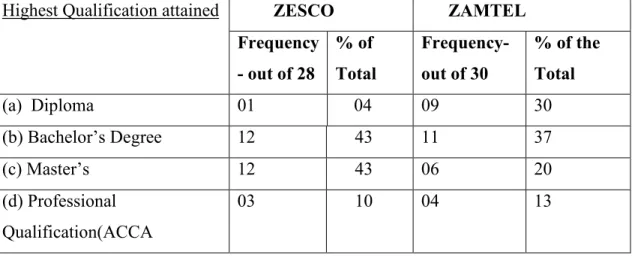
7.2 Analysis of Respondents bio-data... 125
7.3 Impact of emotional intelligence on performance... 129
7.3.1. Do managers/leaders show the attributes of emotional intelligence competences in your company?... 130
7.3.2 How much do these attributes of emotional intelligence competences affect the organisational performance indicators?... 131
7.3.3 Rating of attributes of Emotional Intelligence competences as a positive contribution to organizational performance ... 131
7.3.4 Emotional intelligence attributes that motivate subordinates most from the respondents’ organisation’s leadership... 132
7.3.4.1 Ways to give a degree of influence to Emotional Intelligence attributes that affect organizational performance. ... 134
7.3.5 More pronounced performance indicators affected by Emotional Intelligence... 134
7.3.6 Other Important variables that affect performance. . 1367.4 Understanding of the concept of Emotional Intelligence in the companies ... 136
7.4.1 Degree of understanding of the concept of emotions at work... 137
7.4.2 Good understanding of their own Emotional Intelligence and of others in maintaining good relationships. ... 138
7.4.3. Overriding of other employees, feelings de-motivates and reduces work output. 138 7.4.4 Emotional Intelligence in Managers at Work Increased Employees’ Interest and Enthusiasm... 139
xix
7.4.5 Level of Emotional Intelligence in the leadership of the espondents’ company ... 140
7.4.6 Contributions of Emotional Intelligence to the motivation of subordinates at work. ... 141
7.5 Assessing of Emotional Intelligence competence by competence... 142
7.5.1 Self-Awareness of one’s emotions... 142
7. 5.1.1 Are you aware of your moods and emotions?...143
7.5.1.2 Extent to which respondents’ emotions and moods affected their work performance....144
7.5.1.3 Recognition of one’s’ moods and emotions before other people notice the behaviour....145
7.5.1.4 Making known ones needs under anger in ways that resolves rather exacerbates the Situation....145
7.5.1.5 Change in their emotional state has effect on productivity in work situations...146
7.5.2. Self-Regulation/management of emotions ... 147
7.5.2.1 Respondents’ extent to which they try to achieve their goals under impossible conditions or are tempted to give up....147
7.5.2.2 Respondents’ use of their emotions/feelings in reaching decisions in their lives...148
7.5.2.3 Extent to which respondents control themselves (react) when attacked physically and emotionally....149
7.5.2.4 Respondents’ capacity to take advantage to win attackers over to their way of thinking....150
7.5.2.5 Extent to which respondents manage their effort to be productive in their work.150 7.5.3 Social Awareness of others’ emotions. ... 151
xx 7.5.3.1 Extent of realization by respondents of their feelings effect on other people
around them....151
7.5.3.2 Frequency of challenge by other people on respondent’s attitude to their issues at work?...152
7.5.3.3 Amount of praises that has been offered by workmates on your response to a physical or verbal attack against you...153
7.5.3.4 Freedom of workmates to respond to respondents outbursts of annoyance at work....154
7.5.3.5 Respondents’ “emotional awareness of workmates” attitudes and interests’
contribution to company productivity....155
7.5.3.6 How much consideration the respondents take into account of subordinates’
views when making a decision that concerns them....155
7.5.4 Social Skills... 156 7.5.4.1 Extent of freedom respondents have to be open with either supervisor or
subordinate....156
7.5.4.2 Freedom to engage in free debate with colleagues at work...157
7.5.4.3.1 Extent to which respondents attitude and feelings affect the job performance of their superiors...158
7.5.4.3.2 Extent to which respondents attitudes and feelings affect the job performance of their subordinates....159
7.5.4.4 How easy is it for respondents to influence their colleagues to increase their work output?...160
7.6 Levels of Managers’ Emotional Intelligence... 161 7.6.1 Respondents’ knowledge of colleagues’ emotional state in their company... 161
xxi 7.6.2 Extent to which respondents’ colleagues’ emotional state affect organizational
performance... 162
7.6.3 Amount of emotional intelligence required by the people in management in the respondents’ company. ... 163
7.6.4. The level of emotional intelligence of your immediate superior rated by a subordinate. ... 164
7.6.5 Need to develop a higher degree of emotional intelligence by immediate superior to increase productivity of their subordinates ... 165
7.6.6.1 Extent of immediate superior’s general reaction to crises in the company...166
7.6.6.2 Extent of managers’ general reaction to crises in the company ...166
7.6.5 The impact of managers’ leadership style in employee participation in the affairs of the company. ... 167
7.6.8. Level of contribution of some attributes of Emotional Intelligence... 168
7.6.8.1 The rate of contribution of managers’ emotional self awareness to organizational performance ....169
7.6.8.2. The rate of contribution of managers’ self-actualization to organizational performance ...170
7.6.8.3. Extent of contribution of managers’ interpersonal social relationships to organizational performance...171
7.6.8.4. The rate of contribution of managers’ optimism to organizational performance. ...172
7.6.8. 5. The rate of contribution of managers’ self-motivation to organizational performance ...173
7.6.8. 6. The rate of contribution of managers’ stress -tolerance to organizational performance...173
7.6.8.7. The rate of contribution of managers’ problem – solving capacity to organizational performance..174
7.6.8.8. The rate of contribution of managers’ self-confidence to organizational performance. ...175
7.7 Developments and Challenges at ZESCO and ZAMTEL... 176
7.7.1 Zambia Electricity Supply Corporation (ZESCO) ... 177
7.7.1.1 The company as a special parastatal in Zambia...177
7.7.1.2 Constraints the Company Faces ...178
xxii 7.7.1.3 What makes ZESCO Different from other parastatal firms in Zambia? ...179 7.7.1.4 State of Industrial relations in the Company ...180 7.7.1.5 Use of the Strike Weapon...180 7.7.1.6 Major Milestones in the last 15 years ...181
7.7.2. Zambia Telecommunications Company (ZAMTEL) ... 181
7.7.2.1. The company as a special parastatal in Zambia. ...182 7.7.2.2 Company Constraints...183
7.7.3 Why ZAMTEL is different from other parastatal firms... 184
7.7.3.2 Use of a Strike Weapon ...185 7.7.3.3 Milestone of ZAMTEL in 15 Years ...186
7.8 Summary... 187
CHAPTER 8
……….………..……….………….. ..189DISCUSION OF RESEARCH FINDINGS IN THE ORGANIZATIONS………..189
8.1 Introduction... 188 8.2 The objectives of the study and research findings... 189 8.3. Analysis of the study respondents... 191 8.4. Assessment decision criterion of emotional intelligence by respondents... 192 8.5 Managers/respondents’ conceptual understanding of emotional intelligence... 193 8.5.1 Critical emotional intelligence attributes that influence performance ... 195 8.5.2. Other variables that affect organizational performance... 197 8.5.3 Critical role of leadership in organizational performance ... 198 8.5.3 Respondents’ understanding of emotional intelligence concept... 201
8.6 Respondents self-assessment of emotional intelligence competences... 204
xxiii 8.6.1 Self-awareness of one’s emotions. ... 205 8.6.2 Self–regulation/management of emotions... 206 8.6.3 Social – awareness of other peoples’ emotions. ... 208 8.6.4 Social- skills in dealing with others. ... 211
8.7 Assessment of each company managers’ levels of emotional intelligence... 213 8.7.1 Knowledge of Managers’ emotional intelligence in the company ... 214 8.7.2 Emotional State on Organisational Performance ... 214 8.7.3 Amount of emotional intelligence required by organization leadership ... 215 8.7. 4 Emotional Intelligence of immediate Superiors... 216 8.7.5 Extent of reaction to crises in the company ... 216 8.7.6 Impact of managers’ leadership style on employee participation. ... 217 8.7.7 Contribution of the leadership’s emotional intelligence attributes to organizational performance... 218
8.7.7.1 Managers’ Emotional Awareness ...218 8.7.7.2 Managers’ self-actualisation...219 8.7.7.3 Managers’ interpersonal social relationship ...219 8.7.7.4 Managers’ optimism ...220 8.7.7.5 Managers’ self-motivation...220 8.7.7.6 Managers’ stress management ...221 8.7.7.7 Managers’ problem–solving capacity ...222 8.7.7.8 Managers’ self-confidence ...222
8.8 Nature of each company’s environment through open questions as recorded from respondents’ submissions... 223 8.8.1 The company as a special parastatal company... 223 8.8.2 The Company Constraints ... 224 8.8.4 What makes each Company different from other parastatal firms in Zambia?... 225
xxiv 8.8.5 State of Industrial Relations ... 226 8.8.5 Major Milestones in the last 15 years ... 227
8.9 The General Leadership environment of the Zambian Parastatal Sector... 228 8.10 Emotional intelligence challenges facing the Zambian parastatal firms... 232 8.11 Summary... 233 CHAPTER 9... 234
THE CRITICAL FACTOR - CONCLUSION... 234
9.1 Introduction... 234 9.2 Experience of Emotional Intelligence in organizations during research study... 234 9.3 The research purpose... 238 9.4 Fulfilment of research objectives... 239 9.4.1 Main Objective ... 239 9.4.1.1 Subsidiary objective one...241
9.4.1.2 Subsidiary objective two...242
9.4.1.3 Subsidiary objective three...243
9.4.1.4 Subsidiary objective four...244
9.4.1.5 Subsidiary objective five...245
9.4.1.6 Subsidiary objective six...246
9.5 Conclusion and Recommendations... 246 9.5.1 Conclusion ... 247 9.5.2 Recommendations ... 248 9.5.2.1 Leadership candidature in parastatal companies...249
9.5.2.2 Business and political relations in the management...249
xxv 9.5.2.3 Development of emotional intelligence in organizations...250
9.5.2.4 Instrument for determining of emotional intelligence in organisations...251
9.6. Pilot Test of the instrument for determining EI in organizations... 254 9.7 Further research on other Organizations with the instrument for determining
emotional intelligence…... 261
9.8 Areas for further research... 266 9.9 Summary... 267 APPENDIX 1 RESEARCH QUESTIONNAIRE... 269 APPENDIX 2 BIO-DATA &CHARACTERISTICS OF RESPONDENTS... 281
APPENDIX 3: A BRIEF HISTORY ON RESEARCH ON EMOTIONAL INTELIGENCE... 283 APPENDIX 4 COMPARISONS OF EI MEASURING INSTRUMENTS... 288 APPENDIX 5 INSTRUMENT FOR DETERMINING EI IN ORGANIZATIONS... 290
APPENDIX 6 PILOT TEST RESULTS OF THE EI IN ORGANIZATIONS (CBU & CEC)... 296 APPENDIX 7 FURTHER RESEARCH WITH EI INSTRUMENT IN OTHER ORGANIZATIONS. 298 REFERENCES... 302 APPENDIX 8 ETHICAL CLEARANCE & RESEARCH AUTHORIZATIONS... 313
FIGURES
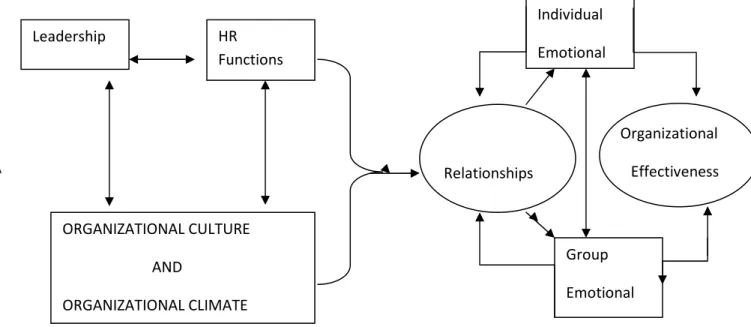
2.1 Qualities expected from an efficient Organizational Leadership 19 2.2 Change-oriented Leadership and Performance 35 2.3 Relationship of leadership and EI to Performance 36 2.4 Process of Theory U 45
xxvi
TABLES
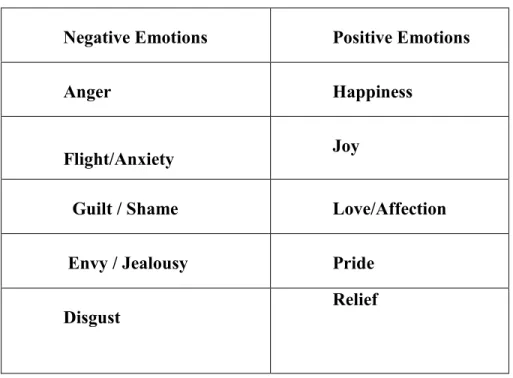
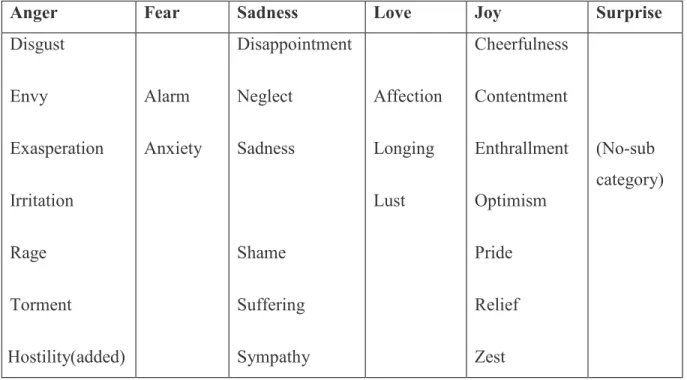
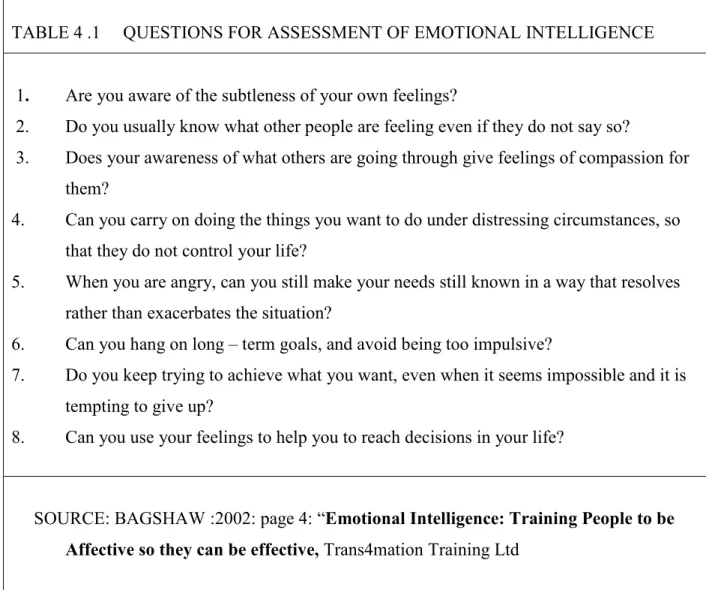
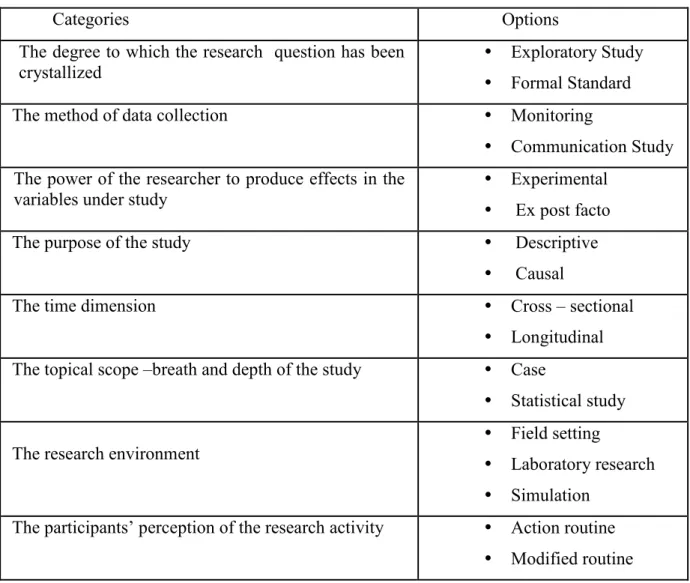
2.1 Relationship of Human needs and other requisites with Employee focus 43 3.1 Positive and Negative Emotions 57 3.2 Generic Categories of Emotions 58 4.1 Bagshaw’s EI Assessment Questionnaire. 70 4.2 Assessment of the effect of EI on organizational Performance 80 6.1 Classification of Research Design 107 6.2 Advantages and Challenges of the Research Study Methods employed 112 6.3 Response Analysis of the Questionnaire 119 6.4 Returns by Station. 119 7.1 Analysed Data tables 122 -171
9.1 Determination of overall Emotional Intelligence in various organizations 198
1
CHAPTER 1
THE RESEARCH SETTING 1.1 Introduction
This chapter seeks to explain the objectives, ethical concerns, limitations, and the significance of this research to Zambia in particular. Discussion of the research approach and paradigm will also be dealt with.
1.2 Title of the Study
The title of the research is “Assessing emotional intelligence as a critical factor in organizational performance in the Zambian parastatal sector.”
The focus of this study is on emotional intelligence in organizational leadership as a critical factor in most enterprises as they strive to achieve economic viability, effectiveness and efficiency. This will be studied in the context of the following organizations – Zambia Electricity Supply Corporation (ZESCO) and the Zambia Telecommunications Company (ZAMTEL).
1.3 Background of the Study
Prior to the action that was taken by the Zambian government to introduce nationalization reforms in the country in 1968 and 1969, major business organizations affected by the action were previously owned and run by expatriates, especially from Europe and the United Kingdom in particular. After nationalisation most firms have performed poorly.
This nationalization led to the take-over of organizational leadership by indigenous management. The performance of the majority of these firms has been declining because the local and indigenous managers who had been appointed by political leadership influenced by Dr Kenneth Kaunda, Zambia’s first President, were poorly qualified for these jobs. Some of them regarded the appointment to such management positions as a
2 reward for their participation in the struggle for the country’s independence rather than a challenge to show their business acumen.
The managements of parastatal enterprises were politically patronized and policies were dictated to them by either the President or via Freedom House, the headquarters of the ruling party – the United National Independence Party (UNIP). It was therefore not surprising to find that both human and public relations between management on the one side, and customers and employees on the other, were poor. This situation resulted in the poor performance of the organizations. Another factor that contributed to this situation was the issue of control of who participates in the line of business with the state owned businesses. Where the employees complained against poor working conditions, little or nothing was done to address the situation. In most cases labour disputes and wildcat strikes were a common feature. Political leaders often labeled these industrial actions as politically motivated rather than industrial issues that needed solutions. Likewise, labour leaders were often labeled as dissidents or troublemakers bent on destabilizing peace in the country. This was evident in the action the government took in 1974 when 17 union leaders belonging to the Zambia Congress of Trade Union (ZCTU) including Mr.
Fredrick Chiluba, the then Chairman General who eventually succeeded President Kaunda as Republican President, were arrested and charged with treason.
The performance of the parastatal sector did not provide encouraging reading in their annual reports. Many reasons have been advanced to account for this poor record but chief amongst these was poor managerial ethics and practices which had little to do with company development. It was common to see in the management and workforce, personnel recruited from the region of origin of the Chief Executive or his puppets who would attempt to disguise this nepotism. With the country’s deteriorating economic situation, resources to support ill managed state companies became a burden to the state.
Most multilateral and bilateral institutions, like the World Bank and the International Monetary Fund, advised that the parastatal companies be either commercialized or privatized so that any financial assistance rendered would not go to supporting the Parastatal firms.
3 Privatisation of the sector was reluctantly begun in 1989 under the leadership of Zambia’s first President, Dr Kenneth Kaunda and speeded up by the following political leaderships.
It must be pointed out that these companies were profitable before they were nationalized and were well run. It was because of their profitability that the government nationalised the companies. None of the poorly performing or small companies were included in the nationalization programme. If the equipment and machinery inherited was the same then poor performance should have been due to poor management of human resources. This machinery had a long life span and was used by both old and new management. If the machinery was no longer viable it was replaceable. People can not be treated like machines as they have feelings. Employees who were taken over by the new managements with this change in the environment responded and performed according to the prevailing situation in the workplace. Poor performance would therefore be attributed to the state of relationships with the human resources in the organizations rather than be blamed on the inherited machinery. It is therefore important to consider the fact that personal and social relationships in a workplace contribute to facilitating industrial harmony and employee motivation which are important for increase in performance and productivity.
Emotions in people affect all human relationships in both positive and negative directions (Bharwaney: 200:29). The ability to recognize one’s emotions and how they affect others and vice versa can be an important instrument in enhancing performance in an organization. This is the area which the parastatal sector in Zambia has never taken advantage of. There have been managers who may have tried to do this but the system may not have accepted it and more especially with “Divine Rights of Presidents” as coined by one minister which gave Zambia’s President authority to appoint and dismiss executives in state organizations publicly and without notice (Tordoff:1980:7 :Simwinga:1980:134)..
4 1.4 Statement of the Problem
Most business organizations in Zambia are established under the Companies Act and are expected to fulfill a specific purpose and need in the society. Since 1991, it was observed that the private sector occupied a very small percentage of business in Zambia. Since most public sector businesses were not doing well and the Government, as the major shareholder, could no longer find money to invest in these organizations, a policy of privatization was introduced. Many parastatal businesses have been privatized since 1992. The major reason that has been put forward for this is poor leadership in the management of these organizations. It is leadership that seems to be a determining factor in organizational performance. Moreover, it has been a question of attitude and more specifically, emotional intelligence, of both the leaders and the rest of the organizational members, which has affected performance of parastatal firms (Johns: 1980:117).
Arising from the discussion above, this study will attempt to provide answers to the problematic issue of assessing emotional intelligence as a critical factor in organizational performance in parastatal companies in Zambia.
1.5 Main Objective
To explore and assess understanding and application of emotional intelligence in the organizational leadership as a critical factor in organizational performance in the Zambian parastatal sector through case studies involving ZESCO and ZAMTEL.
1.5.1 Subsidiary Objectives
This study, in pursuance of the above purpose and the main objective, will attempt to meet the following objectives:
1 To assess the levels of understanding and degree of application of emotional intelligence among a sample drawn from ZESCO and ZAMTEL managers,
2 To explain the concept of emotional intelligence, how it can influence leadership and thereby increase the performance of enterprises,
5 3. To explain how emotional intelligence in an organization can be assessed, and
developed,
4. To document the performance of Zambian parastatal firms since 1991, with particular reference to ZESCO and ZAMTEL, and to evaluate the outcome of efforts made to improve performance,
5. To relate the application of emotional intelligence by managers to the performance of the two organisations and
6. In drawing on the foregoing, to devise an instrument to determine emotional intelligence in the organisation.
1.6 Research Orientation
The researcher has a background in management but this is a management research inquiry whose problem statement requires a solution from the area of psychology. The researcher has little background in the area of psychology. The problem being researched is the enhancement of productivity and employee motivation which is in the hands of the organization’s leadership and the managers in workplaces have a duty to provide this leadership for any desired performance to meet organizations objectives or goals. The organizational performance is seen in the effective and efficient attainment of such targets as expected by the organization’s stakeholders. This is what gives legitimacy to their continued authority as organisation leadership.
The organization’s leadership achieves organization effectiveness and efficiency through its subordinates and as such will need good interpersonal social relationships with the employees, peers and other stakeholders. To enable leadership to meet these expectations, there needs to be a high level of emotional intelligence with good development of all leadership competences. This research seeks to assess the degree of understanding and application of emotional intelligence in the parastatal companies in Zambia. Despite the
6 many challenges especially from social relationships with both inside and outside stakeholders, it is considered that emotional intelligence will provide a solution to achieving increased performance in the two organizations being studied and the rest of the parastatal sector in the country. Emotional intelligence is a critical factor in social relationships in organization as indicated in both management and psychology literature that will be reviewed in this study.
Through the research instrument, a great deal of information has been gained as to what is needed and also what was not captured during the construction of the instrument itself.
Other than the conclusion and specific knowledge that this study will provide to the Zambian public and business sector, an assessment instrument for the understanding and application of emotional intelligence will be provided. It will only provide a determination of the degree of emotional intelligence in the organization. This will thereafter call for a professional psychologist to carry out the appropriate psychometric tests to measure the actual emotional intelligence for each member of the leadership or management if the organization so desires. The instrument will indicate possible solutions which will be part of the package for the interpretation of the result.
1.7 Ethical Considerations
This study took into consideration ethical concerns of both the persons and organisations so that their individual and corporate interests are protected to the greatest degree possible. Saunders (2003:129) defines ethics as the appropriateness of the researcher’s behaviour in relation to the rights of those who will be part of the research process and will be affected by it. This behaviour includes a code of behaviour which is appropriate to academics and the conduct of research as well as the prevailing social norms. These considerations have been taken into account from conception to the end of the acceptance of the report.
An ethical clearance certificate has been received from the University under whose jurisdiction this study has been undertaken. The matter of confidentiality was addressed in the questionnaire used for the collection of data, which was given to the respondents
7 and the companies in which research was done. These ethical considerations are extended to all referenced, cited quotations and acknowledgement of those who made a contribution to this study in one way or the other.
1.8 Limitations
There is limited information in this field in Zambia due to the historical nature of company ownership policy of the UNIP government which had been in power since independence in 1964 for 27 years until it lost elections in 1991 to the Movement for Multiparty Democracy (MMD).It was the only legal political party in the country from 1972 to 1991 and made policies without any opposition. Most initiatives were discouraged, even when they meant well for society if politicians did not give prior approval. This attitude has continued even after the change of government in 1991.
Other limitations are as follows:
i) Little has been written on the relationship between emotional intelligence and organizational performance, effectiveness and efficiency in Zambia,
ii) In some offices, a few foreign managers have been employed for fixed-term contracts and they may have little understanding of the concept and thus may not give a complete picture of what is going on due to limited time and their terms of contract,
iii) Financial resources restricted my movements since this study involves two companies that cover the entire nation and
vi). Political pressure interfered with the release of information by officers responsible to give out this data. Some did not even respond due to fear of reprisals from political leadership.
1.9 Research Approach and Paradigm
This study will be based on a qualitative research approach. This is a process of enquiry for understanding a social or human problem based on complex human development and
8 relationships. The choice of this approach was dictated by the nature of the problem. In this type of research the aim is to acquire insight into the situation, (Bless & Higson – Smith 1995:42).The problem that has been identified would require a resolution. In this case the research work is about finding the relationship between emotional intelligence and organisational performance in the Zambian parastatal sector.
1.10 Structure of the Study Report.
This study report is divided into nine (9) Chapters which are as follows:
Chapter One is an introductory chapter and gives an overview of this research study giving the purpose, the problem statement, the objectives and the ethical considerations of the study. It also deals with the study significance, limitations and finally the overall structure of the report stipulating the major areas that are covered by each chapter.
Chapter two concentrates on the literature review of work done by various proponents of emotional intelligence. There is discussion of definitions, how it may be developed among employees and how it affects performance in the organization. Benefits and criticism of emotional intelligence have also been included.
Chapter three reflects on the relation between emotions and social relations in general and at work. Emotions are discussed and how they affect leadership effectiveness, decision making, egocentrism and work teams.
Chapter four discusses assessment and measuring instruments of emotional intelligence suggested by various psychologists. There is also a theoretical framework that guided the research study.
Chapter Five outlines the environment under which management and leadership of parastatal enterprises in Zambia operate. Various authors examine the nature of relationships that exist between them and the government and political leadership from both the one party and multiparty perspectives in Zambia. This influence on the
9 relationship has also affected our two case - study companies and therefore is included in the discussion.
Chapter Six outlines the methodological procedures that this study followed. It discusses the research and the sampling designs and details of the research questionnaire that was used in the collection of data. It includes the discussion on how this data will be analysed and the analysis of questionnaire response.
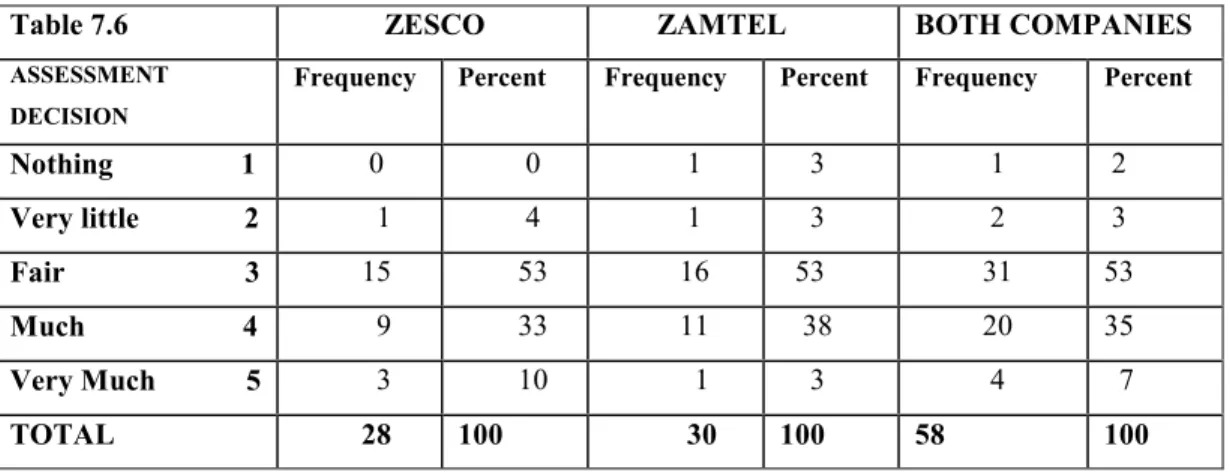
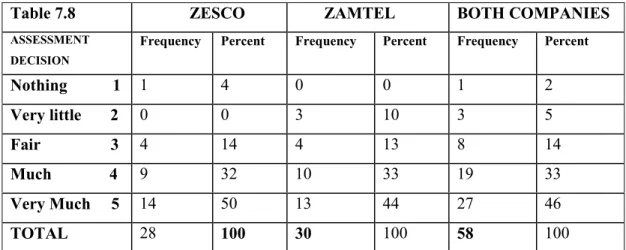
Chapter Seven presents the research results or findings as they were obtained from the field. They have been summarised in the form of discussions and tables expressed in absolute figures and percentage of the assessment decisions of the respondents.
Chapter Eight provides an integrated discussion on the levels and assessment of emotional intelligence. The discussion will also include emotional intelligence implications for the leadership in the company management and how it affects the parastatal companies in Zambia.
Chapter nine concludes the entire theoretical and research evidence of the study. It states the implications of the findings in relation to the purpose, and objectives of the study. It ends by suggesting recommendations and further areas of research in this field of knowledge.
1.11 Summary
This chapter set out to introduce the study of assessing of emotional intelligence as a critical factor in organisational performance. Our setting of this study is in the Zambian parastatal sector with its historical background and subsequent decline in performance.
Out of the parastatal firms, two big, and nationwide parastatal companies have been drawn out as a case study. The background, problem statement and question, objectives, significance and ethical considerations of the study have been highlighted. The limitations as well as the research approach and paradigms of the study have also been considered. The chapter has highlighted expectations and it is therefore set to look at
10 what other scholars have done on the concept of emotional intelligence and its impact on organisational performance and effectiveness.
11
CHAPTER 2
LITERATURE REVIEW 2.1 Introduction
In this chapter literature review will be drawn to determine where organization leadership and organization performance concepts come from. In the same vein, the emotional intelligence phenomenon has been well - documented in the literature of the psychology discipline. It is from this perspective that issues and concerns will be drawn and various views and debates brought out that have long been going on among various scholars particularly in the field of psychology. The discussion will start with literature review on leadership, a major social concern and the works that have been done. Discussion will therefore be more descriptive in looking at the concept of leadership and how it can help to bring about the required organizational performance.
The discussion of the concept of emotional intelligence and its genesis and growth over time will then follow. The comparison and discussion of the views on how it may be developed if the capacity is low in the organization will also be made. It will also be necessary to look at the literature on organizational performance and how both leadership and emotional intelligence interact to bring about performance. The chapter will end with contrasting views about the benefits and criticism of emotional intelligence.
2.2 Leadership in organizations and Management
Management thought has traditionally placed the managerial function at the top of the organization providing the leadership function of showing the vision and mission.
Topping (2002:79) argues that enabling the subordinates to perform their tasks at work and bringing the best out of them is at the centre of managerial leadership. It is the leadership that ensures that all organization’s members direct their energies towards the desired goals. Emotional intelligence becomes an essential ingredient in the leadership’s capacity to relate well with its subordinates thereby setting a stage for effective operations in the organization.
12 Throughout the development of management various schools of thought have undertaken research to perfect the art of effective management of business organizations. Core to this research has been efforts to find the best way to manage organizations and to motivate the workforce (DuBrin: 2000:18). The proponents in all the schools and approaches recognize that there will be the management representing the owners and the subordinates who will work for the owners and carryout the instructions according to the terms of employment.
Management practice has passed through various stages of development beginning with the Scientific Management led by Fredrick Taylor, Frank and Lillian Gilbreth and Harrington Emmerson through the classical, the behavioural and management science schools. These have been complimented by the newest stages of management thought through the systems and the contingency approaches (DuBrin: 2000:19). However, the first three schools of thought still continue to have impact on the workplaces in the twenty-first century.
The main concern in this study is how to provide the leadership at work with a tool that will ensure the organization reaps maximum productivity from each employee in the work place. An analysis of all schools that advocate the best way of getting maximum efficiency and contribution to work is given below.
2.2.1 The Scientific Movement
This movement approaches work with focus on the efficiency of the individual worker (Moorhead and Griffin: 2006; 5) and has the following features:
• A standardised method of performing each task;
• Workers were paid a wage equal to the amount of work completed during the day;
• Money was the only motivating factor at work;
• It boosted productivity and made workers efficient; and
• It facilitated job specialization and resulted in mass production
13 The major criticisms arose out of the consideration of the dehumanizing effect of the workplaces that turned people into machines that had no feelings. It did not matter how people felt as long as the required output was met.
2.2.2 The rest of the Classical school
This rest of the classical management school of thought other than the scientific management of work and the major proponents included Max Weber, Henri Fayol and Lyndall Urwick. DiPadora (1996:61) argues that most literature portrays the way that the Weberian theory focuses primarily on bureaucracy, hierarchy of authority, rules and regulations and to lesser extent on charisma. Weber also discusses the distribution of power by those who have the authority and also the compliance of those who do not have it in the organization. Weber did realize that there would be those in leadership and those who will be followers. He therefore set out conditions for an ideal type of an organization that would maximize its effectiveness. In a similar way, Henri Fayol put across his fourteen administrative principles. He was setting an order of managing an organization which comprised the leaders and the led in the organization in order to achieve maximum returns to the organizations. The classical school of thought does not provide a clear way to capture the quality of delivery of the authority of those in the leadership or the input of the subordinates in the process.
2.2.3 The behavioural School
This school, as DuBrin (2000:19) observes involved most psychologists like Abraham Maslow, Douglas McGregor and Fredrick Herzeberg. It gave an approach of understanding the management of people by emphasizing the understanding of the psychological make up of employees. This understanding of people is manifested through leadership, communication, decision making and conflict management. The strength of this approach is that it advocates that managers at work should take into account the human element unlike the scientific movement that does not. The major weakness is that most often managers adopt one behaviour theory of understanding people and ignore other relevant theories.
14 Elton Mayo, from the human relations movement also added to the behavioural school approach the need to have a consideration of social relations by managers at workplaces.
Mayo’s approach (Kreitner: 2004:54) to solving the problems of motivating employees and enhancing productivity at work, as learnt from the Hawthorne experiments, also cautioned managers that emotional factors were a more important determinant of productive efficiency than physical and local factors. The employees at work create their own culture of doing things at work which determines even rules of conformity. It is therefore up to management to take cognisance of their personal feelings. The emotional intelligence leadership needs to recognize such emotions in its employees before any kind of industrial conflict sets in,
The rest of the schools and approaches in the development of the management thought that include management science school, the systems and contingency approaches all have a strong need for good leadership (DuBrin:2000:16). The management science thought gives an understanding that management ought to be conducted on scientific basis for resolving problems and making decisions. The Systems approach gives a perspective of tackling problems based on the understanding that an organization is a system of interrelated parts. Problems confronting these parts should not be resolved in isolation but in relation to other components in the system. This can be seen in the case where you employ incompetent employees because of political influence, which will be reflected in the low productivity. The Contingency approach on the other hand emphasizes that there is no one best way to manage people or work. It encourages managers to study individual and situational differences before deciding on the course of action. Whichever stage of management thought one thinks of it is the responsibility of the manager in the end to resolve the issue.
The major part of the development of a sound management theory has concentrated on looking for organization effectiveness and efficiency focusing on structures and rationality that are impersonal. The scientific movement and the classical theory and more especially Max Weber’s bureaucratic model of management did not consider people as a major contributor to the good performance of the organization whose well - being needed to be in the centre of production activity. It considered that as long as
15 workers were remunerated well, efficiency and high productivity would be achieved.
Barrett (1998:5) argues that most companies die because their company leaderships concentrate on economics of producing goods and services ignoring the human component of production. These managers forget that the organizations are about the community of people who have emotional, mental and spiritual needs which make them complete and balanced in their lives.
Organizations can be compared to successful athletes who need to prepare themselves adequately by taking care of their bodies, minds and spirit. Likewise, one could claim that the organization is a living entity that needs to take care of all aspects. Traditional management theory has tended to concentrate on suggesting that increased productivity in goods and services is achieved by investing in physical structures. Bennett (1998:11) identifies four aspects of an organization that shows its well - being and this includes the physical well - being, the emotional well - being, mental - well being and its spiritual well - being. I am of the strong opinion that it takes an emotionally intelligent leadership to recognise these components of the organization’s life. While traditional management thought has made a good contribution to managing organizations, it has not done that much as far as looking at the emotional and spiritual side of workers in workplaces.
Management should understand that their emotional state has an effect on the performance of their workers. Both the managers’ and other employees’ emotional states in a real sense can be improved to reach a higher spiritual state that provides high level of motivation that in turn leads to the ultimate answers of increase in productivity and creativity in the organization (Bennett 1998:13). The health spiritual state of its employees will bring about both their internal and external connectedness with other members in the organization and other stakeholders. It is therefore important that leadership and other members of the organization work on developing emotional intelligence as part of organizational culture and values.
The management thought has evolved at the same time as the Leadership theory that has moved from the ‘great man’ theory in which it was thought that leaders are born and not made. In the early 1900s the theory moved from that concept to a more encompassing view of leadership that took into account the interaction between the task, the leader and
16 the relationship with the followers (Topping:2000:2) This is the ideal thinking where we are now and the leader must be able to discern the situational needs of subordinates. It is against the above background that the position of management assumes the role of the leadership in the organization. A manager who inevitably offers his or her leadership in a workplace to get things done effectively must have the ability to inspire confidence and gain support from subordinates on whose effective performance will depend. DuBlin (2005:223) points out that John Kotter had made a distinction between management and leadership. Management is said to be a process of coping with complexity which advocates that a manager must preserve order which has been decided on beforehand. On the other, side leadership deals with change in a very competitive environment and ensuring that the leader maps out a vision and direction.
In the fast changing world, a company needs to have both an effective leadership and management side by side. DuBrin (2005:223) further advocates that leaders should be managers just as managers must be leaders. The workforce requires their organization leadership that is inspiring and persuasive and one which can help them develop and maintain a peaceful and productive workplace. There is need in an organization to have a managerial leadership that must have qualities that will make it effective. Topping (2002:10) gives the following as cardinal qualities:
• Challenging the processes in the organization;
• Inspiring a shared vision and values;
• Enabling others to act;
• Being an Example that other can emulate; and
• Showing passion and willingness,
These qualities come from the heart that wants to see others under them succeed in the workplace. The leader needs to be aware of his or her emotions and those of other people around them to be pulling in the same direction. The subordinates should be able to read the motives and be influenced to follow accordingly.
17 2.3 Leadership definition
Leadership has been defined in several ways. Jerald Greenberg and Robert Baron, Rex Campbell, Geoffrey Meredith & others have defined leadership as:
“The process and behaviour in which one individual or group of persons influences another or group members toward the attainment of defined group or organisational goals.” [Greenberg & Baron: 2003:471, Campbell: 1997: Chapter 1: 01, Meredith et al: 1982:13]
Campbell (1997: Chapter 4:1) recognizes that there is a variety of personal attributes that successful leaders have and display. It is not possible for any one successful leader to have all the leadership attributes or traits. In his assessment he recognizes a number of personal leadership traits that these successful leaders have and which unsuccessful ones do not have. However there are two important issues that must be considered to be successful. These are:
• Motivation is the most important characteristic that successful leaders always want to achieve. Motivation is in every one of them from the most quite to the most outspoken leader and will manifest if the situation demands it.
• Communication skills are identified as the second most important factor for an effective leader. There are four purposes for communication, that is, to convey information, to assure understanding, to cause people to act and to persuade people and to change their stance.
To perform a good job as a leader, Campbell puts forward fourteen traits that most successful leaders may possess. In his words he calls them “tools of trade”. It is not possible to use all the traits in every situation the leader finds himself/herself in; but others will be used when need arises. As earlier alluded to, it is not possible to have all of them but a number of them should be well developed.
He further points out the importance of a person in leadership developing as many of these traits as possible to increase the probability of him or her being successful in his or
18 her leadership role and in other endevours. Development of these traits plus motivation is leadership (1997: Chapter 4: p 2)
The fourteen traits pointed out can also be referred to as the “14 Ps” of leadership success. Campbell (1997: Chapter 4:2) named these as,
“Personality, persuasive, persistence, patience, perceptive, probity, praise giving, positive orientation, people based, possible, practical, progressive, prepared and power building.”
All these important traits require that a leader be both emotionally and socially intelligent. It is good to perform with any of the above traits but as long as it is done at the right time, to the right persons, in the right manner, and when the situation is right.
No wonder Campbell further suggests that a leader should do his work with humor and in a warm environment. The optimistic and cheerful disposition of leaders or managers at work provides a sound impression to those under them that the work environment is good and under control. It gives confidence to both the employees and customers that all is well. Goleman (2002:23) suggests that gifted leadership, which is an important asset to have in the organization and can only happen and make a remarkable contribution when the manager’s inner feelings and intellect meet. The leaders live and execute the organization’s vision guiding, interpreting, motivating, supervising and inspiring the employees under their charge. It is even more crucial that they get feedback through creating dialogue in the organization. Cognitive intelligence is not enough to make successful leaders. That is why another kind of intelligence that cements the relationship between the leaders and the followers – emotional intelligence is necessary.
In a further explanation of the concept of leadership, DuBrin (2004) points out nine important characteristics that are found to contribute to making an efficient leadership that can drive an organization forward. These are diagrammatically presented below.