ASSESSMENT OF COMMUNAL LAND RIGHTS FOR SMALLHOLDER FARMERS ACCESS TO MARKETS IN SOUTH AFRICA: IMPLICATIONS ON GENDER
Thapelo Mothae 213567161
January 2017
Submitted in Fulfilment of the Academic Requirements for the Degree Of Master of Agriculture (Food Security),
African Centre for Food Security,
School of Agricultural, Earth & Environmental Sciences, University of KwaZulu-Natal,
Pietermaritzburg
i ABSTRACT
Most African countries have embarked on improving agriculture, food security and reducing hunger through the support and involvement of smallholder farmers in the food production. Smallholder farmers have been key custodians of most African nations food and nutrition security, yet they are challenged by several factors including lack of access to land, access to credit and access to formal markets. Women smallholder farmers are the most affected due to the patrilineal nature of communal land allocation in most rural societies. Smallholder agriculture can provide a route out of poverty only if it is productive, commercially oriented and well linked to formal markets. Women have over the years relied on land based activities for their livelihoods and survival and food security however, they have always been marginalised in the allocation, control and command over land as a property. Several studies indicate that women perform most of the agricultural activities mainly for their households’ food security and may produce a meagre surplus for sale in the informal markets.
Market access for rural smallholder farmers has been actively promoted to catalyse sustainable rural livelihood development. However, without addressing the land access and gender specific issues that rural smallholder women farmers face in accessing markets, most initiatives aimed at improving smallholder farmer livelihoods and their food security may fail to achieve their sole purpose.
Culturally stipulated roles of women’s in the household and in smallholder agriculture have adverse effects on household food security due to the resultant workload burden and reduced market participation by smallholder farmers. Smallholder women farmers have to travel long distances with their meagre produce to access markets.
This study assessed the relationship between gender and communal land access and how they collectively impact smallholder farmers’ access to markets. The specific objectives of the study were to determine relationships between gender and communal land access, to identify the factors affecting smallholder farmers to access agriculture markets and to determine how land access enhances smallholder farmers’ access to markets. A purposive sample of 135 households was selected in Appelsbosch, KwaZulu-Natal province in South Africa. The mixed methods approach of research made up of structured questionnaires, together with focus group discussions and observation was employed. Qualitative data from the focus group discussions and open-ended questions was analysed for common themes using content analysis. The data was then subjected to descriptive statistical analysis using SPSS.
ii Statistically significant differences were observed between gender and access to land, access of land and the owner of the land (p<0.05). The results further indicated that women land rights were mostly secondary and land access was closely linked to the existence of a relationship with male relatives, largely through marital ties. The study concluded that smallholder farmers faced numerous challenges in terms of accessing land and markets. From these results, the study recommends more equitable measures for secure land rights for women farmers as individuals based on need, improvement in extension services and creation of stable markets and market access support for smallholder farmers to ensure sustainable livelihoods and food security.
Key terms: Gender, land access, communal land rights, market access, smallholder farming, food security
iii DECLARATION
I Thapelo Mothae hereby declare that the dissertation submitted for the Master of Agriculture Food Security at the University of KwaZulu-Natal is my original work and has not been previously submitted in partial or entirety to any other institution of higher education. I further declare that all the sources cited or quoted are indicated and acknowledged by means of a comprehensive list of references.
Signed: ………. Date……….…
Name: Thapelo Mothae
As research supervisor, I agree to submission of this dissertation for examination:
Signed: ………. Date……….…
Name: Dr. Joyce Chitja
iv ACKNOWLEDGEMENT
I would like to express my sincere gratitude to the following people who contributed to make this study possible:
African Centre for Food Security for granting me the opportunity to carry out this study.
Supervisor Dr. Joyce Chitja for being there with everything including materials and encouragement, for support, motivation and critiques during the study.
My Scholarship, W. K. Kellogg Foundation without whom I couldn’t have made it this far. Thank you for helping make my dream come true.
Programme coordinator Mr. D. Naidoo for his positive attitude, guidance, unreserved support, advice, perseverance and encouragement throughout the study.
To all the respondents in Appelsbosch and Mr. Mkhize (Extension Officer), who took their time completing ample and detailed questionnaire, I am thankful. Your contribution made it possible for me to compile this dissertation, it would have been impossible without your willingness to cooperate.
For data collection, I would like to extend my gratitude to my fellow colleagues N. Tamako, T. Mkhize, M. Dlamini, N. Cele, S. Masiya, N. Mthembu and N. Shelembe who provided love, encouragement and assistance in data collection, translation and moral support throughout the study.
My family, especially mom and dad, your faith in me pushed me to work harder. Thank you for your support and for believing in me. My brothers Katiso, Lisema, Motebang and Lehlohonolo, I would like to thank you for standing by my side and for your words of encouragement.
To my friends Nthabeleng, Olwethu, Koetlisi, L. Kokome, L. Liphoto and Lebenya for inspiring me to work hard.
I would like to thank God who gave me the strength to believe in myself and dream beyond my imagination.
v CONTENTS
ABSTRACT ... i
DECLARATION ... iii
ACKNOWLEDGEMENT ... iv
LIST OF TABLES ... viii
CHAPTER 1: THE PROBLEM AND ITS SETTING ... 1
1.1: INTRODUCTION TO THE RESEARCH PROBLEM ... 1
1.2: RESEARCH PROBLEM ... 1
1.3.0: OBJECTIVES ... 2
1.3.1: MAIN OBJECTIVE ... 2
1.3.2: SPECIFIC OBJECTIVES ... 2
1.4: HYPOTHESIS ... 2
1.5: STUDY LIMITATION ... 2
1.6: DEFINITIONS OF TERMS ... 3
CHAPTER 2: LITERATURE REVEIEW ... 5
2.1.0: INTRODUCTION... 5
2.1.1: GENDER ROLES AND DIVISION OF LABOUR ... 5
2.1.2: GENDER AND EMPOWERMENT FOR SMALLHOLDER WOMEN FARMERS’ ACCESS TO MARKETS .. 7
2.1.3: RELATIONSHIP BETWEEN GENDER AND LAND ACCESS ... 9
2.1.4: THE BARRIERS TO EQUAL DISTRIBUTION OF LAND ... 11
2.1.5: THE SOUTH AFRICAN COMMUNAL LAND HISTORY ... 13
2.1.6: FOOD INSECURITY IN SOUTH AFRICA ... 15
2.2.0: WHY SMALLHOLDER FARMING IS IMPORTANT FOR RURAL HOUSEHOLDS? ... 17
2.2.1: EFFICIENCY IN TERMS OF PRODUCTION PER HECTARE ... 17
2.2.2: POVERTY REDUCTION ... 18
2.2.3: MARKET ACCESS PARTICIPATION ... 19
2.3.0: SMALLHOLDER FARMERS’ CONSTRAINTS TO FARMING ... 19
2.4.0: MARKET ACCESS CONSTRAINTS FOR SMALLHOLDER FARMERS ... 20
2.5.0: ACCESS TO RESOURCES ... 22
2.6.0: WOMEN AND SMALLHOLDER FARMING ... 24
2.6.0: SMALLHOLDER FARMERS: GENDER AND ACCESS TO MARKETS ... 25
CHAPTER 3: METHODOLOGICAL APPROACH AND DATA COLLECTION ... 27
3.1.0: INTRODUCTION ... 27
3.2.0: SITE SELECTION AND SAMPLING ... 28
3.2.2: FARMERS GROUPS COLLECTIVE ACTION ... 29
vi
3.2.3: FOOD SECURITY STATUS ... 30
3.3.0: SAMPLING TECHNIQUE... 30
3.4.0: DATA COLLECTION TOOLS ... 31
3.4.1: SURVEY QUESTIONNAIRE ... 31
3.4.2: FOCUS GROUP DISCUSSION ... 32
3.5.0: DATA ANALYSIS ... 32
CHAPTER 4: DOES GENDER AFFECT COMMUNAL LAND ACCESS AND SUCCESS IN FARM-INCOME AND HOUSEHOLD FOOD SECURITY?... 34
ABSTRACT ... 34
4.1.0: INTRODUCTION AND CONCEPTUALIZATION ... 35
4.2.0: METHODOLOGICAL APPROACH AND DATA COLLECTION ... 37
4.2.1: METHODOLOGY AND DATA COLLECTION ... 37
4.2.2: SITE SELECTION AND SAMPLING ... 37
4.3.0: RESULTS AND DISCUSSION ... 38
4.3.2: SMALLHOLDER FARMERS’ LAND ACCESS ... 43
4.3.3: MODES IN WHICH FEMALE FARMERS LOSE LAND RIGHTS IN THE COMMUNITY ... 45
4.3.4: EDUCATION LEVEL OF THE SMALLHOLDER FARMERS ... 46
4.3.5: LIVELIHOOD STRATEGIES AND SOURCES OF INCOME ... 48
4.3.5: RELATIONSHIP BETWEEN GENDER AND LAND ACQUISITION ... 49
4.3.6: RELATIONSHIP BETWEEN GENDER AND LAND ACCESS ... 50
4.3.7: RELATIONSHIP BETWEEN GENDER AND LAND CERTIFICATION ... 52
4.4.0: LAND USER RIGHTS, FOOD SECURITY AND MARKET ACCESS ... 53
4.5.0: CONCLUSION AND RECOMMENDATIONS ... 56
4.5.1: CONCLUSION ... 56
4.5.2: RECOMMENDATIONS ... 58
CHAPTER 5: DECOMPOSITION OF MARKET ACCESS CHALLENGES IN FEMALE DOMINATED HOUSEHOLDS OF RURAL KWA-ZULU NATAL ... 59
ABSTRACT ... 59
5.1.0: INTRODUCTION AND CONTEXTUALISATION ... 60
5.1.1: MARKET ACCESS CHALLENGES ... 62
5.1.2: ACCESS TO RESOURCES ... 63
5.1.3: STRATEGIES FOR IMPROVING SMALLHOLDER FARMERS’ ACCESS TO MARKETS ... 65
5.2.0: METHODOLOGY AND DATA COLLECTION ... 66
5.2.1: SITE SELECTION AND SAMPLING ... 66
5.3.0: RESULTS AND DISCUSSION ... 67
5.3.1: MARKET ACCESS AND SMALLHOLDER FARMERS ... 71
vii
5.3.3: MARKET ACCESS CHALLENGES FOR SMALLHOLDER FARMERS ... 75
5.3.4: MARKET AVAILABILITY AND DEFICIENCY OF INFORMATION ... 77
5.3.5: LOW HARVEST VOLUME AND QUALITY ... 77
5.3.5: ACCESS TO FARM INPUTS AND TRANSPORT ... 78
5.4.0: CONCLUSIONS AND RECOMMENDATIONS ... 78
CHAPTER 6: CONCLUSIONS AND RECOMMENDATIONS ... 80
6.1.1: SUMMARY OF THE RESEARCH OBJECTIVES AND METHODOLOGY ... 80
6.1.2: CONCLUSION ... 80
6.3.0: RECOMMENDATIONS ... 82
REFERENCE ... 87
APPENDIX A ... 96
FOCUS GROUP GUIDE ... 101
ETHICAL CLEARANCE ... 102
viii LIST OF TABLES
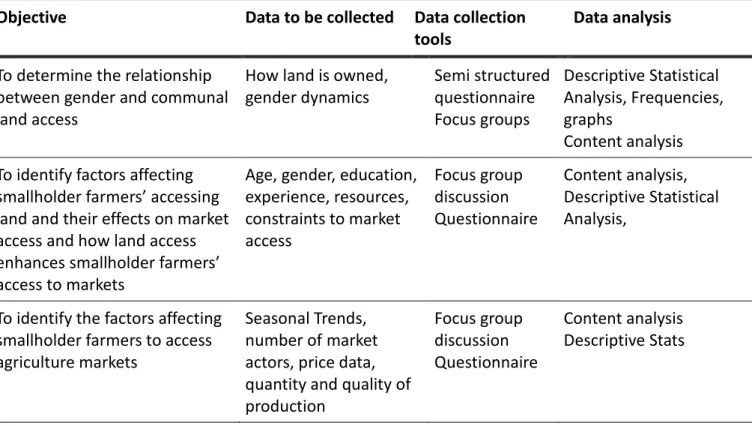
Table 3.1 provides a summary of the objectives, data collection tools, the type of data collected
and the methods for data analysis ………..………... 30
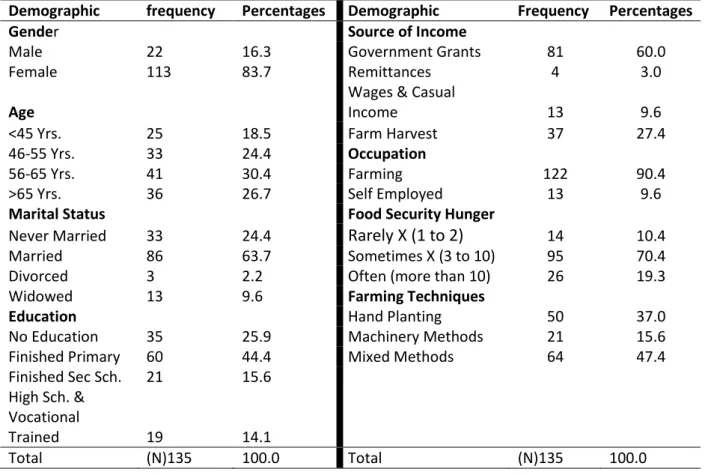
Table 4.1: Demographic data……….……… 39
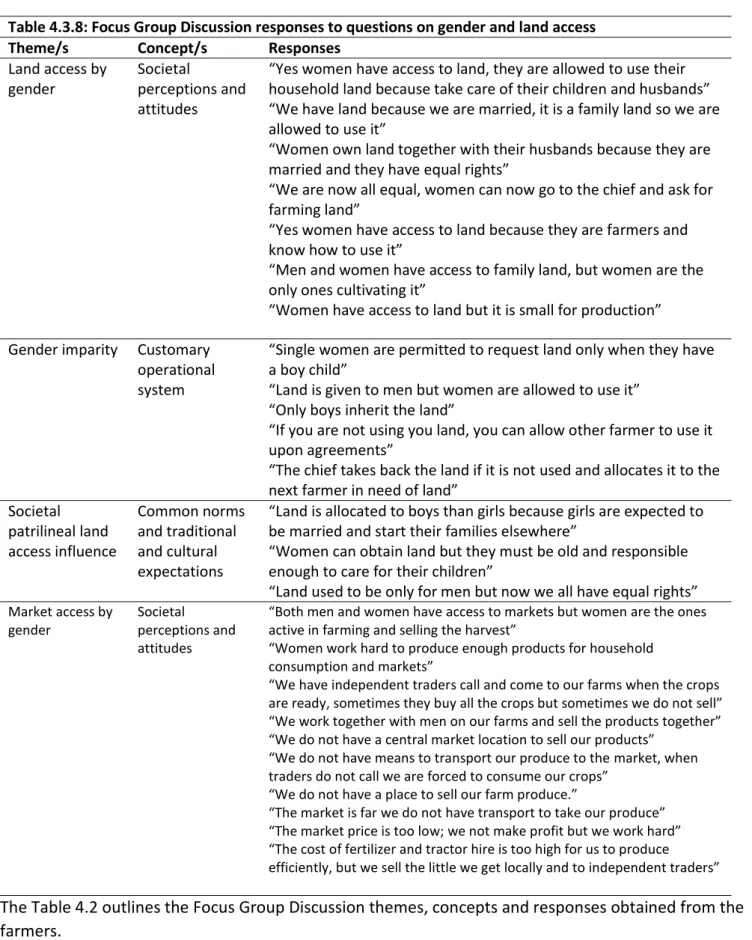
Table 4.2: Focus group discussion responses to questions on gender and land access……….…… 42
Table 4.3: The Modes in which female Farmers lose land right in the community………..……… 45
Table 4.4: The sources if income by smallholder farmers……….……….……… 48
Table 4.5: Agricultural land acquisition methods for males and females in Appelsbosch…….………….. 49
Table 4.6: Land access for men and women in Appelsbosch……….………….………. 50
Table 4.7: Land access certification of men and women……….………… 52
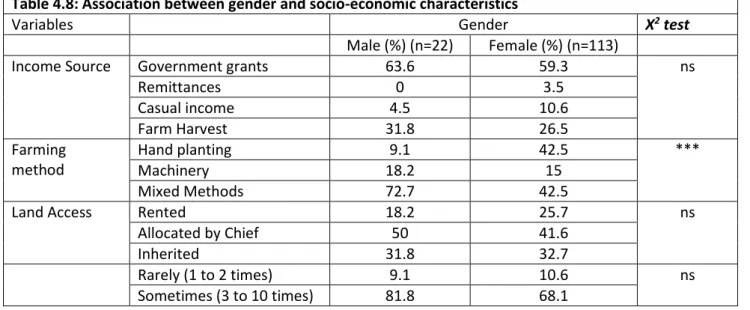
Table 4.8: Association between gender and socio-economic characteristics………..………. 55
Table 5.1: A description of the sample……….……… 68
Table 5.2: Focus group discussion with the smallholder farmers………..……… 70
Table 5.3: Market access by smallholder farmers……….……….…. 73
Table 5.4: Association between gender and socio-economic characteristics………..………. 74
1 CHAPTER 1: THE PROBLEM AND ITS SETTING
1.1: INTRODUCTION TO THE RESEARCH PROBLEM
Agriculture has been the main activity in most African nations that contributed to their GDP (WorldBank, 2009). The major livelihood activity in rural areas has been smallholder semi-subsistence farming, which is practiced by a greater majority of native people (FAO, 2012). The agricultural sector is the main source of livelihood for 86% of rural households in developing countries and 75% of the world’s poor people reside in rural areas and obtain the major part of their income from the agricultural or other related activities (Dethier and Effenberger, 2012). For most rural areas, agriculture is performed largely by females than males (Thamaga-Chitja and Morojele, 2014).
Traditionally women obtain land use rights by virtue of being married or granted permission by their families under customary law and this has provided them with restricted access and control over their land (Murugani et al., 2013). A study by the World Bank (2012) revealed that smallholder farmers continued to provide for their household food security and nutrition despite major challenges they faced. Agricultural activities continue to be the basis of rural people ‘s livelihood assets (Murugani et al., 2014), considerably women who are the main providers of household food security as most men seek better jobs in cities (FAO, 2012; IFAD, 2011).
Most African communities depend on natural resources for livelihood generation (FAO, 2013; FAO, 2012). Women encounter a range of barriers to acquiring and holding land rights equal to those of men (FAO, 2011). The limitation in women’s property rights is the source of their low status, economic vulnerability and poor representation in decision making and management of land (FAO, 2012; IFAD, 2011). FAO studies reveal that women could increase farm productivity by up to 30% if given equal resources with men. The WorldBank (2010) study found that productivity on women's farms in six African countries was significantly lower per hectare compared to men, ranging from 13
% in Uganda to 25 % in Malawi. There is a causal relation between more equal gender relations in the household/community and better agricultural and development outcomes (Peterman et al., 2011).
1.2: RESEARCH PROBLEM
Several African countries have embarked on improving agriculture, food security and reducing hunger through the involvement of smallholder farmers in the food production. Smallholder farmers have been key custodians of most African nations food and nutrition security, however they are
2 challenged by several factors including lack of land, access to credit and access to formal markets.
Women smallholder farmers are the most affected due to the patrilineal nature of communal land allocation in most rural societies. However, women smallholder farmers continue to produce food for their households and earn income for their livelihoods (Thamaga-Chitja and Morojele, 2014). The majority of women smallholder farmers reside in rural areas and are characterised by low education levels, lack of control and access over productive resources, lack of access to markets and credit, they also have to balance the productive and reproductive chores in the household (Magingxa et al., 2009, Thamaga-Chitja and Morojele, 2014). There is a need for farmers to overcome their constraints and improve their production. This study assesses the relationship between gender and communal land access and how they collectively impact on smallholder farmers’ ability to participate in markets.
1.3.0: OBJECTIVES 1.3.1: MAIN OBJECTIVE
The purpose of the study was to find how gender influenced communal land access and its impacts on how smallholder farmers access agricultural markets for sustainable livelihoods.
1.3.2: SPECIFIC OBJECTIVES
To determine the relationship between gender and communal land access
To identify factors affecting smallholder farmers’ accessing land and their effects on market access and how land access enhances smallholder farmers’ access to markets
To identify the factors affecting smallholder farmers to access agricultural markets
1.4: HYPOTHESIS
Gender has an influence on communal land access (the basis of the livelihoods & Food Security) by and impacts access to agricultural markets for smallholder farmers
1.5: STUDY LIMITATION
The study was limited to a group of smallholder farmers in the study area and those groups were not an exact representation of the entire population. The research could not be able to cover all parts of the study area because of time and the availability of resources. The sample selected may not be
3 representative of the entire population but it was large enough for some generalizations to be made with reasonable conviction.
1.6: DEFINITIONS OF TERMS
Smallholder farmer: definitions vary in both political and academic circles in different countries. In both South Africa and Lesotho, Smallholder farmers are defined as those farmers who own small pieces of land on which they grow subsistence crops and very few cash crops relying entirely on family labour (DAFF, 2012). PLAAS (2012), stated that in South Africa the terms “smallholder farmers”,
“communal farmers”, “emerging farmers” and “black farmers” are treated as synonymous.
Smallholder farmers differ in individual characteristics, farm size, resource distribution between food and cash crops, livestock and off-farm activities, their use of external inputs and hired labour, the proportion of food crops sold and household expenditure patterns (DAFF, 2012).
Market access: The opportunity, ability and capacity of smallholder farmers to engage with sellers and buyers, it also includes the ability to obtain inputs, opportunities and marketing channels. The increase in market participation of smallholder farmers indicates the transition from subsistence farming to a market oriented mode which enables them to exchange products and services on a higher scale (Amrouk et al., 2013).
Communal Land Rights and access: While communal land means land which is, or is to be, occupied or used by members of a community subject to the rules or custom of that community (CLaRA, 2004);
Communal land rights are laws created by governments in regard to how individuals can control and benefit from land for their livelihood purposes. It involves the allocation of rights in the land, the delimitation of boundaries of parcels for which the rights are allocated; the transfer from one party to another through sale, lease, loan, gift or inheritance; and the adjudication of doubts and disputes regarding rights and parcel boundaries (FAO, 2002). The term access in this study refers to awarded user rights by the custodian of land rights being the chief in his/her Traditional Authority (TA).
Gender: the economic, social, political, and cultural attributes and opportunities associated with being man or woman (WorldBank, 2007). It is normally accompanied by gender equality, which means equal access to the “opportunities that allow people to pursue a life of their own choosing and to avoid extreme deprivations in outcomes,” highlighting gender equality in rights, resources, and voice (WorldBank, 2009)
4 Assumptions: The study assumed (1) that the respondents would be willing to respond to interview questions very well and truthfully; (2) land was used for agriculture and was allocated by the chief, to sustain their livelihoods and maintenance of their food security; (3) agricultural produce was sold in markets (4) The questions and answers would be translated accurately by a translator, as the researcher is not a native speaker of the local language.
5 CHAPTER 2: LITERATURE REVEIEW
2.1.0: INTRODUCTION
Smallholder farmers have been key custodians of most African nations food and nutrition security, yet they are challenged by several factors including lack of access to land, access to credit and access to formal markets. Women smallholder farmers are the most affected due to the patrilineal nature of communal land allocation in most rural societies. Smallholder agriculture can provide a route out of poverty only if it is productive, commercially oriented and well linked to formal markets. Women have over the years relied on land based activities for their livelihoods and survival and food security however, they have always been marginalised in the allocation, control and command over land as a property. Several studies indicate that women perform most of the agricultural activities mainly for their households’ food security and may produce a meagre surplus for sale in the informal markets.
Market access for rural smallholder farmers has been actively promoted to catalyse sustainable rural livelihood development. However, without addressing the land access and gender specific issues that rural smallholder women farmers face in accessing markets, most initiatives aimed at improving smallholder farmer livelihoods and their food security may fail to achieve their sole purpose. The culturally stipulated roles of women’s agriculture have adverse effects on household food security due to reduced market participation by smallholder farmers. Smallholder women farmers have to travel long distances with their meagre produce to access markets.
2.1.1: GENDER ROLES AND DIVISION OF LABOUR
Gender equality can be promoted by women’s access and control over land, which is not only a productive asset but also a source of social security, status and recognition (WorldBank, 2010). Land is an asset of great importance for multitudes of people living in the rural areas of developing countries (Zziwa, 2011, Zziwa, 2012). (Thamaga-Chitja and Morojele, 2014) explained that women take up more agricultural work compared to the men, this was further emphasised by (Alemu, 2015, Baiphethi and Jacobs, 2009, DAFF, 2012) that the majority of women do the agricultural work. Gender refers to the socially constructed roles, relationships and learned behaviours of male and female (Curran and Saguy, 2013). The World Bank defined gender equality in terms of rights, resources and voices; equality under the law, equality of opportunities and equality of rewards for work and equality of voice (WorldBank, 2010). However, equality between males and females has been compromised by various factors such as the male migrant labourers leaving home for better jobs
6 thereby increasing the burden of women (Okali, 2011), women lack the secure access to land and are unable to provide the collateral that would secure access to credit for their choice of crops to produce (Okali, 2011).
Gender roles in rural households differ with men in control of property and capital resources while women do most of the domestic and farming work (Murugani et al., 2014). There is a huge difference in division of labour in households; men can totally focus on their productive tasks and carry out their other activities at a given time, women are often indebted to carry out numerous tasks, especially reproductive tasks, simultaneously and dispersed over the day (Kapungu, 2013, Thamaga-Chitja, 2012). Women’s productive time and flexibility are much more restricted compared to men, often leading to compromises between their non-productive and productive roles where women have been empowered through access of land and are given leadership roles both in the households and community (UNEP, 2011).In most African countries, women are more involved in activities such as planting, weeding, watering, harvesting, transportation of crops from farm to home, processing and marketing of small farm produce whereas men are only involved in the initial stages of tilling the land or clearing and the marketing of larger amounts of produce (Kapungu, 2013, Murage, 2011, Muzari, 2013). IFAD (2011) Reported that when women get proper access to land, water and capital resources, they become highly motivated, have enhanced creativity and become more productive in their farming thus improving the food security status of their households and community.
Apart from their heavy daily workload, most African women are bound by tradition to help their husbands in the farming activities, this increases their workload and limits their time for their own farming (Duncan, 2010). Women are traditionally responsible for the preparation of food, fetching water and cooking food using firewood they collect from forests; their activities are centred on the household; maintaining the hygiene, nutrition and food security status of the family (PLAAS, 2012, Tanwir and Safdar, 2013, Thamaga-Chitja, 2012). They also ensure that their children are in good health, those of their family members as well as their education and food security (Kapungu, 2013, Tanwir and Safdar, 2013). Duncan (2010) Observed that women usually produce food crops unlike men who farm cash crops and can market and sell them at ease. Men have access to credit facilities and can use their land as collateral for getting loans for large scale production of cash crops, but women due to the fact that they are usually landless cannot get loans and thus cannot expand their food production (Santos, 2014). Tanwir and Safdar (2013) further elaborated that due to their inability to own land and lack of access to financial resources, most African women could not take
7 advantage of new market opportunities or increase their productivity, however; men on the other side had access to capital resources through the land they own, property or their migrant labour abilities (Doss et al., 2014, IFAD, 2011).
2.1.2: GENDER AND EMPOWERMENT FOR SMALLHOLDER WOMEN FARMERS’ ACCESS TO MARKETS
The gender gap in the access and control of property is the single most critical contributor to the gender gap in economic well-being, social status, and empowerment (Agarwal, 1994). Empowerment is a process which enhances the ability of powerless individuals or groups to challenge and change existing power relationships that put them in inferior socio-economic and political positions (Kato and Kratzer, 2013). Agarwal (2015) Defined empowerment as the expansion of people’s ability to make strategic life choices, especially in situations to which they had been denied previously.
Moreover, Krenz et al. (2014) defined empowerment as a process that expands women’s ability to make choices about their lives and their environment. Empowerment comprises the resources, the element of action and the outcome. Empowerment is a process that enhances the ability of disadvantaged individuals or groups to challenge and change existing power relationships that place them in subordinate economic, social and political positions.
From various studies of empowerment, which is also said to have no single definition applicable to all contexts, women are agreed to experience empowerment as they gain the ability to make choices in areas where they were previously denied agency (Kato and Kratzer, 2013, Krenz et al., 2014).
Access of a resource contributes to the empowerment of women, however, their ability to generate income in the agricultural sector is mostly hindered by their limited use, access, and control of productive land (IFAD, 2011, Kapungu, 2013). Women, unlike men are more disadvantaged since assets especially land are accessed mainly through marriage ties in most rural communities under Traditional Authority, thereby single or widowed women may not access them on their own (Kapungu, 2013).
World Bank defines empowerment as the expansion of freedom of choice and actions and increasing one’s authority and control over the resources and decisions that affects one’s life (WorldBank, 2010). Similarly, Mensah and Yankson (2013) saw women’s empowerment as a process through which women gain the ability to take ownership and control of their lives. (Sharaunga et al., 2016) elaborated that empowerment has sources which are the assets and tools that women possess and
8 can use to improve on their influence, confidence or security hence improving their household bargaining power, stability and maintaining food security.
Land access should act as a source of empowerment as it increases women’s security and control over household decisions (Agarwal, 2003). Alemu (2015) contended that ownership of a resource contributes to empowerment, whereby those with resources have more purchasing power than those without resources or assets. Although women account for 43% of the agricultural labour force in developing countries (FAO, 2011) a great gender bias exists in the agricultural production sector, in terms of both quantities of assets, agricultural inputs and resources that women control and own (DAFF, 2012, Dethier and Effenberger, 2012, Doss et al., 2014). The role of women in agriculture production is commonly unappreciated (Doss et al., 2014), despite their efforts and long hours they spend working on the agricultural land that they do not own (FAO, 2011). Most rural women around the world contribute to agricultural production in numerous ways using different livelihood strategies to out lift their families out of poverty and food insecurity (Hill, 2011). However, they often have limited decision making power and control over how to use the land or its outputs (SIRCAR and PAL, 2014b).
FAO (2011) reported that around the world most women work as unpaid, on own account or self- employed labourers in agro-industries or as traders, entrepreneurs and providers of services. Hill (2011) further explained that women migration from rural areas to urban areas for permanent, daily or seasonal work has been on the increase. The rural women are hindered by unequal access to productive resources and land from producing more for their families (IFAD, 2011, Kapungu, 2013, Murugani et al., 2014, PLAAS, 2012, UNEP, 2011) and these limitations bring forth huge socio- economic and environmental costs on rural development especially in agricultural productivity.
Gender disparities as outlined by CEDAW article 14 limit women from enjoying their economic rights.
Moreover, rural women tend to be engaged in their activities for long hours and usually their activities are classified as “non-economic employment” (FAO, 2011). This calls for efforts and the need for women to be empowered for they also form part of the labour on their family farms either producing for household consumption or for commercial purposes.
The economic empowerment of smallholder women farmers is a major requirement for sustainable development and growth. Gender equality and women empowered through access to productive resources speed up their human development and stabilises their livelihood. Women when provided
9 with resources usually invest a higher amount of their earnings in their families and communities than men (DAFF, 2012, Doss et al., 2014). Their natural ability to tend and care for their families can further be translated into considerable amount of development if they are provided with the means to access markets. Markets for smallholder farmers provide a permanent relief from poverty and food insecurity (Sircar and Pal, 2014, Thamaga-Chitja, 2012). Form very little pieces of land they farm smallholder farmers who are usually women have managed to provide for their families and communities over the years despite their constant challenges such as land access, access to capital and improved inputs. Kabeer (2012) reported than the total agricultural output could rise by 20% if women farmers could be provided with equal access to agricultural inputs similarly to men’s.
Women face unique barriers to participating in markets and these limit their capacity to invest in profitable agricultural developmental initiatives (Kapungu, 2013, Kato and Kratzer, 2013). Their lower access of productive assets, unequal access to productive resources and unequally distributed responsibilities for unpaid household chores limit them from accessing profitable markets. It is therefore vital to promote and empower smallholder women farmers for the benefit of families and communities and to achieve gender equality in distribution or access to productive resources.
2.1.3: RELATIONSHIP BETWEEN GENDER AND LAND ACCESS
Land is an important natural resource essential for the maintenance of a good food security status per household (FAO, 2010, IFAD, 2011, WorldBank, 2010). Over the years several international bodies have considered the issues concerning land access, distribution patterns and land rights. FAO, the World Bank and IFAD have all recognized the value and importance of women’s land rights and the inability of land administration programs to protect them. The WorldBank (2009) realised that past initiatives failed to determine how control of assets, particularly land was assigned within household members. Bayisenge et al. (2015) argued that the strengthening of women rights was important for both agricultural productivity, human capital investments, household food security and nutrition.
FAO was mandated by the UN to provide technical assistance for mainstreaming gender in agricultural policy and planning through the development of strategic policy documentation together with relevant ministries and those responsible for gender issues (IFAD, 2011). Moreover, IFAD (2011) aimed at attaining the expansion of women’s access to and control of fundamental assets including land, capital and technologies, decision making and access to basic rural services and infrastructure.
10 FAO (1979) recommended the abolishment of gender discriminatory laws with respect to the rights in inheritance, access and control over productive resources.
Women in Sub-Saharan Africa make up much of people living in rural areas, they provide most the agricultural labour required especially in food production which is mostly done at a subsistence level (Tanwir and Safdar, 2013, Thamaga-Chitja, 2012). (UNEP, 2011) indicated that over 60% of the active populations in Sub-Saharan Africa depend on land for livelihood. Women play a major role in agricultural productivity and they are usually restricted by customary land rights which mainly favour male than females (Murugani et al., 2014, PLAAS, 2012, Budlender,2011). Women’s inability to own land compromises the household food security and development because women are restricted from essential services such as credit facilities, proper healthcare, education and productive skills since they own no assets of their own they cannot be provided with loans for the improvement of their farms (Sharaunga et al., 2016).
The relationship of land access and gender requires a review of systems used in the allocation and distribution of land. Patriarchy is the common system used in the distribution and control of land and property (Arisunta, 2010). Patriarchy as explained by Hartman (1980), is a system in which the father or male considered to be the head of a household in owns and controls all the property resources, makes main decisions and controls all members of the household (Alcoff,1990). Arisunta (2010) maintains that the patriarchal system identifies the man as the head of the household and this enhances male dominance over women regarding access of property in the society. The patriarchal structures apart from limiting women from accessing land, they also deny women the opportunity to pursue their interests such as basic skills training, education, fertility and right to better employment (Alemu, 2015). Women are also barred from partaking in public activities such as leadership or paid work in most African states (Bayisenge et al., 2015, Doss et al., 2014), however, regardless of the women not permitted to seek proper paid work and bound to undertake household chores and farming, they are not given a chance to own the land. The patriarchal system can either be public or private whereby men; under the private patriarchal system control the household labour activities, own the property, and regulate reproduction but in the private patriarchal system women are more independent and can control their fertility as well as get employed without having to submit prior to the man (Asantemungu, 2011).
11 Gender relations are structured mainly by the property status of household and the woman’s participation in paid labour (Agarwal, 1994). Agarwal (1994) further explains that property owning families have hierarchical gender relations in which women do not go out seeking employment but are economically dependent on their male counterparts but, the households without property have egalitarian relations whereby women are active members of the labour force.
2.1.4: THE BARRIERS TO EQUAL DISTRIBUTION OF LAND
Land is a vital resource for livelihood, but the rights of women and girls are prominently undermined, especially in cases where traditions and customs are favoured more than formal laws (Fombe et al, 2013). Poverty reduction and community development can be achieved through empowering women by strengthening their land rights (Fombe et al, 2013). Secured land rights help women increase crop production; access credit, develop self-esteem, and enable them to develop their own skills (Mantobhang, 2011). Empowerment enables the poor to exercise their rights which are their fundamental human rights which give them some freedom and thus they can concentrate on their agro-production to maintain their household’s food security (Galie et al., 2015).
In most African nations, land is owned by males rather than females mainly due to the belief that land has to be preserved for several generations; therefore, only sons can guarantee such protection (Fombe et al, 2013). This unequal distribution of land deprives women of their right to inherit land and puts them in a compromised socio- economic and political position (Fombe et al, 2013). Women experience discrimination in property throughout their lives including before, during, and after marriage, but mostly at the death of a spouse (Chitja et al., 2016). This discrimination exists in part due to current customary laws, but the government’s legislative measures have also failed to uphold women’s rights to property and in some cases, have made the discrimination worse (Weinberg, 2013). While most African countries’ population keep growing rapidly, the pressure on land allocation and access increases tremendously and this affects security of tenure of the customary users (Budlender et al, 2011, Fombe et al, 2013). Even though this pressure on land affects the automatic access of land, women remain landless due to the customary laws that deny them the opportunity to own land especially when they are widowed or divorced (Fombe et al, 2013).
The wellbeing and survival of poor households depends on the productive and reproductive contributions of their female members (FAO, 2012). Also, an increasing number of poor households are headed or maintained by women (FAO, 2013), but they have no say in what happens to the
12 property on which they live (Budlender et al., 2011). This reduces the women’s ability to control disposition of the land as a property or the income gained from it (FIDA-Kenya, 2008). Women’s ability to own land, inherit and control land and property is totally essential for their ability to access resources and participate in the economy (World Bank, 2013). Many women do not have the legal access rights to the land they plough and till; this intensifies their dependence on husbands and male land owning relatives and reduces their ability to acquire credit and productive inputs (Budlender et al., 2011).
The World Bank (2013) found that the constitutional protection of women’s rights is extensive in the entire world but laws continue to restrict women’s rights in fundamental ways. Girls and women do not enjoy equal rights as compared to their brothers in relation to access and control of property (World Bank, 2013; FAO, 2009). Women may appear to have rights to family resources, but the women’s ability to exercise those rights is often limited by culture and context (Burra et al., 2005).
Women are said to be disempowered by the cultural norms that bind them only to the caring and rearing of children while being assistants to their husbands not equals (Burra et al., 2005). Women in most African countries are obliged, by tradition, to assist their husbands in their farming activities and these activities are often carried out in addition to their own farming activities, which are either performed on their husbands’ plots or on separate plots of land that have been allocated to them (Duncan, 2004).
Women may be less aware of their rights, they may have limited access to information about land- related programs, they may have to face officers who are gender biased and they may be affected by cultural, community or family dynamics that discriminate against women as land owners (RIGHTS AND WOMEN, 2013). Women also face a problem if they wish to expand their tiny plots due to the constrained access to financial services, policy and legal barriers as well as cultural and traditional practices that prevent women from keeping bank accounts or entering contracts without the consent of their husbands or another man (FAO, 2011c). RIGHTS AND WOMEN (2013) outlined seven possible barriers affecting women’s ability to own land as: lack of legal knowledge, gendered norms and attitudes about land access, authorities’ recognition of women’s right to own land, gender biases in how families and individuals acquire land, lack of formal documentation, interaction with government officials, and vulnerability to changes in their families. It is important to study the different constraints to equal land access by both men and women, how this inequality affects
13 household food security and this will bring forth learned recommendations and better solutions for maintenance of food security.
2.1.5: THE SOUTH AFRICAN COMMUNAL LAND HISTORY
The 1913 Natives land act of South Africa was one of the first of several discriminatory laws that reinforced the massive dispossessions of land from original black holders. This act together with other colonial policies paved way for freehold rights for the whites whilst the blacks were subjected to communal land access and other user rights. The colonial masters took control of enormous chunks of land, forced black communities into small and confined areas (homelands) and made the land tenure systems to suit their needs (Cousins, 2013). The idea of the formation of homelands or Bantustans was to keep black people in their own self-governing homelands rather than South Africa itself (Bennet, 2008) but keeping them close enough to serve as an inexpensive source of labour for white farmers (Weinberg, 2015). The superior colonial masters created “reserves” commonly known as Bantustans or Homelands within their farms as a strategy to curb resistance to dispossession and as reservoirs of inexpensive labour. The former Bantustans or homelands refer to the ten areas of land designated by the apartheid government in the 1950s as separate ‘ethnic’ zones where black people would live (Weinberg, 2015). Tenure security was reduced through regulations which prescribed conditions on which natives could hire, purchase or occupy land (Cousins, 2008)
The 1994 democratic government of South Africa aimed to distribute 30 percent of commercial agriculture land into black access, to address gross racial inequalities in land access inherited from the past and to curb the ever-increasing rural poverty and food insecurity (Cousins, 2013). Little has been done regarding land redistribution 20 years into democracy and this has seen numerous adjustments of total targeted land redistribution and shifts in policies governing the land allocation (Cousins, 2013).
With unclear timelines of new laws on land expropriation and numerous policy shifts result in insecurity of tenure for most rural people in communal areas and on redistributed land. Moreover, the new laws have been put in place to promote security of tenure for farm dwellers and labour tenants but there is no legislation beyond the Interim Protection of Informal Land Rights Act (IPILRA) to secure land rights for people living in the former homelands or Bantustans (Weinberg, 2015). The concept of communal land tenure was interpreted to be a system of collective land access (Cousins,
14 2007) and land was interpreted to exclusively be controlled by the chief as the representative of the community (Bennet 2008).
Several scholars have had numerous debates on communal land tenure, Cousins (2008) defined land tenure as “socially embedded” and inclusive meaning that individuals and their families have relative rights to residential or agricultural land. Land distribution for individuals or families is negotiated by committees of men in the interests of the whole community. However, women also pressured to became part of the committees that make decisions on land and this ensured that women were also allocated land (Bennet et al, 2012). Weinberg (2015) further argued that communal land allocations as decided by community leadership groups are approved by traditional leaders but this does not make the chiefs the only people making decisions about land. Communal land tenure has a broad definition and has over the years been thinly defined. It involves a lot of historical baggage which when well defined could enable the recognition of the rights of millions of people living in the former homelands (Alcock and Hornby, 2004).
Several analysts have argued that the state has paid overblown prices for land restitution. In the perspective of severe land shortages and insecure land rights, women are often increasingly excluded from access to land (Bennet et al, 2012; Weinberg, 2015). The unequal distribution of land between blacks and whites is a problem of its own making even though the state failed to recognise it. It however opted to address land scarcity and congestion by excluding women from access to land in the reserves, based on a biased version of customary law (Walker, 2002). Magistrates and Bantu Affairs Commissioners progressively articulated to complainants that women could not inherit or manage land in their own right because it was not ‘customary’ to do so (Weinberg, 2015). Instead, they alleged that the household head whom they believed would always be male, had all the power to make decisions about land for the benefit of the family vested in him (PLAAS, 2012).
Smallholder farmers living in the former homelands have access to small pieces of land administered by traditional leaders. Traditional leaders are thought to possess complete and total authority over land allocation and usually use this to cement their positions (Bennett et al., 2012). They allocate land based on cultural norms which favour men to have more land use and control rights over women who may only obtain land through marriage ties (Larson et al., 2015, Murugani et al., 2014, OXFAM, 2011, Sakane et al., 2014, Sitko et al., 2014). Land allocation remain highly patriarchal despite the fact that women farmers are the main workers of the soil (FAO, 2002, Galiè et al., 2015, Hendriks, 2014, IFAD, 2011, Kapungu, 2013, PLAAS, 2012). There is a need to assess the gender inequalities in
15 communal land rights to gather more evidence on land allocation and distribution. Women usually gain land rights through male family members and therefore risk losing the land in cases of divorce, widowhood or husband’s migration. It is also evident from the literature that in most cases women are provided with smaller pieces of lower quality land compared to men’ s (FAO, 2010). The South African government embarked on land reform programmes which were intended to address the critical inequalities in communal land access and the security of land rights of the people (Lahiff and Cousins, 2005, Walker, 2016).
2.1.6: FOOD INSECURITY IN SOUTH AFRICA
Food security has been defined by USDA (2015) as the access to adequate food for an active, healthy life at all times. FAO (2003) further defines food security as the economic and physical ability of people to access adequate, safe and nutritious food that meets their dietary requirements and preferences for active healthy lives at all times. Food security is made up of four pillars, food availability, access to food, the utilisation and stability of food (USDA, 2015; FAO, 2003). Food availability refers to the total agricultural production of food that is available in the markets (Murugani, 2016, FAO, 2003). The access to food refers to the ability to produce one’s own food or purchase it which implies accessing markets and having the purchasing power. The utilisation of food focuses on the hygiene and manufacturing practices applied in food production, harvesting and storage, food processing and distribution to retail and households. The stability of access and supply of food deals with the ability to obtain the right food amidst the variable weather patterns, economic and political factors. Food insecurity is a resultant of the absence of adequate food, food shortages, poverty and deprivation (Scanlan, 2004).
South Africa as a country is considered to be food secure because of strong commercial farming sector which have been developed over years. However, there exists a large number of households who experience food insecurity for extended periods of time. These households are mostly in the rural communities of South Africa as stated by the Department of Agriculture Forestry and Fisheries (DAFF, 2014). Rural households are considered to be vulnerable to food insecurity even though they have access natural resources such as land and water which they can exploit to generate income and provide food. Factors such as poverty, poor infrastructure, poor access to markets, gender inequality in natural resource allocation, changes in climate and lack of institutional support have exposed rural populations to severe food insecurity.
16 Most rural populations have over the years relied on agriculture as their basis for food and income generation. The increase in agricultural challenges, poverty, low income and high input costs reduced the food security per household causing people to seek for non-agricultural income generation opportunities to stabilise their household food security status (Baiphethi and Jacobs, 2009). The ability of households to feed themselves depends on both their non- agricultural income together with their farm income (Baiphethi and Jacobs, 2009). In most rural communities, it is common for men and youth to seek for high paying employment opportunities in cities, mines or commercial farms thereby leaving women with the brunt of agricultural production. Women farmers struggle to produce efficiently on their farms due to shortages of labour and cash for quality inputs while they are also expected to undertake their reproductive responsibilities (Kapungu, 2014). These leads to low harvests which limit farmers to local markets which provide very low returns for trading their surplus produce.
Most rural communities depend on subsistence production, markets and remittances for household food. Poverty and unemployment have caused the migration of strong men and women to non-farm jobs in the cities and towns thereby reducing the agriculture labour force. Women bear the brunt of agricultural production alone in the absence of men and this has resulted in low agricultural production and a heavy dependence on markets for food (Baiphethi and Jacobs, 2009). The rural populations cannot cope entirely with the food markets system, due to high prices and this leads to household food insecurity for the majority of households without the purchasing power. Food insecure households rely heavily on government social grants for children and the elderly.
The issue of food (in) security has been critical in many parts of the world including South Africa. The right to food is enshrined in international and national law. In South Africa, the right to access to sufficient food was embedded in Section 26 and 27 of the Constitutional law of 1996 (Lahiff and Cousins,2005). The constitution indicates that every South African citizen has a right to sufficient food and water; and social security. FAO (2008) reported that South Africa is regarded as a food secure nation which can produce enough staple crops and the capacity to import additional food to improve the nutrition of its population. However, Hart et al (2009) supported the argument but mentioned that South Africa is food secure at national level but rural households are usually food insecure. According to the 2004 report of the Food and Agriculture Organization (FAO) on the state of food insecurity in the world, more than 814 million people in developing countries are undernourished. Of these people, 204 million live in countries of sub-Saharan Africa, including South
17 Africa. In 2015 Oxfam released a study that indicates that 26% of South Africans go to bed Hungry (Oxfam, 2014). Further, over 15 Million South African are on social grants, indicating a serious poverty and household food insecurity problem in one of the most unequal societies in South Africa.
The high unemployment and poverty rates are major causes of food insecurity, however, the enhancement of smallholder farming has the potential to create employment for rural people and provide food for their households. The National Development Plan of South Africa lists smallholder agriculture as central to unlocking deed poverty and that it should be supported. (National Development Plan (NPC, 2011). There are several factors which affected household food security in South Africa. To understand food insecurity, several developmental questions such as social protection, sources of income, access to land, water and inputs, access and participation in markets and education should be answered (Altman et al., 2009). The land question in South Africa is a critical one since over 9 million people in South Africa reside in the former homelands where communal land access rights are prevalent. It is critical that innovations around igniting market access in these areas despite the current land right state.
2.2.0: WHY SMALLHOLDER FARMING IS IMPORTANT FOR RURAL HOUSEHOLDS?
2.2.1: EFFICIENCY IN TERMS OF PRODUCTION PER HECTARE
For most Sub-Saharan African families’ smallholder farming is more of a livelihood survival strategy rather than an occupation. Smallholder farmers grow a number of crops on small pieces of land for consumption in their households and surplus may be sold to their local communities (Zeller, 2013, CroplifeInternational, 2011). FAO (2010) Reported that the world’s two billion people depended upon 500 million smallholder farmers to provide them with adequate food. Smallholder farmers are main drivers of food security in developing countries, however they remain marginalised and lack basic support in the form of market access, access to land and water, inputs and good infrastructure.
Despite their challenges, smallholder farmers continue to produce food enough for their families and communities; they also take care of their land protecting it from harsh changes in the climate.
Smallholder farmers manage their enterprises efficiently to earn a living, they consider their daily farm activities as full time occupation rather than just hours worked. This mentality enables them to produce more food from very small pieces of land (PLAAS, 2012, UNEP, 2011). They use labour intensive methods rather than capital intensive methods as a result their land and capital productivities are highly increased (OXFAM, 2011). However, smallholder farmers still need support
18 in decision making, adoption of new technologies, economies of scale and processing. Their productivity gains should be matched by good transport and communication networks, access to markets, credit and proper infrastructure to ensure food security and stable livelihoods.
2.2.2: POVERTY REDUCTION
Smallholder farmers play a critical role in reducing poverty and hunger in most rural households of the world. The FAO (2015) report indicated that most Asian countries have managed to reduce hunger and poverty before the 2015, this was due to success of the industrious hardworking smallholder farmers supported by favourable policies and governmental support since the beginning of the Asian Green Revolution (ILO,2015, UNDPI, 2010, FAO,2012). Sub-Saharan Africa remains challenged with regard to poverty reduction due to several factors such as inequality in land distribution, rapid population growth and climate change, however FAO (2015) reported that assistance to smallholder farmers who produce most of the global food production with technologies, markets and organizations will be essential for both poverty reduction and food security. When provided with sound developmental policies, advanced technologies and stable political situations smallholder farmers increase their productivity and create more jobs and by so doing they reduce poverty in their communities.
The smallholder farmers have over the years garnered more experience and knowledge on how to earn a living from the soil (OXFAM, 2011). They have honed their farming skills over time, and they know how to best deal with local challenges using indigenous knowledge and natural resource management ability. Their experience and knowledge is essential for their resilience to common shocks and hazards and these abilities can be passed on the generation chain also enabling them to adapt the climate change effects. The increased smallholder farmer support encourages more participation in farming activities, this has created more job opportunities for the youth of numerous rural communities (OXFAM, 2011). Despite having limited access to credit, smallholder farmers continue to produce food for their communities using limited resources, relying on rainfall for irrigation and little land but manage to avoid labour displacing technology and consequently create number of jobs for youth. Their produce contributes more to household food security through subsistence agriculture especially in areas with little development where communities consume locally produced food rather than purchased food (FAO, 2012, IFAD, 2011, OXFAM, 2011).
19 Smallholder farmers are custodians of culture and environmentally safe food production techniques;
they use simple traditional tools and apply their traditional farming knowledge to produce food enough for consumption and perhaps sale of the surplus produce in local markets (Ferris et al., 2014).
The empowerment of smallholder farmers at community level may ultimately translate into a food secure nation with more youth and women employed.
2.2.3: MARKET ACCESS PARTICIPATION
Access to markets for agricultural produce is essential for smallholder farmers since they attain benefits in the form of employment and income generation for the sustenance of their livelihoods.
In most developing nations, most smallholder farmers are characterised by weak access to produce markets which affects their livelihoods (OXFAM, 2011, Ferris et al.,2014).
Smallholder farmers in rural communities continually produce food for household consumption from very minute pieces of land, under unequal distribution of productive resources, they are linked to markets mostly informally but they remain poor (Ferris et al., 2014). Smallholder farmers’ face several challenges with regard to accessing markets in the fast-developing world therefore they need assistance in acquiring access to proper markets to ensure food security for their households and economic sustainability for their communities. Smallholder farmers accessing markets have a potential to increase their yields to improve their household income, food security and nutrition (Baiphethi and Jacobs, 2009, Magingxa et al., 2009, Milligan et al., 2011, Murage, 2011). The ability to participate in markets enables smallholder farmers to earn more income through secured trade channels, value addition and the usually high standards they have to attain (FAO, 2015, Mather et al., 2013, OXFAM, 2011, Giuliani, 2012).
2.3.0: SMALLHOLDER FARMERS’ CONSTRAINTS TO FARMING
Most smallholder farmers in sub Saharan Africa face numerous challenges that inhibit their development and ability to provide adequate and nutritious food at all times to their households (DAFF, 2012, Musah, 2013). The constraints they have can be categorized in three levels the farmers level, market level and at supply level. These constraints hinder considerable agricultural growth for smallholder farming therefore they need to be addressed effectively to increase agricultural productivity. The main challenges to their success are poor access to land, lack of farm infrastructure, storage facilities, lack of access to finance for farm inputs, mechanisation, transport services,
20 extension and research services; and restricted access to high value markets (Mabuza et al., 2013, Musah, 2013, OXFAM, 2011).
Baloyi (2010) Categorised constraints affecting smallholder farmers in two groups, thus internal and external constraints. The Internal constraints are those challenges that affect smallholder farmers’
capability to function efficiently regardless of the potential they may have. These include labour shortage, limited skills, lack of knowledge and education, liquidity problems and cultural issues that prevent them from access and control over productive resources such as land and water. The external constraints arise from a broader agricultural perspective and they are extremely difficult for smallholder farmers to deal with on their own without the extended support. These constraints include natural disasters affecting farming activities, poor access to credit facilities, infrastructure, farm inputs, mechanisation and poor access to markets and market information. High transaction costs as well as poor legislation and policies also form great barriers for smallholder farmers. Most smallholder farmers are women who obtain land rights through marriage ties due to the largely patriarchal distribution of productive resources (Chitja and Mabaya, 2014). Land rights and gender inequality regarding resource allocation also influences the constraints to high agricultural productivity and access to markets.
2.4.0: MARKET ACCESS CONSTRAINTS FOR SMALLHOLDER FARMERS
In most Sub-Saharan countries, the key challenges of smallholder farmers accessing lucrative markets have been outlined as poor infrastructure, lack of improved farm inputs, poor information transfer, lack of knowledge, high transaction costs, poor policies and unavailability of markets (Chitja and Mabaya, 2014). Despite several governments support initiatives for smallholder farmers, they continue to face enormous challenges when they have to physically access markets (Baloyi, 2010, Gouët and Van Paassen, 2012). Smallholder farmers lack market information, business and negotiation skills which they need in acquiring lucrative contracts with the larger players in the markets. They are usually forced to sell their produce at farm gate prices or be kicked out of the mainstream competition due to sale of lower standard produce.
Most of the smallholder farmers are women who in most cases have limited rights over land and low education levels. The smallholder farmers’ illiteracy affects their ability to access beneficial information, ability to interact with formal institutions that incorporate the use of advanced technological systems (Magingxa et al., 2009). They are mostly incapacitated with the marketing and
21 financial skills therefore cannot afford improved inputs such as seeds and chemicals, these leads to their poor production of low standard crops which fetch meagre incomes in the market and are usually declined in the fresh produce market and food processors (IFAD, 2011; World Bank, 2002).
Smallholder farmers need to work in supportive environments that enable them to access markets despite their location, the use of information technology tools enhances market participation among small scale farmers and thus boost their livelihood. Smallholder farmers who use information technology are equipped with new skills in both the production and postharvest handling of their crops. Information and knowledge transfer is evidently faster when using ICTs, their yields are higher, their crops are better packaged, new skills are learnt and lastly it has been revealed through research that farmer to farmer interactions are the most adequate for dissemination of knowledge and skills (Larson, 2015).
The World Bank (2010) report stated that smallholder farmer’s benefit from the use of ICTs, they can access markets prices and other essential information through their mobile phones using SMS or broadcast over radio. The quick message transfer which normally comes at a low maintenance cost, has brought a significant change in the manner which traders and farmers interact. This has created stronger bonds and made traders to take smallholder farmers as trading partners due to improved quality of produce and better handling (Gouet and Van Paasen, 2012). The use of technology systems encourages support from banks, businesses, processing firms and government ministries due to stability of production by the farmers. These ensures better livelihoods and food security for the farmers. Despite the advances in technology, most farming families are challenged by the inequality in resources distribution and land rights due to the patriarchal nature of land allocation in most Sub- Saharan states.
The smallholder farmers can be assisted to overcome their challenges and improve their market access through the push and pull strategies (Chitja and Mabaya, 2014). The Smallholder farmers can be made to operate more formally like their commercial counterparts to address the issue of market access (Chitja and Mabaya, 2014). Microfinance institutions could be engaged to provide farmers with financial services that would enhance their ability to purchase good agricultural inputs, irrigation equipment, processing and storage facilities which would enable them to produce all year round and thus, increase their income and food security (Chitja and Mabaya, 2014). Furthermore, the farmers’
existing group activity can be improved to tackle even deeper challenges such as the acquisition of farm machinery, storage facilities and also to obtain lucrative formal contracts. Chitja and Mabaya
22 (2014) explained that cooperative action could remedy the agricultural market failures for most countries. The improvement of agricultural extension outreach and market oriented training for smallholder farmers can enhance their participation in formal markets, through the attention to issues such as business management, value addition and food safety for farmers to access high-end markets.
Smallholder farmers market access can also be improved by using demand driven tactics that create a pull for smallholder produce in the market area. The smallholder farmers can explore alternative food networks that establish direct linkages to the consumers of their products (Chitja and Mabaya, 2014). The improvement of market information systems can also enhance smallholder farmers’
participation in lucrative markets. The usage of ICTs could improve market access with the provision of real time prices, weather forecasting and products with a higher demand. Contract farming can also be used to provide a secured and sustainable income to smallholder farmers.
The enhancement of smallholder farmers access to markets by incorporating the push and pull strategies would bode well for the increase in their household income and food security. Smallholder farmers have shown a great devotion to maintain earn livelihood for their families regardless of their constant challenges. They have over the years relied on subsistence farming methods which are prone to major challenges in the wake of climate change, population increase and food insecurity.
The markets have a potential to increase smallholder farmers’ income and sustainability of production; they can create employment for youth and help tackle the scourge of food insecurity and poverty in numerous households.
2.5.0: ACCESS TO RESOURCES
Access to productive resources is vital for the advancement o