Hybrids with sufficient seed were evaluated for green maize and agronomic traits at three sites in KwaZulu-Natal. Differences between general combining ability (GCA) of lines and testers, and SCA effects were significant for green maize traits.
Introduction to Thesis
Green Maize Production and Research
Summer production of green maize was reported at Tugela Ferry irrigation scheme at Msinga in the KZN. Large-scale commercial production of green maize in KZN has been reported at Camperdown and Vryheid.
Objectives of the Study
To ensure maximum marketability and other green maize characteristics, such as high earing abilities, are achieved in green maize hybrid varieties, parental materials (inbred lines) in the base population must have the desired characteristics. Therefore, elite germplasm previously selected for the desired green maize traits such as long ears, high single ear yield and marketability (a product of ear length and weight) must be used to design the breeding populations.
Specific Objectives
Hypotheses tested
Outline of the Thesis
Introduction
Global Importance of Maize
Recently, the average global yield per hectare has approached the level of five tons of grain, while the most developed agricultural systems have reached the level of 7-8 tons per hectare (Radosavljevic et al., 2010). In southern Africa, small-scale and subsistence farmers dominate maize production (Mariote et al., 2007).
Uses of green and dry Maize
It has been reported that 16 countries with the highest consumption of maize grain in the world are in sub-Saharan Africa (Banziger and Diallo, 2002) with the highest consumption in southern Africa. The highest consumption of maize is found in the southernmost country cluster, which includes Lesotho, Malawi, Swaziland, South Africa, Zambia and Zimbabwe.
Types of Maize
For example, Banziger and Diallo (2002) reported that maize accounted for 50% of calories in South Africa, while in East Africa it accounted for 30% and in West and Central Africa together 15%. It can be inferred that the low production of the maize crop has serious consequences for the human population in southern Africa.
Flint and Dent Types and sugar levels in Maize
Green Maize Variety Design: Open-pollinated vs. Hybrid varieties
Thus, single cross hybrid seed is the most expensive, while varietal crosses offer better seed price, which can be accepted by small-scale commercial farmers and subsistence farmers in Africa. The implications for green maize production are that the single cross variety is the best option due to the superior uniformity and high ear yield of the hybrid.
Green and dry Maize Production Constraints
The diseases affect the quality of green corn and grain, affecting its ability to market and human health. For example, the ear rot diseases have some adverse effects on the quality of both green corn and grain cabbages.
End-User Requirements for Green and Dry Grain Maize
Other diseases indirectly affect the quality and yield of ears of green maize varieties. Mulatu and Zelleke (2002) indicated that green maize has a gender preference, with women preferring green maize over kernel maize because it provides food and monetary security to the household.
Gene Action
- Additive Gene Action
- Dominance Gene Action
- Epistasis Gene Action
- Combining Ability
- Determination of Combining Ability – Diallel Approach
- Determination of Combining Ability – Line X Tester Analysis
On the heritable scale, overdominance gene action occurs when the heterozygous genotype effect is beyond the effects of both parents. The significance of the dominance gene effects provides an indication that maize varieties can be developed through hybridization of parents.
Combining Ability for Green Maize and Other Desirable Traits
Heritability and Inheritance of Green and Grain Maize Traits
Therefore, in this chapter the literature for maize properties is based on (dry) maize in the grain, unless otherwise stated. 2008) reported that grain yield was controlled by genes with additive and dominant effects in acid and non-mowed soils. Regarding fertility, Velasquez et al. 2008) reported that only additive and dominance effects were significant, and dominant gene effects were dominant. 2010) reported the importance of non-additive gene action in the inheritance of days from emergence to silk emergence, days from emergence to physiological maturity, plant height, spike height and grain yield. 2006) indicated that the selection for large and high-density cores would be easy, as they can be selected by visual assessment or by determining the mass of 100 cores.
Relationships among Traits
Genetic control of flowering traits, yield and its components in maize (Zea mays L.) at different sowing dates. Heterosis expression and combining capacity analysis for yield and its components in inbred maize (Zea mays L).
Abstract
Introduction
Such information is essential for the establishment of breeding programs aimed at developing suitable and specialized hybrids for the green maize market in KwaZulu-Natal. Due to limited information and research on the development of green maize hybrids and the entire value chain, there are only a few hybrids that are suitable for green maize production and acceptable to consumers in South Africa, especially in KwaZulu-Natal. Some hybrids considered suitable for green corn production were actually developed for dry grain production and not necessarily for the green corn market.
Research Objectives
Despite the importance of fresh maize for household food security and as a snack food throughout sub-Saharan Africa and other developing regions, there has been limited research on end-user characteristics and growers' preferred traits for green maize hybrids.
Research Hypotheses
Materials and Methods
The interview was structured in a one-to-one format to avoid bias in the responses of the farmers.
Results
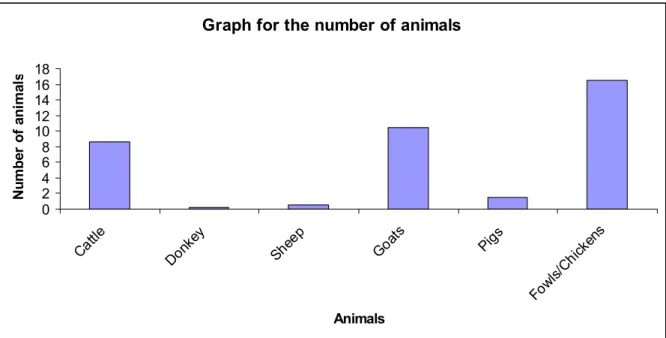
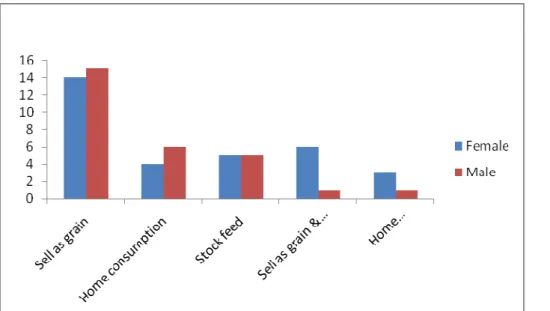
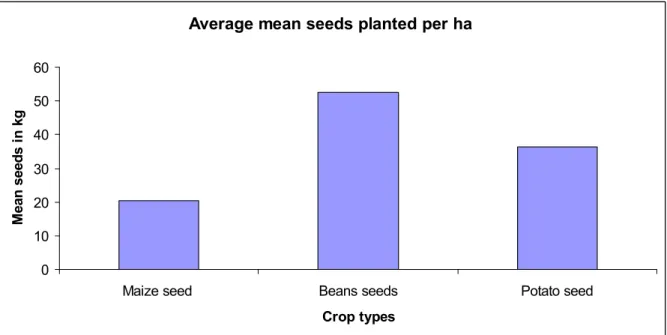
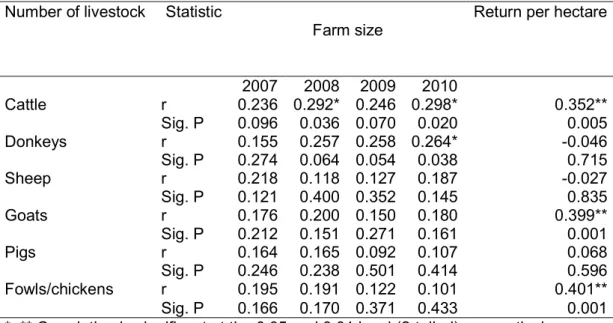
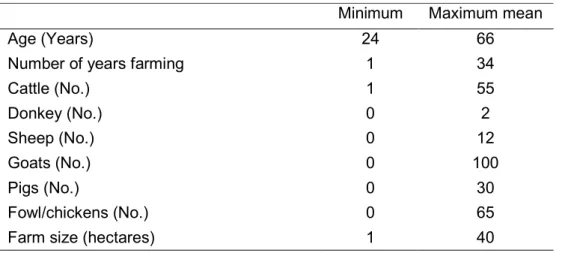
There were significant differences between gender groups for the number of green maize ears sold, the number of cattle, goats and farm sizes owned. Farm size was positively and significantly correlated with farmers' age, number of corn ears sold, fertilizers (MAP and LAN) applied and number of years of farming. The enterprise budget analysis in Table 3.8 revealed that the total cost of producing one hectare of green maize was R11,263.
Discussion
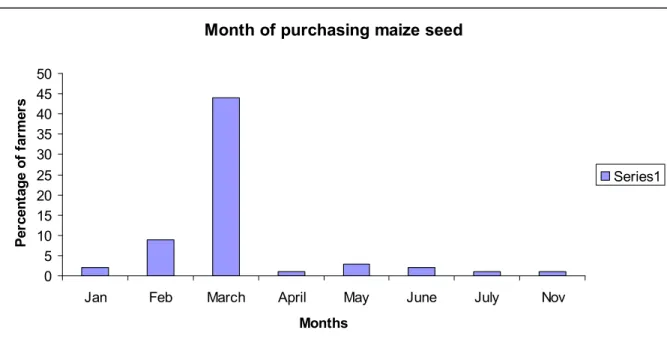
This study showed that the majority of the farmers planted green maize in March to be harvested in July-August when prices are high. This shows that the production and marketing of green maize in the study sites contributes to households' food security and well-being. The emphasis of this study was on green maize hybrid model development and farmers indicated the characteristics they did not like in a green maize hybrid.
Conclusions and Future Directions
Farmers could achieve greater returns if they can obtain suitable hybrids for the lowland environment and improve crop management practices. Comparative performance of direct sowing and transplanting of green maize under farmer management under small-scale irrigation: a case study of Zanyokwe, Eastern Cape, South Africa. Green – maize potential of hybrid and open pollinated cultivars at different levels of applied nitrogen: relationship with grain yield.
Abstract
Introduction
The ability of maize inbred lines to combine for green maize traits, such as marketability traits, has hardly been reported in the literature. The line x-tester analysis is used to estimate the general combining ability (GCA) of lines, testers and specific combining ability (SCA) of the crosses. The combining ability of the lines derived from the "HYP16" population with potential for use in green maize production has not been quantified.
Materials and Methods
Cone size (length) – in centimeters from the root of the ear to the tip of the ear. Flowering date - silking date - the number of days from planting to the date when 50% of the plants in the plot had silk 2-3 cm long. Field weight -, ear weight with ear in kilograms to one decimal place.
Data Analysis
The standard error (SE) of the SCA effects was calculated according to Dabholkar (1992) as follows: SE=√(MSE/rs) where MSE = mean squared error; r = number of repetitions = number of sites.
Results
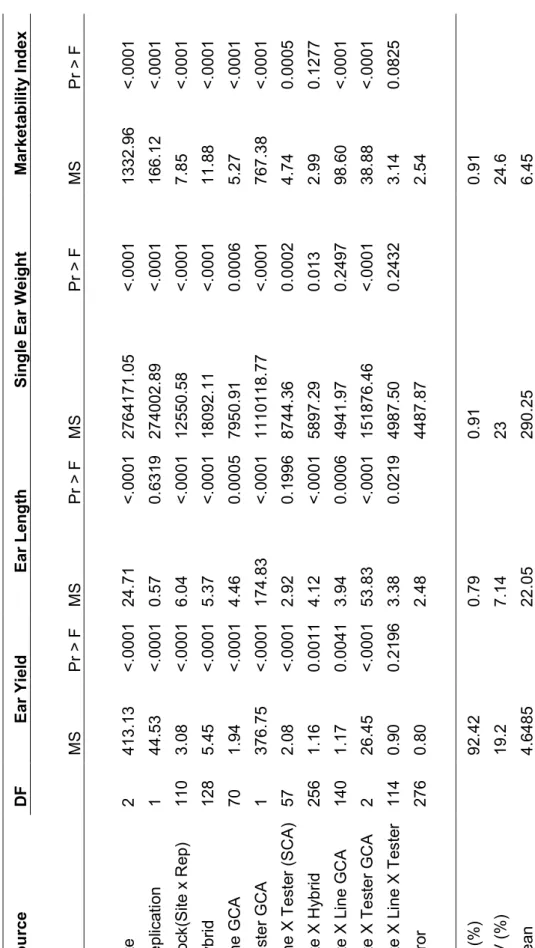
The following lines had significant positive GCA effects for all traits studied, across the three sites: Line GML34, GML95, GML68 and GML105. The following lines showed significant positive GCA effects for one trait line: GML75, Ear yield, GML102 and GML103, Ear length. It is indicated that the best seven hybrids had significant positive SCA effects for marketability index.
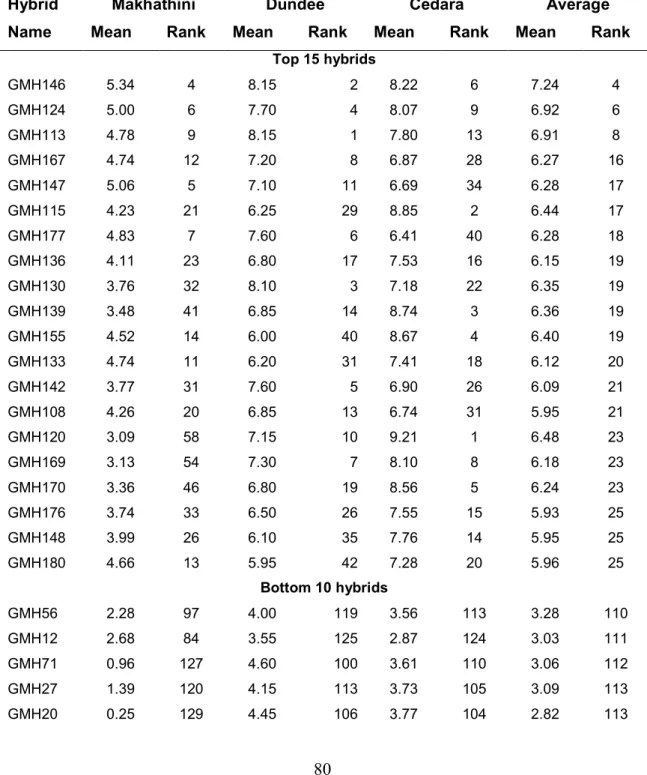
Rank of hybrids across sites
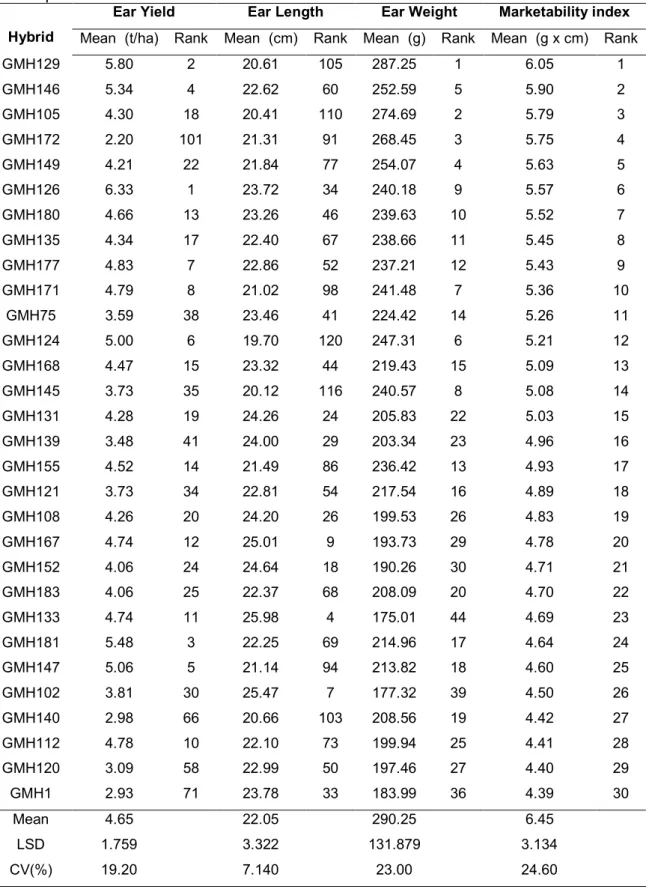
The mean and rank of hybrid for ear length across the sites are shown in Table 4.6. Average ranks for the best top 15 hybrids selected for ear length ranged from 6 to 37 positions. The mean and rank of hybrids for single ear weight traits across the sites are shown in Table 4.7.
Best hybrids selected for green maize potential on the basis of stability of
All the best hybrids exhibited semi-bulge (score of 3) to full-bulge grain texture (score of 5). All hybrids in the top 15 were at least 35% better than control SC701 in terms of ear yield. The data in Appendix 5 indicates that at Makhathini, hybrids involving P1 were predominantly in the top 15 for green ear yield only.
Relationships among traits
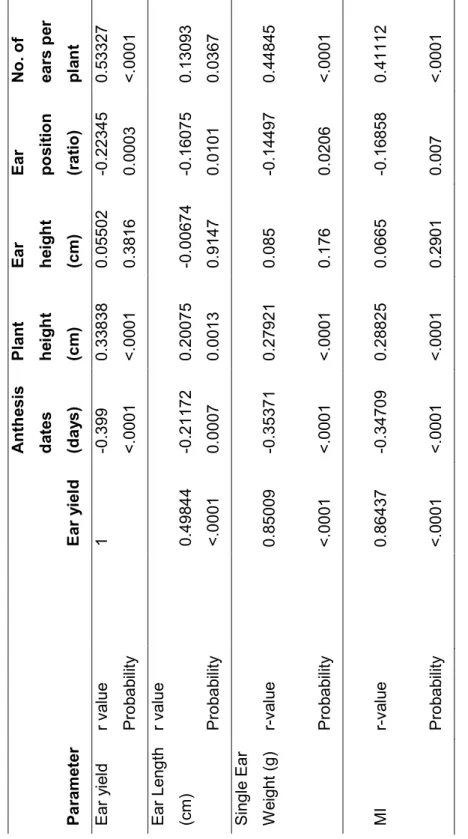
The data in Appendix 6 show that most of the hybrids were in the top 10 for dry ear yield except for one P1 progeny at Makhathini. Table 4.11 shows the correlations between green maize and agronomic traits measured in hybrids at Makhathini.
Frequency distribution of hybrids for green maize traits
Most hybrids had long ears in Makhathini (24 cm) and Dundee (24 cm), while in Cedara most hybrids averaged 22 cm. There was at least a 100 kg difference in ear weight between the two places. The range of marketability of hybrids in Makhathini was between 4 and 12 and in Dundee between 2 and 14 (Figures 4.8 and 4.9).
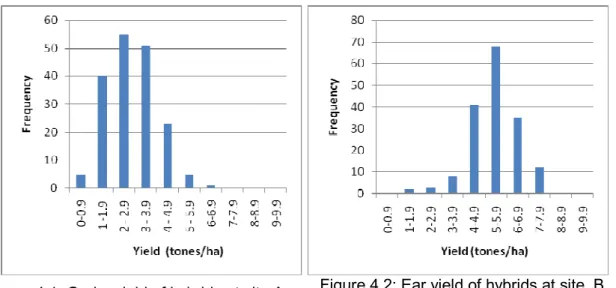
Frequency distribution of hybrids for agronomic traits
Discussion
The Line x Tester interaction effects were significant for all green corn traits except ear length, indicating that SCA effects also controlled ear yield, single ear yield, and marketing index. The current research therefore formed the starting point for the development of special hybrids for green maize. All top 15 hybrids showed at least productivity at all locations, providing an opportunity to select for the best corn suitable for the green corn market.
Conclusion and Recommendations
Spike length was positively and highly significantly correlated with grain yield, suggesting that yield can be increased by improving spike size. Nevertheless, the relationships between grain yield and other agronomic traits are consistent with previous findings in the literature. Mode of inheritance and combining ability for number of grains in a row and grain yield in maize (Zea mays L).
Introduction
Research objectives
Summary of the Main Findings
However, the lack of hybrids suitable for green maize production is still a challenge for green maize growers. The hybrids differed significantly in terms of ear yield and marketability indices, as well as in most agronomic traits at all sites. Breeding progress can be compromised by observing genotype x environment (GXE) interaction effects.
Breeding implications for green maize hybrids and its challenges
Due to the high genetic variation exhibited by hybrids in different areas, breeders need to increase the number of testers and make crosses with selected parents of the top 45 hybrids to identify viable hybrids for green maize production. There are challenges in breeding green maize hybrids, such as the lack of standard green maize controls, especially for wine production, the lack of literature on green maize longevity and palatability measurements. However, the size of the market and its distribution have not yet been determined, providing opportunities for further studies on the entire value chain for green maize production.
Future directions