This dissertation measured using appropriate methodology the degree of independence of the Reserve Bank of Malawi based on the Reserve Bank of Malawi Act of 1989. SMP PRGF Structured Monitored Poverty Reduction Program and the Reserve Bank of Malawi . This research attempts to fill that gap by looking at governance issues at the Reserve Bank of Malawi in relation to the independence granted to it by the Reserve Bank of Malawi Act of 1989.
The study will also advise on the review process of the Reserve Bank of Malawi Act which is in the pipeline.
Objectives and Methodology
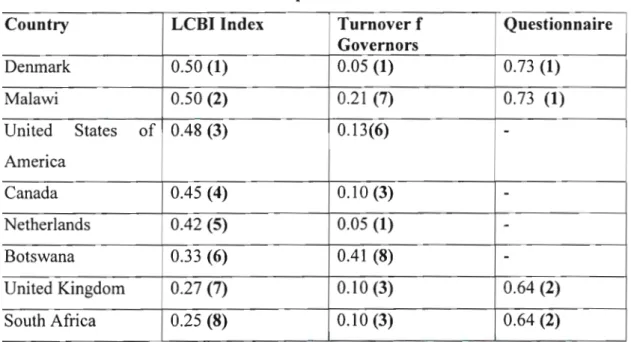
An informal indicator addressing governor turnover, also developed by Cukierman et al (1994), was also used to address this limitation. This indicator was used on the assumption that, at least above some threshold, a faster turnover of governors indicates a lower degree of independence. Regarding good governance, the study used the criteria developed by Eijffinger and Hoeberichts (2000) (see Annex III, page 65), which address accountability and transparency.
The thirteen components are divided into three main themes related to accountability and transparency.
Main Challenges Faced by the Research
The faster turnover creates dependency because when politicians often take the opportunity to choose a new governor, they usually choose those who will obey their wishes. Another informal instrument, a questionnaire, which essentially asks Central Bankers themselves to rate their independence, was used to further strengthen the research.
Summary of Findings
Organization of the Dissertation
Literature, Theory and Methodology
- Introduction
- Central Bank Independence
- Good Governance (Transparency and Accountability)
- Theory and Methodology
- Coding of Legal Independence and Factors Guiding Allocations of Points
- Informal Measures of Central Bank Independence
- Coding, Accountability and Transparency
- Summary
The relationships concern the formulation and communication of monetary policy and the relationship between the Central Bank and the government. The ideal way to ensure accountability is to make inflation the sole goal of the Central Bank (Amtenbrink, 2004:2). To this end, the Central Bank must announce the monetary policy strategy and explain its monetary policy decisions.
The legal characteristics of the central bank's independence, as stated in its charter/act, are grouped into four strands. Chapter Five discusses the central bank's objectives as prior commitments agreed upon by the bank and the government. Is the central bank subject to parliamentary control (is there a requirement to report to parliament in addition to the annual report and/or explain political measures in parliament).
Background - The Malawi Economy and the History of the Reserve Bank of Malawi
- Introduction
- Malawi Economy in Brief
- History of Monetary Policy in Malawi
- Exchange Rate Developments in Malawi
- Summary
The decrease in inflation can be attributed to the rapid harvest due to government policies and the reduction of unnecessary expenditure on the fiscal side (Government of Malawi, 2007:np). From 19 November 1973, the Malawian authorities responded to movements in international currencies by delinking the Malawi Kwacha from the British pound and pegging it to a trade-weighted basket of the British pound and the US dollar (RBM, 2000: np). One of the external factors was the deterioration of the country's terms of trade, which resulted mainly from weak external demand for the country's primary products in world markets.
During this regime, the exchange rate of the Malawian Kwacha, as quoted by the Reserve Bank of Malawi, was determined based on the daily calculations of the exchange rate of the US dollar in terms of the SDR. Rates of other currencies were quoted by the Reserve Bank on the basis of the applicable daily cross rates notified by the IMF. The second reason was that the government of Malawi, as part of the IMF structural adjustment programs that started in 1988, initiated a three-year adjustment program supported by the government.
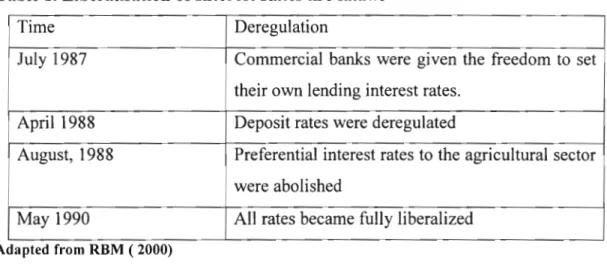
However, in March 1980, interest rates favoring the agricultural sector were introduced for the first time. The role of the bank rate has been increased by the development of the money market and the frequent use of open market operations as a tool of monetary policy. The Reserve Bank of Malawi now uses the bank rate as an indicator of the stance of monetary policy.
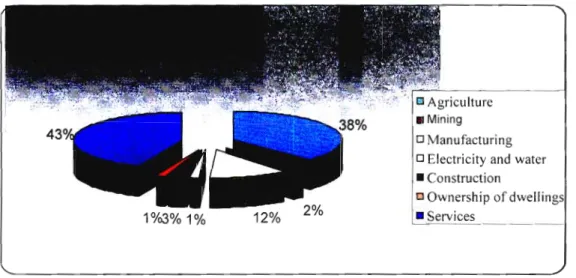
Many times, the adjustment of the bank interest rate resulted in the adjustment of the interest rates in the financial system. This chapter presents statistics showing that Malawi is one of the poorest countries in the world and in Africa.
Analysis of Results
- Introduction
- Legal Independence
- Informal Indicators of Actual Independence
- Turnover of Central Bank Governors
- Questionnaire on Central Bank Independence
- Accountability and Transparency
- Issues not Captured by All Other Indices
- Summary
The last weakness within this cluster is that the term of office of the Central Bank is short (the term of office is five years). The Reserve Bank of Malawi Act is also silent on the involvement of the Central Bank in the preparation of the government budget. The Reserve Bank of Malawi Act specifies ten objectives of the bank, but these objectives are neither clearly defined nor clearly ranked.
For example, the Act states that one of the purposes of the Reserve Bank of Malawi is to maintain price stability, but does not specify at what levels (Reserve Bank of Malawi Act, Part III: Section 4). The Reserve Bank of Malawi Act empowers the Board of Directors, subject to the approval of the Minister, to make bye-laws for the administration and management of the Bank and. The Reserve Bank of Malawi explains through its minutes from the meetings of the monetary policy committee to what extent the bank has achieved its objectives.
First, the size, composition and duties of the Board of Directors of the Reserve Bank of Malawi will be discussed. The Reserve Bank of Malawi has a Board of Directors consisting of seven members who are responsible for the implementation of the Bank's administrative and management policies. The central bank's monetary policy committee is small due to the fact that the economy is underdeveloped, very small and predominantly agricultural with little heterogeneity.
These issues are also well hidden in the minutes of the meetings of the Monetary Policy Committee. These are questions that can be addressed or considered while configuring the governance structure of the Reserve Bank of Malawi, let alone the Act. The research also found that the informal indicator that focuses on the turnover of central governors increases the independence of the Reserve Bank of Malawi compared to the statutory index.
There is a need for a new position of chairman of the board of the Reserve Bank of Malawi because the current setup means that the governor oversees himself.
Conclusion
This essentially indicates that there is a lot of political interference on the Reserve Bank of Malawi's independence. Under accountability and transparency, the Reserve Bank of Malawi Act 1989 gets a total score of 5 out of 13 points which amounts to 38.4%. The reason for the poor score is that the debate on accountability and transparency began to take shape after 1989 when the Reserve Bank of Malawi Act was formulated.
This means that the debate about responsibility and transparency flared up even after the publication of the law. The Board of Governors of the Central Bank of Malawi could be described primarily as a supervisory board, as responsibility for monetary policy is delegated to the Monetary Policy Committee and Board meetings are not necessarily viewed as the main source of effective monetary policy decisions. However, according to some economists, this setup creates a dilemma, as the governor, who is the leader of the board, tends to control himself, which usually leads to reduced accountability and transparency (Parsons, 2005: 17).
Most of the non-voting members of the Monetary Policy Committee are officials of the bank, namely directors of various departments. Parson noted that the success of the Bank of England was attributed to the quality of its policy makers, the knowledge of how the economy works, more particularly the involvement of outside expertise in the Monetary Policy Committee (Parsons, 2005: 19). Finally, the conditions for the appointment of the governor and who bears the final responsibility of the monetary policy were assessed.
Earlier in the chapter we mentioned that the Central Bank of Malawi Act allows the President to appoint the Governor of the Central Bank of Malawi for a term of 5 years by means of an instrument of appointment stating the terms of service for the Governor and that these terms are not set out in law. This becomes important as the government is also involved in the formulation of monetary policy and one could only speculate as to who will bear the ultimate responsibility (who will take the blame) if the central bank fails to achieve its goals.
Recommendations
Last time the Central Bank of Malawi Act was revised, there was little discussion on governance issues, particularly the accountability and transparency of monetary policy. Although the Central Bank of Malawi has several ways of communicating monetary policy to the government and the general public, these avenues need to be formalized to make them mandatory in law. The formalization of these channels would ensure the accountability and transparency of the bank by providing information to the public.
CODING OF LEGAL INDEPENDENCE
Defined in law as objective 1.00 The government has priority or final say only on policy. Goals or in case of conflict within the bank 0.80 A central bank council, executive branch and. The legislature has the final say on policy matters 0.40 The executive branch has the final say on policy matters.
Subject to due process and possible bank protest 0.20 Unconditional preeminence of the executive branch in politics. Price stability is the main or only objective and Centralna has the final say in favor of price stability in case of dispute with. Price stability is one objective with other compatible objectives 0.60 Price stability is one objective with potentially conflicting objectives 0.40 No objectives are stated in the bank's charter 0.20 Objectives stated do not include price stability 0.00.
Advances allowed, but with strict limits Advances allowed, and the limits are loose. No legal limits on lending. Permitted, but with strict limits Permitted and the limits are loose No legal limits for lending.
QUESTIONAIRE BASED INDEX OF CENTRAL BANK INDEPENDENCE (INOFRMAL MEASURE)
First priority for a fixed exchange rate Price or exchange rate stability is among the bank's goals, but not first priority. No mention of price or exchange rate targets Functions as a development bank that provides 0.20 for subsidy rates.