i
THE CHALLENGES IN THE PROFESSIONAL DEVELOPMENT OF TVET COLLEGE LECTURERS IN LIMPOPO PROVINCE OF SOUTH
AFRICA by
MAKGABELE ALFRED MOSEHLA
Submitted in accordance with the requirements for the mini dissertation of
MASTER OF EDUCATION
in
ADULT EDUCATION COLLEGE OF EDUCATION
UNIVERSITY OF SOUTH AFRICA
Supervisors: Dr EM Nkoana Prof MM Dichaba 2023
ii
DECLARATION
I, Makgabele Alfred Mosehla (Student no: 44181256) hereby declare that the research study: The Challenges in the Professional Development of TVET College Lecturers in Limpopo Province of South Africa is my original work and that all the quoted sources have been acknowledged and indicated by means of whole references.
18 August 2023
_________________ _________________
Signature Date
iii
DEDICATION This study is dedicated to:
My late grandfather, Magodingwane Mosehla in appreciation for communicating to me the significance of dedication and hard work in everything I do. He was my pillar of strength, and his wisdom and courage will always be appreciated. Mamajane’a Ribane wa sekata ditlou…!
May your soul rest in peace, Mmaswi wa Mphele le Hunadi.
iv
ACKNOWLEDGEMENTS
The following people would like to be acknowledged:
My wife, Tshepisho Mosehla, for all the sacrifices you made to allow to complete my studies, I like to say thank you for your support. To my children, Given and Bokang Mosehla, your continued support is always appreciated. I took so much of your time as family for doing this work and your smile and understanding kept me going.
My sincere appreciation goes to my family, especially my mother Linky Mosehla, my sister Princess Dolamo, and everyone in my family for your continuous support throughout my studies.
My brother-in-law Matsokela Dolamo, your words of encouragement and great support you offered me throughout my studies is highly appreciated.
To all participants who took part in this study, I am very much grateful to all participants who were involved in my study for their time and meaningful information that helped me to finish this study.
A big thank you to the TVET College management for allowing me time and space to conduct the study at their college.
I want to thank my colleagues Edwin Makwe, Jan Skosana, Mpho Mathye and Pat Sibaya for their support and their words of encouragement.
Finally, I would not have finished my studies without the help of my supervisor and co- supervisor, Prof MM Dichaba and Dr EM Nkoana. your support, leadership, meaningful advice pushed me to complete this study and that is highly appreciated. I am very grateful for the kind of time and professionalism they invested in this project. It was a great privilege and honour to have studied from them.
v
I would like to leave you all with these inspiring words from Tata Mandela: “It always seems impossible until it’s done”.
vi ABSTRACT
TVET colleges are an important part of a quality education system that can offer much needed opportunities for school leavers. The main purpose of the study was to explore the professional development state in the Limpopo TVET colleges to establish plans that can be applied to improve the professional development of lecturers at TVET colleges in South Africa in general.
A qualitative research approach and an exploratory research design was used in this study. The interviews analysis with both the college management presented by participants CM1 and CM3 and the teaching staff represented by participants L1, L2, L4, SL1, SL2 and SL3 were deliberated in this chapter. This chapter also addressed the views of college management and teaching staff as backed by literature. Out of ten (10) participants, two (2) participants (CM2 and L3) did not manage to take part in the study. Participant CM2 did not make it due to ill health and participant L3 did not participate due to personal reasons. To obtain primary data from participants to investigate the challenges in the professional development of TVET college lecturers in the Limpopo Province of South Africa, semi-structured interviews was used.
Responses from both management and lecturers show that there is a lack of certain skills and knowledge in both management and teaching. Senior management must accept full responsibility in implementing professional development courses to improve standard teaching and learning and must arrange and implement professional development courses to empower their lecturing staff. Lectures need to be empowered on how best they can improve their teaching skills using latest technology. But they acknowledge that through professional development courses by management, teaching skills can improve. The findings reveal that a lot still needs to be done to improve the situation in TVET colleges. That is because even though the management and lecturers agree with professional development to address their challenges, the planning and implementation still need more attention.
The study recommended that for college management to execute their leadership duties more effectively, there is a need to provide rigorous training programmes in terms of the significance and consequences of professional development in the
vii
college. The senior management should take up the significance of implementing professional development courses to improve standard teaching and learning. They must arrange and implement professional development courses to empower the lecturing staff. The study also advocated that individual lecturers be anticipated to have detailed understanding of the subjects they are involved in. The study decided that professional development in the Limpopo Province TVET colleges require careful planning and implementation for the advantage of the college, economy, the students, lecturers and the nearby communities.
Keywords: Professional development; TVET colleges; Skilled workers; Limpopo Province
viii
LIST OF ABBREVIATIONS 4IR Fourth Industrial Revolution
4IRSA Fourth Industrial Revolution in South Africa APP Annual Performance Plan
CET Community Education and Training Centres CIEG College Infrastructure Efficiency Grant CPD Continuous Professional Development DAS Developmental Appraisal System DoE Department of Education
DHET Department of Higher Education and Training DSG Development Support Group
FE Further Education
IQMS Integrated Quality Management System ISO International Organization for Standardization MTEF Medium-Term Expenditure Framework
NC(V) National Certificate: Vocational NGO Non-Governmental Organisation NQF National Qualifications Framework NSF National Skills Fund
NSFAS National Student Financial Aid Scheme PAM Personnel Administration Measures PGP Personal Growth Plan
PMS Performance Measure System SA South Africa
SADTU South African Democratic Teachers’ Union SDT Staff Developmental Team
SETA Sector Education and Training Authority
TVET Technical Vocational Education and Training College
UK United Kingdom
UNESCO United Nations Educational, Scientific and Cultural Organization WIL Work-Integrated Learning
WSE Whole School Evaluation
ix
TABLE OF CONTENTS
Declaration ii
Dedication iii
Acknowledgements iv
Abstract vi
Keywords vii
List of abbreviations viii
Chapter 1: Introduction and background to the study
1.1 Introduction and Background 1
1.2 Rationale of the study 3
1.3 Literature Review 4
1.3.1 Professional Development 4
1.3.2 Rationale for Professional Development of TVET lecturers 5 1.3.3 The challenges and opportunities in professional development of
TVET college lecturers
5 1.3.4 Is the Professional Development of TVET College Lecturers the
same as Teacher Professional Development?
6
1.3.5 History of Professional Development 7
1.3.6 Current state/status of Professional Development 7
1.3.7 Future of professional development 9
1.3.8 Legislation and Policies around Professional Development of TVET College Lecturers
9 1.3.9 Department of Higher Education on professional development 10 1.3.10 Academics views and their theories or models 11 1.3.11 International experience says about professional development 12 1.3.12 Regional experience on professional development in the
education sector or in the TVET college sector in particular
12
1.4 Statement of the problem 13
1.5 Aims and objectives of the study 14
1.6 Research questions 15
x
1.7 Research methodology and design 16
1.7.1 Research Approach 16
1.7.2 Population and sampling 16
1.7.3 Instrumentation and data collection techniques 17
1.7.3.1 Data collection methods 17
1.7.3.1.1 Interviews 17
1.7.3.1.2 Observation 17
1.7.3.1.3 Document analysis 18
1.8 Reliability and validity 18
1.9 Research ethics 19
1.9.1 Ethical consideration 19
1.9.2 Informed concern 19
1.9.3 Protection from harm 20
1.9.4 Confidentiality and anonymity 20
1.10 Definition of terms 20
1.11 Chapters outline 21
1.12 Conclusion 22
Chapter 2: Literature review
2.1 Introduction 23
2.2 The meaning of professional development 24
2.3 Rationale for professional development, either teacher
professional development or professional development of TVET college lecturers
26
2.4 The challenges and opportunities in professional development of TVET college lecturers
28
2.4.1 Management in professional development 29
2.4.2 Funding in TVET colleges 30
2.5 History of professional development 33
2.6 The status quo in professional development 34
2.7 The future of professional development 36
xi
2.8 Legislation and policies around professional development of TVET college lecturer
38 2.8.1 The Integrated Quality Management System 2005 39
2.8.2 The National Qualifications Framework 40
2.8.3 Norms and standards for educators’ 2000 41
2.8.4 Personnel Administration Measures 2016 42
2.9 Department of higher education on professional development 43 2.10 Academics views and their theories or models 44 2.11 International experience says about professional development 44
2.12 Conclusion 46
Chapter 3: Research methodology
3.1 Introduction 47
3.2 The research design 47
3.3 The research methodology 48
3.4 The site selection 49
3.5 Data collection tools 50
3.5.1 Interviews 50
3.5.2 Semi-structured interviews 51
3.5.3 Observation 51
3.5.4 Document analysis 52
3.5.5 Digital recorder 53
3.6 Sampling 53
3.6.1 Purposeful sampling 54
3.7 Role of the researcher 54
3.8 Data Analysis 55
3.9 Ethical considerations 55
3.9.1 Informed consent 56
3.9.2 Protection from harm 56
3.9.3 Privacy, confidentiality, and anonymity 57
3.10 Validity 58
3.10.1 Multi method strategies 58
xii
3.10.2 Verbatim accounts and participant language 58
3.10.3 Mechanically recorded data 58
3.10.4 Discrepant data 58
3.11 Trustworthiness 59
3.12 Conclusion 59
Chapter 4: Data analysis and discussion of findings
4.1 Introduction 61
4.2 Profile of the participants 61
4.3 Presentation of findings by managerial staff 62
4.3.1 Understanding of professional development 63
4.3.2 Responsibility for professional development 65
4.3.3 Attitude towards professional development 67
4.3.4 Professional development results 69
4.3.5 The amount of time required for professional development 70
4.3.6 Preference of candidates 71
4.3.7 The kinds of preferred providers 72
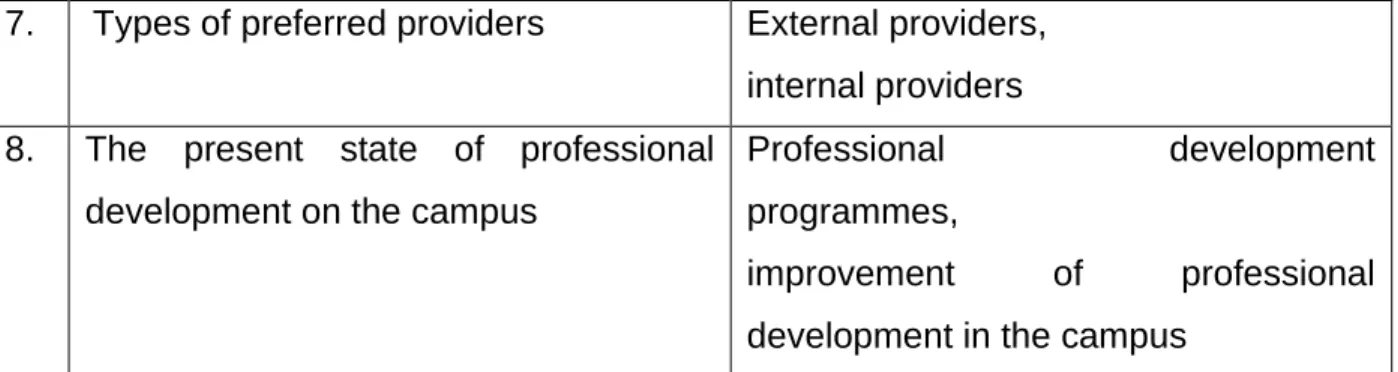
4.3.8 The present condition of professional development on the campus
73
4.4 Presentation of findings by lecturing staff 74
4.4.1 Understanding of professional development 75
4.4.2 The exposure to professional development 76
4.4.3 The impact on lesson planning 77
4.4.4 The lecturers’ perspective of professional development 78
4.4.5 Measuring professional development 79
4.4.6 Assistance from management 80
4.4.7 Monitoring of lecturers 81
4.5 Document analysis 82
4.6 Observation 83
4.7 Conclusion 85
Chapter 5: Findings, Recommendations, Limitations of the study and conclusions
xiii
5.1 Introduction 86
5.2 Summary 86
5.3 Findings 88
5.4 Recommendations 92
5.5 Recommendations for further study 95
5.6 Limitations of the study 96
5.7 Conclusion 96
Reference list 98
Appendices
Appendix A: Proof of Registration 110
Appendix B: Letter of Permission 111
Appendix C: Letter of request to conduct research at the college 113 Appendix D: Interview guide – College manager and section head 115 Appendix E: Interview guide – Senior and Junior lecturers 117
Appendix F: Observation schedule 119
Appendix G: Informed consent form 121
Appendix H: Editor’s certificate 122
Appendix I: Ethical Clearance Letter 123
1 CHAPTER 1
INTRODUCTION AND BACKGROUND TO THE STUDY
1.1 Introduction and background
This chapter provides the background to the study. The second section deals with the research focus, which describes the research problems, research questions, and research aims. It is followed by the merits of the research and the delimitations of the study under sections three and four.
Inequality and unemployment are serious problems affecting most societies around the world, (World Social Report, 2020), and the Technical Vocational Education and Training (TVET) college sector is best placed to address this pertinent issue. TVET colleges are an important part of a quality education system that can offer much needed opportunities for school leavers (Paryono, 2017). These educational opportunities benefit the labour market by increasing the pool of skilled workers and boosting productivity as a result.
This, in turn, will bolster the fiscus of any country through the increased tax base of skilled workers. It will also improve the country’s competitive edge and increase economic growth while fostering innovation (Sibiya & Nyembezi, 2018).
TVET college lecturers should be well equipped to train graduates that contribute to economic growth and human progress. This is more important in the context of a rapidly changing labour market in the globalised economy. They need to obtain the required skills and knowledge even before they can be appointed as TVET college lecturers. They are encouraged to be in contact with industries more often or in-service programmes must be put in place for them to be in line with the ever-changing learning environment. To be a qualified TVET college lecturer, you need to be certified in the area of your expertise and must have relevant pedagogical skill at that level. To have a clear understanding of TVET at the grassroots level, there is a need for qualified and experienced TVET college lecturers and trainers to plan for and execute relevant TVET programmes.
2
Professional development is important to achieve the above because that will allow TVET college lecturers to cope with changes in the education system. It needs a holistic approach; hence, curriculum development is also vital when dealing with the professional development of lecturers. This means that lecturers must equip themselves with new knowledge and skills to teach each new group of students and address their learning needs. Professional development not only allows TVET college lecturers to learn new teaching methods, practices and instructions, it also allows lecturers to interact with colleagues from other areas to improve their own teaching. Though some workshops are effective in introducing new topics, the most effective workshops provide education over time and involve hands-on actions and interactions. This allows for more discussions and questions for lecturers who wish to shine at their jobs and present quality teaching to their students.
Boateng (2012) suggests that TVET colleges need to ensure usual curriculum development repetitions in order to bring into line the skills of the graduates with the needs of the labour market. To achieve their institutions’ set goals, academic managers are expected to play an important role in improving and supporting the quality and relevance of TVET programmes (Albashiry, Voogt & Pieters 2015; Boateng 2012; Mazani 2013).
Pre-service and in-service professional development opportunities for TVET college programme managers are reported to be limited (Albashiry et al. 2015; Bakah, Voogt &
Pieters, 2012; Gervedink Nijhuis, Voogt & Pieters, 2012; Mazani, 2013). Heads of Department (HODs) in TVET institutions have been found to lack the required skills in guiding effective curriculum development practices. That results in academic departments that do not have direction and curricula that have not been reviewed for many years.
Continuous Professional Development (CPD) and learning are very important not only to one’s profession but also to organisations. The capability to collect more information and different viewpoints and relate these to a general business plan can assist in staying up to date on any development within the industry. It is important to have the willingness to
3
study new skills and adjust to new changes at all times. The ability to adapt to new circumstances is important.
1.2 Rationale of the study
It is very important for TVET college lecturers to always be willing to improve their skills.
That means that apart from knowledge of the subject matter, TVET college lecturers also need co-operation, as well as quality development, analysis and assessment. Although teachers are professionally trained, there is a need for continuous training for them to cope with changing learning environments. In Limpopo, the province in which researcher live, there are many people who need skills development. However, most of the development centres there are not very effective in providing the necessary skills to address the people’s needs economically, environmentally, and socially.
Most of the lecturers in the TVET colleges there are not sufficiently prepared to deal with challenges that are faced by their communities, which means there is a need for development. TVET can contribute towards a more sustainable development only if clear systems and approaches are put in place. Lecturers must be well equipped with knowledge and skills that can benefit TVET college graduates. Graduates will be able to use acquired skills and knowledge to improve their lives as well as that of people in the province and country in general.
It is hoped that the findings of this study will help to identify areas that need improvement and assist in finding solutions to the problems. That will help the country, especially Limpopo Province around the Sekhukhune District, to address the challenges being faced. As mentioned in the introduction, Limpopo Province is a province dominated by rural villages, and unemployment is very high. Professional development of TVET lecturers will benefit the province as qualified lecturers will use their skills to empower learners and engage with surrounding industries for job opportunities. Lastly, this study aims to make a valuable contribution to the teaching profession by improving TVET lecturers’ confidence in teaching, planning, and assessing, which will enable them to take pride in their profession and work.
4 1.3 Literature review
1.3.1 Professional development
Lattuca and Stark (2009), state that academic managers need to guarantee that the learning results of the programmes and courses are communicated. They must be up to date during the first stage of the development phase. They need to ensure these lectures and materials are always available. Communicating with students and lecturers and motivating teachers need to be facilitated during the implementation phase. During the evaluation phase, academic managers will assess the application of the envisioned plans, regulate them appropriately and observe the progress of the students.
TVET college lecturers’ preparation and professional development is necessary for them to be able to deal with new packages of educational content as well as coping with new set of skills and new methodologies for delivery and challenges that are emerging during these great paradigm shifts in teacher education. Professional development contains a huge amount of knowledge and experiences that can be shared during formal experiences. These include monitoring, professional meetings, etc. as well as informal experiences, for example, reading professional publications and watching television documentaries related to academic discipline.
It is critical for TVET college lecturers to possess the necessary personal, ethical, professional, teaching qualities and play a leading role in assisting to shape students’
attitudes and objectives. Well-developed and trained TVET college lecturers will be able to function and adjust to an ever-changing technological, social and scientific environment. As mentioned above, professional development needs a holistic approach as there is a need to look into different areas of development like improvement of lessons, personal development, school organisation, career development and vocational development (Duke & Stiggins, 1990).
5
1.3.2 Rationale for professional development of TVET college lecturers
A well-planned professional development of both teachers and TVET lecturers can benefit not only students; teachers and lecturers themselves can grow and be more effective in their teaching and learning. An ever-growing and ever-changing field of education makes professional development more important. Teachers and lecturers must be lifelong learners to allow them to improve their skills, thus preparing TVET college lecturers to be able to deal with students’ learning needs. Through professional development, teachers and TVET college lecturers can learn the knowledge and skills necessary to more effectively address student learning problems that are identified. Professional development also gives teachers and TVET college lecturers the opportunity to interact with educators from other areas to improve their own teaching.
TVET colleges in South Africa were in the process of renewal that required a lot of changes in policies and the National Curriculum Vocational (NCV) that was introduced to address the needs on economy did not meet the expected results. This is an indication that, when coming up with policy, it is very important to engage with different available stakeholders to check if that kind of policy will succeed and benefit all involved to avoid the repeat of what happened when NCV was initially introduced (Buthelezi, 2016).
1.3.3 The challenges and opportunities in professional development of TVET college lecturers
Field, Musset and Álvarez-Galván (2014), note that there were huge obstacles faced by past TVET sectors in South Africa which related to lack of consistency and resulted in problems in the system. Such challenges resulted in a disconnection between the students, lecturers and potential employers. The TVET system needs to be bolstered in such a way that it creates adequate partnerships with business and industry. It needs to be well equipped so that it responds to the skills requirements of employers and to the evolution of graduates into suitable jobs.
6
Excellence issues of vocational systems are flourishing internationally through professional development(Mohlokoane & Coetzer, 2007; Nkosi, 2012). Failure to improve the state of the vocational system here in South Africa makes it very tough for the system to deal with important issues the country is facing. These challenges stressed a need for the TVET college system in South Africa to be reinforced. The complexity of these systems needs to be looked at from different corners and viewpoints so that it can provide access to quality TVET education for everyone. The policy needs to be stable, macro- economic and clear for the system to function more effectively (Mitgang, 2012).
Limited budget is one of the major limitations that TVET is facing in developing countries.
This becomes the essential issue as to why TVET college institutions are not able to employ qualified lecturers, verifiers, and assessors. They are not able to support them in updating and upgrading their skills and knowledge, purchase the most appropriate training facilities and are not able to market themselves more effectively.
1.3.4 Is the professional development of TVET college lecturers the same as teacher professional development?
It is particularly important for school administrators to encourage teachers to pursue professional development not only to ensure the best learning outcomes for their students but also to be more effective and satisfied in various other aspects of their work. What matters here are the benefits and successes of both students and teachers due to process development. Professional development of lecturers and teachers goes hand in hand as a continuous way of empowering them to be more effective and productive.
To ensure competency in any profession and trade there is a need for continuous professional development of TVET college lecturers that is a continuous process and persists throughout the professional career of every individual. It enables one to get ahead and to stay forward, promoting one’s career and improving income. The fundamental results of well-organised continuous professional development procedures are that they defend the public, the employer, professional person and professional
7
career. Well-designed and correctly delivered continuous professional development is important, bringing advantages to the profession, the employer and the community.
1.3.5 History of professional development
For someone to theorise the purpose of TVET, there is a need to understand the history of TVET and its theoretical foundations. Apparently official TVET colleges have been covered to the procedure of economic development and industrialisation. As a result, TVET policies have often been dominated by economic and equity factors (UNESCO, 2012).
The theoretical contestations about the role of TVET start from the economic approach, which is based on neo-liberal assumptions that training leads to productivity that leads to economic growth. Acquiring skills can make people employable and create more job opportunities for people. It is necessary for TVET college lecturers to be qualified for them to be able to transfer skills to learners. The human growth theory declares that TVET provisioning should be aimed at maintainable growth.
TVET is seen as a means of supporting the development of a range of capabilities that are conceived as opportunities to develop performances that individuals, their communities and society at large have reason to value. One other challenge in TVET is funding that is negatively affecting lecturers and students and that has a negative influence on learning and teaching, resulting in poor performance with regard to pass rates of students (HSRC, 2005; Nkosi, 2012).
1.3.6 Current state/status of professional development
There are fifty (50) TVET colleges across South Africa, of which seven are in the Limpopo Province. This means that almost every major region in Limpopo has a TVET college campus. The courses on offer are accredited and independently monitored to ensure that they meet quality standards as well as being accredited by the International Organization for Standardization (ISO). This means that the quality of education and training is internationally benchmarked.
8
There is a need to bring universities, TVET colleges, Community Education and Training Centres (CETs), Sector Education and Training Authorities (SETAs), non-governmental organisations (NGOs) and private providers together into a coherent but diverse and differentiated post-school learning system if we want to achieve a powerful basis for addressing the needs of a developmental state within the framework of the Human Resource Development Strategy for South Africa (Nzimande, 2009).
The available programmes in most vocational colleges around South Africa did not correct the conditions of state because they are designed to provide technical knowledge instead of employability skills (Mok, 2015). Those programmes must be structured in a way that will give graduates the opportunity to gain and maintain employment. That will achieve employment changes such as changes between occupations and positions in the same company to deal with changing job needs. For one to be employable they need to have the required abilities for that task and the capability to use such knowledge to familiarise to changes inside the group (Froehlich, Beausaert, Segers & Gerken, 2014).
Technical knowledge alone does not necessarily make someone employable; it needs to be balanced with other skills as well, (Robles, 2012). Klaus (2010) says that for companies to be succeed, they need 75% non-technical skills like communication, integrity, professionalism, teamwork, and work ethic and around 25% practical knowledge. Non-technical skills or people’s skills, as Klaus (2010) calls them, need to be integrated into the curriculum and be moved from workplace (Kigwilu, 2016). Different kinds of assessment strategies like projects, portfolios, observation and assignments can assist leaners to obtain employability skills (Chaudhary & Dey, 2013). When doing evaluation, it is very important to select an evaluation strategy that inspires teamwork and communication among students (Ng, 2016).
9 1.3.7 Future of professional development
Due to development, a complex advanced technological industrial and agricultural economy has emerged that requires a skilled labour force. The issue of a skills gap needs to be addressed through professional development programmes to empower employees with the necessary skills and knowledge required by employers. Egbenta, (2015) states that untrained labour results in loss to the employer as the employer wastes time and money in preparing workers to be able to perform the task. TVET colleges can be considered as the right platform to attend to the skills’ shortage that existed between the educational programmes presented in colleges. Professional development of TVET college lecturers can help to address the demands set by the industry in terms of required skills.
Mixed methods research is both a method and methodology for conducting research that involves collecting, analysing and integrating quantitative and qualitative research in a single study or a longitudinal program of inquiry. The purpose of this form of research is that both qualitative and quantitative research, in combination, provide a better understanding of a research problem or issue than either research approach alone.
Applying mixed methods to learning and teaching in TVET colleges can be helpful to countries like South Africa as it has been a general habit in other countries like Europe to apply the mixed methods in vocational education and training programmes. The benefit of this approach is that employment and educational methods are basically connected.
This makes separate changes much better than it would be if the two systems were alienated.
1.3.8 Legislation and policies around professional development of TVET college lecturers
In 2000, TVET colleges embarked on a serious change institutionally, structurally and curriculum wise. They were previously ethically and racially isolated, as was the case with all South African education (Sayed, 2003). The merger of one-hundred and fifty (150) technical colleges to form TVET brought many long-awaited opportunities for learners
10
who had not been afforded such an opportunity. The colleges were able to be accessed irrespective of gender, race, and religion, and that was a breakthrough for many previously disadvantaged groups.
Professional development of TVET college lecturers can be seen as a way to address some of the challenges arising from the merging of technical colleges where there was a conflict amongst lecturers because of their backgrounds (Kraak, Paterson & Bok 2016:27). The college governing bodies that were formed under each TVET college were tasked with developing calculated plans and obtaining practical strategic planning competences (Further Education and Training Act, 1998). TVET college leadership, including governing bodies, lacked management skills and knowledge to successfully introduce the new policy requirements (Moyo, 2007:5).
According to the Further Education and Training Colleges Act of 2006, government is responsible for the appointment of management staff, while TVET colleges are responsible for the employment of all lecturers and new staff. The Further Education and Training Colleges Act of (FET Colleges Act, 2006:34) gives the college leadership the ability to approve states of employment. That includes the review and determination of wages for TVET college lecturers and other staff as well as all other forms of remuneration, in line with the available rules. Professional development plays an important role in making National Certificate: Vocational (NC(V) more effective, which commenced in January 2007, a success. TVET college lecturers will need to develop themselves to cope with the required standard of NC(V). National Certificate: Vocational is a TVET college qualification that aims to provide a sound foundation of general knowledge that is mixed with practical examples.
1.3.9 Department of Higher Education and Training (DHET) stance on professional development
An effective and structured TVET education system is important to learners who want to improve their skills and knowledge. It helps to address socio-economic challenges students and their communities are facing. Looking at the high unemployment rate in
11
South Africa, students without skills and knowledge required in the labour market will face the world with some doubts. They will need every chance available to realise their educational dreams. An operational technical, vocational education and training college system is an important section of a comprehensible and first-class post-school education system. An effective TVET college system can improve entrance to the labour market and increase labour effectiveness. The improvement of human wealth can help to improve the economic growth and effectiveness of the country (DED, 2011).
1.3.10 Academics’ views, their theories and/or models
Citing Agrawal (2012), Boateng (2012), and Finch & Crunkilton (1999), professional development of TVET college lecturers prepares them to deliver a hands-on learning experience to students and empowers them with the skills needed for them to face the labour market and enable lecturers and students to be open to the changing needs of the workforce market and that of the community. It is through professional development that lecturers/managers will acquire the required skills for them to be able to deal with the exclusive nature of the TVET programmes and the challenges TVET institutions are facing (Boateng, 2012; Bureau of the Conference of Ministers of Education of the African Union, 2007; The European Centre for the Development of Vocational Training, 2011).
According to Klar (2012), one needs to be more than just a teacher to be good, one needs to have extra skills over and above teaching qualification. It is important to be a leader and motivator to be able to deal with conflicts and other psychological problems related to teaching. Hellriegel, Jackson and Slocum (2005), also agree that as the managers of their class, lecturers must show managerial skill and attitude required for them to be more effective in their wide range of settings.
UNESCO (2014) stresses the importance of reshaping TVET colleges to boost the declining state of the economy globally and here in South Africa. TVET colleges need to be reshaped to be a source of employable graduates that can benefit industries, which is possible with the development of different skills by those institutions of higher learning (Tyler, 1949). According to Spencer, Lucas and Claxton (2012:13), the success of all
12
education systems relies significantly on the excellence of teaching and learning in training centres and other areas where education takes place. A good level of resources is necessary for any type of educational delivery to be excellent. The real answers to improving outcomes from vocational education lie in the classroom, in understanding the many choices TVET college lecturers make as they engage with students.
1.3.11 International experience on professional development
According to data compiled from Planning Commission Reports (2011), India is also using their TVET structures to address the challenges they are facing in their country by training TVET college lecturers. They believe that the quality of training depends on the quality of the trainer. The role of TVET in preparing manpower for the national development is well acknowledged today in India. Citing Shulman, (1987); Zlatkin-Troitschanskaia, Beck, Sembill, Nickolaus and Mulder (2009), and Terhart, Bennewitz, and Rothland (2014), the international state of the research leaves no doubt about the significance of lecturers’
profession-related competencies in the development of their students. Occupational knowledge, motivational emphasis, self-regulating capabilities and beliefs are recognised examples regarding professional occupational capabilities (Krauss, Kunter, & Brunner, 2004).
Vocational knowledge includes content knowledge, pedagogical content knowledge, pedagogical-psychological knowledge and counselling knowledge, according to Baumert and Kunter, (2011). In promoting the practical teaching methods employed by lecturers for the academic success of the student, there is a need for continued interdisciplinary training of teachers (Lipowsky, Rzejak & Dorst, 2011).
1.3.12 Regional experience on professional development in the education sector or in the TVET college sector
There can be little doubt that the South African TVET sector has been preoccupied with change at the macro-level or systemic level during the past fifteen (15) years or so – as successive policy documents indicate, for example, the FET Colleges Amendment Act 3 of 2012; and the White Paper on Postschool Education and Training (DHET, 2013b).
13
Given the large number of youths (about 3.1 million) who are Not in Employment, Education or Training - also referred to as the youth in NEET (DHET 2013a) - and the many policy intentions for TVET which have yet to be fulfilled (DHET, 2013b; Gewer, 2016), systemic change still has some way to go. This article argues that attention should be paid to the micro-levels at which transformation might occur, for instance, at the level of the Vocational College Lecturer engaged at the coalface of change in the TVET classroom.
As a result of DHET centralising colleges, higher education institutions, TVET college institutions and the Training institutions into one Department, there have been challenges for TVET at the institutional level. There was the issue of diversity in TVET, and the quality was not up to the required standard. More TVET colleges were established in rural provinces such as Limpopo, Mpumalanga, KwaZulu-Natal and the Eastern Cape by the government to address the problem of enrolment where the first students were enrolled in the year 2014. Due to volume restraints and the lack of consistency and assistance between educational institutions and the labour market, the diversification of TVET colleges lags behind.
1.4 Statement of the problem
Professional development of lecturers in TVET Colleges is beneficial to the effective delivery of educational programmes. Evidence of poor teaching and learning are visible in the poor throughput rates, high dropout rates, low progression and poor completion rates among college students on the National Certificate Vocational (NCV) programme in the Technical Vocational Education and Training (TVET) Colleges.
The problem of ineffective management of professional development at TVET colleges was visible during the novel Corona Virus (COVID-19) pandemic lockdown, where lecturers had no direction on how to continue teaching because they do not possess technical and technological skills. This signifies that lecturers are not prepared to lead students into the 21st century because they are not developed properly to teach in this
14
era (Mokgato, 2020:3). The researcher observed the same trends at the TVET College when during his regular visit and decided to research this problem. In light of the information presented thus far the research problem has been identified as relating to whether the training offered to TVET lecturers is relevant to the core business of TVET colleges and aid their professional development and whether the management of professional development at a particular college could be improved.
Professional development is viewed as the main tool to empower TVET college lectures with skills and knowledge that will help them in their teaching and learning methods.
Proper management and planning of professional development can assist in achieving the intended objectives. Professional development must always aim to improve skills and knowledge in TVET colleges. According to Tyler (1949), an effective learning experience must include skills, knowledge, attitudes, and values. The mixture of different skills in training programmes and the detailed assessment of the required skill are important (in order to provide for individual student needs and to train the staff (Langer, 2013).
The Department of Education (DoE) introduced the National Certificate: Vocational (NC(V)) in 2007 as an inclusive curriculum with around fourteen fields of study. The main aim was to address issues of poor quality in TVET programmes in order to improve skills and prepare students to face the labour market with the required skills and knowledge and to produce quality and employable graduates. That can all be achieved if there are systems in place to develop and empower TVET college lecturers and managers with the necessary skills for them to be able to make TVET colleges and graduates more effective.
Monitoring the progress of TVET college lecturers can play a huge role in making sure that they are functioning in line with ever-changing educational needs.
1.5 Aim and Objectives of the study
The aim of this study was to investigate the challenges in the professional development of TVET college lecturers in Limpopo Province of South Africa.
Below are the specific objectives to be achieved:
15
• To provide the college with new information and strategies which have not been researched before to address their challenges.
• To examine if lecturers are developed in their specialisation areas.
• To investigate if the management of professional development by staff influences instruction and education for students.
• To identify how this research will assist the college to change its perceptions on managing professional development in areas of specialisation.
• To explore what role does senior management play in managing professional development.
• To find out what the lecturers’ perceptions regarding the management and importance of professional development?
• Explore challenges faced by Limpopo TVET college lecturers.
• Recommend intervention measures that can be used to improve professional development of TVET college lectures in South Africa.
1.6 Research questions
The research questions that this study sought to answers are the following:
Main research question
What are the challenges in the professional development of TVET college lecturers in Limpopo Province of South Africa?
Sub-research questions
• What programmes are available for the professional development of lecturers at Limpopo TVET colleges?
• What challenges does Limpopo TVET college lecturers face?
• What intervention strategies can be employed to improve the professional development of lecturers at TVET colleges in South Africa?
• How effective is the management staff development programmes for lecturers in their areas of specialisation?
16
• How effective are the policies concerning staff development in TVET Colleges?
• What is the role of senior management in professional development in TVET Colleges?
1.7 Research design and methodology
This section presents the research design and research methodology as follows:
1.7.1 Research approach
Qualitative methods were suitable for this study as it allowed me to get a better understanding about the issues on the table. Qualitative methods are more flexible and allow for greater adaptation and naturalness of the communication between the researcher and the study participant. Qualitative methods give participants freedom to respond in their own words because of open-ended questions that are not necessarily expressed in the same way with each participant (Babbie & Mouton, 2011).
In qualitative methods, the relationship between the researcher and the participant is often less formal than in quantitative research. Participants can respond more elaborately and in greater detail than is typically the case with quantitative methods. Again, researchers could respond immediately to what participants say by tailoring subsequent questions to information the participant has provided(McMillan & Schumacher, 2010).
1.7.2 Population and sampling methods
As stated by Denzin and Lincoln (2013), informed consent, privacy, and confidentiality was applied to protect the identity of the participants. The arrangements of the sample included the college manager, section heads, and lecturers at different levels. The TVET college manager, section heads and lecturers were chosen as they are the important people in recognising and transmitting the needs of the lecturers. As the management task is to see to the happiness of the students and lecturers, they have the responsibility to meet the needs of the lecturers to ensure that positive results can be accomplished.
17
TVET college lecturers are better located to understand their failings in terms of their different subject contributions; they are at the point of curriculum distribution.
1.7.3 Instrumentation and data collection techniques
In this section I will present the data collection methods, the data collection tools, and the data analysis and data presentation techniques.
1.7.3.1 Data collection methods
The following data-collection methods were used, namely: interviews, observation and document analysis.
1.7.3.1.1 Interview
Seale, Gobo, Gubrium and Silverman (2004), define an interview as a social encounter where participants cooperate in producing a reflective and personal version of their experiences, future actions, feelings and thoughts. In this study, as the researcher, I used an unstructured form of interview due to its flexibility to questioning. This kind of interview was used because it gives both the researcher and respondents a chance to discuss. It saves time by providing full information and can be changed or adopted to meet the respondents’ understanding and intelligence.
1.7.3.1.2 Observation
Observation took place in natural settings and involved the researcher taking long and explanatory notes of what was happening. There were limits to the situations that could be observed in their usual settings and the presence of the researcher may have led to problems with validity. Limitations with observation included a change in people’s behaviour when they knew they were being watched and the whole situation could not be considered. The researcher may have missed something while watching and taking notes. The researcher may have made judgements or value statements or have misunderstood what has been observed.
18 1.7.3.1.3 Document analysis
To ensure reliable results, the researcher had a clear plan on how and what to be investigated looking at the available resources relevant to the research project which concerned professional developmental needs. A qualitative data-analysis process was followed to examine and interpret the data, during which the information was coded and branded. Referring to Gay, Mills and Airasian (2011), data from the participants were prearranged in significant logical components and coded to indicate each section. The data were then organised by sorting the codes and classifying the key subjects by agreeing on which data can be understood. The register that shows the type of professional training offered and the individuals who attended was requested by the researcher from the campus management and the human resources personnel. Other written information that is related to professional development was also requested so that it can be analysed.
1.8 Reliability and Validity
Reliability becomes a concern every time a solitary observer is the source of data because there is no certain guard against the influence of that witness’s subjectivity, (Babbie, 2010:158). According to Wilson (2010), consistency issues are usually carefully connected with subjectivity and once a researcher approves a subjective approach towards the study, then the level of reliability of the work is going to be compromised.
To ensure validity of the research, the researcher included an appropriate time scale for the study to be selected; and the appropriate methodology to be chosen, considering the characteristics of the study. The most suitable sample method for the study was selected and the respondents were not pressured in any way to select specific choices among the answer sets.
To strengthen the credibility of research findings and to increase the measures of validity, the triangulation method was used. That assisted in equalling the outcomes of different methods to a single unit of study. Triangulation refers to the use of multiple methods or data sources in qualitative research to develop a complete understanding of phenomena
19
(Patton,1999). Triangulation also has been viewed as a qualitative research strategy to examine validity through the meeting of information from different sources.
1.9 Research ethics 1.9.1 Ethical consideration
Ethical approval to conduct research was obtained from the Research Section of the College of Education and permission was received from all stakeholders involved, including the Department of Education, before the research began. Creswell (2012), said that participants participated in the research willingly and the aim of the research was explained to all participants. The processes to be obeyed, benefits, alternative procedures, the dangers, and the measures put in place to ensure privacy were outlined to the participants.
1.9.2 Informed concern
Information - When providing information, the researcher ensured that potential participants were given a clear explanation about the nature of the research and the procedures involved. The information included the objectives of the study and any other potential risks and benefits.
Under voluntariness, consent was freely given, and participants were free to withdraw at any time, as unwarranted influence may take the form of encouragement over potential participants.
Under comprehension, voluntary participation meant that participants could make an informed choice, while informed consent assumed that the information given was accurate. Both principles were strengthened by the principle that participants understood what they were being asked to participate in (McMillan & Schumacher, 2010).
20 1.9.3 Protection from Harm
Participants’ identities were kept confidential, and the assurances extended beyond protecting their names to also include not using self-identifying statements and information. Participants were assured of the confidentiality of information they provided, and the anonymity of respondents was respected. The aim and reason for research was explained to participants so they would have the freedom to participate in the research willingly without any pressure from the researcher (Creswell, 2012).
During the data collection process, we were facing the corona virus pandemic, so the Covid-19 rules and regulations, such as wearing of masks and observing the social distancing requirements when conducting research, were observed in order to avoid infection.
1.9.4 Confidentiality and anonymity
Participants were assured of confidentiality of information they provided and also the anonymity of respondents was respected. The aim and reason for the research was explained to participants so they could decide to participate in the research willingly without any pressure from the researcher. Potential participants are able to make an informed decision about whether they want to participate if they know what is going to happen to the data they provide. Thus, it was very important to explain that to them. I assured people who took part in the interview that their responses would never be used in a way which allowed them to be identified (Cohen, Manion, & Morrison, 2007).
1.10 Definition of terms
The key terms used in this study are defined in order to provide a clear understanding of their meaning in this study.
1.10.1 Professional development
Professional development is defined as continuous education and career training after a person has entered the workforce in order to help them obtain new skills, stay up to date on current trends, and advance their career.
21
1.10.2 Technical and Vocational Education and Training (TVET)
TVET means education or training, which is technical in its nature and aimed to provide skills for a person related to a profession, in order for that person to get a job and provide a livelihood (Chetram, 2017:40).
1.10.3 TVET Lecturer
These are lectures who got training and are qualified as teachers and are employed or working at TVET colleges.
1.10.4 Challenges
In the context of this research, challenges are problems that hamper professional development of TVET college lectures in teaching and learning.
1.11 Chapter outline
Chapter 1: Introduction and background to the study
This chapter introduces the study by presenting the problem statement and related research questions, the aim and rationale for the study are highlighted. The structure or organisation of the dissertation is presented in this chapter.
Chapter 2: Literature review
Chapter 2 presents the conceptualisation of key concepts central to the study, the professional development of TVET college lecturers. It also presents theoretical frameworks of the study and verifies what is already known about the title so that a inclusive picture of the state of relevant knowledge can be found.
Chapter 3: Research methodology and data collection
The chapter focuses on the methods used in the study, the research design, sample selection, and data collection instruments. Procedures of data collection as well as data analysis and ethical considerations in the study are deliberated.
22 Chapter 4: Data analysis and interpretation
This chapter presents the analysis and interpretation of data.
Chapter 5: Discussion, conclusions and recommendations
Chapter 5 discusses the findings of the study, and provides conclusions, and recommendations for further research. The chapter also presents the limitations of the study.
1.12 Conclusion
The above information can only be achieved through combined efforts towards the strengthening of TVET college lecturers. Professional development can be used to bring together skills development and technical knowledge to the benefit of TVET colleges.
TVET colleges are an important part of a quality education system that can offer much needed opportunities for school leavers. These educational opportunities will benefit the labour market by increasing the pool of skilled workers and boosting productivity as a result. This in turn, will bolster the fiscus of any country through an increased tax base of skilled workers. It will also improve the country’s competitive edge and increase economic growth while fostering innovation (Sibiya & Nyembezi, 2018).
TVET college lecturers should be well equipped to train graduates that contribute to economic growth and human progress. This is more important in the context of a rapidly changing labour market in the globalised economy. They need to obtain those required skills and knowledge even before they can be appointed as TVET college lecturers. They are encouraged to be in contact with industries more often or in-service programmes must be put in place for them to be in line with the ever-changing learning environment. To be a qualified TVET college lecturer you need to be certified in the area of your expertise and must have relevant pedagogical skills at that level.
23 CHAPTER 2 LITERATURE REVIEW 2.1 Introduction
The lecturers at Technical Vocational Education and Training (TVET) colleges are confronted with demands to produce quality education that will empower students to develop skills and knowledge so that they can be productive and ready for employment.
According to Bijl and Taylor (2018:126), the aim of vocational education is to train students to be ready for work. This means that the TVET lecturers that present vocational programmes must be able to produce quality education. They must be professionals to the subjects they are teaching. TVET lectures must have latest knowledge of the subject and necessary experience of their subjects that are in line with the industries. They also need teaching skills for them to be able to produce quality content.
The importance of literature review is that current scholarship is examined to learn how different researchers have examined the research problem in which the researcher has interest in, to establish new knowledge (Mouton, 2006: 86). The literature reviews assist in establishing the space between what has been composed on certain topic in which the researcher have interest in. Literature review can also expose likely inadequacies in the literature that has been studied (Maree, 2012:26). This chapter addresses a literature review in line with the challenges in the professional development of Technical Vocational Education and Training college lecturers in Limpopo Province of South Africa.
According to the South African Department of Higher Education and Training (DHET, 2013b), TVET colleges function in the so-called post-school education system with the purpose of arranging or training students for the world of work and to enhance to emerging skills for the economy. Even if TVET colleges were used to be responding to the realistic essentials of business and industry which is to prepare learners more ready for employment and to prepare them for the developing economy, the new programmes
24
make demanding reasoning regarding highest skills and knowledge (McBride, Papier &
Needham, 2009: 22).
In this chapter, literature is reviewed by various scholars both in South Africa and other countries on the subject of the study and with an idea of providing a theoretical structure connecting to professional development and its benefits if well managed. It also looks at the problems in the professional development of TVET college lecturers. A convincing case for the importance of research can only be established by learning what has been researched already (McMillan & Schumacher, 2010:74). The statement is supported by Maree (2017:28), who states that a literature review gives a summary of current information. Literature review reveals sufficiently applicable research suitable to research topic. In this chapter, bearing in mind the above, the following themes will be unpacked:
1. The meaning of professional development;
2. The history and current status of professional development;
3. Academics’ views, their theories, and/or models on professional development;
4. Rationale for professional development of either teacher professional development or professional development of TVET college lecturers;
5. The challenges and opportunities in professional development of TVET college lecturers;
6. Department of Higher Education and Training (DHET) stance on professional development;
7. The future of professional development;
8. Legislation and policies around professional development of TVET college lecturers;
9. What international experience says about professional development.
2.2 The meaning of professional development
Professional development of TVET college lectures is important because it can better the employee skills and knowledge and improves confidence. This could help lectures receive more opportunities for career advancement, such as promotions and transfers.
25
Professional development can make lectures more desirable candidates because of their knowledge and level of expertise in their field. Professional development improves lecture’s skill set and knowledge, but the college also benefits from their growth as an employee.
In support of Chetram (2017:20), professional development is a process that includes a well arranged and organised programme of well organised, arranged, and reasonable activities that channel the learning needs to improve their current repetition, assist in the development of the education planning and increase lecturer’s career satisfaction and confidence.
Professional development is associated with any kind of development improve staff abilities. That can only be achieved through establishing training opportunities. It is a necessity for professional development at TVET colleges to empower lecturers to be more effective when teaching subjects. They need to be well developed professionally to for them to offer meaningful education that can address socio-economic challenges faced by the province. Chetram (2017:40), concur with above statement by saying that TVET college lecturers have a wish to maintain continuous learning occasions to obtain the knowledge and skills add to their societies and to achieve their goals.
Like most of the countries, South Africa is using TVET colleges to address the many challenges the country is facing. Some of those challenges includes unemployment and poverty. That means there is a need for quality education from TVET college lectures to achieve that goal. Professional development assist in improving quality of education of TVET lectures and those of the students. There are lot of complains globally about the quality of education and the problems can be addressed through proper management of professional development. Countries like Indonesia and Malaysia are experiencing the problem with development of their lectures. There is lack of proper training in those countries and the TVET teaching staff are employed directly from universities and they lack proper skills and knowledge and vocational teaching experience (Paryono, 2017).
Quality education is necessary for students hence there is a need for TVET college lectures to be professionally developed (UNESCO, 2014).
26
TVET college lecturers’ preparation and professional development is necessary for them to be able to deal with a new package of educational content and also to deal with a new set of skills and new methodologies for delivery and challenges that are emerging as among the greatest shifts in paradigm in teacher education. According to Gancer (2000), professional development contains a huge amount of knowledge and experiences that can be shared into formal experiences. That includes monitoring, professional meetings, etc. as well as informal experiences like reading professional publications, watching television documentaries related to academic discipline, etc.
It is very critical for TVET college lecturers to possess the necessary personal, ethical, professional, teaching qualities and play a leading role in assisting to shape students’
attitudes and objectives. Well-developed and well-trained TVET college lecturers can function and adjust to an ever-changing technological, social and scientific environment.
As mentioned above, professional development needs a holistic approach as there is a need to investigate different areas of development like improvement of lessons, personal development, school organisation, career development, and vocational development (Duke & Stiggins,1990).
2.3 Rationale for professional development of, either teacher professional development or professional development of TVET college lecturers
Professional development is very important at TVET colleges to empower lectures with new ideas and knowledge to enable them to be effective in the subjects they teach.
Lectures are not well developed to execute their duties to the level of satisfaction. In support of the statement, Chetram (2017:40), mentioned that TVET college lecturers have a wish for continuous learning occasions to develop the capabilities and knowledge to convince their dreams and add value to their communities.
Professional development of TVET college lecturers improves the level of education.
Through professional development, lecturers develop their professional skills. That bring about improvement on how they plan and deliver their lessons, it improves their
27
knowledge. There are some shortcomings of professional development in the sphere revealed by Motala and Pampallis, (2020:7). It was noted that TVET colleges lectures are lacking on teaching approach and are anticipated to attend training that are relevant to the vocational subjects they teach. It was indicated by Motala and Pampallis (2020:10), that there is a need for the review of management of professional development.
A well-planned professional development of both teachers and TVET lecturers can benefit not only students; teachers and lecturers themselves can grow and be more effective in their teaching and learning. An ever-growing and ever-changing field of education makes professional development more important. Teachers and lecturers must be lifelong learners to allow them to improve their skills, preparing TVET college lecturers to be able to deal with students’ learning needs. Through professional development, teachers and TVET college lecturers can learn the knowledge and skills necessary to more effectively address student learning problems that are identified. Professional development gives opportunities to teachers and TVET college lecturers to interact with educators from other areas to improve their teaching.
As TVET colleges in South Africa were in the process of renewal, that required a lot of changes in policies. The National Certificate: Vocational (NC(V)) that was introduced to speak to the needs of the economy, did not archive the expected results. That is an indication that when coming up with policy, it is very important to engage with different stakeholders available to check if that kind of policy will succeed and benefit all involved to avoid a repeat of what happened when NC(V) was initially introduced (Buthelezi, 2016).
Professional development is a continuous process that persist throughout an individual’s professional vocation and upholds the below advantages of a properly arranged professional development:
1. Helps professionals to acquire new possibilities and new knowledge;
2. Contributes in making a professional to play a significant contribution to colleagues and managers and delivers better chances to control and run the organisation;