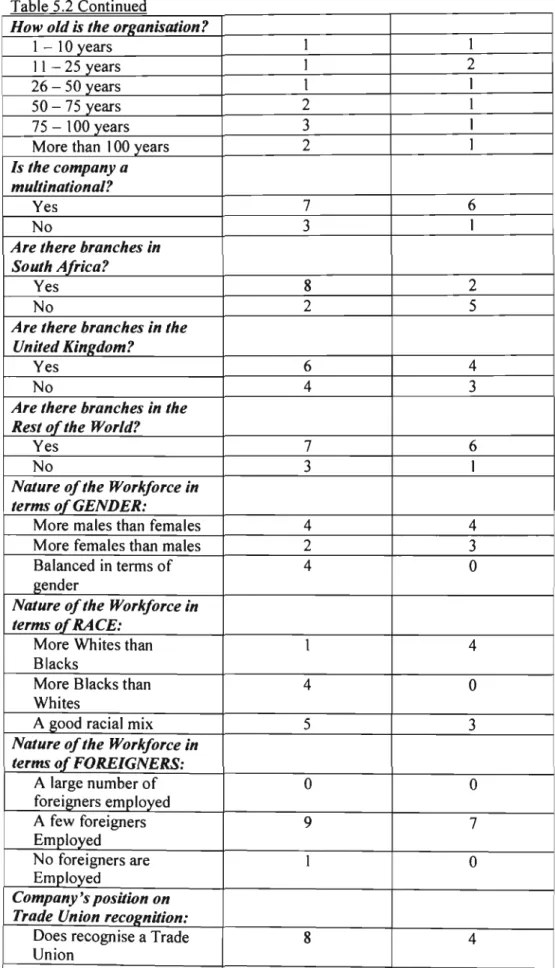
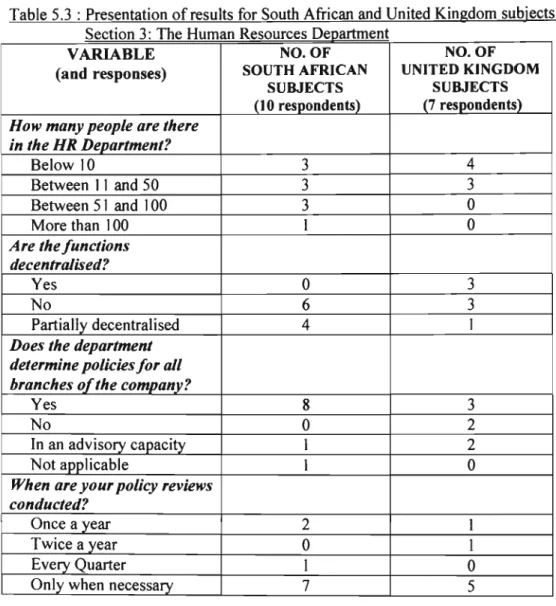
The research addresses this issue by examining the influence of the personal values, beliefs and opinions of the Human Resource Practitioner, who. This study is therefore an exploration aimed at discovering the current practices that dominate South African organizations, focusing on the Durban region, regarding human resource development.
INTRODUCTION __________________________ _
Systems Theory
A change in one part of the organizational system will always have a certain effect or influence on the other parts. Senge i French & Bell Jr (1995) believe that in order to bring about change in the organizational system, it is not acceptable to simply change selected parts of the system.
Competing Values Approach
This example provides a clear indication of the conflicting values and goals that can exist in an organization. The structure of the organization, ranging from an emphasis on flexibility to an emphasis on control.
THE CONTEXT OF GLOBAL AND NATIONAL CHANGES
- Global Developments and their impact on South African Organisations
- Technological Revolution and Globalisation
- Management Practices
- Industrial Relations
- National changes affecting South African organisations -
- The Issue of Skills
- Productivity Levels
- Immigration and Emigration
- The Issue of Women
- The Issue of Diversity
- Employment Equity Act
- The Case ofthe United Kingdom
- Discrimination at the Workplace
- The Issue of Women
- Immigration to the United Kingdom
- Concluding Remarks
Although there has been a significant improvement in the representation of women in this area of the UK workforce. The growth rate of the black population in the UK is dramatic and increasing.
LITERATURE REVIEW 27
Organisational Change and Development
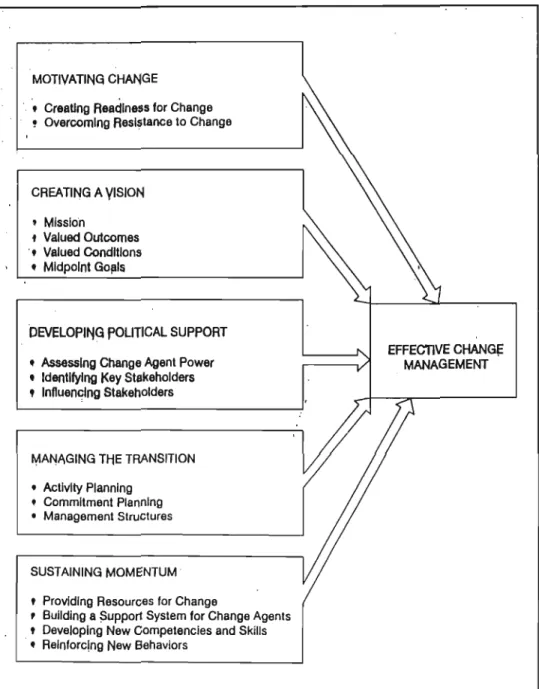
The first step in the change model is to motivate people to change – encourage them to believe that change is necessary and that they should commit themselves to the change process. Three important activities are needed to manage the transition state for the change process to be successful.
Human Resource Policies and Practices
After the development of the policy, it must then be implemented or put into effect within the organization. Along with developing the policy, the procedures and practices needed to implement that policy must also be developed.
Decision Making Process and Participation by Employees
The culture of the organization determines whether there will be any form of participation and whether that participation will be successful or not. It must also be transferred to the values of the organization which are put into practice through management practices.
The Impact of Values
It is also a challenge to incorporate individual values while ensuring that the organization's values and beliefs are taken into account. This creates a distorted view of the organization's values as a group of employees and can alienate some employees. Human resource professionals must be aware of individual and group values within the organization and respect differences in values.
The Culture of the Learning Organisation
Vision and goals serve to connect people in an organization through a shared identity and sense of where the organization is going. Organizations need to focus on the future and it is important that they develop a learning culture in order to survive and adapt to changes that affect them. Therefore, in relation to Senge's (1990) outlook, organizations may need to involve all members of the organization in developing Human Resource policies if they are to achieve the commitment of the whole to decisions made in one part of the organization.
The Emerging Role and Future of the Human Resources Department
The nature of the workplace today has caused a shift in the focus of Human Resource departments in many areas. This new role of Human Resources requires both a change from the Human Resource practitioners as well as from senior management. They must be willing to invest in both new Human Resource practices and staff to ensure that the people have the skills to effect real change in the organization.
Past Research
- Gillian Godsell- CSIR Special Report (1983)
- Lynn Ribton-Turner- Unpublished Masters Thesis (1995)
- Bruce Hiddleston - Unpublished Masters Thesis (1976)
The human resources policy decision-making process and the influence of human resource practitioners and their different values, opinions and beliefs that influence this process. The main objective of this research was to investigate the perceptions, values and attitudes of human resource managers towards their organizational climate. Although the current research does not focus on risky decision making, it can build on Hiddleston's (1976) research by considering the influence of personality variables (values, attitudes, and beliefs) of individuals such as HR professionals on human resource policies. decision making process.
Introduction
Qualitative vs Quantitative Research Methods
The interviews are then supplemented by a short, factual questionnaire that forms the quantitative aspect of the research. The use of a short quantitative questionnaire means that the interviews are not slowed down by the many factual questions that are asked here. Instead, interviews allow for a more in-depth consideration of the subject through the eyes of the subjects.
Sampling
- Population
- Sampling Methods
- Maximum Variation Sampling
- Convenience Sampling
- Research Sample
- Location
- Composition of the Sample
- Response Rates
The investigation looks at the individuals involved in the process, rather than the actual activities of the organization. More people in Britain refused to take part in the survey than in South Africa. In the UK, most short questionnaires involved completing all questionnaires and returning them during the interview.
Research Design
- Designing the Interview Questionnaire
- The Interview Questions
- Standardised, Short Questionnaire
The interview guide consists of a set of questions or issues to be discussed during the course of the. It also reduces the effect of the interviewer because each subject is asked the same questions. This section also requires the organization's name and nature of the business to which the subject is affiliated.
Data Collection Procedures
- Before the Interview
- Interview Setting
- After the Interview
- Ethical Interviewing
Before the interview began, the researcher explained the use of the recorder to the subject and asked if they minded the interview being recorded. subjects were very willing to be recorded. This was often done on the same day as the interview, where the recording of the interview was not very good, so the information was still fresh in the researcher's mind. It is the researcher's responsibility not to abuse this trust that the subject has placed in them.
Data Analysis
- Analysis of Qualitative Data
- The Analysis Begins
- Organising the Data
- Content Analysis
- Analysis of Quantitative Data
Although the subjects were not always asked the questions in the same order, the data could be broken down into different questions and then analyzed into dozens of responses to each question. The themes and sub-themes identified in this study were arrived at by examining the various questions asked during the interview. It must be acknowledged that all respondents answered all questions and none were left out.
Major Theme: Policy Development Process
Regarding employee involvement, 50% of the subjects indicate that there is no employee participation in the process at all. None of the subjects stated that there have ever been negative consequences, in the form of strikes etc., as a result of union involvement in the policy development process. A subtheme related to the issue of employee involvement in the process is that of value conflicts.
Major Theme: Legislation or Organisational Values
I suggest that the role of HR professionals in the policy development process should be a combination of the two approaches mentioned above. This means, as the results of the study confirm, that HR professionals must take a neutral approach, especially in the policy development process. The results of the UK interviews show that the HR professional dominates the policy development process.

Major Theme: Personal and / or organisational values and beliefs
Major Theme: Value Shifts
60% of subjects stated that their values, beliefs and opinions have changed since working in Human Resources, while 40% stated that there had been no change at all in their values, beliefs and opinions. Another subject stated that she had become more hands-on since working in Human Resources and that her view of Human Resources has now changed and that she sees it more as a service to the company. Three subjects said their family had had the greatest influence, while one subject stated that her religious beliefs were the most influential.
Major Theme: Racial and Gender Issues
In other words, according to this subject it is important to determine what can be maximized for the organization from each different group. It was also declared by 60% of the subjects that they either had or will have value sharing. One subject stated that there were managers in her organization who did not really "buy" the element of diversity.
Major Theme: Policy Awareness
70% of subjects admit that respect and understanding of other cultures is important, not only in relationships within the organization, especially between management and. However, she noted that "once the older generation of managers, who are probably the ones who are more likely to window-load their support for these kinds of actions, once they've moved on and moved out, I think as your younger generation comes through, there will be more of an authenticity.
Major Theme: Management Accountability
Major Theme: Basic Individual Needs
Regarding family life, all subjects said that they have a family life policy. 60% of respondents stated that their family life policy reflects only what is required by law, i.e. 34; Another person stated that family life is encouraged especially in relation to working women, where the organization goes to great lengths to maintain the knowledge and skill base of working women by providing flexible working for women.
Major Theme: Management / Employee Relationship
The second subject stated that trust was down due to a lack of understanding between management and the shop floor as a result of the 'corporate wine' where opinions were expressed in ignorance and created confusion. Regarding shared responsibility between management and employees, 90% of subjects stated that this exists and that there is a shared vision. One subject stated that this shared vision is encouraged through incentive agreements for each member of the workforce, while another stated that the reason for the shared responsibility is because of their jobs and the nature of the industry.
Major Theme: Role of Human Resources
One subject also said that there used to be a very adversarial shop floor in the organization because "business tended to be associated with apartheid and largely because management was white men. 20% of subjects said that Human Resources met the needs of employees within need to understand and anticipate the organization's context and even in terms of policies - "to take a bit of a paternalistic approach to looking after our employees. 34; Two subjects see Human Resources as a support function or service to the organization along with the departments of Finance, IT.
Interview Responses for United Kingdom Subjects
- Major Theme: Policy Development Process
- Major Theme: Legislation or Organisational Values
- Major Theme : Personal and / or organisational values and beliefs
- Major Theme: Value Shifts
- Major Theme: Racial and Gender Issues
- Major Theme: Policy Awareness
- Major Theme: Management Accountability
- Major Theme: Basic Individual Needs
- Major Theme: Management / Employee Relationship
The last subject stated that there is a rather relaxed view in dozens of law and. One subject stated that there is not much conflict between her personal values and those of the organization. Two subjects stated that they were balanced in dozens of races and that they had no racial issues in the organization.
Presentation of Results for Standardised Questionnaire
Of the two subjects who had experienced a negative shift in the management-employee relationship, both indicated that this was due to a change in the organization's structure. The second subject stated that the organization of the organization into independently operating business units and the downsizing of some employees through this process had caused an unsettled relationship to develop. However, it was noted by one subject that they expected a change to develop when the organization formally recognizes a union in the next few months.
- Parties to the Process
- Relationship between the actual level of employee
- Relationship between the management-employee relationship
- External Consultation
- Policy Awareness
- Legislation as the driver of policy development
- The Impact of Human Resource Practitioners on the Process -
- The Role of the Human Resource Practitioner
- The Personal Values, Beliefs and Opinions of the
- Primary Influences on the Values, Beliefs and Opinions of the
- Concluding Comments
From the results of the study it can be determined that the current practice of Human Resource Practitioners in the policy development process is to follow the approach of Torrington and Hall (1991). The results of the study found that most Human Resource practitioners are guided by a combination of the organization's values and beliefs and their own personal values and beliefs. The results of the study show that the current situation involves a dominance of the process by Human Resource practitioners and top management.
COMPARATIVE ANALYSIS OF HUMAN RESOURCE
- The Parties to the Process
- External Consultation and Policy Awareness
- Primary Driver of Policy Change
- Policy Content - Racial Issues
- The Personal Impact of the Human Resource Practitioner -
- Shifts in the Values, Beliefs and Opinions of
- Concluding Comments
The level of managerial participation in South Africa differs considerably from the position in the United Kingdom. UK organizations do not openly encourage employees to participate in this process. What the results show is that the HR policy development process followed in the UK is in fact very similar to the process in South Africa.
CONCLUSION
Generalisation of the Research Results
A New Mandate for Human Resource Professionals, Ulrich, D(ed), Harvard Business Review: United States of America. An exploratory study of the perceptions, values and attitudes associated with human resource managers in young South Africa: A focus on. 34;Introduction", in Delivering Results: A New Mandate for Human Resource Professionals, Ulrich, D(ed), Harvard Business Review: United States of America.