
Chapter 1
1. Introduction
1.1. Background
The South African Environmental Management Act 107 of 1998 states that everyone has the right to have the environment protected for the benefit of present and future generations, through reasonable legislative and other measures that prevent pollution and ecological degradation (DEAT, 2009). It also promotes conservation and secure ecological sustainable development and use of natural resources while promoting justifiable economic and social development. However, an increase in the industrial development throughout the world leads to high levels of pollution which seriously threatens the natural resources upon which humankind and other living forms depend for their survival.
Chapman (2007) considered contamination as pollution when the presence of pollutants results in adverse biological effects to resident communities. Pollutants can be biodegradable materials that rapidly decompose by natural processes or nondegradable materials that either do not decompose or decompose slowly in the natural environment. Basically, there are three types of pollution, namely: air pollution, land/soil pollution and water pollution. Amongst pollutants, metals can be distinguished from all other pollutants, since they are non-degradable and can accumulate in living tissues, causing various diseases and disorders (Malik, 2004; Gode and Pehlivan, 2005; Pehlivan, 2006). In South Africa, the Minister of Environmental Affairs and Tourism commented that South Africa is highly industrialized; hence at times it carries the burden of industrial pollution including metals and synthetic organic pollutants (DEAT, 2000). These pollutants are not easily removed by conventional treatment technologies (chemical precipitation, reverse osmosis, etc.) which are presently used by the different wastewater treatment plants; hence the concern is not only for the potable use of water, but
also for the aquatic life and the organisms indirectly dependent on aquatic life (DEAT, 2000).
The effective mechanisms to deal with this unavoidable waste are necessary and much greater attention must be directed to the introduction of preventive strategies aimed at waste minimization and pollution prevention. Various countries have set standards in legislation dealing with the concentration levels of heavy metals that are believed to be low enough to protect public health.
World Health Organization (WHO) and other environmental agencies have also specified safe limits of heavy metals in drinking water as well as water used for other purposes (WHO, 1997). Although South Africa has extensive environmental pollution and waste management legislation, the responsibility for its implementation is spread over a number of departments and institutions (DEAT, 2000).
Environmental pollution by toxic metals also occurs globally through military, industrial and agricultural processes and waste disposal. For example, in previous years, it was estimated that fuel and power industries annually generate 2.4 million tons of arsenic, cadmium, chromium, copper, mercury, lead, vanadium and zinc (Brower et al., 1997; Pagnanelli et al., 2000; Veglio et al., 2003). Metal manufacturing industries, agricultural practices, and waste disposal also add several million tons per year of the same metals to the environment (Pagnanelli et al., 2000). In addition, mineral processing and extractive-metallurgical operations generate toxic liquid wastes (Ahluwalia and Goyal, 2007). All these are activities that human life depends on and are practiced on daily basis and contribute to further pollution of the environment with heavy metals.
Although pollution generated by human activities presents a very serious problem, natural processes have been reported to immobilize heavy metals. For example, through natural erosion processes like weathering and abrasion of rocks, soils and sediments by wind and water, a small but significant fraction of
natural metals are continuously being mobilized and transported in the environment (Raab and Fieldman, 2003). Volcanic eruptions, forest fires and aerosol formation above the sea also contribute to the natural transport of metals. These processes cause cycling of metals in the environment, resulting in natural background levels in the air, surface waters and soil (Mighal et al., 2002;
Raab and Fieldman, 2003).
The present study focuses on contamination of water with two toxic heavy metals, cadmium and copper. Water, the most valuable natural resource on our planet and the main source of life, is critical and it is the most limiting natural resource in South Africa (DWAF, 1986; Roux, 1990). The quality of water is affected by the presence of metals, and this compels different municipalities to monitor the levels of these pollutants in water.
Different conventional technologies are routinely used for the treatment of heavy metal polluted wastewater but the application of such processes is often limited because of technical and economic challenges. Chemical precipitation, ion- exchange, chemical oxidation and reduction, filtration, electrochemical treatment, membrane technologies, etc. are commonly applied to the treatment of industrial wastewater containing heavy metals (Veglio et al., 2003; Potgieter et al., 2006;
Ahluwalia and Goyal, 2007). These processes may be ineffective or extremely expensive when metals in solution are present in the range of 1-100 mg L-1, and they often require a high skill for operation and use of hazardous chemicals (Liu et al., 2004; Zouboulis et al., 2004; Ahluwalia and Goyal, 2007). Another disadvantage of the conventional treatment technologies is the production of toxic sludge as a result of the chemicals used (Gupta et al., 2000), which is often difficult to dewater and also requires extreme caution in its disposal (Kapoor et al., 1999). Unpredictable metal ion removal and high reagent requirements are also disadvantageous (Barros, et al., 2003).
Amongst chemical adsorbents, ion exchange resins are considered as the option for remediation with least ecological problems (Gupta et al., 2000). The treated water/effluent is often sufficiently pure that it can be recycled and reused, and the sorbed metals can be recovered and purified in efficient regeneration processes (McKay, 1995). However, the chemical resins are expensive and increasing demand for eco-friendly technologies has led to the search for low-cost alternatives (Gupta et al., 2000). Environmentally friendly processes need to be developed to clean up the metal contaminated environment without creating harmful waste products and to reduce metal content in wastewater or discharge to acceptable levels at affordable cost. The need for effective and economically viable technologies is driven by strict regulations with regard to the metal discharges which are enforced particularly in industrialized countries.
Toxicological studies also confirm the dangerous impacts of toxic heavy metals in living systems (Rana, 2008; Zhou et al., 2008).
Therefore, there is a challenging task to develop appropriate low cost technologies for treatment of wastewater in order to provide clean water. The search for alternative and innovative treatment techniques has focused attention on the use of biological materials such as algae, fungi, yeast and bacteria for the removal and recovery technologies and this has gained importance during recent years because of the better performance and lower-cost of these biological materials (Kratochvil and Volesky, 1998; Volesky, 2001; Iqbal and Edyvean, 2004). Besides flexibility to handle the range of physico-chemical parameters in effluents, selectivity to remove only the desired metals and the cost-effectiveness are some of the added advantages of biological clean-up techniques (Malik, 2004). Many microorganisms have been intensively examined for their abilities to be applied in bioremediation of toxic heavy metals since microbial biomass can passively bind large amounts of metals during biosorption and provide a cost- effective solution for wastewater management (Malik, 2004).
1.2. Literature review
1.2.1. South African water quality guidelines
Regulatory constrains on the concentration of an individual contaminant vary according to the intended water use and specific contaminant. Four broad categories of water uses are recognized in the South African Water Act, namely:
domestic, agricultural, industrial and aquatic purposes (DWAF, 1991). The quality of water can affect the intended use of water. Firstly, if water is intended for consumption by living organisms, the health of the organisms will be negatively affected if the quality of water is poor. Secondly, the productivity or yield of a crop being irrigated and also the biodiversity of aquatic ecosystems can be affected by the poor quality of water (DWAF, 1991). As suggested by the World Health Organization (2004), it is essential to monitor the quality of water. The main purposes of water quality guidelines are to protect public health and to support the development and implementation of risk management strategies that will ensure water safety through the control of hazardous constituents of water.
These strategies may include regional or national standards developed from the scientific basis provided in the guidelines (WHO, 2004). The nature and form of water quality guidelines may vary among countries and regions because of the different approaches, therefore, it is essential that each country reviews its needs and capacities in developing regulatory frameworks (WHO, 2004). It is also important that the recommended water quality guideline values are both practical and feasible to implement as well as being protective. The guideline values are normally set as concentrations lower than the detection limits achievable under routine laboratory operating conditions and are established taking into account available technologies for controlling, removing or reducing the concentration of the contaminants to the desired levels (WHO, 2004).
The main challenges which disturb improving water quality are the sophistication of the technologies required to treat water to adequate quality and also the cost
of treating water before it can be used. For different water supplies, the Department of Water and Environmental Affairs formerly called the Department of Water Affairs and Forestry, as a South African custodian has established Maximum Contaminant levels (MCL) as indicated in Table 1.1, for different water uses. This guideline takes into account the important developments in risk assessment and its linkages to risk management.
Table 1.1
South African Water Quality guidelines (in mg L-1) for different water uses where no health effects are expected (Adapted from DWAF, 1996).
Water quality constituents
Aquatic water use
Domestic water use
Agricultural water use
Livestock Irrigation Aquaculture
Cadmium 0.00015 0.005 1 0.1 0.05
Chromium 0.007 0.05 0.01 0.01 0.0002
Copper 0.0003 1 1 0.1 0.002
Lead 0.0002 0.1 0.5 0.2 0.01
Mercury 0.00004 0.001 0.001 - 0.000001
Nickel - - 1 0.2 -
Zinc 0.002 3 20 1 0.03
- No guideline is given
Table 1.2
International target values (in mg L-1) for natural seawater environment (Adapted from DWAF, 1996).
Water quality constituents US-EPA EEC Australia South Africa
Cadmium 0.0093 0.0025 0.002 0. 0015
Chromium 0.050 0.015 0.002 0.007
Copper 0.0029 0.005 0.005 0.000 3
Lead 0.0056 0.025 0.005 0.000 2
Mercury 0.000025 0.0003 0.0001 0. 000004
Nickel 0.140 0.030 0.015 -
Zinc 0.170 0.040 0.050 0.002
- No guideline is given
There is a vast difference between the South African water quality standards and international standards with respect to other contaminants, especially the heavy metals, as shown in Table 1.2. The South African standard levels of heavy
metals in natural seawater are lower than those stipulated for other international seawater environments (DWAF, 1996).
1.2.2. Heavy metal pollution in South Africa
South Africa is rich in mineral resources and is one of the leading mineral raw and processed material exporters in the world. The main mineral raw materials are gold, diamonds, platinum, chromium, vanadium, manganese, uranium, iron ore and coal (USGS, 2009). Experts believe that there is still considerable potential for the discovery of other world-class mineral deposits in some areas in South Africa that are yet to be fully exploited. Mining has been the main driving force behind the history and development of Africa’s most advanced and richest economy (USGS, 2005). Large scale and profitable mining started with the discovery of diamond on the banks of Orange River in 1867 by Erasmus Jacobs and the subsequent discovery and exploration of the Kimberley pipes a few years later. Gold rushes to Pilgrim's Rest and Barberton were precursors to the biggest discovery of all, the Main Reef Leader on Gerhardus Oosthuizen's farm Langlaagte, Portion C, in 1886, the Witwatersrand Gold Rush and the subsequent rapid development of the gold field. Presently, South Africa experiences negative environmental impact from mining activities, including heavy metal pollution. Pollution from mining activities is probably the most direct cause of groundwater contamination in the country.
Despite prolific mining activities, there is still little information available in South Africa on pollution and the fate of trace metals in surface waters or sediments.
This has been attributed to relatively few studies that have been undertaken on levels of heavy metals (Roux et al., 1994; Okonkwo and Mothiba, 2005) and primarily because of lack of enforcement of stringent regulatory guidelines in the past and instrumental limitations (Alakendra and Starke, 2006).
The dewatering processes of the mines and disposal of wastes contribute to environmental heavy metal pollution. Alakendra and Starke (2006) described one of the mines which was famous for its prolific gold, coal and uranium deposits and that mining activity had been going on since the late 1800s. One of the activities in the mine was that mine water was pumped out from the shaft on recurrent basis and disposed in the surrounding environment. Also, as mining operations were closed, leaving behind a myriad of shafts underground, water flooded the underground openings and decanted to other deeper mines which were interlinked. Mines which were still active pumped large volumes of mine water to the surface environment (Alakendra and Starke, 2006). This had a negative impact on the environment since it became polluted with toxic heavy metals.
One of the potential hazards of mining operations is that as water flows through settlements around mining operations, heavy metals are dispersed in the environment. Some parts of the country (Gauteng Province), where there are more of these mining operations, experience poor water quality which is likely to impact the fresh water resources on long term basis. For example, a study by Alakendra and Starke (2006) on impact assessment of dewatering of mine waters in the East Rand Blesbokspruit, reported traces of metal concentration higher than the world average concentrations measured in rivers.
Trace metals have little degradation potential and they tend to accumulate in sediments which form metal-rich deposits and with continued accumulation of metals in the sediment, the environmental threshold is often exceeded causing toxicity (Schulin et al., 1995). Furthermore, a change in oxidation state can easily remobilize sequestered trace metals making the metal-rich deposits a potential long term source of metal pollution. The metals can then bioaccumulate moving up the food chain causing genotoxicity among living organisms (Patra et al., 2004).
Fatoki and Mathabatha (2001) found pollution from both point, as well as, diffuse sources such as urban runoff in and around the East London and Port Elizabeth harbors though the concentrations of the heavy metals were low. Fatoki and Muyima (2003) also published a pollution study on the Umtata River which showed cadmium levels ranging from 0.01 mg L-1 to 0.08 mg L-1 (the 1996 DWAF guideline value was 0.005 mg L-1). They speculated that this was due to the chemical waste discharge from a wood processing factory situated near the source of the river as well as effluent discharge from Umtata Sewage Treatment Plant. Urban run-off, nickel-cadmium based batteries from the rural communities that had been disposed in the waste disposal sites and run-off from agricultural soils in the catchment also contributed to pollution in the river (Fatoki and Muyima, 2003). As indicated by Fatoki et al. (2004), water in the Umtata River was used for various purposes by a large population of the Transkei for agricultural, recreational and mostly for domestic purposes. Hence, heavy metal pollution had a great impact on the society around and the aquatic life at large.
Because of this problem, it was further recommended that there should be monitoring and removal of wastes close to the river banks, management of agricultural practices and a valid permit obtained by the Umtata Sewage Treatment Plant to comply with Department of Water Affairs and Forestry effluent regulations according to the National Water Act, 1998. In addition, the development and implementation of routine education programmes to the rural community in order to protect the river was recommended (Fatoki et al., 2004). In a follow-up study, the cadmium levels had dropped to acceptable levels indicating the success of the intervention program (Fatoki et al., 2004).
Okonkwo and Mothiba (2005) found cadmium and lead contamination in the three rivers (Dzindi, Madanzhe and Mvudi) of Thohoyandou, Limpopo Province of South Africa although Thohoyandou was not known for its large-scale industrial activity. On the other hand, the Nyl River and its flooded plain which fall within the Waterberg catchment area were subjected to various potential impacts via anthropogenic activities, such as mining and farming, as well as the
associated problems caused by formal and informal settlements. However, it has been reported by Greenfield et al. (2007) in a study targeting sediment quality that the metals did not appear to pose any environmental problem.
Awofolu et al. (2005) studied the levels of trace metals in water and sediment from Tyume River in the Eastern Cape of South Africa and its effect on an irrigated farmland. They found high levels of cadmium (0.038 mg L-1) and lead (0.044 mg L-1) in the river, which could be directly detrimental to aquatic ecosystems and indirectly to man since the river water was used to irrigate a nearby farmland. Thawley et al. (2004) studied the accumulation of Zn and Cd in Potamonautes warreni (freshwater crab population) from a number of sites in the North-West Province of South Africa that had been heavily mined for gold, diamonds and platinum and therefore vulnerable to metal pollution from the industry. Analysis of water samples indicated the presence of Zn and Cd (in the range 0.00009-0.163 µg mL-1) and accumulation of these metals in a crab population.
1.2.3. Heavy metal pollution management strategies
It can be expected that large-scale industrial development will take place in South Africa as a developing country. Unfortunately, the developments may lead to pollution unless certain precautions are taken. The development of towns and industries in the country and the associated accumulation of wastes in built-up areas during the past years induced problems concerning environmental pollution (DWAF, 1991). Precautions can, however, be costly and are therefore not always enforced (Lazewski, 2000).
Industrial management must comply with stipulated standard figures for metal content in discharge wastes before disposal in wastewater streams which are eventually discharged into waterways containing aquatic life. The standard figures are designed to simulate typical aquatic life and to monitor toxicity of the
effluent to such a life. In most developed and developing countries, strict environmental regulations with regard to contaminants discharged from industrial operations, have been introduced (Atkinson et al., 1998). Suggestions have been made to develop on-site or in-plant facilities for effluent treatment in order to minimize the contaminant concentrations to acceptable limits prior to their discharge (Banat et al., 1996; Vijayaraghavan and Yun, 2008b). The impact of industry on water sources is immense and it is only through promotion of good pollution prevention practices that contamination and deterioration of these waters will decrease (Atkinson et al., 1998). It is, therefore, the responsibility of various water authorities to inform industry of the methods available to them and to encourage implementation of such practices to safeguard the water environment. In a survey conducted by Umgeni Water (KwaZulu-Natal, South Africa) it was found that regionally, industrial discharges are responsible for 56 % of the contamination present in water sources. However, tremendous effort has been made by this regulatory body to educate senior management within the companies concerned about their legal, social and environmental obligations and ways to improve operational practices (Umgeni Water, 1997).
Therefore, this calls for a continuous assessment of water quality that will assist in making informed management decisions. The application of the methods used for remediation purposes, specifically heavy metal remediation, has to be improved and the cost of remediation should be minimal because of the burden created by pollution from industrialization. The most eco-friendly and cost- effective method for heavy metal remediation is the application of naturally occurring biosorbents, e.g. microbes (Kratochvil and Volesky, 1998; Volesky, 2001; Iqbal and Edyvean, 2004).
1.2.4. Biosorption and its application in heavy metal polluted wastewater
Many procedures have been applied for the treatment of heavy metal polluted water. Among the most commonly used techniques are chemical precipitation,
reverse osmosis, electro-dialysis, ion exchange, chemical oxidation or reduction, solvent extraction and filtration (Xia and Liyuan, 2002; Ozdes et al., 2009).
However, these methods have several disadvantages (Volesky, 2001; Hanif et al., 2007). Precipitation is the most common method for removing heavy metals from water (Ahluwaliya and Goyal, 2007). Nevertheless, its efficiency is affected by low pH and it requires addition of other chemicals which finally leads to generation of large volumes of toxic sludge (Gupta et al., 2000). The disposal of toxic sludge is cost intensive (Gray, 1999; Kapoor et al., 1999). Ion exchange is used successfully for the removal of heavy metals from effluents although it is relatively expensive as compared to other methods (Gupta et al., 2000). In addition, the ion exchange resins are prone to fouling by precipitates and organics (Ahluwaliya and Goyal, 2007). Reverse osmosis and electro-dialysis involve the use of expensive semi-permeable membranes at high pressures for the recovery of metals from dilute wastewater (Volesky, 2001).
Disadvantages of the conventional technologies for the treatment of heavy metal polluted wastewater have been summarized and are shown in Table 1.3. This has led to the search for efficient, eco-friendly and cost-effective technologies for treatment of heavy metal polluted wastewater. Alternative metal removal and/or recovery methods being considered are based on metal-sequestering properties of certain natural materials of biological origin similar to chemical oxidation/ion exchange (Kuyucak and Volesky, 1989). Certain types of microbial biomass can retain relatively high quantities of metal ions by biosorption and/or bioaccumulation, thus providing a cost-effective solution for wastewater management (Terry and Stone, 2001; Akhtar et al., 2004; Öztürk et al., 2004).
Table 1.3
Conventional technologies for metal removal from wastewaters (Adapted from Volesky, 2001)
Method Disadvantages Advantages
Chemical precipitation Difficult separation
Disposal of resulting toxic sludge Not very effective
Simple
Relatively cheap
Chemical oxidation or reduction
Chemicals required (not universal) Climate sensitive
For high metal concentrations
Mineralization
Electrochemical treatment Applicable for high metal concentrations Sensitive to specific conditions such as the presence of certain interfering compounds
Metal recovery
Reverse osmosis Application of high pressures Membrane scaling/fouling Expensive
Pure effluent/permeate (available for recycling)
Ion exchange Sensitive to the presence of particles Expensive resins
Resins are prone to fouling leading to decreased capacity
Disposal of spent resins is expensive (incineration)
Effective
Possible metal recovery
Adsorption (e.g. activated carbon)
Not very effective for certain metals Conventional sorbents
Evaporation Energy intensive Expensive Resulting sludge
Pure effluent (for recycle)
1.2.4.1. Biosorption
Biosorption is defined as the ability of biological materials (living or dead) to form complexes with metal ions using functional groups on their outer surfaces.
Biosorption does not consume cellular energy. Heavy metal ions can be adsorbed and/or complexed to either living or dead biomass (Lovley and Coates, 1997). Biosorption is influenced by a number of physico-chemical mechanisms, depending on a number of external environmental factors as well as on the type of metal, its ionic state and the type of active binding site responsible for sequestering the metal. An important feature of biosorption is that it can be
responsible for binding metal ions even when the cell is no longer metabolically active (non-viable). The remaining cell debris such as cell walls can still represent a potent biosorbent. Biosorption is a metabolism-independent process which is a function of chemical makeup of the cell’s outer protective envelope, the cell wall. This passive physico-chemical uptake of heavy metals takes place in many different ways and is dependent on the degree of affinity resulting in different types of binding between metallic species or its ionic forms and an active site of a molecular structure of the cell wall. Positively charged metal ions are sequestered, primarily through the adsorption of metals onto the negative ionic groups (SH-, COO-, OH-, etc.) on cell surfaces or on extracellular polysaccharides (Lovley and Coates, 1997; Malik, 2004). However, on prolonged contact with the metal-bearing solution, the living biomass may also be able to sequester the metal intracellularly by an active process known as bioaccumulation (Gupta et al., 2000).
1.2.4.2. Bioaccumulation
Bioaccumulation is the accumulation of materials which are not critical components of an organism by that organism. Usually, it refers to the accumulation of metals (Bains, 1993). Heavy metal ions accumulate in microbial cells through membrane transport proteins by active transport (Nies, 1999).
Various microbial species including bacteria, fungi, algae and actinomycetes have been shown to be efficient in bioaccumulation of heavy metal ions from polluted effluents (Yakubo and Dudeney, 1986; Premuzic et al., 1991; Wong et al., 1993). In comparison with biosorption, bioaccumulation is a growth- dependent process (Gupta et al., 2000).Transport of the metal across the cell membrane, which is dependent on the cell’s metabolism, yields intracellular accumulation, thus this transportation process must take place only in viable cells. The transport process may be mediated by the same metabolism used to convey metabolically important ions such as potassium, magnesium and sodium (Nies, 1999).
1.2.4.3. Comparison of biosorption and bioaccumulation
Several studies on the application of growing microbial cells for metal removal (bioaccumulation process) have shown that they are better than non-viable cells due to the microbe’s ability of self-replenishment. In addition, bioaccumulation allows a continuous metabolic uptake of metals after physical adsorption (Malik, 2004). Although the use of living microbes may allow development of a single- stage process for removal of most pollutants from the industrial effluents, there are significant practical limitations to the uptake by living cell systems. The limitations include sensitivity of the systems to extreme pH, high metal/salt concentration and the requirement of external metabolic energy (Dönmez and Aksu, 2001).
The biosorption process possesses certain inherent advantages over bioaccumulation process which have been extensively discussed (Vijayaraghavan and Yun, 2008a). The cost of biosorption is usually low, and most biosorbents used are industrial, agricultural and other type of waste biomass whereas in bioaccumulation, the process involves living cells and cell maintenance is costly. Biosorption is usually more rapid than bioaccumulation since the viable cells require time to grow and the intracellular accumulation of metals is also time-consuming (Vijayaraghavan and Yun, 2008b). Some studies reveal that the solution pH is the most important parameter affecting the biosorption process (Vasudevan et al., 2002; Nuhoglu and Oguz, 2003). Other factors affecting the biosorption process include initial concentration of the metal salt, temperature, contact time, agitation speed as well as the concentration of the biosorbent (microbes applied for bioremediation) in solution (Nuhoglu and Oguz, 2003; Akhtar et al., 2004; Iqbal and Edyvean, 2004).
1.2.5. Recycling/regeneration of used biomass
Metals can be desorbed readily and then recovered and purified in regeneration processes if the value and amount of metals recovered are significant (McKay, 1995). The separation and recovery of metal can be done in a form which it can be processed further to the desired final product (either single metal or metal compound). This can be accomplished by following the desorption process when subjecting the heavy metal-loaded biomass to a small volume of desorbing agent (e.g. sodium acetate, sodium chloride, calcium, mercaptoethanol, hydrochloric acid, etc.) that will elute the metal ions from a biosorbent (Deng et al., 2008). The possibility of regeneration of spent biomass is important to keeping the cost of remediation down. The efficiency of microbial biosorbents can be evaluated by following adsorption-desorption processes for a number of cycles to see if the microbial biosorbents can still be effective in metal adsorption from wastewater.
The recovery process should not cause biosorbent physico-chemical damage.
Biosorbents can be regenerated for multiple reuse, offering the metal recovery possibility from concentrated wash solutions whereas metal biosorption in wastewater can meet the environmental discharge criteria. If biomass is plentiful, it can be incinerated, hence eliminating further treatment (Ahluwalia and Goyal, 2007).
1.2.6. Biosorption mechanisms
Utilization of biomass in general (Veglio et al., 1997; Kratochvil and Volesky, 1998; McKay et al., 1999) is considered to be the best alternative for water purification (Sag et al., 1998; Savvaidis, 1998; Tobin and Roux, 1998). The passive removal of heavy metals such as Cd, Cu, Zn, Co, Ni, Pb and Hg by inexpensive biomaterials, termed biosorption, requires that the substrate displays high metal uptake and selectivity, as well as suitable mechanical properties for applied bioremediation scenarios.
Microbial walls are composed of macromolecules (chitin, chitosan, glucan, lipids, proteins), which contain carboxyl groups (COO-), amino groups (NH3+
), phosphates (PO42-
), sulphates (SO3-
) and hydroxides (OH-) (Fogarty and Tobin, 1996; Kapoor and Viraraghavan, 1998a, b; Kapoor et al., 1999). These functional groups (Fig. 1.1) are metal sorption sites (Mashitah et al., 1999; Tereshina et al., 1999; Zhou, 1999).
Fig. 1.1. Adsorption sites for the toxic heavy metals (Adapted from Gazsó, 2001).
The metal adsorption capacity of the microbial biomass is directly related to the presence of these various functional groups on microbial membranes (Mullen et al., 1989; Volesky, 1990; Fourest and Volesky, 1996). The role of carboxylic groups in the adsorption process has been clearly demonstrated by reduction in cadmium and lead uptake by microbial biomass following partial or complete esterification of the carboxylic sites (Davis et al., 2003). Various metal-binding mechanisms have also been postulated to be active in biosorption. These mechanisms include chemisorption by ion exchange, complexation and chelation, physical adsorption, microprecipitation and oxidation/reduction (Volesky, 2001).
Due to the complexity of the biomaterials used, it is possible that at least some of these mechanisms act simultaneously to varying degrees, depending on the biosorbent and the solution environment. Through these various metal-binding
mechanisms, microbes are able to remove metals from contaminated water (Huang and Huang, 1996; Kapoor and Viraraghavan, 1997; Sarret et al., 1998).
There are possible oxidation-reduction reactions taking place in the biosorbent (Coulibaly et al., 2003). When metals are removed by ionic exchange, they generally replace K+, Mg2+, Ca2+ and H+ contained in biomasses (Gomes et al., 1999; Mashitah et al., 1999; Zhou, 1999). Metal sequestrations by microbes are influenced by the mineral and organic composition of the medium in which biomasses are produced. Biomass physiological states (living or dead), co-ions, metal concentration and physical parameters (temperature, pH, ionic strength, presence of others metals) also influence metal removal from polluted waters (Yu and Kaewsarn, 1999; Zhou, 1999; Coulibaly et al., 2003). Metals are sometimes completely removed by microbes from various raw effluents (gold mining effluent, tanning effluent, swine water and polluted lake waters); however, the outputs depend on the metal and microbes involved (Coulibaly et al., 2003). There is a wide variety of microorganisms, including bacteria (e.g. Bacillus spp), fungi (e.g.
Aspergilus sp.), yeast (e.g. Saccharomyces cereviciae), and algae (e.g. Chlorella sp.) that can interact with metals through several mechanisms to transform them (Poole and Gadd, 1989; Gupta et al., 2000).
Some biomasses undergo physicochemical treatments (e.g. soda or acidic treatments, insertion of functional groups, heat treatment, etc.) to increase metal sorption capacities of the biomasses (Coulibaly et al., 2003). Biosorbents can also be treated with different ionic forms such as protons (H+) or saturated with Na+, Ca2+, Mg2+, etc. or treating with mineral acids, bases and/or salts (Gupta et al., 2000). The treatment varies with the biomass type and the metal species to be biosorbed. A number of microbial biomasses in general, have been treated and their performances in metal biosorption have improved (Kramer and Meisch, 1999; Yin et al., 1999; Yan and Viraraghavan, 2000). The biosorption capacity of Streptomyces rimosus, fungal biomass, for the removal of zinc was increased from 30 to 80 mg g-1 following chemical treatment with sodium hydroxide (Mameri et al., 1999). Cystoseria indica, algal biomass, was pretreated with hydrochloric
acid to improve the biosorption capacity for the removal of uranium (Khani et al., 2008). Another algal biomass of Oedogonium sp. was pretreated with hydrochloric acid, nitric oxide, sodium hydroxide, ammonium acetate methanol, acetone and hot water to increase its biosorption capacity for the removal of
Cd(II) (Gupta and Rastogi, 2008).
Finally, biotechnological exploitation of biosorption technology for removal of heavy metals depends on the efficiency of the regeneration of biosorbent after metal desorption (Gupta et al., 2000). Microbial biomasses that have sequestered metals can be regenerated following washing with a desorbing agent, e.g. nitric acid, 0.05 M HNO3, and/or with 0.1 M Ca2+, Mg2+ and K+ (Akthar et al., 1996; Kapoor et al., 1999; Coulibaly et al., 2003). The regenerated biomass can be used again in metal removal process (Iqbal and Edyvean, 2004).
Desorption of metals from loaded biomass can be achieved by the basic understanding of the mechanism involved, in particular, metal sequestration. As a physico-chemical phenomenon, metal ions which show a marked pH dependence in binding to the microbial cells can be desorbed by pH adjustment as reported in the case of Chlorella vulgaris for the desorption of Cu(II), Cd(II) and Cr(II), by lowering pH (Beveridge and Fyfe, 1985). It is also important that the desorption process does not effect the cell architecture as this can result in reduction of biosorption capacity of the biomass (Kuyucak and Volesky, 1989).
1.2.6.1. Physical adsorption
In physical adsorption, metal ions which are positively charged are sequestered through adsorption to the anionic groups on cell surfaces or extracellular polysaccharides. For example, electrostatic interactions have been demonstrated to be responsible for copper biosorption by bacterium Zoogloea ramigera and algae Chlorella vulgaris (Aksu et al., 1992).
1.2.6.2. Ion exchange
Microbial cell walls contain polysaccharides and during biosorption, heavy metal ions exchange with the ions of the polysaccharides. For example, the alignates of marine algae occur as salts of K+, Na+, Ca2+ and Mg2+. These ions can exchange with counter ions such as Co2+, Cd2+, Cu2+ and Zn2+ resulting in the biosorptive uptake of heavy metals (Kuyucak and Volesky, 1989). The biosorption of some fungal species also occur by ion-exchange mechanism (Muraleedharan and Venkobachar, 1990).
1.2.6.3. Complexation
Metal removal from contaminated solutions may also take place by complex formation on the cell surface after interaction between the metal and the active groups. Metal ions form complexes with negatively charged groups (COO-, PO42-
, OH-, SO3-
) of lipopolysaccharides and glycoproteins on microbial cells (Gupta et al., 2000). Complexation was found to be the only mechanism responsible for metal accumulation in a bacterial species, Pseudomonas syringae, (Hall et al., 2001). Microbes may also produce organic acids (citric, oxalic, gluconic, fumaric, lactic and malic acids), which may chelate toxic metals and result in the formation of metallo-organic molecules. Some metals may be sorbed or complexed by carboxyl groups found in microbial polysaccharides and other polymers (Crist et al., 1992).
1.2.6.4. Precipitation
Precipitation may be either metabolism-dependent or metabolism-independent.
In metabolism-dependent process, the removal of metal from solution is often associated with active defense systems of the microbe in response to metal exposure. Some microbes produce compounds which favor the precipitation of heavy metals (Nies, 1999). Precipitation mechanism was reported in Citrobacter
sp. which involved a phosphate-mediated cleavage of glycerol-2-phosphate to release phosphate ion (HPO42-
) which precipitated Cd(II) on the cell surface as insoluble metal phosphate, CdHPO4 (Ahuja et al., 1999). Metabolism independent process may be a consequence of the chemical interaction between the metal and the cell surface (Gadd, 1993).
1.2.7. Biosorbents
Biosorbents used may have the following physiological characteristics suitable for metal biosorption: hardness, porosity, particle size, density and resistance to a broad spectrum of variable solution parameters, such as temperature, pH and solvent content, etc. (Kim, 2004). There are a number of natural biosorbents used for biosorption of heavy metals. Microbes extensively studied for biosorption include the fungi (Cho and Kim, 2003; Prasanjit and Sumathi, 2005), yeast (Yavuz et al., 2006), algae (Cordeo et al., 2004; Mohapatra and Gupta, 2005; Padilha et al., 2005) and bacteria (Ozdemir et al., 2003; Salehizadeh and Shojaosadati, 2003; Melo and D’Souza, 2004). Plant derived biomasses have also been used for biosorption of metals (Verma and Shukla, 2000; Inbaraj and Sulochana, 2004; Ho, 2005). The potential of any biosorbent for bioremediation of metals is dependent on the chemical makeup of the biosorbent for reasons already discussed above.
It is also more beneficial to look for biosorbents that are readily available in large quantities to support potential demand. While choosing a biomaterial for metal sorption, its origin is a major factor to be considered. A biosorbent may be obtained as a by-product of fermentation industry, or organisms naturally available in large quantities in nature or organisms cultivated for biosorption purposes using inexpensive media.
1.2.8. Bacterial morphology and its role in heavy metal ion removal
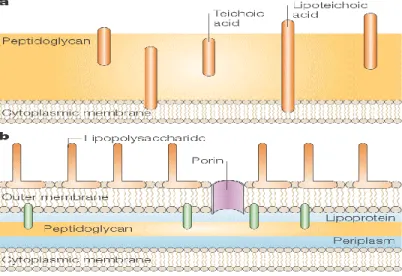
The identification of the microbial morphology is also crucial as it gives information about the cell wall for metal biosorption. Bacteria can be divided into two major groups, namely; Gram-positive and Gram-negative cells. They differ markedly in the appearance and composition of their cell walls (Cabeen and Jacobs-Wagner, 2005). Summary diagrams of Gram-positive and Gram-negative bacterial cell walls are shown in Fig. 1.2. The Gram-positive cell wall is composed of a thick, multilayered peptidoglycan sheath outside of the cytoplasmic membrane. Teichoic acids are linked to and embedded in the peptidoglycan, and lipoteichoic acids extend into the cytoplasmic membrane. The main structural component of Gram-positive bacteria cell walls is peptidogylcan, a polymer made up of carbohydrate strands cross-linked by a small peptide. The peptide contains a glutamic acid residue, whose carboxylate side chain is probably important in metal binding. The peptidogylcan is linked to a second polymer, teichoic acid or teichuronic acid (Fig. 1.2a). Cell walls of Gram-negative bacteria are made of two membrane bilayers. The outer membrane contains lipopolysaccharide and is usually linked chemically to a peptidoglycan monolayer which lies between the outer and plasma membrane (Fig. 1.2b).
Fig. 1.2. Summary diagram of Gram-positive (a) and Gram-negative (b) bacterial cell walls (Cabeen and Jacobs-Wagner, 2005).
Several types of metals (magnesium, zinc, cadmium, etc.) accumulate, with some being heavy metals that upon accumulation contaminate biomass (Smith et al., 1994). Bacterial surfaces are typically anionic and, therefore, interact with metal cations (Beveridge, 1981; Beveridge et al., 1982). Gram-positive bacterial walls consist of a variety of hetero- and homopolymers which in combination produce an electronegative charge density throughout the wall fabric at neutral pH (Beveridge, 1981). Evidence suggests that peptidoglycan layer is responsible for most of the metal deposition (Matthews et al., 1979; Beveridge and Murray, 1980; Beveridge et al., 1982). Interactions between microorganisms and metals can be conveniently divided into three distinct processes (Ford et al., 1995), all of which may be important in heavy metal bioremediation: i.e. intracellular interactions, cell-surface interactions, and extracellular interactions. The three processes are not mutually exclusive.
With intracellular interactions, assimilation of metals (zinc, iron, magnesium, phosphate, etc.) may be important to the microbe in detoxification, enzyme function and physical characteristics of the cell. Cell surfaces contain functional groups (e.g., carboxylic, amino, thiol, hydroxy, and hydroxy-carboxylic groups) that can interact with metal ions (Xue et al., 1988). Gram-negative bacteria possess lipopolysaccharides and phospholipids in their cell walls, with phosphoryl groups as the most abundant electronegative sites available for metal binding (Coughlin et al., 1983; Ferris, 1989). Gram-positive bacterial cell walls possess teichoic acids and peptidoglycan, providing carboxyl and phosphoryl groups that are potential sites for metal binding (Beveridge et al., 1982; Doyle, 1989). Metal binding to cell-surface functional groups is thought to be an important step to intracellular accumulation of trace metals required for enzyme function in Gram-negative and Gram-positive bacteria.
Many microorganisms produce extracellular polysaccharides (EPS), often containing proteins that strongly bind metals (Black et al., 1986; Chanmugathas and Bollag, 1988). Extracellular polymeric substances play an important role in
biosorption of heavy metals and their presence increases the efficiency of biosorption (Oliveira-Martins et al., 2008). Interactions between EPS and metal ions are generally considered as a direct consequence of negatively charged functional groups on the exopolymer. The EPS comprise a mixture of polysaccharides, mucopolysaccharides and proteins, depending on the microbial strain and culture conditions (Oliveira-Martins et al., 2008). They contain ionizable functional groups such as pyruvyl, phosphoryl, hydroxyl, succinyl, and uronyl and amine groups. Ion-exchange, complexation with negatively functional groups, adsorption and precipitation are the mechanisms involved in metal biosorption onto EPS (Zang et al., 2006). In addition, siderophores are low molecular weight organic compounds produced by a number of microorganisms to sequester metals and are thought to be highly specific (Davis and Byers, 1971).
1.2.9. Biosorption experimental procedures
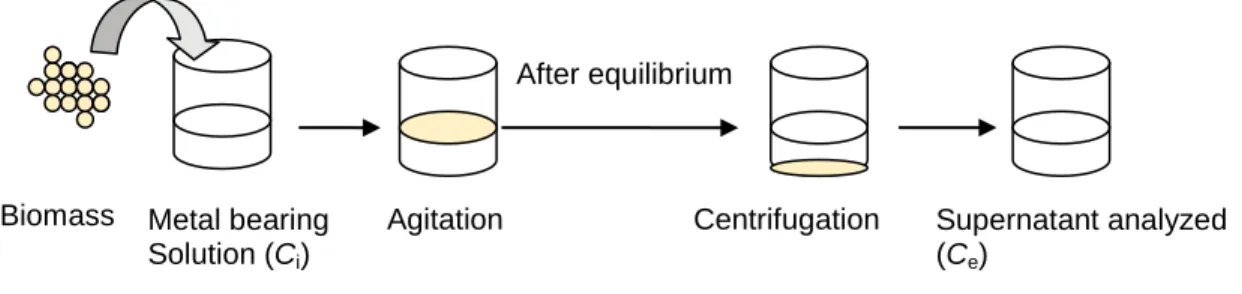
A biosorption process can be performed via several modes, of which batch or continuous modes of operation are frequently employed to conduct laboratory scale biosorption processes. A schematic diagram of batch biosorption experimental procedure is shown in Fig. 1.3. Although most industrial applications prefer a continuous mode, batch experiments have often been used to evaluate the required fundamental information, such as biosorbent efficiency, optimum experimental conditions, biosorption rate and possibility of biomass regeneration (Vijayaraghavan and Yun, 2008b). Batch experiments usually focus on the study of factors affecting biosorption, which are important in the evaluation of the full biosorption potential of any biosorbent. These include the pH of metal polluted solution to be studied, temperature at which the biosorption process would be carried out, ionic strength of a metal ions to be adsorbed, biosorbent dosage and size, initial metal ion concentration, the speed of agitation and time required to reach equilibrium (Iqbal and Edyvean, 2004; Vijayaraghavan and Yun, 2008b).
Fig. 1.3. Schematic diagram of batch biosorption experimental procedure. Ci and Ce are the initial and equilibrium metal ion concentrations (mg L-1), respectively.
Earlier studies have shown that the most critical parameter in the treatment of heavy metal with biosorbent material is the initial pH of the sorption medium (Esposito et al., 2002; Vijayaraghavan and Yun, 2008b). It affects the solution chemistry of the metal ions and the activity of the functional groups of the biosorbent. The pH strongly influences the speciation and biosorption availability of the metal ions. Some of the metal ions precipitate at high pH values, which may complicate the biosorption process (Vijayaraghavan and Yun, 2008b). The different biosorbents also exhibit different pH optima for the sorption of the different metals during biosorption which means that a further increase or reduction of pH reduces the metal uptake.
1.2.10. Equilibrium Modeling
Biosorption has been studied as a simplified sorption system, usually containing one heavy metal. Equilibrium data at a given temperature, commonly known as adsorption isotherms, are basic requirements for the design of adsorption processes. Biosorption isotherms, a plot of solute uptake (q) versus the equilibrium solute concentration in the solution (Ce), are often used to evaluate the sorption performance (Vijayaraghavan and Yun, 2008b). Adsorption isotherms have been commonly used to describe experimental results for the sorption of metal ions by microorganisms and other biosorbents. Although there are a number of adsorption isotherms (Kuyucak and Volesky, 1990), the most
Centrifugation Biomass Metal bearing
Solution (Ci)
Agitation
After equilibrium
Supernatant analyzed (Ce)
commonly used adsorption isotherms are the Langmuir and Freundlich equilibrium models (Liu et al., 2004; Rangsayatorn et al., 2004; Febrianto et al., 2009). The Langmuir and Freundlich adsorption isotherms are widely used models for single solute system and therefore, were used in this study to fit the equilibrium biosorption data for cadmium and copper. Other equations contain two fitting parameters (Dubinin Radushkevich, Braunauer, Emmer and Teller (BET) models) whereas others can have more than two parameters (Redlich Peterson model). A particular model may not apply in a particular situation, and in some cases more than one model may explain the biosorption mechanism.
There is no critical reason to use a more-complex model if a two-parameter model (such as the Langmuir and Freundlich isotherm models) can fit the data reasonably well (Vijayaraghavan et al., 2006). Table 1.4 shows the adsorption models which are generally used to describe biosorption data.
Since biosorption is metabolism-independent, it would be expected to be a rapid process. Initial rapid uptake is often observed, and it is believed to be due to binding of metal ions to the cell wall. Many studies have also shown that at low metal ion concentrations, the amount of metal ion accumulated per unit mass of a cell is directly proportional to the concentration of the metal ion in a solution (Omar, 2002).
Metal sorption capacity (q) for the construction of sorption isotherms is determined as follows:
q = [V(Ci – Cf)]/M (1)
where Ci and Cf are the initial and final metal ion concentrations (mg L-1), respectively; V is the volume of sample solution (L); and M is the dry weight of added biomass (g).
Table 1.4
Adsorption models used to describe the biosorption data (Adapted from Kuyucak and Volesky, 1990).
Isotherm Equation Advantages Disadvantages
Langmuir qe = (KLqmaxCe)/(1 + KLCe) Interpretable parameters
Not structured;
monolayer sorption Freundlich qe = KFCe1/n
Simple expression Not structured
Combination of Langmuir and Freundlich
qe = (KLqmaxCe1/n
)/1 + KLCe1/n
Combination of the above two
Unnecessarily complicated
Radke and Prausnitz
1/qe = 1/aCe + 1/KLCeB
Simple expression Empirical; requires three parameters Redlich
Peterson qe = (aCen
)/(1 + KLCe)
Approaches Freundlich at higher concentrations
No significant advantages
Braunauer, Emmer and Teller (BET)
qe = (βCQo)/[(Cs - C) (1 + (B-1)C/Cs] Multilayer adsorption
-
Dubinin Radushkevich
W/Wo = exp[-K(ε/p)2] Temperature- independent
Behavior is not limited in the Henry’s law regime
- None
1.2.10.1. Langmuir adsorption isotherm
The most widely used adsorption isotherm for the description of adsorption equilibrium is the Langmuir isotherm model. The Langmuir equation relates the coverage of molecules on a solid surface to concentration of a medium to solid surface at affixed temperature (Febrianto et al., 2009). This isotherm is based on three assumptions, namely, adsorption is limited to monolayer coverage, all surface sites are alike and only can accommodate one adsorbed atom and the ability of a molecule to be adsorbed on a given site is independent of its neighboring site occupancy. The classical Langmuir equation is given as follows:
qe = (qmaxKLCe)/(1 + KLCe) (2)
where,
qe = metal uptake on the biosorbent at equilibrium (mg g-1 dry weight);
qmax = maximum possible amount of metallic ion adsorbed per unit weight of adsorbent;
KL = Langmuir adsorption constant related to the affinity of the binding sites for metals;
Ce = equilibrium concentration of metal (mg L-1) in the solution.
The Langmuir equation can be linearised as follows:
Ce/qe = 1/KLqmax + Ce/qmax (3)
The maximum adsorption capacity (qmax) and the equilibrium constant (KL) can be obtained from a linear plot of Ce/qe versus Ce (Aksu, 2001). The Langmuir constant, qmax, is often used to compare the performance of biosorbents whereas the other constant, KL, characterizes the initial slope of the isotherm. For a good biosorbent, a high qmax and a steep initial isotherm slope (i.e. high KL) are generally desirable (Vijaragavan and Yun, 2008b).
As suggested by Hall et al. (2001), the equilibrium parameter (KR) values can be used to predict whether a sorption system (isotherm) is favorable or unfavorable using the essential features of the Langmuir adsorption isotherm. The KR can be expressed in terms of a dimensionless constant or separation factor or equilibrium parameter, KR, which is defined by the following relationship:
KR = 1/(1+KLCi) (4)
where KR is the equilibrium parameter, KL is the Langmuir adsorption constant and Ci is the initial concentration of the metal ion in a solution. The parameter indicates the shape of the isotherm accordingly (Table 1.4).
Table 1.5
KR values for the prediction of the type of isotherm
Values of KR Type of isotherm KR > 1 Unfavorable
R = 1 Linear 0 < KR < 1 Favorable KR = 0 Irreversible
1.2.10.2. Freundlich adsorption isotherm.
The Freundlich adsorption isotherm relates the concentration of an adsorbed metal to the concentration of the metal in the liquid with which it is in contact at equilibrium (Freundlich, 1906).
The linear isotherm model assumes that all sites on the sorbent have equal affinity for the solute (Sawyer et al., 2003). The empirical Freundlich equation based on sorption on a heterogeneous surface is given as follows:
qe = KFCe1/n
(5)
where,
qe = metal adsorbed on the sorbent at equilibrium (mg g-1 dry weight);
Ce = metal ion concentration at equilibrium (mg L-1) in the solution;
KF = an empirical constant that provides an indication of the adsorption capacity of biosorbent;
n = an empirical constant that provides an indication of the intensity of adsorption.
The Freundlich equation can be linearized as follows:
lnqe = lnKF + (1/n) lnCe (6)
The Freundlich adsorption constants (KF and n) can be obtained by plotting lnqe
as a function of lnCe. High KF shows easy uptake of the metal and high n values indicate high ability of metal sorption.
1.2.11. Kinetic modeling
In order to investigate the mechanism of biosorption and potential rate controlling steps such as mass transport and chemical reaction processes, kinetic models have been used to test experimental data. When the biomass is used as a cell free suspension in a well-agitated batch system, all the cell wall binding sites are made readily available for metal uptake so that the effect of external film diffusion on biosorption rate can be assumed not significant and ignored in any engineering analysis (Wehrheim and Wettern, 1994). Information on the kinetics of metal uptake is required to select the optimum conditions for full-scale batch metal removal processes. A number of kinetic models have been developed to describe the kinetics of heavy metal removal. The kinetic models include pseudo- first order, second order, pseudo-second order and saturation (mixed order) rate equations. Frequently, pseudo-first order and pseudo-second order rate equations have been widely used to describe biosorption data (Liu and Liu, 2008).
The pseudo first-order rate expression based on solid adsorption capacity is generally expressed as follows:
dq/dt = k1 (qe - qt) (7)
where qe and qt are the amounts of adsorbed metal ions on the biosorbent at equilibrium and the amount of adsorbed metal ions (mg g-1) at time t, respectively, and k1 is the rate constant of pseudo-first order biosorption (min-1).
The integrated form becomes
ln(qe - qt) = lnqe – k1 (t) (8)
A straight line of ln(qe - qt) versus t suggests the applicability of this kinetic model (Aksu, 2001). The slope of a plot of ln(qe - qt) versus t can be used to calculate the pseudo-first order rate constant k1 (Mamisahebei et al., 2007).
The pseudo second-order equation is also based on the sorption capacity of the solid phase and has been frequently employed to analyze biosorption data obtained from various experiments using different adsorbates and adsorbents (Ho et al., 2000). The pseudo-second order kinetic model is expressed as:
t/qt = 1/k2qe2
+ 1/qe (t) (9)
where qe is the amount of metal adsorbed at equilibrium (mg g-1) for pseudo second-order biosorption, qt (mg g-1) is the amount of metal ion adsorbed at time t and k2 is the equilibrium rate constant of pseudo-second order biosorption (g mg-1 min-1). Values of k2 and qe are calculated from the plot of t/qt against t (Aksu, 2001).
The second order adsorption kinetic model is given as
1/(qe – qt) = 1/qe + k3t (10)
where k3 is the rate constant of second order adsorption (g mg-1 min-1). The slope and intercepts of a plot of 1/(qe – qt) versus t are used determine the second order rate constant k3.
The saturation (mixed-order) rate equation is given by
1/t ln(Ci - Ct) = -ko/k4 – 1/k4 [(Ci – Ct)/t] (11)
where k0 and k4 are the mixed order rate constants, Ci and Ct are the metal concentrations. Mixed order rate constants can be determined from a plot of 1/t ln(Ci/Ct) versus (Ci – Ct)/t] (Mamisahebei et al., 2007).
1.2.12. Thermodynamic parameters of biosorption
The Gibbs free energy change is the fundamental criterion of spontaneity of a process and can be determined using the following equilibrium constant equation:
∆Go = -RT lnKc (12)
where Kc is an equilibrium constant (Kc = Cad/Ce), Cad is the amount of metal ion adsorbed, Ce is the equilibrium concentration of the metal ion in a solution (mg L-
1), R is the ideal gas constant (8.314 J mol-1 K-1) and T is the absolute temperature (K).
The relationship between ∆Go, ∆Ho and ∆So can be expressed by the following equation (Ozdes et al., 2009):
∆Go = ∆Ho - T∆So



![ADSORPTION OF Pb(II), Cd(II), AND Cr(III) FROM AQUEOUS SOLUTION BY POLY-5-ALLYL-CALIX[4]ARENE TETRA CARBOXYLIC ACID | Handayani | Indonesian Journal of Chemistry 21409 40495 1 PB](data:image/gif;base64,R0lGODlhAQABAIAAAP///wAAACH5BAEAAAAALAAAAAABAAEAAAICRAEAOw==)