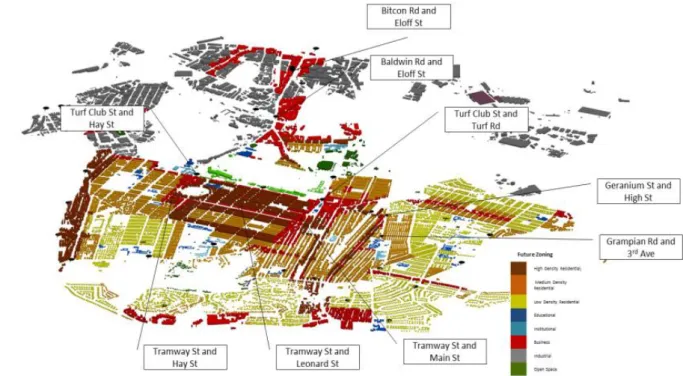
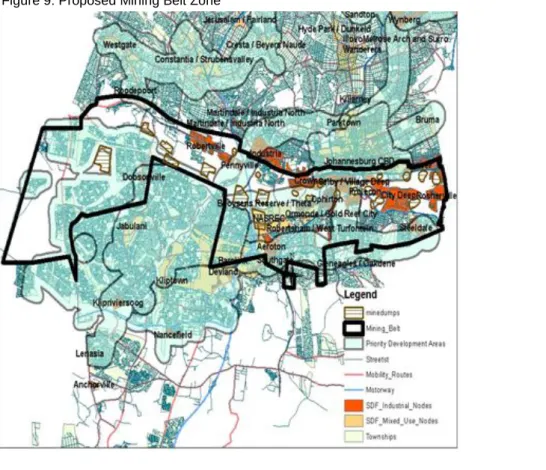
NB: In the context of Johannesburg, the primary network refers to the CBD and Freedom Corridors; the secondary network talks specifically about the Jabulani initiative; Integration zones speak for it.
Background
Total grants represent a significant portion of approximately 40% of the City's annual capital budget. Future audits of the BEPP will report on the progress of the indicators discussed to illustrate successes and areas requiring more work. a) Spatial planning and prioritization of projects.
Confirmation of Adoption
Strategic Review
The city has the largest economy in the country, contributing about 17% of the national GDP and approximately 47% of the Gauteng economy.
Spatial Targeting
Long Term Vision
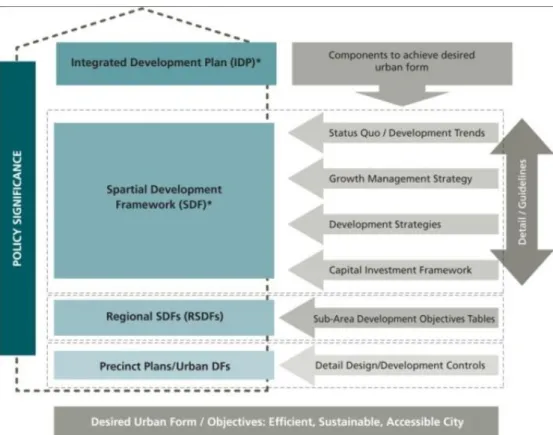
Each program formulated a series of sub-programmes in support of the outcomes and principles embedded in GDS 2040. The Spatial Development Plan is one of the main planning instruments shaping the built environment and is therefore an essential core component of the Performance Plan of Built Environment.
The Spatial Development Framework of the City of Johannesburg
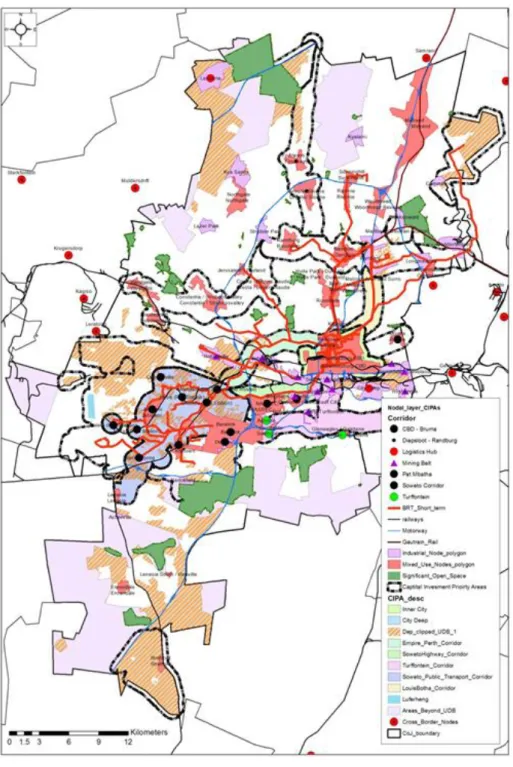
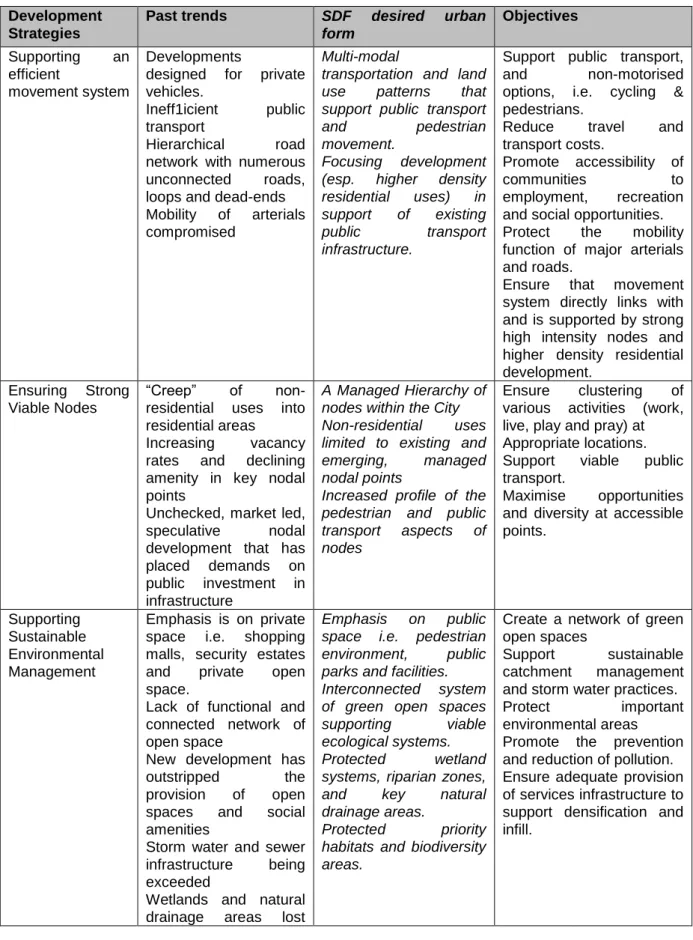
Erosion of rural character from the limited rural assets of the City Spread of subsidized housing initiatives in peripheral locations away from economic and social opportunities. This informs the identification of the BEPP urban network, integration zones and hubs as detailed in the section that follows.
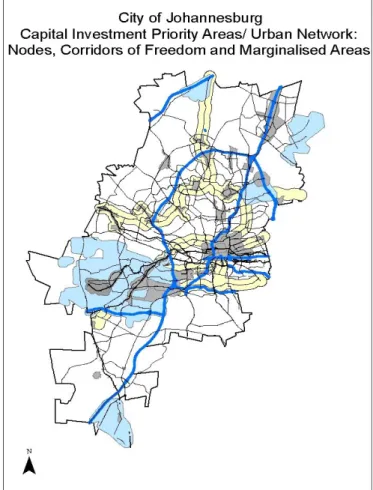
Identification of Urban Network, Integration Zones and Hubs
- Central Business District (CBD)
- Integration Zones
- Urban Hubs
- Marginalised Areas
- Economic Nodes
- Nodal Guideline
The corridor is located in the central eastern area of the city, primarily in administrative region E. The Louis Botha Strategic Area Framework is the city's guide for the short- and medium-term development of the corridor. Turffontein is south of the CBD on the southern edge of the mining strip. The Turffontein corridor is different from the two corridors described above.
The area in question is the location of the last remaining large tracts of undeveloped land east of the city. The potential to negotiate public/private partnerships for the development of the area is higher than in other areas within the city. Most of the city's informal settlements are in Region A, mainly around Diepsloot (25,000 units) and Ivory Park (15,000 structures).
In the 1980s and 1990s, the CBD experienced significant economic decline, which saw many businesses move to the mixed-use nodes of the north of the City. The mixed use and industrial nodes are critical to the current future success of the City's economy.
City-Wide Catalytic Projects
Coordination of SIPs
SIP2 - the Durban-Free State – Gauteng Logistics and Industrial Corridor
SIP 7 – Integrated urban Space and Public Transport Programme –
Apartments and stock improvement Upgrading of apartments around Joburg Fleurhof Mixed development (bulk and . internal infrastructure). The provision of bulk infrastructure including reticulation for specifically the following: water, sewage, road and stormwater management systems. Lufhereng Mixed Development The project involves the provision of bulk, connecting and internal roads, sewage, water and rainwater to the Doornkop Greenfields project (a mixed housing program comprising 25,000 grants) which is being implemented by the Gauteng Department of Housing under of its incremental housing program.
Nancefield Station Precinct Housing Redevelopment of existing flats and construction of additional flat accommodation and provision of bulk infrastructure associated with the development Selkirk Social Housing Development of 300 medium density housing within. The coordination and alignment of SIPs with informal settlements at the City-wide level has been addressed in Section B of this report. The above project list is subject to change through discussions with PRASA and other stakeholders.
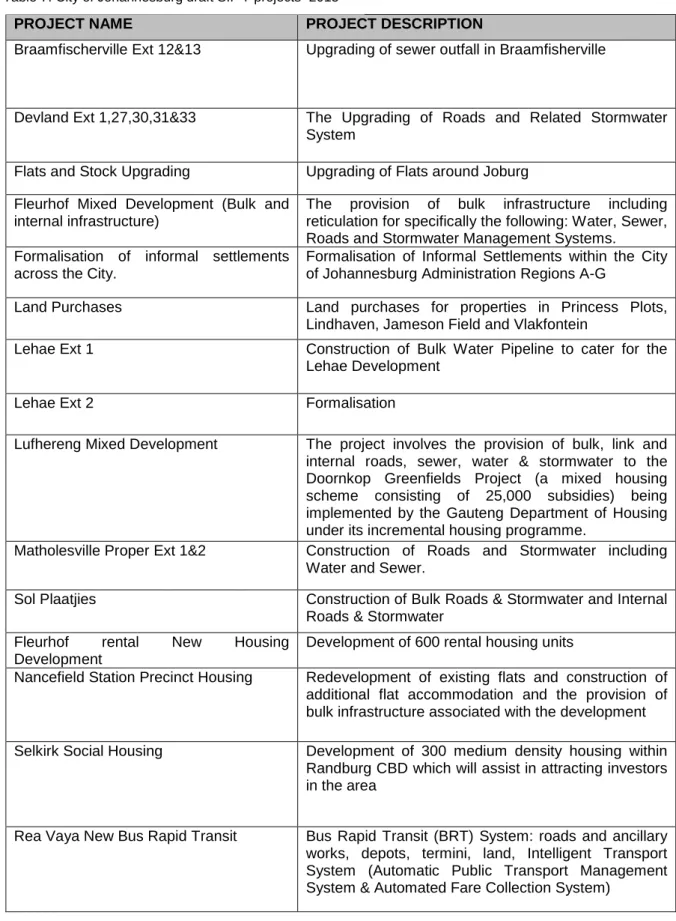
Mega Projects
43| P a g e The above project list is subject to change through discussions with PRASA and other stakeholders.
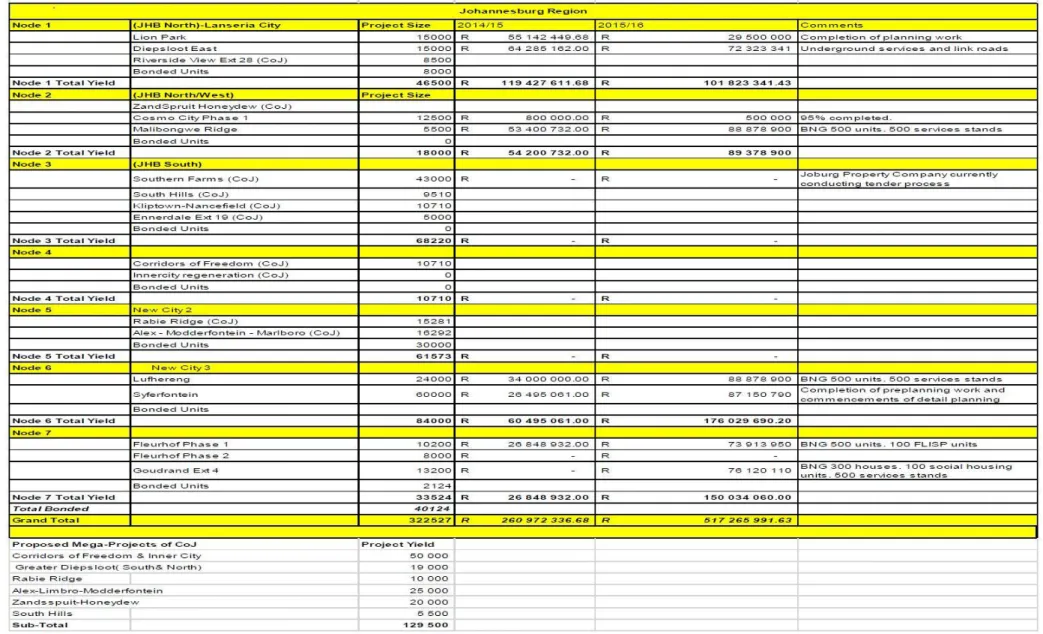
The Value of Programmes and Projects and Projects by Division
- Inner City
- Louis Botha Corridor
- Perth Empire Corridor
- Turffontein Corridor
- Jabulani
- Alexandra Hub
- Non-infrastructure related interventions in the Alexandra Hub
Construction of Linear Market (Informal Trading Shelter) at Pan Africa Facility in Alexandra New Informal Trading Stalls ALEXANDRA EXT.4 E Ward.
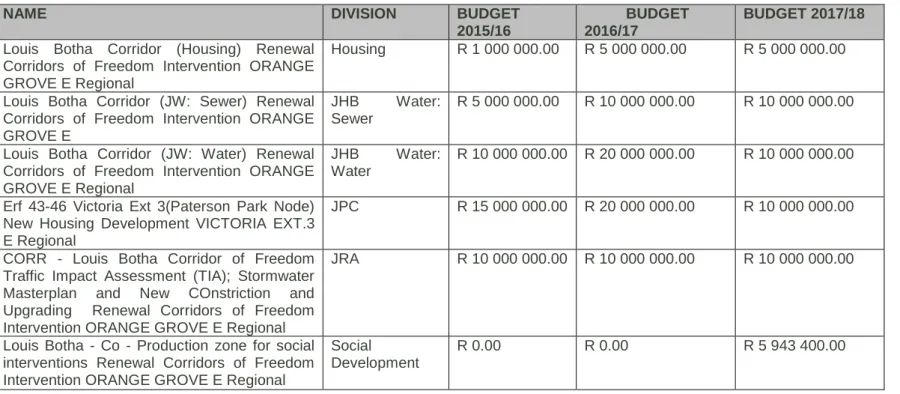
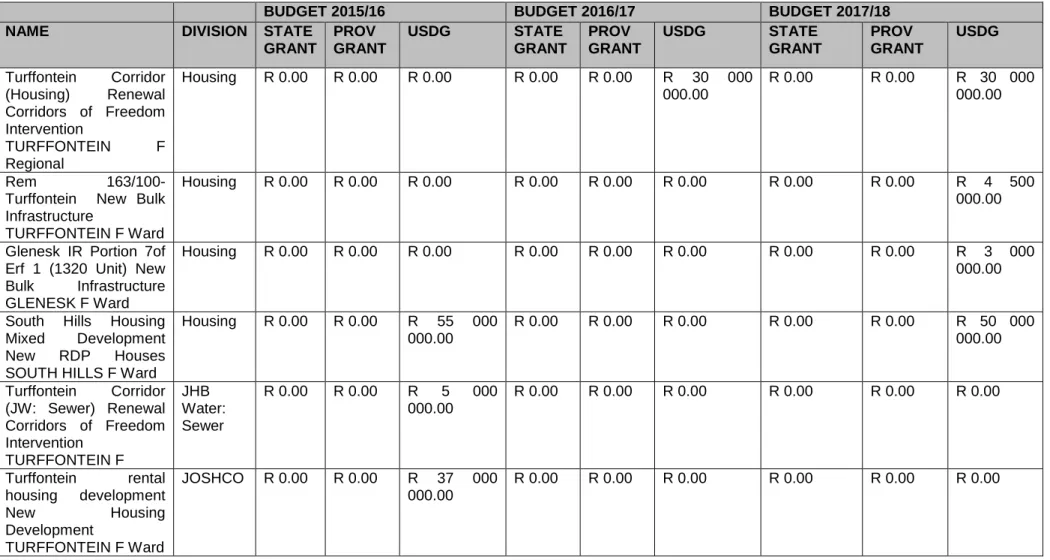
The Application of Grant Resources by Grant Programme and Project
- Inner City
- Louis Botha Corridor
- Perth Empire Corridor
- Turffontein
- Jabulani
- Alexandra Hub
The Louis Botha Corridor figure does not include the PTIS amount for the Rea Vaya bus route. Apartments) Renovation Corridors of Freedom Intervention ORANGE GROVE E Regional.
Proposed timeframes for implementation of catalytic projects and programmes
- Central Business District
- Urban Development Zones
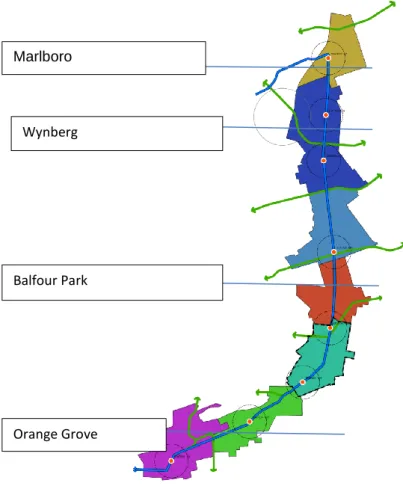
- Corridors
- Special Development Zones
- Jabulani
- Urban Hubs
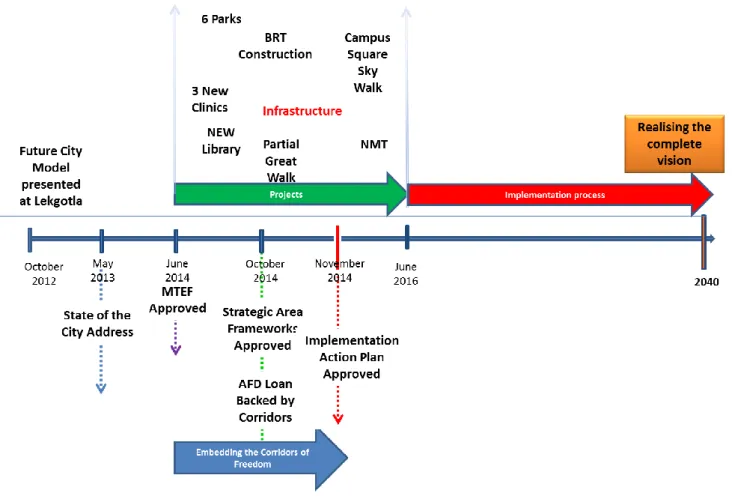
The city is looking to expand the urban development zone concept to include new hubs in marginalized areas to strengthen the city's secondary network and to assist in 'innovatively connecting Joburg's low-income communities to the city's knowledge economy and opportunities'. In addition, the city seeks to expand the UDZ to include certain nodes connected to the Freedom Corridors and identified integration zones. The implementation of all the above projects (Figure 15 and Figure 16) will be handled by responsible departments and municipally owned entities.
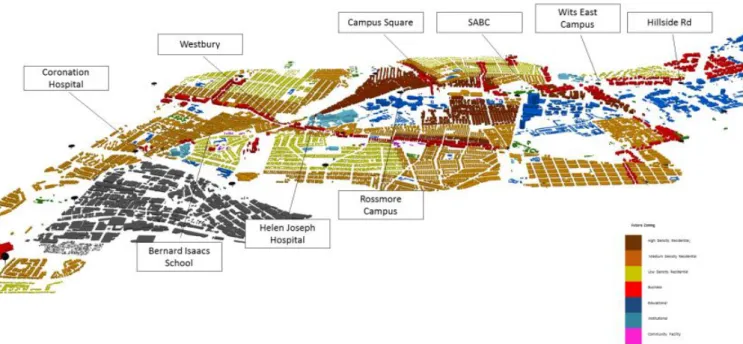
As part of the city's effort to accelerate development within the Corridors of Freedom, the city's Development Planning Department through the Land Use Management Directorate is developing a tool that can be used in reviewing development applications specific to the corridors. The rollout of the interventions related to Jabulani as defined in the Design Framework will be carried out over the next 3-6 years through the coordination of the Johannesburg Property Company, the Johannesburg Development Agency and the Development Planning Department. In the meantime, a program management team should be put together, similar to that described for the corridors.
Urban Management
Possible Incentives and Institutional Mechanisms in Corridors
Institutional Arrangements
Legislature
The Executive
Group Corporate and Shared Services (human resources, Chief Information Officer/Information Technology Labor Relations Office. Group Strategy Coordination and Relations responsible for the oversight, coordination and management of key group policies (including the Plan of Integrated Development), strategies and tactical plans to ensure effective and optimal service delivery The Cluster approach aims to coordinate the city's programs around a set of outcomes outlined in Joburg 2040 and the Mayor's 10 priorities with the aim of integrating service delivery.
Ensuring overall coordination and harmonization of service delivery between departments and municipally owned entities within the group. Advising the municipality committee on the progress in the implementation of service delivery programs within the relevant groups. Department of Environment and Infrastructure Services Table 23: Grouping, Key focus areas for the group and related responsibilities.
Institutional Arrangements for Capital Programme Management
The Capital Budgeting Process
The answers to these questions, combined with the location of the project, are then used to prioritize the projects in question. The two Budget Steering Committees evaluate and comment on Business Plans, including capital budget proposals, of Departments and Entities for the medium-term expenditure framework. This interaction helps city administrative heads make informed decisions about budget allocation in a second Budget Lekgotla.
It is through this capital budgeting process that the city's strategic policy outlined in the GDS, IDP and CIPA, as well as the practical requirements of entities and departments, are condensed into a list of capital projects that the city will execute in three. period of the year. The Directorate evaluates the financial performance of entities and departments, reports on financial progress and makes recommendations for spending patterns and future allocations of funds. Implementation of the Consolidated Infrastructure Plan which aims to improve the coordination of asset management in the City of Johannesburg.
Supply chain management and procurement plan
78 | P a g e These divisions are given the opportunity to present their own critical projects from the list of projects they have committed to JSIP which may differ from the priority list generated on JSIP so that they can be considered by the Budget Lekgotla for approval and implementation in the third budget year of the Medium Term Expenditure Framework (MTEF) budget year. Once a Budget Lekgotla representing the legislature and executive has expressed its opinion on the indicative draft capital budget, the draft capital project list is produced from JSIP. A preliminary Technical Budget Steering Committee and a subsequent Budget Steering Committee (BSC) have been established under the MFMA's Municipal Budgeting and Reporting Scheme.
The establishment of the Engineering Center of Excellence in the Office of the Chief Operating Office, which will provide support to existing engineering capabilities. 79 | P a g e delegation of authority and supplies for supply chain management, sub-delegation, reporting requirements and performance management.
Partnerships
Outcomes
81 | Page The Inner City Plan was prepared as the city's guiding document in addressing the challenges facing the city center and aligning its programs with the city's development goals. This plan is the city's statement of intent to transform Johannesburg's inner city and requires all departments and entities involved in a particular issue to work together to solve problems or implement programs. The plan uses an area management and partnership approach to guide municipal activities in inner city transformation and is a key overall planning tool for all departments and municipal entities in the city.
The SHSUP is the city's response to urbanization and aims to address the current shortage of affordable rental accommodation in the city and define the ground rules for future housing development in the city. The urban deprivation alleviation intervention aims to provide assistance to communities by extending basic services to disadvantaged areas of the city. Citizens contribute to the provision of services in their communities through local micro-enterprises and cooperatives to maintain and deploy off-grid services as a first step in developing citizens' capacity to provide and maintain service infrastructure.
Outputs
Housing market segmentation Annual change in the number of completed subsidized rental housing within the primary and secondary network and within the Integration Zones. An annual increase in the number of completed privately owned rental homes within Integration Zones until an optimal level is reached. The number of early childhood development facilities in primary and secondary networks and in integration zones.
Percentage change in the total number of kilometers of free walking and cycling paths in relation to the length of roads within the primary and secondary network and within integration zones. More Business Opportunities Four-year percentage change in the total market value of all commercial properties in the primary and secondary network integration zones. Acres of service space announced for informal traders within the primary and secondary networks and integration zones.