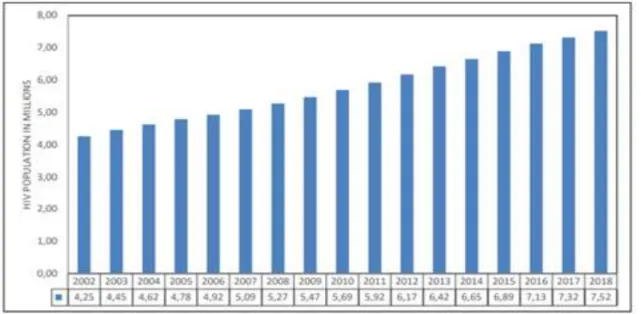
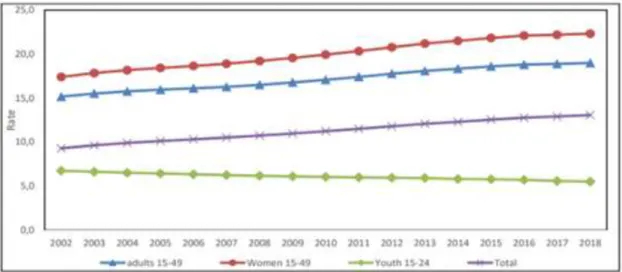
This epidemic is also a challenge in South Africa, as new HIV infections increase more among women than among men. The study therefore aims to identify the Determinants of HIV and AIDS Testing among women of reproductive age in South Africa.
CHAPTER ONE
ORIENTATION OF THE STUDY
- INTRODUCTION AND BACKGROUND TO THE STUDY
- HIV and AIDS amongst Women in Sub-Saharan Countries
- PROBLEM STATEMENT
- SIGNIFICANCE OF THE STUDY
- AIM AND OBJECTIVES OF THE STUDY .1 Aim of the study
- Specific objectives of the study
- Research Hypothesis
- DEFINITION OF CONCEPTS OF CONCEPTS .1 Determinants
- Voluntary Counselling and Testing (VCT)
- Teenage girls
- Literature Review
- Research Design and Methodology
- Analysis and interpretation of data
- Summary, conclusion and recommendations
In addition, a few recent studies on HIV testing in South Africa identify determinants of VCT use among women of reproductive age. The aim of the study is to identify the determinants of VCT use among women of reproductive age in South Africa.
CHAPTER TWO LITERATURE REVIEW
INTRODUCTION
OVERVIEW OF HIV and AIDS
- Historical background
- Epidemiology of global HIV and AIDS in women
- HIV and AIDS in African Women
- HIV and AIDS in Women of South Africa
- Voluntary HIV Counselling and testing
In the same year, a large proportion of women with HIV and AIDS lived in sub-Saharan Africa. The latest in UNAIDS (2019) indicates that in sub-Saharan Africa, adolescent girls and young women (aged 15–24 years) accounted for one in five new HIV infections, despite having only 10 % of the population is.
THEORETICAL FRAMEWORK
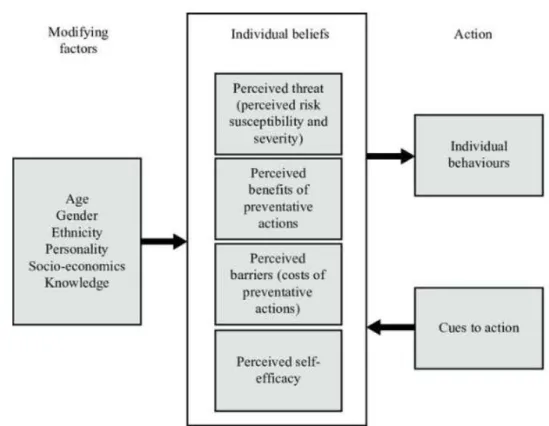
The main goal of VCT is to make people aware of their HIV status and empower them to cope with each of the outcomes. Glanz et al (2008) and Champion et.al (2008) state the HBM as one of the most widely used models in health behavior research since the early 1950s. In light of this evolution of the HBM, the researcher considered the model for the purpose of his original, as according to Rosenstock (1966) as a suitable model to understand this study.
Some of the modifiers identified in this model are identified as variables in this study. Four of the variables corresponding to these modifying factors are identified, namely age, gender, socio-economic and knowledge. The HBM (Figure 2.3) further indicates that of the six concepts, the first two, perceived susceptibility and perceived severity, represent the perceived threat, which in this case refers to the perceived threat of HIV and AIDS infection among women of childbearing age. age.
It is this belief that gives one the confidence to take action because of the expected results (Tarkang and Zotor, 2015). Perceived barriers also include the cost, duration, complexity of the earned behavior, and access to services that would support taking and sustaining required actions.
CONCEPTUAL FRAMEWORK
- The HIV and AIDS testing and counselling
- Benefits of HIV counselling and testing
- The Effectiveness of HIV counselling and testing in preventing and controlling transmission
- Provider Initiated Testing and Counselling (PITC)
- Determinants of Provider-Initiated HIV counselling Testing and CT Voluntary HIV Counselling and Testing
- Socio-demographic determinants .1 Sex
- Marital Status
- Age at First Sex
- Cognitive Determinants
- Attitude towards Voluntary HIV counselling and testing
- HIV knowledge, perception and practice as determinants of VCT uptake HIV knowledge is a significant predictor of a positive attitude toward VCT (Sherr, et al
- Family and community support for testing
- HIV stigma and impact on testing
- Stigma and Discrimination
- Concern about the confidentiality of VCT
- Prevention of HIV transmission
Early diagnosis improves the health outcomes of HIV-positive patients and ensures that they are provided with information to reduce transmission (Makhunga-Ramfolo, Nondumiso et al., 2011). A study conducted in Uganda, on the other hand, showed that individuals who underwent voluntary counseling and testing reported safer sexual practices (behaviours) compared to those who did not, regardless of their null status (Muller et al ., cited in Solomon et al., 2004). This was common among couples presenting for VCT where 84 percent were planning a new marriage relationship (Muller et al., cited in Solomon et al., 2004).
Critics argue that studies that were unable to demonstrate the preventive effect of VCT were generally questioned for their methodological limitations (Solomon et al., 2004). Makhunga-Ramfolo, et al., (2011) state that PITC has increasingly proven to be a crucial strategy for prevention of HIV post-test care, treatment and support services. Age is also one of the demographic factors for acceptance of voluntary HIV counseling and testing.
The positive attitude of family members and friends towards VCT has been implicated in shaping youth VCT use (Denison et al. 2008). Research in developed countries has shown that voluntary counseling and testing has led to self-reported changes in risky sexual behavior among both HIV-positive and HIV-negative clients (Solomon et al., 2004).
CONCLUSION
In an investigation of previously untested individuals who did not plan to be tested, Phillips and colleagues (cited in Vandyk and Vandyk, 2003) found that: women in stable relationships, people of color, young adults, and wage earners lower were just ready to be tested if no one else could access their results. Thus, among sexually active American youth, it was found that 35% of respondents did not believe or did not understand that HIV test results were kept secret, and 19% thought that counselors or health personnel would disclose their zero status. others if the result turned out to be positive (Peltzer, Nzewi & Mohan, 2004). One of the essential steps in controlling the HIV epidemic is the distinct evidence of individuals infected with the disease combined with efforts to intervene in transmission.
The current body of evidence is particularly strong for VCT as a tool to help HIV-positive people reduce their high-risk behaviors so as not to spread the disease to uninfected people. In addition to its role in preventing HIV transmission, HIV counseling and testing is an essential step in identifying individuals who are HIV positive in order to adequately link them to HIV treatment, care and support services. it. These services include prevention of HIV-related diseases, mental, social, legal and family support (USAID; 2000).
CHAPTER THREE
RESEARCH METHODOLOGY
- INTRODUCTION
- RESEARCH DESIGN AND METHODS
- Research Design
- Research Approach
- DATA COLLECTION
- Data Collection Instrument
- POPULATION
- SAMPLING
- VALIDITY AND RELIABILITY
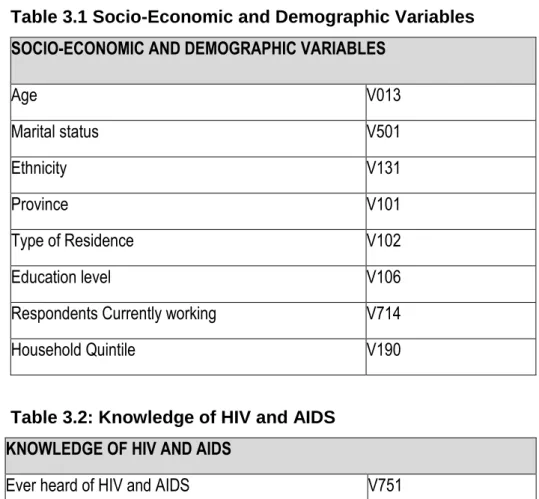
- Dependent Variables
- Independent Variables
- WEIGHTING OF THE CASES
- ETHICAL CONSIDERATIONS
Due to the nature of the design chosen, the study dictates the adoption of a quantitative and cross-sectional design to gain an understanding of how variables shape the phenomenon of Voluntary HIV and AIDS counseling and participation among the female population of South Africa test. This sampling frame is referred to by Stockemer (2019) as a subset of the population that the researcher examines to collect data. However, the study uses data from all women of the mentioned age regardless of their race and settlement.
The first technique is convenience sampling which is non-probability sampling because the sample of the study is taken from the available population which is close. Multivariate analyzes were performed to clarify the net effect of some independent variables on the dependent variable, controlling for potential confounding. Logistic regression predicts the log odds of the dependent variable as a linear fit of the independent variables.
The logistic regression model predicts the log of the odds of the dependent variable as a linear function of the independent variables. This chapter discussed the application of the quantitative approach and how it was analysed.
CHAPTER FOUR
ANALYSIS AND INTERPRETATION OF DATA
- INTRODUCTION
- RESULTS OF DISTRIBUTION OF VARIABLES
- RESULTS OF BIVARIATE ANALYSIS
- MULTIVARIATE ANALYSIS OF RESULTS
- CONCLUSION
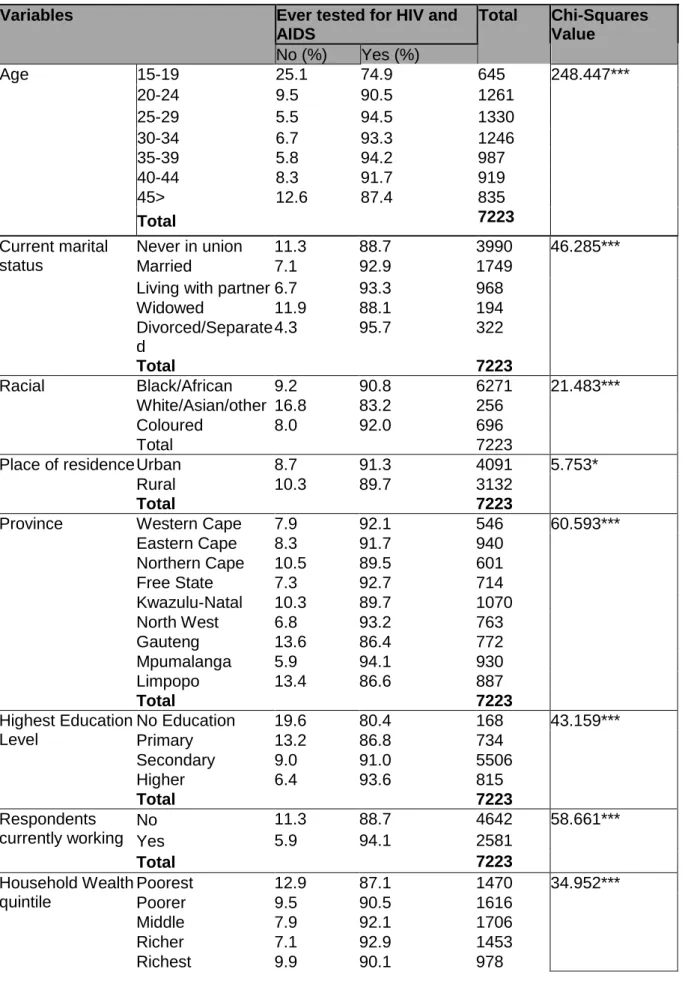
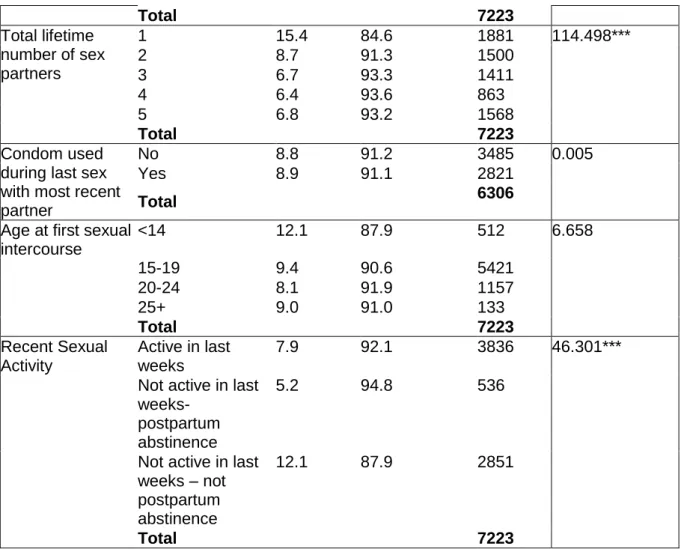
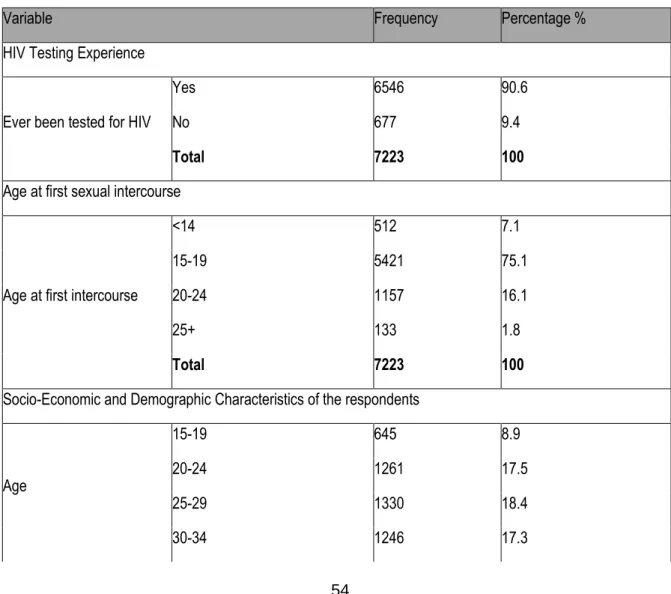
Bivariate analysis is to see the distribution and existence of a relationship between the dependent variables and each of the selected background characteristics of the respondents. High values of Pearson's chi-square test for several given independent variables indicate that there is a strong relationship between each of the given independent variables and the dependent variable holding the effect of other factors constant. It shows that testing was lowest in the youngest group, increases with subsequent age groups and decreases again after age 35-39. Respondents' age has a significant association with their HIV testing at (𝜒 𝑃 < 0.001).
The proportion of the number of lifetime partners has an increasing pattern where women with more partners tested more. The variables became significant predictors of the likelihood of HIV testing in the study. The results of the binary logistic regression model shown in Table 4.3 use ever tested for HIV and AIDS was assigned the value "1" if the respondents tested.
The household wealth index showed that none of the categories of this variable were significantly related to the dependent variable. The presentation of the results is categorized into three phases; namely univariate analysis, bivariate analysis and multivariate analysis.
CHAPTER FIVE
DISCUSSION, CONCLUSION AND RECOMMENDATIONS
Introduction
Discussions of key findings
- Marital status
- Population Group
- Educational level
- Working status
- Total sexual life partners
Study findings describe that African women are more likely to participate in HIV and AIDS VCT than any other race. According to the results, women in provinces such as the Northern Cape, North West, Gauteng and Limpopo were more likely to be tested for HIV compared to other provinces. This finding refutes the study of Hailey et al. 2019) stating that women in Ethiopia who are employed are more likely to use VCT than those who are unemployed.
This study found that both women who were not sexually active postpartum and those who were not sexually active prenatally were more likely to be tested for HIV and AIDS. The author argues that women in Mozambique with a greater number of lifetime sexual partners are less likely to be tested for HIV due to fear of stigmatization. The study further shows that women who never married were significantly more likely to be tested for HIV than those who were married and living with partners.
Women with multiple sexual partners are considered to be at high risk of contracting HIV and AIDS, so the study found that the same women are more often tested for HIV and AIDS. Of greatest concern is that women with a higher level of education who are currently employed were less likely to be tested for HIV and AIDS.
RECOMMENDATIONS
- Recommendation 1
- Recommendation 2
- Recommendation 3
- Recommendation 4
- Recommendation 5
Voluntary Counseling and Testing (VCT) in South Africa: Analysis of Calls to the National AIDS Helpline. Voluntary HIV counseling and testing among men in rural western Uganda: implications for HIV prevention. Determinants of voluntary HIV counseling and testing in the Federal Capital Territory of Abuja, Nigeria (Dissertation, University of South Africa).
Attitudes towards HIV testing, AIDS stigma and voluntary HIV counseling and testing in a black settlement in Cape Town, South Africa. Effect of HIV counseling and testing on HIV acquisition in sub-Saharan Africa: a systematic review. Determinants of uptake of voluntary HIV counseling and testing (VCT) among men who have sex with men (MSM) in Nepal (Master's thesis, University of Bergen).
A qualitative analysis of the barriers and facilitators of HIV counseling and testing perceived by adolescents in South Africa. PROJECT TITLE: Determinants of voluntary HIV and AIDS counseling and testing: A case of South African women.