It is the hope and prayer of this study to develop a biblical theology of conflict that can help change this perception. Therefore, this study pursues the genesis of a biblical theology of conflict (based on the principles of conflict found in Romans 12-16).
INTRODUCTION
Background to the study
For example, one of the important results that came out of the study of Philemon was to provide, illustrate and defend a biblical definition of conflict4 (something that was sorely lacking in theological circles), which in turn began to lay the groundwork for the development of a biblical definition of conflict. theology of conflict5 (BTOC).6. 10 This use of conflict is similar to its use in narrative, where it drives the rising action to a climax—what will happen next.
Problem
- Literature review
- Logos Bible software
- Biblical theology book series
- Catalogue searches
- Systematic theologies
- Biblical theologies
- Historical theologies
- Practical theologies
- Hermeneutics
- Sources on Romans
- Academic situation
- Meyers’ Philemon contributions
- Definition of conflict
- Problem statement
- Research questions
The following is what was discovered using a search on the term "biblical theology of conflict." 21 The emphasis seems to be on the message, point of view and themes of the story, but little is discussed about its composition – the role of conflict in the story.

Paradigmatic perspective .1 Assumptions .1 Assumptions
- Meta-theoretical assumptions
- Theoretical assumptions
- Methodological assumptions
- Delimitations .1 Conceptual .1 Conceptual
- Topical
- Canonical
- Exegetical
This study is not an attempt to identify all types of conflicts and solutions, as such a typology evolves with the growth and development of the study of conflicts. 71 Admittedly, some of this systematization is a necessary component of a qualitative study, but it is not the focus of the study.

Research aim and objectives
- Research aim
- Research objectives
- Central theoretical argument
- Study design
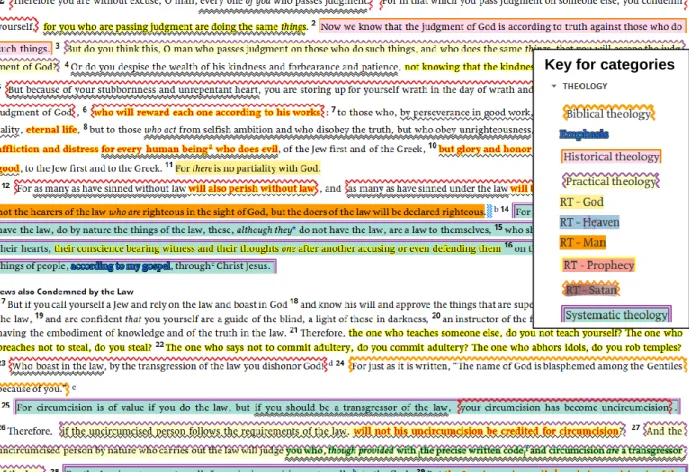
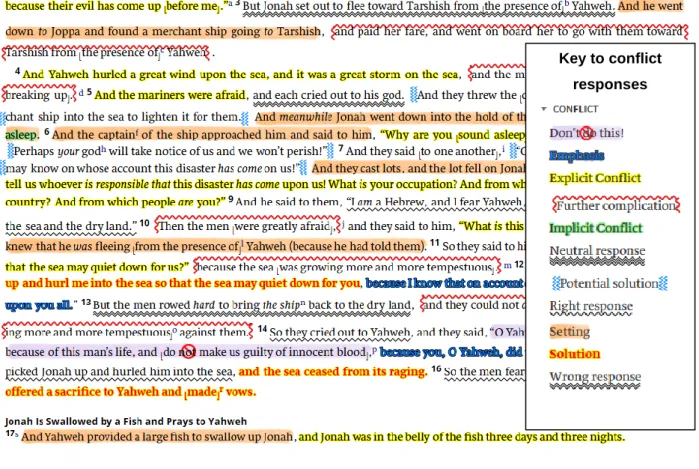
In order to find and explore the biblical evidence of God's view of conflict through conflict principles in Romans 12-16, he undertook an exegetical study of the text: a) providing the original translation of the pericope77 (b) analyzing the text using the conflict rubric78. c) incorporating insight into biblical scholarship from books, journals, commentaries and monographs. In order to observe the biblical evidence of God's view of the conflict from another perspective, in order to eliminate possible "tunnel vision", we undertake a qualitative study of the Letter to the Romans.
Research methodology .1 Textual study of Romans .1 Textual study of Romans
- Significance of the Romans text
- Qualitative study of “conflict”
- Preliminary work
- Software
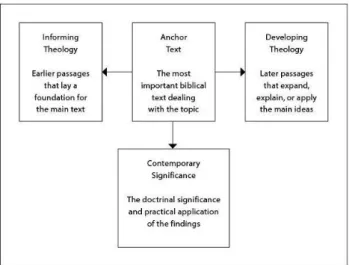
81 This is an example of using the simplistic definition of biblical theology as seen in Table 1-3. When another pericope of Scripture is quoted or summarized as part of the argument or presentation, then it is.
Ethical considerations
Executive summary
LITERATURE REVIEW
Introduction .1 Outlook .1 Outlook
- Topic
- Context
- Significance
- Problem
- Organisation
I call them the "Ten Unspoken Commandments of Conflict in the Church." Unspoken commandments are not exclusive to church circles; social scientists would suggest that they are rooted in a set of shared dynamics that accompany conflict as it escalates.2. The first section is the research background for a BTOC that presents the researchers' responses to four questions.4 The second section reveals the findings and evaluation of 15 potential BTOCs.
Background
- Why conflict?
- Integral
- Cost
- Experience of ongoing and unresolved conflict
- Because of the need
- Why biblical theology?
- Role of narrative
- Role of conflict in narrative
- Because … there is a need for a biblical theology of conflict
- Why Romans?
- Its focus
- How it communicates
- What characterises a biblical theology of conflict?
- Basis in the study of God’s Word
- Holistic look at conflict
- View of conflict
- Update on conflict definition 173
- Proximity
- Variety
- Experience
For the simple reason that it is one of the few things in life that is ubiquitous. It was true in the days of NZ9 and is still true today. For example, Kingsbury refers to the role of conflict in a study of the book of Luke.
And, Goodall has a great perspective on summaries; he writes: "Conflict is not a sign that we are outside God's will. One aspect that has not been adequately considered in the discussion of conflict is the cost of poorly handled conflict. Porter addresses this challenge by talking about the current state of the Church's understanding of conflict.
Greidanus (1988:96) states that “the Bible as a whole teaches one all-encompassing history of the kingdom of God.” 167 In this analysis, the purpose of the study was to discover God's view of conflict by examining His Word.
Literature review
- Secular example for comparison
- Findings
- Claimants of a biblical theology of conflict
- Non-claimants – update on a biblical theology of conflict
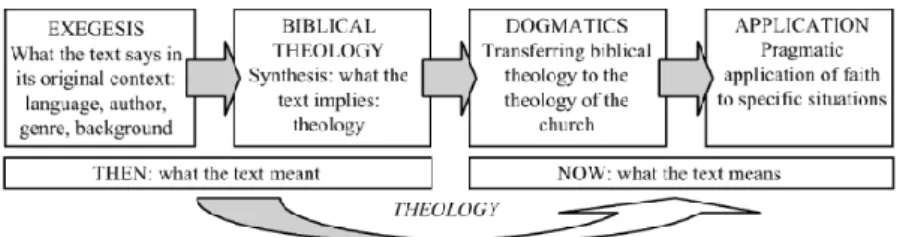
But we are also reluctant to admit that we are in the middle of conflict. This ambivalence about conflict is rooted in the same primary challenge that conflict resolvers face – coming to terms with the nature of the conflict. 198 Mayer makes this observation of views of conflict: “Some people believe that conflict is a natural part of their lives and that it is perfectly acceptable to be in conflict.
The first is his understanding of the connection between Romans 12 and 13 and the work of conflict resolution. Indeed, one of the stated purposes of his discussion of the development of his material is “to teach a biblical theology of conflict” (2011:9). Biblical theology explores God's revelation of conflict (which is lacking here) and answers that question (which will be explored in Romans 12-16).
Christensen and Johnson (2015:5) acknowledge that “the problem is the lack of conflict, not the presence of conflict”. Fourth, it is not BTOC because it focuses on practical implementation versus discovering God's use of conflict.
Impact
- Hermeneutical/theoretical
- Ethical/practical
- Biblical theology of conflict
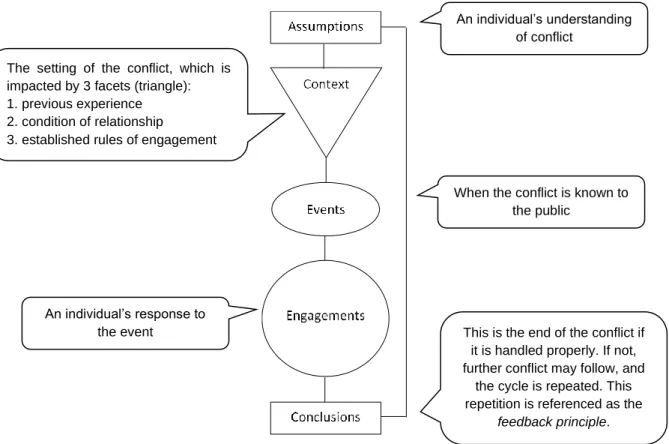
Jurkowski & Hahn no no (pastoral) irrelevant (answer is key) conflict begins in Robertson 1 Cor. 6:1-11 no (judicial) in the answer valuable illustration. This notion corresponds to both a consideration of the role of conflict within the narrative genre (micro level) and the role of conflict in the metanarration of Scripture (macro level). 299 Walker (1996:53) aptly renders this result when speaking of God's story: “Of course modern theologians, in telling the story, cannot make people believe.
What they can do, however, is stand up for the story and once again learn to tell it the way it was meant to be told. It is the Church's great narrative, which is not only decisive for its own identity, but for the salvation of the world. It is one of the goals of this research to begin to provide the missing component for discipleship.
Conclusion
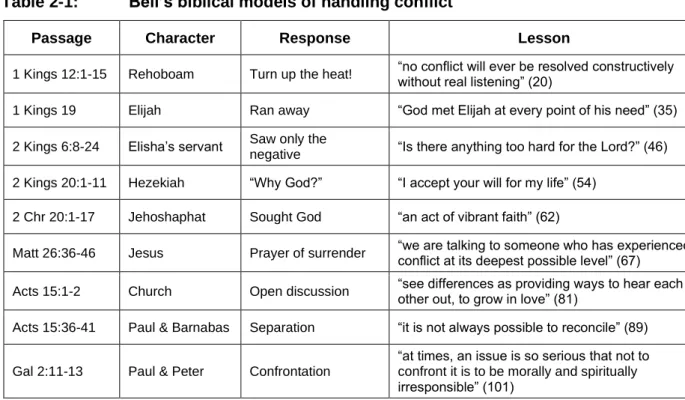
15 examples or models of declared or undeclared BTOCs were examined to determine whether they qualified as BTOCs; that consideration was based on the understanding that intrinsic to a BTOC is a focus on what God's Word reveals about the conflict (as opposed to an integrative approach), rather than a holistic or principled exploration that would be appropriate for the conflict in it all environments. The conclusion was that no BTOC was discovered to date, although it was demonstrated that the work of Bell (1987) and Christensen and Johnson (2015) could be considered at least preliminary or partial BTOCs. What this examination proved was that there was sufficient interest and effort to warrant the effort to begin developing a BTOC that would provide clarity, consistency, comprehensiveness, definition, and development of biblical principles to address these missing components to help believers in responding to conflict in a way that honors and glorifies God. 302.
ROMANS 12-16 CONFLICT EXEGETICAL STUDY
Introduction
Before attempting to begin developing a BTOC, this researcher begins an exegetical study of Romans 12-16 with a limited presentation of conditions or presuppositions as the exegesis is carried out.4 Not all potential topics or positions are mentioned, nor are a fair discussion of each; instead, a statement of the researcher's position and a brief explanation of why it is so is given.5 The reason for this approach is to remove any focus on overturning the beliefs of others and instead focus on the viability of the conflict perspective. , and how it can affect both the understanding of God's word and the implementation of God's word in the life of each believer (regardless of their position on an issue).6 This study provides such a framework from which to evaluate the many opinions that is out. there – something that has not been discovered until now. One aspect of the presuppositions is a brief explanation of why the researcher does not support the New Perspective on Paul (NPP).7 The reason for this specific addition is that many of those who adhere to the NPP are likely to struggle with the individualistic exploration of conflicts principles. 6 This approach may be disappointing or unsatisfactory to some, but such is the nature of conflict – not everyone will be satisfied with the particular solution to the conflict.
It's not about putting someone at ease, but rather about providing an understanding of someone's particular perspective, as an important topic is being discussed. 7 From this point on, the new perspective on Paul is abbreviated to NPP, and the opposing position will simply be called TPP—the traditional perspective on Paul. However, many issues of the NPP have a broad harmony, for example Yinger, who is a fan of the NPP and provides an excellent overview of the positions, says that the term originated with the James Dunn lecture in 1982.
Presuppositions (stipulations)
- New perspective on Paul
- Appeal of Scripture
- Author of Romans – Paul
- Date of Paul’s writing
- Place of Paul’s writing
- Status of chapters 15-16
- Audience of Romans – mixed congregation
- Approach of Romans – conflict
- Argument of Romans – gospel impact
- Aim of Romans – spiritual growth
- Intent of Romans – multiple
In addition, Acts 18:6 indicates Paul's change in the focus of his ministry as a result of the Jews' rejection of the message of Christ. It is clear that they were first-century enemies of the faith, and opponents of the gospel in particular. It is not a matter of admitting the Gentiles to the faith, but of the fact that the Judaizers themselves are not in the faith.”
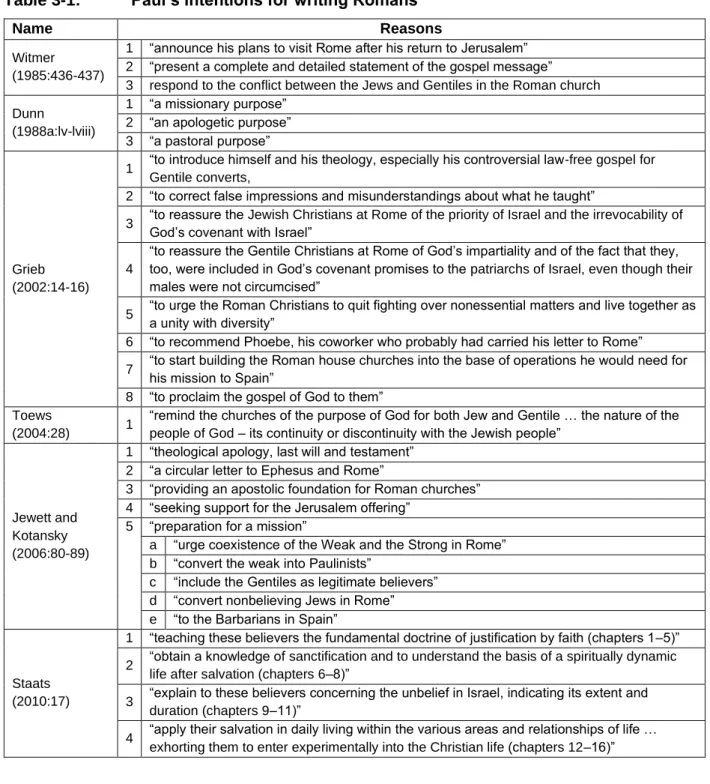
Or Wright who sees Scripture as a game that is not finished and which is finished in the functioning of the lives of God's people today. For this scholar, the less specific scope provides a better reflection of the content of Romans. 3 "to assure the Jewish Christians in Rome of the primacy of Israel and of the irrevocability of God's covenant with Israel."
Study of conflict principles in Romans 12-16
- Seminal conflict – God’s mercies
- Gospel message (1:16-20)
- Man’s wrong response to the Gospel (1:21-23)
- God’s response to man’s response (1:24-32)
- Example of Israel and the Gentiles (2:1-11:36)
- Personal conflict (12:1-2)
- The conflict – “urge”
- The reason for the conflict – mercies of God
- The desired results of the conflict
- Conflict principle of stewardship (12:3-21)
- Conflict principle of submission (13:1-14)
What is delivered is the body – the totality of the individual175 – and not what is convenient or easy. However, it is presented in the form of a counterpoint177 to the point that follows in the second half of the verse. First, there is the result of the triad of yielding, nonconformity, and transformation—approval of God's will.
It is a knowledge and practice of the will of God that leads to spiritual growth and maturity in the Christian's life [authors''. It has to do with the effects towards others of the inner work of God. The difficulty lies in the issues where one struggles to yield - the battle of the will.
![Table 3-3: Further development of basic Romans’ outline g. Conflict application [based on God’s mercies] (12:1-15:13) 1) Be a living sacrifice to God – doing His will (12:1-2)](https://thumb-ap.123doks.com/thumbv2/pubpdfnet/10397344.0/182.892.113.772.214.862/table-development-romans-outline-conflict-application-mercies-sacrifice.webp)