The purpose of the study was to develop and implement an intervention model to manage caregiver burden experienced by family caregivers of end-stage renal disease patients in Southwestern Nigeria. Through the cyclical nature of action research, identifying and exploring the experiences of family caregivers later led to the emergence of key concepts and the development of a model.
Background
According to Hansen and Slagsvold (2013), informal caregivers are volunteers who provide care to a sick family member. These factors appear to reduce caregivers' ability to continue caring for their sick family members.
Statement of the problem
These socio-economic reasons may account for the lack of support for family caregivers of ESRD patients in Nigeria. Government support for family caregivers is essential for continuity of care for patients with ESRD without compromising the health of the family caregiver.
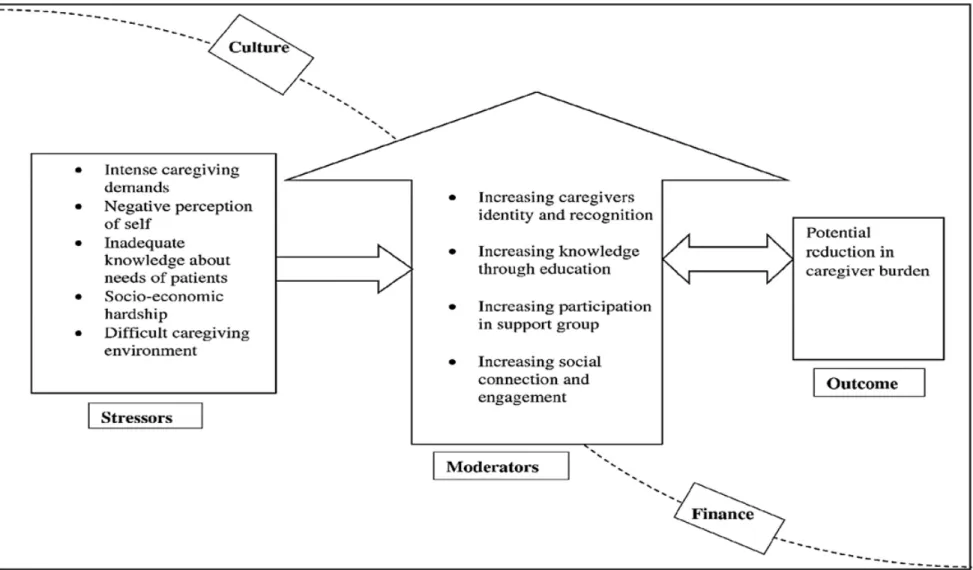
Conceptual framework
- Background and contextual factors
- Stressors
- Moderators
- Outcome
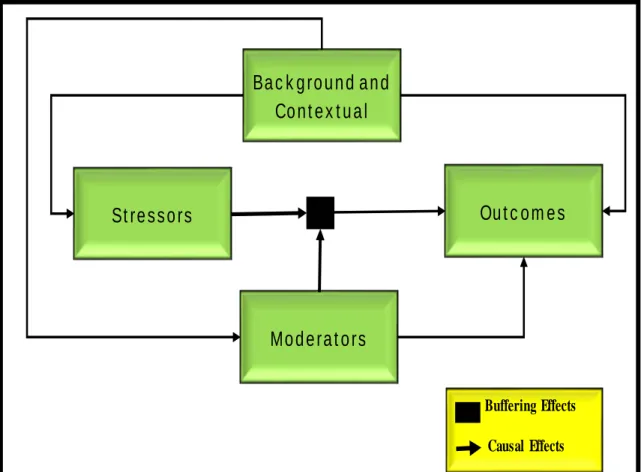
Four components are identified in the model, namely background and contextual factors, stressors, outcomes and moderators and describe their interrelationship in the development of stress in family caregivers (Aneshensel et al., 1995). In this study, stress is any situation that has a negative impact on family caregivers' ability to provide care.
Purpose of the study
In particular, the intensive and prolonged care required by patients with ESRD typically imposes a significant degree of caregiver burden on all aspects of family caregivers' lives. In this study, findings revealed that family caregivers experienced moderate to severe caregiver burden and that all aspects of their lives were affected by prolonged caregiving for a relative with ESRD.
Objectives of the study
Research questions
Significance of the study
- Research
- Practice
- Education
- Administration
This study may contribute to increasing the limited knowledge about informal caregivers of patients with ESRD in Nigeria and Africa. This study may help nurses provide holistic care to caregivers of patients with ESRD.
Operational definitions of terms
- Family caregivers
- Caregiving
- Caregiver’s burden
- End-Stage Renal Disease
- Patient
- Model
In this study, a patient is someone receiving care from a family caregiver for a diagnosis of end-stage renal disease. In this study, the conceptual model will be the plan to manage the burden of care experienced by family caregivers of patients with ESRD in Nigeria.
Research setting
The hospital acts as a referral center for several hospitals around the South West part of Nigeria. The hospital has six beds in the dialysis department with four functioning dialysis machines for hemodialysis and peritoneal dialysis.

Overview of methods
- Study orientation and design
- Study population, participants and sampling
- Measurements
- Questionnaire
- Interviews
- Field notes
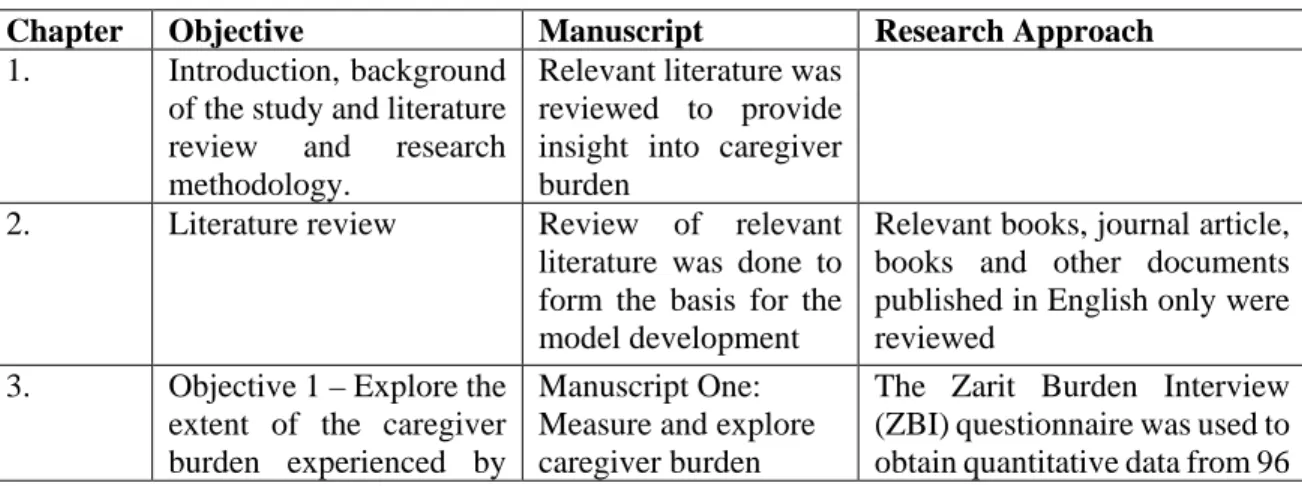
Based on pragmatism and the study objectives to examine the extent of caregiver burden and describe the family caregiver's experiences of caregiving, a complementary mixed method data collection strategy was adopted. These are the instruments used to obtain the data to measure the extent of the caregiver burden and to describe the family caregivers' experiences of caregiving.
Data collection process
Cycle One: Extent of the caregiver burden and developing a research team
This part of the study was conducted in three research settings in South West Nigeria. The study involved seven people as members of the research team during the first cycle of the study.
Cycle Three: Model development process
- Clarity of the model
- Simplicity of the model
- Generality of the model
- Accessibility of the model
- Importance of the model
After this, the research team members attended a workshop to establish a clear understanding of the concepts and clarify the relationships that existed between them (McNiff and Whitehead, 2010). Accessibility of the model was achieved by facilitating communication between the research team members.
Model implementation
Data analysis
The qualitative data was used to supplement the quantitative data in Chapter Two to derive a network of categories that was used to identify the moderators. Action research enabled collaboration between caregivers, nurses, and the researcher to develop the intervention model and gain caregiver buy-in in an effort to bring about change in clinical practice.
Rigor
- Credibility
- Transferability
- Dependability
- Confirmability
This is necessary to ensure consistency and consistency of data over time and under different conditions (Lincoln and Guba, 1985). An in-depth methodological description is made to allow for the integrity of the research results and to allow for review of the study results.
Data quality storage and management
This was done by referring them to the medical social workers in the research settings when the researcher picked up verbal and non-verbal cues indicating their psychological discomfort or anxiety. At other times, interview sessions were suspended until participants were comfortable enough to continue.
Structure of the thesis
Development of an intervention model to manage caregiver burden experienced by family caregivers of ESRD patients in Nigeria. The impact of caregiving on the psychological well-being of family caregivers and cancer patients.
Introduction
Search strategy
Cultural aspects of caregiving in the Nigerian context
Because most family members live in multigenerational environments, the family unit becomes a source of support and recovery for the sick and caregivers (Mokomane, 2013). The culture expects caregivers to always be near the sick person, otherwise they are seen as deviant.
Support for family caregivers
For this reason, nurses can provide coherent and evidence-based information to informal caregivers to avoid uncertainties. Caregivers can use faith and religion to find meaning in caregiving (Sánchez-Izquierdo, Prieto-Ursúa, and Caperos, 2015).
Available support for family caregivers in Africa
Family caregivers seeking help may offer sacrifices to atone for the sins of their sick relatives, pray and participate in rituals on behalf of themselves and their sick relatives (Amoateng et al., 2015). Family caregivers in LMICs are likely to use modeling to seek information about the needs of their sick loved ones (Eslami et al., 2016).
Space and place of care
In some cases, family caregivers negotiate with homeowners for structural modifications to accommodate dialysis and plumbing. Some family caregivers have experienced rent increases and eviction while providing intensive care in a rental environment.
Burden in the relationship
Competing needs for space between different age groups can also create conflict between sick relatives and children (Wiles, 2005). Family caregivers assisting ESRD patients to perform dialysis at home experienced difficulties in unsuitable home environmental conditions due to lack of space to store dialysis consumables, as well as lack of a hygienic room for the procedure (Walker, Howard, Tong, Palmer, Marshall, & Morton, 2016).
Emotional well-being
Social and family life
Finances
Loss of control over one’s life
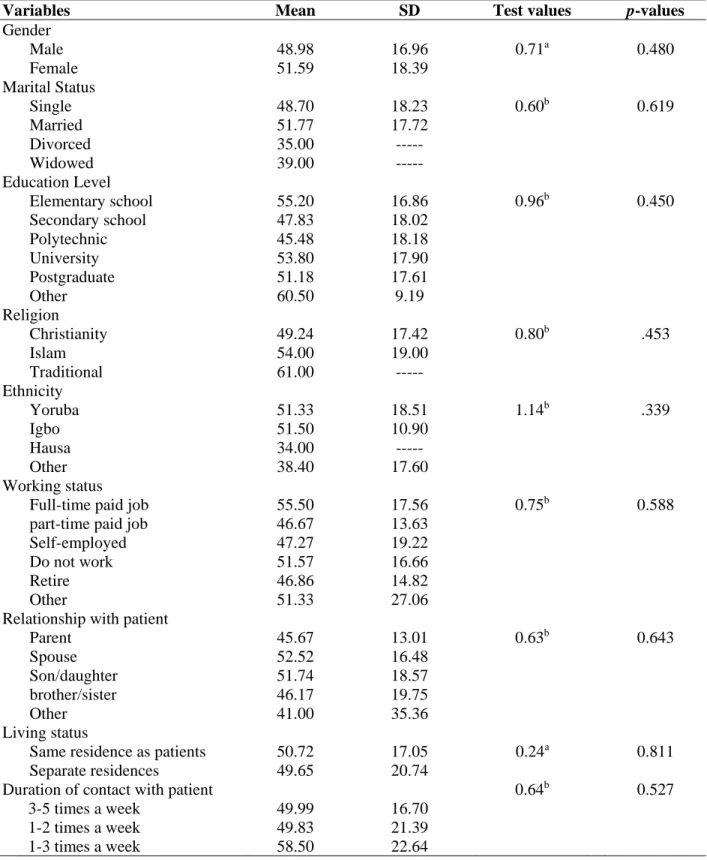
Research into the burden experienced by informal caregivers of patients with end-stage renal disease. This study therefore aimed to investigate the burden of informal caregivers of patients with ESRD patients in South-Western Nigeria.
Synopsis of the article
Synopsis of the article
Seven family caregivers and three registered nurses participated in the model implementation phase of the study. Verbal feedback revealed that the family carers were enthusiastic about having a model to deal with the perceived care burden.
Synopsis of the article
Overview of the study
Synthesis of findings
Objective 1: Exploring the extent of caregiver burden
The study revealed that increased participation of caregivers in support groups appears to help them cope with their experiences of caregiving burdens. In Cycle 1, the family caregivers experienced moderate to severe caregiving burden as measured by the ZBI questionnaire, while Cycle 2 went on to describe the experiences of these family caregivers, which were not explored in Cycle 1.
Objective 2: Describe the caregiving experience of family caregivers 122
Findings from Cycles One and Two were also reviewed together, with members of the research team agreeing that the model addressed caregiver burden (Locke, Alcorn, & O'Neill, 2013). The aim of the model was to reduce caregiver burden for those with relatives who have ESRD in Nigeria.
Methodological discussion
All of this worked together to produce the critical concepts and relationships between them in the caregiver burden management model. The study used action research to develop the model where all members of the research team worked together to bring about the change in practice.
Uniqueness of the study
Therefore, the model may serve as a tool to manage caregiver burden experienced by family caregivers of ESRD patients in resource-limited settings. This was because nurses perceived that family carers' participation in support groups seemed to help them manage their carer burden.
Recommendations
Research recommendations
The Managing Caregiver Burden Model (MCBM) appears to have increased awareness among nurses of the effects of caregiver burden on the family caregivers. By the end of the study, the nurse manager of the implementation site was making plans to present a proposal to hospital management about starting a family caregiver to family caregiver peer support system for the family caregivers of the patients with ESRD.
Education recommendations
Practice recommendations
Strength of the study
Limitations of the study
The small sample size of this study limited the statistical description of participant responses; however, this was due to the uniqueness of the population selected. Quantitative data were collected near the patient's bedside and in the outpatient department while care was being provided to the patient.
Conclusion of the study
A larger study should be considered as this small sample has shown a high level of caregiver burden.
ETHICS APPROVAL FROM RESEARCH SETTING ONE
ETHICS APPROVAL FROM RESEARCH SETTING TWO
ETHICS APPROVAL FROM RESEARCH SETTING THREE
INFORMED CONSENT FORM
Due to inducement(s): You will not receive compensation in any way for participating in this study. Modality of offering treatments and action(s) to be taken in case of injury or side effects: You will not be harmed as a result of your participation in this study.
INFORMATION SHEET AND CONSENT FORM FOR SURVEY
Mo ni ẹtọ lati kopa ninu iwadi yii ati pe Mo ni ẹtọ lati ma ṣe pa ninu iwadi yii. Nigbati mo ni imoye yii, Mo fi owo mi sinu iwadi yii.
ZARIT BURDEN INTERVIEW QUESTIONNAIRE
Do you feel that your health has suffered because of your involvement with your loved one? Do you feel that your social life has suffered because you are looking after your relative?
YORUBA LANGUAGE VERSION OF THE QUESTIONNAIRE
Ṣe o ro pe o ko le tọju ararẹ bi o ṣe fẹ nitori pe o tọju molebi yii? Ṣe o ro pe igbesi aye rẹ ti dara julọ lati igba ti o koju iṣoro yii?
INTERVIEW SCHEDULE
People have different reasons for volunteering to be family caregivers for people living with ESRD.
FOCUS GROUP DISCUSSION: CAREGIVERS
FOCUS GROUP DISCUSSION GUIDE: RESEARCH TEAM
COPY OF INTERVIEW TRANSCRIPT
Now that he is hospitalized, sometimes I like not to stay with him in the hospital to take care of him because I am usually tired from the troubles of the day before………. ZB: I have been to the Medical Social Worker………….she advised me and promised to help me….but I have not yet received any help from her.
PROOF OF THESIS EDITING
RECERTIFICATION OF ETHICAL APPROVAL
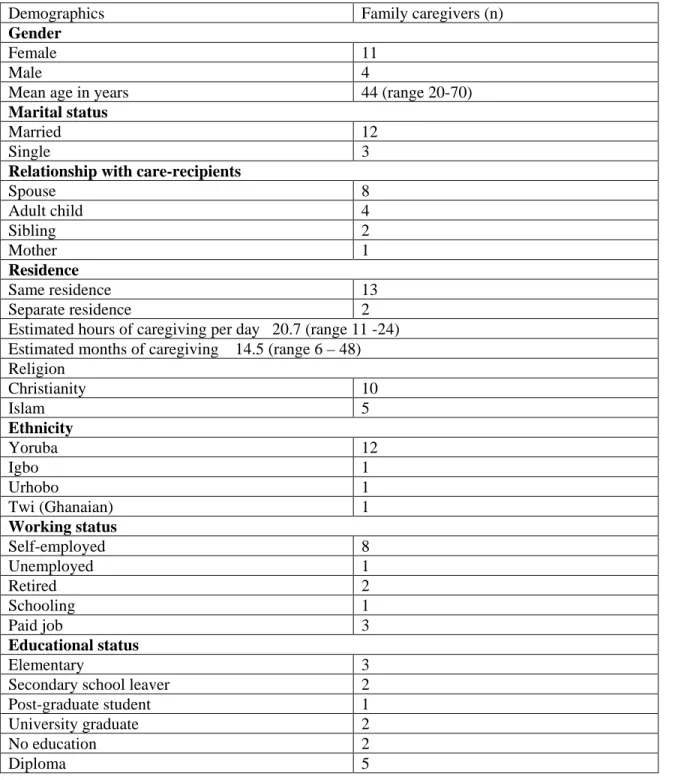
DEMOGRAPHIC CHARACTERISTICS OF PARTICIPANTS FOR
CATEGORIES AND SUB-CATEGORIES OF QUALITATIVE
Life goes by While my classmates are in college studying and studying for the upcoming big exams, I am in the hospital taking care of my sister. If I don't write this exam, I will be affected. When my friend's daughter graduated from college, I took care of my husband in the hospital.
ACTION RESEARCH