i TITLE
THE DISABILITY CASH TRANSFER AS A MEANS OF POVERTY REDUCTION AT NQUTU LOCAL MUNICIPALITY
BY
SIPHELELE RACHEL KHOZA
SUBMITTED IN PARTIAL FULFILMENT OF THE REQUIREMENTS OF THE MASTERS IN COMMUNITY WORK IN THE DEPARTMENT OF SOCIAL WORK
AT THE UNIVERSITY OF ZULULAND
SUPERVISOR: MRS B. N. NDLOVU DATE: NOVEMBER 2017
i DECLARATION
I, Siphelele Rachel Khoza, hereby declare that this study is my original work and that the material has not been published elsewhere, or submitted, either in whole or part to any other institution.
………..
S.R. Khoza
ii DEDICATION
This work is dedicated to my family, especially my mom for being both a mother and a father to me, and for being a pillar of strength to all of her children and grandchildren. Thank you very much.
iii ACKNOWLEDGEMENTS
On the completion of this study, I would like to show my gratitude to God Almighty, and my one and only mother, Ntombikayise Khoza, for being my greatest role model and mentor. I am forever grateful for your love, kindness, respect and mothership, and all the hardships you have been through for me, to see me become successful
My siblings, Sihle, Siphiwe, Nokuthula, Lungile and Thabo, thank you for your support. I know it was hard, but you were always showing faith in me. To the relatives who supported me in any kind way, may the Lord God continue to guide and protect you.
To the foundation that made everything possible for this study to come to life, I am out of words. The National Research Foundation (NRF), thank you for your generosity to fund this project in every aspect possible. Further, I would like to thank Nomathemba Shoba for being the mediator with the NRF offices.
To my initial supervisor, Professor N. H. Ntombela and my co-supervisor, Mr N. P Nwachukwu who was there for me when I first embarked on this journey. You showed me the way, and had faith in me. I pose all my earnest and unpretentious gratitude to both of you.
To Mrs Ndlovu, my supervisors now, thank you taking over the work left by my initial supervisors. To Professor D. N. Ocholla, thank you for critically reading my study.
My friends, colleagues, participants, Nqutu Local Municipality management, and SASSA management at Nqutu, thank you very much for your support.
iv ABSTRACT
Disability and poverty can no longer be denied as being some of the major factors that affect a number of people across South Africa and other developing, or even developed countries.
Yet, disability and poverty are still ill-defined and under researched. South Africa has developed an income system aimed at helping people with disabilities: The Disability Cash Transfer (DCT). Physical and mental conditions of people with disabilities vary from one person to another, which means that the type of care they require as they grow older is also different. Therefore, people with disabilities constantly require financial care and societal acceptance. This is why the South African government provides DCT for people with disabilities who cannot perform any formal work as a way to generate income for themselves.
This study seeks to evaluate if the DCT has an effect on people’s lives, with regards to poverty reduction, within Nqutu Local Municipality. Based on the Nqutu Local Municipality Integrated Development Plan First review (2013/2014:6), the estimated dependency ratio on social grants is 90.60%. The Disability Cash Transfer is within that estimated percentage.
In this study, both qualitative and quantitative data was obtained using questionnaires and interview schedules. The research instruments that were employed in this study to collect data from beneficiaries of DCT were questionnaires, and to gather information from SASSA officials, interview schedules were used. The study target population were the beneficiaries of DCT as well as SASSA officials of Nqutu Local Municipality. To sample DCT beneficiaries, convenience sampling was used, and to select SASSA officials, simple random sampling was employed. This researcher managed to get 73 DCT beneficiaries and 8 SASSA officials.
Content analysis was used to analyse interview schedules, in which all SASSA officials expressed that DCT does have an effect on poverty reduction. To analyse questionnaires descriptive analysis and the statistics program (SPSS) was used.
The findings of the study reveal that although the DCT may be satisfactory, there is a necessity for implementers to re-evaluate current operations to avoid the exclusion and inclusion errors that exist in the DCT distribution. Therefore, it is prudent for the government, community members, and SASSA to work concurrently into introducing new strategies that will strip off distribution errors and mitigate poverty. Findings, further exhibited that 91.78% respondents believe that the DCT has effects at Nqutu Local Municipality because beneficiaries are able to provide essential needs for their families. A
v high number of respondents 57.53% mentioned that there are challenges in the DCT distribution. These challenges were found to be the result of the imperfection of the system as it appeared the DCT beneficiaries would sometimes not receive full amount of their grant. It is recommended that the Department of Social Development working together with SASSA revisit the distribution procedure to avoid fraudulent activities that the DCT beneficiaries experience. To reduce poverty people with disabilities should also be given employment opportunities equal to people with no disabilities as a way to reduce a dependency ratio to social grants.
vi TABLE OF CONTENTS
Contents ... Page
TITLE ... i
DECLARATION ... i
DEDICATION ... ii
ACKNOWLEDGEMENTS ... iii
ABSTRACT ... iv
TABLE OF CONTENTS ... vi
List of tables xii List of figures xiv Abbreviations xv CHAPTER ONE: ORIENTATION OF THE STUDY ... 1
1.1 INTRODUCTION 1
1.2 BACKGROUND TO THE STUDY 2
1.3 PRELIMINARY LITERATURE REVIEW 3
1.4 PROBLEM STATEMENT 6
1.5 AIMS AND OBJECTIVES OF THE STUDY 7
1.6 RESEARCH QUESTIONS 7
1.7 ASSUMPTION OF THE STUDY 7
1.8 INTENDED CONTRIBUTION TO THE BODY OF KNOWLEDGE 8
1.9 RESEARCH METHODOLOGY - OVERVIEW 8
1.9.1 Target population 8
1.9.2 Sampling size and sampling method 9
1.9.3 Sampling frame 9
1.9.4 Data collection method 9
1.9.5 Data presentation and analysis 9
vii
1.10 ETHICAL AND SAFETY ISSUES 10
1.11 RESOURCES 10
1.12 FEASIBILITY 10
1.13 INTELLECTUAL PROPERTY 11
1.14 KNOWLEDGE DISSEMINATION 11
1.15 SUMMARY 11
CHAPTER TWO: LITERATURE REVIEW ... 12
2.1 INTRODUCTION 12
2.2 THE CONCEPT OF DISABILITY 12
2.3 CONCEPTUALIZING MODELS OF DISABILITY 13
2.3.1 Medical model of disability 14
2.3.2 Social model of disability 14
2.3.3 Empowerment model of disability 15
2.3.4 Moral or religious model of disability 16
2.4 APPLICATION OF DISABILITY MODELS TO THE STUDY 16
2.5 CRITIQUES OF DISABILITY MODELS 17
2.5.1 Medical model of disability 17
2.5.2 Social model of disability 17
2.5.3 Empowerment model of disability 18
2.5.4 Moral or Religious model of disability 18
2.6 OVERVIEW OF THE DISABILITY CASH TRANSFER 18
2.7 POVERTY 21
2.8 POVERTY MEASURES 21
2.9 EMPLOYMENT AND INCOME 22
2.9.1 Social grants 24
2.9.2 Number of people living in poverty 24
viii 2.10 LINK BETWEEN THE DISABILITY CASH TRANSFER AND POVERTY 25 2.11 CRITERIA FOR ELIGIBILITY FOR DISABILITY CASH TRANSFER 26 2.12 EXCLUSION AND INCLUSION ERRORS ON DISABILITY CASH TRANSFER
DISBURSEMENT 28
2.13 CHALLENGES FACED BY PEOPLE WITH DISABILITIES 29
2.14 IMPACTS OF THE DISABILITY CASH TRANSFER 31
2.15 IMPACTS OF POVERTY ON HOUSEHOLDS WHO ARE NO LONGER
BENEFICIARIES OF THE DISABILITY CASH TRANSFER 31
2.16 EDUCATION FOR PEOPLE WITH DISABILITIES 33
2.17 SUMMARY 34
CHAPTER THREE: RESEARCH METHODOLOGY ... 35
3.1 INTRODUCTION 35
3.2 RESEARCH DESIGN 35
3.3 TARGET POPULATION 36
3.4 SAMPLING SIZE AND SAMPLING METHOD 36
3.5 DATA COLLECTION 37
3.6 DATA COLLECTION PROCEDURE 38
3.7 DATA PROCESSING 39
3.8 ETHICAL CONSIDERATIONS 39
3.8.1 Confidentiality and anonymity 40
3.8.2 Integrity 40
3.8.3 Deception 40
3.9 DATA ANALYSIS AND INTERPRETATION 41
3.10 ENSURING TRUSTWORTHINESS 43
3.12 SUMMARY 44
CHAPTER FOUR: DATA ANALYSIS AND INTERPRETATION ... 45
ix
4.1 INTRODUCTION 45
4.2 BIOGRAPHICAL INFORMATION OF RESPONDENTS 46
4.2.1 Biographical information of interviewees 46
4.2.2 Biographical information of DCT beneficiaries 46
4.2.2.1Respondents` gender 47
4.2.2.2Respondents` ages at the time they completed questionnaires 48 4.2.2.3Respondents` marital status on the time they completed the questionnaire 49 4.2.2.4Respondents` educational level at the time they completed the questionnaire 49 4.2.2.5Respondents’ number of dependents at the time the questionnaires were
completed 50
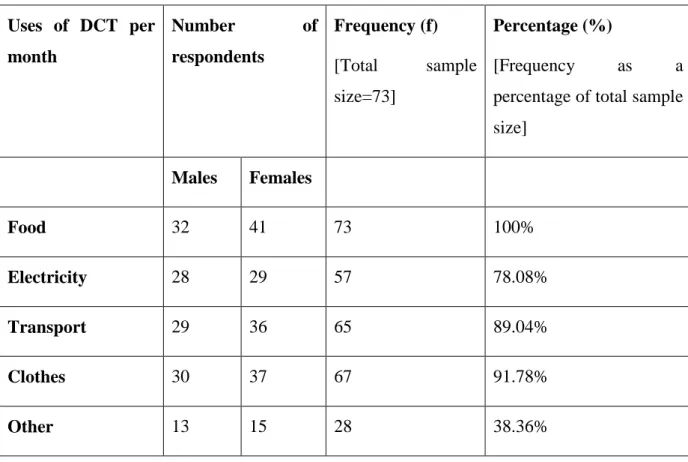
4.2.2.6Respondents views on what the Disability Cash Transfer is mostly used for per
month 52
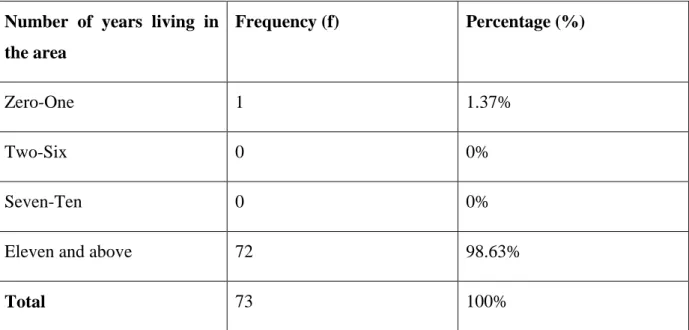
4.2.2.7Respondents` number of years living at Nqutu Local Municipality 53
4.2.2.8Respondents’ home language 54
4.2.2.9 Respondents ethnicity 54
4.3 DATA ANALYSIS PRESENTATION ACCORDING TO RESEARCH
OBJECTIVES AND RESEARCH QUESTIONS OF THE STUDY 55
4.3.1 Research question 1: What are the effects of the Disability Cash Transfer on the beneficiaries at Nqutu Local Municipality towards poverty reduction? 55 4.3.1.7Do you think you know why people benefit from the Disability Cash Transfer at
Nqutu Local Municipality? 63
4.3.2 Research question 2: What are the challenges facing people in utilizing the Disability Cash Transfer as a means of poverty reduction at Nqutu Local
Municipality? 64
4.3.3 Research question 3: How has poverty impacted on households who were former beneficiaries of the Disability Cash Transfer distribution towards poverty reduction?
67
x 4.3.4 Research question 4: Are there any exclusion or inclusion errors on the disbursement
of the Disability Cash Transfer as it affects poverty reduction? 76
4.4 THEMES THAT EMERGED FROM INTERVIEWS 78
4.4.1 Theme number 1: The effects of Disability Cash Transfer 79 4.4.2 Theme number 2: The impacts of Disability Cash Transfer 80 4.4.3 Theme number 3: The inclusion of people with disabilities to the DCT program 81 4.4.4 Theme number 4: Suggestions for poverty alleviation 84
4.5 DISCUSSIONS 85
4.6 SUMMARY 87
CHAPTER FIVE: DISCUSSION OF FINDINGS, CONCLUSIONS AND
RECOMMEDATIONS ... 89
5.1 INTRODUCTION 89
5.1.1 Reaffirming the study objectives 89
5.2 FINDINGS OF THE STUDY IN TERMS OF OBJECTIVES 89
5.2.1 Objective 1: To find the effects of the Disability Cash Transfer on the beneficiaries of Nqutu Local Municipality towards poverty reduction 89 5.2.2 Objective 2: To find challenges facing people in utilising the Disability Cash
Transfer as a means of poverty reduction at Nqutu Local Municipality 90 5.2.3 Objective 3: To identify poverty impacts on households who were former
beneficiaries of the Disability Cash Transfer distribution as a means of poverty
reduction. 92
5.2.3 Objective 4: To asses if there are any exclusion errors on the disbursement of the Disability Cash Transfer as it affects poverty reduction 92
5.3 CONCLUSIONS 94
5.4 RECOMMENDATIONS 96
5.5 FUTURE RESEARCH 97
REFERENCES 99
Addendum A: Informed consent 110
xi
Addendum B: Questionnaire 112
Addendum C: Interview schedule 118
Addendum D: Letter requesting permission to conduct research 120 Addendum E: Letter requesting permission to conduct research 122
Addendum F: Ethical clearance certificate 124
Addendum G: SASSA permission letter 126
xii List of tables
Table 2. 1: Employment distribution 23
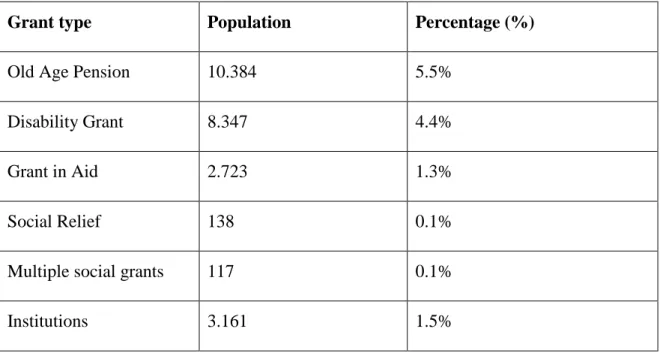
Table 2. 2: Nqutu Local Municipality, (KZN242) Social grants recipients 24
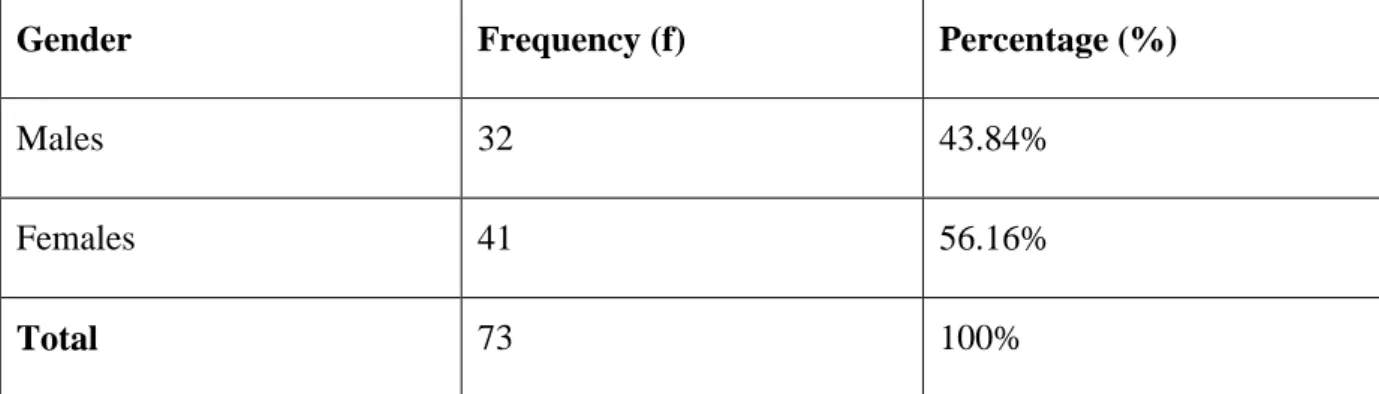
Table 4.1: Respondents' gender at the time the questionnaire was completed (NLM, 2016) 45
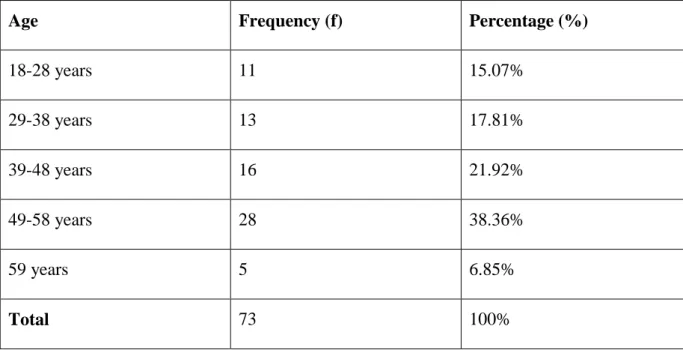
Table 4. 2: Ages (NLM, 2016) 45
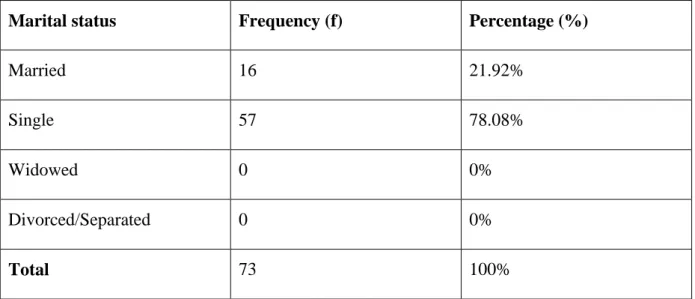
Table 4. 3: Marital Status (NLM, 2016) 47
Table 4. 4: Educational level (NLM, 2016) 47
Table 4. 5: Number of dependents (NLM, 2016) 48
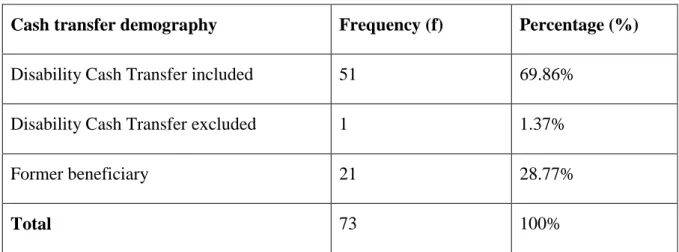
Table 4. 6: Cash transfer demography (NLM, 2016) 49
Table 4. 7: The Disability Cash Transfer is mostly utilised per month for per month 50
Table 4. 8: Number of years living in the area 51
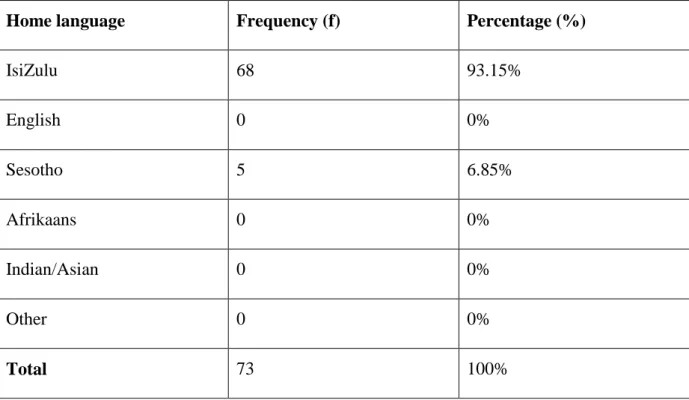
Table 4. 9: Home language 52
Table 4. 10: Respondents` responses on whether DCT has effects or not 54
Table 4. 11: Respondents` basic needs to maintain life 55
Table 4. 12: Respondents` choices on whether the Disability Cash Transfer has assisted
people at Nqutu Local Municipality reduce poverty 56
Table 4. 13: Respondents’ replies on whether they heard about DCT at around Nqutu or not 57 Table 4. 14: Households or individuals that receive the Disability Cash Transfer in your
community 59
Table 4. 15: Respondents` views on why people benefit from the Disability Cash Transfer at
Nqutu Local Municipality 61
Table 4. 16: Challenges in the Disability Cash Transfer distribution
62 Table 4. 17: The DSD or SASSA is it aware that there are people who are no longer
beneficiaries of DCT 66
xiii Table 4. 18: Can something be done to render services in a more suitable way as a way to
monitor what happens with beneficiaries of DCT? 68
Table 4. 19: A particular person is responsible for making sure the DSD services are rendered
well 69
Table 4. 20: Things that need to be changed in terms of how households or individuals are
removed from benefiting from DCT 70
Table 4. 21: The distribution procedure of the Disability Cash Transfer is satisfactory at
Nqutu Local Municipality 72
Table 4. 22: People who wrongfully receive DCT at Nqutu 73
Table 4. 23: People who do not receive the DCT but they are supposed to benefit from it 74 Table 4. 24: Themes and sub-themes generated from the interviews 75
xiv List of figures
Figure 1: Respondents` views on whether DCT has assisted people at Nqutu (NLM, 2016). 57 Figure 2: Respondents who have heard and not heard of the DCT around Nqutu community
(NLM, 2016) 58
xv Abbreviations
DCT Disability Cash Transfer
SASSA South African Social Security Agency DSD Department of Social Development NLM Nqutu Local Municipality
WHO World Health Organisation
VFSG Vulnerable Families Support Grant
SAGE Special Assistance Grant for Empowerment CSDA Centre for Social Development In Africa MDGs Millennium Development Goals
CPS Cash Payment Services
ICT Information Communication Technology AIDS Acquired Immune Deficiency Syndrome
HIV Human Immune Virus
1 CHAPTER ONE: ORIENTATION OF THE STUDY
1.1 INTRODUCTION
The Disability Cash Transfer (DCT) is one of the developmental approaches by the South African government to give people living with disabilities in South Africa an income and save them from the poverty line. The Disability Cash Transfer is a means-tested, cash transfer given to people with disabilities between the ages of 18 years old, and the retirement age of 59 years old, who do not receive other state grants, and who are not cared for in state institutions (Van der Berg, Siebrits, & Lekezwa, 2010-2011:9). The DCT is under the social assistance programme, within the South African social security system. This study reconnoitres and evaluates the capability of the Disability Cash Transfer to reduce poverty.
Khumalo (2003:4) defined social security as a government’s actions aimed at decreasing the economic uncertainties of individuals by ensuring them a Minimum Living Level (MLL).
The (MLL) refers to the line used to measure poverty, or the minimum capital needed to sustain life at a predetermined standard (Khumalo, 2003:4).
In South Africa, the White Paper for Social Welfare (1997:49) has defined social security as an inclusive range of unrestricted and secluded measures that provide money, or in-kind benefits, or both, in circumstances where an individual does not have the means to sustain a living for a lifetime, the means of self-development or empowerment are nearly impossible and the individual is unable to avoid poverty. The South African Social Security Agency (SASSA) is divided into two systems, namely the Social Assistance System and the Social Insurance System (Triegaardt, 2005:3). The Social Assistance System is a state funded one that provides social cash transfers in South Africa. Furthermore, Triegaardt (2005:3) stated that social assistance grants, which are non-contributory and financed entirely from the government, are means tested. This means that only those who meet the criteria of the terms and conditions required, when assessing social assistance bequests, will be legible.
According to the White Paper for Social Welfare (1997:50), “social insurance is defined as joint contributions by employees and employers to pension or provident funds, or social insurance covering other unexpected events. The government can also contribute to social insurance covering accidents at work”. There are eight types of social assistance grants in South Africa, namely the Old Age Pension, the Disability Cash Transfer, Child Support Grant, Foster Care Grant, Care-dependency Cash Transfer, Grant-in-Aid, Social Relief Grant
2 and War Veteran’s Grant (Mokoena, 2015:1). This study has evaluated one social assistance scheme, the Disability Cash Transfer (DCT) at Nqutu Local Municipality.
The Disability Cash Transfer plays a significant role in the South African social security system, mostly to rural people, as well as those living with HIV and those affected by it (De Paoli, Mills, & Gronningsaeter, 2012:2), to alleviate poverty (Leibbrandt, Woolard, Finn, &
Argent, 2010:7).
Mitra (2010:1706), in her study on the DCT, within the context of poverty and unemployment in South Africa, found out that errors in the distribution of the Disability Cash Transfer were increasing serious, and those errors left deserving, disabled non-beneficiaries helpless. She also found that poor infrastructure and isolated communities are the hallmark of the lack of knowledge dissemination for Disability Cash Transfer beneficiaries, and therefore they became automatically excluded. Furthermore, she recommended that research should investigate if Disability Cash Transfers have impacted on the demand for health care services, and the results they have had on beneficiaries. Consequently, the study recommended further inspection in what should be done based on whether a Disability Cash Transfer empowers people with disabilities within their households.
This study further investigated recommendations by Mitra (2010) on awareness pertaining to knowledge dissemination for the South African Disability Cash Transfer in the Nqutu Local Municipality; it ascertained if exclusion errors of the Disability Cash Transfer are extremely disfranchising on deserving non-beneficiaries, with work disabilities, within the context of poverty in South Africa. Additionally, this study looked at how poverty was impacting on households that had been removed from receiving the DCT for months, as recommended by Frikkie (2004:53).
1.2 BACKGROUND TO THE STUDY
South Africa has developed an all-embracing social security system. After the African National Congress (ANC) government came into power in 1994, the government introduced social policies to cater for the underprivileged (Taylor, 2002:19). According to the White Paper on Social Welfare (1997:43), social security is the most funded system in the country, taking about 88% of the welfare budget. The goals for introducing the social policy were to alleviate poverty, achieve a fair income distribution, and lower the rates of poverty in the country. However, there are still unfilled gaps of people living in the shadows of poverty. For
3 example, Taylor (2002:19) estimated that about 60 percent of poor people, which is about 1.1 million people, are not covered by the social security system in South Africa.
The demand for the Disability Cash Transfer has been studied by various authors (Mitra, 2010:3; Van der Berg and Brekenkamp, 2002:1; Gooding & Marriot, 2009:695). Mitra (2010:3) stated that the Disability Cash Transfer demand is now very high, and it has resulted in an effect on the unemployment rate. Van der Berg and Brekenkamp (2002:1) pointed out, that in future, the South African social security system will not be able to cope with the increasing unemployment rate. This will leave at least half of the unemployed working age population non-recipients of social insurance (occupational insurance), which will increase the burden on social grants.
Gooding and Marriot (2009:695) recommended that to avoid an increasing demand and dependency on the Disability Cash Transfer, employment options would have to be provided that would cater for various people with disabilities. Mokoena (2015:1) gave the number of people that are benefitting from social security to be 16.4 million in 2014. Despite all government efforts in reducing poverty in the country, with advancement in economic development since 1994, the country continues to suffer from poverty and unemployment (Meth, cited by Frye, 2008:15).
According to the South African Constitution 1996, Section 27 (1) (C), the Bill of Human Rights states that, “everyone has the right to have access to social security, including, if they are unable to support themselves and their dependants, appropriate social assistance”
(Constitution of the Republic of South Africa, 1996:13). The constitution further states that legislative measures will be used to share available resources to fulfil these rights. Therefore, the South African government is bound by the constitution to find new resolutions that will curb the cumulative numbers of poor people, by promoting the social grant initiative of the government.
1.3 PRELIMINARY LITERATURE REVIEW
In articulating the effects of the Disability Cash Transfer as a means of poverty reduction at Nqutu Local Municipality, the researcher will make use of journals, books, previous dissertations, theses, and internet access to review current literature in order to achieve the objectives of the study, using supportive data to compliment the research data. The existing literature shows that the social security system, which as a cornerstone of social assistance
4 system, is the major leading financial source for many poor households in attaining poverty reduction.
Social cash transfers are overseen by the South African Social Security Agency (SASSA), therefore, it is delegated by the South African Social Security Agency Act of 2004 (Kelly, 2015:1) as a means towards reducing poverty within society. South Africa’s social assistance programme was first launched in the form of non-contributory, old-age pensions, then as programmes for disabled and poor parents, and followed by the introduction of a limited system of contributory unemployment insurance (Seekings, 2008:28-52).
Currently, South Africa has more cash transfer recipients than before, which accommodates various individuals, thus assisting in reducing poverty for the majority of formerly disadvantaged persons. According to the report conducted by Zanker, Morgan, and Meth (2011:3), social assistance schemes’ beneficiaries have increased from 2 million in 1996/97, to 14 million people in 2009/10 (28% of the population). Additionally, Lang, Groce, Kett, Trani, and Bailey (2009:2) asserted that, from a global viewpoint, it is projected that the number of people with disabilities is 650 million, whereby 80% of the people live in countries that are still developing.
According to a GroundUp article, the 2015 cash transfer beneficiaries number has grown to nearly 16 million (Kelly, 2015:1). Although the rate of poverty in rural areas is still much higher, the relocation of people to urban areas has resulted in an increase of poverty in urban areas too. The total number of poor people has escalated over the past 15 years, a circumstance that is connected closely to unemployment (Zanker et al., 2011:15). Social cash transfers have not been enough to address and reduce poverty and inequality fully. According to Lang et al. (2009:2), poverty and disability are vastly allied, with either one being a cause and consequence of the other. The vast number of people with disabilities faces a great chance of not completing formal primary or secondary schooling, and thus find it hard to secure long-term, maintainable employment, hence people who are disabled are more prone to the possibility of being poor. Moreover, Lang et al. (2009:2) pointed out that there is strong evidence that people with disabilities are one of the most discriminated and publicly excluded groups within communities. Hence, this study sought to examine if there is a connection between benefitting from the Disability Cash Transfer and being discriminated from getting employed.
5 According to the South African Civil Society Information Service article, line 34 revealed that half of the children in South Africa live in households where no one is employed (Peters, 2008:1). In contrast, some children live under the care of an adult or the family structure, where only one individual can be a care giver. That means the wellbeing of a child relies on the adult figure. Some of these children have disabilities and require constant health care and supervision.
Unsatisfactory communal safety methods provided by the government, enduring disparity, poor service delivery, and the errors of exclusion are causing detrimental effects on the country. Delays in service deliveries to the community as well as frustration at the lack of changes proposed for community development by providing social protection have all steered to the rise of public action and social conflict, which has resulted to an increase in violence frequency (Brooks, 2009; Duncan, 2010). Lekezwa (2010/2011:12) discovered that there are two errors or challenges that could possibly arise in the process of selecting beneficiaries of social cash transfers. These challenges are the error of exclusion, which occurs when poor people are not included in receiving benefits, and the error of inclusion, when people who are not poor are receive benefits instead of poor people.
Frikkie’s (2004:53) study had correlations with Lekezwa’s study (2010/2011:12), as both studies implied that poverty impacts mostly households or individuals that have been detached from receiving cash transfers for months. This shows that new targeting measures have to be found in order to prevent fraud, which penalises poor people and increases the rate of poverty.
Graham, Selipsky, Moodley, Maina, and Rowland (2010:6) explained that it is often very hard to get the exact figures of the number of people who have disabilities in South Africa.
This may be because people are not aware of the various types of disabilities, such as learning disabilities. They are only aware of the common physical disabilities. They further stated that the stigma attached to people with disabilities contributes to the social exclusion of people with disabilities. Also, the perception about chronic illness and disabilities is often not understood in South Africa, more especially when it comes to disability grant.
South Africa uses means testing as a targeting procedure to see who deserves the social assistance benefits. According to Pauw and Mncube’s (2007:5) study, means testing can be administratively complex, especially when rigorous authentication procedures are in place.
6 Pauw and Mncube (2007:5) further argued that even though there are other targeting ways, they still result in targeting errors. Mitra (2010:3) stated that, among social assistance grants, disability cash transfers do have an influence on poverty reduction in selected societies, in a few provinces in South Africa.
Findings in Mitra’s study (2010:14) discussed that Disability Cash Transfers exclusion errors are very high, and that they need to be attended to, to cover non-beneficiaries with disabilities who cannot work. Therefore, this study embarked upon trying to unveil these issues suggested by researchers (Frikkie, 2004; Mitra, 2010; Pauw and Mncube, 2007) on the DCT towards poverty reduction at Nqutu.
1.4 PROBLEM STATEMENT
People who have different disabilities face physical and attitudinal obstacles to participate in education, the labour market and development processes in general. Nqutu Local Municipality has 4.7% total of people with different disabilities (uMzinyathi District Municipality, 2012/2017:32-33). People with disabilities may require financial support to sustain their lives, but, ironically, they cannot sustain their lives with increases in taxes and livelihood expenses.
These challenges, according to the municipality, are: the high rate of unemployment (44.40%), poor service delivery (water and sanitation), poverty which occurs as a result of low income. The biggest challenge is dependence on Social Cash Transfers (the dependency ratio is estimated to be 90.60% between ages 15-64) (Nqutu Local Municipality Integrated Development Plan First review, 2013/2014:6). The municipality is mostly reliant on social assistance transfers, and yet the community is stricken by poverty (Nqutu Local Municipality Integrated Development Plan First review, 2013/2014:6). That shows that alternative measures need to be put forward to assist the community.
The disbursement of social assistance grants also has a variety of challenges. These challenges have been a great threat to the people, and they are caused by irregularities in cash transfer administration, poor service delivery as a result of staff shortages, possible poor management skills in the Department of Social Development (SASSA section), illiteracy of young, middle and the old age residents, and lastly, poverty reduction measures that are no longer effective.
The study aim was to explore the Disability Cash Transfer as a means of poverty reduction at Nqutu Local Municipality. Thus, the study investigated the effects of the Disability Cash
7 Transfer’s removal of beneficiaries, and the poverty impacts to former household beneficiaries, as well as assessing alterations on the disbursement of the Disability Cash Transfer as a means of poverty reduction.
1.5 AIMS AND OBJECTIVES OF THE STUDY
The study aim was to evaluate the effect of the Disability Cash Transfer as a means of reducing poverty at Nqutu Local Municipality.
The objectives of the study were:
1. To find the effects of the Disability Cash Transfer on the beneficiaries at Nqutu Local Municipality towards poverty reduction.
2. To find the challenges facing people in utilizing the Disability Cash Transfer as a means of poverty reduction at Nqutu Local Municipality.
3. To examine poverty impacts on households who were former beneficiaries of the Disability Cash Transfer distribution as a means of poverty reduction.
4. To assess if there are any exclusion or inclusion errors on the disbursement of the Disability Cash Transfer as it affects poverty reduction.
1.6 RESEARCH QUESTIONS
1 What are the effects of the Disability Cash Transfer on the beneficiaries at Nqutu Local Municipality towards poverty reduction?
2 What are the challenges facing people in utilizing the Disability Cash Transfer as a means of poverty reduction at Nqutu Local Municipality?
3 How has poverty impacted on households who were former beneficiaries of the Disability Cash Transfer distribution towards poverty reduction?
4 Are there any exclusion or inclusion errors on the disbursement of the Disability Cash Transfer as it affects poverty reduction?
1.7 ASSUMPTION OF THE STUDY
The study assumption is based on the premise that the Disability Cash Transfer has not impacted on poverty reduction at the Nqutu Local Municipality. Therefore, it is stated: that there is inadequate evidence that the Disability Cash Transfer has impacted on poverty as a means of poverty reduction at Nqutu Local Municipality.
8 1.8 INTENDED CONTRIBUTION TO THE BODY OF KNOWLEDGE
This study intended to contribute to knowledge by providing insightfulness to the literature, knowledge and information about the South African social security system, which is not known to many people due to inadequate literature. The study also provided information and created awareness about the Disability Cash Transfer to the people in rural areas, pertaining to its importance and how it is to be a beneficiary of the Cash Transfer, especially those living in the rural areas. The study presumed to help not only the Nqutu community, but other rural communities, the government, researchers, the Department of Social Development and other provinces struggling with the same problem.
The gaps that were discovered regarding the social security system in the context of South Africa would be of benefit in future policy formations. The study contributed to finding new ways of reducing poverty, using the already active measures, which are social assistance grants and could new ways to curtail poverty impacts on the research study areas.
1.9 RESEARCH METHODOLOGY - OVERVIEW
The term research methodology refers to the scientific method that is used to collect and analyse data in order to attain a conclusion or a solution to the problem (Struwig and Stead, 2011:44). The study applied the quantitative research method and qualitative research method.
This research was exploratory in nature. According to Yanus and Tambi (2013:17) exploratory studies are significant in order to get a clear understanding of the problem of interest and for advancing knowledge through good theory building. Thus, the study`s aim was appropriate, as it investigated the persistent problem of poverty impacts regardless of the cushion of social cash transfer.
1.9.1 Target population
The study was conducted at Nqutu Local Municipality in KwaZulu-Natal. Nqutu Local Municipality population is at a total of 165 307. An estimate of 34 439 persons and households benefit from the Disability Cash Transfer (UMzinyathi District Municipality, 2012/2017:32).
The target population for the study was those individuals and households benefiting from DCT and the Department of Social Development officials from Nqutu. The respondent’s ages varied from 18 to 59 years old.
9 1.9.2 Sampling size and sampling method
Sampling is the method used through which a sample is drawn from the target population (Bless and Higson-Smith, 2000:83). This study made use of the convenience sampling.
According to Harding (2013:16) convenience sampling is a sampling technique that focuses on the judgement of the researcher including reaching the target sample easily, convenient, and quickly to obtain information.
For the purpose of this research, SASSA officials were selected using simple random sampling. The probability method which is simple random sampling was used because there was an already available sampling frame of SASSA officials.
1.9.3 Sampling frame
The sampling frame is defined as a wide-ranging list of the sampling components in the target population (Brink, Van der Walt, and Van Rensburg, 2012). Thus, this study`s sample frame was derived from the list available to the researcher from the Nqutu Local Municipality (SASSA). Out of 80-150 respondents, 70-135 respondents were the Disability Cash Transfer beneficiaries or households, and 10-15 participants were the Department of Social Development officials at Nqutu.
1.9.4 Data collection method
The study used the structured questionnaire containing two sections to collect data from disability cash transfer beneficiaries. Section A required the bio-data of the beneficiaries, and Section B focused on addressing objectives of the study. The questionnaires were translated to IsiZulu to accommodate illiterate individuals. The study also employed a structured interview schedule to acquire quality information from the Nqutu Local Municipality Department of Social Development (SASSA officials).
1.9.5 Data presentation and analysis
Descriptive analysis was employed in this study to analyse the questionnaire. A descriptive statistics method used measures such as the occurrence rate, measures of central tendency, and measures of relationship (Brink et al., 2012:179). Interview responses were analysed using the content analysis which will be done through the use of the Thematic, the use of common and recurring words (De Vos, Strydom, Fouche, & Delport, 2005; Corbin and Strauss, 2008). On the other hand, Statistical Package for Social Science (SPSS) was employed in the study to generate and analyse statistics.
10 1.10 ETHICAL AND SAFETY ISSUES
The University of Zululand’s ethical guidelines and policies regarding plagiarism, and participants` rights were observed in this research. Ethical requirements at a national level in South Africa were also observed in this study. The researcher requested permission to conduct the study at the Nqutu Local Municipality. The researcher also requested permission to conduct research at the SASSA offices at Nqutu by sending a request to the regional manager of SASSA.
The issue of confidentiality was discussed with all the participants who were involved in the study. To maintain confidentiality and anonymity personal details, such as the name and surname of the client were not written in the questionnaire, but they were written in an informed consent. No one had access to the questionnaires except the researcher and the researcher`s supervisor. The confidentiality agreement was well known as the informed consent was signed by the participants.
These informed consents contained significant information such as the title of the study, objectives and the rights of the participants, including that the study was voluntary. Proper acknowledgement was given to authors for using their materials. The researcher avoided deception by all means. The researcher did not withhold any information regarding the study from the participants. The research intentions and why it was significant for the study to be conducted were explained clearly to the participants.
1.11 RESOURCES
The researcher used journals, books, previous dissertations or thesis and internet access to conduct the research. These resources were accessed at the University of Zululand library.
Other libraries were consulted when the researcher was not at University of Zululand premises. The researcher`s study was funded by National Research Fund (NRF) which covered travelling expenses to Nqutu Local Municipality and to the participating communities. Overall, the money covered the following expenses: travel expenses, assistants photocopying, printing, binding, editing and grammar correction and analysis.
1.12 FEASIBILITY
The probability of the research being conducted was high because the researcher was a full- time student at the University of Zululand. The researcher had enough time to focus on the study. The study investigated the access and use of social grants among beneficiaries at
11 Nqutu Local Municipality. The beneficiaries at Nqutu were selected for the study because of the high poverty conditions reported by the municipality. Considering the time, the research environment for the study focused on one local municipality out of 226 local municipalities in South Africa.
1.13 INTELLECTUAL PROPERTY
The researcher ensured that the sources that were used were acknowledged and the publication and copyright matters were respected. That was to avoid violation of another person`s rights.
1.14 KNOWLEDGE DISSEMINATION
The dissertation will be published on UNIZULU Institutional Repository (IR) as required by the university. It is anticipated that at least one article will be published from the research.
The researcher envisions attending and presenting papers in related conferences locally and internationally.
1.15 SUMMARY
This chapter abstracted the study problem which is Disability Cash Transfer as a means of poverty reduction at Nqutu Local Municipality. This section laid the basis of the dissertation by presenting the aim of the study, research objectives, research methodology, and the research questions. Research factors were discussed following the scope of the study. The definitions and abbreviations associated with the study were explained and defined, as well as their relevance in the study.
12 CHAPTER TWO: LITERATURE REVIEW
2.1 INTRODUCTION
In this chapter, literature relevant to the Disability Cash Transfer as a means of poverty reduction is discussed to form the foundation for the present study. This chapter explores and discusses main themes of this study. The literature that will be discussed will include the models of disability grants as a theoretical framework, and the Disability Cash Transfer and poverty in South Africa. This chapter will also include the inclusion and exclusion errors on the Disability Cash Transfer disbursement and the link between the Disability Cash Transfer to poverty in the context of it as a means of poverty reduction.
2.2 THE CONCEPT OF DISABILITY
The meaning of the word disability is a person`s inability to do something. Nevertheless, in disability and social science research, there is no accord on what exactly forms disability.
Therefore, there is no common way to define and measure disability (Mitra, 2006:236).
Consequently, policy makers and analysts have an interest in the definition of disability as it has major repercussions for the eligibility for public programmes in the scope of legislation, and for the way disability prevalence is measured (Mitra, 2006:236). According to Degener (2004:3), in a latest study, focused on defining disability in different European Union (EU) countries, definitions of disability differ for each and every country, and also inside each country. However, there are similarities present for disability definitions in some areas of social policy, while the legal disability definitions in each country vary considering the revenues maintenance, employment measures or social assistance with daily life activities.
Degener (2004:3) furthermore explained that defining disability is more difficult since it incorporates abundant conditions of mind and physique, and there are blurred lines when it comes to separating ability and disability. The Stanford Encyclopaedia of Philosophy supports the statement of Degener (2004:3), concerning the definition of disability, by also emphasising that,
“The definition of disability is highly contentious for several reasons. First, it is only in the past century that the term “disability” has been used to refer to a distinct class of people. Historically, “disability” has been used either as a synonym for
“inability” or as a reference to legally imposed limitations on rights and powers.”
(Maimon & Zalta, 2011:2)
13 The Department of Social Development, Department of Women, Children and People with Disabilities and UNICEF (2012:27) also agree that there is no single way to define disability, and thus there is no single way to measure disability. According to Marriot and Gooding (2007:7) the United Nations Convention, based on the rights of persons with disabilities, defined disability as, “those who have long-term physical, mental, intellectual or sensory impairments which, in interaction with various barriers, may hinder their full and effective participation in society on an equal basis with others”. Historically, disability was only seen as a medical condition. According to the World Health Organisation (WHO) (2016:1), the term disability is an umbrella, wrapping all impairments together, mobility limitations, and participation boundaries. WHO (2016:1) further stated that an impairment or deficiency in a body is a problem in body functioning; mobility limitations or activity limitations is a difficulty an individual face when performing a certain task, and participation boundaries is a problem encountered by an individual in associating himself or herself with life situations.
Furthermore, disability is not just a medical problem, but, it is a multifaceted aspect involving the interaction of a person`s physique and the society a person lives in.
2.3 CONCEPTUALIZING MODELS OF DISABILITY
Models of disability refer to the frameworks for understanding the foundations of disability, and, by implication, the means to better them (Bricout, Porterfield, Tracey, & Howard, 2004:47). Therefore, different models of disability point out different views and intervention methods; each model provides a distinct and adequate basis for the entire continuum of intervention approaches. For that reason, each model`s limitations are to be used as a strategic tool, rather than separate path ways for action (Bricout et al., 2004:48). Furthermore, Bricout et al. (2004:48) emphasised the significance of understanding the different models of disability, which includes, people with disabilities, people involved directly with a person with a disability, and the surrounding society. Models of disability have been created to establish guidance in terms of ways to define disability. There are various models of disability, however the medical model and social models present the most contrasting arguments pertaining to the ways that disability is perceived (Haegele and Hodge, 2016:193).
The medical model, or individual model, exemplified in earlier studies, and many statistical definitions, undertakes that people are disabled because of their physical and health impairments. On the other hand, the social model in modern years has been innovated by the people with disabilities with the notion that people are disabled by the physical barriers, organisational barriers, and attitudinal barriers within the communities they live in (McNair,
14 2011:2). There are also other disability models such as the empowerment model and regional or moral model of disability.
2.3.1 Medical model of disability
The medical model of disability is now the most common and prominent model of disability, which is also known as the individual model. The medical model of disability focuses on the individual`s medical perspective, whereby disability is couched based on the pathology, impairment or physical nature of a person (Haegele and Hodge, 2016:193; Graham, Selipky, Moodley, Mainca, & Rowland, 2010:45). Graham et al. (2010:48) emphasised that the medical model at times is labelled as being diminishing or desensitising because of the focus it has on people with disabilities’ deficiencies. The medical model or biomedical model is,
“Strongly normative: People are considered disabled on the basis of being unable to function as a “normal” person does. Rehabilitation has an important role to play in bringing the person back or close to the norm. The major concern of the medical model at the political level is to provide health-care and rehabilitation services.” Mitra (2006:237)
As observed by (Carson, 2009:9), the medical model of disability impacts on how people with disabilities view or think about themselves. Nevertheless, most of the people with disabilities internalise the notion that all their problems stem from the fact that they have impairments in their bodies. Therefore, people with disabilities are led to believe that their disabilities are the cause of them not taking part in society. According to Oliver (2009:44), illness and disability are two distinct things: illness is caused by a disease or virus, whereas the causes of disability are vast ranging from birth defects to the results of diseases.
2.3.2 Social model of disability
In contrast, Carson (2009:10-11) explained that initially the social model of disability was formed by people with disabilities, as a result of how the society viewed them, and because of their experiences with the health and welfare system, which made them feel socially excluded and burdened. The preliminary idea for the social model theory began with the publication of the Fundamental Principles of Disability by the Union of the Physically Impaired Against Segregation (UPIAS, 1976). This was an organisation which exclusively had only people with disabilities as members (Oliver, 2009: 42). The social model of disability advances the view that disability is understood as an unequal relationship within society, in which the needs of people with disabilities are often given little attention or not considered at all.
15 Albert, (2004:2-4) stated that disability, based on this design, is not about the well-being, but rather the segregation and social exclusion of people with disabilities. From the social model of disability point of view, disability is a socio-political problem, which then leads to diverse policy priorities, and focuses more especially around the elimination of the hurdles of disability and a prominence on human rights and civil rights. Mitra (2006:237) agreed with Albert`s (2004:2-4) statement by emphasising that, generally, the social model looks at disability as a social paradigm. Mitra (2006:237) further stated that disability is not a person`s characteristic, but rather a creation made by the societal surroundings, and which must be altered. Albert (2004:2-4) alluded that the social model of disability has provided an influential background of getting together people with disabilities to fight for a shared struggle of equality and rights. By doing so, this model has promoted the notion that people with disabilities should learn to do things for themselves, instead of being inactive recipients of care. Barnes and Mercer (2004:5) supported that the social model of disability is the voice or words to describe inequality. This model separates restricting hurdles, such as the inability to walk, from impairments, such as learning difficulties. Hence, the social model extracts obstructions from deficiencies by enabling people with disabilities to concentrate on what hinders them, in order to get close to their human and civil rights and what can be done about them (Barnes and Mercer, 2004:5). The social model of disability is a key especially for those who are poor but who want to live a meaningful life, socially and economically. By helping people with disabilities attain leading roles by being in control of their lives, the social model offers freedom to those in developing and developed countries who are the poorest.
Furthermore, this model is authoritative because it explains how the foundation of poverty and helplessness reside in society instead of the biology or physical structure of a person (Albert, 2004:2-4).
2.3.3 Empowerment model of disability
The empowerment model of disability refers to the individual’s strengths and capabilities, which act as a natural system of helping, and also the methods or contributions that can lead to a positive way of living. Further empowerment is fuelled by the cooperation of society whereby everyone in the community is included in activities. The accessibility of help and assistive devices is for all, and the strengths and weaknesses of people with disabilities are not overlooked, but they are embraced and used in a productive way. (Kamil, Shantini, &
Sardin, 2015: 140). According to these authors, the empowerment model focuses on empowering the strengths and weaknesses of society, with an aim to implement societal
16 change. The empowerment model creates a spirit of self-reliance, harmony and character building. According to Williams (2014:1), the empowerment model of disability is like a teaching method for people with disabilities, allowing them to embrace themselves, adapt to society and learn to overcome overwhelming experiences. The model looks at disability from a social model perspective, hence, people with disabilities have a right to understand the nature of their disability and not be identified by how they appear but rather by their selfhood. The empowerment model of disability is based on empowering people with disabilities equally as those without any disabilities.
2.3.4 Moral or religious model of disability
The Michigan Disability Rights Coalition (MDRC) (2015:1) discussed that the moral or religious model of disability is by far the oldest model in the history of disability models.
Religion involves culture, therefore a number or cultures usually associate disability with a sin or shame and with feelings of guilt, even if such feelings are not openly based on a religious principle or rule. Hence, for people with disabilities, this model is a burden since it does not only affect the individual with a disability, but the entire household. Exclusion from the community occurs when the moral or religious model of disability is applied. This model contrasts with the social model of disability and empowerment model because it creates division in the society. The worst outcome is when families begin to hide a member of their family who is disabled, which may result in fear and hatred in communities. According to Avoke (2002:771), the moral or religious model of disability has become out-dated since the evolution of models such as the social model and the medical model. In contrast to this, this model gained momentum in traditional African societies because of illiteracy, and a limited understanding of the nature of disability.
The varying number of disability models does not necessarily explain individual experiences of people with disabilities.
2.4 APPLICATION OF DISABILITY MODELS TO THE STUDY
The definition of disability has not completely changed, however its representation in all the models of disability has altered. Each model of disability states its own way of how disability should be defined, approached and understood by people. These models are a perfect fit for this study when it comes to defining and understanding disability according to various aspects of life. The medical model of disability acts as a foundation of knowing the degree or severity of an impairment. This model provides the means of numbing and monitoring the
17 condition of a person. The social model brings out the sense of belonging and promotes the spirit of equality; hence, it is very significant to note that people with disabilities should have equal access to resources and opportunities as those considered to be normal. Furthermore, there is empowerment model of disability. This model plays a huge role in this study by acting as an influential tool to people with disabilities. Empowerment model basically screams acceptance of one’s fate and encourages the helping hand spirit. In terms of DCT this model emphasises that regardless of whether you live with a disability or not, whether you are a DCT beneficiary or not everyone should be accepted, assisted and not overlooked.
According to Aiden and McCarthy (2014:3) an increasing number of people who become involved and learn about disability raise the chances of acceptance of people with disabilities.
Moral or religious model of disability on the other hand on this study provides an insight on how cultures view and understand disability.
2.5 CRITIQUES OF DISABILITY MODELS 2.5.1 Medical model of disability
The medical model of disability is controversial and yet well known by most people. This model has its own downfalls. The criticism attached to the medical model of disability is that it mainly focuses on the labelling of impairments rather than creating less costly adaptation measures to the community. The use of labels as ways to differentiate people with disabilities simply reduces them to some type of categories and diminishes their humanity value. The medical model removes the notion that people are the same and are capable of taking care of themselves. The most serious criticism about this model is that it does not consider the prominent roles of environmental and social barriers that people with disabilities face (Rohwerder, 2015:5)
2.5.2 Social model of disability
The social model of disability has been criticised for failing to acknowledge and deal with the reality of individual impairment existence. It cannot be ignored that people with disabilities have some sort of impairment that is why they are considered as having a disability. Owens (2015:394) agrees by stating that the social model solely focuses on physical impairment and does not take differences into consideration. For example, people who do not possess any physical disability may be excluded from a social model because adjusting to the social environment is not always possible and easy. The bases of this model are on what others, the
18 society say or do. It looks at how people in the society perceive people with disabilities rather than embracing all the forms of disability.
2.5.3 Empowerment model of disability
The role of the empowerment model is to enable individuals to take control of their goals and decide on the route of treatment they want to follow (Sajid, 2009:17). The reproach that comes with empowerment model is that it is still hard for people with disabilities to embrace themselves because of being continuously marginalised and refrained from gaining opportunities in order for them to be able to empower themselves.
2.5.4 Moral or Religious model of disability
Moral or religious model is an extreme model, which raises deprivation, prejudice and fear towards people with disabilities (Sajid, 2009:6). This model raises the culture of seclusion by allowing people to think of each other as sinners or cursed just because they have a disability.
Despite the critiques mentioned, these models somehow supplement each other. They bring different understandings of what is disability. Firstly, social model emphasises that disability is a socially constructed magnitude as a result of insufficient awareness of what constitute disability according to people with disabilities. This model blends well or becomes more effective when accompanied with empowerment model. Hence, empowerment model also presses on the note that people with disabilities should be fairly treated and uplifted similarly as those without any form of disability. On the other hand, medical model and moral or religious model have some supplementary facets of their own. These two models bring out the sense of origin of a disability in terms of how, why and when did the disability occur. For example, was a person born with the disability or was the disability caused by an illness or accident. Although there is still a long way to go for these models to actually represent a common goal, there are fragments of each model that contributes towards the understanding of disability.
2.6 OVERVIEW OF THE DISABILITY CASH TRANSFER
The South African Social Security System (SASSS) has two major aims. The first aim is to alleviate poverty, and implement measures to help people who cannot maintain a minimum standard of living and who cannot be part of the employment group, which would include children, the elderly and people with disabilities. The second aim of the SASSS is to accumulate an investment in public health, education, and nutrition in order to also increase
19 the economy of the country. Another objective of this programme is to prevent poverty in situations of unplanned or natural disasters (Woolard, Harttgen, & Klasen, 2010:2-7). Under the SASSS there is the Disability Grant, also known as the Disability Cash Transfer (DCT).
The DCT is categorised into two: The Temporal Disability Cash Transfer, which last for at least six months and accommodates individuals who cannot work for such a period as a result of an illness or a temporary injury, and the Permanent Disability Cash Transfer, which is for individuals who are unable to work because of poor health and major disabilities preventing them to be in the labour market. According to Goldblatt (2009:370), as cited by Sibanda (2012:17), the Disability Cash Transfer is directed at and only available to young adults between the ages 18 and 59, who are found to be medically, unfit to obtain employment or participate in the labour market, in order to support themselves. Sibanda (2012:17) stated that in order to be granted the Disability Cash Transfer, one must be deemed unfit to work or obtain employment by a medical practitioner. Further, in the case of South Africa, one must be a South African citizen, and be living in South Africa, and pass the means test to obtain the grant or rather qualify for the DCT.
According to Woolard et al. (2010:10), the means test of DCT criteria requires that a person be disabled to the point that they cannot work or support themselves. Gooding and Marriot (2009:692) explained that the means test can be a selection problem since it focuses on income rather than on expenses, thus, it does not consider other extra costs associated with a person`s type of disability. Mitra (2010:1692) supported Gooding and Marriot’s (2009) claim that people with disabilities have many costs of living, such as medical bills, transportation and care costs.
‘There is a specific process flow, from the point of first contact to the last point in the value chain, where a grant application is approved or disapproved. In terms of SASSA’s procedural manual, a four step process is outlined for the grant application process. The process includes screening, attesting, quality control and verification.” (Mokgala, 2015: 81-82)
The process may take longer in several areas as a result of various delays, which may end up frustrating applicants.
In South Africa, the Disability Cash Transfer should be renewed every five years if it is to be permanent (Hatla, 2010:23). According to Lang, Groce, Kett, Trani, and Bailey (2009:2), from a global viewpoint, it is estimated that there are about 650 million people with
20 disabilities, where 80% of the people live in countries that are developing. Furthermore, Lang et al. (2009:2) pointed out that there is strong subjective evidence that people with disabilities are one of the mostly discriminated and publicly excluded groups within communities.
The South African Statistics Report (2014: v) reported that 7.5% of the South African population is regarded as having some form of disability. The highest proportion of people with disabilities was found in the Free State Province at 11.1%, followed by the Northern Cape Province with 11%, the North West Province at 10%, the Eastern Cape Province with 9.6%, KwaZulu-Natal at 8.4%, Mpumalanga Province with 7%, Limpopo Province with 6%, the Western Cape at 4.5%, and lastly Gauteng Province, with 5.3%. Therefore, based on the above statistics report, KwaZulu-Natal, where the study will be based, has 8.4% of the population as recorded as having a disability.
The Disability Grant is one of the broad social assistant programmes in South Africa (Goldblatt, 2009:370). The Disability Cash Transfer, Child Support Grant and the Old Age Grant are the largest programmes in the social expenditure (Mitra, 2010:1693). According to the National Treasury Republic of South Africa Budget Review (2014: x), the government will spend about R410 billion on social grants for the next three years. Gordhan (2016:22) emphasised the increase of social assistance expenditure to R165 billion in 2018/19, from R129 billion allocated for the year 2016. The Disability Cash Transfer is non-contributory in nature, and the appropriateness measure, means-testing, and how big the grant is, are detailed in the welfare regulations (NO. R.373 of 1996), which is under the Social Assistance Act, Act No. 59 of 1992 (Lienbenberg and Tilley, 1998:7). The purpose of a disability grant is to reimburse individuals for loss of income (Potts, 2011:82). The Disability Cash Transfer is one of the largest of the social assistance programmes (Goldblatt, 2009:370; Triegaardt and Patel, 2005:130).
According to Goldblatt, (2009:370) and Triegaardt and Patel (2005:130), the rise of the Disability Cash Transfer beneficiaries is a result of the rising number of people with HIV, who are now able to apply and qualify for the Disability Cash Transfer. Standing (2008: 21- 22) also mentioned the growth of the Disability Cash Transfer disbursement as a result of the HIV/AIDS pandemic. Standing (2008: 21-22) mentioned that there is a rule based on obtaining the Disability Cash Transfer if a person has HIV/AIDS. The rule is that,
“Those with a CD4 count - a measurement of the body’s immunity - below a value of zero are entitled to a temporary disability grant, if they pass those means
21 tests; however, they are supposed to de-register if their CD4 count improves to above 200 due to anti-retroviral.”
The Disability Cash Transfer is the only grant that accommodates the working age population. It can be either temporal or permanent depending on an individual`s condition. A temporal Disability Cash Transfer is given to a person with a disability and this could last for at least six months and more, but not over a year; the permanent Disability Cash Transfer caters for individuals in cases where there is no change in the individual’s functional abilities as expected. Both these types of disability transfers are the same amount which is R1510.00 as of the year 2016 (Mitra, 2010:2).
2.7 POVERTY
Du Toit (2004:31) defined poverty as a circumstance of unacceptable human deprivation.
Swanepoel and De Beer (2006:2) stated that poverty is a relative notion which cannot be described, but it can describe the condition of one person, the entire household, the community, or society as a whole. Poverty can also be well-defined using various diverse levels, from a national level, to an individual or household level, each with a different and distinctive strategy for intervention (Xaba, 2006:9-10). Swanepoel et al. (2006:3), in contrast, mentioned that poverty can be classified into two categories: as absolute or relative poverty.
Absolute poverty is best described as when the absence of food or meal can mean the difference between life and death. Relative poverty is more like a comparison of poverty levels between communities - “relative poverty is an expression of one entity in relation to another entity” (Swanepoel et al., 2006:3). Furthermore, the Taylor’s Committee Report (2002:15) pointed out that by bringing absolute and relative poverty together for a broad social security system, poverty can be defined differently. According to the Taylor’s Committee Report (2002:15), “poverty can be defined as the inability of individuals, households or entire communities to command sufficient resources to satisfy a socially acceptable minimum standard of living”.
2.8 POVERTY MEASURES
In South Africa, as of the year 2012, the government established three national poverty lines that were to be used to measure poverty in the country. These lines are the Food Poverty Line (FPL), the Lower-Bound Poverty Line (LBPL), and the Upper-Bound Poverty Line (UBPL).
The FPL is the poverty measurement in which people have difficulties in buying enough food that will sustain and assist them in their daily lives. The LBPL and the UBPL includes food