Cost-effectiveness of using dehydrated and pasteurized struvite pellets and latrines: Experimental evidence from South Africa. Analyzing the cost-effectiveness of using agricultural pellets and dehydrated and pasteurized struvite ("LaDePa") as new fertilizers: Experimental evidence for maize, wheat and sugarcane in KwaZulu-Natal, South Africa.
INTRODUCTION
- BACKGROUND
- RESEARCH PROBLEM
- RESEARCH OBJECTIVES
- STUDY OVERVIEW AND EXPECTED OUTCOMES
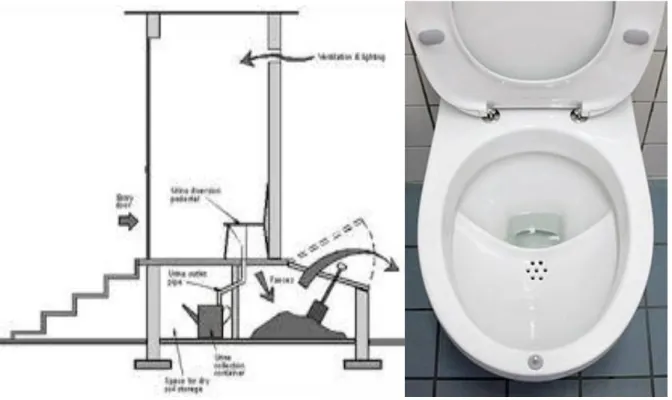
Frequent use of dry toilets means that large amounts of waste will be collected and more fertilizers can be produced. These can be quantified in terms of costs saved from using new plant nutrient sources instead of existing, widely used commercial fertilizers (Pimentel et al., 2005).
LITERATURE REVIEW
INTRODUCTION
This imposes enormous costs on those to whom the services are provided, which for some, especially low-income households, may be relatively high. These have the advantage that they can be installed in any place, no matter how uneven the topography, and it ensures good and accessible sanitation for the population.
HUMAN EXCRETA-DERIVED MATERIAL PRODUCTION
Most pathogens in source-separated urine result from cross-contamination (the accidental mixing of liquid and solid waste) and must be removed to ensure safe use of the final product. Infectious microorganisms are deactivated by storing, processing, drying and filtering the urine steps.

AGRICULTURE AND THE PHOSPHORUS CHALLENGE
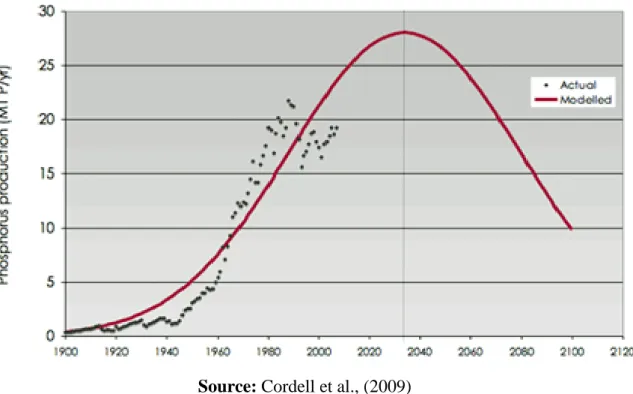
However, all this phosphorus is lost in various ways with about 18.5 million metric tons being lost as solid waste in soil and through soil erosion and about 1.32 million tons being discharged to air and water (Villalba et al., 2008). Phosphorus is also lost in human and animal wastes after digestion of foods or foods rich in phosphorus (Meyer et al., 2014). The rate at which rock phosphate accumulates is increasing and is predicted to peak around the mid-2030s (Cordell et al., 2009).
Low supply of phosphorus with a sustained high demand can also result in an increase in the prices of phosphorus products (Villalba et al., 2008). Researchers have discovered human urine as an alternative source of phosphorus, it is more concentrated in urine than in any other excreted human waste (Meyer et al., 2014).
THE SOUTH AFRICAN FERTILISER MARKET
The rate of adoption and use of fertilizers in SSA is also very low in contrast to that in East Asia and North America (Yanggen et al., 1998). Most countries with successful agricultural production use mainly fertilizers, which are directly related to the product, so that they may even produce more than the country needs (Jayne et al., 2003). Fertilizer use in SSA is mainly influenced by two factors: (i) profit incentives and (ii) adequate input access (Yanggen et al., 1998).
Other factors influencing adoption in the SSA region include the output-nutrient (O/N) ratio and the input-output price (I/O) ratio3, farmer's age4, level of education5, household size6 and number of cattle7 (Croppenstedt et al. , 2003). This low rate of fertilizer use can be attributed to the high farm gate fertilizer prices (the final cost per unit of fertilizer paid by the farmer, after accounting for all costs incurred to get the fertilizer to the farm) which are more than those of the other parts of the world (Jayne et al., 2003).
ECONOMIC, AGRONOMIC AND ENVIRONMENTAL IMPLICATIONS OF
This is common in the SSA region, where rates of fertilizer use are low, resulting in low food production levels compared to other parts of the world (Sommer et al., 2013). Due to the delicate, low fertility and carbon content of soils in the SSA region, chemical fertilizers are easily washed away, leading to nutrient loss (Yanggen et al., 1998). The entry of HEDMs into the market may result in a decrease in the prices of commercial fertilizers due to increased supply of plant nutrients in the fertilizer market (Nikiema et al., 2013).
LaDePa can potentially help reduce the effects of climate change due to its organic nature (Decrey et al., 2015). Fertilizer application practices, such as foliar application, soluble fertilizer pellet application, deep placement and top dressing (fertilizer dissolved in water used for irrigating crops), help reduce greenhouse gas emissions (Lipper et al., 2014).
SUMMARY
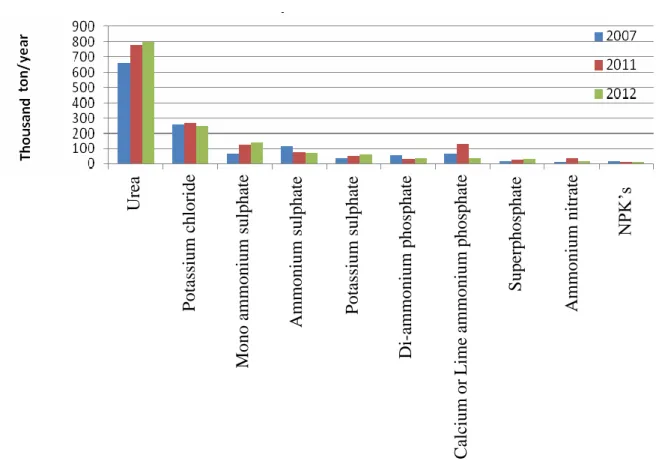
The world is on the verge of a phosphorus crisis due to the continuously decreasing deposits of phosphorus rocks. Struvite, a urine-based phosphorus source, can be used as an agricultural fertilizer because it is highly concentrated and comparable to existing commercial phosphorus fertilizers. However, South Africa is a price taker in the global fertilizer trade as it consumes less than 1% of the total global fertilizer used.
Due to growing concerns about global warming, climate-smart agriculture is now preferred to reduce the level of greenhouse gas emissions in the atmosphere. The application of chemical fertilizers can lead to the release of nitrogen oxide and ammonia from agricultural soils, which causes global warming.
THE COST-EFFECTIVENESS OF USING HUMAN EXCRETA-DERIVED
INTRODUCTION
The World Health Organization (WHO) and the International Water Management Institute (IWMI) have developed guidelines on the use of treated wastewater and waste in agriculture (World Health Organization, 2006a; Nikiema et al., 2014). The collected and stored urine undergoes a process of urea hydrolysis due to the high pH (potential of hydrogen) and ammonia concentrations, creating an environment that promotes the inactivation of microorganisms (Udert et al., 2003). According to Nikiema et al. 2013), microbial characteristics in the produced dry organic pellets were within the.
Although these fertilizers may be viable, social acceptance in many societies may be problematic due to cultural restrictions and hygiene fears (Okem et al., 2013). They have not been quantified in terms of crop (e.g. maize) yield produced, the effectiveness of the potential fertilizers compared to chemical fertilizers and the costs associated with the farm production processes have also not been determined (Uggetti et al., 2011).
RESEARCH METHODOLOGY
- Conceptual framework and assumptions
- Data sources and collection
- Empirical estimation procedures
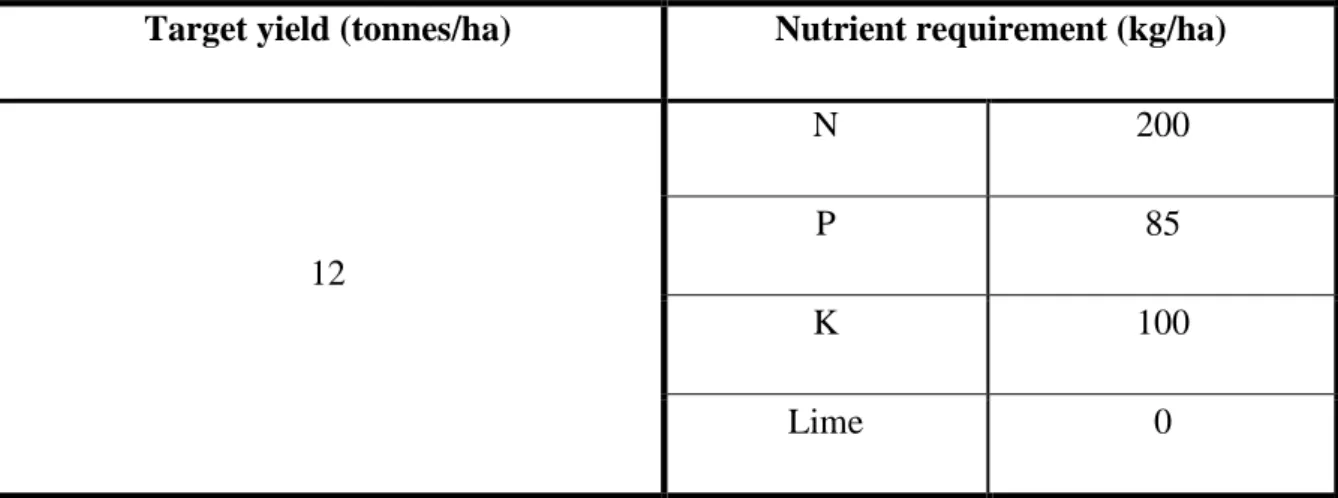
- Nutrient sources and plant requirements
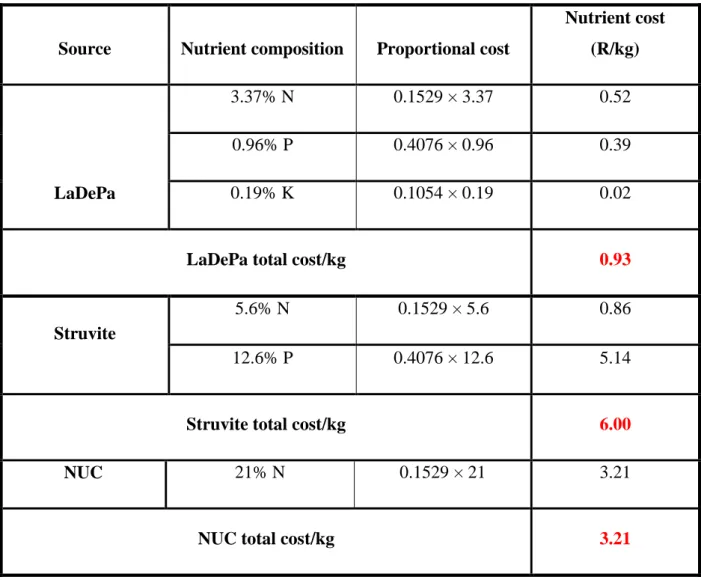
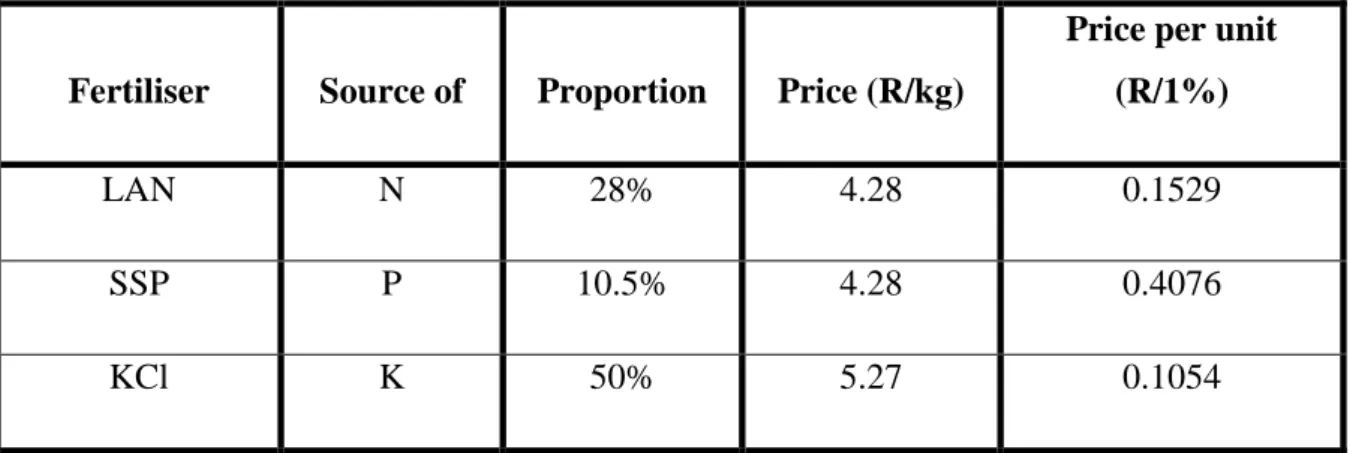
Thus, if the costs of production and distribution of fertilizers from human waste are lower than those of the sources of NPK, LaDePa, struvite and NUC will even be more economically viable, which may be the case since they are produced locally; therefore no shipping costs or currency requirements to access them. The second step is to ask, "What amounts of LaDePa, struvite, and NUC do we need to provide the required nutrient levels?" If the plant nutrient source could not adequately supply any of the three basic nutrients, a pure fertilizer would be added to compensate for the deficit, which would be costed accordingly. Third, how much do the calculated (step two) amounts of LaDePa, struvite and NUC cost.
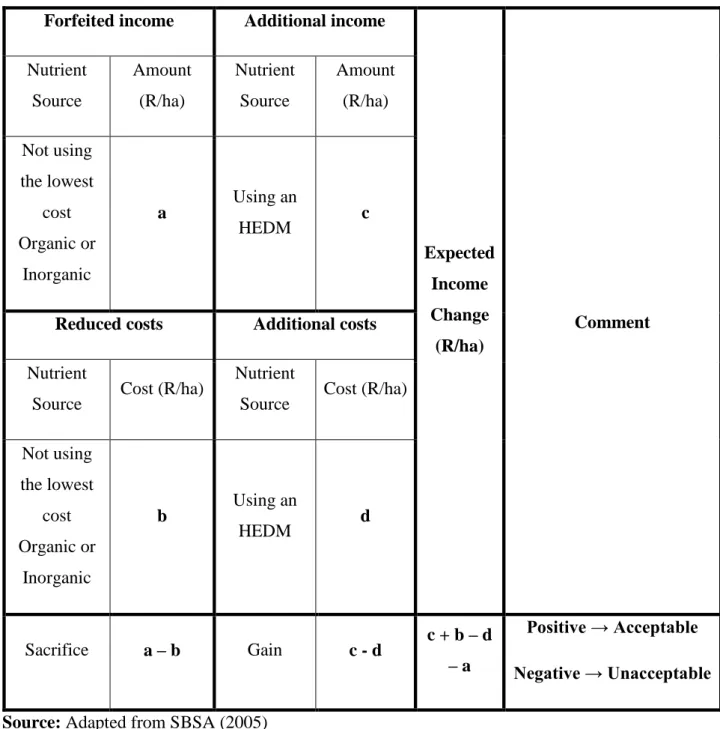
If the change in income is positive, then switching to the use of LaDePa, struvite or NUC is financially desirable as the reduced costs will be greater than the additional costs. However, if it is negative, the change will not be financially viable and LaDePa, struvite and NUC will not be financially feasible.
EMPIRICAL RESULTS AND DISCUSSION
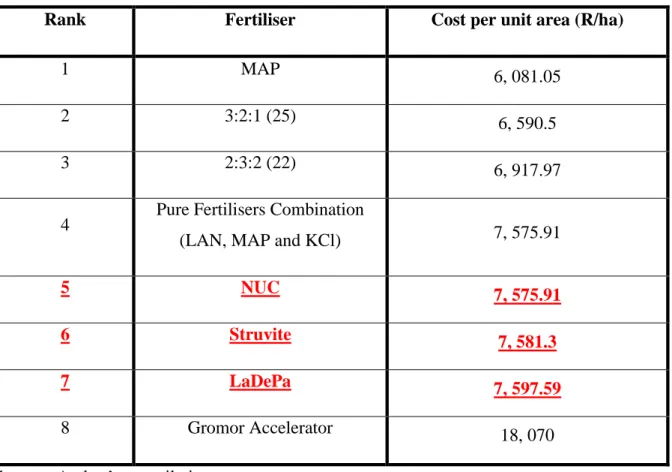
Although large quantities must be applied to meet the nutrient requirements of the respective crops, its relatively low price would keep the cost per hectares lower. From Table 3.8, it was confirmed that using a combination of pure chemical commercial fertilizer or inorganic excreta-derived and commercial chemical fertilizer, (nutrient combination 1 and 2), had the lowest costs per The net income in tabular form has been obtained by subtracting the treatment fertilizer costs per hectare (shown in table 3.8) from the calculated income per acres.
From Table 3.9 it can be confirmed that HEDMs are very effective in terms of crop growth as the first two combinations, LaDePa + struvite and NUC + struvite, had the highest net income per hectare. The control group had the lowest yield and income per hectare of all treatments because no nutrient sources were used to promote crop growth.
SUMMARY
None of the treatments experimented with reached the target of 12 tonnes of maize per hectare which would have yielded R37,263/ha. The cost per hectare of using the above fertilizer combinations showed that using a combination of pure commercial fertilizers (LAN + SSP) had the lowest cost. Although the cost per hectare for the HEDM fertilizer combinations was not widely different from that of the commercial fertilizers, as it was in a similar range (≈ R200/ha).
HEDM treatments, on the other hand, had higher net incomes (total income - fertilizer costs) due to high yields and relatively low costs per hectare, with the combination of pure HEDM LaDePa + struvite treatment having the highest net income. The fertilizer treatment that resulted in the lowest net profit was the Gromor + SSP treatment, which was lower than the HEDM treatments as it had very high fertilizer costs per hectare.
THE FERTILISER VALUE AND AGRICULTURAL-EFFECTIVENESS OF
INTRODUCTION
Nitrogen will be used for vegetative growth when applied in excessive amounts, but will help provide accumulation if applied in sufficient amounts (Wang et al., 2011). It also plays a role in photosynthesis, cell division and enlargement and improves yield quality (Stewart et al., 2005). It activates various enzymes in the plant for physiological processes and also controls the reaction rates (Havlin et al., 2005).
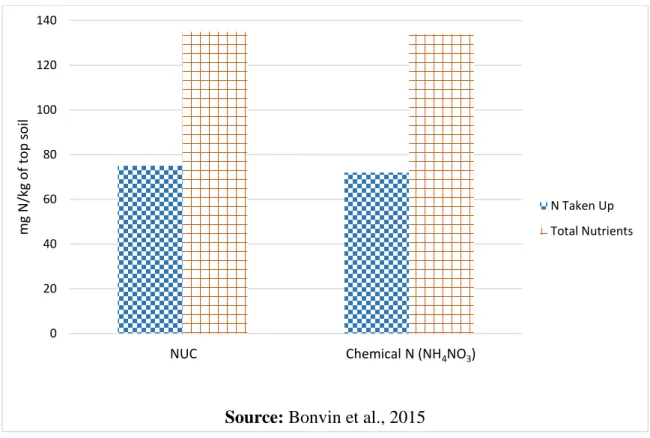
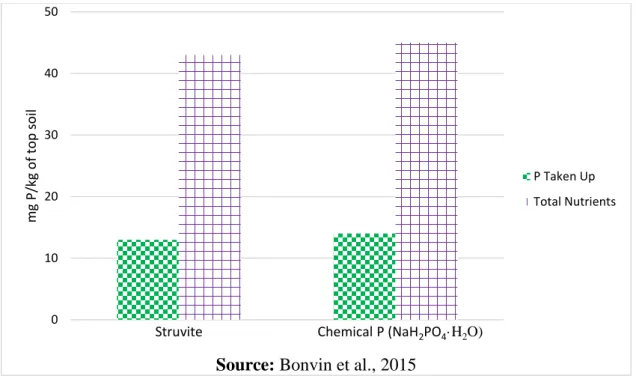
Human excreta derived materials can be effective in the agricultural industry as fertilizers and have the potential to increase crop growth as they can effectively provide the same nutrients as commercial fertilizers (Sommer et al., 2013). Overapplication can also result in excessive vegetative plant growth, which can result in a detrimental impact on yield (Wang et al., 2011).
RESEARCH METHODOLOGY
- Conceptual framework
- Data sources
- Experimental design, procedures and data collection
The potential of the HEDMs LaDePa, struvite and NUC as agricultural fertilizers and their competitiveness compared to commercial fertilizers is currently unknown as they have not been used in large-scale crop production. In this context, the production of HEDMs can potentially be useful, as it provides solutions to some of the common, everyday problems that societies face. While formulating policies, regarding the conservation of the environment, the use of the organic HEDM LaDePa should be prioritized as it will yield positive results (Harrison and Wilson, 2012).
For HEDMs to dominate the fertilizer market, their competitiveness in crop production must equal or exceed that of commercial fertilizers. The nutrient composition of the soil used in this experiment, a Catref soil, was obtained from Cedara, KwaZulu-Natal Agriculture, Environment and Rural Development following soil testing.
EMPIRICAL RESULTS AND DISCUSSION
- Plant height
- Plant leaf number
- Biomass
- Yield
- Harvest Index
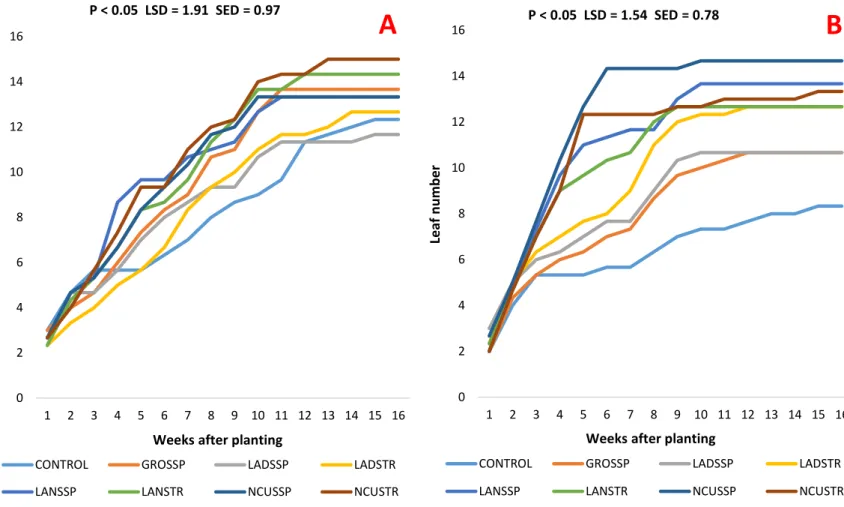
There was a constant increase in leaf number in the first trial for the first ten weeks after planting (Figure 4.2.A). However, there was no significant interaction effect between treatments and weeks after planting with respect to plant leaf number in the first trial. There was a very high significant difference between the treatments (P < 0.001) regarding the leaf number in the second trial (Figure 4.2.B).
There was a different trend in the biomass results for the first and the second trial (Figure 4.3). In general, the biomass produced in the second trial was greater than that produced in the first trial.
SUMMARY
In general, the HEDMs effect on growth was satisfactory as in the rank of the chemical, commercial fertilizer treatments and sometimes even better. In financial terms, replacing the fertilizer MAP with any of the HEDMs increased production costs. Fate of the pathogen indicators phage ΦX174 and Ascaris suum eggs during the production of struvite fertilizer from source-separated urine.
Maize aboveground biomass for different fertilizer treatments of the first trial Source of variation d.f. Maize aboveground biomass for different fertilizer treatments of the second trial Source of variation d.f.