LNS of families during the genocide 5.4.1.1. Entry of families during the genocide 5.4.1 .3, Types of injuries during the genocide 5.4.2. Transportation before and after the genocide I 12 Means of information before and after the genocide 113 Means or communication herrc and after the genocide 114 Type of clothing available to families before and after.
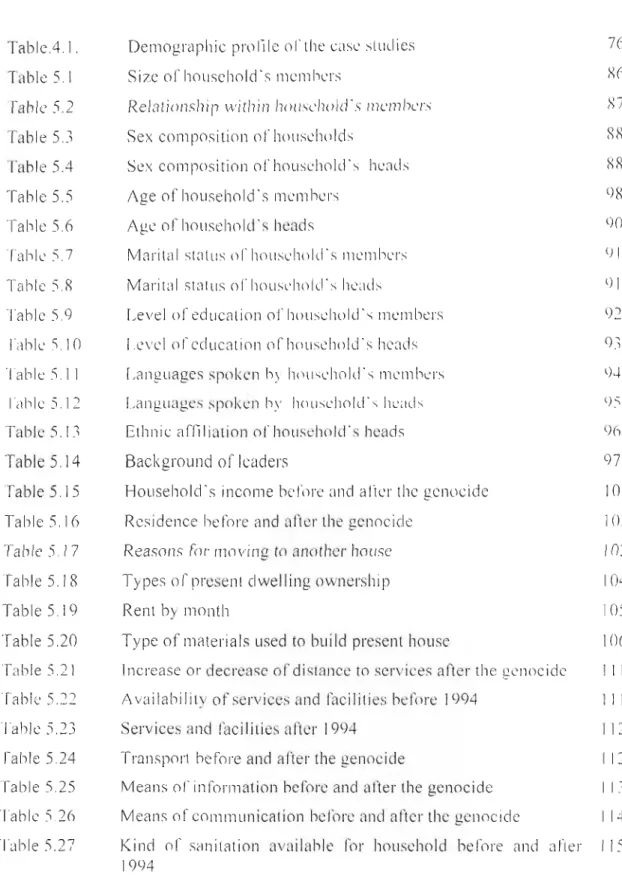
Figure 4.8
LIST OF FI<;lIRF:S
Plate 4.1
View of a (;atovL! suburb in Cyangugu n . View of Akahutare cell in 8utare 76 Residential building dcstro)'cd in C':-;lngugu I(n.
AFB ARAMF:T
BARAKABAHO CELL
CERAI CGC
FAO FAR
HIVI/AIDS
IGIKAKARUGAMBA
IMIOUGlJOlJ I RS
INTERAHAMWE IRST
ACRONY1\-lS A 'I) ABBRF:VIATIO S
IRSAC
KI YARWANDA KYMERS ROUGES
MINITERE
MORHINCA TREE MRNDD
NATO EPAD
RWA OATEL RPF
RWFR UKZN
UMUGANDA U
UNISA
URWIBUTSO
I TRODUCTIO
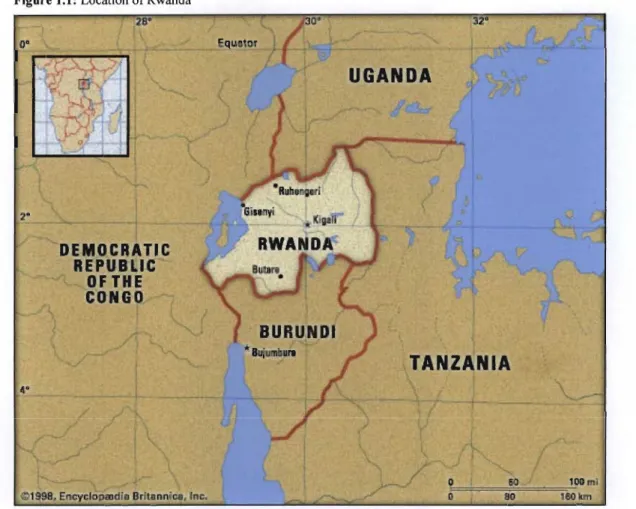
Tanzania to the east, and Democratic RC~~lIblic or Congo situated to the west and NOI, to the west. The country enjoys a mild tropical climate with tv, IO rainy scasons and two dry seas. The pressure 01' people on scarce IRnd has posed (a sharp threat to social harmony and the physical C'nvil'onlllenl (Worlc Rank.
UGANDA
AIM AND OBJECTIVES
This study aims to investigate the socio-economic impacts of the genocide that occurred in Rwanda in 1994 and the current development of this area of the country. To investigate how the masses (migrations) spread/expand during and after it. the genocide affected the infrastructure and lifestyle of households.
CHAPTER SEQUENCE
To assess coping strategies of people and their leaders with the impacts of genocide and.
4. CONCLUSION
CONCEPTUAL FRAMEWORK
- INTRODUCTION
- POLITICAL GEOGRAPHY
- GEOGRAPHY OF CO iFLICTS
- CULTURAL MATERIALISM THEORY FOR
Several studies have been inspired by his methods, for example: the geography of war in the DR Congo and Sierra Leone (Vehnamaki, 2002), the geography of ethnic violence (Toft, 2004), the geography of armed civil conflict (Ruhaug, 2004) ) , armed conflicts and political violence (Moser and Clarl<. 200 I). Due to the complex problems (hnt [the country ran like .iustice nnd rehabilitation of infrastructure, min' hn-; was done on socio-economic and geographical causes and consequences ('If' conflict in the country.
UNDERSTANDING THE GENOCIDE AND ITS IMPACTS
CONCLUSION
LITERATURE REVIEW 3.1. INTRODUCTION
GE OCIDE IN THE 201'11 CENTURY
- Review of defin itions
- Socio-economic impacts of genocide
- Socio-political reconstruction after the genocide
- Economic reconstruction after the 2cnocide
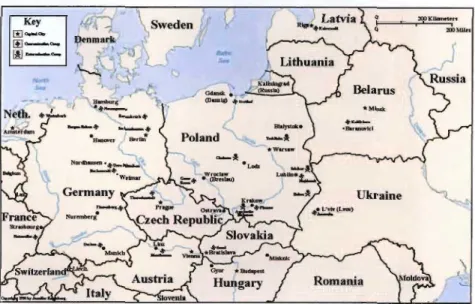
Naimak (200I) attributed the roots or European ethnic cleansing to late nineteenth century nationalism. The first genocide of the 20111 century was the genocide of Christian Armenians during World War I in Turkey.
THE GENOCIDE IN RWANDA: APRIL-JULY 1994
- Socio-political causes
- Socio-economic impacts of the genocide in Rwanda
- Socio-economic reconstruction in Rwanda
Moser and Clark (200 I) noted socio-economic factors that shaped the scale of genocide, and these were: (i) the sudden drop in the price 0 ('coffee. the main source of income for 00 PCI' cent of Rwandan ramilies. together with 40 percent devaluation of currency In 1989 and rapid inflation after 1990. ii) a structural adjustment program which reduced social services and introduced levies for health care, schooling and water, combined with a drought in the southern regions which turned into a famine, (iii) from 1990. The genocide cast Hutu and Tutsi as separate political identities (Mamdani. 2001). The dilemma of post-genocide RWflnda is on the one hand the struggle for Tutsi survivors for justice and on the other hand Hutu's demand for amnesty.
CONCLUSION
34;The genocide in Rwanda has not been the 111th genocide on the African continent and if the mechanisms to prevent and postpone the connection of Illillagcmcnt have not been established in 011 of the continent. The present chapter focuses on a description of the study area and the methods and techniques used for obtaining primary and secondary data. The last two sections address the methods used in the data analysis and the limitations of the study.
STUDY AREAS
- Butare town 1. Location
- Physical features
- History
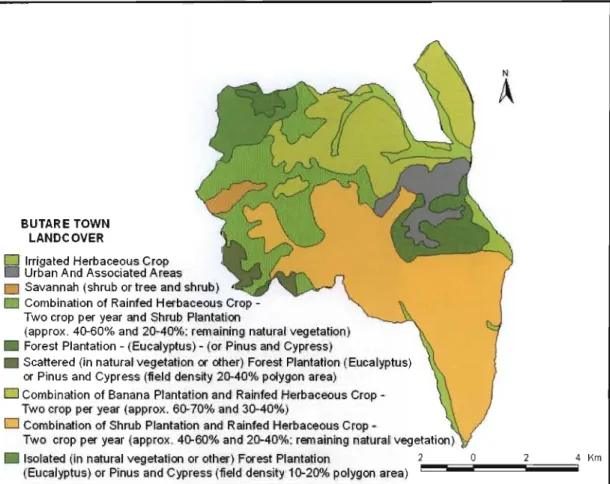
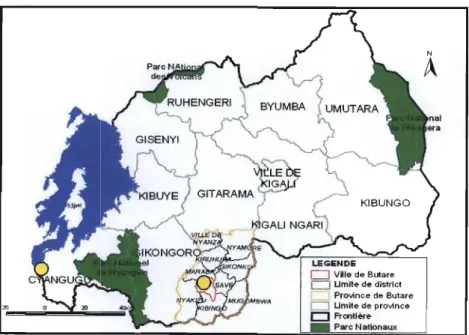
On the physical level, the town of Butare is divided into two parts by the Rwamamba River. The city occupies the top of the hills with an average height of 1700m. The valleys around the city average 1,650 m. The city area is characterized by a series of hills separated by talwegs (steep descents) that drain the city's water. The city was chosen (IS the capital of the territory of Rwanda-Urundi in the same year.
It is the period of the construction of the white city on the four hills and the black city on the Ngoma hill. The period was marked by the establishment of the National University of Rwanda in 1963 at Ruhande Hill.
Cyangugu town 1. Location
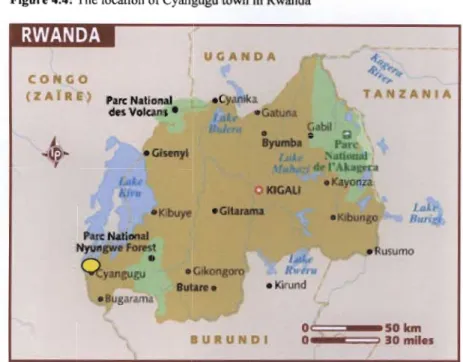
To the southeast it borders Gashonga District, while to the west it shares borders with the Democratic Republic of the Congo, separated by the Rusizi River and Lake Kivu.
RWANDA
- History
- METHODS OF DATA COLLECTrON
- Sampling techniques
- Primary and secondary data
- DATA ANALYSIS
- LIMITATIO S OF THE STUDY
- CONCLUSION
The landscape 01'Cyangugu city is characterized by a chain of plains whose average height is I 600m. The hilly nature or ICITC1in poses great challenges to human activities and imposes limitations on physical development. Sampling of districts, sectors and cell subdivisions to be visited in the survey took inter alia. taking into account the last territorial restructuring of the country in 200 I. The second questionnaire was administered at the local authority level and to the leaders of the cells in each district.
Analysis of the socio-economic impact of genocide and the current development of processed results from the questionnaire. After the genocide, documents such as maps and statistics were not available for inspection as they were simply destroyed.

RESULTS AND DISCUSSION
INTRODUCTION
BACKGROUND OF RESPO DE TS (IDE TIFICATIO AND CHARACTERISTICS)
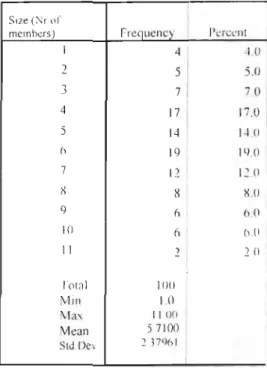
I. Size of households
- Sex composition of households and household's heads
- Marital status of household's members and household's heads
- Level of education of household's members and household's heads
- Languages spoken by households and household heads
The share of female heads of household (36%) remains relatively high compared to the situation before the genocide (6.5%) (0 APO,2002). It was rare to find people who spoke foreign languages without having a secondary education before the genocide. The large number of heads of households in TlItsis is due: firstly to the insecurity that prevailed in the countryside after the genocide, which pushed survivors to migrate to the cities, and secondly.
It was found that the majority of leaders of sampled areas did not live in the same villages before the genocide. In Butare, leaders who lived in the country before the genocide represent only 25%, while in Cyangugu they represent 50%.
IMPACT OF THE GE OCIDE ON INFRASTRUCTURE
- Income
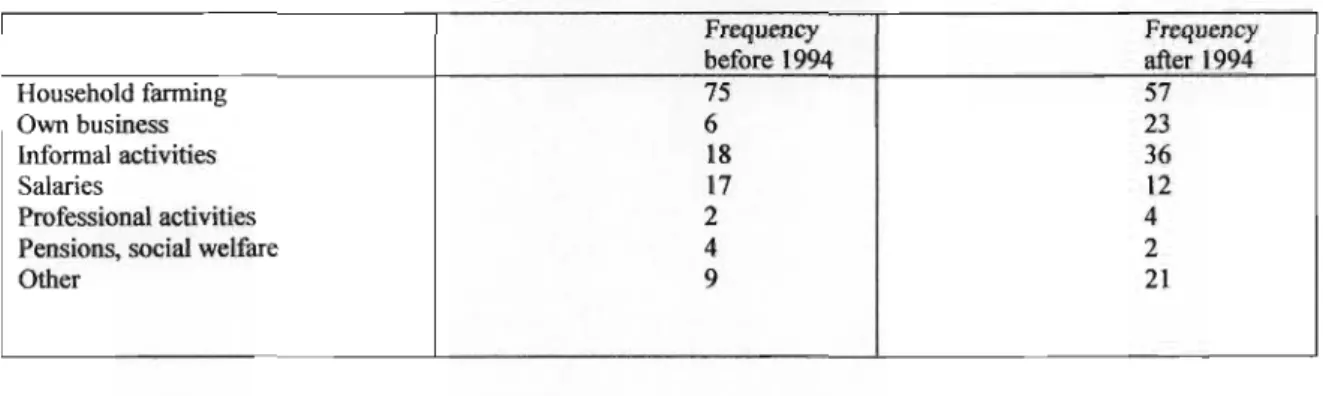
- Households income sou rces before and after the genocide
- Increase or decrease of household incomes after the genocide
- Services and facilities
- Availability and distances to services and facilities before and after the genocide
- Means of transport before and after the genocide
- Means of information before and after the genocide
- Sanitation before and after the genocide
- Services and facilities most desired to improve quality of life
- Other things purchased by households
- Health
- Health facilities before and after the genocide
- Distance, time and cost of health services before and after the genocide
In addition, the high inflation in the local currency after the genocide has affected the quality of life throughout the country. However, the number of households that leave has been high before and after the genocide and is almost the same at 73% and 69% respectively. This was attributed to poverty and lack of income-generating activities before and after the genocide (Table 5.24).
The main means of communication before the genocide was post-mail (57%) ~lIld telephone landlines (53%). Typhoid in Cyangugu town and HIV/AIDS in both Butare and Cyangugu were reported to have intensified after the genocide.
128 Cyangugu. The mam problem of water and electricity supply was technical,
IMPACT OF THE GENOCIDE ON STRUCTURES
- Household losses during the genocide 1. Household deaths
- Households' injuries during the genocide
- Type, of injuries during the genocide
- Effects of migrations 011 families
- Proportion of households who li\ cd in the area hefore and after the genocide
- Economic relationships
- Sources of leisure/recreation before and after the genocide
- Con flicts
- Type of conflicts and tensions with neighbours
- Orphans
- Women
- Youth
- Elders
- Disabled people
Socially and psychologically, the most prominent effect of the genocide was the loss of life. During and after the genocide. were accompanied by murders b) unforeseen migration inside and outside the country. In Cyangugu town for example, only a quarter were in the town before and after the genocide.
34; it was very difficult for old people to cope with life in the aftermath of the genocide." One of several long-term challenges brought about by the genocide was an increase in the number of disabled people.

IMPACT OF THE GENOCIDE ON SUPERSTRUCTURE
- Attendance at places of worship
- Attitudes to marriage across ethnic boundaries after the genocide
- Opinion's on national reconciliation
- Opinions on aspects of culture destroyed during the genocide
Rwanda was a predominantly Christian country with over 90% Christians before the genocide and 85.6% after the genocide (Prunier, 1991; ONAPO, 2002). Many Christians have changed congregations, as the majority of surveyed households were Roman Catholic before the genocide. Households were upset about the participation of some priests of the Catholic Church who participated and participated in the genocide.
Religion also became a source of comfort in all kinds of suffering, especially loneliness in the aftermath of the genocide. On the other hand, religion became a refuge for perpetrators traumatized by the fact that they killed people during the genocide.

CONCLUSION
Monogamy and fidelity between couples and the high rate of prostitution mentioned by families was due to poverty, promiscuity in the clustered habitat "Imidugudu" the presence of people from many backgrounds and many parts of the world after the genocide. The increasing level of poverty and loss of access to resources increased disease, illness, marginalization and environmental destruction in many aspects. Apart from mobile phones as new means of communication, all the services and facilities that were poor before 1994 suffered dramatic deterioration during and after the genocide.
Even private initiatives encouraged by the government are difficult to apply in poor suburban areas. Since most people in Rwanda belong to congregations, skilled and well-educated religious leaders are needed to rehabilitate the upbuilding of society.
EVAL(IATIO ,RECOMMEI OATIONSA DCO CLl!SIO
INTRODUCTION
EVALUATION
- Demographic charactc"istic\;
- Households losses
Hutu and Rutsi:; h~l(.I participated until 1994. when I was genocide. relations were reported as 2:)% \'cry good. 005:4J9) to quote l'cv, werc rather illlllledialc and pure) seCl'ndan, "J:ln\ 1:1ClPrs. especially had go\'enlancc. . povcny and indi Ilercnce or thc iIlILTnL!tW!1 :11 l'C1ll'lllllunity m:lck it possihle. ThercrClre.. explaining the outbreak of genocide in 1~\\'anlia or analyzing its impacts b) The OnC factor will always be weakened. Despite modern and uJld:l1ed means of comlllunic<1lil)ll and cOlllllllitment( I fthe lr, 'prevent. iv) The genocide in Rwanda -,spread to neighboring countries: in 8uruncli and fJRC \\tutsis of the L'lhnish group \'.' The results of the interviews showed that two-thirds of the households lost one or more members during the genocide and the average number of persons lost. R\VJncla I'rc.-cnL new categories or pCClpk in 1. '111111CClinn \\ with genocide and its consequences. The crisis in Rwanda in the 1990s was partly exacerbated by the poverty of the population. Also, malaria, worms, HIV as well as other communicable diseases reported in the study are multifactorial diseases that are often associated with poverty and underdevelopment. The success of microcredit and microfinance in recent decades in reducing poverty and serving the poor through access to credit on reasonable terms in many developing countries should inspire anti-poor efforts in Rwanda. R\\and,: must karn from the processes started in other countries, For example in the south,'\rrica, in <1 agree:in lohle, people have roots' in the African way nf forgiveness, 'Nere ahle to conducted S ,)uth Ari'icn beyond the abyss (Marks, 20001,. All this must be seen in the context of the democratic culture installed through the newly voted constitution. SOME RESEARCH DIRECTIO IS The role of GACACA courts in conflicts management in Rwanda Selected Chronology of genocide- In Europe Selected chronology of Genocide in Africa Selected Chronology of (;ellOtqdc in tilt' t\ met'iea,I;, Questionnaire for hcad~, of !1ouseholds and leadersRECOMMENDATIONS