
Traffic deaths and injuries absorb massive economic resources, about 1% of GDP in developing countries, 1.5% in transition countries and 2% in highly motorized countries (WHO, 2004, p. 5). Solutions to the road safety issue are unlikely to keep pace with the rapid motorization rates in low- and middle-income countries (FEVR News Letter 40, 2003, p. 5).
Five major steps of CEA
If both net effects and net costs are positive, we can say that the health of the recipients is better with the intervention program than without it, but the resources are being used. A cost-effectiveness ratio is determined by dividing the net cost of an intervention by changes in health status or improvement in healthy life years, yielding a measure of effectiveness expressed in dollars per healthy life year.
Cost effectiveness analysis and road safety
Limitations
Appropriate method
The population-level impact of each specific intervention carried out over a 10-year period (after which rates and health status scores return to their natural values). The difference is the population-level health improvement expressed in DALYs averted as a result of the intervention, DALYs then discounted at 3% and age-weighted, with sensitivity analyzes performed omitting these weights.
Conclusion
The transition from high-speed roads to low-speed roads, such as living on a highway, requires that measures in the transition zone are complemented by measures along the main route within the urban area and result in a cumulative effect that culminates in a gateway to the city or village , which marks the entrance and coincides with the beginning of the city and/or the speed limit for the village. The entry gate must be the most prominent feature in the zone and visible over the stopping distance for the 85th percentile of the approach. The speed-reducing potential of variable speed limits appears to be greatest when the reason for the current speed limit is indicated in the form of a warning or advice. A 32% reduction in the number of vehicles violating the speed limit, a 40% reduction in the number of deaths or injuries at camera locations, and a 33% reduction in personal injury crashes at camera locations.
Previous studies have shown that in 1992, after three years of deployment in Britain, deaths fell by 70%, injuries by 27% and minor injuries by 8%. A meta-analysis of the effectiveness of traffic light cameras found that they have a 12% potential to reduce crashes, and a cost-benefit analysis in the UK found that the return on investment was almost double after one year and 12 times after five years. (GHSA News and Media, 2005, p. 1). These devices are used in many countries and estimates from 1997 claim that they could contribute to a 2% reduction in injury crashes.
Around the world today, progress has undoubtedly been made in preventing alcohol-impaired driving, although alcohol remains a significant and widespread factor in road traffic accidents. Mass media campaigns generally increase the effectiveness of alcohol-impaired law enforcement by increasing fear of detection, arrest and its consequences, stigmatizing drinking and driving, and promoting the acceptability of enforcement activities (Elder et al., 2004, p.57-58). Six studies reported a reduction in alcohol-related crashes, and two studies found net reductions of 30% and 158% in the proportion of drivers consuming alcohol (Guidelines for Community Preventive Services, 2005, P.l).
Occupant protection
The road safety problem in low and middle income countries is made even more complex by the fact that the majority of deaths and injuries occur in low and middle income countries. Although rates of road traffic fatalities vary greatly between regions and between countries, higher rates are common in low- and middle-income countries. The problem of road safety is growing at a rapid rate in low- and middle-income countries due to rapid motorization against the background of inadequate road infrastructure with poor.
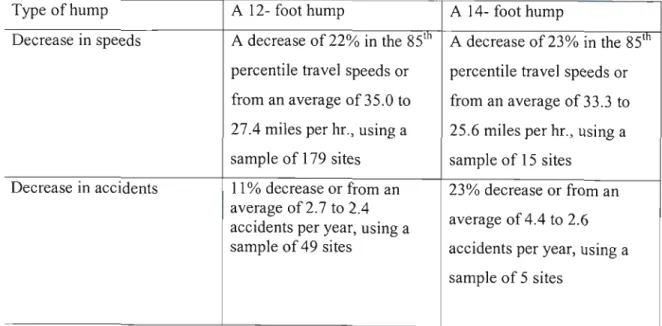
Much can be learned from intervention strategies that have been developed and proven successful in high-income countries, which are generally feasible and can be implemented in low- and middle-income countries. Speed management is central to traffic safety law in order to harmonize the coexistence between the most vulnerable road users and vehicles in low- and middle-income countries. Setting speed limits has proven to be an effective intervention in reducing traffic deaths and injuries of pedestrians as well as car occupants and has been evaluated in low- and middle-income countries.
Measures to enforce speed limits that have been developed and proven effective in high-income countries are feasible and can be applied to various situations in low- and middle-income countries.
Alcohol restraint
The UK experience of road safety education has shown that the use of real streets with real traffic has the greatest potential for training young children, who appear to benefit most from a behavioral approach to road safety (Sayer, 1997, page 5). Providing appropriate educational materials, teaching approaches, and general awareness raising among relevant stakeholders, ministries of education, teachers, and students will go a long way toward addressing the problem in low- and middle-income countries. The results of a controlled study by the UK Transport Research Laboratory showed that children exposed to 'Safe Roads' material improved their road safety knowledge and attitudes compared to children not exposed to the resource, which statistically significant at the 5% level. (Sayer, 1997, P.10).
There are several effective enforcement measures that could be feasible and useful, for example, in low- and middle-income settings. Lowering the legal limit to 0.5 g/l and a lower limit of 0.2 g/l for inexperienced drivers, public service drivers and heavy goods drivers, with greater potential to improve road safety, particularly where road infrastructure is inadequate and vehicles are less likely to be equipped with the latest technology (The Globe, 2003, pp. 1-2). Penalties In the form of fines, driver disqualification (see 3.3.2) and vehicle confiscation (The Globe, 2003, p. 3) are appropriate to deter repeat offenders.
A comprehensive, community-based approach that combines publicity and educational campaigns with responsible alcohol serving practices (The Globe, 2003, p.2).
Occupant Protection
The ignition interlock device relevant to hardcore drinkers may be affordable and durable in low- and middle-income countries, but its feasibility and enforceability are controversial given current technological issues, installation in old cars, and the possibility of tampering with the device without it being available . of effective inspection, enforcement and financing (Forjuoh, 2002, P.115). Due to their affordability and feasibility, they can be used in low- and middle-income countries. High-income countries have sufficient resources to carry out primary enforcement, while some low- and middle-income countries can only afford secondary enforcement, which is less effective and leads to passive enforcement and low compliance (see section 3.4.1).
In low- and middle-income countries, more than half of imported vehicles do not have functional seat belts, nor do the relevant government agencies have the capacity to carry out the inspections, making banning such vehicles the next best alternative (FOIjuoh, 2002 , p. 112). Although they are suspected to be less cost-effective, they are nevertheless feasible and applicable in low- and middle-income countries, as most of the latest car models imported from high-income countries are said to already be equipped with airbags directly from the manufacturers. In low- and middle-income countries, children are among the most vulnerable road users as pedestrians, but also as passengers in private cars, school buses and other forms of public transport often involved in accidents, such as buses and minibuses.
The development and local production of low-cost helmets is also feasible in low- and middle-income countries, following the example of the Asia Injury Prevention Foundation, which developed a lightweight tropical helmet for Vietnam and established performance standards for helmets (WHO, 2004, p. 137 ).
Conclusion
Afukaar F.K., 2002, Speed control in developing countries: problems, challenges and opportunities in reducing road traffic accidents, Injury control and safety promotion, 2003, Vo1.10, No. Nantulya et al., 2002, Introduction: The global challenge of road traffic accidents : can we achieve safety equity?, Injury Management and Safety Promotion, 2003, Vol. Nantulya / Reich., 2002, Equity dimensions of road traffic accidents in low- and middle-income countries, Injury Control and Safety Promotion, 2003, Vol.
Peden M World Report on Road Traffic Injury Prevention: How to do more for public health, www.rospa.co.uk.
Chapter 5
- Introduction
- Intervention strategies
- Concluding remarks
- Conclusion
According to the Department of Transport, some of the factors that contribute to the magnitude of the road safety problem include;. Following the abolition of the National Road Safety Council in the early 1990s, the management of South African road safety became the responsibility of the Traffic Safety Directorate within the Department of Transport, to coordinate activities. The main strategic objective of Road to Safety is to ensure an acceptable quality in road traffic with the main emphasis on road safety in all urban and rural roads of the country.
The main focus of the 2001-2005 strategy to reduce the number of road casualties on urban and rural roads is on the following key areas; The current momentum of the Road to Safety can be attributed to the revision of the 1996 Road Traffic Management Strategy, which brought about the Administrative Adjudication of Traffic Offenses Act (AARTO) and the establishment of the Road Traffic Infringement Agency (RTIA) . and the establishment of the Road Traffic Management Corporation (RTMC). This brings us to the key elements of strategy management, the intermediate results and the user group results.
In accordance with the recommendations of the World Report on the Prevention of Road Traffic Injuries, the Road Traffic Safety Council within the Ministry of Transport is the commissioner and custodian of the Road Traffic Safety Strategy. A noticeable reduction in road traffic accidents in the next five years, leading to the hosting of the major event, will improve South Africa's international image (Yang B, 2002, P.I-2). The problem of road safety can be compared to that of preventing HIV and AIDS.
