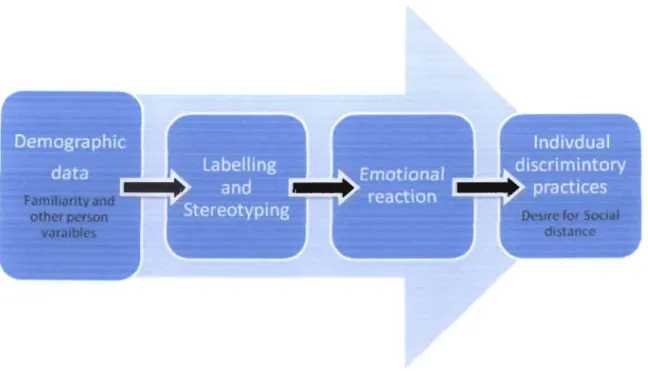
The purpose of the exploratory study was to explore and describe the stereotypes associated with severe mental illness and the effects of familiarity on the stigmatization process of serious mental illness among potential employer informants in the greater Durban area, eThekwini District, KwaZulu-Natal. Statistical results showed limited correlations between emotional reactions and desire for social distance, stigmatizing attitude and desire for social distance, and evidence of the absence of a significant relationship between familiarity and other components within the stigmatizing pathway.
CHAPTER ONE
INTRODUCTION TO THE STUDY
- STATEMENT OF THE PROBLEM
- SIGNIFICANCE OF THE STUDY
- PURPOSE OF THE STUDY
- RESEARCH QUESTIONS
- SUMMARY OF THE CHAPTER
The possibility of employment has been identified as one of the critical factors in the recovery and rehabilitation of adults with serious mental illness (Iannelli & Wilding, 2007). The aim of the research study was to explore and describe stereotypes associated with SM!, and the effects of familiarity on the serious mental illness stigmatization process in potential employer informants in the Durban area, e'Thekwini District, KwaZulu-NataI.
CHAPTER TWO
LITERA TURE REVIEW
INTRODUCTION
First, psychiatric nursing could pay more attention to the diagnostic label than to its own mandate, the lived experience of the mental health service user (MHCU). The diagnostic label adds salience to the division between 'us' and 'them' by offering characteristics or attributes that help create the 'out-group'.
EXPLORING THE COMPONENTS OF THE STIGMATIZING PROCESS
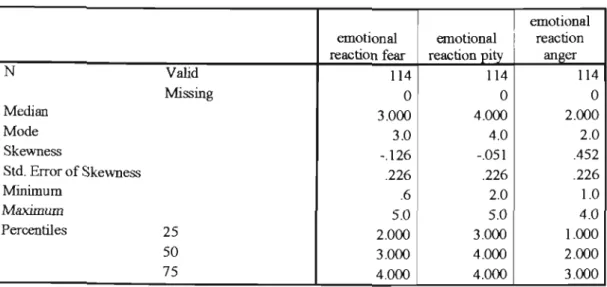
Fear of persons with mental illness correlated with a desire for social distance (r = .51) as well as perceptions of dangerousness (r = .44). Four common stereotypes applied to people with mental illness prevalent in the media have been identified (Byrne, 1997).
SUMMARY OF THE CHAPTER
CHAPTER THREE
INTRODUCTION
RESEARCH DESIGN
SETTING AND TARGET POPULATION
Several studies have shown that students from part-time certificate/degree and/or degree programs are perhaps a useful purposive sample of the target population (Corrigan, Edwards et al., 2001; Corrigan, Green et al., 2001). , 2001; Feldman & Crandall, 2007; Holmes et al., 1999). First, it is likely that these participants are more demographically representative of the population as a whole, as they represent the diversity within the professional setting (Corrigan, Green et al., 2001; Holmes et al., 1999).
SAMPLE AND SAMPLING PROCEDURE
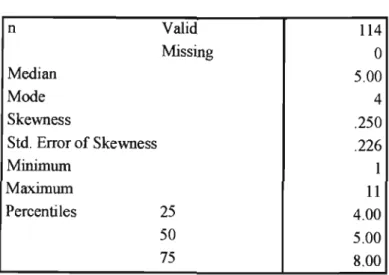
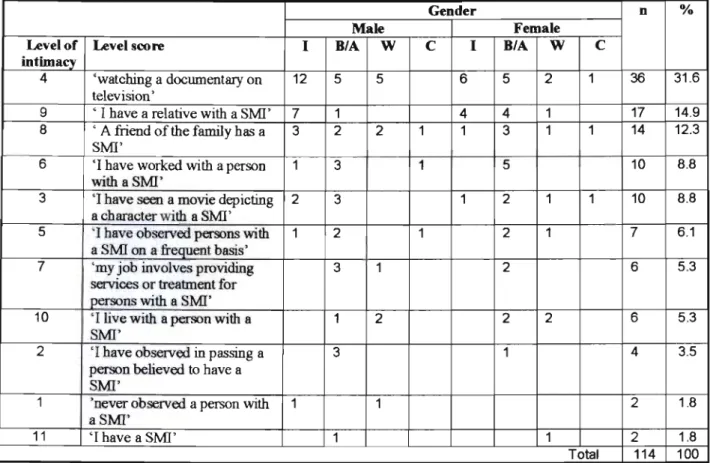
Validity and reliability for each tool are included as an aspect of each tool's description to improve the overall readability of this section (Terre Blanche et al., 2006). This additional rating is a point of comparison for participants' ratings of the target labels (Link et al., 2004). The familiarity index is a ranking of the most intimate situation that the participant labels.
The researcher explained that written consent was not required and that their completion of the questionnaire constituted implied consent. Participants were assured of their right to not participate and to withdraw from the study without prejudice in the information and consent form and again verbally at the beginning of the data collection session.
DATA ANALYSIS
Participants were informed that it is not possible to withdraw their data from the study at a later stage because the data is anonymous to the researcher. This is useful in situations where self-report questionnaires are used to collect data and the researcher wants to ensure participant anonymity and reduce responses that may represent social desirability bias (polit &. Beck, 2006, p. 300) .
INTRODUCTION
Statistical data analysis for demographic data and each of the four subsections (scales) that made up the single self-report questionnaire is presented in detail. First, frequency distributions, measures of central tendency, and distributions for the demographic data and each of the subsections/scales (LOC, SOM, ERMIS, and SOS) are presented. Due to the length of this section, a summary of the results of all correlations is presented at the end.
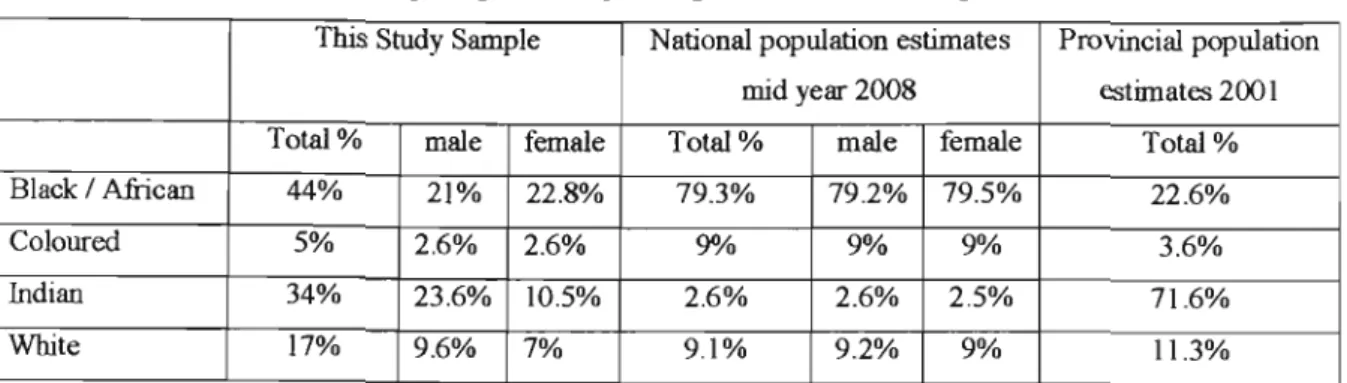
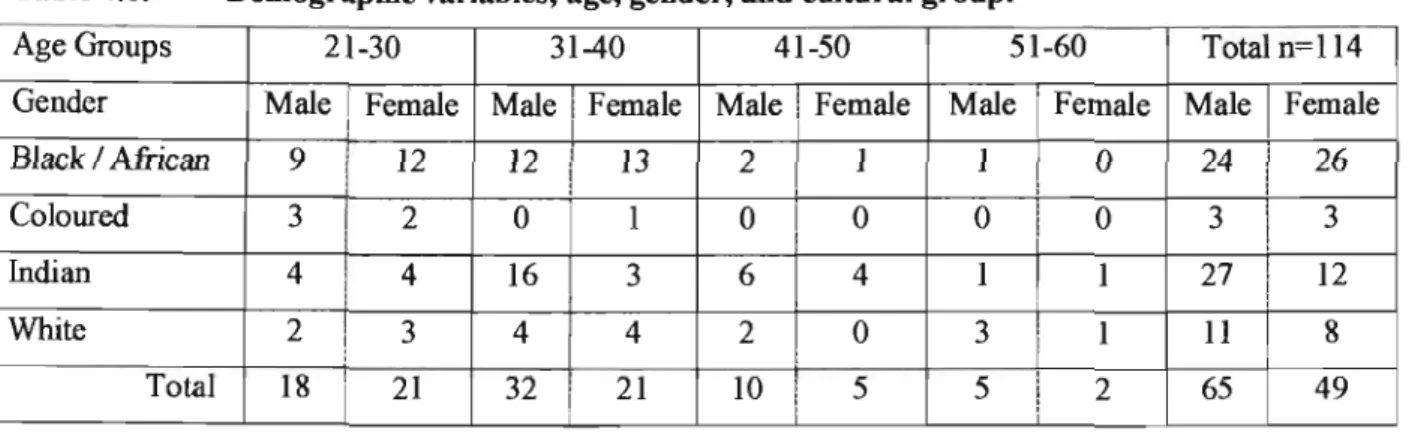
This is not representative of the national mid-year population estimates (Statistics South Africa (SSA), 2008). Cultural group distribution is similar to the KwaZulu-Natal statistics, with Indian participants making up the largest proportion of the sample followed by blacks.
SEMATIC DIFFERENTIAL MEASURE (SDM)
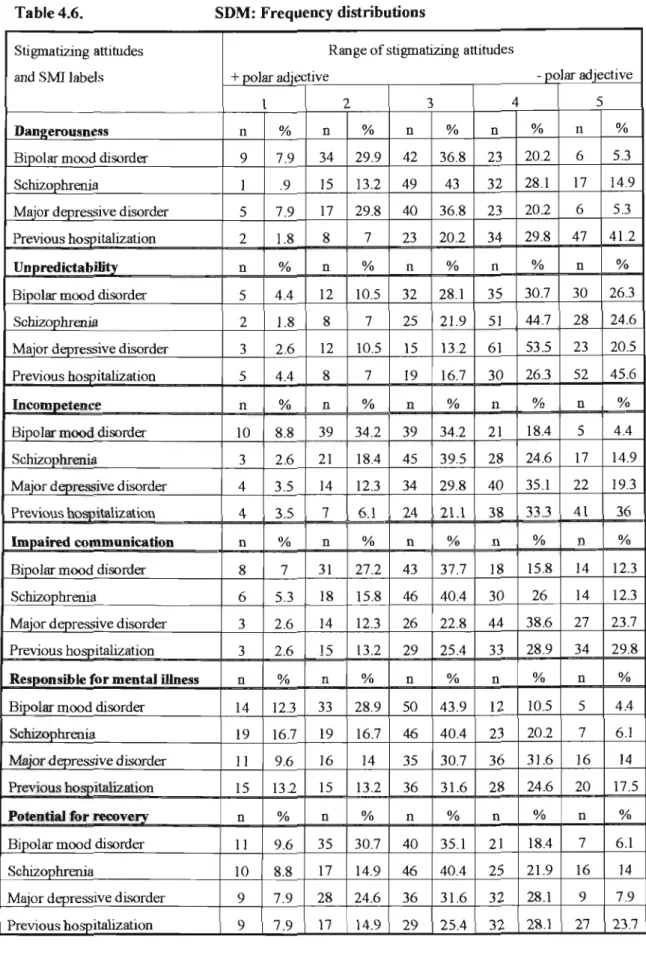
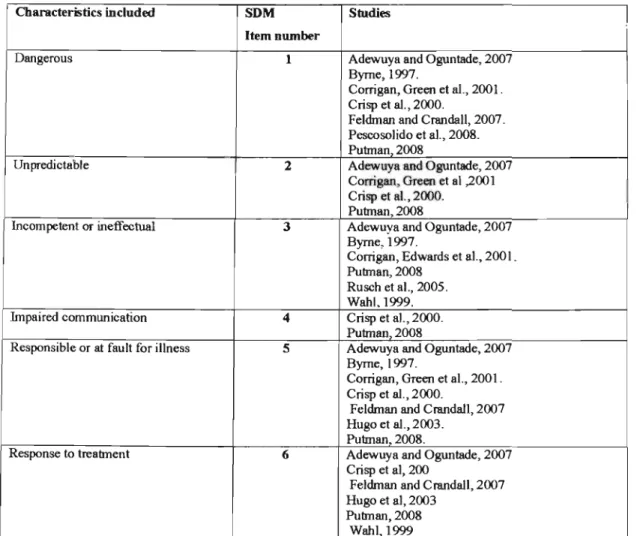
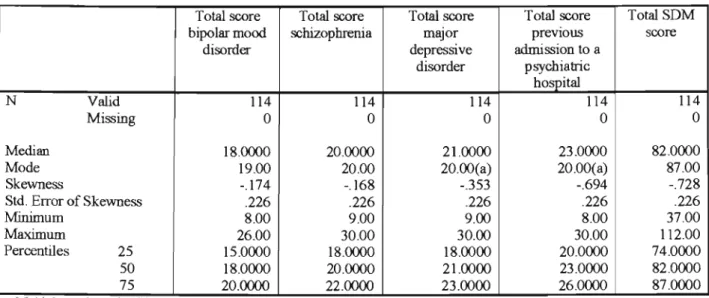
The data were then exported to excel and ordinal scales were created to represent each participant's total score for each of the four mental illness labels and for the total score on the SDM. The ordinal scales representing the SDM included: one point for each of the six (6) stigmatizing attitudes within each of the four mental illness labels (total 24 points, 5 each); a final score for each of the four mental illness labels (one point per label out of 30); and a total final score for SDM (out of 120). The label 'previous admission to a psychiatric hospital' revealed a significant negative skew, the skew statistic (-.694) being more than twice the size of the Std.
The distribution for the total score on the SDM also showed significant left skew (a negative skew), with the skew statistic (-.728) being more than twice as large as the Std. The median for three of the mental illness labels: 'schizophrenia' (Md=20), 'depressive disorder' (Md=21) and 'previous psychiatric hospital admission' (Md=23) was above 66% of the available score.
EMOTIONAL REACTION TO MENTAL ILLNESS SCALE (ERMIS)
Results relating to other mental illness labels revealed that: 'schizophrenia' was reported as more dangerous and less likely to be cured than 'major depressive disorder' and 'bipolar mood disorder'. Finally, “major depressive disorder” was reported as multiple; incompetent, unable to communicate and responsible for mental illnesses such as "schizophrenia" and "bipolar disorder".
SOCIAL DISTANCE SCALE (SDS)
ASOCIATIONS AND CORRELATIONS
- ASSOCIATIONS
- CORRELATIONS
First, the intercorrelations between each of the six stigmatizing attitudes within the four labels of mental illness as measured by the SOM were explored (blue arrow in Figure 2 ). Finally, correlations between the six stigmatizing attitudes within the four labels of mental illness (as measured by the SDM) and the desire for social distance (as measured by the SDS) were explored (green arrow in Figure 2). The following section presents a description of the associations between the 6 stigmatizing attitudes to the label of mental illness.
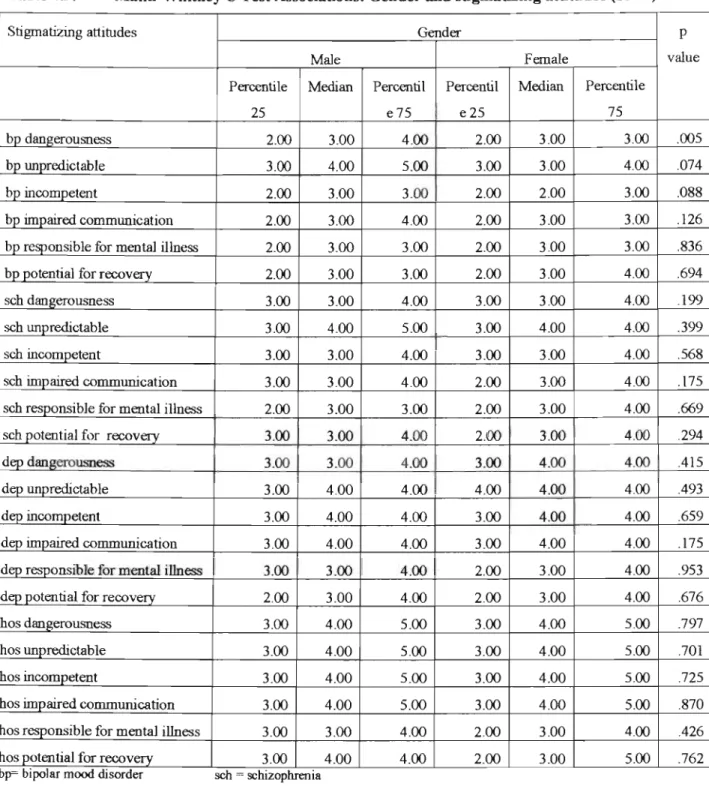
Stigmatizing attitudes during previous psychiatric hospital admission are associated with ERMIS subscales. Scatterplots were computed to explore the relationships between level of familiarity and the six stigmatizing attitudes within each of the four mental illness labels (see Appendix F).
SUMMARY OF THE CHAPTER
CHAPTER FIVE
DISCUSSION AND RECOMENDATIONS
INTRODUCTION
DISCUSSION
This hierarchical placement of the labels for serious mental illness is also reflected in the results of Crisp and colleagues' (2000) study, which reported that schizophrenia was the label associated with the largest negatively polar adjectives and major depressive disorder was the label that was associated with the fewest negative polar adjectives. . This perceived lack of desire for social distance contradicts the extent of stigmatizing attitudes reported by participants. Despite participants having a high level of personal (face-to-face) contact, the results of this study indicate the absence of an association between familiarity with a person with a serious mental illness and stigmatizing attitudes.
The results of the work of Penn and colleagues (1999), Corrigan, Green and colleagues (2001), Corrigan, Edwards and colleagues (2001) and Angermeyer and colleagues (2003) are different from those reported in this study. This is likely related to males reporting slightly higher negative polar adjective scores than females.
LIMITATIONS OF THE STUDY
However, the vignettes used in this study had proven validity and to that extent the results of this study can contribute to the understanding of the presence of stigmatizing attitudes and give an indication of the extent of these stigmatizing attitudes among potential employers in KwaZulu-Natal. This study can help with the development of a baseline of the stigmatizing attitudes that are visible towards people with serious mental illness in KwaZulu-Natal. The purpose of the review would be to check whether the label language is derogatory and thereby facilitate stigmatization of the seriously mentally ill.
This involvement of mental health care users with mental health practitioners (MHCPs) may also help to adjust MHCPs' stereotypes of the seriously mentally ill. It is suggested that this variation in contact changes the view from the stigmatized 'out-group' to the individual who transcends the narrow description of the diagnostic label (Arboleda-Florez, 2003; Corrigan, 2007).
CONCLUSION
Such behavior prompted the British national director of mental health, Louis Appleby, to make the statement that it is necessary to
Understanding the Effects of Labeling in Mental Disorders, Assessing the Effects of Anticipation of Rejection. After you have read all of the statements below, tick EACH statement that represents your experience with people with severe mental illness.
Level of Familiarity Questionnaire
LEVEL OF FAMILIARITY WITH M ~;NTAL ILLNE~S
Confirmatory factor analysis gave a fairly good fit for the three dimensions as indicated by a CFI of 0.953 and an ILl of 0.930 (see Angermeyer MC & Matschinger H: The stigma of mental illness: .. effects of labeling on public attitudes to people with mental disorder If someone managed to engage him in a conversation, he would only address one single topic: the question of whether some people had the natural gift of reading other people's minds.Often he even heard these people speak to him and they would give him instructions.
Sometimes they would also talk to each other and joke about what he was doing at that moment. So he had not spent the night at his home last week, but had hidden in hotel rooms and hardly dared to go out.
Information and Consent Sheet
The results of this study will be used to raise awareness of stigma as it relates to severe mental illness and inform existing anti-stigma policy and interventions. If you wish, you can access the results of this study through the Department of Nursing UKZN.
APPENDIX D: Ethical clearance
ETHICAL STATEMENT: '"THE EFFECTS OF KNOWLEDGE ON STIGMA COMPONENTS IN POTENTIAL EMPLOYERS TOWARDS PEOPLE WITH SERIOUS MENTAL ILLNESS IN DURBAN KWAZULU-NATAL". This approval is provisionally granted and the final terms for this project will be given once the above condition is settled. Appendix F: Scatterplots: Semantic differential measure (previous admission to a psychiatric hospital) & level of contact/familiarity.