Moore-Gordon (1997) revealed that several interrelated factors are involved in the control of 'Hass' avocado fruit size. According to Chapin (1991), a CK:ABA ratio reduction of this kind occurs through an increase in the level of root and leaf ABA in response to abiotic/biotic plant stress.
LITERATURE REVIEW: AVOCADO TREE GROWTH DYNAMICS
PLANT GROWTH DETERMINANTS
HORTICULTURE OF THE AVOCADO .1 ORIGIN
- CULTIVARS
- CLIMATIC FACTORS
- Temperature
These variable characteristics have been useful in the different climates of the world's avocado companies, either as units or hybrids thereof. Subsequently, 'Hass' was developed as the best of the "second generation" cultivars and is still overwhelmingly dominant in the cool subtropics due to being more tolerant of cold during fruiting.
PLANT GROWTH FACTORS
- WATER UPTAKE
- ASSIMILATE PARTITIONING
- Source: Sink Relationships
- Carbohydrates
- ROOT: SHOOT RATIO
Water stress during critical stages of fruit development leads to an increase in the incidence of pedicel ring neck (Whileyetal.,1986). According to Finazzo and Davenport (1987), the carbohydrate content of the plant is often correlated with early fruit development and so is overall ultimate yield.
PHENOIPHYSIOLOGICAL CYCLING
PLANT STRESS FACTORS
- THE ROLE OF POTASSIUM IN PLANTS
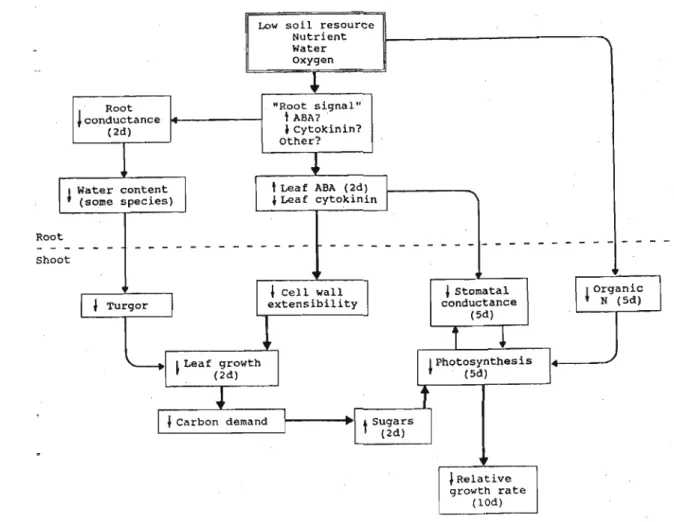
This mechanism works as follows: a low soil resource such as water, nutrients or oxygen causes a shift in the balance of plant growth regulators increasing root ABA and thus ultimately ABA levels of leaves and/or by decreasing cytokinin transport from roots to leaves. (Blackman and Davies, 1985). A combination of altered endogenous factors, rather than a single factor, is likely to result in reduced plant growth in response to stress, with the hormonal trigger in the form of ABA.
ROOT ROT
In addition, the content of exchangeable calcium, magnesium, nitrogen and organic matter was higher than in the soil, which promotes root rot. Cultural practices that increase soil organic matter therefore appear beneficial in reducing root loss due to Pc root rot.
CULTURAL PRACTICES IN AVOCADO GROWING
- MULCHING AND NUTRITION
Cultivation practices that increase soil organic matter content therefore appear to be beneficial in reducing root loss due to Pc root rot. 1980). Mulching prevents the spread of raindrops from surface aggregates, reducing crusting and compaction of the soil surface.
Improved Mineral Nutrition
Mulch-derived organic matter adsorbs many of these elements, dramatically reducing leaching while increasing the cation exchange capacity of the soil (Turney and Menge, 1994) and thus the availability of many nutrients to plant roots (Lanini et al., 1988 ). Furthermore, a higher organic matter content, both in mulch and ingested organic matter, has a positive effect on earthworm establishment and activity (Tisdall, 1978), as well as on microbial activity.
Amelioration of Soil Temperature and Atmosphere
Improved Shoot and Root Growth
Depending on the type of mulch used, both the mulch application and the mulch itself can be costly (Turney and Menge, 1994). Uncomposted organic mulches can contain significant amounts of weed seed which will be introduced into the orchard if the mulch is not fully composted (Turney and Menge, 1994).
Upset Nutrient Balance
Increased Fire Hazard
- FILTERCAKE AS A MULCH
MATERIALS AND METHODS
- STUDY SITE
- STANDARD MANAGEMENT
- EXPERIMENTAL DESIGN
- APPLICATION OF MULCH AND POTASSIUM
- PHENOIPHYSIOLOGICAL DATA COLLECTION
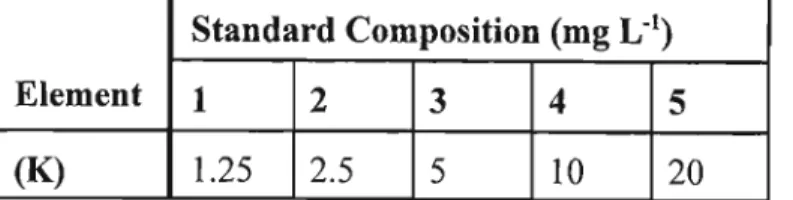
- CATION ELEMENT ANALYSIS
- FRUIT SIZE AND YIELD MEASUREMENTS
- AGROMETEOROLOGICAL MEASUREMENTS
- THETAPROBE SOIL WATER CONTENT DETERMINATION
- STATISTICAL ANALYSIS
- PHENOIPHYSIOLOGICAL RESULTS
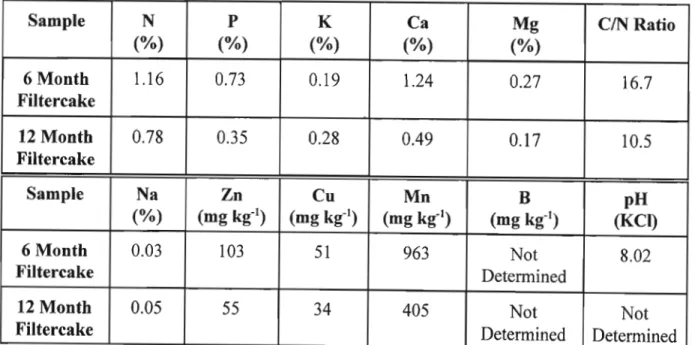
- ANALYSIS OF FILTERCAKE
- CANOPY DIAMETER
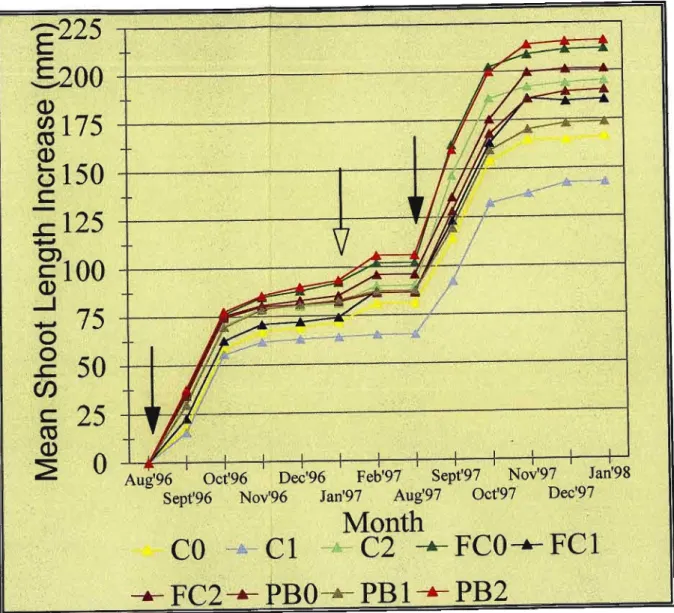
- SHOOT GROWTH
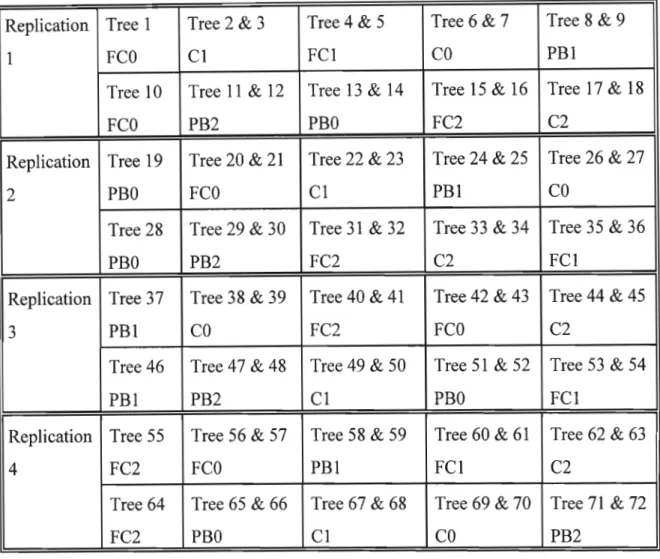
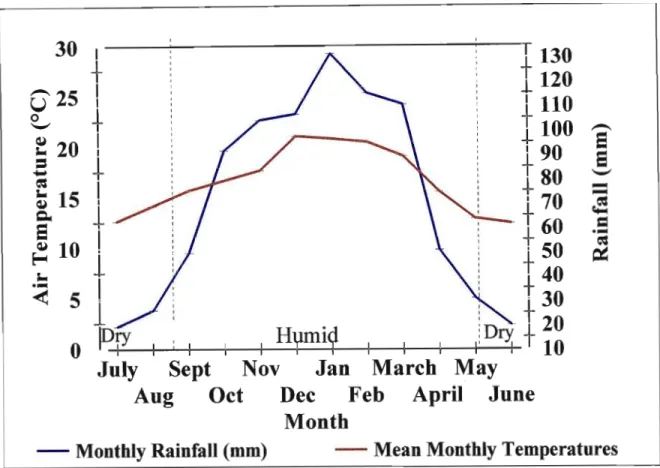
Normal cultural methods were implemented with the overall management level of the highest standards. Note, volumetric soil water content is the ratio between the volume of water present in a sample and the total volume of the sample. The time scale in months refers to the total age of filtration from the output from the sugar mill, ie.
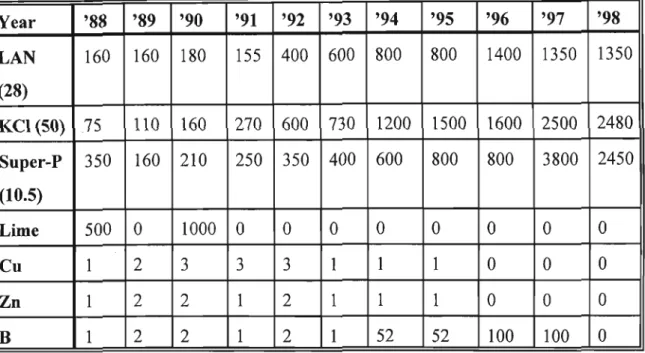
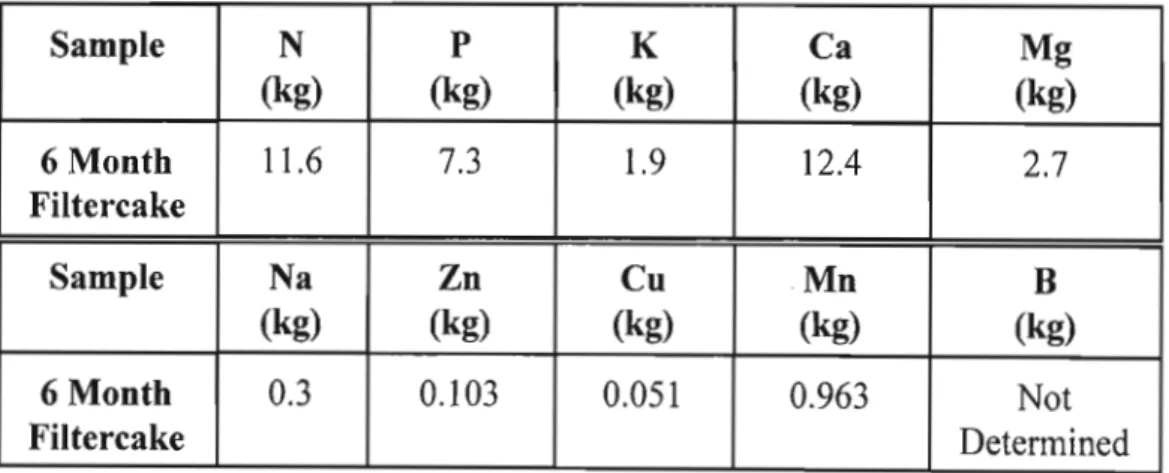
In an attempt to determine the total amounts of the above nutrients added to filter cake mulch per tree, it was calculated that approximately 1000 kg of actual filter cake material was used for approximately 28 m2 of mulch per tree.
Canopy Extension (m)
STEM CIRCUMFERENCE
Periods of root flushing occurred at approximately the same time for all treatments (Figure 3.4), with most trees reaching peak root growth for the first season in January 1997. The only exception to the timing of peak root growth for the second spring flush was the FCO trees, which peaked again in January (Figure 3.4). For a significant portion of the first summer root flush (January 1997), most trees scored "good" (250%), with most reaching peak root growth above 60.
This indicates that PBl and control trees allocated more time to root growth than mulched trees.
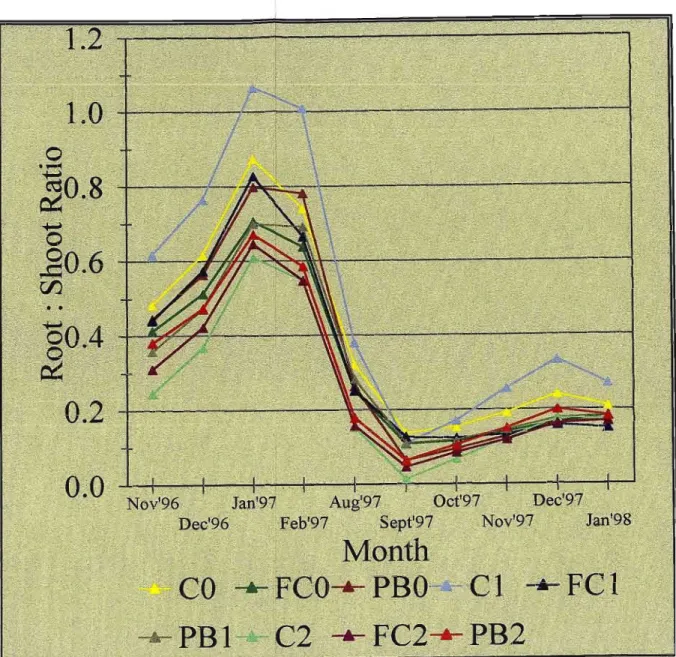
ROOT: SHOOT RATIO
As shoot growth for both flushes was fairly consistent (Fig. 3.2), this is indicative of the higher root growth observed in January compared to the December root flush (Fig. 3.4). From an overall perspective, the Cl and CO trees produced a greater root/shoot ratio than all other treatments, with the opposite being the case for FC2 and C2 trees (Fig. 3.5 and Table 3.4). Although less pronounced in the second season, the highest rate of K application always produced the lowest root/shoot ratio, regardless of mulch treatment (Fig. 3.5 and Table 3.4), indicating that K played a greater role in reducing root growth than shoot growth.
As expected, the highest K treatment levels (C2, PB2 and FC2) produced the corresponding highest leaf K concentrations (Fig. 3.6 and Table 3.5), with FC2 leaf K concentrations greater than all other treatments from April to October (Fig.
Mean Fruit Mass (g)
YIELD RESULTS
- MEAN FRUIT MASS
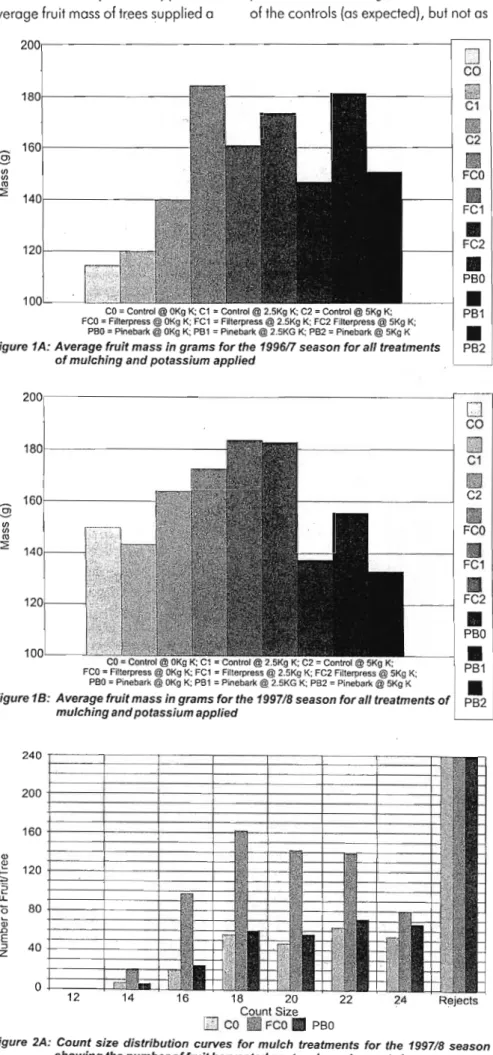
Cumulatively, this did not result in a significant difference (p s 0.1) in mean fruit weight between CO and CI-treated trees, while C2 trees produced significantly larger (p ~ 0.1) fruit than either treatment. Mean fruit weight of trees treated with pine bark mulch was significantly greatest (p s 0.1) for PB 1 trees for both harvests, with no significant difference (p ~ 0.1) between PBO and PB2 treatments in this time period. . The only time that mean fruit weight for all pine bark treatments was not in the rejection range (~170 g) between two harvests was for trees treated with PB 1 in the 1997 harvest, which were categorized for size 22 counts.
In addition, the large mean fruit mass differences between seasons in control trees is an example of the clear alternative bearing cycle that was visible in the field (Fig.3.7).
QUIQ
Number of Fruit/T·ree
COUNT SIZE DISTRIBUTION
Number of Fruit/Tree
TOTAL FRUIT YIELD
In addition, C2 trees produced the lowest percentage of rejected fruit (44%) of all control treatments (Figure 3.11), indicating that high K levels had a significant effect (p s 0.05) on reducing the number of small (rejected) fruits while simultaneously increasing sales tonnage to 7.12 tons (Table 3.7). In trees treated with filter cake, FCO treatment resulted in higher total yield than trees treated with FC 1 and FC2 (Figure 3.11 and Table 3.7). However, after comparing the discard fruit yield (Figure 3.11), it becomes apparent that FC 1 trees produced significantly (p s 0.05) less discard fruit than FCO and FC2 trees, resulting in a marketable yield close to that of FCO-treated trees (table 3.7). ).
Similarly, in trees treated with pine bark, there was a tendency for a reduction in the number of rejected fruit with K additions, where the PB 1 treatment gave the highest total yield and the lowest yield of rejected fruit (Fig. 3.11), and thus also the highest salable yield of all pine bark treated trees trees.
One way to verify if fewer small and more larger fruits are actually being produced by a tree is to measure the number of small fruits or discards as a percentage of total yield. Over the two harvests, control trees were seen to produce higher yields at the C2 K treatment rate than at CO and Cl treatment rates (Fig.3.11). From an overall perspective, the highest total yields were produced by C2,FCO,FCl,PBO and PB 1 trees, and the lowest by CO, Cl,FC2 and PB2 trees (Fig. 3.11), indicating that the 5.0kg K treatment rate was optimal for control trees, but above optimum for cover trees.
However, upon further investigation it becomes clear that FCO treated trees yielded only 1.26 ton ha more marketable fruit than FC 1 trees, and they did so.
ROOT-ZONE CLIMATE
AGROMETEOROLOGICAL RESULTS
- VOLUMETRIC WATER CONTENT
Root-Zone Temperature (QC)
TEMPERATURE
The filter cake mulch again produced the most consistent temperature in the root zone of the three treatments, with daily temperature fluctuations never exceeding 1.6°C and the total fluctuation over the entire three-day period never exceeding 2.9°C. In addition, the filter cake mulch showed a far more gradual change in root zone temperature in response to changes in air temperature than the control or pine bark treatments. It is likely that this overall different behavior of the filter cake mulch compared to the control and pine bark mulch is largely due to its inherent higher water content. (Fig. 4.1).
This in turn will result in temperature changes being less gradual, with worse peak root zone temperatures being achieved in these treatments compared to the filter cake mulch.
Root-Zone Temperature eC)
However, on average pine bark was 0.52 °C warmer than the control, which again produced the lowest mean root zone temperature (21.2 CC) of all treatments. Additionally, the time required for temperature rise and fall to occur in the filter cover was much longer than for the other two treatments, indicating that the roots underwent a much more gradual temperature change in the filter. From an overall perspective, the filter was the warmest and the control the coolest of the applied treatments, and while pine bark responded similarly to the filter in response to temperature changes at cooler temperatures, it tended to to react similarly to the control at higher temperatures.
Since water has a very high specific heat capacity (2.5 MJ kg" at 0 CC), it takes a long time to heat up and cool down, giving rise to gradual temperature changes such as those observed in the filter cake.
DISCUSSION
In the case of PH1 and C2 trees, it is clear that although almost identical percentages of their total yield fell in the rejection range, PH1 trees yielded higher than C2 trees (Fig. 3.11). Firstly, the high K application rate in C2 could have caused a prioritization of assimilates to stem thickening (carbohydrate storage) (Fig. 3.3) to the detriment of root growth, as was the case for all 5.0kg K treatments (Table 3.3). However, the trade-off for this is a lower ability to absorb water and nutrients from a root zone environment that is already depleted in water content (Fig. 4.1), leading to a reduced yield.
This is a similar response to that observed for C2 trees, where the high K application rate appears to have caused a prioritization of assimilates to trunk thickening (carbohydrate storage) (Fig. 3.3) to the detriment of root growth.
SUMMARY AND CONCLUSIONS
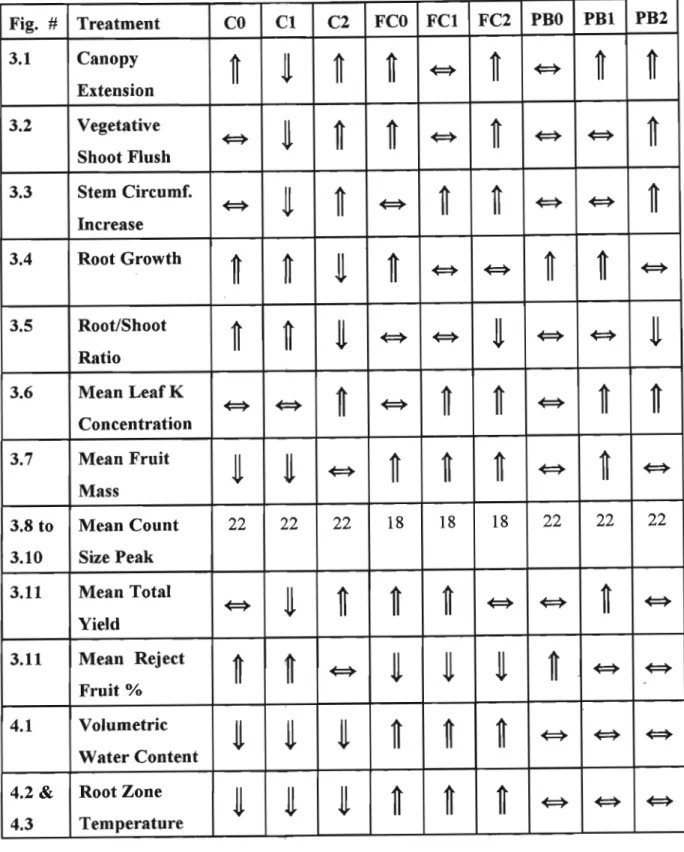
When looking at why the highest yielding treatments of FCO, FC I, PB 1 and C2 perform so well, one of the most important factors to consider is the root:shoot ratio, and the amount of vegetative growth that occurs each parameter contributes to that ratio. Considering these factors, the best average annual root:shoot ratio is about 0.32, with an annual average white feeder root growth of 33% to 38%, but never more than 65%, and an annual average shoot growth of about 100mm. In addition, an average annual leaf K content of approximately 1% should be maintained if fruit size and yield are to be maximized.
Although this is within industry norms, it is important that this level of leaf K content is maintained throughout all months of the year, and not simply achieved during a single leaf analysis.
LITERATURE CITED
Optimization, validation and application of radioimmunoassays for plant growth substances in avocado (Persea americana Mill.) fruit. Effects of irrigation and mulching on shoot and root growth of avocado (Persea americana Mill.) and mango (Mangifera indicaL.). The effect of root infection by Phytophthora cinnamomi and soil oxygen content on the concentrations and total amounts of nutrients in avocado plants (Persea americana Mill).
Effect of Phytophthora root rot on the water balance of avocado: interpretation with a water transport model.
APPENDICES
Paper(s) published
Mulching and Potassium Relationships in Hass Avocados to Increase Yield and Fruit Size
Control trees produced fruits of 115 g per CO (Fig. 1A), and average fruit mass increased with increasing rates of K. Control trees produced larger fruits of 151 g per CO (Fig. 1 B), without apparent trend in response to the rate of K applied. The number of distribution peaks 18 for filter pressing, with respectively 173 fruits (Fig. 2A) and 192 fruits (Fig. 2B). A significant number of
Not only was more fruit produced by filter press mulched trees, but they were generally larger. Pinebark mulch-treated trees produced more fruit than control trees, but 66% (Fig. 2A) and 63% (Fig. 2B) of these fruits were in their range.
LM CVERVOERDIENSTE . TRANSPORT SERVICES
34;Quality of Service
IS as Important as quality of product"