Absence or presence of the receptors on the intestinal walls determines the resistance or sensitivity of the host to the E. AIDA-1 / aidaA Adhesin involved in diffuse attachment factor or gene AluI Restriction enzyme of the Arthrobacter luteus origin ARC Agricultural Research Council.
- Introduction
- Justification
- Objectives
- References
Prevalence of the enteroaggregative Escherichia coli heat-stable enterotoxin 1 gene and its relationship with fimbrial and enterotoxin genes in E. Examination of the porcine MUC13 gene: isolation, expression, polymorphisms and strong association with susceptibility to enterotoxigenic Escherichia coli F4ab/ac.
Introduction
Successful initiation and progression of colibacillosis is a complex process that requires fimbriae, specific receptors in the lining of the host's small intestine, optimal bacterial load, and ultimately toxin production. Vaccines, antibiotics and breeding for genetic resistance are some of the methods used to prevent colibacillosis outbreaks in pigs (Sellwood, 1983; Wong et al., 1995).
Virulence factors and classification of E. coli
- Serotype
- Colonisation factors
- Toxin genes
- Association between toxins and colonisation factors
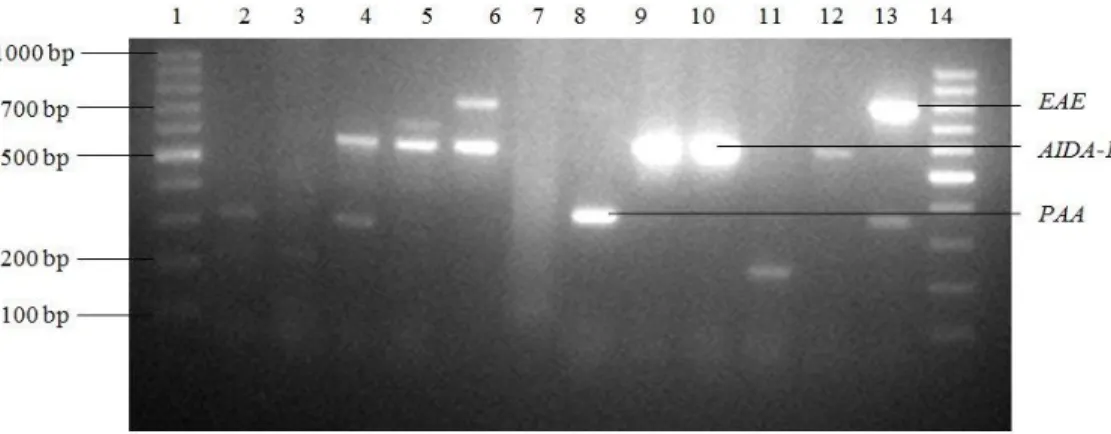
The EAE and PAA are part of the LEE genes involved in the A/E mechanism (Batisson et al., 2003). Heat-stable toxin variant b is also one of the most common ST toxins (Chen et al., 2004).
Pathogenesis and prevalence of E. coli infections in pigs
Diagnostic tools for E. coli infections
Although conventional PCR is still used, the PCR procedure has changed over the years, leading to the development of multiplex PCR. Multiplex PCR is the most preferred and has been used in several studies for the diagnosis of ETEC infections associated with diarrhea and edema (Madoroba et al., 2009).
Control strategies against E. coli bacterial infections in pigs
- Antibiotics
- Immunisations or vaccines
- Diet incorporated control methods
- Disease resistance and genetic approach
Despite the association of the three mucin genes with the F4bcR, the causative gene and mutation remain unknown (Zhang et al., 2008; Ji et al., 2011). The phenotypes obtained are then compared with the alternative genotypes to verify the reliability of the candidate gene used in the selection process (Jensen et al., 2006).
E. coli colibacillosis in South African pigs
The results of the study were not significant and could not rule out that the FUT1 gene has a pleiotropic effect on litter size. Current genetic programs are mainly focused on improving pig meat production and reproductive traits (Haesebrouck et al., 2004), with less emphasis on disease control.
Summary
This part of the country is also known for its warm temperatures, which can be favorable for the multiplication of E. This method is mostly possible if one locus is involved in the control of the disease.
Pathotypes and serogroups of enterotoxigenic Escherichia coli isolated from pre-weaning pigs in northern Vietnam. Fine mapping of the enterotoxigenic Escherichia coli F4ac intestinal receptor locus on porcine chromosome 13. Occurrence of virulence genes in Escherichia coli strains recently isolated from juvenile pigs with diarrhea in the United States.
Introduction
The success of any control or treatment program for colibacillosis will depend on good knowledge of the etiology of the disease, characteristics of the pathogens, pathogenicity as well as their distribution. The prevalence of specific virulence gene combinations or pathotypes will change over time (Vu-Khac et al., 2006) due to new mutations arising and others being selected from the population through the use of vaccines and antibiotics (Doughari et al. al., 2009). The aim of the study was to determine the prevalence of ETEC and STEC and EAEC in Duroc, Landrace and Indigenous pig breeds from South Africa.
Materials and methods
- Pigs
- Faecal swab collection and microbiological analysis
- DNA extraction
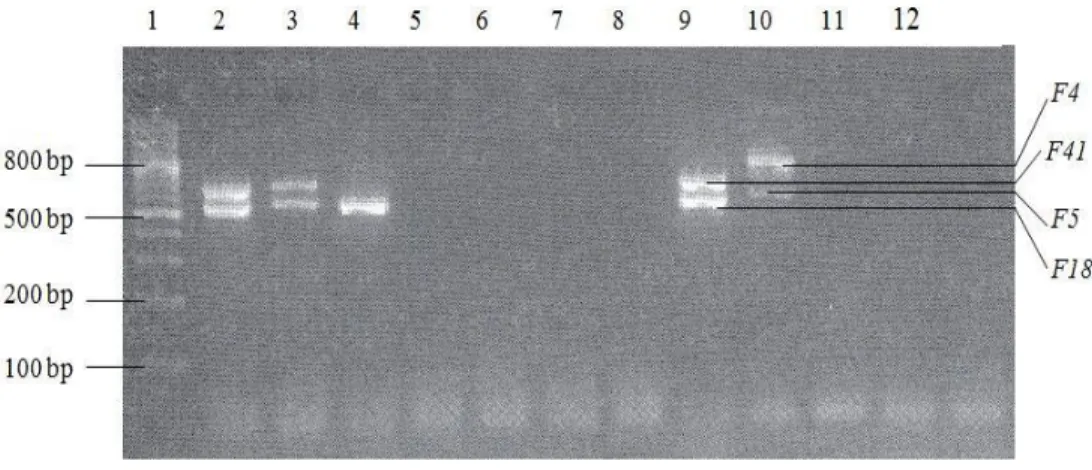
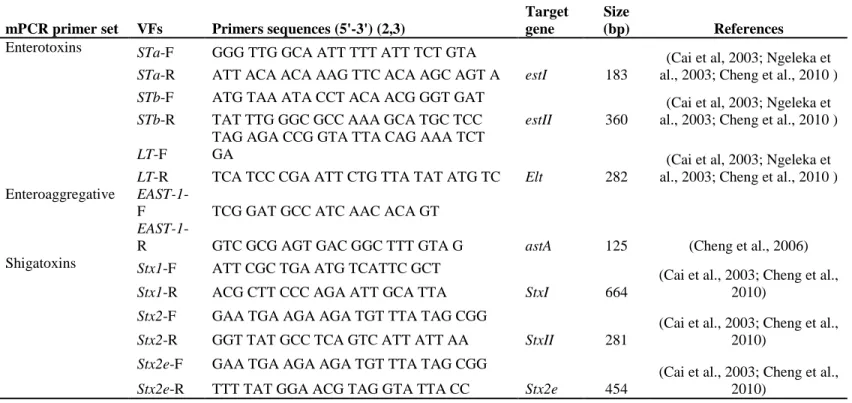
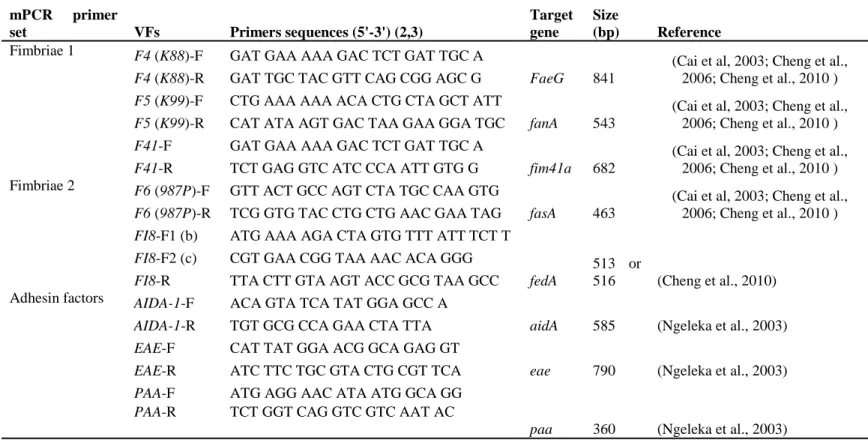
- DNA amplification and gene identification
- Electrophoresis
- Statistical analysis
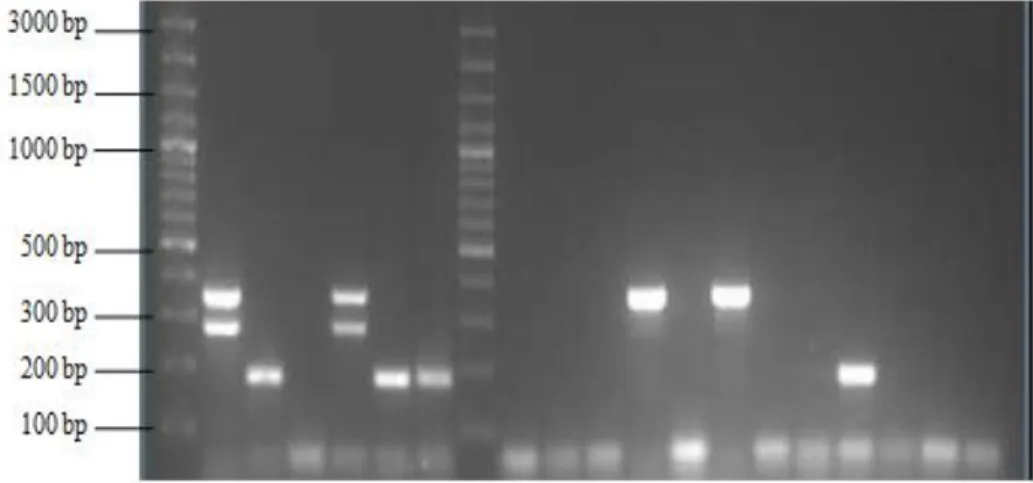
Fifty additional samples were collected from the Middledrift pig farm in the Eastern Cape Province. The samples were subjected to electrophoresis for 1.5 to 2 h, followed by visualization of the gels using a gel documentation system (Bio-Rad Trans-UV, Japan). Differences in the prevalence of the individual virulence genes, gene combinations between varieties and between collection sites were assessed using Chi-square (χ2) tests (SAS, 2012).
Results
- Microbiological results
- Genotyping results
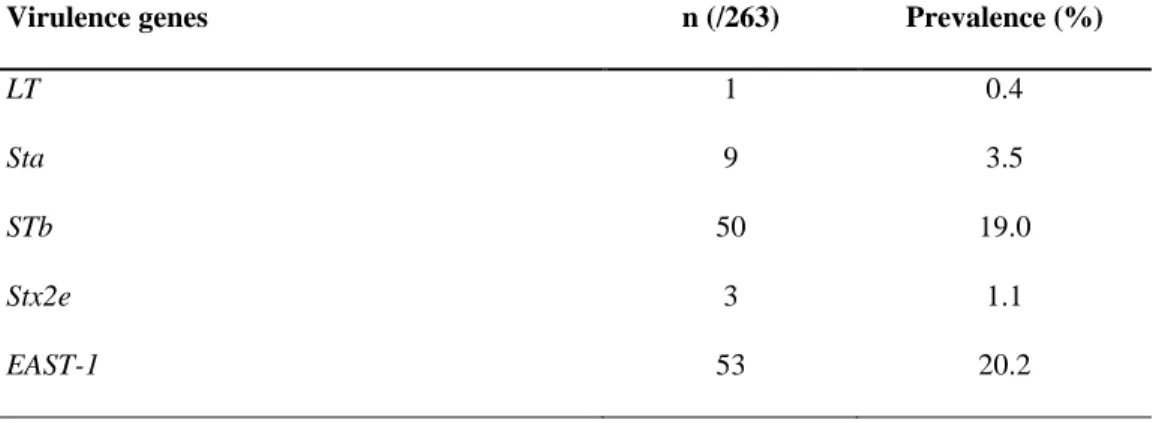
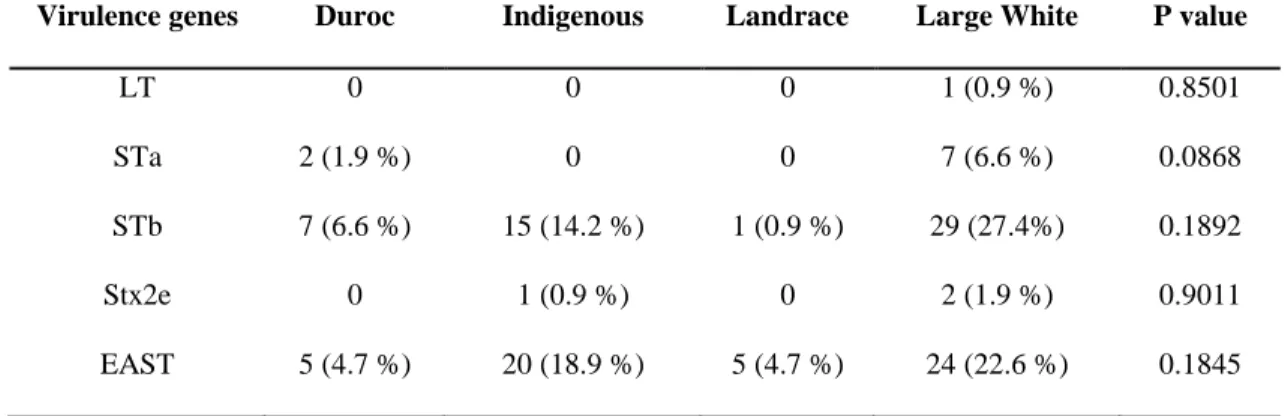
The heat-stable variant b toxin gene was found in the only LT positive isolates and in two of the Stx2e, 0.8 % STa and 1.9 % EAST-1 positive isolates. However, no statistical difference was achieved and this implies that breed did not affect the distribution of individual toxins among the four breeds of pigs used in the study (P > 0.05) (Table 3.4).
Discussion
The presence of ETEC in the host does not necessarily mean a successful infection. Of 800 faecal swab isolates collected from pigs in the Czech Republic, 36.5 % were identified as EAEC (Zajacova et al., 2011). The rate of toxin transport is influenced by the number of Stx2e toxin-producing E. coli colonizing the porcine intestinal mucosa.
Conclusions
Frequency of virulence genes in Escherichia coli strains isolated from piglets with diarrhea in Northern Parana State, Brazil. Distribution of virulence genes in Escherichia coli strains isolated from diarrheal pigs in the Slovak Republic. Serotypes, virulence genes and PFGE profiles of Escherichia coli isolated from pigs with post-weaning diarrhea in Slovakia.
- Introduction
- Materials and methods
- DNA amplification and gene identification
- Statistical analysis
- Results
- DNA amplification and gene identification
- Prevalence of colonisation factors
- Discussion
- Conclusions
- References
For example, Post et al. coli positive for enterotoxigenic genes, only 94.9% had one of the fimbria genes in the United States. Characterization of a novel Paa factor involved in the early steps of the Escherichia coli attachment and shedding adhesin mechanism. Genotypic prevalence of an adhesin involved in diffuse adherence in Escherichia coli isolates from preweaned pigs with diarrhea in Korea.
Introduction
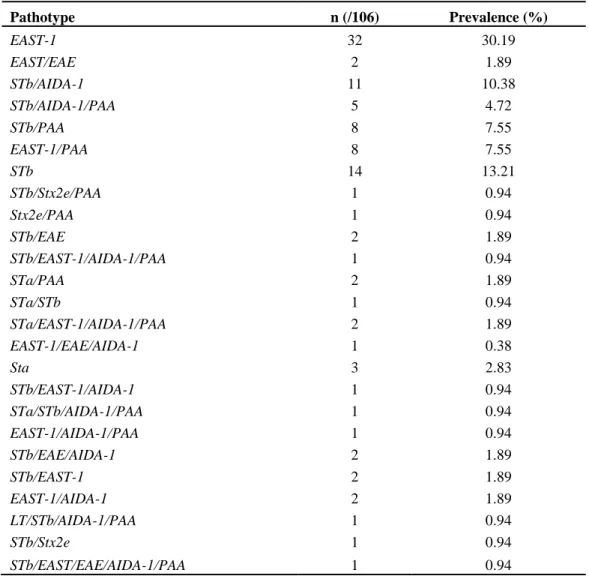
This also represents the relationship between the virulence genes for toxins, fimbrial and non-fimbrial adhesins. The number of gene combinations is not limited and may vary depending on the number of virulent genes isolated. In addition, some pathotypes have been associated with the growth phase of piglets in some regions (Jung et al., 2011; Toledo et al., 2011).
Materials and methods
- Determination of pathotypes
- Statistical analysis
Results
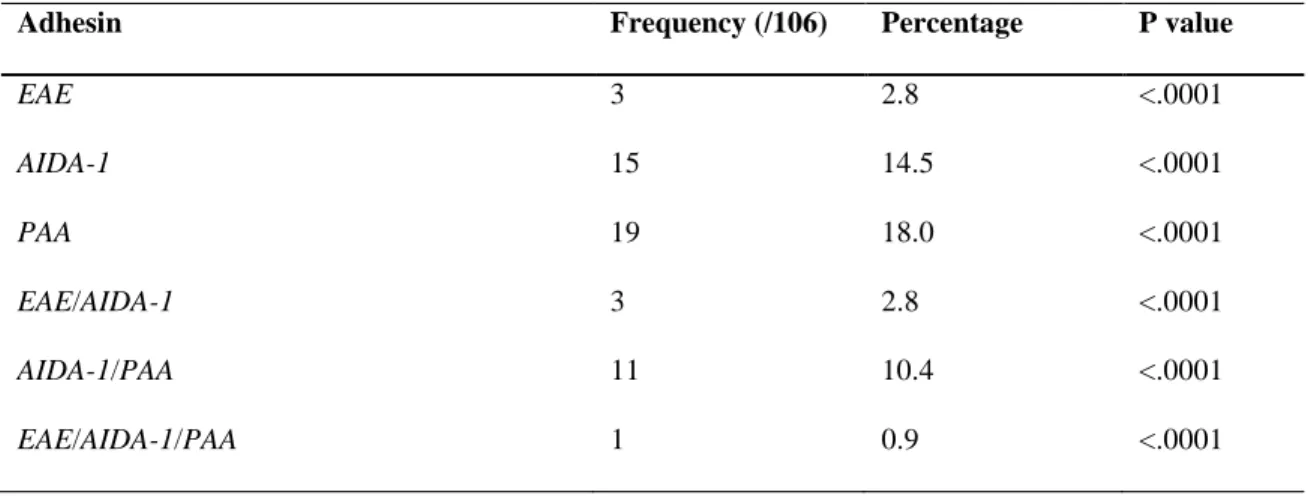
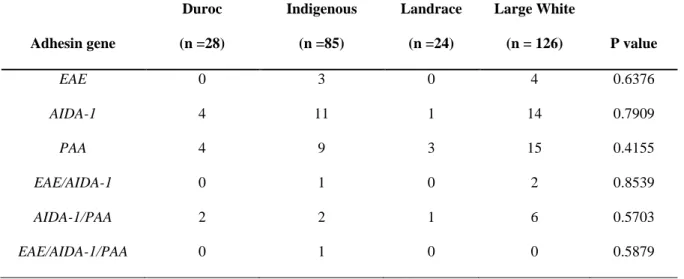
The associations between individual toxin genes and each acquired adhesin were also investigated, and the results are shown in Table 5.2 below. EAST-1 and STb were found in almost similar proportions in isolates carrying the PAA adhesin gene (P < 0.0001). The effect of breed on pathotype recovery was also tested and the results showed a significant effect in the distribution of only four pathotypes among the four breeds (P <0.05) (Table 5.3).
Discussion
In the same study, it was also found that the occurrence of the toxin gene together with the adhesions is important for the development of the disease. The pathotypes carrying the AIDA-1 gene in the current study have the potential to cause an infection regardless of the toxin gene present in the isolate. The results of the current study provide basic information for the development of vaccines against the existing E.
Conclusions
Prevalence of genotypes for fimbriae and enterotoxins and of O serogroups in Escherichia coli isolated from piglets with diarrhea in Korea. Prevalence of virulence genes in Escherichia coli strains isolated from piglets during the suckling and weaning period in Mexico. Serotypes, virulence genes, intimin types and PFGE profiles of Escherichia coli isolated from piglets with diarrhea in Slovakia.
Introduction
The loss of immunity in the later stages of growth suggests additional costs to reverse symptoms in case the pig succumbs to the disease. The selection effect in Switzerland resulted in an increase in the frequency of the resistance allele A by 22, 1 and 7% in the Large White, Landrace and Duroc breeds, respectively, during the five years of selection between 1996 and 2001 (Bertschinger et al., 2004 ). As such, there is no information on existing receptors and the role of candidate genes in SA pig populations.
Material and methods
- Sample collection
- DNA extraction
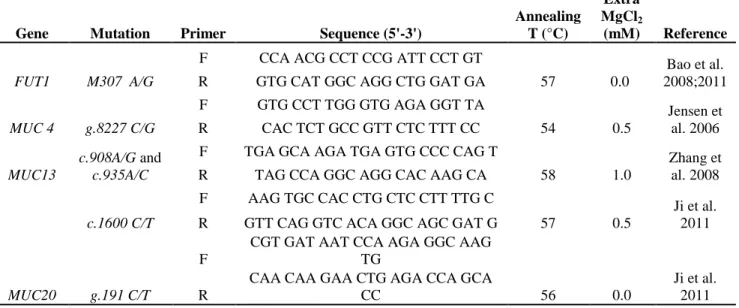
- Gene amplification and PCR-RFLP genotyping
- Statistical analysis
The aim of the study was therefore to investigate polymorphisms of the FUT1, MUC4, MUC13 and MUC20 genes and to determine the prevalence of alleles resistant to F18+ and F4 ab/ac ETEC in the SA pig population. The level of polymorphism at these genes will affect their utility in selection programs, while the presence of the resistance alleles implies resistance of the SA population to F18+ and F4ab/ac ETEC. When digested with XbaI, it can yield an undigested resistant allele G (367 bp) and/or susceptible allele C digested to yield 216 and 151 bp fragments (Jensen et al., 2006). The amplification of MUC13 resulted in a 176 bp fragment.
Results
- Genotyping
- Genetic analysis
Only a small proportion of the population carried the T susceptibility allele and was found in only 11.7% and 0.5% of native and large white pigs, respectively. The highest Fis value for the MUC4 gene was found in the indigenous population (0.402), and the Large White group showed a moderate inbreeding coefficient of 0.124. The Large White Ho was similar to the expected heterozygosity value of 0.011 (Table 6.3).
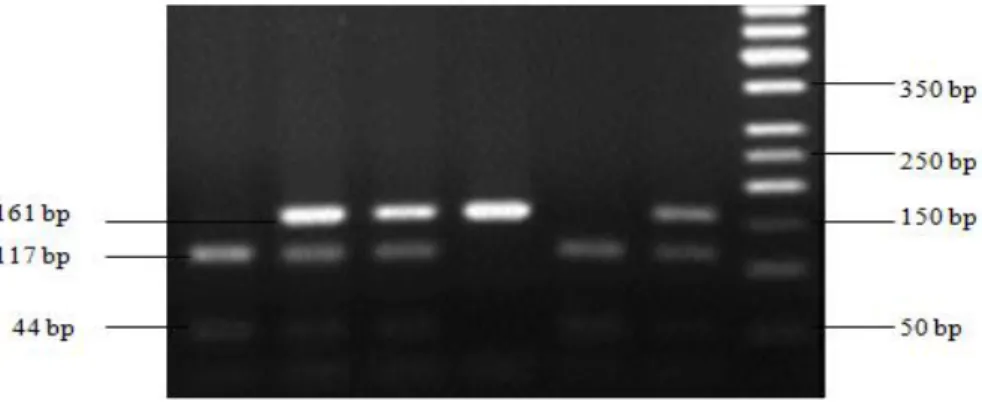
Discussion
Both breeds showed significantly high levels of the resistant allele C, with frequencies of 0.890 and 0.863 in the native and great white, respectively. The majority of the population in both pig breeds carried the resistance genotypes c.1600 CC and g191. The results of the current study did not show any LD and association between the four loci included in the analysis.
Conclusions
However, no association was found between MUC20 g.191 C/T and MUC13 c.908A/G White Duroc × Erhualian pig population. The reasons for no LD in the current population may be due to the distance between loci and/or as a result of the same factors that affect HWE, such as non-random mating and selection at other loci close to the studied loci. The non-linkage in all the genes studied suggests that the use of genotyping and marker-assisted selection would be easier as there would be no interference between the loci.
Refined candidate region specified by haplotype sharing for Escherichia coli F4ab/F4ac susceptibility alleles in pigs. The porcine MUC20 gene: molecular characterization and its association with susceptibility to enterotoxigenic Escherichia coli F4ab/ac. The receptor locus for Escherichia coli F4ab/F4ac in pig maps distal to the MUC4-LMLN region.
- General discussion
- Conclusions
- Recommendations and further research
- References
However, the question of the origin of the selection pressures that resulted in the absence of common fimbrial adhesins and the presence of new pathotypes in South African E receptors are the binding substrates found in the intestinal brush border (Van Den Broeck et al. , 2000 ). The presence of MUC4 and MUC20 resistance genotypes was found to be very high in the present population.