Factors associated with future investments in irrigation agriculture were also studied in the Lower Orange River Irrigation Scheme. The power to exercise authority rested with the Minister of Water Affairs and Forestry.
Water User Associations
In the next chapter, the criteria for the allocation of water resources are described and past research in the selected research areas is discussed. In order to promote and achieve optimal allocation of water resources, appropriate methods of resource allocation are needed.
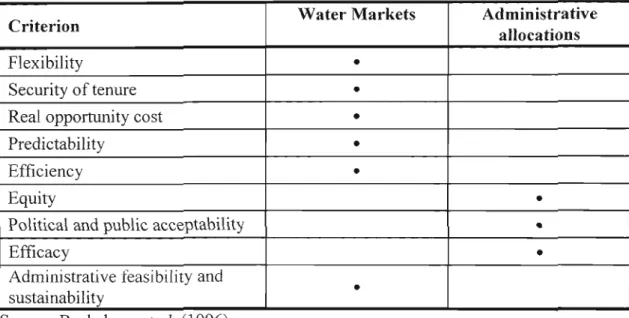
Criteria for comparison of water allocation methods
Prices, as a result, represent neither the cost of water supply nor its value to users (Dinaret al., 1997). The following chapter discusses various features of a water market and describes the benefits of well-functioning water markets and the requirements for their efficient operation.
Requirements for the efficient operation of a water market
Water rights regimes
Regions where water is relatively abundant tend to use the doctrine of riparian rights (Holden and Thobani, 1996). It describes the hypothesized model and describes the statistical techniques used in evaluating the models.
The economic model of water transfers
Economic efficiency hypothesis
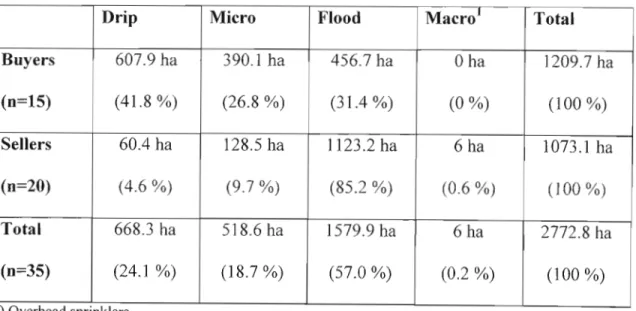
The third section introduces and discusses the study areas of the Lower Orange and Crocodile Rivers. The economic efficiency hypothesis is that the buyer of water has a high expected return per unit of water (growing profitable export crops), is more liquid (cash flow), has a less negative view of the five-year license review period and uses more advanced irrigation technology.
Factors affecting future investment in irrigation farming
In addition, if water is being transferred from small to large farms, this may indicate that the market does not promote equity in distribution, or, conversely, may indicate a lack of evidence to support the notion that the market does little to promote efficiency.
Other research objectives
It must be physically possible for the participants to transfer water corresponding to the traded rights, just as the law must support trades and enable enforcement of the legislation surrounding the trading process.
Statistical procedures
- Risk and risk aversion
- Ridge regression
- Principal component analysis
- Logistic regression
Now L, the log of the odds ratio, or logit, is linear in X and, more importantly, in the parameters. It is assumed that the type of farmer (buyer or seller) is determined by the n attributes (Xs) of the farm and the farmer.
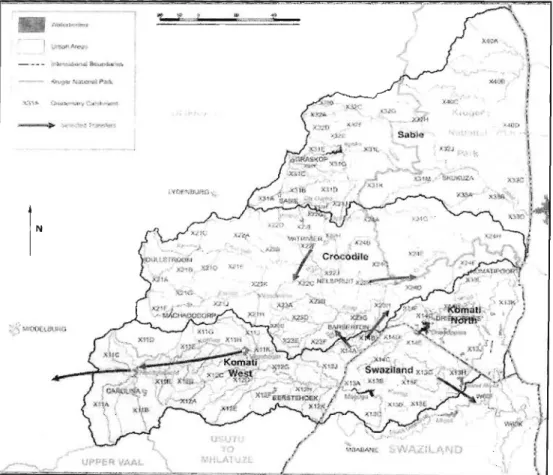
The study areas
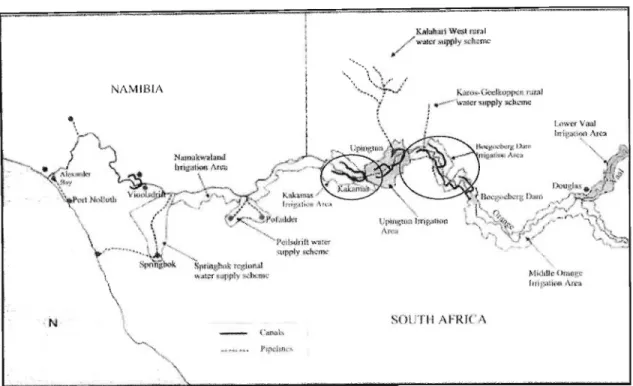
The Lower Orange River
This area is completely dependent on the flow of water in the Orange River (RSA. 2002). This chapter analyzes and discusses various characteristics of farmers in the Lower Orange River area.
Characteristics of water Buyers and Sellers
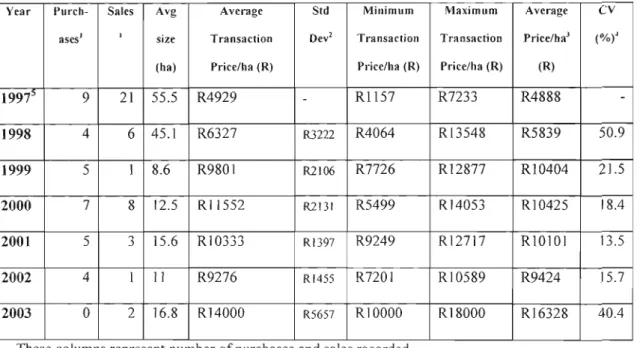
Farmers are grouped as buyers or sellers depending on whether they bought or sold water rights in the market. This is likely because buyers are purchasing water rights from sellers and are developing new land. Two transactions were excluded from the price analysis because one traded water for land, and in the other transaction the farmer could not remember the price of the transaction.
2 A farmer stated that the trade referred to in the 1998 DWAF records actually took place in 1997. The rand weakened against major currencies during the period under review, most likely causing an increase in the price of exported grapes. This can partly explain why there is such a large spread in the hectare price for transactions.
Further analysis of farmer responses
Farmers' perceptions of the NWA
All but one of the Sellers and 57 percent of the Buyers would rather not receive any amount to avoid the possibility of a loss. My opinion of the New Water Act has become more positive since the Act was first published'. 2 'The New Water Act offers increased protection for the environment, which distinguishes it from the old Act'.
Similarly, buyers feel that the law provides increased protection for the environment (73 percent agree) compared to sellers (40 percent agree). The totals for each of the first two statements also reflect more responses agreeing with the statements than disagreeing. Responses to the third statement on water transfers show that farmers have not experienced an increased administrative burden in the trading process.
Farmers' perception of the five-year review period
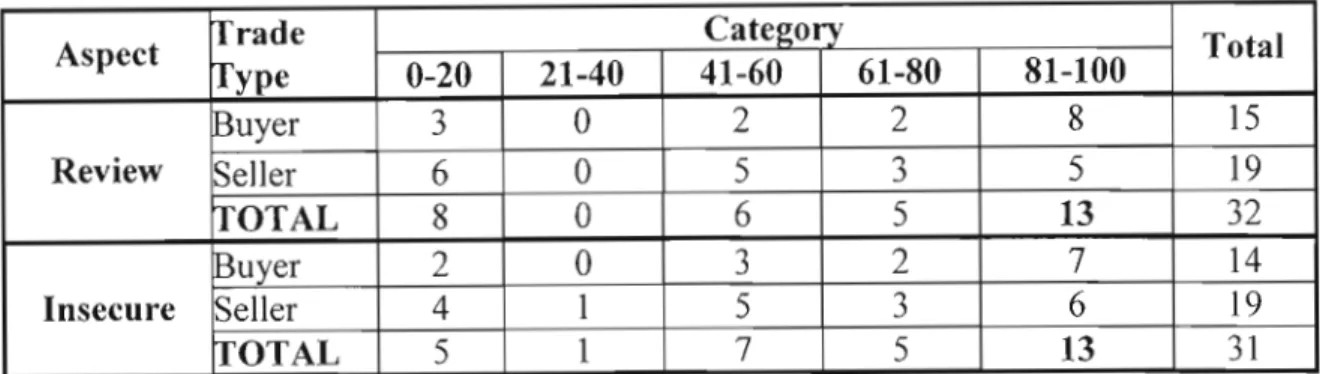
Farmers said that although the administrative burden of trading water is quite significant, they have had a lot of assistance from the relevant staff at the DWW&B offices in Upington. Both buyers and sellers tend to rank REVIEW and UNSURE on the higher end of the scale. This is probably explained by the planning horizon for many of the crops grown in the area, such as vine and orchard crops, which exceed five years and farmers' need for assurance of water supply for the life of the crop.
Indeed, farmers need security of water rights as long as they run their agricultural business. The lack of clear information about the review process affects farmers' decisions about irrigation investments and the security of water permits. The practical implications of the review period should be explained to farmers, as they may hinder plans for further investment and development of the area.
Transaction costs of water sales
Some buyers stated that they were expanding the development and that they had more water rights than their current water usage. The costs depend on whether an agent is engaged to manage the transaction or whether a legal entity is involved. In Lower Orange it was more common for a large buyer to enter into contracts with several sellers.
The net sales of Boegoeberg farmers included in the survey were 316.6 ha for the same period. It appears that the farmers in the sample were responsible for a significant portion of the water traded in these areas. This chapter discusses the growing conditions experienced in the Crocodile River region and analyzes and discusses various characteristics of farmers in the region.

Bio-climatic conditions in areas trading in water
More specifically, the reasons for the relatively unfavorable growth conditions above the gap are as follows. Temperatures above the canyon are also not warm enough for the heat-loving crops under irrigation (sugarcane, mango, grapefruit, Valencias, and bananas), while on the other hand, it is not cool enough for temperate crops that require coolness (pecans). With good management (irrigation and fertilization) fruit planting is possible above the gorge, but the conditions are not as favorable as below.
Macadamias grow well above the gorge (HoItzhauzen, 2004) and cultivation is expanding (Malan, 2004), but the growing conditions in other areas, for example in Bela Reka, are better (higher land, red soil that is more weathered with a higher content clay). It is not hot enough above the gorge in summer and not cold enough in winter. Because it is cooler above the gorge, a longer growing cycle is required compared to below the gorge.
Importance of risk and cash flow in crop selection
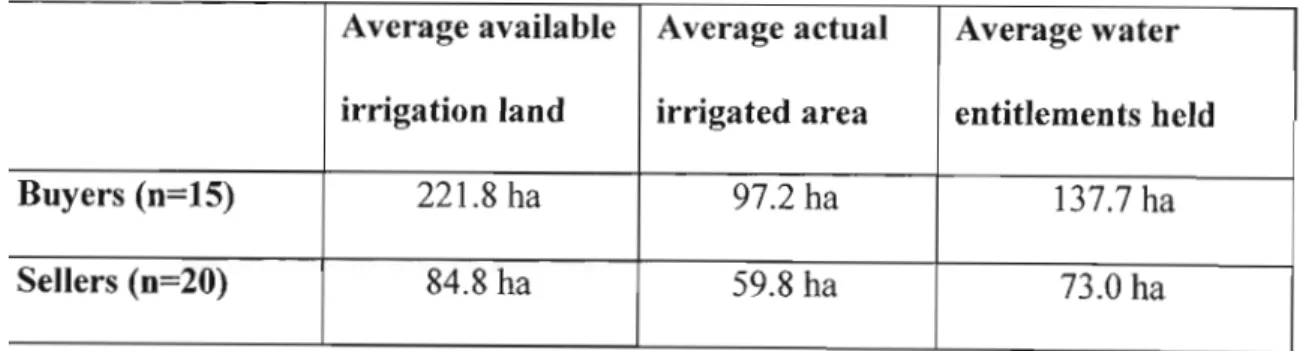
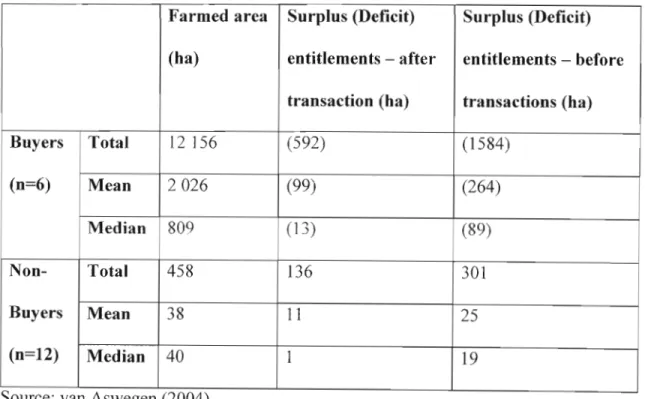
Due to the uncertainty of water supply, the unused water can be seen as an existing legal use of water and given legitimacy. Due to the low number of permanent transfers, short-term water leases were included in the analysis. The total agricultural areas and summary of water rights owned by the respondents are shown in Table 6.1 on the next page.
Buyers cultivate a larger area than non-buyers, but do not have sufficient permanent water rights for the planted area and must lease or purchase a large amount of water to irrigate their crops. Deacon (2004) contends that excessive water use without sufficient water rights is particularly a problem below the gully as according to him farmers simply expanded production even though they did not have water rights to support the expansion. Transfers of water from the tributaries of the Crocodile River would be irresponsible as it would worsen the water scarcity situation and the only way Comrie (2004) sees is compulsory licensing.
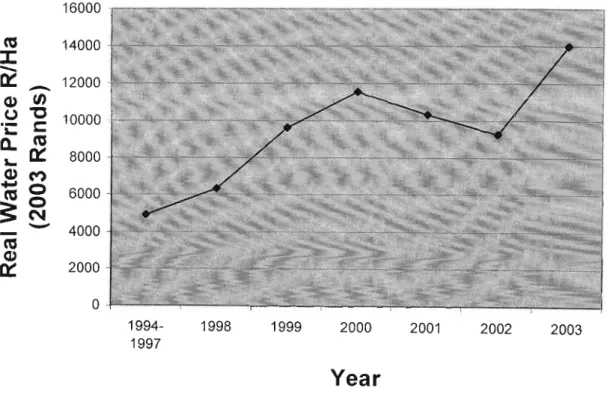
Analysis of prices of permanent water transfers and rentals .1 Price trends of permanent water transfers
Farmers' perception of the five-year review period
Farmers were also asked to rate (on a scale of 0 to 100) the importance of the five-year review as a factor influencing their investment decisions (REVIEW in Table 6.6 on next page). This indicates that farmers feel that the five-year review period will have little impact on their investment decisions, but some farmers are concerned and feel that the relatively short period of the review period will have a negative effect on their investment decisions. This is due to uncertainty about the details of the law and about the practical consequences of the review period.
This uncertainty also influences fans' perceptions of the safety of water permits, and farmers mainly rate the safety of water permits as moderately uncertain, with only three farmers feeling that permits would be completely safe (rating zero). The practical implications of the review period should be made clear to farmers as it could hinder further investment in research and development in the area. The next chapter presents the results of an econometric analysis of the water markets in each of the study areas.

CHAPTER SEVEN
Lower Orange River Analysis
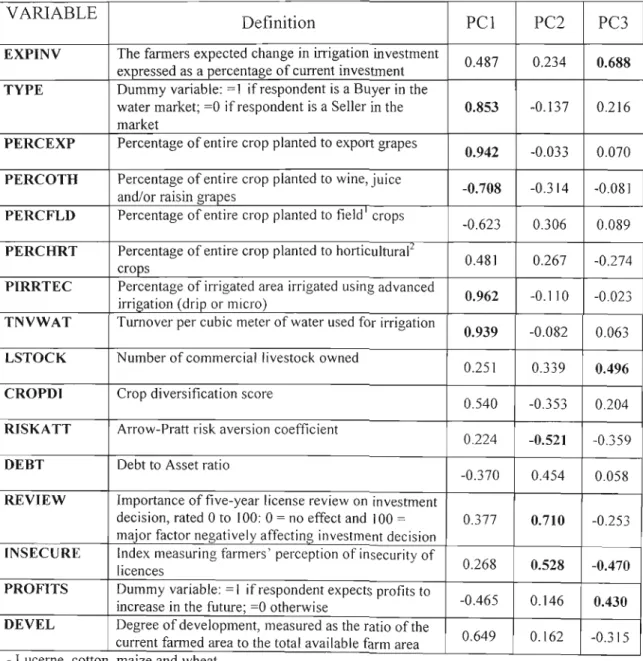
- Principal Component Analysis of variables associated with water marketing Table 7.1 overleaf shows the loadings of two principal components extracted from the
- Estimated Arrow-Pratt Absolute Risk Aversion Coefficients
- Statistical modelling of Buyers and Non-buyers of water in the Crocodile River Area
- Logit model of water Buyers versus Non-buyers
It shows positive loadings for the following variables; Buyers of water rights (TYPE =1); the percentage of the area planted for export of table grapes (PERCEXP); percentage of advanced irrigation technology used (PIRTEC); circulation per cubic meter of applied water (TNVWAT). It is expected that farmers who were short of water would be buyers in the market and the model confirms this. The model suggests that there is no significant difference in the NPV of gross margins per cubic meter of water between buyers and non-buyers.
It is clear that farmers with a shortage of water will be buyers of water in the market. The buyers of water rights tend to specialize in the production of few highly profitable crops such as export grapes. The five-year water license review period appears to have a negative impact on the purchase of water rights.
An econometric and institutional economic analysis of water use in the Crocodile River catchment, Mpumalanga Province, South Africa. Transaction year Volume of water Specify (Rent in/Rent out) Price (Specify unit - ego per 15000 m3).