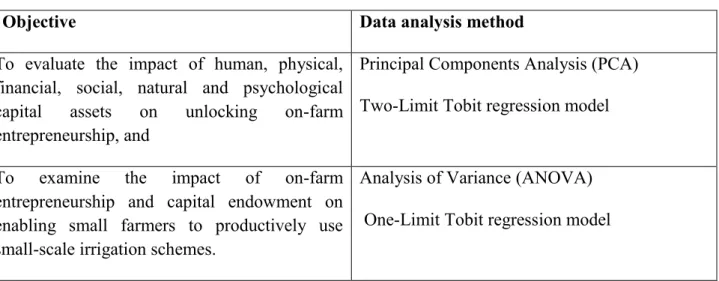
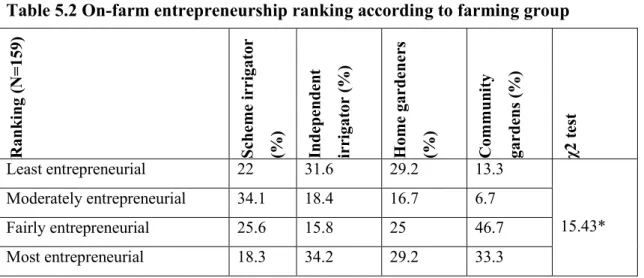
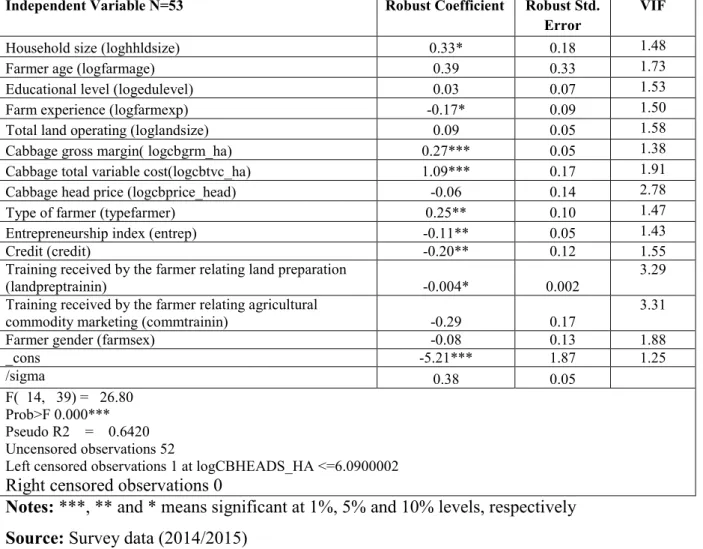
The second objective of the study was to examine the impact of on-farm entrepreneurship and capital provision on enabling smallholder farmers to make productive use of the program's infrastructure. The production functions were estimated to find out the impact (at the margin) of on-farm entrepreneurship on the productivity of individual farmers in each category of respondents.
Background
However, these trends have changed and irrigation investments have increased significantly (You et al., 2011). Most of the schemes have collapsed or are used well below their potential (Van Averbeke et al., 2011).
Study motivation
5 number in Thailand, the leading country in the GEM index (Herrington and Kew, 2013). The South African GEM country report associates the weak entrepreneurship performance with four factors: the high transaction costs of tax compliance, especially for young businesses, the weak support structures, especially business development services that are not accessible or suffer from poor quality, inadequate support structures for informal businesses and insufficient access to credit, especially microfinance (Foxcroft et al., 2002; Herrington and Kew, 2013). Visualizing smallholders as a homogeneous group is inaccurate and hinders the policy development process.
Study objectives
Organisation of the study
Introduction
Defining entrepreneurship
In addition, Gray (2002) defines an entrepreneur as an individual who runs a business with the goal of expanding the business and with the leadership and management skills necessary to achieve those goals. Timmons (1999) makes a balancing argument with the view that entrepreneurship is a combination of both talent and skills; it is the opportunity together with the necessary resources and applied with the entrepreneurial mindset.
Measuring entrepreneurship: evidence from the empirical literature
Start-up activity is measured by counting the share of the adult population currently setting up a business. New business activity is measured as the share of the adult population currently involved in running a business for less than 42 months.
Rural entrepreneurship in the context of smallholder agriculture
Farmers are "innovative reservoir in agricultural communities and potential sources of entrepreneurship" (Alsos et al., 2003). The lack of adequate start-up finance is one of the most prominent obstacles for people who want to create their own businesses in rural areas (Robinson et al., 2004; Sarasvathy, 2004; Ulrich, 2006).
Entrepreneurship in smallholder agriculture
However, it is also important to simultaneously enable an environment where experienced farmers can be entrepreneurial and connect to value chains (IFAD, 2001; Brooks et al., 2013). Research on the development of entrepreneurial and organizational competencies among farmers is particularly scarce in emerging economies (Diaz-Pichardo et al., 2012).
The role of human, social and psychological capital to on-farm smallholder
It helps with the integration and accumulation of new knowledge, as well as with integrating and adapting to new situations. According to this study, this subsequently resulted in high levels of dependency among farmers on the schemes and poor performance when farmers had to manage the schemes themselves.
State of entrepreneurship in South Africa
Given the inability of the formal and public sector to absorb the growing number of job seekers in South Africa, increasing attention has focused on entrepreneurship and new businesses and its potential to contribute to economic growth and job creation (Herrington et al., 2009). Despite these efforts, an estimated 10 million South Africans still do not have access to transport and are therefore limited in their physical movements (Fal et al., 2009; Mitchelle, 2004).
Summary
Global Entrepreneurship Monitor (GEM) studies have shown over the years that the low level of early stage entrepreneurial activity in South Africa is created by low levels of education, social and entrepreneurial factors that do not encourage entrepreneurship as a career of choice, lack to access to finance and a difficult regulatory environment. With South Africa already having the lowest Total Entrepreneurship Activity (TEA) rate by any standard.
Introduction
Study area description
Makhathini Irrigation Scheme
Mjindi Farming is employed by the KZN Department of Agriculture and Environmental Affairs to manage and maintain the Makhathini irrigation system (2500 ha). The irrigation program extends across part of the KwaJobe Tribal Authority area, resulting in some overlap with farmers under the Big 5 False Bay jurisdiction area.
Ndumo B -Mnotophansi – Co-op
The pattern of farming in the Jozini area is closer to commercial and semi-commercial farming relative to the pattern of subsistence and small-scale farming practiced not only in the rest of Umkhanyakude, but also in the rest of KZN.
Data collection methods
Data collection instruments
Sampling procedure and sample size
Conceptual framework
The SLF provides a holistic analysis of smallholder assets and their business environment (Muchara et al., 2014). Traditionally, financial and physical assets, such as plant and equipment, have received the most attention. For Schumpeter (1942), the quality of human resources was crucial for the performance of the entrepreneurial function.
It puts farmers in a favorable position to compare the costs and benefits of the current practices being used with alternatives (Kahan, 2012; Kelley et al., 2012).

Empirical methods of data analysis
- Descriptive statistics
- Principal Components Analysis (PCA)
- Tobit regression model
- Production function
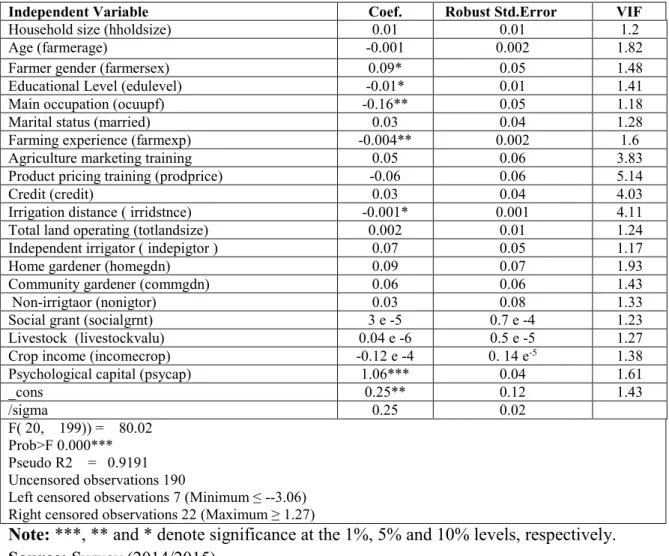
Farmers with higher scores are expected to be entrepreneurial on the farm, as shown in Table 3.2. Farmers with higher livestock value are expected to be entrepreneurial on the farm, as can be seen in Table 3.2. Farmers with higher gross crop income are expected to be entrepreneurial on the farm as shown in Table 3.2.
It is expected that farmers with greater psychological capital are entrepreneurs on the farm, as can be seen in table 3.2.
Summary
Z7= total variable costs for cabbage per ha Estimated Rands/ha costs for cabbage production per year (2015). The ABCD approach encourages awareness and mobilization of assets and strengths in local communities, an aspect not considered in the SLF approach. PCA was used to generate the on-farm entrepreneurship index, and this index is again used as a dependent variable in the two-limit Tobit regression model to examine the effect of capital grants on on-farm entrepreneurship.
After estimating the two-frontier Tobit regression model, a production function of the main crop (cabbage) was estimated to examine the impact of farm entrepreneurship on crop productivity in each category of respondents.
Introduction
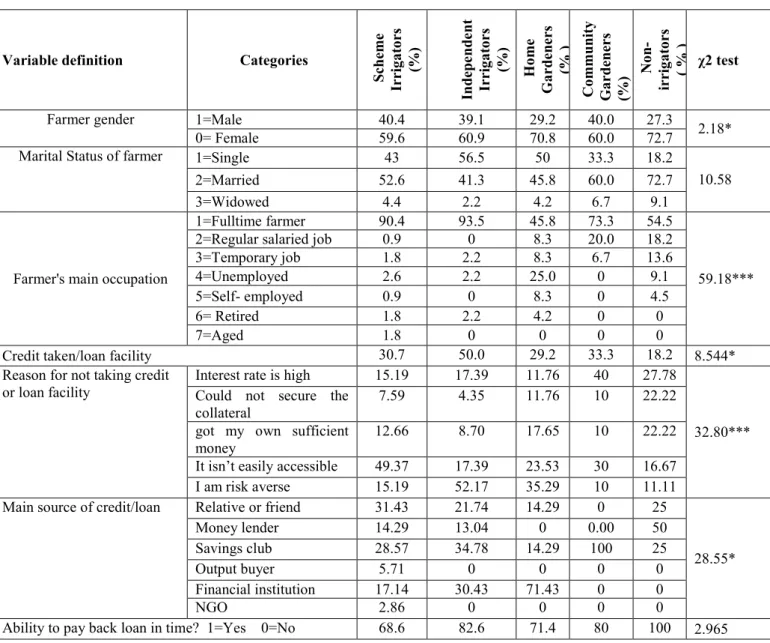
Descriptive analysis of household demographics and socio-economic characteristics
Formulation of on-farm entrepreneurial competencies index: principal component
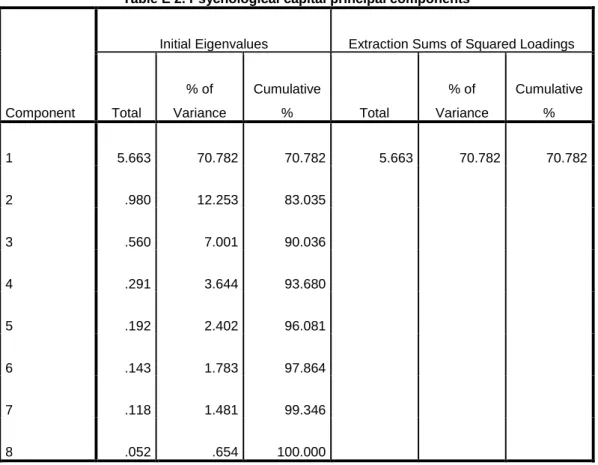
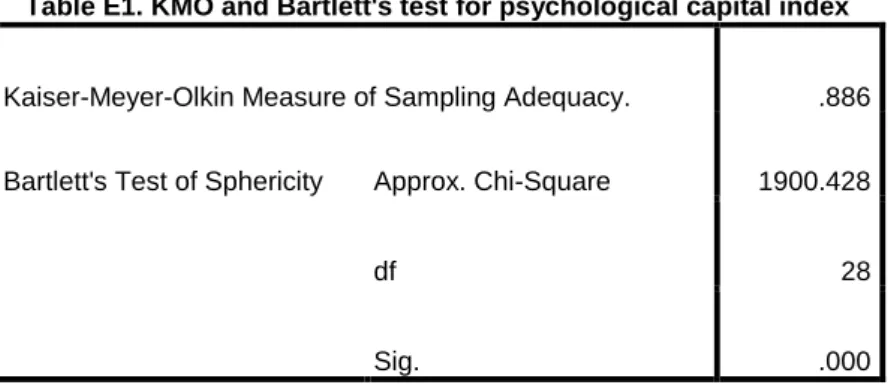
This suggested the importance of strategic thinking and planning as necessary tools for entrepreneurship on the farm. Only PC1 was retained and then used to generate the on-land entrepreneur index. The next subsection examines capital grants and its impact on unlocking entrepreneurship on the farm.
Capital allocation and its impact on unlocking entrepreneurship on the farm: results from Ndumo-B and Makhathini.
Capital endowment and its impact on unlocking on-farm entrepreneurship: results
The part-time farmers in the study had the ability and inclination to start other non-agricultural businesses, in this regard, emerging as hubs of mixed entrepreneurial talent. Furthermore, additional discussions that were held with farmers in the survey regions confirm the study of Fischer and Quim (2012). However, independent irrigators scored 0.07 points higher on levels of on-farm entrepreneurial competence, while home gardeners scored 0.09 points higher on levels of competence.
The focus group discussions revealed that independent irrigation companies continued to participate in the market against all odds, with the aim of increasing their cash needs.
Summary
This chapter presents the main findings of the study regarding on-farm entrepreneurship and its relationship to the productive use of irrigation water in Ndumo B and Makhatini. The chapter seeks to achieve the second objective of the study, which is to examine the impact of on-farm entrepreneurship and capital grants on enabling smallholder farmers to productively use small-scale irrigation schemes.
Crop productivity results
69 Maize: Irrigation systems for maize production had a statically and significantly higher average yield of 3.208 kg/ha (Table 5.1). However, home gardeners had the highest average gross margin of R8.996/ha, but this increased to R16.196/ha when family labor costs were excluded. Community gardeners had statically and significantly the highest average total variable costs of R10,313/ha, which dropped to R6,710/ha when family labor costs were excluded.
Community gardeners generated an average gross margin of R32,354/ha, rising to R35,957/ha, excluding family labour.
Average crop gross margin according to on- farm entrepreneurship
Cabbage production function
However, a 1% increase in family size could lead to a 0.33% decrease in cabbage yield, ceteris paribus. Cabbage farmers who had access to credit were 0.20% less productive than those without access to credit, ceteris paribus. The reason for this finding was that some farmers used credit for purposes other than agricultural activities such as purchasing food and spending on children's education. . This would result in less land being allocated to cabbage production, resulting in a lower cabbage yield as an opportunity cost of producing other crops, ceteris paribus.
The results showed that individuals who were trained had a 0.004% lower gross margin compared to individuals who were not trained, ceteris paribus.
Summary
Cabbage gross margin (logcbgrm_ha): Cabbage gross margin per harvested hectare was statistically significant and positively related to changes in yield.
Recap of the research objectives and methodology
Conclusions
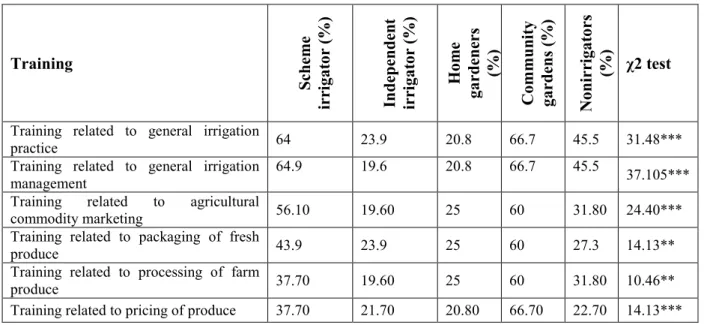
This is a topic that deserves further research in the context of farming, especially in rural areas. As training and field visits for irrigation scheme are common in the area, it is recommended that fair amounts are also given to independent irrigators. This reinforces the idea that the implementation of operational irrigation schemes plays an important but partial role in reducing poverty in the rural areas.
Innate entrepreneurial spirit and psychological capital are what separate farmers from others and help farmers achieve their business goals.
Policy recommendations
80 distribution of land in the community, it is recommended that land use rights be allocated directly to a greater number of women farmers. What will be essential for planning poverty alleviation projects in the future is a comprehensive understanding of the socio-economic profile of the target group, how they make a living, what their limitations are and how they interact socio-economically. Finally, support for local innovation is needed by promoting science and technology in tertiary, entrepreneurial and technical and vocational training for young students who want to live in rural areas and work in agriculture.
Improving ICT infrastructure in rural areas and increasing the role of this technology in agriculture could be one of the focus areas of the intervention package.
Areas for further study
In Report of the First National Bank (FNB) Conference Centre, Sandton (Gauteng), South Africa (Vol. 19). Available at http://umkhanyakudedistrict.org.co.za 1. The role of people and social assets in growth: expanding our understanding. 2012). Social Welfare in South Africa: Curing or Causing Poverty. A Review of the Problems of Poverty and Food Security in South Africa: Is Agriculture the Solution?
Towards a transformation of the agricultural extension service in South Africa: views and suggestions from smallholder farmers in the Eastern Cape. South African Journal of Agriculture. 1 = Very Satisfied 2 = Satisfied 3 = Neutral 4 = Dissatisfied 5 = Not Satisfied 14 Do you participate in the maintenance of channels in the scheme.