How is internal strategic communication between top managers and junior employees effective at KZNSB in South Africa? How is internal strategic communication between top managers and junior employees ineffective at KZNSB in South Africa?
Structure of the thesis
SUMMARY
INTRODUCTION
Definition of Strategic Communication
One example is the effort to demonstrate the contribution of communication practice to an organization's output related to strategic communication parameters. According to Hallahan (2007), strategic communication refers to “the purposeful and deliberate use of communication by an organization to fulfill its mission”.
Internal Communication
Seen in this way, internal communication is often perceived as synonymous with intra-organizational communication or employee communication (Mishra et al., 2014). In this regard, the emphasis is on identifying and adapting internal communication to internal stakeholders (Mishra et al., 2014).
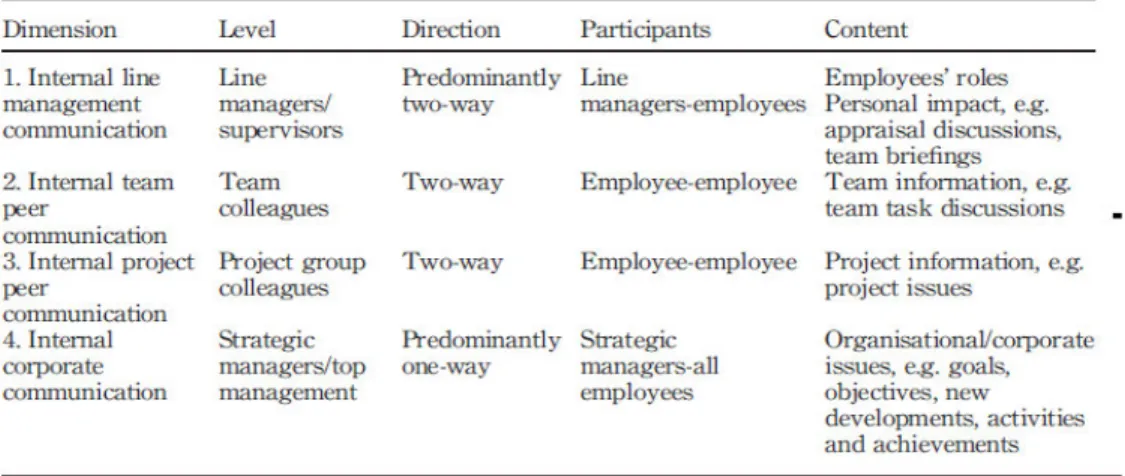
Channels of Internal Communication
On the other hand, social media tools are also used internally by organizations to communicate with employees. It is noteworthy that social media as a vehicle for internal communication has several characteristics, including virility of the message, participation in conversations, openness and a sense of community.
MODELS OF INTERNAL STRATEGIC COMMUNICATION
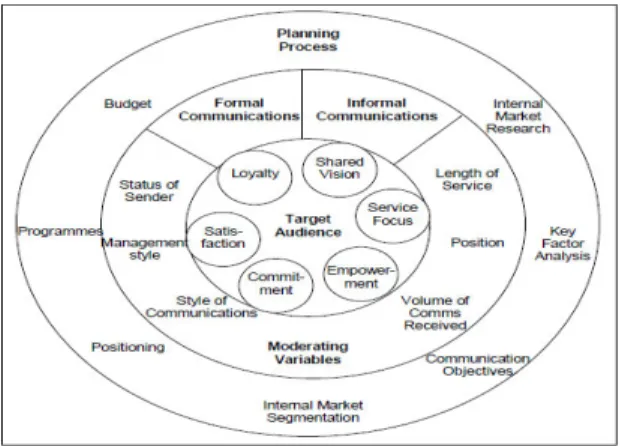
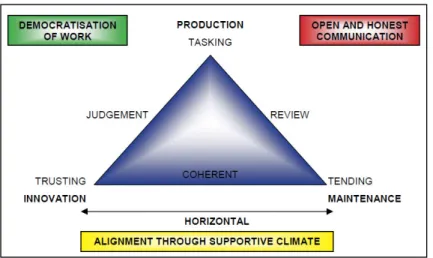
Due to the absence of strategic and effective internal communication, the organization is vulnerable to "internal malcontents". First, the section discusses Asif and Sargeant's (2000) model of internal communication before focusing on Verwey, Du Plooy-Cilliers and Du Plessis' (2003) workplace communication triad.
Asif and Sargeant’s (2000) model of internal communication
Asif and Sargeant's model recognizes that internal communication must be tailored to different groups of employees. Overall, the model does not reflect any recognition of the strategic contribution of internal communication.
Verwey, Du Plooy-Cilliers and Du Plessis’ (2003) Communication Triad at Work Verwey, Du Plooy-Cilliers and Du Plessis’ (2003) Communication Triad at Work explain how
While Asif and Sargeant's model illustrates some important elements of internal communication, it does not draw a clear link between the organization's overall strategy and the internal communication process. Notably, the model of Verwey et al. supports the strategic contribution of internal communication by focusing on strategic alignment and illustrating how strategic internal communication depends on all aspects of communication in the organization.
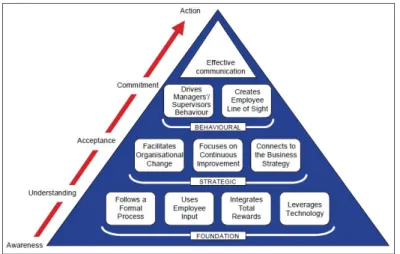
Watson Wyatt Worldwide’s (2004) hierarchy of effective communication
At the strategic level, effective internal communication should facilitate organizational change, focus on continuous improvement, and connect employees to the organization's strategy. The model is very insightful for this study as it brings a new dimension to the strategic aspect of internal communication by aligning the communication goals and level with what happens in the organization.
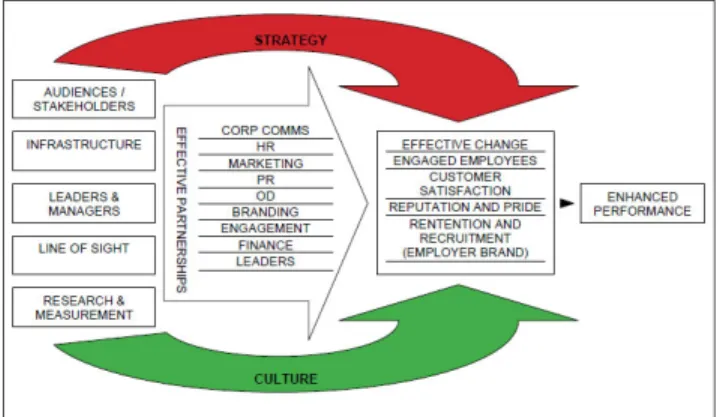
Mellor and Dewhurst’s (2008) framework for an effective internal communication function
The models of internal communication that have been reviewed also emphasize key aspects that are essential to evaluate the effectiveness or ineffectiveness of internal strategic communication between top managers and junior staff at KZNSB in this study. Emphasis is placed on (1) the manner in which senior leaders in KZNSB communicated organizational vision, mission, shared values and new developments, and (2) also focus on communication goals that ultimately have the potential to lead to strategic action and behavioral change. as suggested by Asif and Sargeant (2000) (eg service focus, .employee loyalty, employee satisfaction) were effectively or ineffectively pursued in the internal strategic communication. Furthermore, the study will also dwell on Watson Wyatt Worldwide's (2004) objectives (e.g. awareness, understanding, acceptance, commitment, action, etc.) to examine how internal strategic communication between top managers and junior employees effectively and ineffectively influenced awareness, understanding, acceptance, commitment and facilitated organizational changes, ongoing improvements and line of sight for the individual employees or linked the individual employees' work to organizational strategic direction (vision, mission) and strategic goals within KZNSB.
SUMMARY
How does internal strategic communication take place between senior managers and junior staff at KZNSB as the organization strives to achieve its strategic goals and objectives?” This chapter is structured as follows. First, the chapter discusses the research paradigm, sampling and sample size before describing the interviewees. As suggested by Remenyi, research is not only about the question of why the research is done, but also about the question of what to research and how to conduct the research.
Research Paradigm and Approaches
First, "ontology is concerned with what is the nature of reality and what can be known about that reality" (Denzin and Lincoln, 1994:13). Second, "epistemology is concerned with the relationship between the knower, what it would know, and what can be known" (Guba and Lincoln, 1994:108). In this retrospective study, a post-positivist paradigm was used to gain evaluative views on the effectiveness and also the ineffectiveness of the internal strategic communication between top management and junior staff at KZNSB in South Africa.
Sampling
In this study, the researcher used the worldview of internal stakeholders at different hierarchical levels of KZNSB and interacted with them in individual interviews to understand their reality regarding how strategic internal communication took place between top managers and employees and also evolved at KZNSB in South Africa . Briefly, the selection criteria in this study were that (1) a participant must be an employee at any level within KZNSB, (2) the employee must have experience working for KZNSB for a continuous period of not less than 5 years, and (3 ) must be able and willing to share his or her experiences at KZNSB in the field of internal strategic communication. Based on the purposive sample selection criteria, board members as external stakeholders were deliberately excluded from this study, which focused solely on internal strategic communications as seen from the eyes of internal stakeholders, known as top managers, middle managers and junior staff members at KZNSB.
Description of Interviews
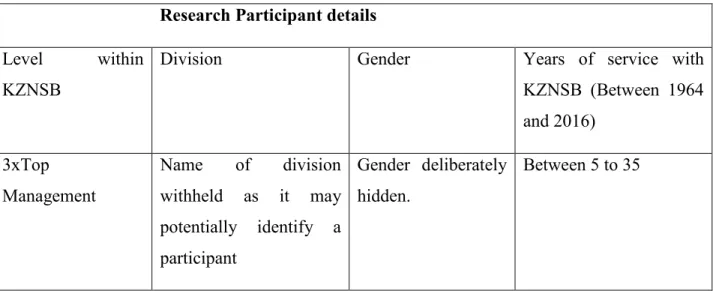
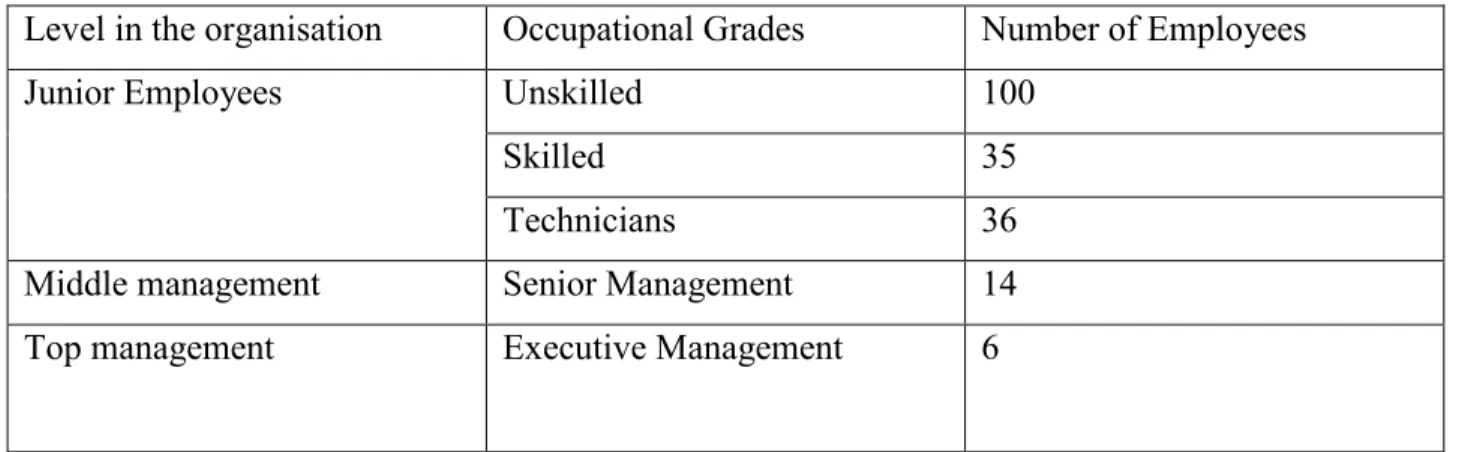
As such, employees at KZNSB did not have an equal probability of being selected for this study. In this way, 7 of the research participants were from head office, while 6 were from Zinkwazi base stations. As shown in table 3, this study followed the advice that researchers need to use research participants with relevant knowledge and experience of a phenomenon being studied, if they want to get meaningful results (Creswell, 2014).
Data Collection
More probing questions were added so that research participants could illustrate their answers with concrete events, actions, or behaviors. A face-to-face semi-structured interview with each of the research participants was conducted in their respective offices or workplaces. Data collection stopped when research participants began behaving so repetitively that more interviews would not yield new data.
Data Analysis
Face-to-face interviews provide more flexibility and openness during interviews. This procedure was also used to confirm data collected during previous interviews with the same or other participants. Immediately after the interview data were transcribed, each research participant was given the opportunity to check, validate and confirm the accuracy and meaning of what was covered during the face-to-face interview.
Research Quality Issues
Ethical Consideration
Limitations of the Study
SUMMARY
As such, the researcher in this study has provided sufficient detail to allow the reader to transfer the findings to a relevant and similar context, but not to generalize them. Research quality issues, ethical considerations and limitations of this qualitative study are all discussed in this chapter.
INTRODUCTION
Effectiveness of internal strategic communication
In this regard, the verbal style of internal strategic communication was effective as a means of clearly conveying messages to different types of junior employees. One senior manager reflected how effective internal strategic communication was when it was characterized by two-way verbal communication where recipients could easily ask questions and gain clarity. One of the junior employees asserted that internal strategic communication was effective as it captured employee input and was also participatory to create employee understanding and commitment to organizational growth in KZNSB.
Ineffective of internal strategic communication
Senior managers, middle managers and junior staff at KZNSB reflected diversity, ignorance and confusion in their understanding of the vision for KZNSB. Within senior management there were three different types of perspectives which reflect diversity in their understanding of KZNSB's vision. This is how one of the middle managers showed ignorance but also lack of interest when asked about the vision for KZNSB.
Changes in internal strategic communication at KZNSB
One of the junior employees emphasized that there are now more alternatives and open ways for all employees to register their complaints and also access management directly to get relevant and useful strategic messages than in the past. Organizational events reflected how past internal strategic communications at KZNSB had not targeted all employees and made it difficult for some employees to feel belonging. One of the junior staff contrasted his sense of being left out at the previous staff performance awards events and how this has now become more inclusive as everyone is welcome, as illustrated in the quote below.
SUMMARY
I think ten years ago a lot of our staff were uneducated, so strategic issues had to be passed on from word of mouth. Now a lot of staff are educated and I think management expects staff to understand English... In the end, one has to understand the fact that lack of ownership and knowledge usually causes/leads to people resisting, which is not what the organization wants/hopes for orient your employees (KZNSB11).
INTRODUCTION
Direct interactive communication style
Specifically, internal strategic communication directly from the Chief Executive to junior employees was less frequent at KZNSB. It is important to emphasize that strategic communication directly from top management, especially the Chief Executive Officer, gives employees the feeling that they are receiving full information and makes them feel important. The study also found that a different interactive style of internal strategic communication at KZNSB involved members of top management below the Chief Executive.
Divisional differences and diverse understanding of strategic direction
Internal strategic communications at KZNSB did not achieve strategic alignment as there was no clear and common awareness and understanding among all internal stakeholders about the vision. Consistent internal strategic communication is useless if there are differences not only in what top managers focus on, but also in the way they communicate with junior employees. It is essential that all contacts disseminating internal strategic communications at KZNSB are integrated to present a consistent and synergistic strategic intent and identity of the organization.
Junior employee engagement and unsupportive middle managers
Internal strategic communication must provide employees with sufficient information, with opportunities to express themselves, get involved, be listened to and participate actively. By helping every top manager, middle manager, and junior employee gain a greater understanding of the organization's strategic intent, internal strategic communication can help them see how the information they have can be useful to other parts of the organization. The fact that some middle managers are not familiar with strategic intentions increases their understanding, commitment and effort, has a negative effect on internal strategic communication.
Variety of internal strategic communication tools
Shift from induna style to interactive communication
One way to facilitate alignment is through high-quality internal strategic communication with all employees rather than a select few. Creating internal communication alignment is vital as companies depend on each employee to achieve their strategic objectives.
SUMMARY
- Overview of the study and summary of findings
- Recommendations
- Areas of future study
- KZNSB STRATEGIC GOALS AND STRATEGIC OBJECTIVES
This reflects how internal strategic communication in KZNSB failed to create strategic consensus, as well as alignment among top managers in their understanding of strategic intent, particularly the vision. Internal strategic communication in KZNSB was not effective as it failed to create a common understanding of the vision among different types of employees. In particular, the commitment of junior staff was one of the positive outcomes of internal strategic communication, but it also created an unsupported middle management in KZNSB.
Baron, R.M. and Kenny, D.A., (1986), The moderator and mediator variable distinction in social psychological research: conceptual, strategic and statistical considerations. Kennan.W.R and Hazelton V (2006), Internal public relations, social capital, and the role of effective organizational communication: Journal of Public Relations theory.