AN EVALUATION OF SOCIAL WORK AND COUNSELLING SERVICES OFFERED TO UNDERGRADUATE STUDENTS WITHIN THE UNIVERSITY OF
LIMPOPO BY
MALEPE LESLEY MOGALE
Submitted in fulfilment of the requirements for the degree MASTER OF SOCIAL WORK
in the
DEPARTMENT OF SOCIAL WORK
FACULTY OF HUMANITIES School of Social Sciences
UNIVERSITY OF LIMPOPO
SUPERVISOR: Mrs. T.M.A. Mahlatjie Co-Supervisor: Prof S.L. Sithole
2023
i
DECLARATION
I, Malepe Lesley Mogale declare that the dissertation hereby submitted to the University of Limpopo for the degree, Master of Social Work is my work in design and execution. I also declare that this work has not been previously submitted by me or someone else for a degree at this or any other University and that all material contained herein have been duly acknowledged using complete references.
Signature:
Mogale M.L
Date: 19/01/2023
ii
ACKNOWLEDGEMENTS
I wish to express my gratitude to the following people for their assistance and support in making this study a success:
1. My Supervisor, Mrs. T.M.A Mahlatjie of the University of Limpopo for her advice, passion, continued support and guidance. I appreciate the knowledge and expertise she shared with me during my study.
2. Prof S.L Sithole for his patience and support. I appreciate the knowledge he imparted with me during this period of my study.
3. The Head of the Director of Student Health and Wellness Centre and the Director of the Centre for Student Counselling and Development for having given me permission to conduct this study within their units.
4. The Head of the Department of Social Work, DR. M.R. Manganyi for his support in making sure that my work is of a good standard and all the staff in the Department of Social Work for their helping-hands in my work.
5. Prof Kubayi in the School of Languages and Communication Studies at the University of Limpopo, for editing this work to its current form. The time you have dedicated to the project was not in vain.
6. HWSETA for their financial support. I really appreciate the grant they contributed in my study to ensure that my fees are taken care of.
7. Above all, I thank the Almighty God for being with me throughout my studies.
For preserving me to live long enough to see the final product of my research project through His mercy and grace.
iii
DEDICATION
This dissertation is dedicated to the following important people in my life:
1. My parent, Ms. Lucy Mogale for the role she played in my life from infancy until adulthood. I know that it was hard raising us (my siblings and I) as a single parent. Thank you for the good morals and values that you have taught me.
Thank you for showing me that education is the key to success.
2. My daughters, Samkeliso Refilwe Nosley Mogale and Pearl Bokang Morley Mogale, they served as a great motivation for me to set better educational example for them.
3. My wife, Mahlodi Mogale, for her unwavering support and motivation to complete the study.
4. My siblings, Layn and Ivy Mogale, for their support and motivation.
5. My close friends, Nothando Khoza, Ntsako Ngobeni and Whyzen Mangena for their support and motivation throughout the study.
It was not an easy journey. It was full of stressful and emotional situations but through all your support, help and guidance, I managed to rise above the challenges and to see the study through. Thank you all from the bottom of my heart.
iv ABSTRACT
The study focused on an evaluation of Social Work and counselling services rendered to undergraduate students within the University of Limpopo. The study aimed to evaluate both social work and counselling services offered to undergraduate students at the University of Limpopo by ascertaining the effectiveness, utilisation rate, describing the collaboration that exists between the centres from which the services are offered, and determining the mode in which students are made aware of the services under evaluation as well as the challenges faced by the practitioners when they render their respective services. The study employed a qualitative research approach and an evaluative design. The General Systems Theory and Evaluation Theory were employed. The General Systems Theory was used to explain the relatedness of all the sub-systems in making the whole system functional. In this case the sub-systems are the centres that exist and work together within the university in order for the university to reach its purpose for existence. The theory shows that if one or more sub-systems are dysfunctional, the functionality of the whole will be negatively impacted. The Evaluation Theory was employed to guide the researcher on what evaluation is, how and by whom it should be carried out. A convenience sampling method was used because all the people in the population of the study stood a chance to participate in the study and no preference was given to anyone. Ethical clearance was obtained from the University of Limpopo’s Turfloop Research Ethics Committee and gatekeeping permissions were given by the Centre for Student Counselling and Development and Student Health and Wellness Centre. No one was coerced to participate in the study, that is, the participants participated voluntarily.
The findings of the study indicated that students were aware of counselling services from the Centre for Student Counselling and Development but not aware of the existence of Social Work services for students within the university. The study also revealed that the effectiveness of the services under evaluation high amongst those who had utilised the services and perceived to be highly effective by those who had not yet utilised the services. The study also established that there were proper referral channels for referring students to various service provider including the ones that the study seeks to evaluate. As such, the practitioners also indicated some of the challenges they face when rendering their services to be lack of awareness of Social
v
Work services by the student populace, lack of commitment from students and being under-staffed since their target population is huge compared to the number of professionals employed to service them. Through recommendations yielded by the study, students are encouraged to play their role in making the services effective by committing and attending to the prescribed sessions, the social worker needs to strengthen the awareness efforts in place to market the services and the management of the university is advised to re-assess the professional-student ratio and work on balancing it.
vi Contents
DECLARATION... i
ACKNOWLEDGEMENTS ... ii
DEDICATION ... iii
ABSTRACT ... iv
CHAPTER ONE ... 1
1.1. Introduction and background of the study ... 1
1.2. Research problem... 2
1.3. Aim and objectives of the study ... 4
1.3.1. Aim of the study ... 4
1.3.2. Objectives of the study ... 4
1.4. Significance of the study ... 4
1.5. Outline of the study ... 5
CHAPTER TWO ... 6
2.1. Introduction ... 6
2.2. The General Systems Theory ... 6
2.3. Relevance of the General Systems Theory in this study ... 7
2.4. Evaluation Theory ... 8
2.5. Relevance of Evaluation Theory ... 8
2.6. Summary of the chapter ... 9
CHAPTER THREE ... 10
3.1. Introduction ... 10
3.2. Social work and counselling services in institutions of higher learning: an overview ... 10
3.3. The purpose for establishing social work and counselling services in institutions of higher learning ... 12
3.4. Students’ social work and counselling service awareness ... 13
3.5. The students’ utilisation of social work and counselling services ... 16
3.6. The effectiveness of social work and counselling services ... 17
3.6.1. Goals, objectives and components of the services under evaluation ... 18
3.6.2. Roles played by social work services in institutions of higher learning. ... 19
vii
3.6.3. Roles played by counselling services in institutions of higher learning. ... 20
3.6.3.1. Social ... 20
3.6.3.2. Educational ... 20
3.6.3.3. Career ... 21
3.6.4. Ethical principles of social work services as outlined by the SACSSP ... 21
3.6.4.1. Commitment to clients ... 21
3.6.4.2. Self-determination ... 21
3.6.4.3. Informed consent ... 22
3.6.4.4. Competence ... 22
3.6.4.5. Cultural Awareness and Social Diversity ... 22
3.6.4.6. Privacy and confidentiality ... 23
3.6.5. Ethical principles of counsellors as outlined by the Health Professions’ Council of South Africa (HPCSA) ... 23
3.7. Referral for Services ... 25
3.8. Challenges facing institutions of higher learning in implementing guidance and Counselling services ... 26
3.8.1. Alternatives to the challenges identified ... 30
3.9. Service evaluation ... 31
3.10. Benefits of evaluation ... 32
3.11. Reasons for the social work and counselling services evaluation ... 33
3.12. Preconditions for conducting evaluation ... 34
3.12.1. Organisational and service commitment ... 34
3.12.2. Answering the why, when and how of evaluation ... 35
3.13. SUMMARY OF THE CHAPTER ... 36
CHAPTER FOUR ... 37
4.1. Introduction ... 37
4.2. Research approach ... 37
4.2.1. Research design ... 37
4.2.2. Population ... 38
4.2.3. Sampling ... 38
4.2.4. Data collection method ... 40
4.2.5. Data analysis ... 40
viii
4.3. Quality criteria ... 42
4.3.1. Credibility ... 42
4.3.2. Transferability ... 43
4.3.3. Dependability ... 43
4.3.4. Confirmability ... 43
4.4. Ethical considerations ... 44
4.4.1. Permission ... 44
4.4.2. Informed Consent ... 44
4.4.3. Voluntary participation ... 44
4.4.4. Confidentiality and anonymity ... 45
4.4.5. Avoidance of harm ... 45
CHAPTER FIVE ... 46
5.1. Introduction ... 46
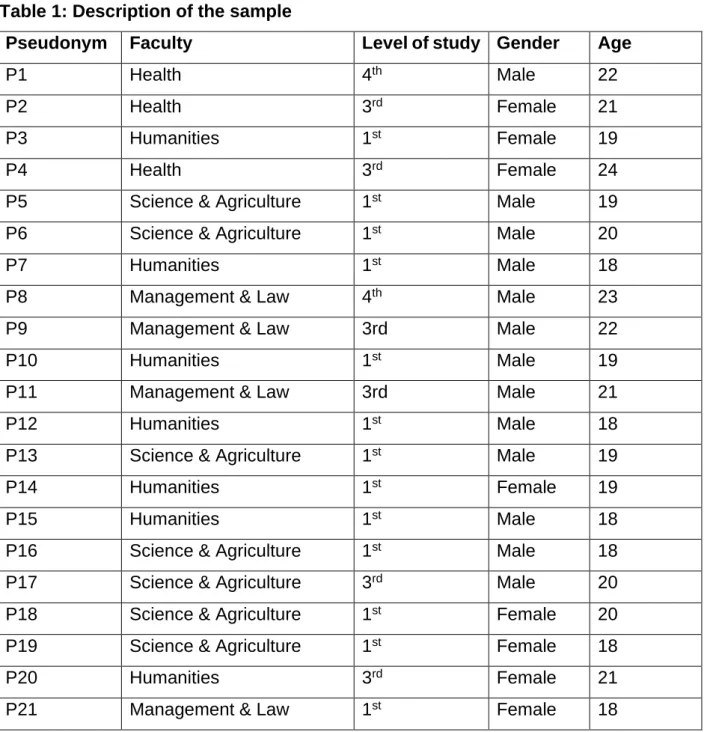
Part 1: The presentation, analysis and interpretation of data acquired through interviews from a social worker working at Student Health and Wellness Centre and from four student counsellors from the Centre for Student Counselling and Development ... 46
5.2. Description of the sample ... 46
5.2.1. Practitioners positions ... 46
5.2.2. Practitioners’ duration in their respective positions ... 47
5.3. Formulation of themes and sub-themes ... 48
5.4. Discussions ... 50
5.4.1. Theme 1: Social worker and student counsellors create awareness of their services to undergraduate students ... 50
5.4.1.1. Sub-theme 1: Awareness campaigns ... 50
5.4.1.2. Sub-theme 2: Advertisements ... 51
5.4.1.3. Sub-theme 3: First-year student orientations ... 52
5.4.1.4. Sub-theme 4: Compulsory first-year modules and compulsory assessment... 53
ix
5.4.1.5. Sub-theme 5: Faculty and departmental meetings ... 54
5.4.1.6. Sub-theme 6: Peer counsellor and peer educator programmes ... 55
5.4.2. Theme 2: The social worker and student counsellors’ perceptions of undergraduate students’ rate of Student Psychosocial Support Services utilisation ... 55
5.4.2.1. Sub-Theme 1: Utilisation rate of the Student Psychosocial Support Services... 55
5.4.3. Theme 3: The social worker and student counsellors’ views on the effectiveness of services rendered to undergraduate students ... 57
5.4.3.1. Sub-theme 1: Post intervention feedback from students ... 58
5.4.3.2. Sub-theme 2: Social Work and counselling service practitioners’ collaboration with internal and external stakeholders ... 59
5.4.4. Theme 4: The referral channels of students for and from Student Psychosocial Support Services ... 60
5.4.4.1. Sub-theme 1: Self- referrals ... 61
5.4.4.2. Sub-theme 2: Peer referrals ... 61
5.4.4.3. Sub-theme 3: University personnel ... 62
5.4.4.4. Sub-theme 4: Peer Counsellors and peer educators ... 62
5.4.5. Theme 5: Challenges faced by the social worker and student counsellors when rendering Student Psychosocial Support Services to undergraduate students ... 63
5.4.5.1. Sub-theme 1: Ineffective referral system ... 63
Part 2: The presentation, analysis and interpretation of data acquired from undergraduate students of the University of Limpopo who were registered for the 2020 academic year. ... 64
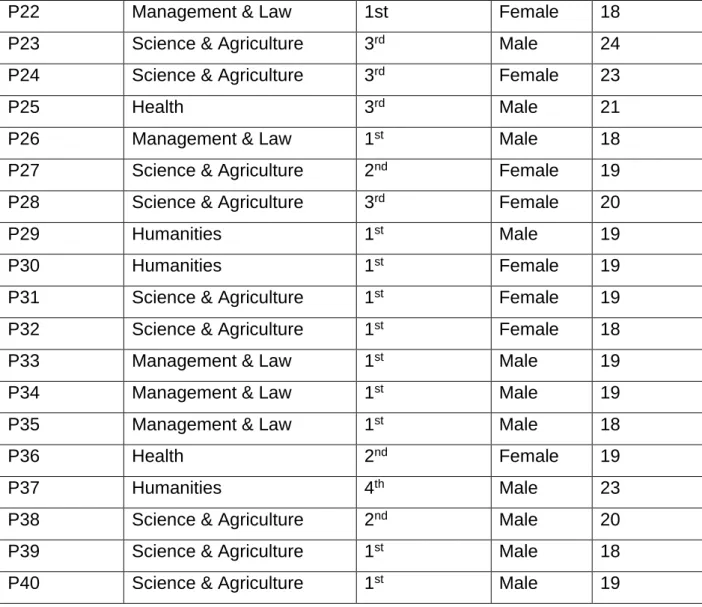
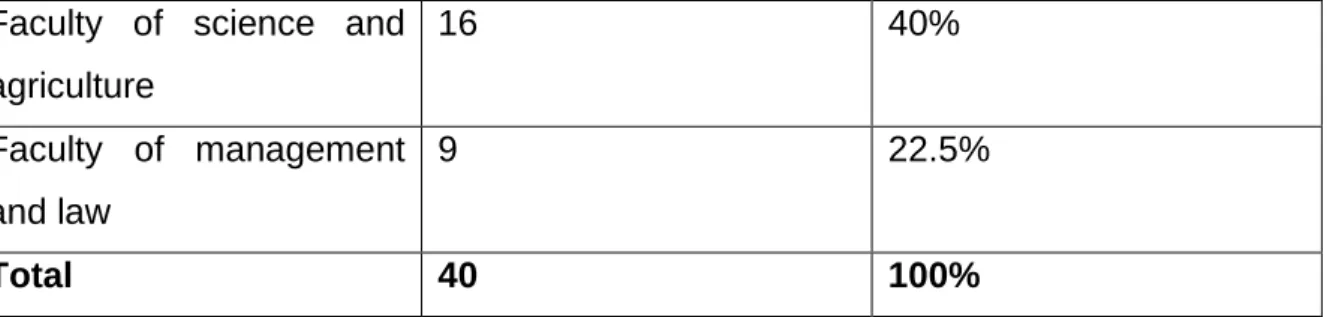
5.5. Description of the students ... 64
5.5.1. Participants’ respective faculties ... 65
5.5.2. Participants’ level of enrolment ... 66
5.5.3. Gender of participants ... 67
x
5.5.4. Age of the participants ... 68
5.6. Formulation of themes and sub-themes ... 70
5.7. Discussions ... 71
5.7.1. Theme 1: Undergraduate students’ awareness of the existence of counselling and Social work services ... 71
5.7.1.1. Sub-theme 1: Undergraduate students’ awareness of the existence of counselling services from the Centre for Student Counselling and Development ... 71
5.7.1.2. Sub-theme 2: Undergraduate students’ awareness of the existence of Social Work services from Student Health and Wellness Centre ... 72
5.7.2. Theme 2: The effectiveness of Social Work and counselling services to undergraduate students based on the utilisation of the services ... 73
5.7.2.1. Sub-theme 1: Undergraduate students’ utilisation of Social Work services ... 73
5.7.3. Theme 3: Undergraduate students’ utilisation of counselling services 74 5.7.4. Theme 4: Multi-disciplinary collaboration ... 76
5.7.5. Theme 5: Undergraduate students’ referral and perceived referral system to Social Work and counselling services ... 76
5.8. Summary ... 78
CHAPTER 6 ... 81
6.1. INTRODUCTION ... 81
6.2. SUMMARY OF THE STUDY ... 81
6.3. 6.3. ASSUMPTIONS OF THE STUDY ... 82
6.3.1. Awareness... 82
6.3.2. Utilisation ... 82
6.3.3. effectiveness ... 83
6.3.4. Referral ... 83
6.4. OBJECTIVES OF THE STUDY ... 83
xi
6.5. CONCLUSIONS ... 84
6.5.1. Awareness... 84
6.5.2. Utilisation ... 85
6.5.3. Effectiveness ... 85
6.5.4. Referral system ... 85
6.6. RECOMMENDATIONS ... 85
6.6.1. Social Work Management within Student Health and Wellness Centre 86 6.6.2. Management within the Centre for Student Counselling and Development ... 86
6.6.3. The social worker and student counsellors ... 86
6.6.4. Students ... 86
6.7. AREAS FOR FURTHER RESEARCH ... 87
6.8. CONCLUDING STATEMENT ... 87
6.9. References ... 89
ANNEXURE A: INFORMED CONSENT (For Social Work service practitioner and counselling service practitioners) ... 97
ANNEXURE B: INFORMED CONSENT (For undergraduate student’s participants)98 ANNEXURE C: CONSENT BY PARTICIPANTS ... 99
ANNEXURE D: INTERVIEW SCHEDULE ... 100
ANNNEXURE E: CLEARANCE LETTER FROM TURFLOOP RESEARCH ETHICS COMMITTEE ... 105
ANNEXTURE F: LETTER TO REQUEST PERMISSION TO THE DIRECTOR OF STUDENTS HEALTH AND WELLNESS CENTRE (The social worker’s centre) AND CENTRE FOR STUDENT COUNSELLING AND DEVELOPMENT CENTRE. ... 106
ANNEXTURE G: APPROVAL LETTER FROM THE DIRECTOR OF STUDENTS HEALTH AND WELLNESS CENTRE (The social worker’s Centre). ... 107
ANNEXTURE H: EDITORIAL LETTER ... 108
1
CHAPTER ONE
GENERAL ORIENTATION TO THE STUDY 1.1. Introduction and background of the study
Students in higher learning institutions at times find the setting challenging in their lives as they face social, psychological, academic and financial problems. They develop stress and find it difficult to cope and manage every aspect of their lives (Mwangi &
Otanga, 2015). This leads to undesirable acts such as dropping out of their studies, poor academic performance and substance abuse, including suicide and suicide attempts (Nkwanyana, 2013). Makola and Mogale (2017) identified several influences of students’ underutilisation of psychosocial services from institutions of higher learning, especially universities. These include cultural beliefs, low expectations of benefiting from services, lack of knowledge about services rendered, and perceived lack of confidentiality.
In 2016, the Council on Higher Education indicated that South African colleges and universities are aware of the need to balance students’ academic development and their general wellbeing (Council on Higher Education, 2016). This consciousness is demonstrated by the availability of student support structures in most colleges and universities across South Africa. Such institutions include counselling, social work services, health, and writing centres, to name but a few.
This study focused on the evaluation of social work services from Student Health and Wellness Centre and also counselling services from the Centre for Student Counselling and Development (CSCD) operating from D- Block at the University of Limpopo. The researcher obtained views from practitioners (social worker and counseling psychologists) and undergraduate students in order to evaluate the services (Social Work and counselling services) rendred to undergraduate students within the University of Limpopo. The services were evaluated by a way of gauging the students’ level of awareness of the services available to them from these centres, their rate utilising the services from the centres, the effectiveness of the services and the referral system of students to and from the services.
2
This research focused on Social Work services rendered to undergraduate students by the social worker based at the Student Health and Wellness Centre, as well as counselling services rendered by student counsellors based at the Centre for Student Counselling and Development Centre at the University of Limpopo.
1.2. Research problem
In 2008, Moeketsi and Maile compiled a report which revealed that the Department of Education stated that 120 000 students were enrolled in colleges and universities in the year 2000. Moeketsi and Maile (2008) further stated that 36 000 (30%) students dropped out of their studies in the first year of their studies, and 24 000 (20%) dropped out while in second level of their studies. Furthermore, Moeketsi and Maile (2008) stated that out of the remaining 60 000 students, only 22% of them completed their studies at the recommended time-frame for a three-year standard bachelor’s degree.
In the year 2000, the Department of Education conducted a cohort study which presented an even more alarming picture. The cohort study indicated that by the end of 2004, a 30% of the total first-year students’ intake into universities would have had completed their studies (Moodley and Singh, 2015). According to Scott, Yeld and Hendry (2007), a fifty-six percent (56%) of the admitted students had left their initial institutions without completing their initial programmes, and 14% would still be in the system (Moodley and Singh, 2015). The comparison of students’ drop-out rates relative to the requirements in the Department of Higher Education, appealed for the overall university admission to increase from 900,000 in 2011 to 1.5 million by 2030 (DHET, 2012), build-up the issue of student drop-out rates because it goes contrary to the appeal that has been made (Moodley and singh, 2015). The National Development Plan supports the DHET (2012) with a target of 1.62 million college and university admissions by 2030. This means that a minimum of 400,000 graduates per year is required in order to meet the target by that date (Scott, Yeld and Henry, 2007).
Moodley and Singh (2015) compiled a report in 2010 which thoroughly indicated drop- out rates published by the Council on Higher Education (2004) of the three universities in South Africa. Amongst those, some of the institutions that took part in the study stated that “out of the students that started in 2000, only 6.8% had dropped-out by the end of the year. It increased to 11.8% by the second year and 17.3% by the third” as reported by the Council on Higher Education in 2004. That university also reported a
3
20% drop-out rate of undergraduate students from their studies.
The Council for Higher Education in 2013 released a report in which it was reported that one out of four students were able to complete their studies from a contact-based institution within the recommended timeframe aside for a specific degree (Council for Higher Education, 2013). A sum of 58% of the students attending a contact-based institution needed an extra 2 years to complete a 3-year bachelor’s degree; the percentage increased to an alarming 91% for non-contact based institutions (Council for Higher Education, 2013).
Moodley and Singh (2015) are of the view that students drop out of their studies due to domestic or financial problems. Based on the researcher’s observation, there have been reports of suicide and suicide attempts committed by students at the University of Limpopo. This is an extreme way of dropping out of school. In 2017, Nomahlubi wrote a newspaper article about a student from Witwatersrand University who committed suicide, and on the 11th May 2018, Magadla also wrote a newspaper article reporting about a Witwatersrand University student who committed suicide. The events- serve as evidence which shows thatstudents in institutions of higher learning do face challenges which overwhelms their coping mechanisms. These suicides and attempts of suicides, dropping out of their studies, substance abuse suggests that students do not utilise the Social Work and counselling services available to them within their universities or the services are ineffective. As such, evaluating the services is crucial in order to increase utilisation and/or the effectiveness of the services.
Rousseau (2015) maintains that students’ undesirable behaviour may be traced back to the ineffectiveness of a support or counselling service within an institution. Students also have a role to play in the underutilisation of both the counselling and social work centres. They may be influenced by the type of problems they deem to qualify for professional help, the uncertainty of confidentiality from the service providers, seeking social acceptance and cultural backgrounds, to name but a few (Nkwanyana, 2013).
Mwangi and Otanga (2015) believe that students are reluctant to seek help regardless of the availability of Social Work and counselling services. The problem under investigation was conceptualised by students as perceived underutilisation of social work services from Student Health and Wellness Centre and counselling services from the Centre for Student Counselling and Development at the University of Limpopo.
4
Furthermore, this perceived underutilisation of social work and counselling services by undergraduate students leads to poor academic performance, high rate of drop-outs, substance abuse, suicide and suicide attempts (Mwangi and Otanga, 2015). In response to these problems, the researcher evaluated the University of Limpopo’s Social Work and counselling services in the aforementioned centres rendered to undergraduate students, determined the level of utilisation of services from both centres, learnt the reasons for the underutilisation of the services and suggested recommendations to improve the utilisation of the services.
1.3. Aim and objectives of the study 1.3.1. Aim of the study
The aim of the study was to evaluate social work services in the Student Health and Wellness Centre and also student counselling services from the Centre for Student Counselling and Development operating from D- Block at the University of Limpopo.
1.3.2. Objectives of the study
The study pursued the following objectives:
● To determine how undergraduate students are made aware of social work services from Student Health and Wellness Centre and counselling services from the Centre for Student Counselling and Development.
● To ascertain the rate of the utilisation of social work services and counselling services.
● To determine the level of effectiveness of both social work services and counselling services.
● To describe referral channels for those social work services in Student Health and Wellness Centre and counselling services available in the same institution.
● To identify challenges faced when rendering both social work services and counselling services to undergraduate students.
1.4. Significance of the study
The researcher evaluated Social Work services at the Student Health and Wellness Centre and also counselling services from the Centre for Student Counselling and Development to determine the level of service utilisation by undergraduate students, the services’ effectiveness in addressing challenges faced by undergraduate students,
5
efficiency, and students’ awareness of social work and counselling services available to them. This was done to identify areas for improvement or maintenance in order to eradicate or lower students’ undesirable behaviours such as dropping-out of their studies, the use and abuse of substances, and the attempting and committing of suicide, to name only a few. The study also helps to bring insights on reasons that make students to succumb to their challenges, which lead them to drop out of their studies, have poor academic performance, attempt and commit suicide instead of seeking social work and counselling services available to them within the university.
The study is also significant to the researcher’s career development. The study enriches the knowledge of the Social Work profession by assisting social workers and counsellors to know when and how to evaluate their services. Last but not least, the study will help the management of the centres from which the services being evaluated stem and the university at large to implement strategies that will increase service utilisation level, effectiveness, efficiency, and students’ awareness of the services.
1.5. Outline of the study
1.5.1. Chapter one: Introduction and background of the study 1.5.2. Chapter two: Theoretical framework of the study
1.5.3. Chapter three: Literature review 1.5.4. Chapter four: Research methodology
1.5.5. Chapter five: Presentation, analysis and interpretation of data
1.5.6. Chapter six: Summary, conclusions and recommendations of the study
6
CHAPTER TWO
THEORETICAL FRAMEWORK OF THE STUDY 2.1. Introduction
In this chapter the researcher introduces theoretic structure that was employed to evaluate social work and counselling services rendered to undergraduate students within the University of Limpopo. The study employed the General Systems Theory (GST) and Evaluation Theory. These theories guided the researcher in a non-linear way to first understand Student Health and Wellness Centre and the Centre for Student Counselling and Development as centres from which the services being evaluated are offered and accessed through the General Systems Theory. The Evaluation Theory will help the researcher to comprehend the procedure of evaluation, that is, how it should be carried out, by whom it should be carried out and the purpose of evaluation (Miller, 2010).
2.2. The General Systems Theory
The proponent of the General Systems Theory, Von Bertalanffy initially shared the perspective of the General Systems Theory at a philosophy conference at the University of Chicago in 1937 (Laszlo & Krippner, 1998). After the Second World War, his first publication appeared on this subject (Laszlo & Krippner, 1998). Rousseau (2015) is of the view that the General Systems Theory began to be recognised as a theory of scientific integration and inter-disciplinary level in the 1960s. Von Bertalabffy (1972) said that the General Systems Theory would be established and used to support inter-disciplinary communication and co-operation, and promote the unity of knowledge and efforts towards a common goal (Laszlo, 1974). This is beneficial to the study on the notion that the University of Limpopo has inter-related centres which function to ensure that the university serves its purpose. This means that the functionality of the university may be impacted by the effectiveness or ineffectiveness of a centre. Therefore, for a ]centre to be deemed effective, it must go through evaluation.
7
Kast and Rosenzweig (1972) hold the notion that theory provides the pattern for organisation and management theorists to incorporate into their systems model, all of the different knowledge from relevant essential disciplines operating altogether towards a common goal. This simply means that systems have sub-systems that operate and resonate well with one another in order to ensure the overall functionality of the whole system. Since this study sought to evaluate services which stem from components or centres that add to the accomplishment of the university’s mission, it is imperative that the centres providing the services under evaluation be understood.
2.3. Relevance of the General Systems Theory in this study
This theory is relevant to this study on two premises: the first is the perspective that a human being, in this case, a student is a system; and the second perspective is that colleges and universities are also systems. The first premise is that a student is a human being, which means he or she is a system, and like any system, there are several subsystems or spheres that work interdependently to maintain the overall functionality of the whole system, in this case, the student. Some of those spheres are the political, physiological, financial, psychological and cultural spheres, to mention but a few (Hutchinson & Oltedal, 2014). This means that if one sphere malfunctions, the individual’s wellbeing will be affected. This explains the reasons for the said suicide thinking and behaviour displayed by students in distress. It also explains students’
poor academic performance and the reason for dropping out of their studies, that if one area of the student’s life is negatively affected, then the student will not function adequately.
The second premise is that the University of Limpopo is a system with subsystems that are interrelated. The financial aid structure, the student health structure, the housing structure, the sport and recreational structure and the counselling structure are among other students’ support structures available at the University of Limpopo.
They all function towards the one main goal, which is the aim of the University and that is found on the motto of the university “finding solutions for Africa”. Therefore, if one of the subsystems is ineffective, it can impede the goal of the university, in a sense fewer students will graduate. If the university does not produce enough professionals, it will be regarded as dysfunctional. Given the understanding that these sub-systems are interrelated and function together for the functionality of the system as a whole,
8
the relationship needs to be analysed and understood as well. This allows the researcher to also look at the structure of the referral systems within and without the university in an attempt to deal with issues relating to their clients in a holistic approach. Furthermore, one student may need services from more than one centre.
How the centre brings other role players in the intervention process is key. Thus, it needs to be analysed.
2.4. Evaluation Theory
Scriven (1991) defined Evaluation Theory as “a set of guidelines for determining the merit, worth and value of things”. Shadish, Cook and Leviton (2007) noted that Evaluation Theory is about why evaluation should be carried out, for whom and how.
According to Smith, Mitton, Cornelissen, Gibson and Peacock (2012), evaluation theory refers to “a means by which evaluators reflect upon what it is they do when they evaluate”. Furthermore, the theory helps to organise and bring logical thinking, provide transparent grounds for specific implementation choices as well as help to resolve problematic issues which may arise when conducting an evaluation project (Smith et al., 2012). Given the above statements, Evaluation Theory enhances the study given its aim, which is to evaluate social work and counselling services offered to undergraduate students respectfully from Student Health and Wellness Centre and also the Centre for Student Counselling and Development.
Patton (1990) discussed intervention-orientated evaluation, participatory evaluation and empowerment evaluation as some of the different approaches to evaluation.
Furthermore, Utilisation-Focused type of Evaluation Research was established during the 1970s centered on an investigation to see the original use of the results from the evaluation (Patton, 1978). Patton (1978) supported the use of less rigid models of evaluation with and alteration to the methods that were comprehensive, and offered an overall framework to be applied by evaluators.
2.5. Relevance of Evaluation Theory
Based on the nature of the study, Evaluation Theory is a relevant choice for the benefit of the study. On account of the nature of the study and the phenomena being evaluated, utilisation-focused evaluation is a relevant approach to evaluation since the
9
study aims to evaluate social work services from Student health and Wellness Centre as well as counselling services from the Centre for Student Counselling and Development. The utilisation, effectiveness as well as awareness of the said services by undergraduate student populace are being evaluated. The study benefited from Evaluation Theory because the researcher will be informed by the theory on the reasons for the evaluation to take place, which will then provide guidance as to how to carry out the evaluation of the aforementioned services.
According to Gargani, Miller and Spiegelman (2016), evaluation theory entails among others, reasons for carrying out evaluation, when and how. They further stated that evaluation may serve many purposes such as programme improvement, accountability, worth, significance and ultimately promote social welfare. Miller (2016) also stated that Evaluation Theory provides researchers with viewpoints and direction on issues such as the role of the evaluator and the connection between the evaluator and those taking part in the evaluation and the community at large. Moreover, selecting evaluation questions and matching them with suitable methods, as well as participant selection are other nitty-gritties that Evaluation Theory will provide clarity about. The researcher is of the view that using Evaluation Theory, Patton’s utilisation- focused evaluation will be highly beneficial to the study because the researcher will be guided by the principles outlined by the theory for a successful and meaningful achievement of the aim of the study.
2.6. Summary of the chapter
In this chapter the researcher discussed theoretical frameworks which guide the study.
The chapter highlighted the background of the General Systems Theory and Evaluation Theory, followed by their respective merits which qualified them to be employed in this study. The next chapter will deal with literature review on the evaluation of Social Work and counselling services rendered to undergraduate students within institutions of higher learning.
10
CHAPTER THREE
LITERATURE REVIEW ON THE EVALUATION OF SOCIAL WORK AND COUNSELING SERVICES OFFERED TO UNDERGRADUATE STUDENTS
WITHIN INSTITUTIONS OF HIGHER LEARNING 3.1. Introduction
This chapter covers literature aspects such as undergraduate students’ awareness of social work services from Student Health and Wellness Centre and counselling services from the Centre for Student Counselling and Development. It further outlines the rate of utilization and the level of effectiveness of those services rendered by the said centers to undergraduate students. The chapter also covers referral channels as well as challenges faced when rendering students for social work and counselling services conducted in those respective centers. Evaluation, types of evaluations, benefits of evaluation and reasons for evaluation are also discussed in the chapter.
3.2. Social work and counselling services in institutions of higher learning: an overview
Moodley and Singh (2015) are of the opinion that institutions of higher learning are comprised of private and public institutions. It is also the view of Moodley and Singh (2015) that “most students who enroll in private institutions are mostly responsible for funding their own studies and students in public institutions of higher learning are government-funded.” There are still concerns with students’ pass rate because of the impediments they come across in their respective learning environments. This was also supported by Brock (2010) who stated that “access to higher education by individuals has increased significantly over the last few years, but students’ completion of their studies is still a concern”. It was further stated by Brock (2010) that institutions that are funded by the government admit more students than institutions that are not funded by the government.
According to Tamuliene (2014), the diversity of the student populace that enroll in public institutions of higher learning is faced with different predicaments that require serious efforts from different stakeholders to intervene in endorsing a comprehensive Student Support Services (SSS). Furthermore, Tamuliene (2014) stated that “student
11
support services should increase and support academic achievement through the provision of a support system that counters students’ challenges.” The view in line with Young (2009), who worked tirelessly to identify and eradiate the difficulties that students face in tertiary institutions when they work towards achieving their academic goals and further stressed the “need for government and other key stakeholders to establish comprehensive Student Support Services that should cater for psychological and emotional needs of the students”. For the purpose of this study, the researcher will use the term Student Psychosocial Support Services (SPSS) interchangeably with social work and counselling services.
The Council on Higher Eduction (2016) indicated that students who enroll in institutions of higher learning are of different circumstances and differ in age and socio- economic status. The variances in their demographic dynamics have a major impact on their academic success (Nkwanyana, 2013), because a significantly high number of students in TVET colleges come from previously disadvantaged backgrounds (Dlamini, 2019). Therefore, Tamuliene (2014) reiterated the necessity for comprehensive Student Psychosocial Support Services in order to combat the students’ diverse challenges. The researcher deduced from the above claims that there is a need to establish Student Psychosocial Support structures for services that will guarantee that institutions successfully produce graduates.
Tamuliene (2014) defined a Student Support Structure as a “system that is made available by institutions of higher learning, which caters for students’ academic and emotional needs and which is regarded as a requirement for enhancing the students’
academic success”. The National Education Policy Act No. 27 (Ministry of Education, 1996) highlighted the importance of Student Support Services as a measure that will add great value to students’ development. It is essential for public colleges and universities to establish an all-inclusive Student Support Services that combats both social/personal and academic/career related difficulties faced by students.
Miller, Smith and Nichols (2011) indicated the difference between educational counselling and non-educational counselling by pointing out that educational counselling consists of services that are based on aiding students to attain their academic goals through the utilisation of the resources made available to them by their respective institutions. Miller et al. (2011) also mention that “academic success is
12
measured through persistence on the part of the student”. On the other hand, non- academic counselling includes social work and counselling services that focus on improving their study skills and alleviate the problems that may interfere with the students’ performance (Brock (2010 & Miller et al. 2011). According to Miller et al.
(2011) non-educational counselling includes the application psychological techniques that covers the emotional, mental and personal growth of students to make certain that the produce positive academic results. Brock (2010) also mentions that Student Support Services include but no limited to the provision of services that are financial in nature in order to foster students’ comprehension of basic skill instruction, psychological services, career guidance, social work services and mentoring the students. This shows that that the services are of paramount importance because they play a vital role in the health and wellness of the students.
According to Miller et al. (2011), students who utilise Student Support Services are likely to produce better academic results than students who do not utilise the services.
The Council on Higher Education (2016) advices that it is vital for institutions to be mindful of the needs of their students before they can establish student support programmes and services. The needs of the students may differ from one student to another depending on their background, history, financial positions and cultural beliefs.
Mwangi and Otanga (2015) hold the view that “most students enrolled at public institutions, particularly in TVET colleges come from low socio-economic backgrounds and their background determines the nature of support they require.” An emphasise by Miller et al. (2011), is based on the necessity to approach student support services as a customer service to allow them to market the services to the student populace. A study conducted by Mochineripi (2017) at De Vry University indicated that the best performing institutions of higher learning are those that attribute their success to the idea of low-income and first generation students’ educational experience and improve from there.
3.3. The purpose for establishing social work and counselling services in institutions of higher learning
Section 27 (3) of the Higher Education Act No. 107 of 1997 as amended requires institutions of higher learning to establish students’ support services in order to help them balance their social life as an attempt to maximise academic performance.
13
Michubu, Nyerere, Kyalo, Epiu, Wabule, Kambugu, Mayanja-Kizza, Tindimwebwa, Dubowitz, Muchiri and Jagongo (2017) define student support services as services that are meant to make students’ academic life more effective and comfortable.
Furthermore, students’ support services differ across institutions of higher learning depending on the needs and requirements of the institution, the number of students enrolled, the location and even institutional mission statements. Chapter 2 of the Department of Education’s White Paper (1997) identifies career guidance, counselling and financial aid services as essential requirements for student support services.
However, this study focuses on counselling services provided to undergraduate students.
Gibelman (2005) as cited by the National Association of Social Workers (NASW) stated that Social Work services play a critical role in higher education settings. He further stated that colleges and universities across South Africa include social work services in their counselling centres or within their faculties to provide students with the support they need. Social work services in institutions of higher learning focus mostly on the psychosocial functioning of individual students. According to Beiter, Nash, McCrady, Rhoades, Linscomb, Clarahan and Sammut (2015), there is a correlation between stressors to students' wellbeing and academic performance. This means that the prevalence of stress in students’ lives can result in poor academic performance. Thus, social work services play an important role in ensuring students’
academic success by reducing or eliminating situations that may be stressful to students.
3.4. Students’ social work and counselling service awareness
Social marketing as a model of community work holds the school of thought says that people fail to develop and enhance their lives because they do not know, or are not aware of the services available to them (Weyers, 2013). Eyo, Joshua and Esuong (2010) stated that one of the factors that can increase the utilisation of counselling services among students is to expose students to media information on counselling services. Eyo et al. (2010) concur with Wayers (2013) on the premise that people who know services they are surrounded with tend to use them for the betterment of their lives. Dhavaleshwar (2016) concurs with views by Eyo et at. (20210) and Wayers (2013), that “social services and social work have an important role in helping the
14
people to improve the quality of life by creating awareness”.
The promotion of services is crucial to their utilisation. Brennan and Beidel (2006) agree that the advertising of a service is vital to the success and utilisation of the service being marketed. Brennan and Beidel (2006) add that communicating counselling messages frequently, and conducting seminars, road shows and information sessions may influence awareness and the utilisation of the services being marketed. Mundalamo (2015) further agrees that effective communication of and about the services is essential and that without awareness of the programme, it is highly difficult for the intended populace to use the services (Antonellis, 2012).
Therefore, it is of paramount importance for practitioners to make the public aware of the services they render for them to be successfully utilised.
Similarly, Wayers (2013) is of the notion that the Community Education model affirms that people fall in trouble due to lack of information, knowledge and services surrounding them. The Community Education model aims to facilitate a collective problem-solving by equipping community members with the knowledge to facilitate action, and by promoting community participation and shared decision-making (McGuinness, Arney, Chessell & Salvaron, 2013). Therefore, evaluating the level of awareness that supports centres at the University of Limpopo offered to students is important in determining both their utilisation and effectiveness in addressing student challenges. Mundalamo (2015) maintained that awareness of counselling or social work services includes but not limited to helping prospective clients to understand the services, their availability, ensuring that the prospective service users are familiar with the procedures to follow in order to utilise or access the services and address concerns about confidentiality of the services.
Marketing contributes positively to increasing knowledge of services to the public and intended target, and increasing familiarity and comfort of the services in order to create acceptance and enhance utilisation (Antonellis, 2012) of the services by the public, and to maintain the visibility of the services and its presence as a vital contributor to the organisation/community or the public at large. Antonellis (2012) also stressed that the foundation of counselling services is rooted in education and awareness. Poorly informed opinions concerning the activities and capabilities of the counsellor and a passive role in creating awareness about the need for counselling among the active
15
population hinders students’ development as it impacts negatively to the utilisation of the services which becomes detrimental to their wellbeing.
According to Oluremi (2014), Student Psychosocial Support Services enable students to improve academically, achieve and also boost their personal growth as well as resolve issues with regards to occupational, personal-social problems and develop student’s decision-making processes (Salami, 1998). Dean and Meadows (1995) define student counselling as a way of providing counselling services to students within a specified environmental setting such as a campus. Nevertheless, whether students use counselling facilities or not is another question (Salami, 1998). Salami (1998) is supported by Nkwanyana (2013) and Oluremi (2014), who are of the view that students may know of the availability, importance and benefit of utilising counselling services and still choose not to utilise the services. Olumeri (2014) is of the notion that students prefer talking to their friends or family members about their problems than talking to a professional.
Dlamini (2019) noted that “one of the reasons students underutilise University psychological services is due to a lack of knowledge and awareness about such services”. This shows that there is correlation between awareness and utilisation of a service. In a study conducted by Russell, Thomson, and Rosenthal (2008) at an Australian Metropolitan University about the utilisation of health and counselling services by international students, uncovered that students’ unwillingness to seek help from psychological services stems from the insufficient seriousness of their problems, that is, a thought about their problems being less important to address; inadequate information on the available services; and uncertainties and uneasiness about the services (Russell et al., 2008). This suggests to the researcher that students’
underutilisation of counselling services may be attributed to lack of detailed information regarding the services.
Students’ awareness level may be associated with the type of career that the students are pursuing (Leahy, Peterson, Wilson, Newbury, Tonkin and Turnbull (2010). For instance, non-health disciplines are reported as more distressed than health-related disciplines (Leahy et al., 2010). The researcher interpreted this to mean that students in the health disciplines like medicine, nursing, social work and psychology are not likely to be in distress because they are mindful of the stress-relieving services that
16
are available to them from their institutions because they are familiar with such services compared to students from other disciplines who may not be aware of the existence and relevance of PSS. However, a study by Dlamini (2019) disproved this idea, as it was not the case at UKZN, PMB Campus. Furthermore, the study conducted by Dlamini (2019) showed that students from the College of Agriculture, Engineering and Science used psychological services on campus the most matched with students in the College of Humanities. However, the researcher is aware of the research limitations in the sense that campuses are not the same, and so are students. The results of the current study may yield results that are contrary to the ones by Dlamini (2019).
A study conducted by Burns, Davenport, Durkin, Luscombe & Hickie (2010) in Australia explored patterns of internet use by young people to assess the usefulness of online resources for mental health problems. The results of the study showed that
“young people used the internet to interact one with one another and to acquire knowledge about a mental health issue, even in cases when the mental health issue is not theirs.” According to Dlamini (2019), in the last five years, twenty percent of young people had experienced a mental health problem and dealt with it on their own with their sources of information being the internet (Burns et al., 2010). The researcher deduced from the above statements that the internet plays a crucial role in promoting mental health among the youth and is progressive in doing so.
3.5. The students’ utilisation of social work and counselling services
In 2017, the researcher and his allocated research partner conducted an unpublished research project as part of the fulfilment of a Bachelor of Social Work degree. The researchers discovered that the utilisation of counselling services at the University of Limpopo by the student population was low. The conclusion was based on a relatively small population of participants, and the researchers may have overgeneralised.
Therefore, it is imperative that this factor be looked at from the service centre’s point of view. Yorke, Voisin and Baptiste (2016) identified low expectations of benefitting from counselling services by the student population within institutions of higher learning.
17
Nkwanyana (2013) mentioned that a lack of service awareness could affect utilisation because students did not know the types of services offered, the nature of problems tackled by the centres and the effectiveness of the intervention. This implies that there is a correlation between the knowledge that students have about the services and the utilisation as well as the effectiveness of the services. Dlamini (2019) stated some of the reasons for students’ underutilisation of university-provided psychological services as the lack of understanding, lack of awareness of the services, availability of infrastructure where the services would be provided, and their attitudes towards psychological services.
Schreiber (2007) indicated that “more undergraduate students, more females than males, and more English second language speakers made use of student counselling services in South Africa.” This view was supported by a study conducted by Dlamini (2019) which revealed that the students’ usage rate psychosocial services was similar to that reported in the literature with regards to gender, race and level of study. This was in contrast with views by Leahy et al. (2010), which suggested that the level of psychological awareness and utilisation was associated with the kind of profession that students were enrolled in. This created view that students from colleges that are engineering-based would have the lowest utilisation rate of psychological services.
However, the study by Dlamini (2019) proved that this was not the case at UKZN, PMB Campus. Furthermore, the study projected that the students from the College of Agriculture, Engineering and Science used psychological services on campus the most compared to students in the College of Humanities. Moreover, students seek help from student university-based psychological services mostly for vocational- academic assistance (Van Schoor & Whittaker, 1988), and not often regarding their personal and social lives (Oluremi, 2014). The researcher is of the view that Social Work and counselling services are important and relevant in any institution of higher education, regardless of the industry that the institution focuses on.
3.6. The effectiveness of social work and counselling services
The effectiveness of a service can be determined by checking if they are meeting their goals, and if not, evaluating aspects that hinder progress to develop corrective measures for development. Specific goals of a programme are identified and the degree of the accomplishment of those goals gets documented (Wall and Solutions,
18
2014). The roles that the service providers/personnel are supposed to play and whether they practice within the legal parameters of their service delivery can also be used to assess the effectiveness of the services. The results of a summative evaluation might pin-point and indicate changes that should be made in order to improve it in its subsequent implementation (Wall and Solutions, 2014), whereas a formative evaluation, also known as process or implementation evaluation, is performed to examine various aspects of an ongoing programme in order to make changes/improvements as the services are being implemented (Wall and Solutions, 2014). Process evaluation is good as it focuses on improving services as they are being rendered in order to benefit the client who is currently accessing the services as opposed to summative evaluation, which aims at improving the services for the next client.
3.6.1. Goals, objectives and components of the services under evaluation
Evaluators cannot evaluate services without knowing and understanding their goals and objectives because evaluation research is about assessing service process, efficiency or effectiveness. In order for the evaluation of the services to be successful, goals and objectives of the services need to be clearly stated and mutually understood between organisers and service providers. In addition, they must be operationalised in measurable terms (Mahlatjie, 2016). It is crucial to make sure that the goals and objectives selected reflect personnel’s version of the task, statement and their efforts to implement service. Oluremi (2014) stated the following as some of the goals that counselling services in institutions of learning might have.
• Students Guidance and Counselling Centre provides services to assist students to maximise their overall growth, academic and personal-social problems, and challenges for all-round development (Oluremi, 2014). This is to ensure that all students who enroll in colleges and universities exit as healthy professionals.
• Assisting the students to identify and recognise their interests, values, abilities, capabilities, skills and positive personality traits and to match these with their chosen career fields. According to Erik Erikson’s stages of development and cited by Berzoff (2011), human beings leave the identity versus role confusion between the ages of 13 years to 21 years old. This suggests that institutions of higher learning are populated with people who are somewhat in the same stage of identity and role confusion.
19
Therefore, the social work and counselling service practitioners help students to find themselves and be able to identify their personality, strengths and weaknesses, values and interests, to name but a few.
• Equipping students with knowledge, values, experience and to facilitate preparation for the world of employment.
• Presenting workshops on Study Skills, Life Skills and Career Development to the student populace as well as to individuals;
• Providing psychotherapy which aims to improve an individual’s holistic well- being, resolve or alleviate troublesome behaviours, thoughts and emotions in order to enable them to improve relationships with others as well as social skills.
• To provide social work services with regard to protection, care, support and development of vulnerable groups, individuals, families and campus community.
• Attend to any matters that could result in, or stem from, social instability in any form in and around the campus.
• Participate in outreach activities, educational campaigns and other community engagement activities.
• Contibute to the operational research, monitoring and evaluation components of the campus social services by keeping records of work done and the achieved results, and collect additional data as required.
3.6.2. Roles played by social work services in institutions of higher learning.
The National Association of Social Workers (NASW, 1955) identified some of the roles played by social worker in an educational setting as “developing assignments that promote critical thinking, practice and creativity among students, facilitating discussions and debates about current events among students, incorporating information about vulnerable populations and cultural diversity into course materials;
identifying appropriate resources, including literature and technology for student instruction; analysing students’ learning challenges and recommending appropriate actions; building effective relationships within the local community where students may
20
reside in order to get support and protection from community members; collaborating with staff from other disciplines and departments for the benefit of the students;
assessing students’ emotional and psychosocial issues, such as substance abuse, eating disorders, support systems and/or physical well-being; educating students about the wide range of issues they might be facing, their causes, ramifications and remedies; participating in service planning and identifying and referring students to community resources (Hebenstreit, 2017).” This shows that social work services play a vital role in the health and wellness of students.
3.6.3. Roles played by counselling services in institutions of higher learning.
Oluremi (2014) indicated that counselling services in schools are provided in three critical areas, that is, the personal/social, academic, and career development. The services help students to resolve their emotional, social and behavioural problems, as well as help them to develop a clearer focus and sense of direction.
3.6.3.1. Social
In this area, counselling services are expected to deal with personal problems such as dropping out, substance abuse, suicidal thoughts, irresponsible sexual behaviour, eating disorders and pregnancy (Oluremi, 2014). Fook and Sidhu (2015) are in agreement with challenges listed by Oluremi (2013). However, they added time management, not coping with too much reading/studying and becoming active students. Counselling services rendered at this level will help students to overcome these challenges. Nkwanyana (2013) is of the view that students have social relationships at home and at their institutions. Furthermore, the social aspect includes romantic relationships and friendships as they may also be stressors to students.
3.6.3.2. Educational
It is the vbiew of Nkwanyana (2013) that there is a need for skills development to assist students as they learn. The counselling services, to be embedded within classroom activities as a form of guidance to students, application of effective group study skills aiming towards setting goals for learning to improve test-taking skills (Fook and Sidhu, 2015). The counselling services for this area may focus on notes-taking, time
21
management, memory techniques, relaxation techniques, overcoming test anxiety and the development of concentration and listening skills (Litoiu, and Oproiu, 2012).
3.6.3.3. Career
Career guidance and career guidance counselling are regarded as some of the priority need in this twenty-first century (Hughes, Law and Meijers, 2017). According to Nkechi, Ewomaoghene, and Egenti (2016) “planning for the future, combating career stereotyping, analysing skills and interests” are some of the career goals that students must develop while they are still in school to avoid career burnout. It is important to share information on the available careers with students and inviting presentations from various work industries (Litoiu and Oproiu, 2012). This falls with in social work and counselling services, career counselling to be specific and it is necessary in preparing students for the world of work (Litoiu and Oproiu, 2012). Choosing a career is as important as planning for the future because they involve making life-long-future- altering decisions and as such, Social Work and counselling are required to help the students in taking such decisions.
3.6.4. Ethical principles of social work services as outlined by the SACSSP
The South African Council for Social Work has, in terms of section 27(1)(c) of the Social Work Act No. 110 (1978) with the approval of the Minister of National Health, made the following rules:
3.6.4.1. Commitment to clients
Social work services' main function is to promote the well-being of their clients.
Basically, the interests of the clients are key. However, social workers’ responsibility spread to cover larger society and since they deliver services in accordance to certain prescribed legal obligations their loyalty is owed to clients served (Hepworth, Rooney, Rooney and Strom-Gottfried, 2013).
3.6.4.2. Self-determination
Social workers are expected to always respect and promote the clients’ right to self- determination as well as to assist people in their efforts to identify and clarify their
22
goals (Hepworth, et al., 2013). Social workers may limit clients' right to self- determination in instances where they are obliged to enforce a professional judgment, especially in cases where the clients' actions or potential actions poses threats to themselves or others (SACSSP, 1978).
3.6.4.3. Informed consent
Social workers should provide services to clients only in the context of an appropriate professional relationship based on a valid informed consent. According to Hepworth et al. (2013) social workers should use “clear and understandable language to inform clients of the purpose of the services, risks related to the services, limits to services, the requirements of a third-party payer, relevant costs, reasonable alternatives, clients' right to refuse or withdraw consent, and the time frame covered by the consent.” They should provide clients with an opportunity to ask questions (SACSSP, 1978).
3.6.4.4. Competence
Social workers received training which acquired them certification and license to practice. Therefore, their obligation is to provide services with competency since their training exposed them to professional expertise (NASW, 1955). On that note, the SACSSP (1978) declared social workers to be relevant professionals with abilities to provide services in applicable areas and their intervention based on techniques as well as approaches which reveals competency in service delivery.
3.6.4.5. Cultural Awareness and Social Diversity
Social workers should understand culture and its function in human behaviour and society, recognising the strengths that exist in all cultures (Wayers, 2013), that is, they should recognise and acknowledge their client’s cultural practices. This knowledge base will enable them to demonstrate competence in the provision of the services that are sensitive to the clients’ cultures and differentiate between cultural groups (SACSSP, 1978).