Research problems and objectives-Key questions 4
Objectives of the study 5
The main purpose of this study is to investigate how parents react to the Children Act, 38 of 2005, particularly Section 134. To investigate parents' perceptions of children's rights to consent to medical treatment and surgical operations; . iii).
Research Questions 5
The question becomes: what impact does this act have on the intended recipients (ie children)?. The study will be constructed in part, using the theory of public participation, which is a common means of consulting and involving members of the public in agenda setting.
Research methodology and methods 8
- Research methodology 8
- Data collection process 8
- Population Sampling 8
- In-depth interviews with key informants 9
- Focus group discussions interviews 10
- Data Analysis 10
The main reason for choosing in-depth interviews as a data collection technique is that it gives the researcher more flexibility to focus on key themes, issues and questions that the investigation aims to address. In this study, the interviews, both individual and focus group discussions; will be recorded and transcribed.
Ethics 10
Data will be analyzed by finding differences and similarities between male and female participants in this study. Participants' voluntary participation in the study will be explained from the outset and they will be informed of their choice to leave the study if they feel uncomfortable.
Structure of dissertation 10
In the early years of Mandela's presidency, the South African government began to review laws relating to the treatment of children in various contexts, including divorce, paternity and child protection. As a result, South Africa created a number of liabilities that needed to be met at home.
The Socio-Economic History of the Children in South Africa 13
This rationale is also consistent with the United Nations Convention on the Rights of the Child. These participants were in favor of a clause on the use of contraceptives and the termination of pregnancy in their children. Eighteen participants, 15 of whom were over the age of 33, objected to an article in the Children's Rights Act regarding the use of contraceptives and termination of pregnancy for their children.
This comment was consistent with the aim of the Children's Act to protect children and enable them to make decisions that affect their well-being. We therefore asked the participants to what extent they participated in the preparation for the promulgation of the law. Only 3 stated that they attended a public hearing before the law was promulgated.
This chapter has presented the results of the study as they were obtained from the various informants.

The Children Act 15
Access to Contraceptives 18
The article means that condoms may be provided to children under the age of twelve, but such requests may be refused. At his or her request and without the consent of the child's parent or guardian, contraceptives other than condoms may be provided to the child if: (i) the child is at least 12 years old; (ii) appropriate medical advice is given to the child; and (iii) the child is medically examined to determine whether the child should not be given a specific contraceptive for medical reasons. Contraceptives other than condoms should therefore not be provided to children under the age of 12 without the consent of the parents or guardians.
Section134 18
Children who obtain condoms, contraceptives or contraceptive advice in terms of the Act are entitled to confidentiality. Section 134 of the Act states that no person may refuse to sell condoms to a child above the age of 12 years; or to provide a child over the age of 12 with condoms on request where such condoms are provided or distributed free of charge. A medical examination is carried out on the child to determine if there are any medical reasons why a specific contraceptive should not be provided to the child.
What other Countries do in terms of age consent? 21
In contrast, other groups, such as the Women's National Democratic Convention, have expressed their displeasure with the law and disapprove of it. Women of the National Democratic Convention (NADECO) (Mail & Guardian, July 2007) claim: "This immoral law makes it unacceptable that contraception indirectly gives our children permission to engage in sexual activities at 12". Moreover, despite the fact that people had the opportunity to participate in the consultation process before the promulgation of the law, the statements of representatives of NADECO and Child Welfare indicate a certain level of dissatisfaction with the law.
What do the relevant policies say? 23
While one can understand and support the government's intentions, there appears to be a mismatch between the intent of the law and the objectives formulated to achieve that intent. The law states that: 'contraceptives other than condoms [and also including condoms] may be given to a child at the child's request and without the parental consent of the child's parent or guardian if the child is at least 12 years of age.' (Hoffman-Wanderrer, 2013:7). The introduction of the Child Support Grant has been critical in providing support to mothers of young children, children aged 0-18 are now eligible for the grant and primary carers receive R280 per child per month, which will rise to R300 RAU until October. 2013.
How effectively are policies being implemented? 25
Our interviews also reflected ignorance of the SASA policies, indeed, none of our respondents knew about the law that enables them to continue in school. Both of the teens who left while pregnant reported that leaving teen sexual activity is 'a common and normal bridge to adulthood'. In fact, maternal mortality is still one of the biggest killers of teenage girls in Africa (World Population Foundation); teenage girls are twice as likely as older women to die from pregnancy and childbirth-related causes (Save the Children, 2004), and young girls between the ages of 10 and 14 are five times more likely to die during childbirth than mothers who are between 20 and 24 (Save the Children, 2004).
Conclusion 28
The previous chapter (Chapter Two) focused on the theories that were used to guide the study. Now that the theoretical framework that guided the study has been outlined, this chapter will explain the approach the researcher took to collect and analyze the data and the research methods used in this study. There are also important factors such as validity and reliability of the study, ethical consideration and some limitations of the study.
Study Setting 30
Its purpose is to place the study in a much wider context to ensure that it can be generalized or related to other similar studies. Other important aspects include an in-depth description of data collection methods and the rationale for conducting research using these research methods. The main focus was to gain an in-depth understanding of their response to this section of the Children's Act, as well as to explore whether these methods have any impact on young people who engage in sexual activities at a younger stage.
Research Design 31
As such, the results of the study are not generalisable to the broader population of South African parents. Despite the fact that the survey instrument was pre-tested, some questions remained unclear to respondents, which was a further weakness of the survey. Six of the 9 participants were Christians, 1 was a non-believer and the remaining 2 were from African traditional religions.
These responses seem to reflect the ideals of a democratic society as stated in the Convention on the Rights of the Child. Adolescent perceptions of unplanned teenage pregnancies in light of current high rates of HIV/AIDS in South Africa.
Participant selection process 33
Data Collection Instrument 33
Dependability and Credibility (Reliability and Validity) 35
Golafshani (2003) argues that it is impossible to have absolute confidence in credibility mainly because research is influenced by the processes through which the researcher investigates and presents a particular topic and findings. However, Golafshani (2003) and Ulin et al (2002) suggest that there is a need to ensure that findings are consistent in terms of the explanations they support. Extensive reading of the topic and considerable collaboration with experts in the field contributed to the credibility of the results.
Ethical Considerations 35
In qualitative research, credibility focuses on confidence in the truth of the findings, including an accurate understanding of the context. Participants were informed about the purpose of the study, the procedures for the content of the interviews, the use of the collected data and the assurance of confidentiality. Participants were also informed that the author's supervisor would have access to the data collected; however, their identities would be kept confidential.
Potential limitations of the study 37
Conclusion 38
This chapter has discussed research methodology, which included study setting, elaborating on the location of the study and where it was conducted. The research design also shows the framework for the study, sampling strategy for how the participants were selected;. This chapter also discussed the issue of confidentiality which is a barrier when wanting to respond as most of the participants like to remain anonymous.
Introduction 39
Responses from Educators in Chesterville High School 39
The educators who are also parents raised their concerns and disbelief as to why our government is promoting such laws. They believe that a child in school should be encouraged to focus on education and that sexual activities should be discouraged at a young age. As a researcher, I believe that educators face these issues daily and are expected to confront such issues on a daily basis and encourage students to focus on education, but the truth is that students engage sexually at a young age.
Responses from Youth Focus Groups 40
In contrast, 8 participants were in favor of the clause, with female participants more than their male counterparts. In line with this understanding, this chapter focuses on the data analysis and findings of the study. It is possible that most participants gave socially desirable answers and claimed to be knowledgeable about the law because they did not want to appear ignorant.
The results of the study discussed in the fifth chapter showed different opinions among the informants. It is possible that some of these participants gave socially desirable answers and claimed to know the law because they did not want to appear ignorant to the researcher.

Participants’ views regarding the use of contraceptives 42
Conclusion 46
The participants voiced their concerns, and to summarize the discussion, it is clear that parents are concerned and have different views on section 134 of the Children's Act. The educators were concerned about the large number of young people engaging in sexual activities at a younger age and not using contraception and a need to promote sexual reproductive health for young people. It is clear that while the majority of participants strongly disagreed with the issue of children from the age of twelve having the right to consent to access condoms and termination of pregnancy without their parents' consent, a minority believed that children had right to make such decisions.
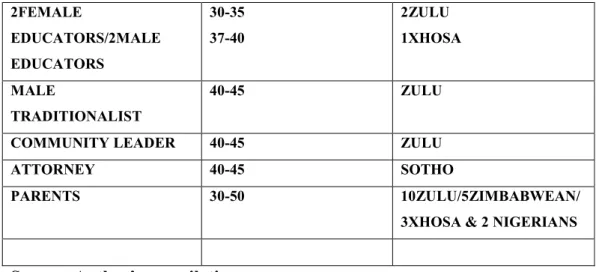
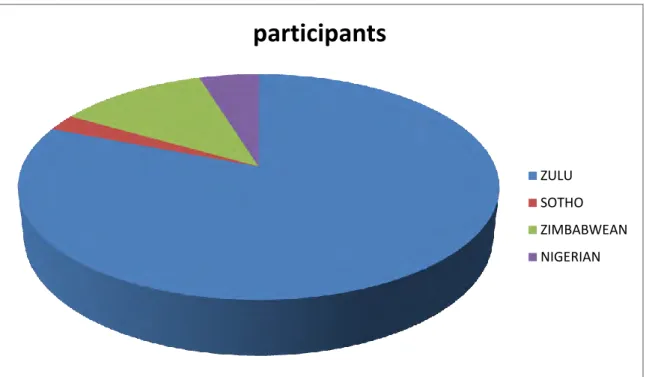
Demographic Profile of Participants 47
However, this did not preclude them from participating as they answered the questions based on the paragraphs read to them before the question session on the law. Therefore, relevant paragraphs from the Children's Act were read out to them so that they could comment on them. In the developed countries of the Global North, where democracy has matured, Gaventa (2007) refers to a large body of literature which focuses on the declining patterns of citizen participation in the processes of representative democracy.
Conclusion 50
CONCLUSION AND RECOMMENDATIONS
Conclusions of the study 52
It also emerged from this study that the participants did not participate in the process of building the law despite this being a legislative mandate from the government, which reflects the strength of any democracy. Pregnancy among high school students was highlighted as one of the most concerning issues. The government adopted a development approach that sought to empower children and free them from all forms of exploitation, which was in line with the country's constitution and the UN Convention on the Rights of the Child.
Recommendations 54
- Content Recommendations 54
- General Recommendations 55
Ten Years of Democracy in South Africa: Documenting the Transformation in Reproductive Health Policy and Status. Analyzing Paradigms: Developmental Social Welfare and Children's Right to Social Services in South Africa. Flanagan, A., Lince, N., Durao de Menezes, I and Mdlopane, L. Adolescent Pregnancy in South Africa: A Literature Review Examining Contributing Factors and Unique Interventions.