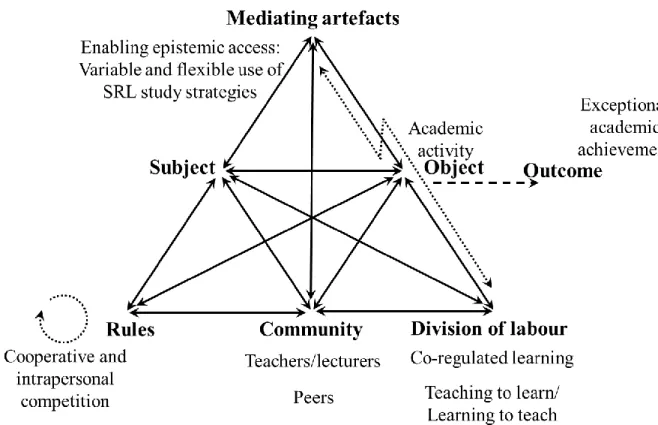
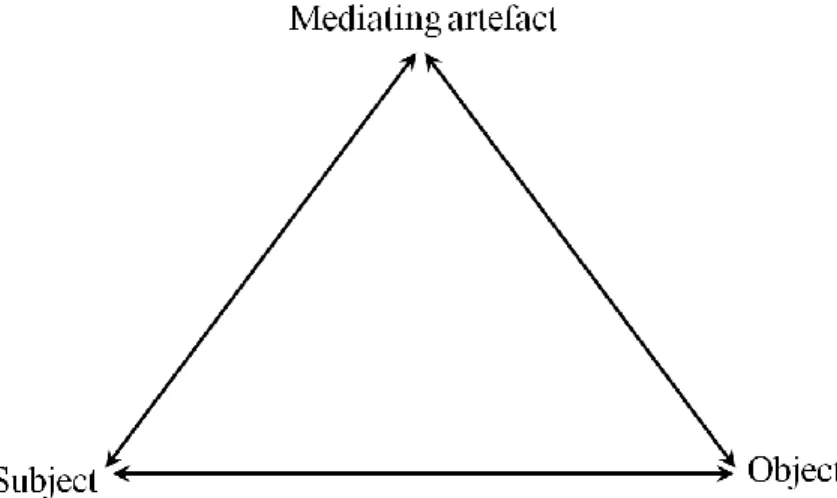
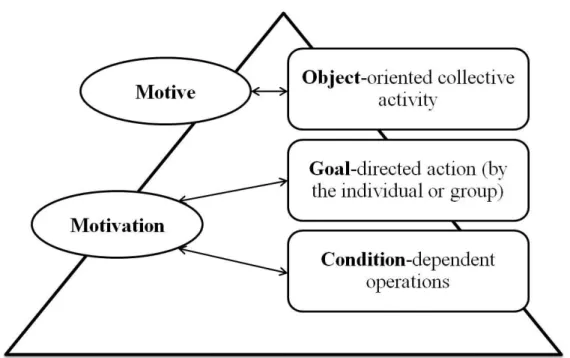
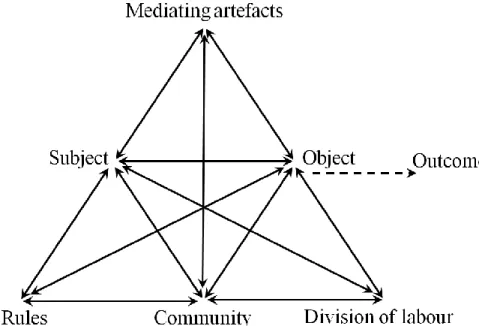
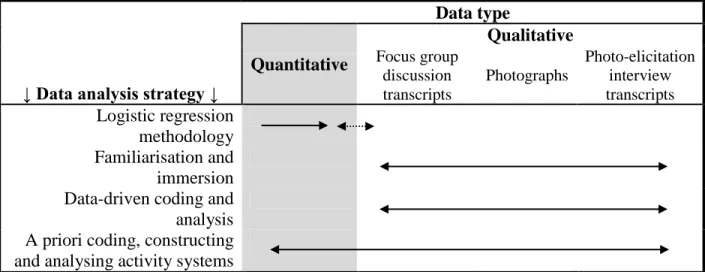
This dissertation reports on a study that explored equity of representation within the phenomenon of outstanding academic achievement in higher education in South Africa. Three systems of activity offer a conceptual perspective of outstanding academic achievement in higher education, viz.
Exceptional) Academic Achievement: Literature, and Historical- Contextual and Conceptual Frameworks Contextual and Conceptual Frameworks
Outstanding) Academic Achievement: Literature and Historical-Contextual and Conceptual Framework Contextual and Conceptual Framework. Dis)orientation and historical-contextual framework 1.1 Introduction and overview of the chapter 1.1 Introduction and overview of the chapter.
Dis)orientation and Historical-Contextual Framework 1.1 Introduction and Overview of 1 Introduction and Overview of Chapter
- Historical-Contextual Framework
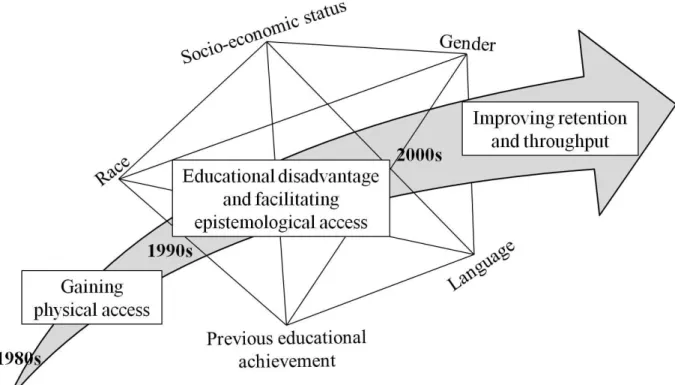
- Three themes in South African higher education
- Five intersecting variables in South African higher education
- The problem with a focus on the problem of academic underachievement
- Disorientation from Academic Underachievement: The Phenomenon of Exceptional Academic Achievement Academic Achievement
- Objectives and Research Questions
- The Structure of the Thesis and an Overview of the Study
- Concluding Remarks
Each of the five variables will be examined in relation to academic performance in South African higher education. The first part (Chapters 1 and 2) examines the historical-contextual and conceptual frameworks (and relevant literature related to these frameworks) in relation to the phenomenon of exceptional academic performance in higher education.
From a Dominant Social Cognitive Framework to an Emerging Sociocultural Framework Framework
Introduction and Overview of Chapter
A Social Cognitive Framework for Exceptional Academic Achievement: An Individual–
- Self-regulated learning
The next section explores the proposed role of self-regulated learning in the domain of exceptional academic achievement. Three other self-regulatory sub-processes (ie, time management, environmental structuring, and help-seeking) are also highly relevant to academic achievement outcomes in higher education.
A Sociocultural Framework for Exceptional Academic Achievement: An Individual–
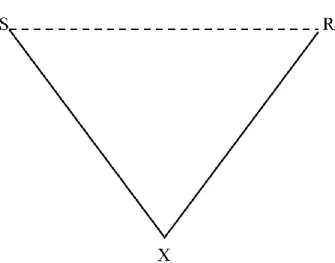
- Defining socioculturalism: The human mind as mediated
- An overview of cultural-historical activity theory
- Sociocultural conceptions of self-regulated learning: Co-regulated learning
- Contemporary Sociocultural Concerns: Contradictions, Tensions, and Collective Emotions
McCaslin's (1996) use of the term “co-regulation” emphasizes relationships (rather than individual efforts or knowledge transfer) in the process of learning and academic achievement. This study focused on multiple sources of influence (personal, social, and cultural) on co-regulation in teaching/learning and the academic achievement track.
Concluding Remarks
A Method for Profiling and Exploring Exceptional Academic Achievement Achievement
Methodology: Contexts, concepts and methodological processes 3.1 Introduction and overview of chapter 3.1 Introduction and overview of chapter.
Methodology: Contexts, Concepts, and Methodological Processes 3.1 Introduction and Overview of 1 Introduction and Overview of Chapter
Contextual and Conceptual Frameworks: Methodological Considerations
The specific methodological considerations arising from a socio-cultural and activity-theoretical framework are reviewed below. Based on an activity theoretical framework, it was then predicted that exceptional academic achievements would not necessarily exist within the individual or in the context in which the individual operates and creates, but rather in the dialectical processes within and between these. This had important consequences for what was perceived as a suitable unit of analysis for research grounded in activity theory (see subsection 2.3.2).
Methodologically, the activity theoretical framework and case study method implied that the units of analysis for aspects of the current study were the activity and activity systems of outstanding academic achievement in higher education.
Rationale, Research Questions, and Unit of Analysis
In this way, the first research question also asked conversely who was unlikely to excel, or who was underrepresented, in the cohort of exceptional academic achievers. The first question responds to the need to profile exceptional academic performance in South African higher education, and the second and third questions respond to the socio-cognitive and social aspects. 32Sociocultural and educational “variables” such as race, gender, and educational background are ontologically not viewed as static phenomena, but rather as dynamic cultural domains that can interact in the pursuit of exceptional academic achievement (CHE, 2010).
Specifically... a) What strategies make underrepresented examples of academically exceptional . undergraduate students use to achieve academically exceptional results?.
Mixed Methods Rationale and Critical Dialectical Pluralism
Currently, there exist multiple, intersecting typologies of mixed methods designs, as well as thirteen philosophical positions that typically underlie mixed methods research (Onwuegbuzie & Frels, 2013). Given the ontological and epistemological positions discussed above in relation to the contextual and conceptual frameworks, this mixed methods research was inspired by what is now described as a critical dialectical pluralist stance. Although referring back to her original conception of mixed methods research in general, Greene (2007) later specified that a mixed methods dialectical stance focuses on generating research.
This mixed methods study was undertaken from the principles of critical dialectical pluralist philosophy.
Research Design and Process
- The selection of the University of KwaZulu-Natal as the institutional case
- Mixed method design
- Phase 1: Quantitative data production and initial analyses
- Phase 1: Findings preview
- Phase 2: Qualitative data production and initial analyses
- Integrating quantitative and qualitative data: Drawing on activity theory
First, the dialectical and iterative nature of the study was evident in the framing of the research questions (specifically, the second and third research questions were placed in dialectical tension with the first research question). Nevertheless, all students selected for participation in the qualitative phase of the study were technical. Of the nineteen students who participated in the focus group discussions, one did not consent to participate in the study.
For example, the logistic regression methodology was applied in the quantitative phase of the study.

Ethical Considerations
- General ethical principles
- Ethics pertaining to visual methods
At the beginning of the focus group discussions for this study, participants were guided through an informed consent document (included as Appendix 7). Although informed consent documents were discussed early in the focus group discussions, participants were asked to leave these until the end of the focus group discussion. In general, confidentiality means that information pertaining to research participants is kept private and anonymous in the reporting of the study.
Because the research participants owned the photos they took, they were also asked to sign a photo release form.
Quality in Mixed Methods Research
Thus, the quality of the design can be independently assessed by the readers of the research. In addition, design quality can be further enhanced by design breadth and depth (Caracelli & Riggin, 1994). Concerns about the breadth and depth of design quality naturally lead to a third domain of quality, that of data quality.
Overall, interpretive rigor takes into account the quality of the connections between the findings, analyses, interpretations, and conclusions (O'Cathain, 2010).
Concluding Remarks
The transferability of these conclusions between contexts is usually assessed by the reader based on thick descriptions and a thorough examination of the research context (Dawson, 2009). Extracts from the transcriptions are used in the analysis chapters of the diploma thesis, and Appendix 15 contains a list of the used transcription symbols. The affective principle expressed the participants' emotional involvement in the research and could therefore be conceptualized as a quality improvement strategy. quantitative data analysis), a preview of the results of Phase 1 and a description of Phase 2 (ie, the qualitative phase, including the initial steps of qualitative data analysis).
After presenting the methodology used for this study, the next two chapters (ie Chapters 4 and 5) provide a quantitative and qualitative presentation of the phenomenon of outstanding academic achievement in higher education in South Africa.
Descriptive Findings and Data-Driven Analyses
A Quantitative Representation (and Explanation) of Exceptional Academic Achievement Achievement
Introduction and Overview of Chapter
Specifically, it involves a presentation of the explanations of the findings of Phase 1 as provided by. The presentation of the Phase 1 findings to a group of Phase 2 participants was important in terms of the mixed methods philosophy and design of the study. The act of presenting the Phase 1 findings (quantitative) in the qualitative dimension of the study particularly emphasizes the dialectical and integrative attitude of the design.
Finally, producing co-constructed explanations that relate to Phase 1 findings works to improve the quality of inference and the quality of study design, which align with the notion of validity in mixed methods research (Teddlie & Tashakkori, 2010). ).
Phase 1 Findings
- The socio-demographic predictor variables
- The pre-university educational predictor variables
- The outcome variable: Exceptional academic achievement
- Logistic regression analysis
As mentioned above, 641 (3%) of the 20,120 graduates included in the sample graduated their undergraduate degrees cum laude or summa cum laude. This achievement requires a sustained high level of academic achievement over the duration of the undergraduate degree, and for the purposes of Phase 1 of this study was intended to indicate exceptional academic achievement. Similarly, row 1 of Table 4-3 indicates that although only 9% of UKZN graduates in the sample were white women, 38% of the exceptional graduates were white female.
This served to predict the likelihood of membership in the extraordinary academic achievement category on the basis of the aforementioned sociodemographic and pre-university education variables.
Research Participants’ Responses to the Findings from Phase 1
- General overview and impression
- Race and gender
- Financial aid
- Matriculation score and matriculation English symbol
First, participants realized that being on financial aid did not put the necessary pressure on them. It was suggested that financial aid administrative problems contributed to the decreased likelihood of exceptional academic achievement for students receiving financial aid. The above three explanatory themes suggest that participants in the focus group discussions were easily able to identify reasons why students with financial aid might be less likely to excel academically compared to those students who were not with financial aid.
In contrast, some of the participants argued that students on financial aid should and could excel academically.
Concluding Remarks
These factors were provided as possible reasons why African women were underrepresented in the exceptional academic achiever cohort. In fact, even when controlling for certain pre-university academic achievement variables and financial aid, the model confirmed a race-based advantage in the area of exceptional academic achievement in South African higher education. While Chapter 4 presented a quantitative representation (and . explanation) of exceptional academic performance at the institutional and national level, Chapter 5 offers a qualitative explanation of exceptional academic performance at the individual level.
Furthermore, the qualitative explanations are unique in that they pertain to underrepresented examples of outstanding academic achievement in South African higher education.
A Qualitative Representation (and Explanation) of Exceptional Academic Achievement Achievement
Introduction and Overview of Chapter
Chapter 5 presents four participant descriptions, including the descriptions of one participant from each of the four UKZN Colleges. Each participant description was based on the data forms of transcripts resulting from the three focus group discussions conducted with 18 participants, a selection of the 53 photographs taken by the four participants, and transcripts resulting from the four individual photo elicitation interviews conducted by the participants attended.
Sikhumbuso (College of Agriculture, Engineering and Sciences)
- A vision for the future: “I want her to be free.”
- Epistemic access: Feelings and grounding principles
Don't forget where you came from, and of course, visualize where you're going. So, I think it helps me too (.) Because for me, I don't just take things as they are. Elaborating on his comments in the focus group discussion, where he said: “You are supposed to feel it (.) don't just study to pass (.) to understand it and automatically you pass.
So now I don't have to have someone telling me "Don't do this, don't do that."
Joy (College of Humanities)
- Epistemic access: Assimilating English and peer teaching/learning
The educational importance placed on Joy's migration to a former Model C school is evident from her statement above. In addition to recognizing that her migration to a former Model C school “was a huge transformation for me [and] I couldn't adapt” (Joy, PEI 3, 187), Joy acknowledged that as well. However, by talking about this during the photo-elicitation interview, she also exposed the emotional pressure on her as a result of the migration.
That's why I took the photo - especially of the notice board because we went to look for our marks.
Sindi (College of Law and Management Studies)
- A vision for the future: “Graduate healthy.”
- Epistemic access: Goal setting, planning, and environmental structuring
Cos um (.) the reason why I try to check my health is just that for me I want (.) throughout university I want when I graduate I still want to graduate healthy (.) I still want to fulfill my dreams and (.) So, for me it's like I'm strict about it, you know. Photo 5-9 is an illustration of the level of microenvironmental structuring evident in Sindi's study activities. Before discussing Photos 5-9 in the photo-elicited interview, Sindi also referred to a level of macro-environmental structuring.
However, Sindi's future orientation and employment plans were based on the understanding that "at home they are waiting for me" (Sindi, PEI 2, 161).
Sifiso (College of Health Sciences)
- A vision for the future: “Hungry for improvements.”
- Epistemic access: Study spaces, daily routines, and socialising
And my place, the place where I used to live in Ermelo (.) It's cold, very cold, so you want to live somewhere warm when you study. That's all I can say now, it's (.) better [referring to the study room reflected in photograph 5-12]. Because many things arise when you hang out with your colleagues (.) it is important, most things are useful.
It's a way of bonding, and when we bond, we're able to help each of us achieve more.
Concluding Remarks
However, the individual, photo-infused descriptions contained in Chapter 5 are necessarily incorporated into subsequent chapters and serve as a platform for what follows.
Analysing Systems of Exceptional Academic Activity
An Evolving System of Outstanding Academic Activities 6.1 Introduction and Chapter Overview 6.1 Introduction and Chapter Overview.
An Evolving System of Exceptional Academic Activity 6.1 Introduction and Overview of 1 Introduction and Overview of Chapter
System Components
- Subject, object, and outcome
- Mediating artefacts
Although all participants, photographs and discussions surrounding them were included in the construction and analysis of the evolving system, more emphasis was necessarily placed on photographs that reflected the participants' current academic activity (as was required of them during the introductory car photography session). . 73 I refer to the subject (i.e. the student) in a collective sense, and not in the sense of an individual student. Although ontologically indistinguishable from the subject, the object in the evolving system was conceptualized as referring to academic activities in higher education, with a specific focus on.
Each of the four participants described in Chapter 5 used a variety of study strategies in their pursuit of exceptional academic performance.