One strategy that applies to both external and internal aspects of the organization is the implementation and use of ISO 9000 quality systems. ISO 9000 is a marketing tool, but there are even more benefits to using an ISO 9000 quality system. This exploratory study among technical manufacturing organizations in Durban, South Africa, aims to prove that commitment and correct implementation of ISO 9000 will result in the expected benefits for an organization.
Additional factors such as the size of the organization, the duration of the ISO 9000 accreditation, the degree of internationalization, the methods and the perceived problems are also related to the expected benefits of the ISO 9000 accreditation. The results of the study prove that there is a positive correlation between the attitude of commitment, implementation and degree of internationalization and the expected benefits of using ISO 9000 quality systems. Attitudes regarding the benefits of ISO 9000 are compared with attitudes regarding involvement and implementation, perceived problems and other biographical data such as the size of the organization, the duration of ISO 9000 accreditation, the degree of internationalization and the method of operation.
It is expected that attitudes towards the benefits of ISO 9000 will vary depending on the structure, characteristics and culture of each organization. But the objective of this study is to determine which aspects of organizations influence the success or failure of ISO 9000 within the engineering manufacturing industry.
LITERATURE REVIEW
According to Zhu and Scheunnann (1999), ISO 9000 is an important trend driven by customer demand and is gaining popularity, especially with increasing international trade and the opening of new markets. Doug (2000) found that ISO 9000 was primarily used to address areas in a business that required attention, and that ISO 9000 requires management involvement and a good set of quality standards for the system to be successful. The main focus of this project is whether or not a commitment to ISO 9000 and its implementation results in the expected benefits for technical manufacturing organizations.
Commitment to ISO 9000 is associated with perceived benefits from it, for an organisation
The duration of ISO 9000 accreditation has an effect on the benefits of ISO 9000 accreditation
The size of the organisation has an effect on the perception of the benefits of ISO 9000 accreditation
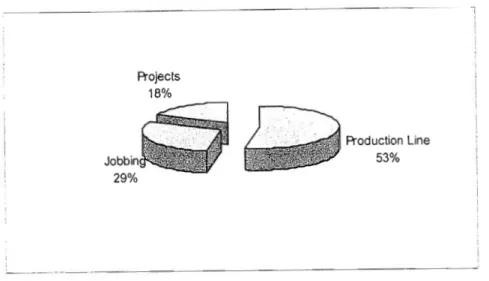
The method of operation has an effect on the perception of the benefits of ISO 9000 accreditation
METHODOLOGY
The target population for the sample is engineering manufacturing organizations in Durban, South Africa, which had ISO 9000 accreditation. The four accreditation bodies, South African Bureau of Standards (S.A.B.S.), Societe Generale de Surveillance SA (S.G.S), TOV Rheinland Quality Services and Bureau Veritas were asked to list engineering manufacturing organizations in Durban that had ISO 9000 accreditation. This exploratory study was undertaken to determine whether ISO 9000 has delivered the benefits as marketed by ISO.
Informal conversations and internet chat rooms show that ISO 9000 is only useful in some cases. This survey is structured with the initial hypothesis that: a commitment to the ISO 9000 quality system will result in the system being more useful. Other factors such as the size of the organization, mode of operation, degree of internationalization, duration of ISO 9000 accreditation and problems with ISO 9000 implementation are also taken into consideration.
The main problem with the survey was determining the level of commitment to the ISO 9000 quality system. Questions about commitment were worded mostly negatively to avoid respondents simply agreeing, and to focus more attention on the question itself. The first two organizations (A and B) were used as a pilot study to determine whether the telephone questionnaire would work.
The questionnaire (Appendix A) is divided into four main sections: biographical data, benefit statements, implementation statements, and a list of potential problems with ISO 9000 and its implementation. Biographical data includes general information about how to initially contact the organization and information about any follow-up questions, confirmation that it is a technical manufacturing organization, and other data that may also impact the benefits, implementation and issues of ISO 9000 -quality systems. The second and third parts consist of a series of statements that refer to the benefits and the organization's commitment to the ISO 9000 quality system.
Statements were obtained from lists of expected benefits of the ISO 9000 quality system and from lists of problems encountered by organizations that had implemented ISO 9000 quality systems. The last part of the questionnaire asked respondents to determine the extent to which certain aspects of the system were ISO 9000 quality or organizational characteristics problem. This section also includes an open-ended question for the respondent to mention any other problems they have and indicate the level of the problem on the same scale from 1 to 10.
DATA ANALYSIS
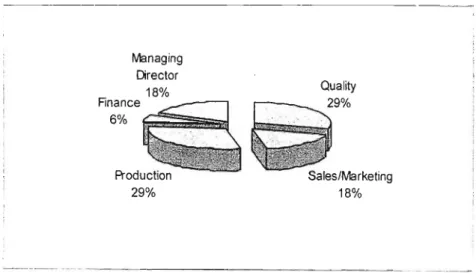
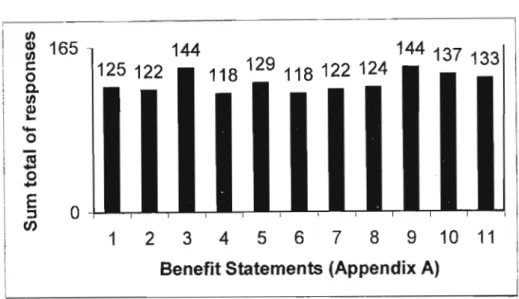
Further analysis of technical manufacturing organizations in Durban in terms of size will indicate whether smaller organizations prefer ISO 9000 or not. The correlation of -0.11 between the quality function and benefits indicates that the respondents responsible for quality were not biased towards having ISO 9000. This indicates that the main perceived benefits of ISO 9000 are the improvement of production quality (statements 3) and an improved perception of the organization by the customers (statement 9).
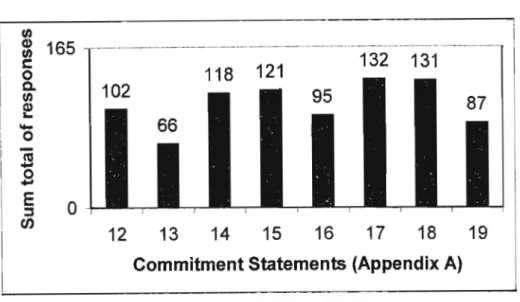
The lowest benefits were that ISO helped operations stay within budgets (question 4), and that ISO 9000 increased sales. Both correlation and regression analysis support the hypothesis that the perceived benefit derived from ISO 9000 quality systems is related to the management commitment to implementing ISO 9000 quality systems. The remaining problems all scored below 50%, indicating that ISO 9000 was not a major problem to implement for the organizations surveyed.
In addition to the listed problems analyzed above, respondents were asked to indicate additional problems with the ISO 9000 quality system. Maintenance of the ISO 9000 system, lack of commitment from management and workforce, auditor's lack of experience and double standards were mentioned four times. Most respondents indicate that the problem is primarily due to resistance to change, and employees feel that ISO 9000 does not change anything – it only increases paperwork.
The organizations that have the most difficulty maintaining the ISO 9000 system are those that have only recently implemented it (average duration of 11 months). The ISO 9000 system, like any other system, requires cooperation from everyone in the organization to maintain the system. The problem with this part of the questionnaire is that the questions test the level of commitment to the ISO 9000 system, as well as whether or not the system has been implemented correctly.
Another limitation is not having a complete database of the entire population of ISO 9000 accredited manufacturing engineering firms in Durban. Collecting the same biographical data for all ISO 9000 accredited firms in the engineering manufacturing industry in Durban and comparing the data would show whether or not the sample was representative. The objective of the survey was to carry out a cross-assessment between attitude towards commitment and perceived benefits of ISO 9000 quality systems at a macro-cross-sectoral level of individual attitudes within the industry, rather than at a micro-level within organisations.
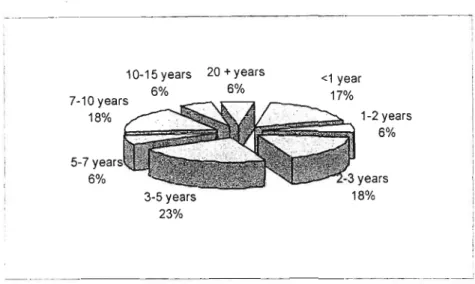
CONCLUSIONS
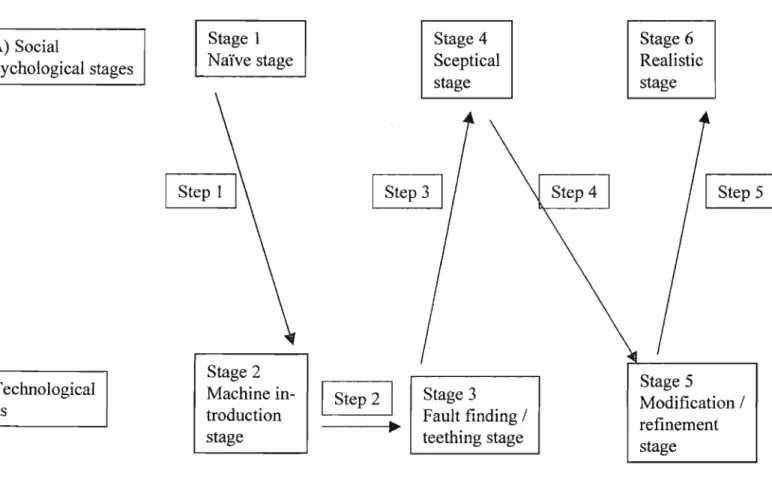
The sociotechnical model is believed to be more applicable to individual organizations at a micro level, rather than across an industry. The third hypothesis - the size of the organization has an effect on the perception of the benefits of ISO 9000 accreditation - is correlated (Cramers V - 0.707), but is not significant, p= 0.356. ISO 9000 is becoming an international requirement, as customers have some assurance about the quality of the product, thereby reducing the risk associated with cross-border purchases.
The fourth hypothesis - the mode of operation affects the perception of the benefits of ISO 9000 accreditation - cannot be proven. Commitment is required from top management to the shop floor through education and training. Considering that ISO 9000 can be considered as a sociotechnical tool, it is necessary to develop systems that provide two-way communication, such as feedback, and involve all stakeholders.
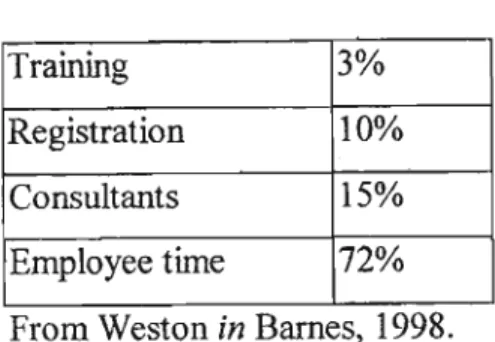
More time and money should be spent on training all employees from the initial implementation of ISO 9000 instead of on consultant fees, and the system should be adapted and maintained as the organization develops so that the ISO 9000 system delivers the benefits that it should deliver.
I am doing my MBA dissertation on the benefits (or lack of benefits) of being ISO 9000 accredited. The reason for my study is that after talking to various people about ISO 9000 quality systems, they felt that ISO was not as useful as can be. My project focuses on whether ISO 9000 registration is beneficial to the engineering manufacturing industry and if not why not.
I would like to emphasize that: All answers and responses will be kept confidential and you or your organization will not be mentioned in my report and your answers will not be disclosed to anyone. The questionnaire consists mainly of statements to which I would like you to answer. 13 When you have received ISO 9000 accreditation. please note that there are no right or wrong answers).