EXPLORING THE PERCEPTIONS OF CONGOLESE MIGRANT WOMEN IN DURBAN TOWARDS THE PRACTICE OF PRESERVING
VIRGINITY BEFORE MARRIAGE
BY
CECILE BULUNGU KANDA
Submitted in partial fulfilment of the requirements for the degree Master of Arts (Gender Studies)
In the
Faculty of Humanities, Department of Social Sciences University of KwaZulu-Natal
(Howard College Campus)
Supervisor: Dr GABISILE MKHIZE 2017
iv
DEDICATION
This dissertation is dedicated to my supportive and lovely husband, for allowing and encouraging me to go back to school. Despite his busy schedule, he manages to attend to the care of our 3 children, especially of our son Glory, whose health condition required my full attention.
v
ACKNOWLEDGEMENTS
Firstly, I give thanks to the almighty the creator of everything, Lord Jesus the source of my life, for strengthening me and helping me to carry out with this work despite all the hard and difficult times I went through while undertaking my MA studies
I am deeply grateful to all my research participants who granted me the opportunity to dig into their private lives – without them this work could not have been accomplished.
A huge thanks to my supervisor Dr Gabi Mkhize for all her exceptional assistance, motivation and support; this work couldn’t have seen light without her specialised knowledge and input.
I owe special thanks to my husband Jean Didier Kanda for all the support, sacrifice, the love and much more to ensure that I finished this work. Thanks for encouraging me to never give up even though all the circumstances around me were pulling me down.
To all my precious children (Blessing, Praise and Glory), thank you for understanding each time when I could not give you all the attention you required while I was busy typing my work.
I am also grateful to my spiritual parents Apostle Benjamin and his wife Prophetess Lilian Lukola for the mountain of prayer and spiritual assistance in times of need.
Thanks to honourable Samuel Fikiri, Mr Sunday, Phd students and Mr Feruzi for their assistance each time I was stuck in my work.
Thank you to all my family; god children and friends : Mabika family; N’kulu family ;Alain Ntumba, ;Couple Fataki; couple Makanzu; Couple Mandango, couple Tshibwabwa; Nathan Kamalondo.
Thank you to all my family-in-law for their love, support; and for taking me as their own.
Lastly, my appreciation to all of you that walked alongside with me while undertaking my MA degree studies.
vi
ABSTRACT
This study explored the perceptions of Congolese migrant women towards the practice of preserving virginity as a form of purity until marriage, by focusing on the opinions of Congolese migrant women living in Durban in South Africa.
Virginity has social and significant legal implications in many societies in the Democratic Republic of Congo (DRC) and women have responsibilities to protect their virginity in order not to be viewed by society as impure. In DRC, virginity purity before marriage is viewed as the key contributor to the true meaning of womanhood. Because of that, it is culturally expected that woman should not engage in premarital sex. Thus, a woman should enter into marriage as a virgin; she should “give up” her virginity to her husband in the act of consummating the marriage. The aim of this study was to determine whether Congolese migrant women living in South Africa, specifically in Durban, continue to engage in the practice of virginity preservation before marriage as they are now immersed in a new and different society than that of DRC. Also, the study sought to explore how Congolese migrant women view the practice of keeping virginity as a form of purity before marriage. That is, do the migrant women reinforce or resist this culture while being in a foreign land, relative to being in the DRC?
In order to answer these key questions and address the objectives, the study used the qualitative research method. This method was chosen because it seemed to be the most appropriate to describe how the changes among Congolese women could possibly affect their perceptions of culture. The study used interviews and focus groups as its research instruments for gathering data from the sample size of 18 Congolese migrant women who reside in Durban. The findings of this study indicate that most Congolese found it difficult to maintain the gendered practice of preserving virginity before marriage as recommended in their culture and this could be attributed to mixture of cultures in their new environment.
Therefore, Congolese migrant ;women in particular need to be educated on how to protect themselves and stay safe from the danger of STIs and HIV/AIDS
Keys words: Virginity; Premarital sexuality; Marriage; Honour; Migration
vii
TABLE OF CONTENTS
DECLARATION ... ii
COLLEGE OF HUMANITIES DECLARATION - PLAGIARISM ... iii
DEDICATION ... iv
ACKNOWLEDGEMENTS ... v
ABSTRACT ... vi
TABLE OF CONTENTS... vii
LIST OF FIGURES ... xi
LIST OF TABLES ... xii
LIST OF ACRONYMS ... xiii
CHAPTER 1: INTRODUCTION AND RESEARCH BACKGROUND ... 1
1.1 INTRODUCTION AND BACKROUNG TO THE RESEARCH ... 1
1.2 PROBLEM STATEMENT ... 2
1.3 THE STUDY RATIONALE AND BROAD ISSUES TO BE INVESTIGATED ... 3
1.4 KEY QUESTION ASKED ... 4
1.5 SIGNIFICANCE OF THE STUDY ... 4
1.6 STRUCTURE OF THE RESEARCH ... 5
1.7 CONCLUSION ... 6
CHAPTER 2: LITERATURE REVIEW ... 7
2.1 INTRODUCTION ... 7
2.1.1 INTERNATIONAL MIGRATION ... 9
2.1.2 CONGOLESE MIGRATION TO SOUTH AFRICA ... 13
2.2 CONCEPTUALISING VIRGINITY PURITY FOR WOMEN ... 15
2.2.1 SYMBOLISM OF VIRGINITY ... 16
2.2.2 WOMANHOOD, MARRIAGE AND VIRGINITY ... 18
2.3 ENFORCEMENT OF VIRGINITY PURITY: TESTING AND CEREMONIAL RITES OF PASSAGE ... 20
2.3.1 VIRGINITY TESTING AND HIV ... 22
2.3.2 TRENDS IN MARRIAGE AND VIRGINITY... 26
2.3.3 PREMARITAL SEXUAL ACTIVITY AMONG CONGOLESE WOMEN ... 27
2.4 WOMEN’S SEXUALITY AND VIRGINITY PURITY ... 29
2.4.1 SEXUAL VIOLENCE IN DRC ... 30
2.5 CONCEPTUALISING AFRICAN CULTURE, RELIGIOUS BELIEFS AND GENDER .. 32
viii
2.5.1 THE ROLE OF CULTURE IN SEXUAL PRACTICE ... 32
2.5.1.1 THE ANTRHROPOLOGICAL PERSPECTIVE ... 34
2.5.1.2 RATIONAL ADAPTATION ... 35
2.5.1.3 SOCIAL DISORGANISATION ... 35
2.5.2 THE ROLE OF RELIGION IN SEXUAL PRACTICES ... 36
2.5.3 ROLE OF GENDER IN SEXUAL PRACTICE ... 38
2.6 THE SITUATION OF MIGRANT WOMEN ... 40
2.7 CONCLUSION ... 41
CHAPTER 3: THEORETICAL FRAMEWORK ... 43
3.1 INTRODUCTION ... 43
3.2 TRANSNATIONALISM THEORY... 44
3.2.1 DEFINING TRANSNATIONALISM THEORY ... 44
3.2.2 UNDERSTANDING TRANSNATIONALISM ... 46
3.2.2.1 DIASPORAS ... 48
3.2.3 AGENTS OF TRANSNATIONALISM ... 48
3.3 SOCIAL CONSTRUCTIONISM THEORY... 50
3.3.1 SOCIAL CONSTRUCTIONISM IN A SOUTH AFRICAN CONTEXT ... 52
3.4 CONCLUSION ... 53
CHAPTER 4: RESEARCH METHODOLOGY ... 54
4.1 INTRODUCTION ... 54
4.2 RESEARCH APPROACH ... 54
4.2.1 QUALITATIVE RESEARCH METHODOLOGY ... 54
4.2.2 RESEARCH DESIGN ... 55
4.3 TARGET POPULATION AND RESEARCH SITE ... 55
4.4 SAMPLE ... 56
4.5 DATA COLLECTION... 59
4.5.1 IN-DEPTH INTERVIEWS ... 60
4.5.2 FOCUS GROUP INTERVIEWS ... 62
4.6 DATA ANALYSIS ... 62
4.6.1 FAMILIARISATION WITH DATA ... 63
4.6.2 GENERATING INITIAL CODES ... 63
4.6.3 COLLATING THE CODES INTO OVERARCHING THEMES ... 63
4.6.4 REVIEWING THEMES ... 63
4.6.5 PRODUCING THE REPORT ... 63
4.7 ETHICAL CONSIDERATIONS AND LIMITATIONS OF THE STUDY ... 63
4.7.1 ETHICAL CONSIDERATIONS ... 63
ix
4.7.2 LIMITATIONS ... 64
4.7.2.1 THE CONSTRAINT OF TIME ... 65
4.7.2.2 THE CONSTRAINT OF FINANCE ... 65
4.7.2.3 THE CONSTRAINT OF CULTURE ... 65
4.7.2.4 THE CONSTRAINT OF SAMPLING ... 65
4.7.3 RELIABILITY ... 66
4.7.4 VALIDITY ... 66
4.7.5 CONCLUSION ... 66
CHAPTER 5: FINDINGS OF THE STUDY AND DISCUSSION ... 68
5.1 INTRODUCTION ... 68
5.1.1: PERCEPTION TOWARDS VIRGINITY WITHIN THE TRANSNATIONAL CONTEXT……….68
5.1.2GENERALDEMOGRAPHYOFPARTICIPANTS………..69
5.1.2.1 UNMARRIED WOMEN ……….69
5.1.2.2 MARRIED WOMEN……… 69
5.1.2.3 MARRIED MEN ... 70
5.2: OVERALL PRESENTATION OF THE FINDINGS ... 70
5.2.1 DEFINING VIRGINITY ... 71
5.2.1.1 REASONS BEHIND THE CULTURE OF KEEPING VIRGINITY ... 73
1. VIRGINITY FOR THE PROMOTION OF MARRIAGE (VALUE OF WOMEN) ... 74
2. VIRGINITY FOR THE PROMOTION OF FAMILY (PATRIARCHAL EXPECTATIONS) ... 75
3. VIRGINITY FOR THE PROMOTION OF SOCIETY (SOCIAL CONTROL) ... 76
5.1.1.2 NEGATIVE PERCEPTIONS TOWARDS VIRGINITY LOSS ... 77
5.1.1.1 PREMARITAL SEXUAL BEHAVIOUR... 83
5.1.1.2 VIRGINITY TESTING AND ITS IMPACT ON VIRGINITY PRESERVATION ... 86
5.1.1.3 MEN’S PERSPECTIVE TOWARDS THE PRACTICE OF PRESERVING VIRGINITY BEFORE MARRIAGE AND GENDER INEQUALITY ... 88
5.2.3 INFLUENCE OF IMMIGRATION ON CULTURAL PERCEPTION TOWARDS THE PRACTICE OF PRESERVING VIRGINITY ... 92
5.1.1.1 THE NEED OF REMAINING VIRGIN ... 92
5.1.1.2 DIFFICULTIES ASSOCIATED WITH MAINTAINING VIRGINITY ... 97
5.1.1.3 FACTORS INFLUENCING THE PRACTICE OF PRESERVING VIRGINITY IN DURBAN ... 100
x
3. SOCIOECONOMIC FACTORS ... 100
4. FAMILY INSTABILITY AND LACK OF PARENTAL SUPERVISION ... 101
5. MEDIA ... 101
6. ENVIRONMENT AND PROMISCUOUS ... 102
7. SOCIETAL PRESSURE ... 103
5.2.4 ENFORCEMENT OF VIRGINITY VERSUS THE THREAT OF HIV/AIDS ... 103
5 .2.4.1 VIRGINITY MOTIVATORS ... 103
1. RELIGIOUS MOTIVATION ... 104
2. CULTURAL OR TRADITIONAL MOTIVATION... 106
3. FAMILIAL MOTIVATION ... 107
5.1.1.2 THE PROMOTION OF VIRGINITY AND THE PREVENTION OF HIV/AIDS ... 108
5.3 CONCLUSION ... 110
CHAPTER 6: CONCLUSION AND RECOMMENDATIONS ... 112
6.2 OVERVIEW OF THE RESEARCH... 112
6.3 CONCLUSION ... 113
6.4 RECOMMENDATIONS ... 115
REFERENCES... 118
APPENDICES ... 138
xi
LIST OF FIGURES
Figure 4.1: Distribution of the four main languages of the DRC ... 61
xii
LIST OF TABLES
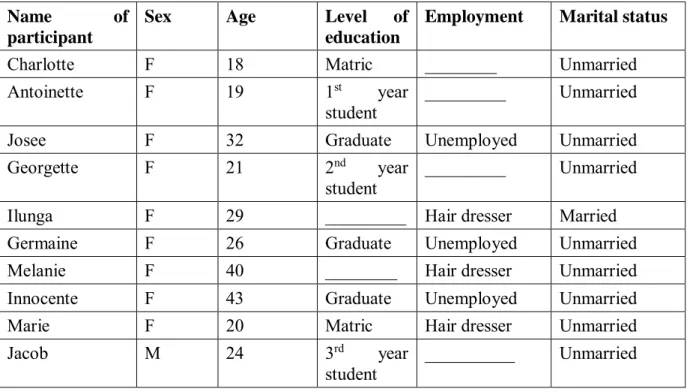
Table 4.1: In-depth interviews ... 58 Table 4.2: Focus group interviews ... 59 Table 5.1: Themes emerging from the findings ... 71
xiii
LIST OF ACRONYMS
AIDS : Acquired immune deficiency syndrome DRC : Democratic Republic of Congo FMG :Female genital mutilation
HIV : Human immunodeficiency virus HSRC : Human Science Research Council IOM : International organization for migration NGO : Non-governmental organization
OECD : Organization for Economic Co-operation and Development RSS : Refugee social services
SAMP : South African migration surveyprogram SANAC: South African national council
SASFs :Semiautonomous social fields STDs : Sexual Transmitted Disease
UNICEF: The United Nation Children’s Fund
USAID : United states agency for international development WHO : World Health Organization
1
CHAPTER 1: INTRODUCTION AND RESEARCH BACKGROUND
1.1 INTRODUCTION AND BACKROUNG TO THE RESEARCH
This study intended to explore the perceptions of Congolese migrant women towards the culture of keeping virginity as a form of purity until marriage. It focused on the opinions of Congolese migrant women living in Durban, South Africa. Traditionally, as in the case of the Democratic Republic of Congo (DRC), most African cultures and religions oblige young women to remain virgins until marriage. This means that women are expected not to engage in sexual intercourse, defined as “penis penetration of the vagina”, before marriage (Nkosi 2013:
146).
In the DRC, keeping virginity pure before marriage is a culture that is linked to the concept of honour. This means that virginity loss before marriage is culturally considered to bring dishonour not only to the bride’s and the groom’s families, but also to their communities as a whole. Bosmans (2007) states that in the event that a non-virgin woman marries, the dishonour is brought upon the husband and his family. Therefore, practicing sexual intercourse out of wedlock could result in a woman being “ostracized by her family and her community” (Jean- Bouchard 2014: 364). This is because, in the DRC, the family is regarded as the foundation and a woman is regarded as the centre-piece in a marriage or her family and in her society.
Therefore it is unacceptable and a sign of dishonour for her to be engaged in any form of immorality or sexual behaviour. The honour of a family or society is regarded as being the responsibility of female members.
However, some literature claims that upon immigrating out of the DRC into other countries around Africa and the world, the societal pressures that existed for Congolese women to uphold virginity are now changing (Stewart et al. 2008). Upon emigrating out of their countries of origin, the new communities of migrants comprise people from different nationalities and upbringings (Stewart et al. 2008). The new migrant communities comprise diverse migrants from different African and non-African nationalities, including citizens of the new countries of residence (Peters & Sundaram 2015). This diverse community consists of different cultures, which may strengthen or weaken the cultural practices of the migrants’ countries of origin.
This is the reason why this study wants to explore if the practice of preserving virginity before marriage in Congo is being adhered to by Congolese migrants.
2
South Africa has been chosen because of its high cumulative number of refugees, which recent estimates place at 65,881 (United Nations Higher Commission on Refugees 2014; Smit &
Rugunanan 2014). Also, South Africa is one of the African countries that promotes the preservation of virginity before marriage, although the practice is based on different reasons as compared to DRC. In the Zulu culture of South Africa, methods have even been devised to allow non-penetrative sex as a means of preserving virginity, preventing pregnancy, and preventing HIV (Njogu & Orchardson-Mazrui 2013). Despite this, however, the high rates of teenage pregnancy in Africa, including South Africa, mean that many women are
“overstepping the accepted boundaries that define ‘proper’ female behaviour” (Leclerc- Madlala 2003: 17). It is not clear in the literature whether such local sexual practices are influencing the Congolese women who have migrated to South Africa, or their views or practice relating to keeping virginity purity until marriage. This directly contributes to the problem behind the study.
1.2 PROBLEM STATEMENT
Virginity has social implications and significant legal implications in many societies in the DRC, and women have responsibilities to protect their virginity in order not to be viewed by society as impure (Kurtz, 2015 120). In the Congolese society, heterosexual marriage is a highly regarded institution that is viewed as contributing significantly to the true identities of women (Kondemo 2011). Traditionally, there has been a cultural expectation that women would not engage in premarital sex; that a woman would come to her wedding a virgin and that she would ‘give up’ her virginity to her new husband in the act of consummation of the marriage (Abdalla 2007).
It is becoming widely accepted, though, that rapid changes are taking place in Africa, and that traditional values and ideas are being abandoned, modified or coloured by the changing socio- political circumstances (Imbo 1998). For example, in sub-Saharan Africa, there has been a considerable trend, especially within urban areas, towards later onset of marital union (Shapiro
& Gebreselassie 2014). However, at the same time it is unreasonable to believe that all traditional values are being changed or forgotten, or that there are no traces of these values remaining among individuals.
The DRC is one of the poorest countries in the world (United Nations Higher Commission on Refugees 2012). Since its independence, the DRC has gone through numerous political and economic crises (Lincoln 2011). These crises have profoundly affected migration patterns and
3
the traditional practices of Congolese nationals who travel to other countries as refugees (Schoumaker et al. 2013). In the past 20 years, South Africa has increasingly become a host society for many of these forcibly displaced individuals and families from across the African continent (Smit & Rugunanan 2014). The lifestyles and experiences of these migrant populations are being influenced by the practices of diverse cultures the find themselves in and their (the immigrants’) economic, political and social status.
It is within such a context that this study intended to explore the perceptions of Congolese migrant women in Durban towards the practice of keeping their virginity and purity until marriage. The study aimed to find out if Congolese migrant women are still expected to practice premarital virginity in a foreign land, and to understand their views on this practice.
1.3 THE STUDY RATIONALE AND BROAD ISSUES TO BE INVESTIGATED Traditionally, there has been a cultural expectation that women should not engage in premarital sex; that a woman should come to her wedding a virgin, and that she should ‘give up’ her virginity to her new husband in the act of consummating the marriage (Abdalla 2007). Since its independence, one of the poorest countries in the World, the DRC has gone through numerous political and economic crises (United Nations Higher Commission on Refugees 2012). These crises have profoundly affected migration patterns, and the traditional practices of Congolese nationals, who travel to other countries as refugees (Schoumaker et al. 2013). In the past 20 years, South Africa has increasingly become a host society for many of these forcibly-displaced individuals and families from across the African continent (Smit &
Rugunanan 2014). Many of the lifestyles and experiences of these migrant populations are being influenced by the practices of diverse cultures, and by the economic, political, and social status of these migrants in their new societies. This study intends to determine whether Congolese migrant women generally continue to observe the practice of virginity preservation before marriage, once they are immersed in their new societies. Thus, the aim of this study was to explore the perceptions of Congolese migrant women in Durban towards the practice of preserving virginity before marriage. The research objectives were:
To explore the pre-marital sexual practices of Congolese migrant women in Durban;
To establish the meaning that is given to pre-marital sexual life by Congolese migrant women in Durban;
To define how Congolese migrant women in Durban view the practice of keeping virginity as a form of purity before marriage;
4
To understand how Congolese migrant women in Durban behave in order to reinforce or resist virginity preservation until marriage; and
To understand how Congolese migrant women in Durban perceive the practice of virginity preservation while being in foreign land, relative to being in the DRC.
1.4 KEY QUESTION ASKED
The following key research questions were posed in order to achieve the above stated research objectives:
What are the pre-marital sexual practices of Congolese migrant women in Durban?
What meaning do Congolese migrant women in Durban give to pre-marital sexual life?
How do Congolese migrant women in Durban view the practice of keeping virginity as a form of purity before marriage?
How do Congolese migrant women in Durban behave in order to reinforce or resist virginity preservation until marriage?
How do Congolese migrant women in Durban women perceive the culture of virginity preservation before marriage, while being in foreign land, relative to being in the DRC?
In an attempt to answer these key questions and address the objectives, the study used the qualitative research method. This method was chosen because it seemed to be the most appropriate to describe how the changes among Congolese women could possibly affect their perceptions of cultures. The study used interviews and focus group discussions as its research instruments for gathering data from the sample size of 18 Congolese migrants residing in Durban. The findings of this study indicate that most Congolese found it difficult to maintain the gendered practice of preserving virginity before marriage as recommended in their culture and this could be attributed to mixture of cultures in their new environment.
1.5 SIGNIFICANCE OF THE STUDY
While much research has been conducted on the sexual practices of women while under the influence of their native societies, cultures, and religions (Lusey et al. 2014; Gallo et al. 2010;
Djamba 2003, 1997, 1995), there is limited research to show how the sexual practices of young men and women change once these native controlling beliefs are altered through migration – specifically in the African and South African context. Furthermore, while considerable research exists to indicate how the survival, lifestyle, economic, and employment practices of migrant women from the DRC and other Africa countries alter within their new societies, such as South
5
Africa (Peters & Sundaram 2015; Smit & Rugunanan 2014), there is limited research to show how the sexual practices of the migrant women, specifically relating to the taboo topic of virginity purity, are altered once their native controlling environments are changed by migration.
Furthermore, there is no information describing how the changes in environment among Congolese women affect their sexual habits or perceptions of keeping virginity purity until the first night of marriage, specifically in the South African context. This study hopes to fill this gap in the research, by exploring the perceptions of Congolese migrant women in Durban of the culture and practice of keeping virginity purity until the first night of marriage.
The results of this study will contribute to the existing knowledge on the topic. Further, the results may assist South African organisations dealing with women’s health, women’s sexual empowerment, women’s rights and gender inequality, thereby providing an understanding that could improve the livelihoods of migrant women from all other African countries.
1.6 STRUCTURE OF THE RESEARCH This dissertation consists of six chapters:
Chapter 1: Introduction – This provides the background to the study, problem statement, research aim, research questions, research objectives, and the dissertation outline.
Chapter 2: Literature review – This provides a comprehensive review of the knowledge base relating to research that has already been published on topics that are relevant and related to this study.
Chapter 3: Theoretical framework – This outlines the principal theories upon which the research project has been constructed.
Chapter 4: Research methodology – This presents the details of the qualitative methodology that was conducted in order to achieve the aim of this study.
Chapter 5: Findings of the study and discussion – This presents the results following the thematic analysis of the qualitative data and discussions of the findings
Chapter 6: Summary and conclusions – This summarises the main findings of the study compared to the findings of previous studies, and provides recommendations for future research on the practice of preserving virginity.
6 1.7 CONCLUSION
This chapter introduced the study of the practice of preserving virginity among Congolese migrant women residing in Durban, and outlined the study problem and objectives which aimed to explore the Congolese migrant women’s sexual behaviour in the transnational context.
The following chapter analyses literature on virginity preservation and the perception of its implications among Congolese migrant women. It further reviews pre-existing literature concerning the practice of preserving virginity.
7
CHAPTER 2: LITERATURE REVIEW
2.1 INTRODUCTION
A literature review is an “information analysis and synthesis, focusing on findings and not simply bibliographic citations, summarizing the substance of the literature and drawing conclusions from it” (Randolph 2009)
Conducting a literature review allows me as a researcher to delve within previous knowledge regarding the perception of virginity and the meaning given to its loss including the key variables and phenomena that are linked to sexual behaviour among Congolese migrant women within the transnational space.
Sexuality in general will be discussed first in the context of religion culture, age, education, financial status, family stability, the media, and immigration, followed by an exploration of the perceptions of women regarding sexual practices globally and in South Africa, particularly those of migrant women in Durban.
The Greek philosopher Heraclitus is believed to have said: “There is nothing permanent except change” (Krebs 1999). This statement accurately reflects life and society and is commonly used as motivation in the pursuit of success. The 21st century marks an era of technological advancement in virtually every aspect of society. While much of this modernisation reflects progress, change can also have negative implications. For instance, there has been a rapid increase in the growth of the HIV/AIDS epidemic, despite advancements in medical research.
Much of this growth has been attributed to the changing views of society towards sexuality and sexual behaviour (Acharya et al. 2015).
In earlier times, sexuality and discussions on sexual behaviour were off-limits, and these were viewed as immoral and private. This conservative attitude towards sexuality was generally heavily influenced by religion and culture (Stoppa et al. 2014; Twenge et al.2015). Many religions including Christianity, Islam, and Hinduism abide by a strict moral code which advocates abstinence before marriage (Eriksson et al. 2013; Lusey et al. 2014; Stoppa et al.
2014). Traditional Zulu practices in African culture also honour virginity by practicing a ritual called umhlanga (Bhana 2016). Despite these religious influences, recent research has shown a decline in religiousness and cultural values, with most youngsters having a more liberal
8
attitude towards sexual behaviour (Lusey et al. 2014; Moodley 2016; Yip et al. 2013). This attitude has led to an increase in premarital and extramarital sex, both of which are major contributors to high-risk sexual behaviour (Eriksson et al. 2013; Moodley 2016; Yip et al.
2013).
Other circumstances which are perceived to have an influence on premarital sexual activity include an individual’s age, and socioeconomic conditions such as education and financial status (Chirinda et al. 2012; Mutinta et al. 2014; Yip et al. 2013). The adolescent and emerging adult developmental stages have been shown to be pivotal periods with regard to sexuality (Moodley 2016; Mutinta et al. 2014; Stoppa et al. 2014; Yip et al. 2013). This age cohort represents students either at high school or at university, who have been shown to display high- risk sexual behaviour (Mbotho, Cilliers & Akintola 2013; Moodley 2016; Mutinta et al. 2014).
This age range is also the period where students develop their individualism, including their religious beliefs and sexual identities (Stoppa et al. 2014). Many students have indicated that the university environment, peer pressure, and a lack of parental supervision are major influences in their decisions to engage in premarital sexual activity (Chirinda et al. 2012;
Mbotho et al. 2013; Mutinta et al. 2014).
Education is another key factor, with those that are uneducated being more likely to engage in risky sexual activities (Chirinda et al. 2012). Some female students have reported financial gain as a motivation for engaging in risky sexual behaviour (Lusey et al. 2014). Young women indicated that having multiple sexual partners allowed them to support their education, with the added benefit of gaining luxuries (Lusey et al. 2014). While this sexual behaviour is not strictly classified as sex work, the financial motivation for such behaviour cannot be ignored.
Thus, socio-economic conditions play an enormous role in the decision of women to engage in premarital and risky sexual behaviour. Parental influence was shown to have a significant effect on the sexual behaviour of teenagers and emerging adults (Chirinda et al. 2012; Erickson et al.
2013; Mbotho et al. 2013). In some cases, parental supervision was seen to deter students from sexual activity, resulting in a later sexual debut (Mbotho et al. 2013; Mutinta et al. 2014).
However, other students viewed poor parental monitoring as a factor, and were therefore more likely to display early sexual behaviours (Erickson et al. 2013; Yip et al. 2013). In this regard, orphans and single-parenting, or divorced households were seen to be especially susceptible to this kind of behaviour (Erickson et al. 2013; Langley 2016; Yip et al. 2013). This therefore suggests that family instability may directly influence the sexual behaviour of young adults.
The role of the media on the current behaviour of society cannot be over-expressed.
9
Anybody living in modern society is bombarded with media influences. Television, music, movies, the internet, and printed media are all categories that have become heavily sexualised, and have a profound impact on the sexual behaviour of society (Yarber et al.2013). These influences have further increased with the advent of social media in this modern era. Many young adults have indicated that the media has had a strong influence on their sexual behaviour.
Movies packed with sex scenes, hypersexual dance moves, skimpy fashions, and lewd lyrics have been reported to be influential in the sexual behaviour of young adults, making it more difficult to maintain abstinence (Acharya et al. 2015; Eriksson et al. 2013; Yarber et al. 2013).
As discussed earlier, religion and culture are crucial factors in the development of one’s sexuality (Stoppa et al. 2014; Twenge et al. 2015). These values are usually firmly connected to parental upbringing and strongly aligned to the home environment. As seen with university students, the change in environment plays a significant role in influencing their sexual behaviour (Mutinta et al. 2014). Therefore, it is highly probable that immigrants are at a high risk for changing their sexual behaviour and adapting to the conduct of their new environment.
In Durban, most of the unmarried Congolese migrant women are students who have changed their home environment and could possibly be influenced by the culture of their new place of residence, therefore are at high risk for changing their sexual behaviour. Thus, in this study the views on the practice of virginity of Congolese migrant women living in Durban, South Africa, are explored.
2.1.1 INTERNATIONAL MIGRATION
The dominant theory of migration at the individual level is neo-classical economics, which posits that rational actors migrate because they expect positive net returns from international movement. Migration is conceptualized as an investment in human capital: people move to places where they can be more productive, given their skills. However, before they can reap the higher wages associated with greater productivity, they must pay the costs of traveling, looking for work, learning a new language and culture, adapting to a new labour market, and cutting old ties (Cerrutti & Massey 2001).
In traditional societies, many people spend their whole lives in their native village neighbourhoods. Today, migration is becoming increasingly common as people move in search of security and a better lively-hood: from villages to towns, from one region to another in their home country, or between countries and continents. Even those who do not migrate are affected as relatives, friends or descendants of migrants, or through experiences of change in their
10
community as a result of departure of neighbours or arrival of new comers. International migration means crossing the frontiers which separate one of the world’s approximately 200 states from another (Castles 2000).
Over the last 25 years, there has been little concerted effort to incorporate gender into theories of international migration. This is despite the reality that gender is critical in the migration context. Because migration theory has traditionally emphasized the causes of international migration over questions of who migrates, it has often failed to adequately address gender- specific migration experiences. Without clear theoretical underpinnings, it becomes difficult to explain, for example, the conditions under which women migrate, or the predominance of women in certain labour flows and not in others. Furthermore, traditional theory fails to help us understand the circumstances that encourage women to become transnational migrants, to enter into trafficking channels, or to seek refugee resettlement.
Answering these questions and other more gender-sensitive inquiries requires demonstration of how a seemingly gender-neutral process of movement is, in fact, highly gender-specific and may result in differential outcomes for men and women. Today the question: “How can gender be incorporated into our understanding of migration?” remains only partially answered for a variety of reasons. For example, understanding migration and constructing useful theories must take into account many different types of migration, including temporary, permanent, illegal, labour, and conflict-induced migration. Developing a gendered theory of migration has been difficult because the disciplines of anthropology, sociology, political science, economics, demography, law, and history have tended to focus on only a few types of migration and stress different explanations. Also, incorporating gender as an explicit part of migration theory has more recently been influenced by developments in feminist perspectives in North America, which continue to challenge more orthodox views (Boyd & Grieco 2003).
International migration occurs when people cross state boundaries and stay in the host state for some minimum length of time. Migration occurs for many reasons. Many people leave their home countries in search of economic opportunities in another country. Others migrate to be with family members who have migrated or because of political conditions in their countries.
Education is another reason for international migration, as students pursue their studies abroad.
Until recently, governments generally did not see international migration as a central political issue. Rather, migrants were divided into categories such as permanent settlers, foreign workers, or refugees, and dealt with by a variety of special agencies such as immigration
11
department, labour offices, aliens’ police welfare authorities and educational ministries (Castles et al. 2013).
There are several different potential systems for categorizing international migrants. One system organizes them into nine groups: temporary labour migrants; irregular, illegal, or undocumented migrants; highly skilled and business migrants; refugees; asylum seekers;
forced migration; family members; return migrants; and long-term, low-skilled migrants. These migrants can also be divided into two large groups, permanent and temporary. Permanent migrants intend to establish their permanent residence in a new country and possibly obtain that country’s citizenship. Temporary migrants intend only to stay for a limited period of time;
perhaps until the end of a particular program of study or for the duration of their work contract or a certain work season. Both types of migrants have a significant effect on the economies and societies of the chosen destination country and the country of origin (Organisation for Economic Co-operation and Development 2007).
The United States (US) has remained the most important migrant destination in the world. It is home to one fifth of the world's migrants and the top destination for migrants from some 60 sending countries. Migration to Western Europe has come largely from elsewhere in Europe.
The oil-rich Persian Gulf countries emerge as important destinations for migrants from the Middle East and North Africa and South and Southeast Asia. Finally, although the global migrant stock is predominantly male, the proportion of female migrants increased noticeably between 1960 and 2000. The number of women rose in every region except South Asia (Özden et al. 2011).
In the early 1970s, Lesotho, Malawi, and Mozambique were the main suppliers of labour to apartheid South Africa. This pattern later changed, and the supply of workers from Lesotho increased steadily over the years to 50 per cent of the foreign labour in South Africa. The striking disparities in economic development and living standards between South Africa and other African countries, and the remarkable transition to post-Apartheid rule attracted migrants of all categories from Africa and beyond, despite the daunting problems of unemployment, crime, widespread poverty, and the spread of AIDS. It is estimated that nationals from some 100 countries now live in the Republic of South Africa. From West Africa came highly skilled professionals from Nigeria and Ghana to staff the universities and other professions, along with tradespeople from Senegal and Mali, including street vendors and small traders. These joined their counterparts from the DRC, Zaire and Zimbabwe to swell the informal sector in addition
12
to the traditional immigrants from Lesotho, Swaziland, Botswana, Malawi, and Mozambique, whose nationals were mostly unskilled farm labourers and mine workers (Adepoju 2003).
In 2009, almost two-thirds of African immigrants to South Africa were from Eastern and Western Africa, but no individually reported country accounted for more than 14.1 percent of the foreign born from the Africa region. The top countries of origin for the African born were Nigeria, Ethiopia, Egypt, Ghana, and Kenya (McCabe 2011).
In Africa, labour migration, particularly over greater distances, tend to be dominated by young men. However, female migration is high in many places, including Ethiopia, Congo, Botswana, Kenya and Mali. Male migrants predominate in northern Benin, but women are predominant in the centre and south of the country. The number of women among international migrants is hardly less than the number of men: in 1990, world-wide an estimated 57 million women were
‘foreign-born’, forming 48 per cent of the total ‘stock’ of migrants. Some people have argued that female migration is increasing compared to men’s. This is undoubtedly true for migrations for some kinds of activities (De Haan 2000). Thus, composition of migration streams is diverse, and may be changing over time. Also, both motivations for, and returns from, migration may differ. For example, in Mali, a polygamous society, female migration tends to be related to the desire to earn money for dowries, whereas male migration tends to be related to earning cash for the bride price. In China, a woman’s age and marital status are more important in determining whether she migrates or not than a man’s, and single female migrants in northern China tend to remit a lower proportion of their income than married male, married female and single male migrants (De Haan 2000)
The DRC is located in the centre of Africa bordering nine neighbouring countries which links it into multiple migration systems in different regions of Africa. Given that there are no roads across the country, for many people moving to a neighbouring country is much easier than trying to cross the length of DRC.
The brutality of the Belgian colonial regime established a pattern of forced migration that has continued to the present day. The chaos of independence, followed by ongoing political tensions and conflict in Central Africa have resulted in large-scale exchanges of refugee movements migration between DRC and most of its neighbours over decades. According to World Bank estimates, currently some 570,000 Congolese are living abroad, of whom 120,000 are in Europe and North America. However, the real number of Congolese abroad, in particular in African countries, is likely to be much higher because many migrants are not registered.
13
Although the vast majority of Congolese migrants stay within Africa, there have been significant movements to Belgium and, to a lesser extent, France to study or work. With increasing repression and economic decline in DRC, most of the migrants did not return.
However, each migratory movement has its own specific historical patterns. Given that the present study was conducted among migrants living in Durban, it is important to consider the history of migration in this province as well. The South African Migration Survey (SAMP) conducted numerous surveys focusing on immigration issues of the 1990s. One of these surveys was conducted in Durban in 1999. The Durban survey revealed that the average age of Durban’s migrants was 34 years. A national survey revealed that the average age of migrants was 32 years (McDonald et al. 1999). In Durban, most of the migrants (70%) were in their economic prime, in other words between 25 and 44 years old. Only 15% were younger than 24 years, and a nominal 4% were older than 55 years. The majority (74%) of the migrants were males (Maharaj & Moodley 1999).
The migrants had a fairly good educational background. This is reflected by the fact that a significant number had secondary (45%) and tertiary (29%) educations. Sixteen percent had some form of primary education, and only a few (10%) had no formal education. Over 50% of the migrants were single (that is, had never married). A significant proportion (32%) was married. Almost equal proportions of those that were married had left their spouses in the country of origin or had brought them with to South Africa. It is interesting to note that, at the time of the survey, 78% of the spouses/partners of migrants were South African (Maharaj &
Moodley 1999).
Research conducted by several researchers has shown a gender imbalance among African migrants to South Africa in general and in Durban in particular. This gender-related migration pattern may be due to the fact that in many African societies males are considered as the ones who are economically active and can save enough in a higher wage economy country in order to improve conditions at home. However, after staying for a period in the host country (Durban), some of these male migrants return home but others prolong their stay, get their spouses to join them or find partners in Durban. With the birth of children, settlement generally takes on a permanent character making migrant women economically male dependant.
2.1.2 CONGOLESE MIGRATION TO SOUTH AFRICA
Africa has been described as a continent prone to political turmoil as a result of its history of colonialism, oppressive military dictatorships, economic instability, corruption and ethno-
14
cultural civil war. The above issues have been part of the causes of conflict and violence, resulting in citizens being displaced and seeking refuge throughout the continent of Africa.
South Africa has been the country of choice in terms of destination for most migrants. Since the early 1990s, refugees have been residing in South Africa (Assounga, 2014). Migration is often a result of economic and social development. In return, migration may contribute to further development and improved economic and social conditions, or alternatively may help to perpetuate stagnation and inequality. Much depends on the character of migration and the actions taken by the governments and other stakeholders concerned. Migration helps to erode traditional boundaries between languages, cultures, ethnic groups and nation-states. It therefore challenges cultural traditions, national identity and political institutions, and contributes to a decline in the autonomy of the nation-state (Boyle et al. 2008)
Congolese refugees represent the biggest group among the refugee community in Durban. In 2000; there were 787 Congolese refugees and asylum seekers in Durban, representing 29.5%
of the entire refugee population in South Africa (Amisi 2005). Although current statistics are unavailable from Home Affairs officials, there is reason to believe that due to the successive wars, rebellions, inter-ethnic conflicts, riots, massive human rights violations, social and political instability in the African Great Lakes Region and the cumulative consequences of all these events in the DRC, the number of refugees from the Congo is likely to be higher than it was in 2000. This is particularly so if one considers the figures available for monthly arrivals at the Durban Refugee Reception Centre in 2003 were for only a few months of that year, from January to June 2003, the Durban Reception Centre received 582 asylum seekers including 383 adult males, 90 adult females and 109 children (Amisi 2005).
Most of the literature on migration deals with the differences between the automatic assimilation and the gradual integration of the migrant into the host society (Papastergiadis 2013). Congolese migrants’ desire to integrate into the multicultural transnational space has demonstrated negative consequences on their own cultural identity. The cultural exchange experience in Durban has a dynamic role in the reshaping of Congolese migrant sexual behaviour.
In DRC and any other patriarchal societies women’s primary roles are defined as wife and mother, dependant on a male bread winner (Castles et al.2013) The breakdown of patriarchal control mechanisms that would have kept women anchored to a male authority figure (husband, father, priest, chief) opens opportunities for women to make autonomous decisions to migrate.
15
In many instances, the breakdown of control mechanisms is linked to men’s inability to materially provide for their families. The withdrawal of this support without compensatory support for women in their communities also provides an incentive to move (Kihato 2007).
2.2 CONCEPTUALISING VIRGINITY PURITY FOR WOMEN
Although African societies differ in geography, ethnicity, religion and cultural practices, they all share the commonality of valuing virginity and upholding and enforcing norms of preserving virginity until marriage (Alaba 2004; Beckwith & Fisher 2002.).
The Merriam-Webster dictionary defines a virgin as one who has never engaged in sexual intercourse (Merriam-Webster 2016). Abdalla (2007) provided a definition similar to the one given by Merriam-Webster which states that virginity is the state of a person who has never engaged in sexual intercourse. From a medical point of view, Abdalla explains that “virginity is typically tested by checking for the presence of a hymen, which is a fold of mucous membrane that partly covers the entrance to the vagina, and which is usually ruptured when sexual intercourse takes place for the first time” (Abdalla 2007). Kefallinos (2012) states that an epithet the word ‘virgin’ means the unknown, the unattached, the unspoiled and the pure; as a noun ‘virginity’ means an intact hymen and the absence of sexual intercourse between male and female (Kefallinos 2012).
The classification of women into the two categories of kadin and kiz on the basis of the status of their hymen is still pervasive in Turkish culture, and clearly reflected in the vernacular.
When describing or addressing anunmarried woman, the word kiz (girl, intact hymen) is used:
the kiz becomes a kadin (woman, non-virgin) when she is married and her hymen is broken.
Explicit in the notion of kiz is not only sexual purity and innocence, but also, particularly important, the desexualisation of unmarried women, and the normative expectation that the transition from girlhood/non-sexual to womanhood/sexual should occur within the institution of marriage. In short, a non-virginunmarried woman has no place in the societal classification.
The hymen, as a fold of flesh, has the power to rule the sexual identities of unmarried women (Ozyegin 2009).
Globally, virginity encompasses many different meanings (Bersamin et al. 2007). While virginity refers to the state of having “never had sex” (Carpenter & Kettrey 2015), Trotter and Alderson (2007:11) argue that not everyone means the same thing when they talk about “having sex”. Therefore, there is ambiguity surrounding the definition of “having sex”. For instance, in the US, young people have traditionally assigned different meanings to virginity, and
16
experienced virginity loss in different ways based on their gender. For example, Bersamin et al. (2007:2) found out that while almost all (99.5%) of the university students in their study perceived penile-vaginal penetration as “having sex”, 81% believed that penile-anal penetration did not constitute “having sex”. Oral-genital contact was also only considered to be “having sex” among 40% of the respondents. For the purposes of this study, sexual relations or “having sex” will be defined according to the definition of Trotter and Alderson (2007:11), as the penetration of the vagina by a penis. This study is focused, however, on migrant women and explore the perception on the practice of preserving virginity and the meaning given to loss of virginity. From the analysis of data collected on Congolese migrant women living in Durban, virginity is a state of a person who has never had sex before and having sex includes non- penetrative sexual practice as well as penile vaginal intercourse.
2.2.1 SYMBOLISM OF VIRGINITY
Aside from the strictly anatomical ideology of virginity, virginity has a considerable symbolism attached to it as well. A strong cultural and symbolic value is also attached to virginity and to virgin girls in many parts of Africa, where the term metaphorically represents fertility, health, vigour, and the future of the community (Leclerc-Madlala 2003). Traditionally, most African cultures and religions require young women to remain virgins until marriage, which means that women are expected not to engage in sexual intercourse, or experience penile-penetration of the vagina, before marriage. Among the Yoruba tribes of Western Nigeria, virginity is valued and encouraged prior to marriage, since marriage to a virgin female is said to enhance the legitimacy of her offspring (Alaba 2004). In South Africa, preserving virginity purity until marriage is also typically expected of women of various tribes and cultures (Scorgie 2002).
Studies among youth and young adults in South Africa have shown that the age of sexual debut has significantly decreased with most females having experienced sexual activity by the age of 15 years (Chirinda et al. 2012; Mbotho et al 2013). This indicates the diminished importance of preserving virginity until marriage. University students were shown to have the highest prevalence of increased sexual behaviour, due to changes in their home environment as well as increased independence (Moodley 2016; Mutinta et al. 2014). Although many students identified with the religious views regarding premarital sexual activity, they indicated difficulty in maintaining these restrictions in the university environment (Eriksson et al. 2013; Mbotho et al.2013, Moodley 2016).
17
Swanlek (20134) argues that in Egypt virginity functioned to stifle public dissent. Swanlek states: “I utilize both a synchronic and diachronic analysis of the ideograph ‘virginity’ in Egypt, and argue that it is structured in both a religious and patriarchal meta-discourse used to demarcate the role of the ‘good women’” (Swanlek 2013). In Turkey, oppressive control over women’s bodies and sexuality prevails, as is often the case in the world. Patriarchal domination continues to suppress women as always with various discourses on their sexuality which is regarded to be closely connected with honour. Their body is still considered something to be possessed, kept in male control and talked about (Kalav 2013).
In Sweden several young women suffer from strong patriarchal chastity ideals, even to the extent that some undergo surgery to restore a lost virginity (Cinthio 2015).
Virginity as a concept in most countries of Western Europe and the US remains ‘old fashioned’, but in some countries of Africa, Asia, South America and South-Eastern Europe, it continues to be a taboo topic, bringing numerous problems for women who lose their virginity before marriage (Fejza et al. 2015). In the Kosovan society even today, for example, people primarily speak of the importance of female virginity and the need to remain a virgin until their wedding day (Fejza et al. 2015: 22).
Virginity has been presented antithetically as both anatomical and ideological, real and imagined, private and social/public, prestigious and an obstacle, sacred and profane, as well as a commodity and an artefact (Kefallinos 2012).
In the Congolese culture, virginity purity before marriage is linked to the broader concept of honour, whereby virginity loss before marriage is considered to bring dishonour not only to the woman’s family, but also to her community, her future husband, and his family as well (Bosmans 2007). If a Congolese girl is ever caught having sexual intercourse out of wedlock, it could result in her being “ostracized by her family and her community” (Jean-Bouchard 2014: 364). In the DRC, a girl is the centre piece of a marriage, and she plays an indispensable role in the success and respect of both her and her husband’s families. Bosmans (2007: 6) states that the DRC “is a society where a woman’s value is closely linked with virginity, marriage and child bearing,” and that any suffering by the woman “is often subordinate to the dishonour and frustration inflicted upon the husband, the family and the whole community”.
This study was conducted among Congolese migrant women living in Durban, on their perception of the practice of preserving virginity before marriage. The study reveals that
18
virginity is symbolized as something to be proud of and something that gives value and represents the importance of a woman and the honour of the family
2.2.2 WOMANHOOD, MARRIAGE AND VIRGINITY
The drive to modernize and the adoption of a free-market approach to economic and social development have clearly influenced women’s gendered expectations and ideals. Market dynamics infuse social relations with values of self-sufficiency and individualism, which engender new roles and demands for women. At the same time, family and work responsibilities have created contradictions in the lives of women, generating a critical assessment and a redefinition of their social place (Mora 2006). A study conducted by Schaan et al. (2016) on personal views about womanhood amongst women living with HIV in Botswana revealed that womanhood in Africa is a socially constructed concept that can be said to have two central defining elements: being a wife and being a mother. This implies that women’s social place is “marriage”, also mentioned by Mora (2006). The dictionary definition of ’womanhood’ is much broader, with the Cambridge dictionary defining it as the state of being a woman or the period of time when someone is a woman, or qualities that are considered typical of woman. (Cambridge Dictionary 2017).
An article written by Jaji (2015) on refugee women in East and Central Africa argues that femininity is a constraint in some instances and a resource in others, such that what exists among the refugee women is not a single femininity but a continuum of femininities. Sennott and Mojola (2017), in a study conducted in rural Mpumalanga (South Africa), argue that behavioural standards for respectable womenhood that reinforce the ideal femininity were focused on dress, manner and talk, and were particularly stringent for mothers. Thus, motherhood, marriage and home-life remain strongholds of womanhood. Base on traditional conceptions among Zulu, women play a role in the practice and maintenance of the custom and the custom sustains a widely desired and respected notion of womanhood (Rudwick & Posel 2015). In the DRC there is a traditional belief that a woman is a weak creature who cannot live by herself, playing a vocational role which is to serve within a family as a wife and a mother but with a main role of bearing and raising children. Congolese women’s daily duties include cooking and doing other household chores. In Congolese culture, a woman is expected to represent an ideal and model by her behaviour. Women represent the dignity and cultural pride of the society with the main responsibility of promoting and contributing to upholding of the custom and the tradition to the next generation. There are differences, however, in the ways in
19
which many Congolese ethnic groups regard women. Some ethnic groups associate women with ‘motherhood’ and focus on their reproductive role while others consider women only as
‘mothers and/or sisters’ and others see a woman as ‘a man’s property’(Kondemo 2011).
Marriage is a key institution in many, if not all, societies. In some societies marriage is seen as a defining mark in transition from childhood to adulthood, and as a mechanism for how relationship and kin networks are formed. In Africa and in DRC in particular, marriage has a place of pride, marriage is very important because of its meaning which is rooted in patriarchal society. In these societies women have been taught to think that they need protection and financial security from men since birth, and are forced into marriage for economic security.
In Congolese society, heterosexual marriage is a highly regarded institution that is viewed as contributing significantly to the true identities of women (Kondemo 2011). A study conducted in Congo by USAID (2013-2014) on Congolese marital status reveals that the rate of unmarried was 26%, married 46%, staying together 17%, divorced 7% and widow and widower 2%..
Previously, Amisi (2006) conducted a study on Congolese migrant women living in Durban.
Results reveal that compared to the study done in DRC, the rate of married was 26% (almost half of what observed in DRC), the rate of unmarried was 50% (almost double), widowed 6.6%, divorced 3.3%, and living together 13.2% (Amisi 2006). A study by Hosegood et al (2009) on marriage and partnership trends in rural Kwazulu-Natal in South Africa shows that marriage has continued to decline with a small increase in cohabitation among unmarried couples, particularly in more urbanised areas (Hosegood et al.2009).
In DRC, when a woman accepts a marriage proposal, she invites the man to go to see his parents for the payment of bride price. The man and the members of his family present the dowry, which is generally composed of a sum of money (the dowry proper), clothes and shoes for the parents of the bride, two goats (destined for the mother for the virginity of her daughter), drink and accessories (Mukenge 2010).
The significance of sexuality and reproduction within any particular social system can only be understood with reference to both biology and culture combined. For this reason, an understanding of biological facts is necessary in order to understand the position of women in society. Virginity is both a biological fact of life and a concept with multiple social meanings and consequences (Hastrup 1978). “Virgin” has really become a designation for a particular model of femininity and womanhood that marginalizes anyone who does not meet those very narrow standards (Valenti 2009).
20
In the light of the above, it is clear that the importance of virginity is linked to marriage and child bearing. Marriage defines the true identity of women. Cooper et al. (2007) state that motherhood is an important component of married women’s identity and important for women’s social status. Family, husbands’ and societal expectations for childbearing were important influences on women’s reproductive intentions (Cooper et al. 2007).
However, despite the importance given to marriage, the study conducted by Amisi (2006) shows a decrease in the occurrence of marriage. This could be due to an increase in women’s education although it also appears to be largely a consequence of enduring economic hardship.
Premarital sex was reported among Congolese migrant women specially those who migrate for studies, due to changes in their home environment as well as increased independence. Data collected for this study reveal that in DRC women get married at an earlier age than their counterpart migrants. The late occurrence of marriage among Congolese migrants, in particular those living in Durban, could be one of the reasons why preserving virginity has been a challenge.
Among Congolese migrants residing in Durban, it has been argued that financial uncertainties, challenges in paying ‘bride wealth’, and difficulties in establishing households have been delaying people’s entry into marriage. As a result, this is promoting premarital sexual behaviour among Congolese migrants.
2.3 ENFORCEMENT OF VIRGINITY PURITY: TESTING AND CEREMONIAL RITES OF PASSAGE
The enforcement of virginity purity is a global practice, which is most often prompted through the routine testing of young girls to ensure their virginity has not been compromised. At times, this is even enforced through the practice of various ceremonial rituals, or “rites of passage”
(Gupta 2000)
Ultimately, the enforcement of virginity has been described as an “inter-generational struggle”, where it is primarily the older men and women who are the most vocal proponents of preserving virginity, and enforcing virginity-testing (Leclerc-Madlala 2003: 23). According to Leclerc- Madlala (2003: 23), the generations comprising the middle-aged and elderly are the ones who constitute “the bulk of today’s ‘cultural revivalists’ who are capitalising on a sense of lost control and desperation by calling for a tighter grip on virginity.” In this respect, it is the elderly women in the community who typically act as the testers of virginity (Leclerc-Madlala 2003).
21
In KwaZulu-Natal, many young girls undergo virginity testing in their communities, where they participate in Umkhosi wohlanga (The Reed Dance) ceremony, which takes place in the Zulu royal palace with young maidens gathering carrying umhlanga (reed sticks) (Nkosi 2013).
Virginity testing is also often performed by a traditionalist group of Zulu women or a team of women who are tasked to conduct virginity inspections or ukuhlolwa kwezintombi on young women (Scorgie 2002). These inspections typically follow the same procedure for all the girls:
girls are lined up on their backs, on grass mats, among an assembled crowd of women (Scorgie 2002). The judge, or umholi, asks each girl, in turn, to part their legs, whereupon she makes her judgement by peering briefly at – or at times using her hands to part and observe – the girl’s exposed genitalia. Each confirmation of virginity is accompanied by “cheers from the crowd”
and a “printed certificate” of virginity purity is awarded (Scorgie 2002: 58). A “smearing of white clay” is also characteristically placed on the virgin’s forehead to signify that they have passed the test (Scorgie 2002:58). Those who fail, are instead sequestered, questioned, and reprimanded.
Many other countries, such as Somalia, Egypt, Senegal, Sudan, and Mali also enforce female virginal purity through various ceremonial rituals and rites of passage. One such ceremonial rite of passage is performed through the act of female circumcision, which is widely regarded as a form of female genital mutilation (FGM) (Gupta 2013:21). Female circumcision is seen in many African cultures, for example, as a traditional ritual to ensure a girl’s virginity and make her marriageable (Gupta 2013: 21). Female genital mutilation is the collective name given to several different traditional practices that involve the cutting of females’ genitals. It was practiced by many ancient cultures including the Phoenicians, Hittites and the ancient Egyptians, as well as by modern physicians. Female genital mutilation is one of traditional rituals that prepare girls for womanhood (Toubia 1995).
Practices of FGM have been practiced in the DRC, which include ritual defloration, and, among isolated populations of the Kivu region of the DRC, widening of the vaginal canal is practiced (Gallo et al. 2010). Studies, such as by Gallo et al. (2010), have described the practice of stretching the labia minora among women in the DRC, as well as other expansive interventions of female genitalia. Genital stretching (GS), which constitutes the expansive modification of the labia minora, is commonly practiced in the African Great Lakes region, among which includes the DRC (Gallo et al.2010).